
How to Sell a Car with a Salvage Title

Selling a car with a salvage title isn’t impossible—it just takes extra care, honesty, and strategy. From understanding your state’s laws to pricing it right and finding the right buyer, this guide walks you through every step to sell your salvage-title vehicle confidently and legally.
Key Takeaways
- Understand what a salvage title means: It indicates the car was declared a total loss by an insurance company due to damage, theft, or flood.
- Check your state’s regulations: Laws for selling and re-registering salvage vehicles vary widely—know your local requirements.
- Disclose the title status upfront: Honesty builds trust and avoids legal trouble or buyer disputes.
- Price the car competitively: Salvage-title cars sell for 20–40% less than clean-title equivalents—research similar listings.
- Target the right buyers: Mechanics, rebuilders, and hobbyists are more likely to buy salvage vehicles than everyday drivers.
- Prepare thorough documentation: Include repair records, photos, and inspection reports to prove the car is safe and functional.
- Consider selling “as-is” to private buyers: Dealerships often avoid salvage cars, but private sales can yield better prices.
📑 Table of Contents
Understanding What a Salvage Title Means
When you see “salvage title” on a vehicle’s paperwork, it’s not just a label—it’s a red flag that tells a story. A salvage title is issued when an insurance company declares a car a total loss after an accident, flood, fire, or theft. This usually happens when the cost to repair the damage exceeds a certain percentage of the car’s value—often 70% to 80%, depending on the state.
But here’s the good news: a salvage title doesn’t mean the car is junk. Many salvage vehicles are repaired, inspected, and driven safely every day. The title simply alerts buyers that the car has a history of significant damage. Think of it like a medical record—it shows past trauma, but it doesn’t mean the patient can’t live a full life.
Still, selling a car with a salvage title comes with unique challenges. Buyers are often wary, financing is harder to secure, and resale value drops significantly. That’s why knowing exactly what you’re dealing with—and how to present it—is crucial.
How Salvage Titles Are Assigned
Insurance companies determine whether a car gets a salvage title based on repair estimates and state guidelines. For example, if your car is worth $10,000 and repairs cost $8,000, it may be declared a total loss. Once that happens, the insurer takes ownership (in most cases), repairs the car (or sells it to a repair shop), and then applies for a salvage title when reselling it.
Some states use terms like “rebuilt,” “reconstructed,” or “prior damage” instead of “salvage,” but they all mean the same thing: the car was once considered a total loss. Always check your state’s Department of Motor Vehicles (DMV) website to understand the specific terminology and rules in your area.
Common Misconceptions About Salvage Titles
One big myth is that salvage-title cars are unsafe or illegal to drive. That’s not true—many are perfectly roadworthy after proper repairs. Another misconception is that you can’t insure them. While some insurers are hesitant, others offer liability coverage, and a few even provide full coverage for rebuilt salvage vehicles.
The real issue isn’t safety—it’s perception. Most buyers assume the worst, so your job as a seller is to prove them wrong with transparency and proof.
Know Your State’s Laws and Requirements
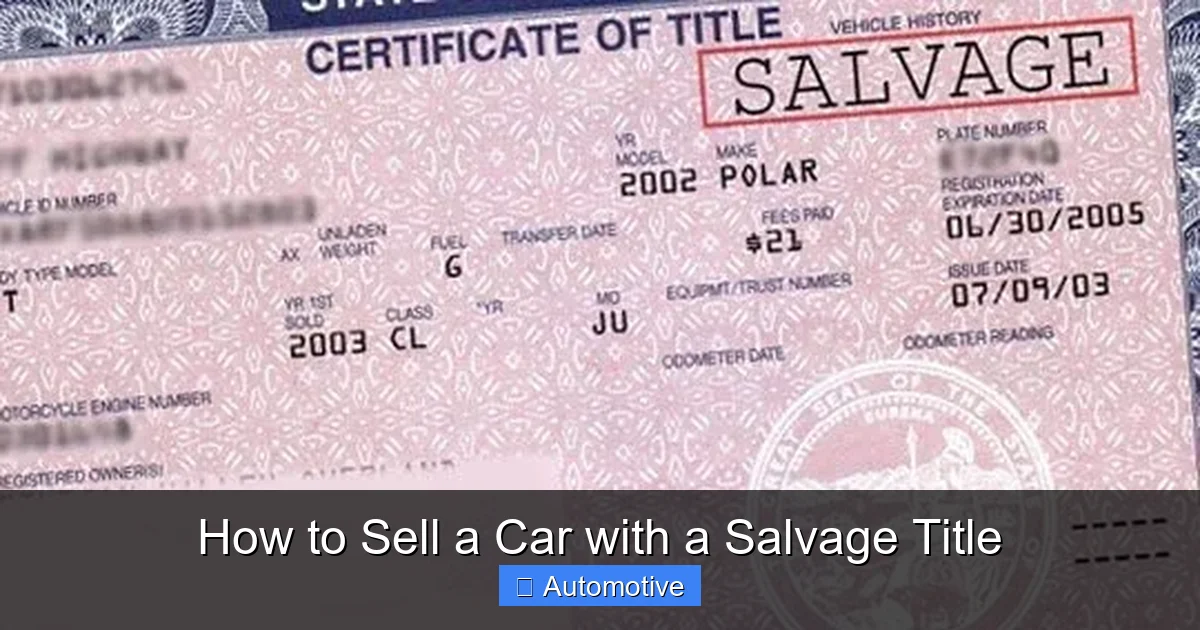
Visual guide about How to Sell a Car with a Salvage Title
Image source: images.squarespace-cdn.com
Before you list your salvage-title car for sale, you need to know the rules. Every state handles salvage titles differently, and ignorance won’t protect you from fines or legal trouble.
Salvage Title Regulations by State
Some states, like California and New York, have strict inspection requirements before a salvage car can be re-registered. Others, like Texas and Florida, allow salvage vehicles to be driven after repairs but require a “rebuilt” title designation. In a few states, like Arizona, salvage titles can’t be cleared at all—once salvage, always salvage.
For example, in California, you must pass a brake-and-light inspection and a VIN verification before the DMV will issue a rebuilt title. In contrast, in Ohio, you only need to provide proof of repairs and pay a fee.
Required Documentation
To sell a salvage-title car legally, you’ll typically need:
- The original salvage title (signed over to the buyer)
- Proof of ownership (registration, bill of sale)
- Repair invoices and receipts
- Photos of the car before and after repairs
- A completed vehicle inspection report (if required)
Some states also require a notarized affidavit stating the car was repaired and is safe to drive. Always check your local DMV website or call them directly to confirm what’s needed.
Can You Transfer a Salvage Title?
Yes—but only if the car meets your state’s requirements for re-registration. If the car hasn’t been repaired or inspected, you may not be able to transfer the title at all. In that case, you might need to sell it for parts or scrap.
If you’ve already repaired the car and it passes inspection, you can usually apply for a “rebuilt” or “reconstructed” title, which makes it easier to sell and register.
How to Price a Car with a Salvage Title
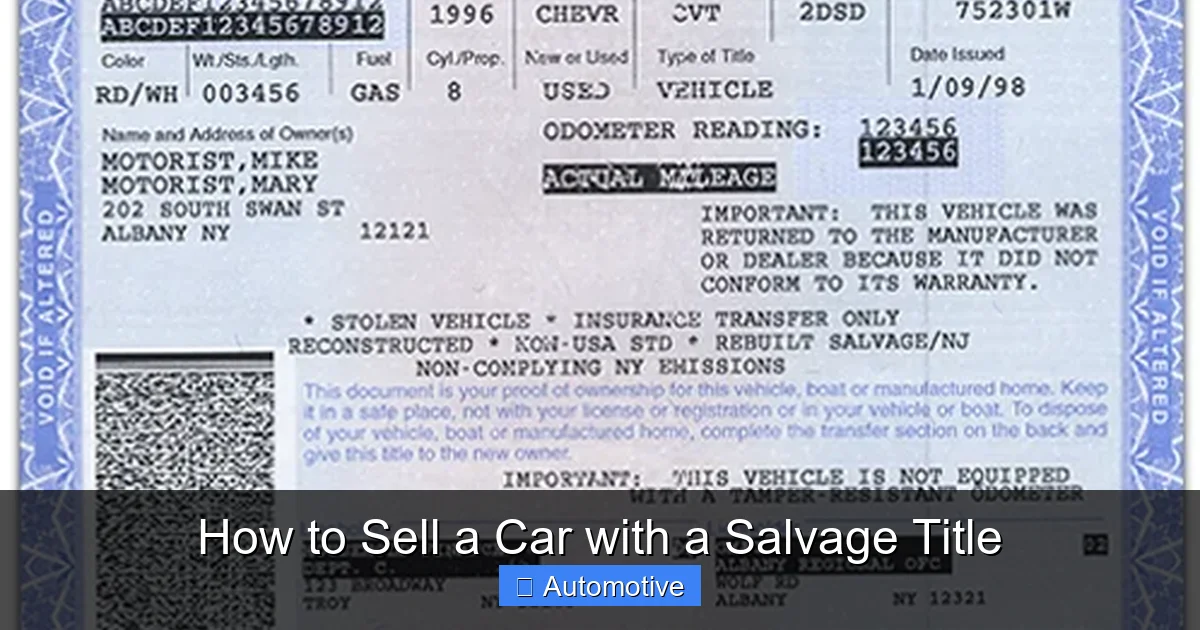
Visual guide about How to Sell a Car with a Salvage Title
Image source: images.surferseo.art
Pricing is one of the trickiest parts of selling a salvage-title car. You want to get a fair price, but you also need to be realistic. Most buyers expect a steep discount—and they’re right to.
What Affects the Value?
Several factors influence how much your salvage car is worth:
- Extent of damage: A car with minor frame damage will sell for more than one that was submerged in floodwater.
- Quality of repairs: Professional repairs with OEM parts boost value; DIY fixes may scare buyers away.
- Make and model: Popular cars (like Honda Civics or Ford F-150s) hold value better, even with salvage titles.
- Mileage and condition: Low mileage and good interior condition can offset the title stigma.
- Market demand: If your car is rare or in high demand among rebuilders, you might get a better offer.
How Much Less Should You Charge?
On average, a salvage-title car sells for 20% to 40% less than the same model with a clean title. For example, if a clean 2018 Toyota Camry sells for $18,000, a salvage-title version might go for $10,800 to $14,400.
To find the right price, check listings on sites like Craigslist, Facebook Marketplace, and eBay Motors. Filter for “salvage” or “rebuilt” titles and compare similar models. Don’t forget to adjust for your car’s specific condition and repair history.
Pricing Tips for Maximum Value
- Be honest about flaws: Hiding problems will backfire. Disclose everything upfront to build trust.
- Highlight strong points: If the engine is new or the interior is pristine, mention it.
- Offer a warranty (if possible): Even a 30-day engine-and-transmission warranty can ease buyer fears.
- Consider parting it out: If the car isn’t driveable, selling parts individually might earn more than selling the whole car.
Preparing Your Salvage Car for Sale
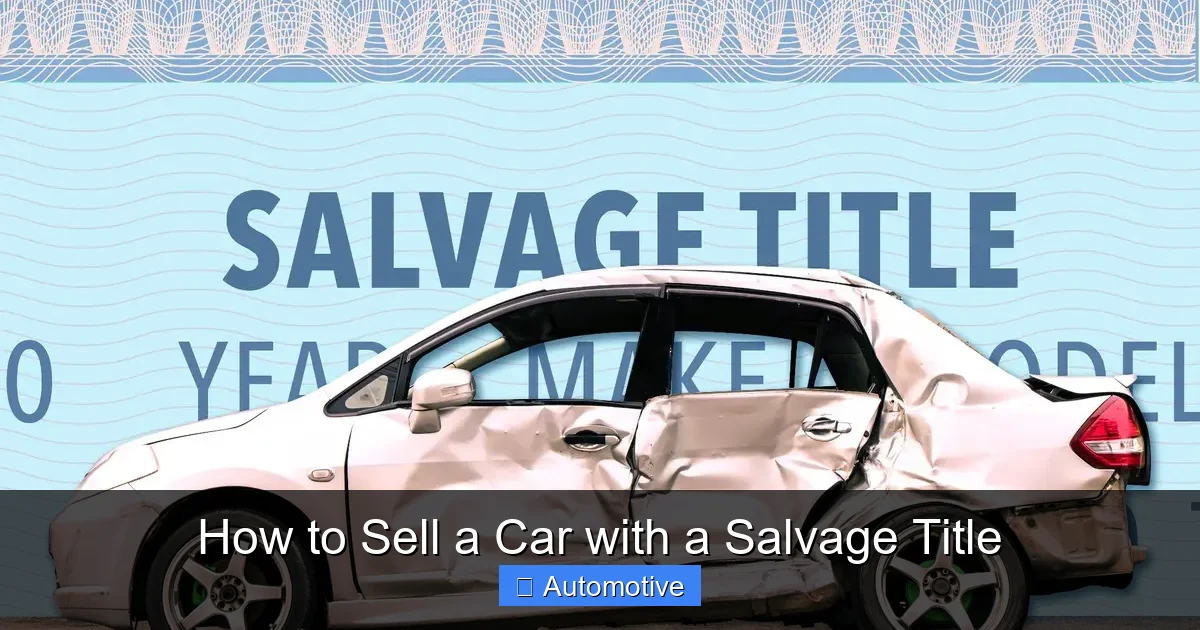
Visual guide about How to Sell a Car with a Salvage Title
Image source: images.cars.com
First impressions matter—even for a salvage-title car. A clean, well-documented vehicle will attract more buyers and command a higher price.
Clean and Detail the Car
Start with a thorough wash, wax, and interior cleaning. Remove personal items, vacuum the carpets, and wipe down surfaces. A fresh-smelling, spotless car looks cared for—and that matters, even if it has a salvage history.
If the exterior has minor scratches or dents, consider getting them touched up. You don’t need a full repaint, but small fixes can make a big difference.
Gather and Organize Documentation
Buyers will want proof that your car is safe and legally roadworthy. Create a folder (physical or digital) with:
- Repair invoices and receipts
- Photos of damage and repairs
- Inspection reports
- Maintenance records
- Previous registration and title documents
If you rebuilt the car yourself, include a detailed summary of the work done. For example: “Replaced front bumper, headlights, and radiator after collision. Used OEM parts. Aligned frame at certified shop.”
Take High-Quality Photos
Photos are your first chance to impress buyers. Take pictures from multiple angles: front, back, sides, interior, engine bay, and undercarriage. Include close-ups of any repaired areas to show the quality of work.
Avoid dark, blurry, or cluttered shots. Use natural light and a clean background. If possible, take photos in daylight with the car on a flat surface.
Write a Clear, Honest Listing Description
Your ad should answer all the questions a buyer might have. Include:
- Year, make, model, and mileage
- Salvage title status and reason (e.g., “flood damage,” “front-end collision”)
- Details of repairs and parts used
- Current condition and any remaining issues
- Reason for selling
- Contact information
Example:
“2016 Honda Accord, 85,000 miles, salvage title due to rear-end collision. Professionally repaired with OEM parts. New bumper, trunk, and rear lights. Drives perfectly, no issues. Clean interior, recent oil change. Selling because I’m upgrading. Serious buyers only.”
Where and How to Sell Your Salvage Car
Not all buyers are created equal—and not all platforms are ideal for salvage vehicles. Choosing the right sales method can mean the difference between a quick sale and months of frustration.
Selling to a Private Buyer
Private sales usually yield the highest prices. Platforms like Facebook Marketplace, Craigslist, and OfferUp are great for reaching individual buyers. You can also post on car-specific forums (like Honda-Tech or Ford Truck Enthusiasts) where hobbyists and rebuilders hang out.
Pros:
- Higher sale price
- Direct negotiation
- No dealer fees
Cons:
- More effort (showings, test drives, paperwork)
- Risk of scams or no-shows
- Buyer may back out after inspection
Selling to a Dealer or Salvage Yard
Most dealerships won’t buy salvage-title cars, but some specialize in rebuilt vehicles. You can also sell to a salvage yard or auto auction.
Pros:
- Fast, hassle-free sale
- No need to advertise or meet buyers
Cons:
- Much lower offer (often 50–70% below market value)
- May only accept cars in running condition
Selling Online Through Specialized Platforms
Websites like Copart, IAAI, and eBay Motors cater to salvage and rebuilt vehicles. These platforms attract buyers who know what they’re getting into.
Pros:
- Large audience of qualified buyers
- Secure payment and title transfer
Cons:
- Listing and selling fees
- Competitive pricing
Tips for a Smooth Sale
- Meet in a public place: For safety, meet buyers at a police station or busy parking lot.
- Bring a friend: Never meet a buyer alone.
- Verify payment: Use cash, cashier’s check, or secure digital payment. Avoid personal checks.
- Complete the title transfer correctly: Sign the title, fill out the bill of sale, and keep a copy for your records.
- Notify the DMV: Some states require you to report the sale within a certain timeframe.
Legal and Ethical Considerations
Selling a salvage car isn’t just about money—it’s about responsibility. You have a legal and ethical duty to be honest about the car’s history.
Disclosure Laws
In most states, you must disclose the salvage title status in writing. Failing to do so can result in fines, lawsuits, or even criminal charges. Some states also require a specific disclosure form.
For example, in Texas, sellers must complete a “Vehicle Transfer Notification” and check the box indicating a salvage title. In California, you must provide a “Notice of Transfer and Release of Liability” to the DMV within 5 days of sale.
Avoiding Scams and Legal Trouble
Unfortunately, salvage cars attract scammers. Common tactics include:
- Fake cashier’s checks
- Overpayment scams (buyer sends too much money and asks for a refund)
- Phishing for personal information
Protect yourself by:
- Never sharing your VIN or title number publicly
- Using secure payment methods
- Meeting buyers in person
- Verifying funds before handing over the car
Ethical Selling Practices
Even if the law doesn’t require it, it’s ethical to:
- Disclose all known issues
- Provide repair documentation
- Allow a pre-purchase inspection
- Be patient and respectful with buyers
Remember: a happy buyer is more likely to leave a positive review or recommend you to others—even in the salvage car world.
Conclusion: Turning a Challenge into an Opportunity
Selling a car with a salvage title might seem daunting, but it’s far from impossible. With the right knowledge, preparation, and mindset, you can sell your vehicle safely, legally, and profitably.
Start by understanding what a salvage title means and how your state regulates these vehicles. Price your car fairly based on its condition and market demand. Prepare it thoroughly—clean it, document repairs, and take great photos. Choose the right sales platform, whether that’s a private sale, online auction, or specialty dealer.
Most importantly, be honest and transparent. A salvage title doesn’t define your car’s value—your integrity does. By treating buyers with respect and providing all the information they need, you’ll build trust and increase your chances of a successful sale.
Yes, it takes extra work. But the reward—getting a fair price for your car and helping someone find a reliable vehicle at a great deal—is worth it. So don’t let that salvage title hold you back. With the right approach, you can turn a challenging situation into a win-win for everyone involved.
Frequently Asked Questions
Can I sell a car with a salvage title?
Yes, you can legally sell a car with a salvage title in most states. However, you must disclose the title status to the buyer and follow your state’s regulations for transfer and registration.
How much less does a salvage-title car sell for?
On average, a salvage-title car sells for 20% to 40% less than the same model with a clean title. The exact discount depends on the extent of damage, quality of repairs, and market demand.
Do I need to repair the car before selling?
Not always, but repairing the car can significantly increase its value and appeal. If the car isn’t driveable, you may need to sell it for parts or scrap.
Can a salvage-title car be insured?
Yes, but options are limited. Some insurers offer liability-only coverage, while a few provide full coverage for rebuilt salvage vehicles. Shop around and be upfront about the title status.
What buyers are most interested in salvage cars?
Mechanics, car rebuilders, hobbyists, and collectors are the most likely buyers. They understand the risks and see value in repairable vehicles.
Do I need a rebuilt title to sell?
Not necessarily, but having a rebuilt or reconstructed title makes the car easier to sell and register. Check your state’s rules—some require it for legal transfer.