How to Sell a Car on Bring a Trailer
Selling a car on Bring a Trailer (BaT) can be a rewarding experience—if you do it right. This guide walks you through every step, from preparing your vehicle to closing the sale, helping you attract serious buyers and get top dollar. Whether you’re selling a classic, a project car, or a daily driver, BaT’s passionate community offers a unique marketplace for enthusiasts.
In This Article
- 1 Key Takeaways
- 2 📑 Table of Contents
- 3 Introduction: Why Sell Your Car on Bring a Trailer?
- 4 Understanding the Bring a Trailer Marketplace
- 5 Preparing Your Car for Sale
- 6 Creating a Winning Listing
- 7 Managing the Auction and Engaging Buyers
- 8 Closing the Sale and Handling Logistics
- 9 Conclusion: Selling Smart on Bring a Trailer
- 10 Frequently Asked Questions
Key Takeaways
- Know Your Audience: Bring a Trailer attracts car enthusiasts, not casual buyers. Tailor your listing to appeal to knowledgeable, passionate bidders.
- Prepare Your Car Thoroughly: Clean, inspect, and document your vehicle. A well-maintained car with service records builds trust and increases bids.
- Write a Compelling Listing: Use clear, honest descriptions and high-quality photos. Highlight unique features, modifications, and history.
- Set a Realistic Reserve Price: Research similar sales and set a reserve that reflects your car’s true market value to avoid disappointment.
- Engage with the Community: Respond to comments, answer questions promptly, and be transparent. BaT buyers value honesty and communication.
- Understand Fees and Logistics: BaT charges a seller’s fee (typically 5% of the final price, capped at $5,000). Plan for shipping or local pickup.
- Close the Sale Smoothly: Coordinate payment, title transfer, and delivery. Use BaT’s recommended escrow service for secure transactions.
📑 Table of Contents
Introduction: Why Sell Your Car on Bring a Trailer?
If you’ve ever owned a car that turns heads at gas stations or sparks conversations at car meets, you know there’s a special kind of joy in driving something unique. But when it’s time to sell, finding the right buyer can feel like searching for a needle in a haystack. That’s where Bring a Trailer (BaT) comes in—a trusted online marketplace designed specifically for car enthusiasts.
Unlike mainstream platforms like Craigslist or eBay Motors, Bring a Trailer caters to a niche but passionate audience. These aren’t just people looking for a cheap commuter car. They’re collectors, restorers, weekend racers, and lifelong gearheads who appreciate the story behind every vehicle. Whether you’re selling a vintage Porsche 911, a lifted Jeep Wrangler, or a low-mileage Toyota Supra, BaT gives you access to buyers who truly understand and value what you’re offering.
Selling on Bring a Trailer isn’t just about listing your car and waiting for bids. It’s a process that rewards preparation, honesty, and engagement. Done right, it can result in a faster sale, higher offers, and a smoother transaction than traditional methods. In this guide, we’ll walk you through every step—from prepping your car to closing the deal—so you can sell with confidence and get the best possible outcome.
Understanding the Bring a Trailer Marketplace
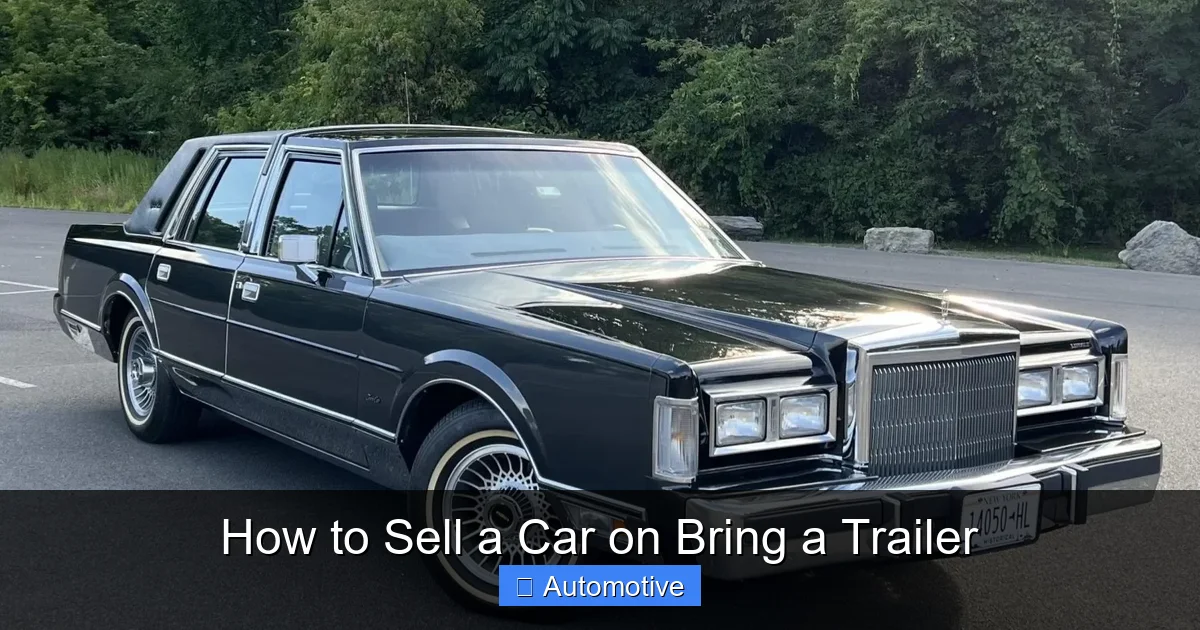
Visual guide about How to Sell a Car on Bring a Trailer
Image source: bringatrailer.com
Before you list your car, it’s important to understand what makes Bring a Trailer different from other car-selling platforms. BaT isn’t just a classifieds site—it’s a community-driven marketplace built around transparency, storytelling, and trust.
Who Uses Bring a Trailer?
The typical BaT user is a car enthusiast with a deep appreciation for automotive history, performance, and craftsmanship. They’re not just looking for a deal; they’re looking for a story. A 1970s muscle car with original paint and a documented race history will attract far more interest than a similar model that’s been repainted and stripped of its past.
This audience values honesty. They expect detailed descriptions, high-resolution photos, and open communication. In fact, many buyers follow BaT auctions like sports events, commenting on listings and discussing specs in real time. This level of engagement creates a dynamic bidding environment where well-presented cars can exceed expectations.
How BaT Auctions Work
Bring a Trailer operates on a timed auction model. Sellers list their vehicle with a starting bid (often $1 or $500), and the auction runs for 7 days. Bidders place offers, and the highest bid at the end wins—assuming the reserve price (if set) is met.
One of BaT’s standout features is its comment section. Potential buyers ask questions, point out details, and even offer advice. As a seller, your job is to respond quickly and accurately. This interaction builds trust and can influence bidding behavior.
Another key feature is the “BaT Concierge” service, which helps coordinate inspections, shipping, and paperwork for a fee. While optional, it’s especially useful for long-distance sales or high-value vehicles.
What Types of Cars Sell Best?
While BaT accepts a wide range of vehicles—from daily drivers to race cars—certain categories consistently perform well:
– **Classic and vintage cars** (e.g., 1960s–1980s American muscle, European sports cars)
– **Japanese performance icons** (e.g., Nissan Skyline, Honda S2000, Toyota AE86)
– **Modern supercars and exotics** (e.g., Porsche 911 GT3, Ferrari F430, Lamborghini Gallardo)
– **Off-road and adventure vehicles** (e.g., lifted 4Runners, Jeep CJ-7s, Land Rovers)
– **Project cars and barn finds** (with clear potential and documentation)
Even daily drivers can sell well if they’re well-maintained, low-mileage, or have a compelling backstory (e.g., “owned by a retired mechanic,” “driven only on weekends”).
Preparing Your Car for Sale
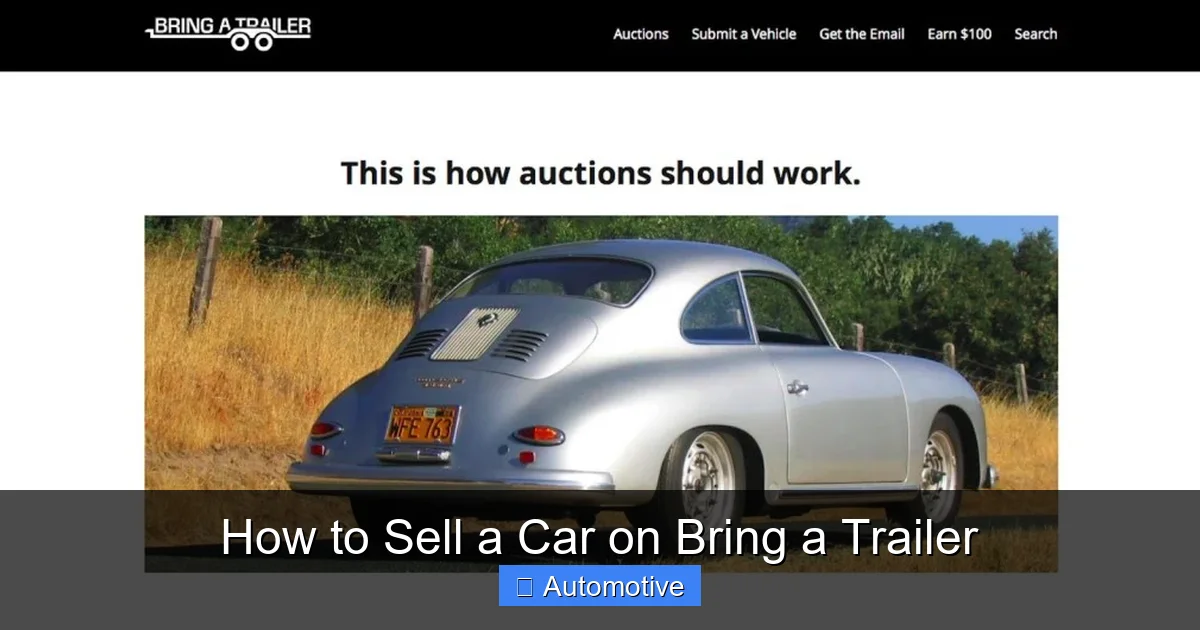
Visual guide about How to Sell a Car on Bring a Trailer
Image source: images.hgmsites.net
The foundation of a successful BaT sale is a well-prepared vehicle. Buyers on BaT are discerning—they’ll notice every scratch, every missing bolt, and every inconsistency in your story. Taking the time to get your car ready can make the difference between a $20,000 sale and a $35,000 one.
Clean and Detail Your Vehicle
First impressions matter. Start with a thorough wash, wax, and interior cleaning. Remove any personal items, trash, or clutter. If your car has leather seats, condition them. If it’s a convertible, clean the top and check for leaks.
Don’t stop at the exterior. Under the hood, in the trunk, and under the car should also be clean. A spotless engine bay signals that the car has been cared for. Use a degreaser and a soft brush to remove oil and grime, but avoid power washing sensitive components like distributors or electronics.
For older cars, consider professional detailing. A $200 detail can add thousands to your final sale price by making the car look showroom-ready.
Address Mechanical and Cosmetic Issues
Be honest about your car’s condition—but also proactive. Fix minor issues like burnt-out bulbs, cracked windshield wipers, or loose trim. These small fixes show buyers you’ve maintained the car responsibly.
If there are bigger issues—like a transmission that slips or a check engine light—address them before listing. Even if you can’t fix everything, disclose it clearly in your description. Buyers appreciate transparency and may still bid if the price reflects the needed work.
For project cars, document the work that’s been done and what still needs attention. Include receipts, photos of repairs, and a list of parts included (e.g., “comes with spare carburetor, new brake pads, and original wheels”).
Gather Documentation and History
BaT buyers love history. The more documentation you can provide, the better. Collect:
– Service records and maintenance logs
– Original owner’s manual and warranty book
– Title and registration (clean title preferred)
– Photos of the car over the years
– Modification receipts (e.g., suspension, exhaust, engine work)
– Any racing or event history (e.g., track day logs, rally participation)
If your car has a unique story—like being featured in a magazine, owned by a celebrity, or driven across the country—highlight it. These details add character and can significantly increase buyer interest.
Get a Pre-Sale Inspection (Optional but Recommended)
Consider having a trusted mechanic perform a pre-sale inspection. This isn’t required, but it adds credibility. You can include the inspection report in your listing, showing buyers that the car has been professionally evaluated.
Some sellers even offer a “BaT Inspection” through the Concierge service, where a certified inspector evaluates the car and provides a detailed report. This can be especially helpful for high-value or complex vehicles.
Creating a Winning Listing
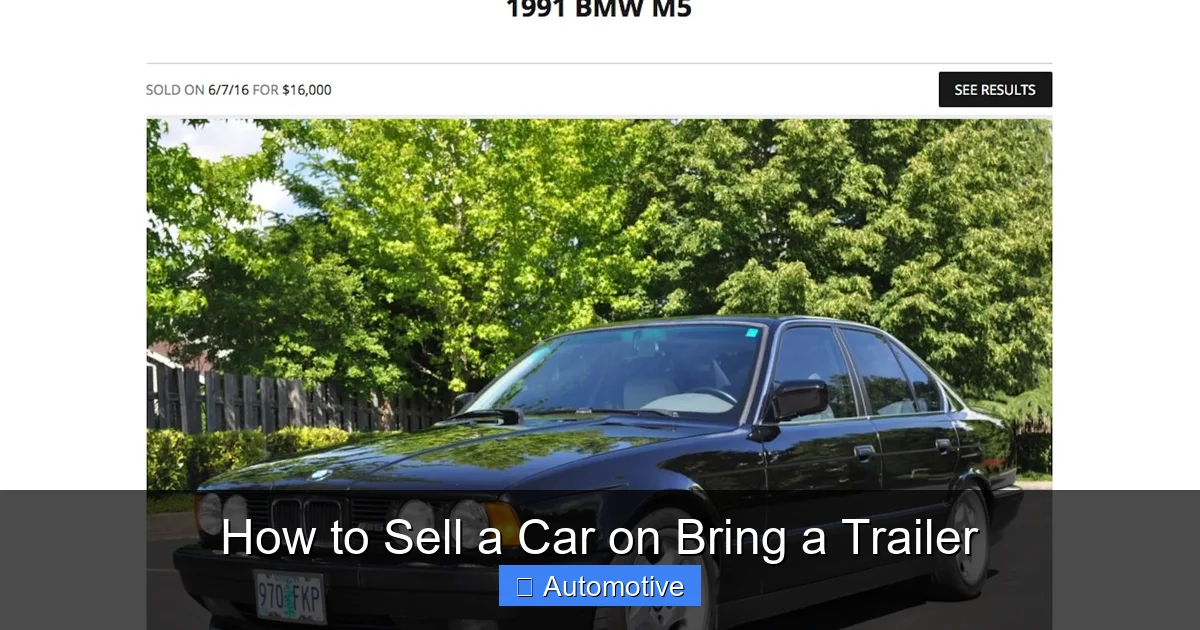
Visual guide about How to Sell a Car on Bring a Trailer
Image source: images.hgmsites.net
Your listing is your car’s first—and often only—chance to make an impression. A strong listing combines clear, honest writing with high-quality visuals and smart pricing.
Write a Clear and Compelling Description
Start with a strong headline that includes the year, make, model, and a standout feature (e.g., “1972 Porsche 911T – Matching Numbers, 45k Miles, Service Records”).
In the description, be detailed but concise. Use short paragraphs and bullet points for readability. Cover:
– **History:** How long you’ve owned it, previous owners, usage (e.g., weekend driver, track car)
– **Condition:** Note any flaws honestly (e.g., “small dent on passenger door,” “paint fade on hood”)
– **Mechanicals:** Engine, transmission, suspension, brakes, and recent work
– **Modifications:** List all aftermarket parts and explain why they were added
– **Included items:** Spare parts, tools, manuals, wheels, etc.
Avoid exaggerations like “flawless” or “perfect.” BaT buyers are experts—they’ll see through hype. Instead, use phrases like “well-maintained,” “drives smoothly,” or “needs attention to X.”
Take High-Quality Photos
Photos are critical. Aim for at least 20–30 high-resolution images covering every angle and detail. Use natural light and avoid shadows or glare.
Include:
– Exterior shots (front, rear, sides, 3/4 angles)
– Interior (dashboard, seats, trunk, backseat)
– Engine bay (clean and labeled if possible)
– Undercarriage (to show rust or damage)
– Close-ups of flaws (scratches, dents, wear)
– Tires and wheels
– VIN and engine stampings (for verification)
Pro tip: Take photos in the same location and lighting for consistency. A clean, neutral background (like a quiet street or empty parking lot) works best.
Set the Right Starting Bid and Reserve Price
BaT allows you to set a starting bid (usually $1 or $500) and an optional reserve price (the minimum you’re willing to accept).
For the starting bid, $1 is common and encourages early bidding. Avoid high starting bids—they can scare off casual bidders.
For the reserve, research recent sales of similar cars on BaT. Use the “Sold Listings” filter to see what others have fetched. Set your reserve slightly below market value to create bidding momentum, but high enough to protect your investment.
If you don’t meet the reserve, the auction ends without a sale. You can relist, but it may reduce buyer confidence. Only use a reserve if you’re firm on your price.
Choose the Right Category and Tags
BaT organizes listings by category (e.g., Classics, Japanese, Off-Road). Pick the one that best fits your car. Use relevant tags like “matching numbers,” “restomod,” or “barn find” to improve visibility.
Also, consider listing during peak hours (evenings and weekends) when more users are online.
Managing the Auction and Engaging Buyers
Once your listing goes live, the real work begins. Your goal is to keep bidders engaged, answer questions, and build trust.
Monitor Comments and Respond Promptly
Check your listing daily. Buyers will ask about mileage, rust, modifications, and test drives. Answer clearly and honestly.
Example:
*“Is the engine original?”*
→ “Yes, it’s the matching-numbers 2.0L flat-six. I have the stampings photographed in the listing.”
Avoid vague answers like “It runs great.” Instead, say, “It starts on the first turn, idles smoothly, and pulls strong through all gears.”
Encourage Inspections and Test Drives
Many buyers will want to inspect the car in person. If you’re comfortable, offer a test drive or invite them to bring a mechanic. This shows confidence in your vehicle and can lead to higher bids.
If the buyer is out of state, suggest a third-party inspection through BaT Concierge or a local shop.
Handle Bidding Strategically
Watch the bidding closely. If activity slows, consider adding a comment like, “Reserve is close—this is a rare opportunity to own a well-documented example.”
Avoid “bid sniping” (last-second bids) by encouraging early participation. Some sellers even offer a small incentive (e.g., “First 10 bidders get a set of vintage hubcaps”).
Closing the Sale and Handling Logistics
When the auction ends, it’s time to finalize the sale. This step requires coordination, but BaT provides tools to make it easier.
Confirm the Winning Bid and Payment
Once the auction closes, BaT notifies you and the winner. The buyer has 48 hours to confirm the sale and arrange payment.
BaT recommends using an escrow service (like Escrow.com) for transactions over $5,000. This protects both parties—the buyer doesn’t pay until the car is delivered and inspected, and the seller gets paid securely.
For smaller sales, wire transfer or cash (for local pickup) are common.
Transfer the Title and Complete Paperwork
Sign the title over to the buyer and provide a bill of sale. Include your contact info and any relevant documentation.
If the car is being shipped, coordinate with the buyer on pickup or delivery. BaT Concierge can help arrange transport, or you can use a reputable auto shipping company.
Leave a Positive Review
After the sale, both buyer and seller can leave feedback on BaT. A positive review builds your reputation and encourages future buyers.
Conclusion: Selling Smart on Bring a Trailer
Selling a car on Bring a Trailer is more than just listing a vehicle—it’s about storytelling, transparency, and connecting with a community that truly appreciates automotive passion. By preparing your car thoroughly, crafting a compelling listing, and engaging with bidders, you can turn a simple sale into a rewarding experience.
Remember, BaT buyers aren’t just looking for a car. They’re looking for a story, a connection, and a piece of automotive history. When you give them that, you’re not just selling a vehicle—you’re passing on a legacy.
So whether you’re selling your first project car or your tenth classic, approach the process with care, honesty, and enthusiasm. The right buyer is out there, and with the right preparation, your car could be the next BaT success story.
Frequently Asked Questions
How much does it cost to sell a car on Bring a Trailer?
Bring a Trailer charges a seller’s fee of 5% of the final sale price, with a maximum cap of $5,000. There are no listing fees, so you only pay if your car sells. Additional costs may include photography, detailing, or shipping.
Can I sell a car with a salvage title on BaT?
Yes, you can sell a car with a salvage title on Bring a Trailer, but you must disclose it clearly in your listing. Some buyers specialize in salvage or project cars, but transparency is key to building trust.
Do I need to set a reserve price?
A reserve price is optional. It protects you from selling below your minimum acceptable price. However, setting a reserve can reduce bidding momentum, so weigh the pros and cons based on your car’s value and market demand.
How long does a BaT auction last?
All Bring a Trailer auctions run for exactly 7 days. The countdown begins when your listing goes live, and the highest bid at the end wins—if the reserve is met.
Can I relist my car if it doesn’t sell?
Yes, you can relist your car if the auction ends without meeting the reserve. However, repeated relisting may signal to buyers that the car has issues, so consider adjusting your price or improving your listing.
Is Bring a Trailer only for classic cars?
No, Bring a Trailer accepts a wide range of vehicles, including modern performance cars, off-road vehicles, and daily drivers. What matters most is that the car appeals to enthusiasts and is presented honestly.