
How to Sell a Car in Virginia

Selling a car in Virginia doesn’t have to be stressful. With the right preparation, clear documentation, and smart marketing, you can complete the process quickly and safely. This guide walks you through every step—from pricing your vehicle to transferring ownership legally.
Key Takeaways
- Know the Virginia DMV requirements: You’ll need a completed Vehicle Title, Bill of Sale, and possibly an emissions inspection to legally transfer ownership.
- Price your car accurately: Use tools like Kelley Blue Book or Edmunds to research fair market value based on your car’s condition, mileage, and features.
- Prepare your vehicle for sale: Clean it inside and out, fix minor issues, and gather maintenance records to boost buyer confidence.
- Advertise effectively: Use online platforms like Craigslist, Facebook Marketplace, or Autotrader, and include clear photos and a detailed description.
- Ensure safe transactions: Meet in public places, accept secure payment methods like cash or cashier’s checks, and avoid scams.
- Complete the paperwork correctly: Sign over the title, file a Release of Liability, and provide the buyer with necessary documents to register the vehicle.
- Cancel your insurance promptly: Once the sale is complete, contact your insurer to avoid paying for coverage on a car you no longer own.
📑 Table of Contents
- How to Sell a Car in Virginia: A Complete Step-by-Step Guide
- Step 1: Determine the Value of Your Car
- Step 2: Prepare Your Car for Sale
- Step 3: Choose How to Sell Your Car
- Step 4: Advertise Your Car Effectively
- Step 5: Handle the Sale Safely and Legally
- Step 6: Cancel Your Insurance and Registration
- Bonus Tips for a Smooth Sale
How to Sell a Car in Virginia: A Complete Step-by-Step Guide
So, you’ve decided it’s time to sell your car in Virginia. Whether you’re upgrading to a newer model, downsizing, or just ready for a change, selling a vehicle can feel overwhelming—especially if you’ve never done it before. But don’t worry. With a little planning and the right information, the process can be smooth, safe, and even profitable.
Virginia has specific rules and procedures for selling a car, and understanding them upfront can save you time, money, and headaches down the road. From pricing your vehicle correctly to handling the legal transfer of ownership, every step matters. This guide will walk you through the entire process, offering practical tips and real-world examples to help you sell your car with confidence.
Whether you’re selling privately or trading in at a dealership, knowing your options and responsibilities is key. Private sales often yield higher profits, but they require more effort. Dealerships offer convenience, but you might get less money. We’ll cover both paths so you can make the best choice for your situation.
Step 1: Determine the Value of Your Car
Visual guide about How to Sell a Car in Virginia
Image source: speedytemplate.com
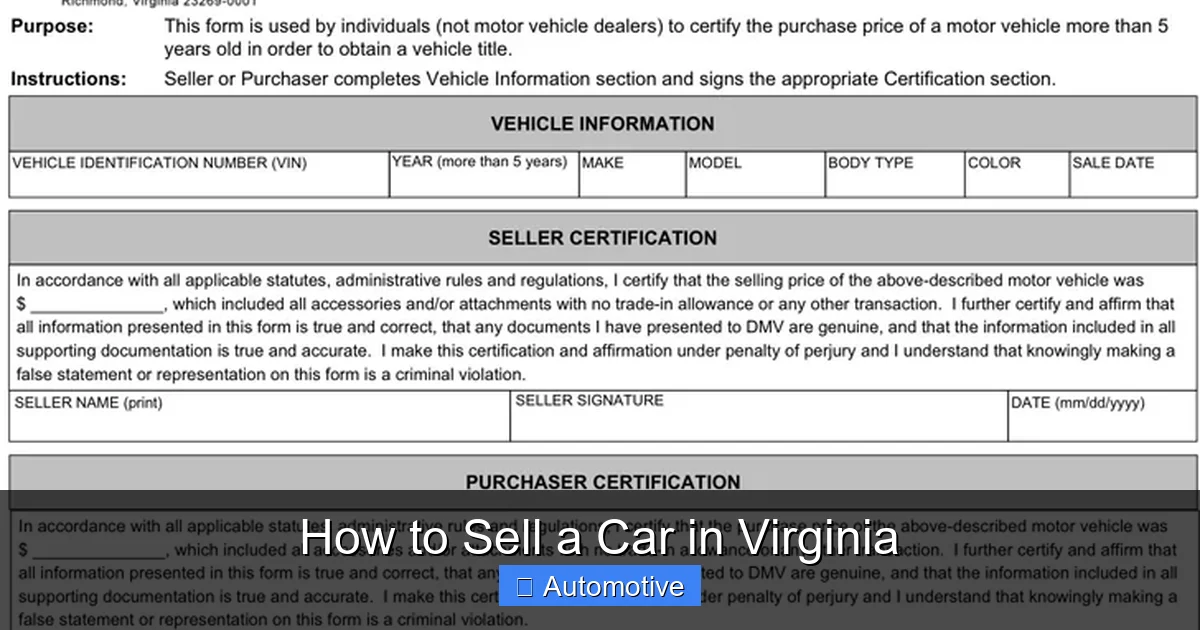
Before you list your car for sale, you need to know how much it’s worth. Pricing it too high can scare off buyers, while pricing it too low means leaving money on the table. The goal is to find that sweet spot—fair market value.
Use Online Valuation Tools
Start by using trusted online resources like Kelley Blue Book (KBB), Edmunds, or NADA Guides. These tools ask for details such as your car’s make, model, year, mileage, trim level, and condition. Be honest when describing your vehicle—don’t exaggerate its condition to inflate the value.
For example, if you’re selling a 2018 Honda Civic with 60,000 miles in “good” condition, KBB might estimate its private party value at $16,500. But if the car has a clean maintenance record, new tires, and no accidents, you could justify pricing it closer to $17,000.
Check Local Listings
Next, look at similar cars for sale in your area. Search sites like Craigslist, Facebook Marketplace, and Autotrader for vehicles with comparable mileage, features, and condition. This gives you a real-world sense of what buyers are willing to pay in your local market.
Let’s say you find three similar 2018 Honda Civics listed in Richmond for $16,200, $16,800, and $17,100. That tells you the market range is about $16,200–$17,100. You can then price yours competitively—maybe at $16,900 to attract interest while leaving room for negotiation.
Adjust for Condition and Extras
Your car’s condition plays a big role in its value. A well-maintained vehicle with service records, clean interior, and no mechanical issues will command a higher price. On the other hand, if it has dents, stains, or needs repairs, you’ll need to adjust the price accordingly.
Also, consider any upgrades or extras. A car with a premium sound system, leather seats, or a sunroof may be worth more than a base model. Be sure to highlight these features in your listing.
Step 2: Prepare Your Car for Sale
Visual guide about How to Sell a Car in Virginia
Image source: wjla.com
First impressions matter—especially when selling a car. A clean, well-maintained vehicle not only looks more appealing but also signals to buyers that it’s been cared for. Taking the time to prepare your car can significantly increase its value and help it sell faster.
Clean It Inside and Out
Start with a thorough wash and wax. Remove dirt, grime, and bird droppings from the exterior. Don’t forget the wheels and tires—clean them with a dedicated cleaner to make them shine.
Inside, vacuum the carpets and seats. Wipe down surfaces with a microfiber cloth and mild cleaner. Remove any personal items, trash, or clutter. If there are odors, use an odor eliminator or place an open box of baking soda in the car for a few days.
Consider professional detailing if your budget allows. A $100–$200 detail can make your car look nearly new and justify a higher asking price.
Fix Minor Issues
You don’t need to rebuild the engine, but addressing small problems can make a big difference. Replace burnt-out light bulbs, fix cracked windshield wipers, and patch small dents or scratches if possible.
If the check engine light is on, get it diagnosed. Even if it’s a minor issue like a loose gas cap, fixing it shows buyers you’re responsible and transparent.
Gather Maintenance Records
Buyers love seeing proof that a car has been well-maintained. Collect all service records, receipts, and repair invoices. Organize them in a folder or binder to present during showings.
For example, if you’ve had regular oil changes, brake inspections, and tire rotations, highlight that in your listing. It builds trust and can justify a higher price.
Take High-Quality Photos
Photos are your car’s first impression online. Take pictures in good lighting—early morning or late afternoon works best. Capture the exterior from multiple angles, the interior (including seats, dashboard, and trunk), and any special features.
Avoid shadows, glare, or cluttered backgrounds. Use a smartphone with a good camera or ask a friend to help. Aim for at least 8–10 clear, well-lit photos.
Step 3: Choose How to Sell Your Car
Visual guide about How to Sell a Car in Virginia
Image source: source.cocosign.com
Now that your car is ready, it’s time to decide how to sell it. You have two main options: selling privately or trading it in at a dealership. Each has pros and cons, so choose the one that fits your goals.
Sell Privately
Selling privately typically yields the highest return. You set the price, negotiate directly with buyers, and avoid dealer fees. However, it requires more effort—advertising, meeting buyers, and handling paperwork.
Private sales are ideal if you want maximum profit and don’t mind the extra work. You can list your car on platforms like:
– Craigslist
– Facebook Marketplace
– Autotrader
– Cars.com
– OfferUp
When creating your listing, include a clear title (e.g., “2018 Honda Civic EX – Low Miles, Clean Title”), detailed description, high-quality photos, and your asking price. Mention key features like fuel efficiency, safety ratings, and recent maintenance.
Trade-In at a Dealership
Trading in your car is faster and more convenient. You can apply the trade-in value toward a new vehicle purchase, and the dealer handles most of the paperwork. However, you’ll likely get less money than a private sale.
Dealerships need to resell your car for a profit, so they offer lower prices. Still, the convenience may be worth it—especially if you’re buying another car at the same time.
To get the best trade-in offer, research your car’s value beforehand and get quotes from multiple dealerships. Don’t accept the first offer—negotiate just as you would in a private sale.
Sell to a Car Buying Service
Companies like CarMax, Carvana, or Vroom offer instant cash offers for your car. You can get a quote online, schedule an inspection, and receive payment quickly—often within 24 hours.
These services are convenient but usually pay less than private sales. They’re a good option if you need to sell fast and don’t want to deal with buyers.
Step 4: Advertise Your Car Effectively
Once you’ve chosen your selling method, it’s time to get the word out. Effective advertising increases visibility and attracts serious buyers.
Write a Compelling Listing
Your listing should be clear, honest, and engaging. Start with a strong headline that includes the year, make, model, and key selling points (e.g., “2019 Toyota Camry LE – One Owner, Excellent Condition”).
In the description, include:
– Mileage
– Condition (exterior, interior, mechanical)
– Features (navigation, backup camera, etc.)
– Recent repairs or maintenance
– Reason for selling
– Any known issues (be transparent!)
Example:
“Selling my well-maintained 2019 Toyota Camry LE with only 45,000 miles. One owner, non-smoker, always garaged. Recent oil change, new brakes, and tires. Clean title, no accidents. Selling because I’m upgrading to an SUV. Asking $18,500 OBO. Serious inquiries only.”
Use Multiple Platforms
Don’t rely on just one site. Post your listing on several platforms to reach more buyers. Facebook Marketplace is great for local sales, while Autotrader attracts serious shoppers.
Update your listing regularly to keep it near the top of search results. If your car hasn’t sold in a week, consider lowering the price slightly or improving the photos.
Respond Promptly to Inquiries
When buyers contact you, reply quickly and professionally. Answer questions honestly and schedule test drives at safe, public locations like a shopping center or police station parking lot.
Avoid sharing personal information like your home address or phone number until you’re comfortable. Use email or messaging apps for initial communication.
Step 5: Handle the Sale Safely and Legally
When a buyer shows interest, it’s time to close the deal. But safety and legality should be your top priorities.
Meet in a Safe Location
Always meet in a public, well-lit place during daylight hours. Avoid meeting at your home or in isolated areas. Bring a friend if possible, and let someone know where you’re going.
Many buyers feel more comfortable meeting at a local DMV office or police station—some even have designated “safe exchange zones” with cameras and lighting.
Verify the Buyer’s Identity
Ask to see the buyer’s driver’s license and make sure the name matches the one on the payment. Be cautious of buyers who seem evasive or push for a quick sale.
Accept Secure Payment
Cash is the safest and most common payment method for private car sales. If the amount is large, meet at a bank so the buyer can withdraw cash in front of you.
Cashier’s checks are also acceptable, but verify they’re legitimate before handing over the car. Avoid personal checks, money orders, or wire transfers—they can be fraudulent.
Never release the car until payment is confirmed and in your possession.
Complete the Paperwork Correctly
In Virginia, you’ll need to transfer ownership properly to avoid future liability. Here’s what you’ll need:
– **Vehicle Title:** Sign over the title to the buyer. Make sure all information is accurate, including the sale price and odometer reading.
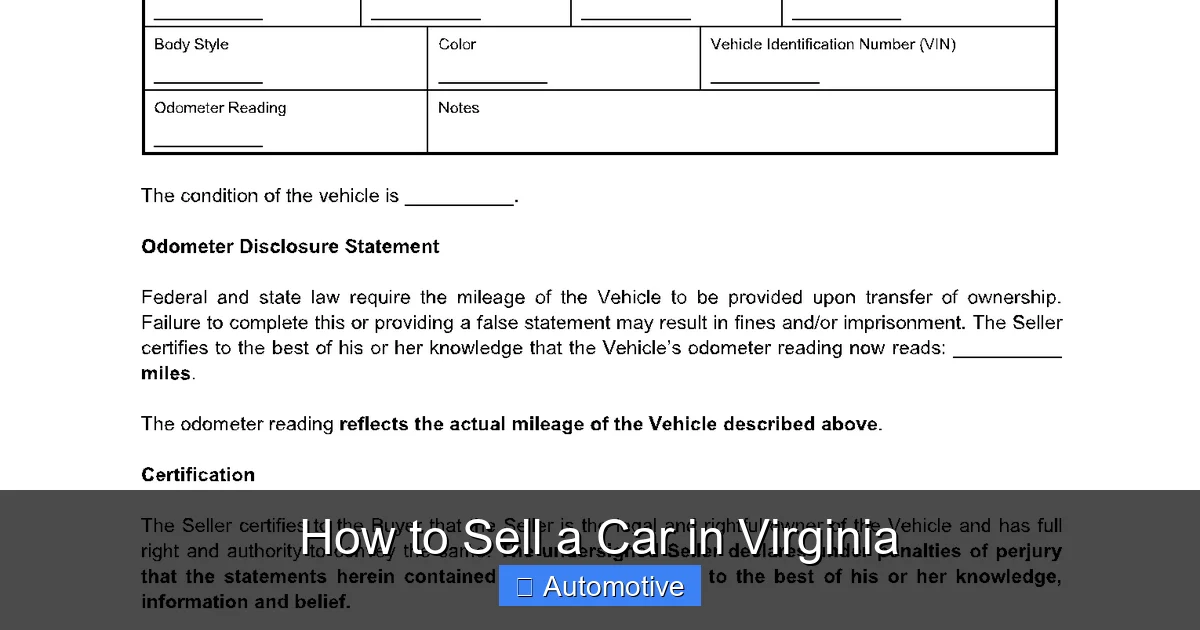
– **Bill of Sale:** While not always required, it’s a good idea to complete a Bill of Sale (Form VSA 20). This document records the transaction details and protects both parties.
– **Odometer Disclosure:** Federal law requires you to disclose the mileage at the time of sale. This is usually done on the title.
– **Release of Liability:** After the sale, file a Release of Liability with the Virginia DMV. This protects you if the buyer gets a ticket or causes an accident before registering the car.
You can file the Release of Liability online at the Virginia DMV website. It’s free and takes just a few minutes.
Provide the Buyer with Necessary Documents
Give the buyer:
– Signed title
– Bill of Sale (if used)
– Owner’s manual and spare keys
– Maintenance records (if available)
– Emissions inspection certificate (if required)
The buyer will need these to register the car in their name.
Step 6: Cancel Your Insurance and Registration
Once the sale is complete, don’t forget to tie up loose ends.
Cancel or Transfer Insurance
Contact your insurance company as soon as the car is sold. You can cancel the policy or transfer it to your new vehicle. Don’t keep paying for coverage on a car you no longer own.
Most insurers require proof of sale, so have your Bill of Sale or title transfer ready.
Remove License Plates
In Virginia, license plates stay with the owner—not the car. Remove your plates before handing over the vehicle. You can reuse them on your next car or return them to the DMV.
Update Your Registration
If you’re not buying another car right away, you may need to surrender your registration. Visit a DMV office or use the online portal to complete the process.
Bonus Tips for a Smooth Sale
– **Be honest about flaws.** Buyers appreciate transparency. If your car has a dent or needs a repair, mention it upfront.
– **Be patient.** It may take a few weeks to find the right buyer. Don’t rush into a low offer.
– **Negotiate wisely.** Set a minimum price you’re willing to accept and stick to it. Be polite but firm.
– **Keep records.** Save copies of all documents, including the Bill of Sale and Release of Liability, for your records.
Selling a car in Virginia doesn’t have to be complicated. With preparation, honesty, and attention to detail, you can complete the process safely and successfully. Whether you’re upgrading, downsizing, or just ready for a change, this guide gives you everything you need to sell your car with confidence.
Frequently Asked Questions
Do I need a Bill of Sale to sell a car in Virginia?
While a Bill of Sale (Form VSA 20) is not always required, it’s highly recommended. It documents the sale details and protects both the buyer and seller in case of disputes.
Is an emissions inspection required when selling a car in Virginia?
Yes, in certain areas like Northern Virginia, an emissions inspection is required before transferring ownership. Check with the Virginia DMV to see if your location requires it.
Can I sell my car if I still owe money on it?
Yes, but you’ll need to pay off the loan first or arrange for the buyer to assume the loan. Most lenders require the title to be clear before transferring ownership.
How long do I have to file a Release of Liability after selling my car?
You should file the Release of Liability as soon as possible after the sale. While there’s no strict deadline, doing it promptly protects you from liability for the buyer’s actions.
Can I sell my car without a title in Virginia?
No, you must have a valid title to sell a car in Virginia. If your title is lost, you’ll need to apply for a duplicate from the DMV before selling.
What happens if the buyer doesn’t register the car after purchase?
Once you file a Release of Liability, you’re no longer responsible for the vehicle. However, it’s wise to follow up and ensure the buyer registers it to avoid any complications.