How to Sell a Car in Alberta
Selling a car in Alberta doesn’t have to be complicated. With the right preparation, clear documentation, and smart marketing, you can get a fair price and avoid common pitfalls. This guide walks you through every step—from pricing to transfer—so you can sell with confidence.
Selling a car in Alberta can feel overwhelming—especially if it’s your first time. Between figuring out the right price, finding a buyer, and handling the paperwork, it’s easy to get lost in the details. But with a clear plan and the right information, you can turn what seems like a hassle into a smooth, successful transaction. Whether you’re upgrading to a newer model, downsizing, or just ready to part ways with your current ride, this guide will walk you through every step of how to sell a car in Alberta—legally, safely, and profitably.
The good news? Alberta has a straightforward process for private vehicle sales. Unlike some provinces, there’s no requirement for a safety inspection before selling (unless the buyer requests one), and you don’t need to go through a dealership unless you want to. That means you have full control over pricing, negotiation, and timing. But with that freedom comes responsibility—especially when it comes to legal documentation and protecting yourself from scams. This guide will help you navigate it all, so you can sell your car with peace of mind and walk away with cash in hand.
In This Article
- 1 Key Takeaways
- 2 📑 Table of Contents
- 3 Step 1: Know the Legal Requirements for Selling a Car in Alberta
- 4 Step 2: Price Your Car Fairly and Competitively
- 5 Step 3: Prepare Your Vehicle for Sale
- 6 Step 4: Create an Effective Listing and Advertise Smartly
- 7 Step 5: Handle Test Drives and Negotiations Safely
- 8 Step 6: Complete the Sale and Transfer Ownership
- 9 Conclusion
- 10 Frequently Asked Questions
- 10.1 Do I need a safety inspection to sell a car in Alberta?
- 10.2 Can I sell my car if it still has a loan on it?
- 10.3 How long do I have to notify the registry after selling my car?
- 10.4 What if the buyer doesn’t register the car?
- 10.5 Can I sell my car to a dealership instead of a private buyer?
- 10.6 What should I do if I suspect a scam?
Key Takeaways
- Understand Alberta’s legal requirements: You must complete a Bill of Sale and notify the registry within 14 days of the sale to avoid liability.
- Price your car accurately: Use tools like Kelley Blue Book or Canadian Black Book to research fair market value based on condition, mileage, and demand.
- Prepare your vehicle for sale: Clean it thoroughly, fix minor issues, and gather maintenance records to boost buyer confidence.
- Advertise effectively: Use high-quality photos, detailed descriptions, and popular platforms like Kijiji, AutoTrader, or Facebook Marketplace.
- Handle test drives safely: Meet in public places, verify buyer’s license, and consider bringing a friend or using a ride-along app.
- Complete the transfer properly: Sign over the title, provide a Bill of Sale, and cancel your insurance only after the sale is finalized.
- Avoid scams and fraud: Be wary of overpayment checks, wire transfers, or buyers who refuse to meet in person.
📑 Table of Contents
- Step 1: Know the Legal Requirements for Selling a Car in Alberta
- Step 2: Price Your Car Fairly and Competitively
- Step 3: Prepare Your Vehicle for Sale
- Step 4: Create an Effective Listing and Advertise Smartly
- Step 5: Handle Test Drives and Negotiations Safely
- Step 6: Complete the Sale and Transfer Ownership
- Conclusion
Step 1: Know the Legal Requirements for Selling a Car in Alberta
Before you even list your car, it’s crucial to understand the legal side of selling a vehicle in Alberta. The province has specific rules designed to protect both buyers and sellers, and skipping these steps can lead to fines, liability issues, or even legal trouble down the road.
Bill of Sale: Your Most Important Document
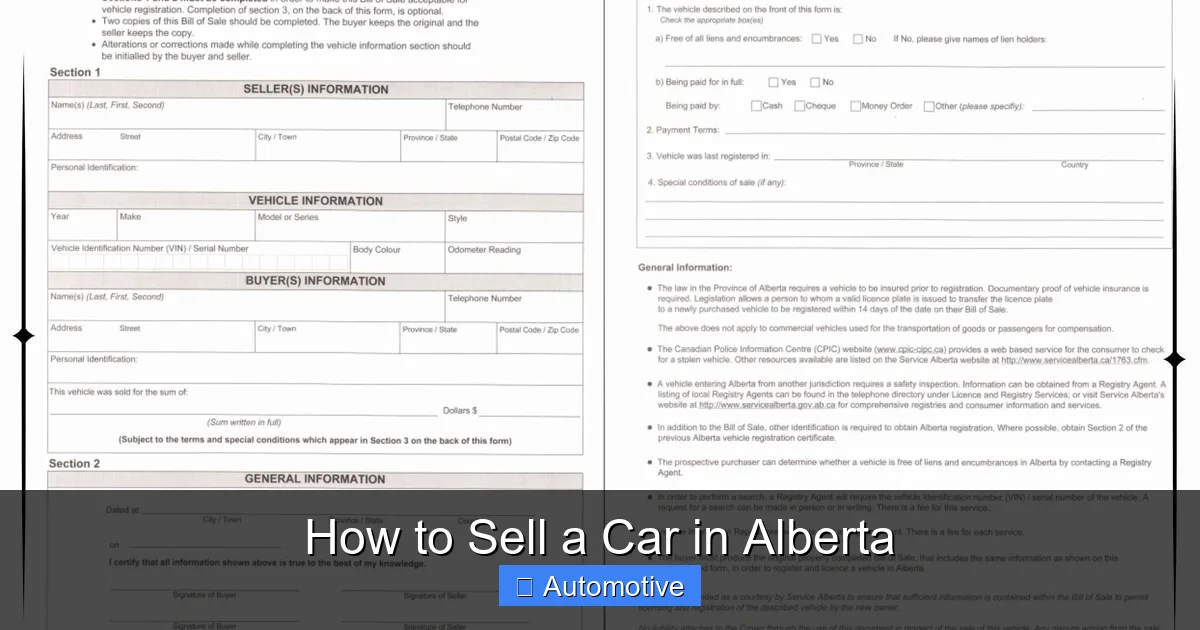
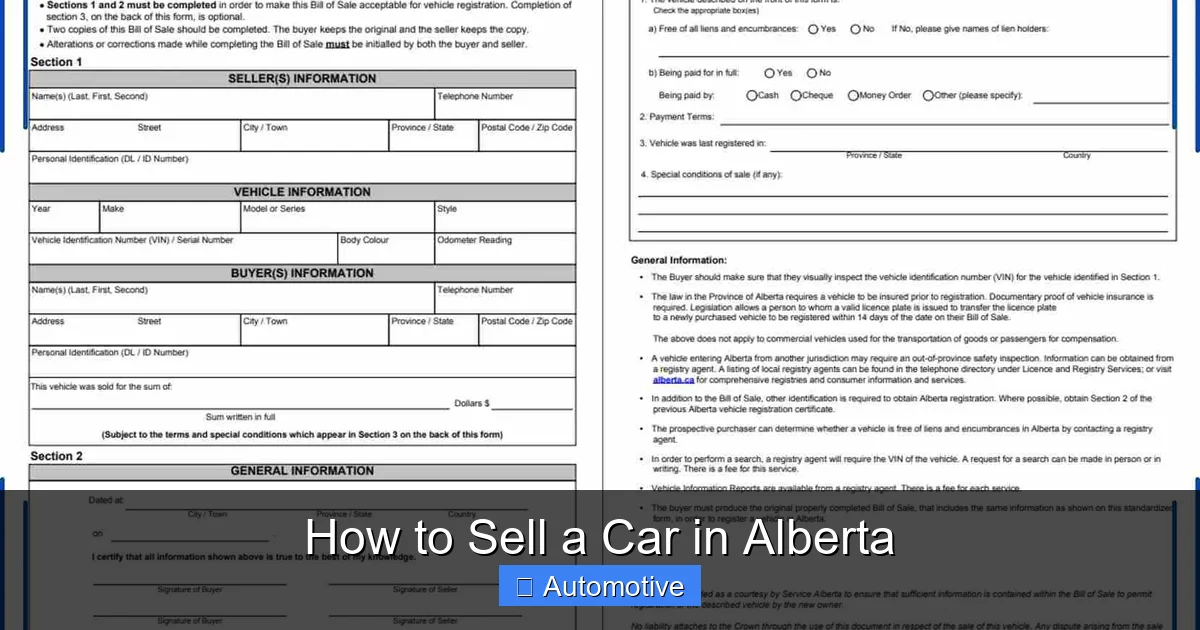
Every private car sale in Alberta must include a completed Bill of Sale. This document serves as proof of the transaction and includes key details like the vehicle identification number (VIN), sale price, date of sale, and the names and addresses of both buyer and seller. You can download a free, government-approved Bill of Sale form from the Alberta government website or use a template from a reputable source like the Alberta Motor Association (AMA).
Make sure both you and the buyer sign the form in front of each other. Keep a copy for your records—this will protect you if the buyer fails to register the vehicle or gets into an accident before transferring ownership. Without a signed Bill of Sale, you could still be held liable for tickets, tolls, or damages caused by the new owner.
Notify the Registry Within 14 Days
After the sale, you must notify the Alberta Registry Agent within 14 days. This step is critical because it officially releases you from liability for the vehicle. You can do this online through the MyAlberta eServices portal or by visiting a registry office in person. You’ll need your driver’s license, the VIN, and the Bill of Sale.
Failing to notify the registry can result in fines and continued responsibility for the vehicle—even if you no longer own it. For example, if the new owner gets a parking ticket or is involved in a collision, you could still be on the hook if the transfer isn’t recorded. So don’t skip this step, no matter how eager you are to move on.
Title Transfer and Registration
In Alberta, the buyer is responsible for registering the vehicle in their name and paying the associated fees. However, as the seller, you must sign over the vehicle’s title (also called the Registration Certificate) to the buyer. Make sure the title is clean—no liens or outstanding loans—before you sell. If there’s a lien, you’ll need to pay it off first or get written permission from the lender to transfer ownership.
When signing over the title, only sign in the “Transfer of Ownership” section. Never leave blank spaces, and avoid signing over the title before the sale is complete. Once the buyer has the signed title and Bill of Sale, they can take it to a registry office to complete the registration process.
Step 2: Price Your Car Fairly and Competitively
Visual guide about How to Sell a Car in Alberta
Image source: worksheets.clipart-library.com
Pricing your car correctly is one of the most important factors in how to sell a car in Alberta quickly and for a good price. Overpricing can scare off buyers, while underpricing means leaving money on the table. The key is to find the sweet spot—fair market value based on real data.
Research Market Value Using Trusted Tools
Start by checking pricing guides like the Canadian Black Book, Kelley Blue Book (KBB), or AutoTrader’s valuation tool. These resources consider factors like make, model, year, mileage, condition, and local demand. For example, a 2018 Honda Civic with 80,000 km in Calgary might be worth around $18,000 in good condition, while the same car in Edmonton could be slightly less due to lower demand.
Don’t forget to check local listings on Kijiji, Facebook Marketplace, and AutoTrader. Look at similar vehicles in your area to see what others are asking. If your car has low mileage, a clean service history, or recent upgrades (like new tires or a new battery), you can justify a higher price. But be realistic—buyers will compare your listing to others.
Adjust for Condition and Extras
Be honest about your car’s condition. A vehicle with minor scratches, worn upholstery, or a check engine light will sell for less than one that’s in excellent shape. If you’ve kept detailed maintenance records or recently replaced parts like brakes or a timing belt, mention that in your listing—it adds value.
Optional features like a sunroof, leather seats, or a premium sound system can also increase your car’s appeal. But don’t overvalue them. A sunroof might add $500–$1,000 to the price, but it won’t double the value of a base model.
Consider Timing and Seasonality
The time of year can affect how quickly you sell your car and how much you get for it. Convertibles and sports cars tend to sell faster in spring and summer, while SUVs and trucks are in higher demand during winter. If you’re selling a winter-ready vehicle like a 4×4 truck in November, you might get a better price than in July.
Also, consider economic factors. If gas prices are high, fuel-efficient cars may be more desirable. If there’s a shortage of new vehicles (like during the pandemic), used car prices rise—so you might get more than expected.
Step 3: Prepare Your Vehicle for Sale
Visual guide about How to Sell a Car in Alberta
Image source: worksheets.clipart-library.com
First impressions matter—especially when selling a car. A clean, well-maintained vehicle not only attracts more buyers but also justifies a higher price. Think of it as staging your car like you would a house before an open house.
Deep Clean Inside and Out
Start with a thorough wash and wax. Remove any dirt, salt, or grime from the exterior, and clean the wheels and tires. Don’t forget the windows—clean glass makes the interior look brighter and more inviting.
Inside, vacuum the carpets and seats, wipe down all surfaces, and remove personal items like loose change, sunglasses, or air fresheners. Consider using a fabric cleaner for stains and a leather conditioner if you have leather seats. A clean interior signals that the car has been well cared for.
Address Minor Repairs and Maintenance
You don’t need to spend thousands on repairs, but fixing small issues can make a big difference. Replace burnt-out light bulbs, top up fluids, and fix minor dents or scratches if they’re inexpensive. A fresh oil change and new air filter show that the car is in good working order.
If the check engine light is on, get it diagnosed. Even if it’s a minor issue like a loose gas cap, fixing it removes a red flag for buyers. Similarly, if the tires are worn, consider replacing them—safety is a top concern for buyers.
Gather Documentation
Have your maintenance records, owner’s manual, and any warranty information ready. If you’ve had regular oil changes, brake service, or major repairs, include receipts. This builds trust and shows that the car has been properly maintained.
Also, make sure you have the original keys, spare keys, and any remote fobs. Missing keys can lower the value or scare off buyers who worry about security.
Step 4: Create an Effective Listing and Advertise Smartly
Visual guide about How to Sell a Car in Alberta
Image source: canadiandrivingtest.ca
Once your car is clean and priced right, it’s time to get it in front of buyers. A great listing can mean the difference between a quick sale and weeks of waiting.
Write a Clear, Honest Description
Your ad should include essential details: make, model, year, mileage, transmission type, fuel type, and condition. Be honest about any flaws—buyers appreciate transparency, and it avoids problems later.
Highlight positives like low mileage, recent maintenance, or special features. For example: “2019 Toyota RAV4, 65,000 km, all-wheel drive, one owner, no accidents, regularly serviced at dealership, new tires installed last month.”
Avoid vague terms like “runs great” or “needs nothing.” Instead, say “engine starts smoothly, brakes responsive, AC blows cold.” Specifics build credibility.
Use High-Quality Photos
Take photos in good lighting, preferably during the day. Shoot from multiple angles: front, back, sides, interior, dashboard, trunk, and under the hood. Include close-ups of any damage or wear, so buyers know what to expect.
Avoid cluttered backgrounds. A clean driveway or quiet street works best. If possible, take photos after washing the car—it makes a huge difference.
Choose the Right Platforms
Popular options in Alberta include:
– **Kijiji**: Free to list, widely used, great for local buyers.
– **Facebook Marketplace**: Easy to use, integrates with your profile, good for quick sales.
– **AutoTrader**: More professional, attracts serious buyers, but may charge a fee.
– **Craigslist**: Still used in some areas, but be cautious of scams.
List on multiple platforms to reach more people. Update your ad regularly to keep it at the top of search results.
Step 5: Handle Test Drives and Negotiations Safely
Once buyers start responding, it’s time to meet them—safely and smartly.
Meet in a Public Place
Always meet in a well-lit, public area like a shopping mall parking lot or police station. Avoid your home or isolated locations. Let someone know where you’re going and who you’re meeting.
Verify the Buyer’s License
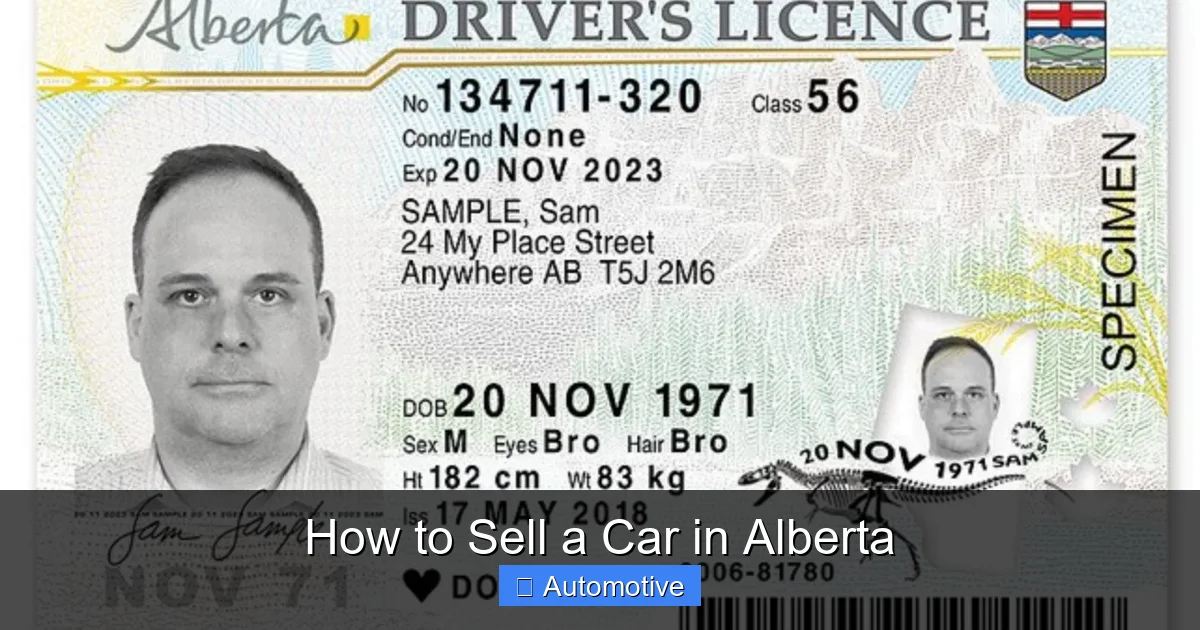
Ask to see the buyer’s driver’s license and confirm it matches their name. Don’t let them drive your car without a valid license—insurance won’t cover accidents if the driver isn’t licensed.
Accompany the Test Drive
Always go with the buyer on the test drive. This protects you from liability and lets you answer questions. If the buyer insists on driving alone, it’s a red flag.
Negotiate Fairly
Be prepared to negotiate. Most buyers will try to lower the price. Know your bottom line and stick to it. If the offer is too low, politely decline or counter with a reasonable number.
Remember: the goal is a fair deal for both sides. If the buyer is serious and the price is close, consider meeting in the middle.
Step 6: Complete the Sale and Transfer Ownership
Once you’ve agreed on a price, it’s time to finalize the sale.
Accept Safe Payment
Cash is the safest option for private sales. If the amount is large, meet at a bank so the buyer can withdraw cash in front of you. Avoid personal cheques, wire transfers, or money orders—they can be fake.
For larger amounts, consider a certified bank draft or cashier’s cheque. Verify it at the bank before handing over the keys.
Sign Over the Title and Provide Documents
Hand over the signed title, Bill of Sale, and any maintenance records. Make sure the buyer has everything they need to register the vehicle.
Cancel Your Insurance
Once the sale is complete, call your insurance provider to cancel coverage. Don’t wait—you’re still liable until the policy is officially canceled.
Keep Records
Save copies of the Bill of Sale, title transfer, and any communication with the buyer. You may need them if there’s a dispute later.
Conclusion
Selling a car in Alberta doesn’t have to be stressful. By following these steps—understanding the legal requirements, pricing accurately, preparing your vehicle, advertising effectively, handling test drives safely, and completing the transfer properly—you can sell your car quickly, legally, and for a fair price. Take your time, stay organized, and don’t rush into a deal that doesn’t feel right. With the right approach, you’ll be driving away in your new vehicle—or with cash in hand—before you know it.
Frequently Asked Questions
Do I need a safety inspection to sell a car in Alberta?
No, Alberta does not require a safety inspection for private vehicle sales. However, the buyer may request one before purchasing, especially if they plan to register the car in another province.
Can I sell my car if it still has a loan on it?
Yes, but you must pay off the loan first or get permission from the lender to transfer ownership. The lien must be removed from the title before you can sell the vehicle.
How long do I have to notify the registry after selling my car?
You must notify the Alberta Registry Agent within 14 days of the sale. This protects you from liability for the vehicle after the transfer.
What if the buyer doesn’t register the car?
As long as you’ve completed the Bill of Sale and notified the registry, you’re not responsible. The buyer is legally required to register the vehicle, but failure to do so doesn’t affect your liability once the transfer is documented.
Can I sell my car to a dealership instead of a private buyer?
Yes, many dealerships buy used cars directly. While you may get less than a private sale, it’s faster and requires less effort. Get quotes from multiple dealers to compare offers.
What should I do if I suspect a scam?
Avoid buyers who offer to pay with a cashier’s cheque for more than the asking price, ask for personal information, or refuse to meet in person. When in doubt, walk away and report suspicious activity to local authorities.