How to Reset the Traction Control Light on a Jeep Wrangler

Contents
- 1 Key Takeaways
- 2 📑 Table of Contents
- 3 That Little Light Just Won’t Quit? Let’s Talk Traction Control
- 4 What Is Traction Control, and Why Is My Light On?
- 5 Common Culprits: Why Your Wrangler’s TCS Light Is Stuck On
- 6 When You Should NOT Reset the Light (The Golden Rule)
- 7 Step-by-Step: How to Reset the Traction Control Light on a Jeep Wrangler
- 8 What If the Light Comes Right Back? Advanced Steps
- 9 Preventive Care: Keeping That Light Off for Good
- 10 Data Table: Common Traction Control Light Scenarios & Actions
- 11 When to Call a Professional: Don’t Gamble with Safety
- 12 Wrapping It Up: Confidence on the Road and Trail
- 13 Frequently Asked Questions


Resetting the traction control light on your Jeep Wrangler is a straightforward process, but it’s critical to first diagnose and fix the underlying issue that triggered the warning. The most common method involves turning the ignition to the “ON” position (without starting the engine) and pressing the traction control button for several seconds until the light blinks and turns off. For persistent lights, an OBD-II scanner is required to clear the fault code after repairs, as simply turning the light off without fixing the problem—like a faulty wheel speed sensor or ABS module—will cause it to return immediately.
Key Takeaways
- Diagnose first: Always find the root cause before resetting to prevent recurrence.
- Use the button: Press and hold the TCS button for several seconds to manually reset.
- Try a battery reset: Disconnect the negative terminal briefly to clear stored codes.
- Drive to recalibrate: Normal driving for 10-15 minutes often lets the system reset itself.
- Monitor the light: If it returns quickly, a deeper mechanical issue exists.
- Seek professional help: Consult a mechanic for persistent or multiple warning lights.
📑 Table of Contents
- That Little Light Just Won’t Quit? Let’s Talk Traction Control
- What Is Traction Control, and Why Is My Light On?
- Common Culprits: Why Your Wrangler’s TCS Light Is Stuck On
- When You Should NOT Reset the Light (The Golden Rule)
- Step-by-Step: How to Reset the Traction Control Light on a Jeep Wrangler
- What If the Light Comes Right Back? Advanced Steps
- Preventive Care: Keeping That Light Off for Good
- Data Table: Common Traction Control Light Scenarios & Actions
- When to Call a Professional: Don’t Gamble with Safety
- Wrapping It Up: Confidence on the Road and Trail
That Little Light Just Won’t Quit? Let’s Talk Traction Control
You’re cruising down your favorite backroad in your trusty Jeep Wrangler, the top’s down, and the world is your oyster. Suddenly, a little icon of a car with squiggly lines beneath it illuminates on your dash. Your heart sinks a little. The traction control light. It’s not the check engine light, but it’s persistent, and it’s confusing. You haven’t been doing anything crazy, so why is it there? More importantly, how do you make it go away?
First, take a breath. That light is your vehicle’s way of saying, “Hey, I noticed something about how the wheels are gripping the road, and I’m not entirely happy about it.” It’s a safety feature, not necessarily a death sentence for your wallet. Many times, the solution is simpler than you think. This guide is built from real-world experience—both mine and countless Wrangler owners I’ve chatted with at trailheads and garages. We’ll walk through exactly what that light means, how to diagnose if it’s a quick fix or a deeper issue, and the step-by-step process to reset it safely. Think of this as your friendly, no-nonsense manual for getting that dash clean and clear again.
What Is Traction Control, and Why Is My Light On?
Before we start flipping switches, we need to understand what we’re dealing with. Traction Control System (TCS) is a brilliant piece of technology designed to prevent wheel spin. When your Wrangler’s computer (the PCM) detects that one wheel is spinning significantly faster than the others—a sign of losing traction—it automatically steps in. It can reduce engine power or selectively apply the brake to the spinning wheel. This helps you maintain control, especially on slippery surfaces like ice, mud, or wet pavement.
Visual guide about How to Reset the Traction Control Light on a Jeep Wrangler
Image source: vehiclers.com
The Light’s Story: It’s Not Always “Reset”
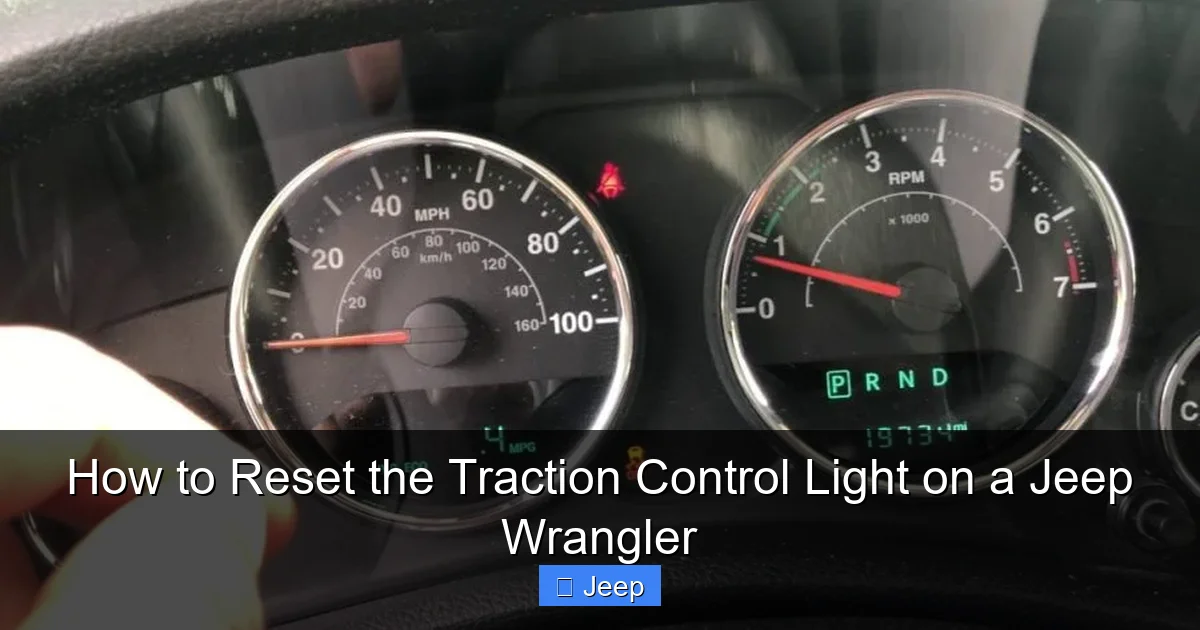
The traction control light serves two main purposes. First, it should illuminate briefly (a few seconds) when you start your engine as a self-check. That’s normal. Second, and more commonly, it stays on or flashes while driving to indicate the system is actively working to prevent wheel slip. If it’s stuck on solid after you’ve been driving normally, that’s your cue that the system has detected a fault and has shut down. You’ve lost that safety net. The key thing to remember is that the light is a symptom, not the disease. Simply resetting it without addressing the underlying cause is like taking a painkiller for a broken bone—it masks the problem until it flares up again, worse.
Common Culprits: Why Your Wrangler’s TCS Light Is Stuck On
Diagnosis comes before reset. Guessing and resetting blindly often leads to the light returning within minutes or days. Here are the most frequent reasons your Jeep Wrangler’s traction control light will illuminate and stay on, ranked from simplest to most complex.
Visual guide about How to Reset the Traction Control Light on a Jeep Wrangler
Image source: koala.sh
1. Tire Pressure and Size Mismatch
This is the #1 offender, especially for Wrangler owners who run different tires or have recently rotated them. The TCS system relies on wheel speed sensors. If one tire is significantly lower or higher in pressure than the others, its rotational speed changes slightly. The computer sees this as one wheel slipping and triggers the light. Similarly, if you have a temporary spare (donut) on, it’s a different size and will almost always set off the light. Solution: Check and equalize tire pressure to the manufacturer’s specs (found on the driver’s door jamb sticker). Ensure all four tires are the exact same size and tread depth.
2. Faulty or Dirty Wheel Speed Sensor
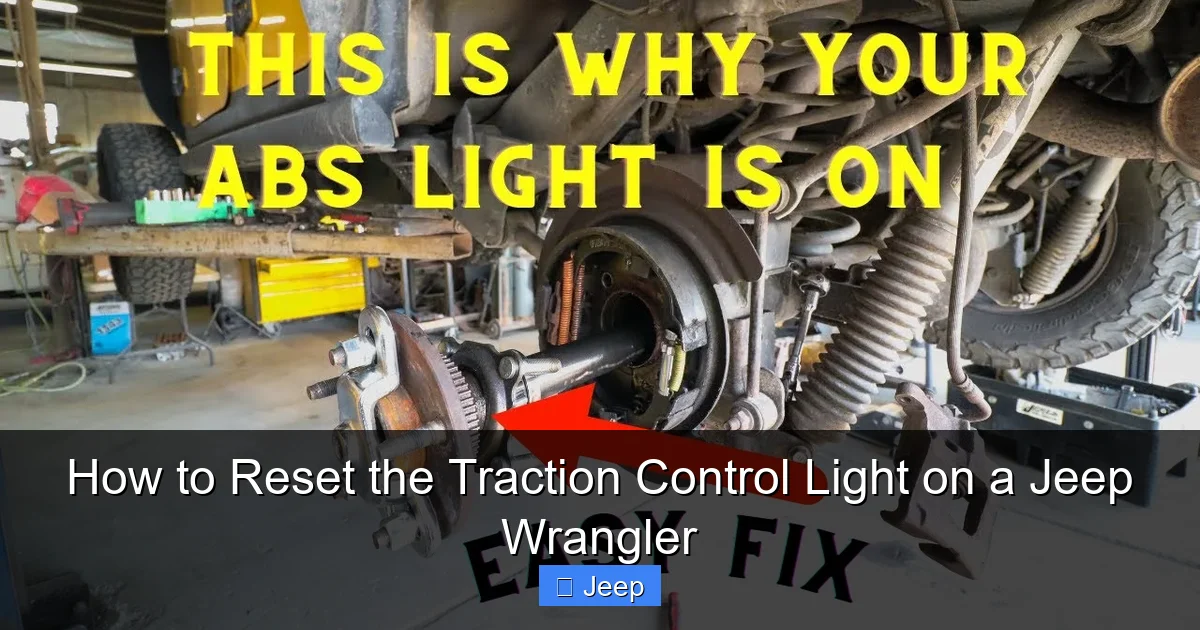
Your Wrangler has a wheel speed sensor at each wheel. These little guys get coated in brake dust, mud, and road grime. They can also get damaged from impacts or just wear out. If one sensor sends a garbage signal (too weak, no signal, or erratic signal), the TCS/ABS module gets confused and throws a code, illuminating the light. This is very common on older JK and early JL models.
3. Bad or Loose Wiring Harness
The wires running to your wheel speed sensors take a beating. They flex with suspension travel, get exposed to the elements, and can get rubbed or chafed. A broken wire or a corroded connector will interrupt the sensor’s signal. Inspect the wiring near each sensor and the main harness running along the wheel well.
4. Failed ABS Module or PCM Issue
This is the least common but most expensive. The module that controls ABS and TCS can fail internally. Similarly, a fault in the main PCM can disrupt communication. If you’ve ruled out sensors, tires, and wiring, this becomes a suspect.
When You Should NOT Reset the Light (The Golden Rule)
Here’s the most critical section. If the traction control light is on because of an active fault, resetting it will only work temporarily. The system will detect the same fault again and turn the light right back on. You must fix the problem first. So, when should you absolutely not attempt a reset?
Visual guide about How to Reset the Traction Control Light on a Jeep Wrangler
Image source: fourwheeltrends.com
- The light is flashing rapidly while driving: This means the system is actively intervening to prevent wheel spin. You should adjust your driving for conditions (e.g., slow down on ice). Resetting is pointless and dangerous.
- You have other warning lights on: Is your ABS light also on? Or the brake light? These systems are deeply integrated. A problem with ABS will often disable TCS. You need to scan for codes first.
- You recently had work done: If you just rotated tires, changed a sensor, or worked on the brakes, the light may need a reset after the repair is complete and verified.
- You feel a difference in braking or handling: If the brakes feel spongy, pull to one side, or you hear grinding, do not reset. Have it towed. You have a serious safety issue.
The Proper Sequence: Diagnose (using a scan tool or visual inspection) → Repair the faulty component → Clear the code/reset the light → Test drive to confirm the light stays off.
Step-by-Step: How to Reset the Traction Control Light on a Jeep Wrangler
Assuming you’ve addressed the root cause—fixed the sensor, inflated the tires, repaired the wire—it’s time for the reset. The method varies slightly by Wrangler generation. We’ll cover the two most common: the JK (2007-2018) and JL (2018-Present). The process is essentially a “relearn” or “cycle” for the system.
Method 1: The Standard Drive Cycle (Works for Most JK & JL Models)
This is the manufacturer-recommended method and works in 90% of cases after a repair. It’s beautifully simple.
- Start with a Clear Dashboard: Ensure the engine is off. The traction control light should be off when the key is in the “ON” position (before starting). If it’s on with the key on, you likely still have an active fault.
- Start the Engine: Turn the key to start the engine. Let it idle for about 10-15 seconds. Do not press the gas.
- Turn the Key Off: Turn the engine off. Wait 10 seconds.
- Repeat: Perform steps 2 and 3 a total of 3 to 5 times. This cycle forces the vehicle’s systems to power down fully and reboot, clearing any temporary “soft” codes stored in memory.
- Final Start and Drive: On the last start, let the engine idle for 30 seconds, then drive the vehicle normally for 5-10 minutes. You should drive at varying speeds, including some light braking. This allows all wheel speed sensors to be “seen” by the computer and allows the TCS system to calibrate itself to the new data. The light should remain off.
Method 2: Using the TCS Button (If Available)
Some Wrangler models have a dedicated traction control/ESC (Electronic Stability Control) button on the dash or center console. This is primarily for manually turning the system off for off-road use, but it can also be used in a reset sequence.
- With the engine running and the vehicle in park, press and hold the TCS/ESC button for about 5-10 seconds. You should see a message on the EVIC (Electronic Vehicle Information Center) screen like “ESC/TCS Off” or a similar indicator.
- Release the button.
- Press the button again briefly to turn the system back on. The message should disappear from the screen.
- Drive the vehicle for a few minutes to allow the system to initialize. The light should stay off if the fault is resolved.
Note: If the light comes back on immediately after this procedure, the underlying fault is still present. You have not fixed the problem.
What If the Light Comes Right Back? Advanced Steps
So you did the drive cycle, and the light is back on after a block. Now what? It’s time for a more systematic approach. This is where basic automotive knowledge becomes your best friend.
Step 1: Visual Inspection is Your First Tool
Grab a flashlight. Jack up each corner of your Wrangler safely with jack stands. Visually inspect:
- Wheel Speed Sensors: Look at the sensor itself (usually near the brake caliper or axle). Is it covered in thick, caked-on brake dust or mud? Gently clean it with a brake cleaner and a soft brush. Check the sensor tip for physical damage.
- Wiring: Follow the wire from the sensor back toward the main harness. Look for any cuts, abrasions, corrosion, or loose connectors. Pay special attention to where the wire bends with suspension movement.
- Ring Tone (Reluctor Ring): This is the toothed ring that the sensor reads. It’s on the axle shaft or hub. Look for broken, missing, or badly bent teeth. This is a less common but possible failure.
Step 2: The Diagnostic Scan Tool (The Game Changer)
You cannot properly reset a persistent TCS light without knowing the stored fault code. You need an OBD-II scanner that can read ABS/TCS module codes, not just engine codes. A basic “check engine” reader won’t cut it here.
- Professional Scan Tool: A dealer-level tool (like the wiTech for FCA/Stellantis) is ideal but expensive.
- Advanced DIY Scanners: Tools like the Autel MaxiCOM, Launch CRP, or even some high-end BlueDriver variants can read ABS/TCS codes on many vehicles. Check compatibility for your specific Wrangler year.
- What the Code Tells You: A code like “C0035 – Left Front Wheel Speed Sensor Circuit” is a direct hit. It points you to one specific wheel. A code like “C0060 – ABS/TCS System Malfunction” is vaguer and points to the module itself. The code is your roadmap for repair.
Step 3: Repair and Retest
Based on your findings—a cleaned sensor, a repaired wire, or a replaced sensor—clear the code with your scan tool. Then perform the drive cycle from the previous section. If the light stays off, success! If it returns with the same or a new code, the repair was incomplete or you have a new problem.
Preventive Care: Keeping That Light Off for Good
An ounce of prevention is worth a pound of cure. Here’s how to keep your Wrangler’s traction and stability systems happy.
- Maintain Proper Tire Pressure: Check monthly and before long trips. This is the single easiest thing you can do.
- Rotate Tires Regularly: Follow the schedule in your owner’s manual (usually every 5,000-7,000 miles). This promotes even wear, keeping all wheel speeds consistent.
- Be Mindful of Your Spare: If you use the temporary spare, drive cautiously and minimally. Remember it will trigger the light. Replace it with a full-size spare or fix the original tire as soon as possible.
- Gentle Off-Roading: While Wranglers are built for trails, avoid violently smashing into rocks or deep ruts that can jar sensors or damage wiring. Use proper recovery techniques.
- Regular washes in winter: Road salt and grime can accelerate corrosion on sensor connectors. Rinse the wheel wells and undercarriage periodically.
Data Table: Common Traction Control Light Scenarios & Actions
| Symptom | Most Likely Cause | Recommended First Action | Should You Reset? |
|---|---|---|---|
| Light on solid after starting car, no other symptoms | Faulty wheel speed sensor (one wheel) or low tire pressure | Check tire pressures on all 4 tires. Visual sensor inspection. | Only after fixing the identified issue. |
| Light flashes while accelerating on wet road | System working correctly (wheel slip detected) | Adjust driving for conditions. No action needed. | No. The system is doing its job. |
| Light on solid + ABS light on solid | Shared component failure (sensor, wiring, module) | Scan for ABS/TCS codes immediately. | No. Address the common fault first. |
| Light came on after tire rotation | System needs to recalibrate to new tire wear patterns | Perform the standard drive cycle (5-10 min normal driving). | Yes, via the drive cycle. No underlying fault. |
| Light on, and you hear grinding from a wheel | Severe brake or wheel bearing issue | STOP DRIVING. Have vehicle towed for inspection. | Absolutely not. This is a critical safety failure. |
When to Call a Professional: Don’t Gamble with Safety
Resetting a dashboard light is a fantastic DIY skill that saves money and builds confidence. But there is a hard line where a professional’s expertise is non-negotiable. Walk away from the job and call a trusted mechanic or your Jeep dealer if:
- You’ve performed the drive cycle and the light returns immediately or within a few miles.
- A scan tool reveals a code pointing to the ABS/TCS Control Module itself. This is a complex, expensive part that requires professional programming after replacement.
- You are uncomfortable or unsafe jacking up your vehicle for inspection.
- The wiring damage is extensive or located in a hard-to-reach area.
- Multiple related lights are on (TCS, ABS, Brake, Red Brake Light). This indicates a potentially serious hydraulic or electronic system failure.
For Wrangler owners, a good independent mechanic who specializes in Jeeps is worth their weight in gold. They understand the quirks of these vehicles better than anyone.
Wrapping It Up: Confidence on the Road and Trail
That little traction control light doesn’t have to be a source of anxiety. By understanding its purpose, you shift from “what’s wrong?” to “what do I check?” The process is logical: diagnose the cause (tires, sensors, wires), repair it, then reset the system through a simple drive cycle. For the vast majority of cases—especially those caused by tire pressure or a dirty sensor—this is a perfect weekend project that takes under an hour.
Remember, your Jeep Wrangler’s traction and stability systems are there to keep you safe, whether you’re navigating a rainy highway or a rocky canyon. Treating that light with respect—by investigating its cause rather than just turning it off—keeps those systems ready when you need them most. You’ve got this. Now get out there, check those tire pressures, and enjoy your Wrangler with a clear dash and peace of mind.
Note: The procedures in this guide are based on common Jeep Wrangler models (JK, JL). Always consult your official owner’s manual for model-specific information. If you’re ever in doubt about your vehicle’s safety, consult a certified automotive professional.
Frequently Asked Questions
Why is my Jeep Wrangler’s traction control light on?
The traction control light illuminates when the vehicle’s computer detects a problem with the traction control system (TCS) or a related component like a wheel speed sensor. It can also come on temporarily during slippery conditions as the system actively works to maintain traction. A persistent light, especially on dry pavement, indicates a fault that needs diagnosis.
How do I reset the traction control light on a Jeep Wrangler?
The most common method to reset the traction control light is by performing a system reboot. Turn the ignition to the “ON” position (engine off), then firmly press and release the gas pedal three times within about 10 seconds. Finally, start the engine and drive normally; the light should go off if the issue was transient.
Can I drive my Jeep with the traction control light on?
You can technically drive, but it’s not recommended for extended periods. Driving with the light on means your traction control and electronic stability systems are disabled, reducing safety in wet, icy, or sudden maneuvers. It’s best to diagnose and fix the underlying cause, such as a faulty sensor, as soon as possible.
Will disconnecting the battery reset the traction control light?
Yes, disconnecting the negative battery terminal for about 10-15 minutes will clear many fault codes and reset the system, potentially turning off the light. However, this is a temporary fix if the actual problem (like a bad wheel speed sensor) isn’t repaired, as the light will likely return once the computer re-detects the fault.
What if resetting the traction control light doesn’t work?
If the light reappears after a reset, it signifies a persistent fault that requires professional diagnosis. A mechanic will use a scan tool to read the specific trouble code stored in the Wrangler’s computer, which points to the exact failed component, such as a steering angle sensor, ABS module, or wiring issue.
Is the process to reset the traction control light the same for all Jeep Wrangler models?
The basic reset procedure (gas pedal dance) is generally the same for most JK (2007-2018) and JL (2018+) Wranglers. However, some model years or specific trims may have slightly different sequences or require a scan tool for certain faults. Always consult your owner’s manual for the most accurate information for your specific vehicle.