
How to Reset the Abs Light on a Dodge Ram 2500

Contents
- 1 Key Takeaways
- 2 📑 Table of Contents
- 3 Understanding the ABS System in Your Dodge Ram 2500
- 4 Common Causes of the ABS Light on a Dodge Ram 2500
- 5 Tools You’ll Need to Reset the ABS Light
- 6 Step-by-Step Guide to Resetting the ABS Light
- 7 Preventing the ABS Light from Coming Back
- 8 When to See a Mechanic
- 9 Conclusion
- 10 Frequently Asked Questions

Car Tissue Holder
Car Wash Mitt

Parking Sensor Kit

Tool Roll Bag
Resetting the ABS light on your Dodge Ram 2500 doesn’t have to be complicated. Whether you’ve fixed a sensor issue or just want to clear the warning, this guide walks you through simple DIY methods and professional tools to get your truck back on the road safely.
If you’ve ever been behind the wheel of a Dodge Ram 2500 and noticed that little yellow ABS light glowing on your dashboard, you know how unsettling it can be. It’s not just an annoyance—it’s a signal that something in your truck’s anti-lock braking system might need attention. The ABS, or Anti-lock Braking System, is a critical safety feature designed to prevent your wheels from locking up during hard braking, especially on slippery roads. When that warning light comes on, it means the system has detected a problem and has temporarily disabled ABS functionality. While it doesn’t mean your brakes have failed completely, it does mean you’re driving without one of your truck’s most important safety nets.
Now, before you panic or rush to the dealership, take a deep breath. In many cases, resetting the ABS light on a Dodge Ram 2500 is something you can do yourself—especially if the issue was minor, like a loose connection or a temporary glitch. Maybe you just replaced a wheel speed sensor, topped off your brake fluid, or fixed a damaged wire. Once the underlying problem is resolved, the next logical step is to clear that persistent warning light. But here’s the catch: you can’t just turn the key and hope it goes away. The ABS system needs to be properly reset so it can relearn and confirm that everything is working as it should.
In this comprehensive guide, we’ll walk you through everything you need to know about resetting the ABS light on your Dodge Ram 2500. Whether you’re driving a 1998 model or a 2023, we’ve got you covered. We’ll explain why the light comes on in the first place, how to diagnose the issue, and—most importantly—how to reset it using tools you might already have at home. We’ll also share practical tips to prevent the light from coming back and when it’s time to call in a professional. By the end of this article, you’ll feel confident handling this common truck issue like a seasoned DIYer.
Key Takeaways
- Understand why the ABS light comes on: Common causes include faulty wheel speed sensors, low brake fluid, or damaged wiring—identifying the root issue is key before resetting.
- Use an OBD2 scanner for most models: A diagnostic tool is the fastest and most reliable way to reset the ABS light on newer Dodge Ram 2500 trucks (2003 and later).
- Manual reset methods work for older models: Trucks from the late 1990s to early 2000s may allow a manual reset via the fuse box or ignition cycling.
- Check brake fluid and fuses first: Low fluid or a blown fuse can trigger the ABS warning—fix these simple issues before attempting a reset.
- Test drive after reset: Always take a short drive to ensure the light stays off and the ABS system functions properly.
- Seek professional help if needed: If the light returns repeatedly, there may be a deeper electrical or mechanical problem requiring a mechanic’s attention.
- Regular maintenance prevents future issues: Inspect sensors, wiring, and brake components during routine service to avoid ABS light reappearances.
📑 Table of Contents
Understanding the ABS System in Your Dodge Ram 2500
To effectively reset the ABS light, it helps to understand what the system actually does and how it works. The Anti-lock Braking System in your Dodge Ram 2500 is made up of several key components that work together to keep your wheels from skidding during emergency stops. At the heart of the system are wheel speed sensors—one at each wheel—that constantly monitor how fast each wheel is turning. These sensors send real-time data to the ABS control module, a small computer that processes the information and decides whether to intervene.
If the module detects that one wheel is slowing down much faster than the others (a sign it’s about to lock up), it activates hydraulic valves in the brake lines. These valves rapidly pulse the brake pressure to that wheel—thousands of times per second—allowing it to maintain traction with the road. This pulsing is what causes that familiar “vibrating” sensation in the brake pedal during hard stops. Without ABS, your wheels could lock, causing you to lose steering control and potentially skid.
Now, when the ABS light comes on, it means the control module has detected a fault in one or more parts of this system. It could be a sensor that’s dirty or damaged, a wiring harness that’s corroded, or even a problem with the module itself. The light is essentially the system’s way of saying, “I can’t guarantee I’ll work properly, so I’m shutting down until the issue is fixed.” That’s why it’s so important not to ignore it—even if your brakes still feel normal.
How the ABS Light Gets Triggered
The ABS light doesn’t just come on randomly. It’s triggered by specific conditions that the control module identifies as abnormal. One of the most common causes is a faulty or dirty wheel speed sensor. These sensors are located near the wheel hubs and can get covered in dirt, mud, or metal shavings over time. When they can’t read wheel speed accurately, the module assumes there’s a problem and turns on the warning light.
Another frequent culprit is low brake fluid. The ABS system relies on proper hydraulic pressure to function, and if the fluid level in the master cylinder drops too low, it can trigger the light. This often happens due to worn brake pads, which cause the calipers to extend further and consume more fluid. A simple top-off might solve the issue—but only if the pads aren’t severely worn.
Electrical problems are also common. Corroded connectors, frayed wires, or a blown fuse can interrupt communication between the sensors and the control module. In older Ram 2500 models, the wiring harnesses near the wheels are especially vulnerable to damage from road debris and moisture. Even a loose ground connection can cause the system to malfunction.
In some cases, the issue might be with the ABS control module itself. These modules can fail due to age, moisture intrusion, or electrical surges. When that happens, the light may stay on even after other components are replaced. Diagnosing module failure usually requires professional equipment, but it’s something to keep in mind if simpler fixes don’t work.
Common Causes of the ABS Light on a Dodge Ram 2500

Visual guide about How to Reset the Abs Light on a Dodge Ram 2500
Image source: images.surferseo.art
Before you attempt to reset the ABS light, it’s crucial to identify and fix the underlying problem. Resetting the light without addressing the root cause is like putting a bandage on a broken bone—it might look better temporarily, but the issue will return. Let’s break down the most common reasons the ABS light illuminates in a Dodge Ram 2500.
Faulty Wheel Speed Sensors
Wheel speed sensors are the eyes and ears of the ABS system. Located at each wheel hub, these small devices use magnetic fields to detect how fast the wheel is spinning. Over time, they can become contaminated with dirt, grease, or metal particles from brake wear. In colder climates, ice and road salt can also damage the sensor or its wiring.
A failing sensor might send erratic signals or stop sending data altogether. The ABS module interprets this as a wheel locking up or spinning out of control, triggering the warning light. Replacing a faulty sensor is usually straightforward—most are held in place with a single bolt and plug into a wiring harness. However, it’s important to clean the area around the sensor and inspect the tone ring (the toothed wheel it reads from) for damage.
Low Brake Fluid
Your brake fluid reservoir is located under the hood, near the firewall on the driver’s side. The fluid level should be between the “MIN” and “MAX” lines. If it’s below “MIN,” the ABS system may detect low pressure and activate the warning light. Low fluid is often a sign of worn brake pads, which allow the calipers to extend further and consume more fluid. It can also indicate a leak in the brake lines or master cylinder.
Topping off the fluid might clear the light temporarily, but if your brake pads are worn, they should be replaced as soon as possible. Driving with low fluid or worn pads can compromise your entire braking system—not just the ABS.
Blown Fuses or Bad Relays
The ABS system is powered by fuses and relays located in the fuse box under the hood. A blown fuse can cut power to the control module or sensors, causing the light to come on. Similarly, a faulty relay can prevent the system from activating properly.
To check the fuses, locate the fuse box (usually labeled in the owner’s manual), remove the cover, and inspect the ABS-related fuses. Use a fuse puller or needle-nose pliers to remove them and look for a broken filament. Replace any blown fuses with ones of the same amperage. If a fuse blows again immediately, there’s likely a short circuit that needs professional diagnosis.
Damaged Wiring or Connectors
The wiring harnesses that connect the wheel speed sensors to the ABS module run along the frame and can be damaged by road debris, corrosion, or improper repairs. Look for frayed wires, cracked insulation, or loose connectors—especially near the wheels where they’re most exposed.
Corrosion is a common issue in older trucks, particularly in areas with harsh winters. Moisture can seep into connectors and cause intermittent faults. Cleaning the connectors with electrical contact cleaner and applying dielectric grease can help prevent future problems.
ABS Control Module Failure
In rare cases, the ABS control module itself may fail. These modules are sealed units that can be damaged by water intrusion, overheating, or electrical issues. Symptoms include the ABS light staying on even after all sensors and wiring are confirmed good, or the system activating unexpectedly during normal driving.
Diagnosing module failure usually requires a professional scan tool that can communicate with the module and check for internal faults. Replacement can be expensive, but it’s sometimes necessary for full system restoration.
Tools You’ll Need to Reset the ABS Light
Visual guide about How to Reset the Abs Light on a Dodge Ram 2500
Image source: images.surferseo.art
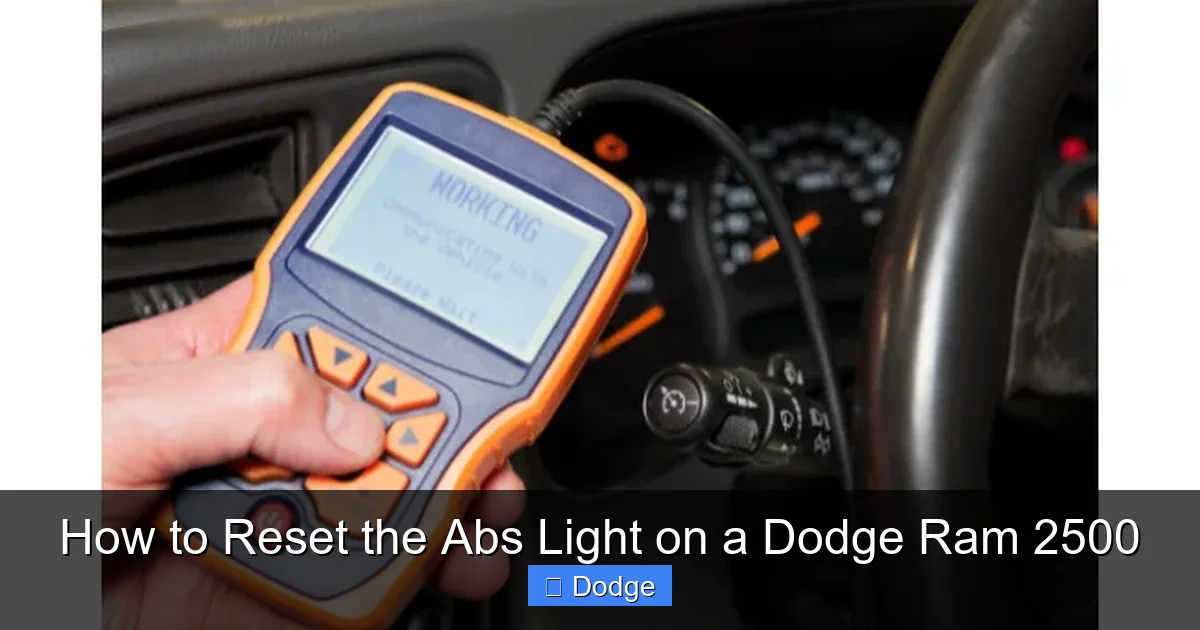
Resetting the ABS light on your Dodge Ram 2500 doesn’t require a garage full of tools—but having the right equipment makes the job much easier. The most important tool is an OBD2 scanner with ABS capabilities. While basic code readers can clear engine codes, they often can’t access the ABS system. You’ll need a scanner that can communicate with the ABS module, read fault codes, and perform resets.
Popular options include the Autel MaxiCOM, Foxwell NT510, or even some mid-range Bluetooth scanners that work with smartphone apps like Torque Pro. These tools plug into the OBD2 port—usually located under the dashboard on the driver’s side—and allow you to view live data, clear codes, and reset the system.
If you don’t have a scanner, some older Dodge Ram 2500 models (typically 1998–2002) allow a manual reset using the ignition key and fuse box. This method involves cycling the ignition and removing a specific fuse for a set amount of time. However, it’s less reliable and doesn’t diagnose the underlying issue, so it’s best used only if a scanner isn’t available.
Other helpful tools include a multimeter (to test sensor resistance), a flashlight (for inspecting wiring), and basic hand tools like wrenches and screwdrivers. If you’re replacing a sensor or checking connections, having these on hand will save time and frustration.
Step-by-Step Guide to Resetting the ABS Light

Visual guide about How to Reset the Abs Light on a Dodge Ram 2500
Image source: youcanic.com
Now that you understand the system and have the right tools, let’s walk through the actual reset process. The method you use will depend on your truck’s model year and whether you have access to a diagnostic scanner.
Method 1: Using an OBD2 Scanner (Recommended for 2003 and Newer)
This is the most reliable and widely applicable method for modern Dodge Ram 2500 trucks. Here’s how to do it:
1. **Turn off the engine** and locate the OBD2 port. It’s usually under the dashboard, near the steering column.
2. **Plug in your OBD2 scanner** and turn the ignition to the “ON” position (don’t start the engine).
3. **Follow the scanner’s prompts** to access the ABS system. Select “ABS” or “Chassis” from the menu.
4. **Read the fault codes** to confirm the issue has been resolved. If codes remain, address them first.
5. **Select “Clear Codes” or “Reset ABS”** and confirm the action.
6. **Turn off the ignition**, wait 10 seconds, then restart the truck.
7. **Check the dashboard**—the ABS light should be off. If it returns, the problem may not be fully fixed.
After resetting, take your truck for a short test drive. Apply the brakes firmly at low speed to ensure the ABS activates properly. If the light stays off and the system responds normally, you’re good to go.
Method 2: Manual Reset (For Older Models, 1998–2002)
If you have an older Ram 2500 and no scanner, you can try a manual reset:
1. **Turn the ignition to “OFF.”**
2. **Locate the ABS fuse** in the under-hood fuse box. It’s usually labeled “ABS” or “ABCM.”
3. **Remove the fuse** using a fuse puller or pliers.
4. **Wait 30 seconds**, then reinsert the fuse.
5. **Turn the ignition to “ON”** (don’t start the engine) and wait for the ABS light to flash.
6. **Turn the ignition back to “OFF”** and wait another 10 seconds.
7. **Start the engine** and check if the light is off.
This method works by resetting the control module’s memory. However, it won’t fix underlying issues, so use it only after confirming the problem is resolved.
Method 3: Battery Disconnect (Universal but Less Effective)
As a last resort, you can try disconnecting the battery:
1. **Turn off the engine** and remove the key.
2. **Disconnect the negative battery terminal** using a wrench.
3. **Wait 10–15 minutes** to allow the system to fully reset.
4. **Reconnect the terminal** and start the truck.
This method may clear temporary glitches, but it’s not guaranteed to reset the ABS light. It also resets other systems like radio presets and clock settings.
Preventing the ABS Light from Coming Back
Once you’ve reset the light, the last thing you want is for it to return. Regular maintenance is key to keeping your ABS system in top shape. Start by inspecting your wheel speed sensors during routine brake service. Clean them with brake cleaner and check for damage. Also, examine the tone rings for cracks or missing teeth.
Keep your brake fluid at the proper level and replace it every 30,000 to 50,000 miles to prevent moisture buildup. Check the condition of your brake pads and rotors—worn components can lead to low fluid and sensor issues.
Inspect wiring harnesses for signs of wear, especially near the wheels. Use zip ties to secure loose wires and prevent them from rubbing against moving parts. If you live in a snowy or salty area, rinse the undercarriage regularly to prevent corrosion.
Finally, if the ABS light comes on repeatedly, don’t ignore it. Intermittent faults can indicate a failing sensor or module that needs professional attention. Addressing small issues early can save you time and money down the road.
When to See a Mechanic
While many ABS issues can be resolved at home, some problems require a trained technician. If the light returns after a reset, or if you notice unusual brake behavior—like the pedal feeling spongy, the truck pulling to one side, or the ABS activating unexpectedly—it’s time to visit a mechanic.
A professional can perform a full diagnostic scan, test the control module, and inspect components that are hard to reach. They may also have access to manufacturer-specific tools and software that home scanners can’t replicate.
Don’t risk your safety by ignoring persistent warnings. The ABS system is there to protect you in emergencies—make sure it’s working when you need it most.
Conclusion
Resetting the ABS light on your Dodge Ram 2500 doesn’t have to be a stressful experience. With the right knowledge and tools, you can diagnose the issue, fix the problem, and clear the warning light—all from your driveway. Whether you use an OBD2 scanner or a manual method, the key is to address the root cause and verify the system is functioning properly.
Remember, the ABS light is there for a reason. It’s your truck’s way of telling you something needs attention. By staying proactive with maintenance and responding quickly to warnings, you’ll keep your Ram 2500 safe, reliable, and ready for whatever the road throws at it.
Frequently Asked Questions
Can I drive my Dodge Ram 2500 with the ABS light on?
Yes, you can still drive, but your anti-lock braking system is disabled. This means your wheels could lock up during hard braking, especially on wet or icy roads. It’s safe for normal driving, but avoid sudden stops when possible.
Will disconnecting the battery reset the ABS light?
It might clear temporary glitches, but it’s not a reliable method. The ABS system often retains fault codes even after a battery disconnect. Use an OBD2 scanner for a proper reset.
How much does it cost to replace a wheel speed sensor on a Ram 2500?
A new sensor typically costs $50–$150, and installation is usually straightforward. Labor at a shop may add $50–$100, but many DIYers can do it in under an hour.
Why does my ABS light come on and then go off?
This could indicate an intermittent issue, like a loose connection or a sensor that’s failing under certain conditions. Have it checked before it becomes a constant problem.
Can low tire pressure trigger the ABS light?
Not directly, but significantly uneven tire pressure can cause wheel speed discrepancies that the ABS module may interpret as a fault. Always check tire pressure during routine maintenance.
Do I need a special scanner to reset the ABS light?
Yes, a basic OBD2 reader won’t work. You need a scanner with ABS or chassis system capabilities to access and reset the anti-lock braking system.


