
How to Repair a Mobile Home Kitchen Faucet

Repairing a mobile home kitchen faucet doesn’t have to be overwhelming. With the right tools and a bit of patience, most common issues like leaks, low water pressure, or stiff handles can be fixed in under an hour. This guide walks you through everything you need to know—from identifying the problem to reassembling your faucet like a pro.
Key Takeaways
- Identify the faucet type first: Mobile homes often use compact, single-handle or compression-style faucets that differ from standard residential models.
- Turn off the water supply before starting: Always shut off the hot and cold water valves under the sink to prevent flooding.
- Use the right tools: A basin wrench, adjustable wrench, and screwdrivers are essential for tight spaces under mobile home sinks.
- Replace worn-out cartridges or washers: Most faucet problems stem from degraded internal parts—replacing them is often cheaper than buying a new faucet.
- Check for mineral buildup: Hard water can clog aerators and valves, reducing flow—soaking parts in vinegar helps dissolve deposits.
- Reassemble carefully: Follow the disassembly steps in reverse, ensuring O-rings and seals are properly seated to avoid leaks.
- Test slowly after repair: Turn the water back on gradually and check for drips or irregular flow before declaring success.
📑 Table of Contents
Introduction: Why Mobile Home Kitchen Faucets Are Different
If you live in a mobile home, you’ve probably noticed that many of the fixtures—especially the kitchen faucet—are designed differently than those in traditional houses. These faucets are built to fit compact spaces, conserve water, and withstand the unique plumbing setups found in manufactured homes. While this makes them efficient, it also means that repairing them requires a slightly different approach than what you might use for a standard residential faucet.
Over time, even the best mobile home kitchen faucets can develop issues. You might notice a persistent drip, reduced water pressure, or a handle that’s hard to turn. These problems are rarely signs of a major plumbing failure—they’re usually caused by worn-out internal components, mineral buildup, or loose connections. The good news? Most of these issues are completely fixable with basic tools and a little know-how. In this guide, we’ll walk you through the entire process of diagnosing and repairing your mobile home kitchen faucet, step by step.
Understanding Your Mobile Home Kitchen Faucet
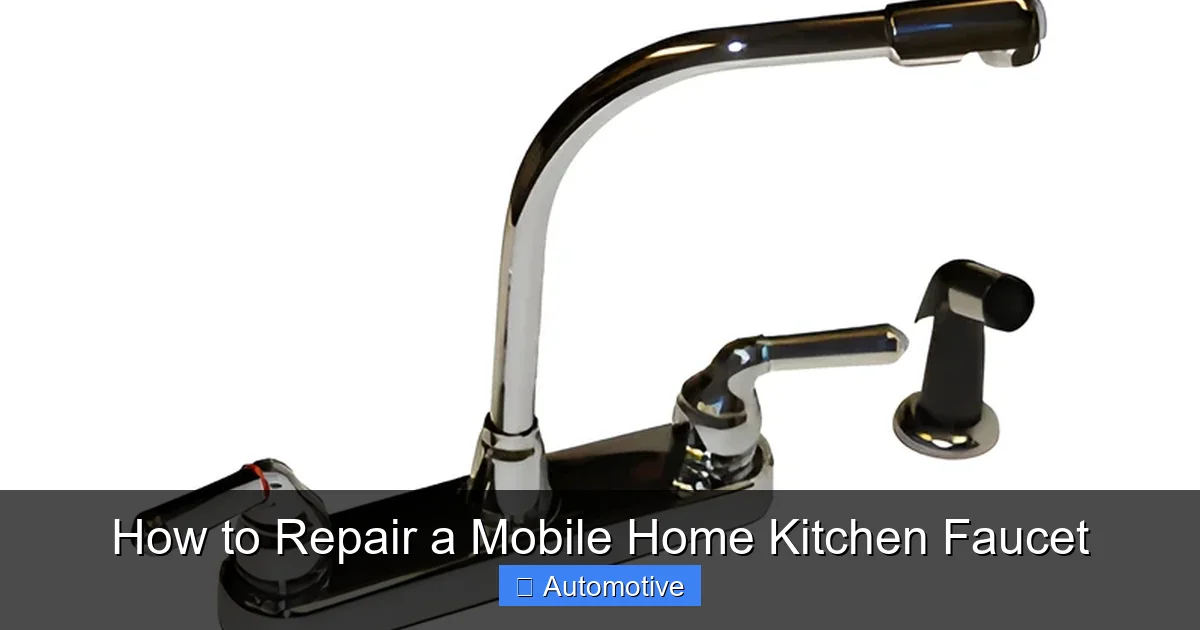
Before you start taking anything apart, it’s important to understand what kind of faucet you’re working with. Mobile homes typically use one of three types of kitchen faucets: single-handle cartridge faucets, two-handle compression faucets, or ball-type faucets. Each has its own internal mechanism, and knowing which one you have will help you choose the right replacement parts and repair method.
Visual guide about How to Repair a Mobile Home Kitchen Faucet
Image source: mobilehomeideas.com
Single-Handle Cartridge Faucets
This is the most common type found in modern mobile homes. It uses a single lever to control both water temperature and flow. Inside, a cylindrical cartridge regulates the mix of hot and cold water. Over time, the cartridge can wear out, leading to leaks or difficulty adjusting temperature. These faucets are relatively easy to repair—often requiring only a new cartridge, which costs between $10 and $25.
Two-Handle Compression Faucets
Older mobile homes may still have two-handle faucets, where one handle controls hot water and the other controls cold. These use rubber washers that compress against a valve seat to stop the flow of water. With repeated use, the washers wear down, causing drips. Repairing these faucets involves replacing the washers and sometimes the valve seats. While slightly more involved, the process is straightforward and inexpensive.
Ball-Type Faucets
Less common but still found in some mobile homes, ball-type faucets use a rotating metal ball to control water flow and temperature. These are more complex internally and often require a specialized repair kit. If you suspect you have a ball-type faucet, look for a rounded cap under the handle—this is a key identifier.
To determine your faucet type, remove the handle(s) by unscrewing the set screw (usually hidden under a decorative cap). Once the handle is off, you’ll be able to see the internal mechanism. Take a photo or note the brand and model number if visible—this will help when purchasing replacement parts.
Tools and Materials You’ll Need
Repairing a mobile home kitchen faucet doesn’t require a professional toolkit, but having the right tools on hand will make the job much easier—especially in the tight spaces under a mobile home sink. Here’s a list of what you’ll need:

Visual guide about How to Repair a Mobile Home Kitchen Faucet
Image source: mobilehomeideas.com
- Adjustable wrench: For loosening nuts and fittings.
- Basin wrench: Essential for reaching nuts in tight spaces behind the sink.
- Screwdrivers (Phillips and flathead): For removing screws on handles and mounting hardware.
- Needle-nose pliers: Useful for gripping small parts like washers or clips.
- Replacement parts: Cartridge, washers, O-rings, or repair kit specific to your faucet model.
- White vinegar: For soaking and cleaning mineral deposits.
- Rag or towel: To catch water and protect surfaces.
- Bucket or container: To collect water when disconnecting lines.
- Plumber’s tape (Teflon tape): For sealing threaded connections.
Most of these items can be found at your local hardware store or home improvement center. If you’re unsure about which replacement part to buy, bring the old cartridge or washer with you—or take a photo of the faucet’s brand and model number. Many stores have catalogs or online databases to help match parts.
Step-by-Step Guide to Repairing Your Faucet
Now that you’ve identified your faucet type and gathered your tools, it’s time to get to work. Follow these steps carefully to ensure a successful repair. Remember: take your time, work in a well-lit area, and keep track of where each part goes—this will make reassembly much easier.
Visual guide about How to Repair a Mobile Home Kitchen Faucet
Image source: mobilehomeideas.com
Step 1: Turn Off the Water Supply
The first and most important step is to shut off the water supply. Under your sink, you should see two small valves—one for hot water and one for cold. Turn both clockwise until they’re fully closed. If you don’t see valves, you may need to shut off the main water supply to the entire mobile home. Once the valves are closed, turn on the faucet to release any remaining water pressure. You should hear a slight hiss as air enters the lines.
Step 2: Disconnect the Water Lines
Place a bucket or container under the sink to catch any residual water. Use an adjustable wrench to loosen the nuts connecting the water supply lines to the faucet. These are usually located at the base of the faucet where the flexible hoses meet the valve body. Be gentle—over-tightening or forcing connections can damage the lines or fittings. Once disconnected, let any remaining water drain into the bucket.
Step 3: Remove the Faucet Handle(s)
Use a screwdriver to remove the screw(s) holding the handle in place. On single-handle faucets, the screw is often hidden under a small cap on the top or side of the handle—use a flathead screwdriver to pop it off. Once the screw is removed, gently wiggle the handle to pull it off. If it’s stuck, don’t force it—spray a little penetrating oil around the base and wait a few minutes before trying again.
Step 4: Remove the Retaining Nut or Clip
Under the handle, you’ll see a retaining nut or a spring clip holding the internal mechanism in place. Use a basin wrench or needle-nose pliers to remove it. On cartridge faucets, this nut secures the cartridge; on compression faucets, it holds the stem in place. Keep this part safe—you’ll need it for reassembly.
Step 5: Extract the Internal Mechanism
Now it’s time to remove the cartridge, stem, or ball assembly. For cartridge faucets, use a cartridge puller tool (often included in repair kits) or gently wiggle the cartridge out with pliers. For compression faucets, unscrew the stem counterclockwise using a wrench. Ball-type faucets may require a special tool to remove the cap and ball. Take note of the order and orientation of parts as you remove them.
Step 6: Inspect and Clean Components
Once the internal parts are out, inspect them for wear, cracks, or mineral buildup. Soak rubber washers, O-rings, and metal parts in white vinegar for 15–30 minutes to dissolve hard water deposits. Use an old toothbrush to scrub away stubborn grime. Check the valve seat (the area where the washer presses) for pitting or corrosion—if it’s damaged, you may need to replace it or use a valve seat wrench to smooth it out.
Step 7: Install New Parts
Replace any worn or damaged components with new ones. Make sure the replacement cartridge, washer, or O-ring matches the original exactly. Apply a small amount of plumber’s grease to rubber parts to ensure a smooth fit and prevent leaks. Reinsert the new cartridge or stem, making sure it’s seated properly. Replace the retaining nut or clip and tighten it securely—but don’t over-tighten, as this can crack the faucet body.
Step 8: Reattach the Handle and Water Lines
Slide the handle back onto the stem or cartridge and secure it with the screw. Reconnect the water supply lines to the faucet, using Teflon tape on the threads if necessary to prevent leaks. Tighten the nuts with a wrench, but again, avoid over-tightening.
Step 9: Turn the Water Back On and Test
Slowly turn the water supply valves counterclockwise to restore water flow. Open the faucet and let it run for a minute to flush out any debris. Check for leaks around the base of the faucet, under the sink, and at the connections. If everything looks good, test the handle for smooth operation and proper temperature control.
Common Problems and How to Fix Them
Even with proper maintenance, mobile home kitchen faucets can develop recurring issues. Here are some of the most common problems and how to address them:
Dripping Faucet
A dripping faucet is usually caused by a worn-out washer (in compression faucets) or a damaged cartridge (in single-handle models). Replace the faulty part as described above. If the drip persists, check the valve seat for damage—pitting can prevent a tight seal even with a new washer.
Low Water Pressure
Low pressure is often due to clogged aerators or mineral buildup in the cartridge or supply lines. Remove the aerator (the mesh screen at the tip of the spout) and soak it in vinegar. If that doesn’t help, disassemble the faucet and clean the internal components. In some cases, the problem may be with the home’s water pressure regulator or supply lines—check with your park management if you’re in a mobile home community.
Handle is Hard to Turn
This is typically a sign of a worn cartridge or corroded internal parts. Lubricate the mechanism with plumber’s grease during reassembly. If the handle still sticks, the cartridge may need replacement.
Water Leaks Under the Sink
Leaks under the sink usually indicate loose connections or damaged supply lines. Tighten all nuts and fittings, and replace any cracked or brittle hoses. Use Teflon tape on threaded connections to ensure a watertight seal.
Faucet Sprays or Sputters
This can be caused by air in the lines or a clogged aerator. Turn the faucet on and off several times to purge air. If the problem continues, clean or replace the aerator.
Preventative Maintenance Tips
Regular maintenance can extend the life of your mobile home kitchen faucet and prevent many common issues. Here are a few simple habits to adopt:
- Clean the aerator monthly: Unscrew the aerator and rinse it under warm water to remove sediment.
- Use a water softener if you have hard water: This reduces mineral buildup in the faucet and plumbing.
- Don’t force the handle: If it’s hard to turn, investigate the cause instead of applying extra pressure.
- Inspect under the sink periodically: Look for signs of leaks, corrosion, or loose connections.
- Replace parts proactively: If your faucet is over 10 years old, consider replacing the cartridge or washers before they fail.
When to Call a Professional
While most faucet repairs are DIY-friendly, there are times when it’s best to call a plumber. If you’ve tried the steps above and the problem persists, or if you notice major leaks, cracked pipes, or low water pressure throughout the home, professional help may be needed. Additionally, if your mobile home has a unique plumbing system or you’re uncomfortable working with water lines, don’t hesitate to seek expert assistance.
Conclusion
Repairing a mobile home kitchen faucet is a practical and rewarding task that can save you money and extend the life of your fixture. With the right tools, a clear understanding of your faucet type, and a methodical approach, you can tackle common issues like leaks, low pressure, and stiff handles with confidence. Remember to turn off the water, work carefully, and test your repair thoroughly. By following this guide, you’ll keep your kitchen running smoothly—no matter where your home is parked.
Frequently Asked Questions
Can I use regular faucet parts for my mobile home kitchen faucet?
Not always. Mobile home faucets are often smaller and use specialized parts. Always check the brand and model number before buying replacements, or bring the old part to the store for matching.
Why does my faucet still drip after replacing the cartridge?
This could be due to a damaged valve seat, improper installation, or debris in the line. Inspect the valve seat for pitting and ensure the new cartridge is seated correctly.
How often should I clean my faucet aerator?
For homes with hard water, clean the aerator monthly. In areas with soft water, every 2–3 months is usually sufficient.
Is it safe to use vinegar to clean faucet parts?
Yes, white vinegar is safe and effective for dissolving mineral deposits. Soak parts for 15–30 minutes, then scrub gently with a brush.
What if I can’t find replacement parts for my faucet?
Contact the manufacturer or search online using the model number. Some universal repair kits may also work, but compatibility varies.
Do I need to shut off the main water supply?
Only if there are no individual shut-off valves under the sink. Most mobile homes have separate hot and cold valves for each fixture.