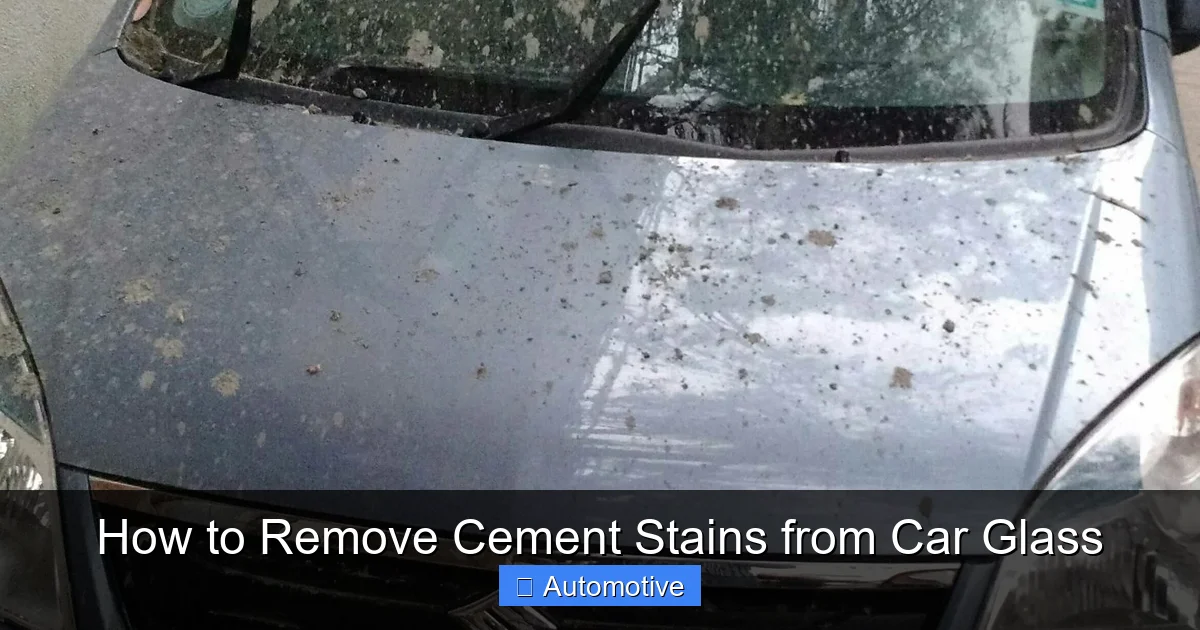
How to Remove Cement Stains from Car Glass

Contents
- 1 Key Takeaways
- 2 📑 Table of Contents
- 3 Why Cement Stains Are a Problem on Car Glass
- 4 Understanding Cement and How It Bonds to Glass
- 5 Tools and Materials You’ll Need
- 6 Step-by-Step Guide to Removing Cement Stains
- 7 Alternative Methods for Tough Stains
- 8 Preventing Cement Stains in the Future
- 9 When to Call a Professional
- 10 Final Thoughts
- 11 Frequently Asked Questions

LED Indicator Light

Car GPS Navigator

Car Jump Starter

Car Back Support Cushion
Removing cement stains from car glass can seem daunting, but with the right techniques and tools, it’s entirely manageable. This guide walks you through safe, step-by-step methods to dissolve and lift hardened cement without scratching or damaging your windshield or windows.
Key Takeaways
- Act quickly: Fresh cement is easier to remove than dried, hardened residue.
- Use the right tools: Plastic scrapers, soft cloths, and non-abrasive cleaners prevent scratches.
- Vinegar and water solution works well: A 50/50 mix helps break down alkaline cement without harsh chemicals.
- Avoid metal scrapers: They can scratch glass and compromise visibility.
- Test cleaners first: Always do a spot test on a small area to ensure no damage occurs.
- Protect surrounding areas: Cover paint and trim to avoid accidental damage during cleaning.
- Prevent future stains: Park away from construction zones and use protective covers when possible.
📑 Table of Contents
Why Cement Stains Are a Problem on Car Glass
Cement stains on car glass aren’t just an eyesore—they can seriously affect your driving safety. Whether you’ve driven past a construction site, parked near a sidewalk repair, or had a DIY project go awry, cement splatter can land on your windshield, side windows, or rear glass. Once it dries, it forms a hard, chalky layer that’s tough to remove and can scatter light, reducing visibility.
What makes cement particularly tricky is its chemical makeup. Cement is highly alkaline, with a pH level that can reach 12 or higher. This alkalinity allows it to bond strongly with surfaces, including glass. When it dries, it doesn’t just sit on top—it begins to etch into the microscopic pores of the glass, especially if left untreated for days or weeks. Over time, this can lead to permanent cloudiness or even micro-scratches that compromise the integrity of your auto glass.
The good news? You don’t need to replace your windshield or spend hundreds at a professional detailer. With the right approach, you can remove cement stains safely and effectively at home. The key is understanding how cement interacts with glass and using methods that break down its structure without damaging the surface.
Understanding Cement and How It Bonds to Glass

Visual guide about How to Remove Cement Stains from Car Glass
Image source: d2hucwwplm5rxi.cloudfront.net
To effectively remove cement stains, it helps to know what you’re dealing with. Cement is made from limestone, clay, and other minerals that are heated and ground into a fine powder. When mixed with water, it undergoes a chemical reaction called hydration, forming a hard, stone-like material. This process is what allows cement to stick so stubbornly to surfaces—including your car’s glass.
When cement splatters onto glass, the water in the mixture begins to evaporate. As it dries, the alkaline compounds in the cement start to react with the silica in the glass. This reaction can create a bond that’s more than just surface-level adhesion—it can actually begin to alter the glass surface at a microscopic level. That’s why dried cement often leaves behind a hazy, rough patch that feels gritty to the touch.
The longer cement remains on glass, the stronger this bond becomes. Fresh cement (within a few hours) is mostly water and uncured particles, making it relatively easy to wipe away with water. But once it cures—usually within 24 to 48 hours—it hardens and becomes much more resistant to simple cleaning. This is why timing matters. The sooner you address the stain, the better your chances of a complete removal.
The Role of pH in Cement Stain Removal
One of the reasons vinegar is so effective against cement is its acidity. Cement is alkaline, and vinegar (acetic acid) helps neutralize it. When you apply a vinegar solution to dried cement, the acid reacts with the alkaline compounds, breaking them down and loosening their grip on the glass. This chemical reaction makes it easier to scrape or wipe away the residue without excessive scrubbing.
This principle is similar to how baking soda (a base) and vinegar (an acid) react to create fizzing—except in this case, the reaction helps dissolve the cement rather than just create bubbles. That’s why acidic cleaners are generally more effective than neutral or basic ones for cement removal.
Tools and Materials You’ll Need

Visual guide about How to Remove Cement Stains from Car Glass
Image source: media.wd40.in
Before you start scrubbing, gather the right tools. Using improper equipment can do more harm than good—especially on delicate auto glass. Here’s a list of recommended items:
- Plastic razor blades or scrapers: These are gentle on glass and won’t scratch. Look for ones made from polycarbonate or nylon.
- Microfiber cloths: Soft, lint-free cloths are ideal for wiping and polishing without leaving streaks.
- White vinegar: A natural acid that breaks down cement. Avoid colored vinegars, which may stain.
- Distilled water: Prevents mineral deposits that can cloud glass.
- Spray bottle: For applying cleaning solutions evenly.
- Rubber gloves: Protect your hands from alkaline residue and cleaning agents.
- Protective covering: Use painter’s tape and plastic sheeting to shield paint, rubber seals, and trim.
- Soft-bristle brush: A toothbrush or detailing brush works well for scrubbing tight spots.
- Glass cleaner (optional): For final polishing after cement removal.
Avoid using metal scrapers, steel wool, or abrasive pads like Scotch-Brite. These can scratch glass, especially if there’s sand or grit mixed into the cement. Even a small scratch can distort your view and weaken the glass over time.
Optional but Helpful Tools
For tougher stains, you might consider a commercial cement remover designed for automotive use. Products like Krud Kutter Concrete Cleaner or Zep Concrete Dissolver are formulated to break down mineral deposits and cement without damaging glass. Always check the label to ensure it’s safe for automotive glass and follow the manufacturer’s instructions.
Another helpful tool is a steam cleaner. The heat and moisture can soften dried cement, making it easier to remove. However, use caution—excessive heat can damage window seals or tint film if your car has them.
Step-by-Step Guide to Removing Cement Stains

Visual guide about How to Remove Cement Stains from Car Glass
Image source: homeupward.com
Now that you’re prepared, let’s walk through the removal process. This method works for both fresh and dried cement stains, though dried stains may require more time and effort.
Step 1: Assess the Stain
Start by examining the affected area. Is the cement still wet or has it dried? If it’s fresh (within a few hours), you may only need water and a soft cloth. If it’s dried and hardened, you’ll need a more involved approach.
Also, check for any loose debris. If there are chunks of cement or sand stuck to the glass, gently brush them off with a dry cloth or soft brush. Don’t rub—this can grind particles into the glass and cause scratches.
Step 2: Protect Surrounding Areas
Before applying any liquid, cover the car’s paint, rubber seals, and trim with painter’s tape and plastic sheeting. Cement removers and vinegar can damage paint or degrade rubber over time. Even water can seep into seams and cause issues if left sitting.
This step only takes a few minutes but can save you from costly repairs down the line.
Step 3: Apply a Vinegar Solution
Mix equal parts white vinegar and distilled water in a spray bottle. Shake gently to combine. Spray the solution generously over the cement stain, making sure to saturate it completely. Let it sit for 5 to 10 minutes. You may see some fizzing—this is normal and indicates the acid is reacting with the alkaline cement.
For thicker or older stains, you can soak a cloth in the vinegar solution and lay it directly on the stain. Cover with plastic wrap to prevent evaporation and let it sit for up to 30 minutes.
Step 4: Gently Scrape the Cement
After the vinegar has had time to work, use a plastic razor blade or scraper to gently lift the cement. Hold the blade at a low angle (about 15–30 degrees) and use short, smooth strokes. Work from the edges toward the center to avoid spreading the residue.
If the cement doesn’t come off easily, reapply the vinegar and wait a few more minutes. Never force it—forcing can scratch the glass.
Step 5: Scrub with a Soft Brush
For stubborn spots, use a soft-bristle brush (like an old toothbrush) dipped in the vinegar solution. Gently scrub in circular motions. The bristles help dislodge cement particles without scratching.
Focus on areas where the cement has bonded tightly, such as around wiper blades or near the edges of the windshield.
Step 6: Rinse and Wipe
Once the bulk of the cement is removed, rinse the area with clean water. Use a hose or a spray bottle filled with distilled water. Avoid using high-pressure washers, as they can force water into seals.
Wipe the glass with a clean microfiber cloth to remove any remaining residue. Check under bright light to ensure no haze or spots remain.
Step 7: Polish and Final Clean
For a streak-free finish, apply a high-quality glass cleaner and buff with a fresh microfiber cloth. This step removes any lingering vinegar smell and restores clarity.
If you notice any cloudiness or etching, it may be permanent—especially if the cement was left on for weeks. In such cases, professional glass polishing may be needed.
Alternative Methods for Tough Stains
If vinegar doesn’t do the trick, don’t panic. There are other options.
Commercial Cement Removers
Products like Krud Kutter or Zep Concrete Dissolver are formulated specifically for mineral and cement removal. They’re more potent than vinegar and can tackle older, hardened stains.
To use:
- Apply the cleaner to the stain as directed.
- Let it sit for the recommended time (usually 5–15 minutes).
- Scrape gently with a plastic blade.
- Rinse thoroughly and wipe dry.
Always wear gloves and work in a well-ventilated area. These products can be harsh, so avoid contact with skin and eyes.
Baking Soda Paste (For Light Stains)
For minor cement dust or light splatter, a baking soda paste can help. Mix baking soda with a small amount of water to form a thick paste. Apply it to the stain and let it sit for 10 minutes. Then, scrub gently with a soft cloth or brush and rinse.
Note: Baking soda is mildly abrasive, so use it sparingly and avoid scrubbing too hard.
Clay Bar Treatment
After removing cement, your glass may feel rough due to embedded particles. A detailing clay bar can help smooth the surface. Lubricate the glass with a clay lubricant or soapy water, then glide the clay bar back and forth. It will pick up microscopic contaminants, leaving the glass silky smooth.
This step isn’t necessary for everyone, but it’s great for restoring clarity and preparing the glass for wax or sealant.
Preventing Cement Stains in the Future
The best way to deal with cement stains is to avoid them altogether. Here are some practical tips:
- Park strategically: Avoid parking near construction sites, sidewalk repairs, or areas where concrete is being poured.
- Use a car cover: A waterproof, breathable car cover can protect your entire vehicle from splatter and debris.
- Wash your car regularly: Frequent washing removes dust and light cement particles before they have a chance to harden.
- Apply a glass sealant: Products like Rain-X or Glass Science create a hydrophobic barrier that makes it harder for stains to stick.
- Be mindful during DIY projects: If you’re working with cement at home, cover your car or park it in the garage.
Even with precautions, accidents happen. The key is to act fast. If you notice cement on your glass, clean it as soon as possible—ideally within the first few hours.
When to Call a Professional
Most cement stains can be removed at home, but there are situations where professional help is best:
- Large or widespread stains: If cement covers a large portion of the windshield, a detailer has the tools and experience to handle it safely.
- Etching or cloudiness: If the glass looks foggy or feels rough after cleaning, the surface may be permanently damaged. A professional can assess whether polishing or replacement is needed.
- Tinted or coated glass: Some aftermarket films or coatings can be damaged by acidic cleaners. A professional will know how to clean without harming the treatment.
- Lack of confidence: If you’re unsure about using scrapers or chemicals, it’s better to let an expert handle it.
Auto glass specialists and mobile detailers often offer cement removal services. While it may cost $50–$150, it’s a small price to pay for peace of mind and a flawless finish.
Final Thoughts
Removing cement stains from car glass doesn’t have to be a nightmare. With the right knowledge, tools, and techniques, you can restore your windshield and windows to like-new condition. The key is acting quickly, using gentle methods, and avoiding abrasive tools that can cause more harm than good.
Remember: vinegar is your friend. Its natural acidity breaks down alkaline cement without harsh chemicals. Pair it with a plastic scraper and microfiber cloth, and you’ve got a winning combination. And if the stain proves too stubborn, don’t hesitate to call in a pro.
By following this guide, you’ll not only remove existing stains but also learn how to prevent future ones. Keep your car looking sharp, your visibility clear, and your drives safe—one clean windshield at a time.
Frequently Asked Questions
Can I use Windex to remove cement stains?
Windex and other standard glass cleaners are not effective against cement stains. They’re designed for dirt, fingerprints, and light grime—not alkaline mineral deposits. You’ll need an acidic cleaner like vinegar or a commercial cement remover.
Will vinegar damage my car’s paint or rubber seals?
Vinegar is generally safe when used properly, but it can degrade rubber and damage paint if left on too long. Always rinse thoroughly and protect surrounding areas with tape and plastic sheeting.
How long can cement stay on glass before it becomes permanent?
The sooner you remove it, the better. Fresh cement (within 1–2 hours) is easiest to clean. After 24–48 hours, it cures and bonds more strongly, increasing the risk of etching or cloudiness.
Can I use a metal scraper if I’m careful?
It’s not recommended. Even with caution, metal scrapers can scratch glass, especially if there’s sand or grit in the cement. Plastic scrapers are safer and just as effective when used with the right cleaner.
What if the glass feels rough after cleaning?
A rough texture may indicate etching—microscopic damage from the cement. Try a clay bar to smooth the surface. If that doesn’t work, consult a professional for glass polishing.
Is it safe to use pressure washers on cement stains?
Avoid high-pressure washers, as they can force water into window seals and cause leaks. Use a gentle spray or hose instead, and always follow up with a thorough wipe-down.