
How to Recline a Jeep Wrangler Seat

Reclining your Jeep Wrangler’s seat is a simple yet essential adjustment for comfort on and off the road. Whether you have a classic TJ, a modern JL, or anything in between, the process is straightforward but varies by seat type and model year. This guide breaks down every method, from the manual lever to advanced power controls, ensuring you can find your perfect riding position every time.
So, you’re settled into your Jeep Wrangler, ready for a long drive or a leisurely trail ride, but something feels just a little off. You’re sitting too upright. That open-air freedom feels a bit too… rigid. The solution? Reclining your seat. It’s one of the most fundamental and frequently used adjustments in any vehicle, but in a Wrangler, with its various generations and trim levels, the “how” isn’t always immediately obvious. Whether you’re a new owner of a JLU Rubicon or you’ve been wrenching on a TJ for years, understanding how to properly and safely recline your seat is crucial for comfort, safety, and even the longevity of the seat mechanism itself. This guide will walk you through every single method, from the classic lever to the modern switch, troubleshoot common problems, and give you pro-tips to keep everything working smoothly for years to come.
First, let’s clear up the biggest point of confusion: not all Jeep Wrangler seats recline the same way, and not all models even have a recline function for every seat. The front two seats almost always recline. The rear seats in a 2-door are typically fixed at a steep angle for cargo space, while the rear seats in a 4-door Unlimited model (JLU) often have a limited recline or a fold-and-tumble feature that changes their angle. We’ll focus primarily on the driver and front passenger seats, as that’s where the dedicated recline controls are found. The core principle remains the same—you’re adjusting the angle of the seatback relative to the seat bottom—but the interface changes dramatically between manual and power systems.
Key Takeaways
- Mechanism Matters: Identify if your Wrangler has manual (lever) or power (switch/button) seat controls before starting.
- Model Year Differences: TJ/LJ (1997-2006) and JK/JKU (2007-2018) primarily use manual levers, while JL/JLU (2019+) often feature power recline as an option.
- Safety First: Always ensure the vehicle is parked, the parking brake is set, and you’re not adjusting seats while driving.
- Obstructions are Common: Floor mats, cargo, or seat belt anchors can physically block the seatback from reclining fully; check these first if it sticks.
- Maintenance is Key: Dirt, sand, and lack of lubrication are the top reasons manual levers become stiff or power motors fail over time.
- Consult Your Manual: Your owner’s manual is the definitive source for your specific model’s capabilities and any warnings.
📑 Table of Contents
Identifying Your Seat Adjustment System: Manual vs. Power
Before you go hunting for a non-existent switch or pulling on a lever that doesn’t exist, you need to know what kind of seat you have. This is the first and most important step. The division generally follows model generations and trim levels.
The Classic Manual Lever (TJ, LJ, JK, JK Unlimited, Many JL/JLU Base Models)
If your Wrangler is from the model years 1997 through 2018 (TJ, LJ, JK, JKU), you almost certainly have a manual recline system. It’s a simple, robust, mechanical design that has served Jeep owners for decades. You’ll find a large, prominent lever, usually on the lower front side of the seat cushion, near where your hip would rest. It’s often a metal bar with a plastic or rubber grip. On some models, particularly in the rear of the front seat, there might be a smaller, secondary lever or a pull-strap style handle. The action is always the same: you pull the lever (or handle) to release a lock mechanism, lean back or forward to move the seatback to your desired angle, and then release the lever to lock it back into place. It’s a hands-on, tactile experience.
For many JL and JLU models (2019+) equipped with the base “Sport” or “Sport S” trims, this manual lever is still standard equipment. It’s a testament to its reliability and cost-effectiveness. The lever might be slightly redesigned but the function is identical to its predecessors. If you see a lever and no obvious power switch on the seat side or base, you have manual.
The Power Recline Switch (Most JL/JLU Higher Trims, Some JK/JKU Premium Packages)
Starting with the introduction of the JL generation, Jeep began offering power-adjustable front seats more widely, especially on Sahara, Rubicon, and High Altitude trims. If your Wrangler has power-adjustable seat bottoms (fore/aft, height, lumbar), it almost certainly has a power recline function as well. The control is typically a small, rectangular switch panel mounted on the outer side of the seat cushion, within easy reach of your hand. It will have at least two buttons or a rocker switch dedicated to the seatback angle, often marked with a seat icon tilting backward and forward. You simply press and hold the “recline” button to move the backrest backward, and the other button to bring it forward. It’s smooth, effortless, and can be adjusted in tiny increments while seated.
On some older JK/JKU models with the optional power seats (often part of a premium or convenience package), the power recline switch is integrated into a larger multi-function panel on the door panel or the side of the seat. The key identifier is the absence of a large manual lever and the presence of an electronic switch with a seatback icon. If your seat moves forward/backward with a small button or switch on the side, you have power seats, and recline is part of that system.
Step-by-Step: How to Recline a Manual Seat
Let’s get hands-on. For the vast majority of Wranglers on the road, this is your process. It’s simple, but a few key details ensure it works smoothly every time.
Visual guide about How to Recline a Jeep Wrangler Seat
Image source: i.ytimg.com
Locating and Using the Lever
Sit in the driver or passenger seat. Look at the front lower corner of the seat cushion, on the side closest to the door. You’re looking for a solid metal lever, usually about 4-6 inches long, with a good grip. On passenger seats, it might be on the inboard side (center console side). On some TJs and early JKs, the lever for the driver’s seat might be on the outboard side. Once found, place your hand on the grip. You’ll need to pull it *upwards* and *outwards* (away from the seat). It requires a firm, deliberate pull. You should hear and feel a distinct “click” or release as the lock disengages. Don’t just jiggle it; pull it firmly until it stops moving.
Adjusting and Locking
With the lever held up, use your back and core to gently lean the seatback rearward to your desired angle. You can also push forward on the seatback to make it more upright. The movement should be smooth. Once you have the angle you want, simply release the lever. You’ll hear it ratchet or click back into a locked position. Give the seatback a firm push or pull with your back to confirm it is securely locked and will not move unexpectedly. This is a critical safety check. A seatback that doesn’t lock can fail in a sudden stop or collision.
Pro-Tips for Manual Systems
- Lubrication: If the lever feels stiff or the seatback doesn’t move smoothly, the mechanism likely needs lubricant. With the lever pulled, spray a dry lubricant like PTFE-based spray (e.g., DuPont Teflon) or a silicone spray into the pivot points around the lever housing. Work the lever back and forth to work it in. Never use WD-40 as a long-term lubricant; it attracts dirt.
- Check for Obstructions: A common reason a manual seat won’t recline is a floor mat jammed behind the seatback or cargo piled up directly behind the seat. Always check the space behind the seat first.
- Full Range: Most Wrangler manual seats recline quite far, nearly flat. This is great for sleeping in the back or for passengers. However, be aware that reclining the driver’s seat too far can affect your ability to reach the pedals and steering wheel comfortably and safely. Find an angle where you maintain full control.
Step-by-Step: How to Recline a Power Seat
The power system removes the physical effort, but the logic is similar. The key is finding the right switch and understanding it’s a motor-driven system, so patience is key.
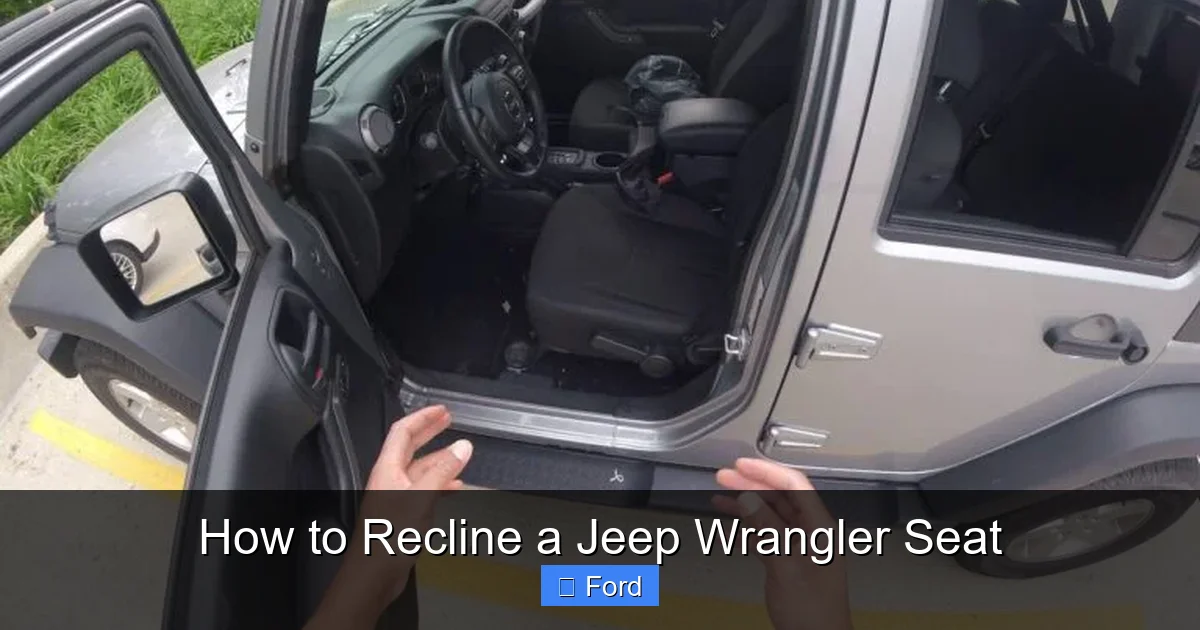
Visual guide about How to Recline a Jeep Wrangler Seat
Image source: adventurejeep.com
Locating the Control Panel
Sit in the seat. Examine the outer side of the seat cushion, near the front. You’re looking for a small plastic panel, often with multiple buttons. It controls fore/aft, height, lumbar, and recline. The recline buttons are usually the topmost or bottommost set and are marked with a simple line drawing of a seat back tilting. Sometimes it’s a single rocker switch; other times it’s two separate buttons (one for back, one for forward). If you have a memory function (like on a Rubicon or High Altitude), the recline control is part of that larger memory switch cluster.
Operating the Switch
With the ignition in the “ON” or “ACC” position (the engine doesn’t need to be running, but the vehicle must be powered), press and hold the button that moves the seatback rearward. You’ll hear a small motor whirring. The movement is slower than a manual adjustment. Keep the button pressed until the seatback reaches your desired angle. To bring it forward, press and hold the opposite button. Important: Do not rapidly press these buttons. Press, hold, and release. Rapid pressing can confuse the seat’s position memory or stress the motor.
Power Seat Troubleshooting & Tips
- No Movement? First, check the fuse. The seat adjustment motors have a dedicated fuse in the Power Distribution Center (PDC) under the hood. Your owner’s manual will have the exact location and amperage. A blown fuse is a common fix.
- Slow or Noisy Movement: This indicates a weak motor or binding mechanism. It could be due to dirt, lack of grease on the track, or a failing motor. This often requires professional diagnosis or a seat removal for deep cleaning and lubrication. If you’re considering aftermarket seat covers, this is a good time to address it.
- One Side Moves, Other Doesn’t: In some power seats, the recline mechanism uses two separate motors—one for the left side of the backrest, one for the right. If only one side moves, the other motor may have failed. This is a more complex repair.
- Safety Interlock: Many power seats won’t adjust if the driver’s door is open and the ignition is off. Make sure the door is closed or the ignition is on.
Troubleshooting Common Recline Problems Across All Models
Whether your seat is manual or power, a few issues are universal. Let’s diagnose the most common complaints.
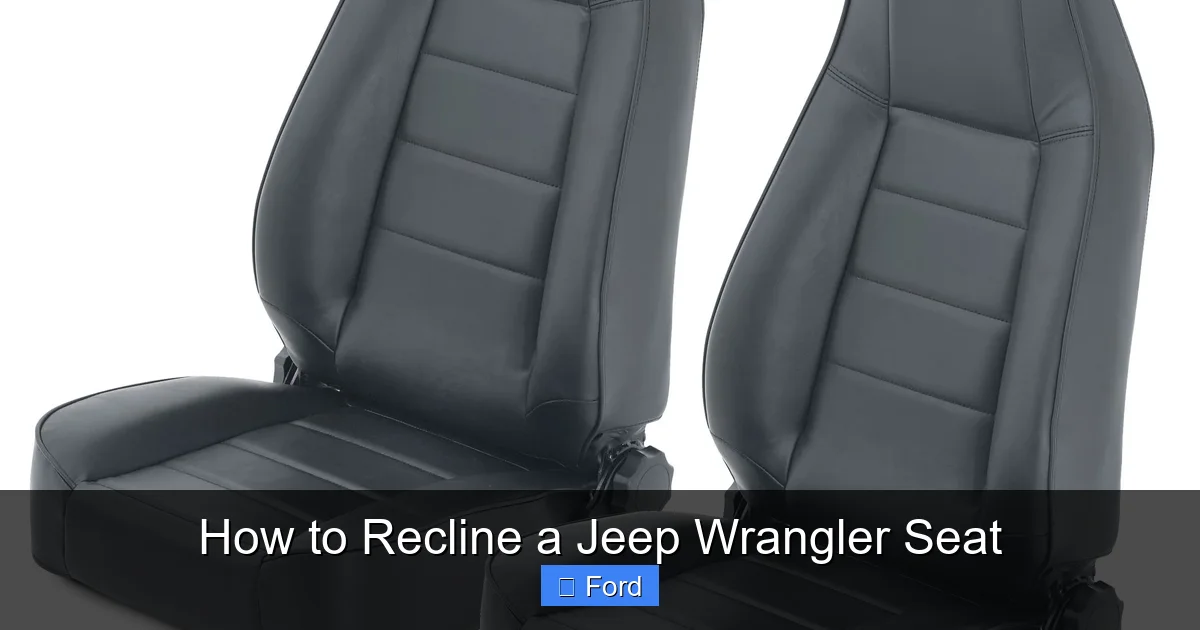
Visual guide about How to Recline a Jeep Wrangler Seat
Image source: quadratec.com
“My Seat Won’t Recline at All!”
For manual seats: The #1 culprit is an obstruction. Get out of the vehicle and look behind the seat. Is a floor mat rolled up? Is there a duffel bag, cooler, or child’s car seat directly behind it? Move everything. Next, inspect the lever itself. Is it broken? Is the connection to the mechanism loose? Sometimes the internal plastic gear or pawl breaks, rendering the lever useless. This usually requires seat removal and parts replacement.
For power seats: Follow the electrical troubleshooting path. Check the fuse. Check for any other electrical issues (e.g., other seat functions not working). If only recline is dead, the problem is likely isolated to the recline motor(s) or its wiring harness under the seat, which can get pinched or corroded.
“My Seat Reclines but Won’t Stay in Place!”
This is a mechanical lock failure. On manual seats, the ratcheting lock mechanism is worn out or broken. The lever might pull out but not catch. This is a serious safety issue. The seat must be repaired before use. On very rare older models, the lock might just need cleaning and lubrication, but usually, internal parts are worn.
On power seats, a seat that won’t hold position typically indicates a failed position sensor or a weak motor that can’t hold the load. The seat controller thinks it’s reached its position but the motor can’t maintain it. This also requires professional repair.
“It’s Stiff and Hard to Move”
This is the most common and usually the easiest to fix. Dirt, sand, road salt, and lack of lubrication are the enemies of any moving part in a Jeep. For manual seats, liberally spray the mechanism (with the lever pulled) with a silicone or PTFE lubricant. Work the seat back and forth. For power seats, the issue is often the track the seat slides on or the recline gear assembly. This requires removing the seat from the vehicle to access and clean/lubricate properly. A good time to do this is when you’re installing new seat covers or giving the interior a deep clean.
Practical Tips for Comfort and Long-Term Care
Mastering the recline function is just step one. Using it wisely and maintaining it will pay dividends.
Ergonomics: Finding Your Sweet Spot
The goal is a neutral spine position. You want your back fully supported, with your knees slightly lower than your hips. A slight recline (10-15 degrees) can take pressure off your spine on long drives. However, reclining too far while driving can be dangerous. You become a “backseat driver” in your own car—your reaction time for braking and steering is compromised, and in a collision, a heavily reclined position increases the risk of “submarining” (sliding forward under the seatbelt). A good rule: you should be able to comfortably reach the steering wheel and pedals without stretching or leaning forward. The recline is for comfort, not for turning the driver’s seat into a lounge chair.
Seat Covers and Recline Compatibility
If you’re planning to install aftermarket seat covers, you must consider recline. Full seat covers that go over the entire backrest must have enough material and elasticity to allow the seatback to move freely without binding or tearing. Look for covers specifically designed for vehicles with reclining seats. They will have extra material and gussets. Installing them incorrectly (too tight) can literally prevent you from reclining the seat. Always test the recline function thoroughly after installing new covers.
The Rear Seat Factor (4-Door JLU Models)
Owners of the 4-door Unlimited need to know about the rear seats. They are not fixed! The rear outboard seats (behind the driver and passenger) have a lever on the side of the seat cushion. Pulling this lever allows the seatback to recline a few degrees for rear passenger comfort. More importantly, it releases the seat for the “fold-and-tumble” function. To access the rear cargo area behind the rear seats, you pull this same lever and push the entire seat forward and down. It’s a fantastic feature for maximizing cargo space. If your rear seat won’t recline or tumble, check for obstructions in the footwell behind it and ensure the lever is being pulled fully.
When to Seek Professional Help
While many recline issues are simple fixes, some are not. Know your limits. If you’ve diagnosed a broken internal mechanism in a manual seat, a failed motor or sensor in a power seat, or any issue that requires removing the seat from the vehicle (which involves disconnecting wiring harnesses and possibly the seatbelt pretensioner), it’s time to call a professional. A dealership or a trusted automotive upholstery shop has the specific parts catalogs and experience to fix Wrangler seats correctly. Attempting a complex repair without the right tools and knowledge can lead to further damage or, worse, an unsafe seat that fails when you need it most. For context on overall vehicle maintenance costs, you might find our article on how much does it cost to get a Jeep lifted informative, as it discusses the broader economics of Jeep ownership.
Furthermore, if you’re considering a full customization of your Wrangler’s interior, understanding seat functionality is key. You might explore options like wrapping your Jeep Wrangler to match a new seat color scheme, or even looking into the total cost of ownership, which our piece on how much is it to lease a Jeep Wrangler can help outline. Your seat’s comfort directly impacts your enjoyment of every drive, whether on a daily commute or a weekend adventure.
Frequently Asked Questions
Can I recline the rear seats in a 2-door Jeep Wrangler?
No. In all 2-door Wrangler models (TJ, JK, JL), the rear seat is fixed at a very upright angle to maximize cargo space behind it. It does not have a recline function. Only the 4-door Unlimited (JKU, JLU) rear outboard seats have a limited recline and fold-and-tumble feature.
Is it safe to recline the driver’s seat all the way back while driving?
No. Reclining the driver’s seat excessively (beyond about 30 degrees) is dangerous. It reduces your ability to see the road clearly, reach the steering wheel and pedals effectively, and significantly increases the risk of injury from the seatbelt in a collision. A slight recline for comfort is fine, but you should remain in a position of full control.
Why does my power seat recline slowly or make a grinding noise?
Slow movement or grinding noises almost always indicate a failing motor or a binding mechanical linkage. It could be a lack of lubrication on the recline gears or a motor that’s worn out. This requires diagnosis and likely replacement of the motor or a thorough cleaning and greasing of the mechanism, which often means removing the seat.
Can I adjust the recline on my Wrangler while the vehicle is moving?
Technically, you can on many models, but you absolutely should not. Adjusting any seat while the vehicle is in motion is a major distraction and can lead to loss of control. Always make all seat adjustments, including recline, only when the vehicle is parked, in “Park” (or neutral for manuals), and the parking brake is set.
My manual lever pulls out but the seatback doesn’t move. What’s wrong?
This usually means the internal locking pawl or ratchet mechanism is broken or worn out. The lever releases the lock, but the lock itself is damaged and doesn’t disengage from the gear teeth on the recline shaft. This is a mechanical failure that requires disassembling the seat back to repair or replace the broken parts.
Do seat covers affect my ability to recline the seat?
Yes, they absolutely can. Poorly fitting, non-stretch seat covers, especially those that are too tight or have non-elastic panels on the backrest, can bind against the seatback as it tilts, preventing full recline or even tearing the cover. Always buy seat covers specifically designed and rated for vehicles with reclining seats.
