
How to Put the Soft Top Down on a Jeep Wrangler 2 Door

Putting the soft top down on a Jeep Wrangler 2-door is a straightforward process that unlocks the vehicle’s iconic open-air experience. This guide breaks it down into simple, manageable steps, from preparing your vehicle and unclasping the sections to properly folding and stowing the top. Following these techniques ensures a clean, damage-free operation every time, allowing you to enjoy the sunshine with confidence.
There’s nothing quite like the feeling of the wind in your hair and the sun on your face in a Jeep Wrangler. The entire point of this legendary off-roader is its versatility, and the soft top is the key to transforming it from a cozy SUV into a wind-in-your-hair fun machine. But if you’re new to the Wrangler world, the process of putting that big, fabric sail down can seem intimidating. Where do you even start? Which clips go first? How do you fold it without creating a permanent crease? Don’t worry. Putting the soft top down on a 2-door Jeep Wrangler is a skill anyone can master with a little patience and the right guidance. This comprehensive, step-by-step guide will walk you through every single detail, turning a daunting task into a simple, satisfying ritual.
We’re going to assume you have a standard factory-style soft top with the familiar three-part configuration: a large rear section with the window, and two smaller front sail panels. The principles are the same for most aftermarket tops, but always consult your specific manufacturer’s manual if you have a unique setup. The goal here is to get you comfortable with the mechanics, the sequence, and the little tricks that make all the difference. Think of it like learning a new dance—once you know the steps, it’s effortless. So, let’s roll up our sleeves, pop the hood for a little prep work, and get that top down.
Key Takeaways
- Preparation is Crucial: Always park on a level surface, clean the top, and ensure it’s dry before starting to prevent dirt buildup and mildew.
- Sequence Matters: Follow the specific order of unclasping (rear, side, front) and folding to avoid tangles and make the process smooth.
- Two People Make It Easier: While doable solo, having a helper drastically reduces strain and the risk of scratching your Jeep’s paint or top material.
- Storage Must Be Secure: The folded top must be properly secured with the provided straps and placed on the rear shelf to prevent shifting while driving.
- Practice Makes Perfect: Don’t expect a flawless first try. Practice in a garage to learn the mechanics without pressure or weather concerns.
- Regular Maintenance Extends Life: Clean the top and its components regularly, and use a protectant to keep the vinyl or fabric supple and UV-resistant.
📑 Table of Contents
Essential Preparation Before You Begin
Rushing into this is the number one cause of frustration, scratched paint, or a tangled top. Taking five minutes to prep your Wrangler and yourself will save you twenty minutes of hassle later. This isn’t just about clearing space; it’s about setting yourself up for a clean, successful operation.
Choose the Right Location and Conditions
First and foremost, park your Jeep on a perfectly level surface. An incline can cause the folded top to slide or shift unexpectedly, which is a recipe for disaster. A flat driveway or garage floor is ideal. Avoid grassy or dusty areas if possible, as dirt and debris will become embedded in the fabric as you work. Ideally, perform this operation in a shaded area or a garage. Direct sunlight can make the vinyl or fabric soft top material hot and pliable, which might seem good, but it also attracts dust and can make the material sticky, making it harder to handle and fold cleanly. A cool, dry environment is best.
Clean and Dry the Top
Before you touch a single clasp, give your soft top a quick once-over with a soft brush or a dedicated soft top cleaner. You want to remove loose dirt, leaves, and grit. Any abrasive particles left on the surface can scratch your Jeep’s paint as you move the large sections around. More importantly, the top must be completely dry. If it’s damp or wet, folding it will trap moisture, leading to mildew, water spots, and that musty smell that’s so hard to get out. If it rained recently, wait for a sunny day or use a garage to let it air dry fully. This step is non-negotiable for the long-term health of your investment.
Gather Your Tools and Mindset
The good news is, you don’t need any special tools—just your hands and maybe a friend. However, gather a few things to make it smoother: a clean, soft towel or blanket to place on the rear shelf to protect the top’s underside from any grit, and maybe a bottle of waterless wash or quick detailer for any accidental smudges. Most importantly, clear your schedule for 15-20 minutes. Don’t try to rush this while you’re late for an appointment. Patience is your most valuable tool here. If you have a helper, now is the time to recruit them. Two sets of hands make this a 5-minute job instead of a 15-minute wrestling match.
The Step-by-Step Folding Process
Now for the main event. The process follows a specific, logical sequence designed to free the top from the windshield frame and allow it to fold neatly onto the rear cargo area. The mantra is: rear first, sides next, front last. We’ll break it down into the three main phases: Unclasping, Folding, and Securing.
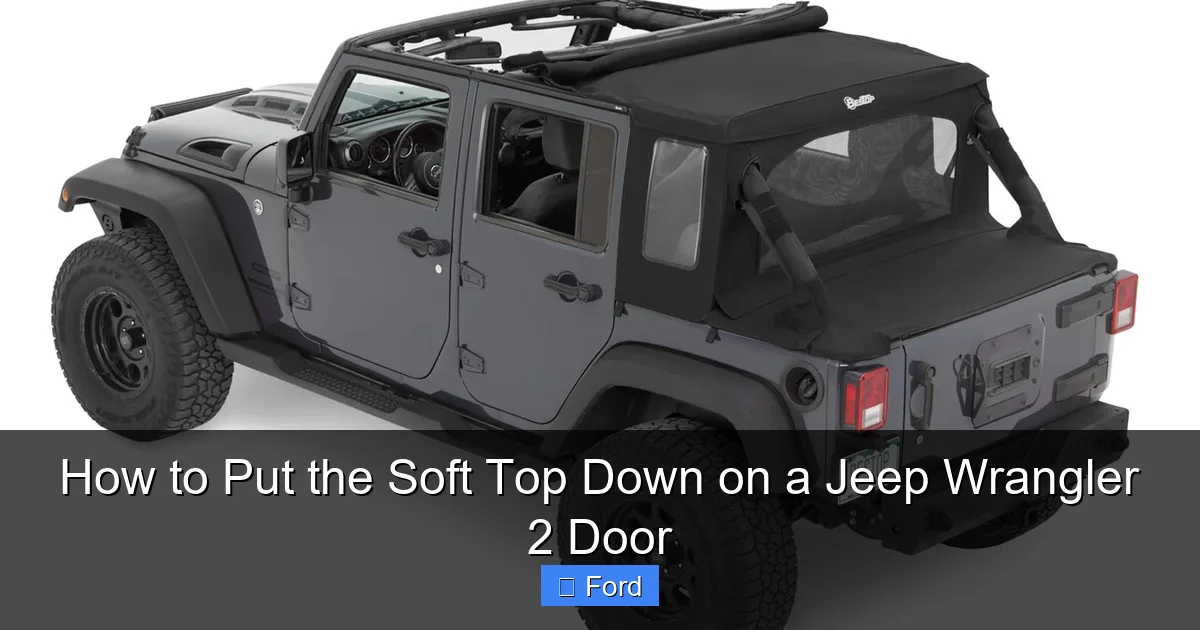
Visual guide about How to Put the Soft Top Down on a Jeep Wrangler 2 Door
Image source: cdn11.bigcommerce.com
Phase 1: Unclasping – Freeing the Top
This is the most critical phase. Doing it out of order can cause the top to bind or put stress on the zippers and fasteners. Stand at the rear of your Jeep for the best vantage point.
Step 1: Release the Rear Window and Section. The rear section is the largest and usually has a zippered rear window. Start by unzipping this window completely and folding it up against the inside of the rear section. You’ll see a series of plastic snap fasteners or Velcro strips along the top edge of this rear section, where it attaches to the frame just behind the rear seats. Unsnap or un-Velcro all of these fasteners along the entire rear header. Work your way from one side to the other. Then, locate the two or three large plastic buckles on the sides of the rear section (near the C-pillars). Press the release tabs and pull the straps free. Finally, there is often a central latch or hook at the very top center of the rear section—unfasten this. The rear section should now be completely free from the frame except at the very front edge.
Step 2: Unfasten the Side (Sail Panel) Sections. Move to the side of the Jeep. Each front sail panel is attached along its long outer edge to the door frames with a combination of snaps and sometimes a zipper. Start at the rear of the sail panel and work forward toward the windshield. Unsnap all the fasteners along the door jamb. Pay special attention to any zippers that might run along the bottom edge—unzip them fully. At the front of the sail panel, you’ll find it attaches to the windshield header frame. This is usually a long strip of Velcro or a series of snaps. Release this entire front connection. You should now be able to lift the sail panel slightly away from the door and windshield frame. Repeat this exact process for the opposite side sail panel.
Step 3: Disconnect the Front Header (Windshield Frame). With both side panels and the rear section mostly free, you can now address the front header bar that runs across the top of the windshield. This is held on by a number of Velcro strips or snap fasteners. Starting from one side, systematically peel back or unsnap the entire front header. It should come away cleanly. If your top has a sunroof panel, this is usually the piece you’re removing now. Set it aside carefully in a safe, flat spot. At this point, the entire top structure should be loose and ready to be folded.
Phase 2: Folding the Top Onto the Rear Shelf
This is where the choreography comes in. The goal is to fold the top in a specific “letter Z” or accordion pattern so it sits compactly and securely on the rear deck. If you have a helper, one person can guide the top while the other folds.
Step 4: Position and Begin the First Fold. With the top now completely detached from the frame, lift the rear section up and over the roll bar. You’re going to fold it forward onto the roof of the Jeep, but first, you need to create the first fold. The standard method is to fold the rear section in half lengthwise (so the window faces inward) and then fold it again widthwise, creating a compact rectangle. However, the most reliable method is the “Z-fold.” Take the rear section and fold it forward, bringing the bottom edge up to meet the top header bar, folding it in half. Now you have a long, narrow strip.
Step 5: Fold the Sail Panels. Take one of the side sail panels and lay it flat on top of the already-folded rear section, aligning them neatly. Then, take the second sail panel and lay it on top of the first, creating a neat stack of three folded pieces. The final stack should be a manageable rectangle roughly the size of the rear seat area. Some people prefer to fold each sail panel in half first before adding them to the stack; find what creates the neatest, most compact bundle for your specific top.
Phase 3: Securing for Storage and Driving
This is the final, vital step. An unsecured top is a major hazard and will be destroyed at the first stoplight.
Step 6: Place and Strap the Bundle. Carefully lift the entire folded bundle and place it on the rear cargo shelf behind the rear seats. Place a clean towel or the factory storage bag (if equipped) underneath it to protect both the top and your Jeep’s interior from scratches. You will now see a set of heavy-duty straps or bungee cords specifically designed for this purpose, usually stored in a pocket of the top or in the cargo area. Route these straps over the top of the folded bundle and secure them tightly to the designated tie-down points on the rear shelf or roll bar. Pull them snug. The top should not be able to shift, bounce, or unfold even if you hit a bump. Give it a firm shake test. If it moves, tighten the straps again.
Step 7: Final Checks. Double-check that no straps are dangling where they could snag on the rear hatch or door. Ensure the folded top is sitting flat and isn’t putting pressure on the rear window defroster lines or any electrical components. Close the rear hatch or install the rear window (if you have a removable rear window that stays in place). You are now ready to drive with the top down. Always re-check the straps after your first few miles of driving, as the top can settle and straps may need a final tug.
Common Challenges and Expert Solutions
Even with the best instructions, you might hit a snag. These are the most common issues and how to solve them like a pro.
Visual guide about How to Put the Soft Top Down on a Jeep Wrangler 2 Door
Image source: i.ytimg.com
The Top Won’t Unsnap; Fasteners Are Stuck
This is common with older tops or those exposed to extreme weather. Plastic snaps can become brittle or jammed. Never use excessive force or a metal tool to pry them, as you’ll break the clip. Instead, use a plastic trim tool or even a flat, wide plastic spatula. Gently work the tool between the two halves of the snap to lever them apart. For stubborn Velcro, a hair dryer on low, warm heat can soften the adhesive backing slightly and make it release. If a zipper is stuck, apply a tiny dab of zipper lubricant or even a bit of paraffin wax to the teeth.
Folding Creates Awkward Bulges or Creases
Your stack should be neat, not lumpy. A bulge usually means a section wasn’t fully detached or is folded incorrectly. Unfold everything and start the folding phase again. Take care to smooth out air pockets and align the edges precisely as you fold each layer. The “Z-fold” method (fold rear section in half, then in half again) often creates the most uniform stack. If your top has a stiff rear window, you may need to fold it in a specific way—consult your manual. Sometimes, simply re-arranging the order of the sail panels on top of the rear section creates a better fit.
It’s a One-Person Struggle
If you’re alone, the biggest challenge is managing the weight and floppiness of the rear section. The trick is to use your Jeep’s roof and roll bars as a work surface. After unclasping everything, don’t try to lift the rear section directly from the middle. Instead, gather one long side of the rear section and lift it, draping it over the windshield frame and onto the roof. This gives you a handle and uses the Jeep’s structure to support the weight. Then, you can fold it on the roof itself before transferring the bundle to the rear shelf. It’s slower and requires more maneuvering, but it’s very doable. Practice this method in private before you need to do it quickly.
Storing Your Soft Top Properly
Once down, your soft top’s journey isn’t over. How you store it while driving and when not in use for extended periods determines its lifespan.
Visual guide about How to Put the Soft Top Down on a Jeep Wrangler 2 Door
Image source: i.ytimg.com
Driving with the Top Down
As emphasized, the straps must be tight. But also consider your cargo. Anything loose in the rear will become a projectile. Use the cargo net or a small, secured bag. Be mindful of sudden, strong crosswinds—they can catch the underside of the folded top and cause it to flutter, which increases stress on the straps and seams. If you feel significant fluttering, pull over and re-secure. At highway speeds, the wind noise will be constant; this is normal. Also, remember that your rearview mirror visibility is now limited to the rear window of your soft top, which is now folded away. You’ll be relying entirely on your side mirrors. Get used to checking them frequently.
Long-Term Storage and Winterizing
If you plan to store your Wrangler with the top down for weeks or months (like in a garage during winter), extra steps are needed. First, ensure the top is impeccably clean and 100% dry. Any residual moisture or dirt will cause permanent damage. Consider applying a UV protectant and a fabric/vinyl conditioner to prevent cracking. Some owners invest in a dedicated soft top storage bag, which adds an extra layer of protection from dust and sunlight. Store the folded bundle in the coolest, driest part of your garage, away from direct sunlight. Avoid placing heavy items on top of it. For the ultimate in convenience and protection, many Wrangler owners eventually invest in a hardtop or a premium premium aftermarket frameless top that stores more compactly and securely, but that’s a project for another day.
Reinstalling the Soft Top: A Quick Overview
Putting it back up is essentially the reverse process, but with its own nuances. It’s often easier than taking it down because you’re dealing with fewer moving parts. The key is to start with the front header. Lay the folded bundle on the rear shelf, unfasten the straps, and unfold the top onto the roof. First, connect the front header bar to the windshield frame. Get all the Velcro or snaps engaged. This creates your anchor point. Then, with your helper, lift each sail panel and connect its front edge to the header bar, then work down the door jamb, snapping all the fasteners. Finally, lift the rear section, connect its front edge to the header, zip up the rear window, and then connect the rear header straps and buckles along the sides and top. Take your time, ensure every single fastener is fully engaged before driving, and you’ll have a tight, quiet, water-ready top again. For a visual masterclass, searching for “Jeep Wrangler soft top reinstall” on video platforms is highly recommended—seeing the hand positions and fabric flow is invaluable.
Conclusion: Embrace the Freedom
Mastering the soft top operation is a rite of passage for every Jeep Wrangler owner. It connects you to the vehicle’s core purpose: adaptability. That first time you successfully drop the top, fold it neatly, and drive off into the sunset with nothing but sky above you is a pure, unadulterated joy. Remember the core principles: prepare meticulously, follow the sequence (rear, sides, front), use two people when possible, and secure with extreme diligence. Don’t be discouraged by a fumbly first attempt. Every Wrangler enthusiast has a story about a top that blew down on the highway or a clip that broke. It’s all part of the journey. With this guide as your reference, you’re equipped to handle that journey with confidence. So go ahead, find a scenic road, and put that top down. You’ve earned the open-air freedom that only a Jeep can deliver.
Frequently Asked Questions
Can I put my Jeep Wrangler soft top down by myself?
Yes, you absolutely can, though it’s significantly easier and safer with two people. If you’re solo, use the Jeep’s roof and roll bars as a support surface to manage the weight of the rear section, and take your time to avoid straining your back or scratching the paint.
What’s the biggest mistake people make when folding the soft top?
The most common errors are not fully disengaging all fasteners before folding (causing binding) and not securing the folded bundle tightly enough with the straps. A loose top can unfold while driving, leading to total destruction of the top and a major safety hazard.
Do I need to unzip the rear window every time?
Yes, the rear window must be fully unzipped and folded inward before you can unfasten the rear section from the header bar. Leaving it zipped will prevent the top from folding properly and can stress the zipper.
How tight should the storage straps be?
They should be drum-tight. The folded top should not be able to move, shift, or bounce at all when you push on it. You should not be able to slip a finger between the strap and the top bundle. Re-check after your first drive, as the material can settle.
Is it bad to drive with the soft top down in the rain?
The folded top is not watertight. Driving in rain with the top down will soak the stored top and your interior. The main purpose of putting the top down is for fair weather, open-air enjoyment. Always reinstall the top before any precipitation.
My soft top feels really tight and hard to unclip. What should I do?
This is often due to temperature or age. Try warming the fasteners slightly with a hair dryer on low heat to expand the plastic slightly. Use a dedicated plastic trim tool to gently pry stubborn snaps. If a zipper is stuck, apply a specialized zipper lubricant. Never use excessive force.
