How to Program Tpms Sensors on a Toyota

Contents
- 1 Key Takeaways
- 2 📑 Table of Contents
- 3 Understanding TPMS in Toyota Vehicles
- 4 When Do You Need to Program TPMS Sensors?
- 5 Tools and Equipment Needed for Programming
- 6 Step-by-Step Guide to Programming TPMS Sensors on a Toyota
- 7 Model-Specific Programming Tips
- 8 Troubleshooting Common TPMS Programming Issues
- 9 Maintaining Your TPMS System
- 10 Conclusion
- 11 Frequently Asked Questions

Side Mirror Rain Guard

Car Roof Rack Cross Bars

Car Glass Cleaner

Car Neck Pillow
Programming TPMS sensors on a Toyota doesn’t have to be complicated. With the right tools and a clear process, you can reset or reprogram your tire pressure monitoring system quickly and safely—whether you’re swapping wheels, replacing sensors, or performing routine maintenance.
Key Takeaways
- TPMS sensors monitor tire pressure and alert drivers when levels drop below safe thresholds, improving safety and fuel efficiency.
- Programming is required after sensor replacement or tire rotation to ensure the system recognizes each sensor’s unique ID and location.
- Use a TPMS scan tool or OBD2 scanner compatible with Toyota vehicles to initiate the programming process.
- Follow the correct sequence—activate sensors in the right order (usually front left, front right, rear right, rear left) to avoid errors.
- Some Toyotas support auto-learning after a short drive, while others require manual activation via a tool or dashboard menu.
- Always verify sensor function after programming by checking the TPMS light and using a pressure gauge.
- Keep your vehicle’s software updated to ensure compatibility with newer TPMS tools and procedures.
📑 Table of Contents
- Understanding TPMS in Toyota Vehicles
- When Do You Need to Program TPMS Sensors?
- Tools and Equipment Needed for Programming
- Step-by-Step Guide to Programming TPMS Sensors on a Toyota
- Model-Specific Programming Tips
- Troubleshooting Common TPMS Programming Issues
- Maintaining Your TPMS System
- Conclusion
Understanding TPMS in Toyota Vehicles
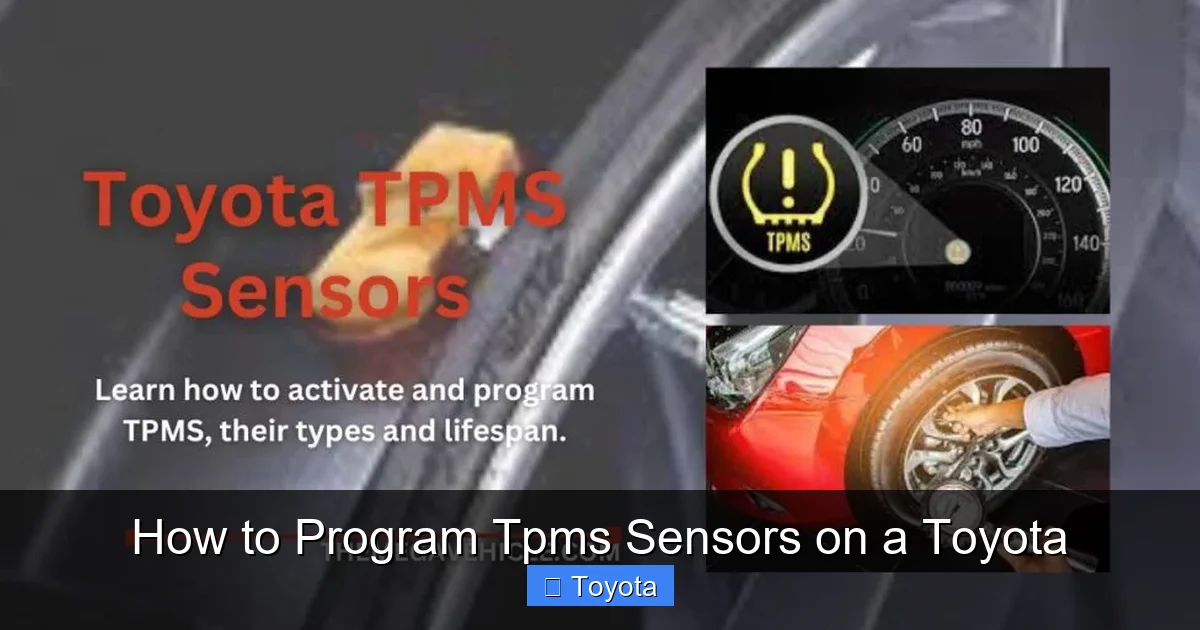
Tire Pressure Monitoring Systems (TPMS) have become a standard safety feature in all modern Toyota vehicles. These systems continuously monitor the air pressure inside your tires and alert you when one or more tires are significantly underinflated. This not only helps prevent blowouts and uneven tire wear but also improves fuel economy and overall driving safety.
Toyota uses a direct TPMS system, which means each wheel is equipped with a sensor mounted inside the tire, usually attached to the valve stem. These sensors transmit real-time pressure and temperature data wirelessly to the vehicle’s onboard computer. When pressure drops below a certain threshold—typically 25% below the recommended level—the TPMS warning light on your dashboard will illuminate.
But here’s the catch: every time you replace a sensor, rotate your tires, or install a new set of wheels (like winter rims), the system needs to “learn” the new sensor IDs and their correct positions. This is where programming comes in. Without proper programming, your TPMS may display incorrect readings, fail to warn you of low pressure, or keep the warning light on unnecessarily.
Why Programming TPMS Sensors Matters
Imagine driving down the highway, and your TPMS light suddenly flashes. You pull over, check your tires, and find they’re all properly inflated. Frustrating, right? That’s exactly what can happen if your TPMS sensors aren’t programmed correctly. The system might be reading the wrong sensor or not recognizing a new one at all.
Programming ensures that each sensor is uniquely identified and assigned to the correct wheel position. This allows the vehicle to accurately monitor each tire and provide reliable alerts. It also prevents false alarms and helps maintain the integrity of your vehicle’s safety systems.
For Toyota owners, this process is especially important because many models—like the Camry, RAV4, Highlander, and Tacoma—use advanced TPMS systems that require precise calibration. Even minor errors in programming can lead to system malfunctions or dashboard warnings that won’t go away.
When Do You Need to Program TPMS Sensors?

Visual guide about How to Program Tpms Sensors on a Toyota
Image source: m.media-amazon.com
Not every tire service requires TPMS programming, but many do. Knowing when to reprogram can save you time, money, and headaches down the road.
After Replacing a TPMS Sensor
If one of your sensors fails—due to battery depletion, damage, or corrosion—you’ll need to replace it. Most TPMS sensors have a lifespan of 5 to 10 years, so older vehicles are more likely to need replacements. When installing a new sensor, it must be programmed so the vehicle recognizes it and knows which wheel it belongs to.
For example, if you’re replacing the sensor on the front right tire of your 2018 Toyota RAV4, simply installing the new sensor isn’t enough. You must use a TPMS tool to register its unique ID and assign it to the correct position.
After Tire Rotation or Wheel Swapping
Rotating your tires is essential for even wear, but it changes the position of each sensor. Even though the sensors themselves aren’t replaced, their locations shift. The vehicle needs to update its records so it knows which sensor corresponds to which wheel.
The same applies when you swap wheels—such as switching from summer to winter tires. If you’re using a second set of rims with their own TPMS sensors, the vehicle must learn the new sensor IDs and map them to the correct positions.
After Installing New Wheels or Rims
Upgrading to aftermarket wheels? If your new rims come with TPMS sensors, they’ll need to be programmed. Even if you’re reusing your old sensors, transferring them to new wheels may require reprogramming, especially if the sensor orientation or mounting method changes.
After a TPMS Reset or Battery Replacement
Sometimes, the TPMS system may need a reset after a 12-volt battery replacement or a software glitch. While not always required, reprogramming ensures the system communicates properly with all sensors.
When the TPMS Light Won’t Turn Off
If your TPMS warning light stays on despite proper tire inflation, it could indicate a sensor communication issue. In many cases, reprogramming the sensors resolves the problem by re-establishing the connection between the sensors and the vehicle’s computer.
Tools and Equipment Needed for Programming

Visual guide about How to Program Tpms Sensors on a Toyota
Image source: thecarhow.com
Before you begin programming your Toyota’s TPMS sensors, make sure you have the right tools. The process isn’t something you can do with just a wrench and a tire gauge—it requires specialized equipment.
TPMS Scan Tool or OBD2 Scanner
The most important tool is a TPMS scan tool that’s compatible with Toyota vehicles. These devices can read sensor IDs, activate sensors, and program them to the correct wheel positions. Popular options include:
– Autel MaxiTPMS TS508 or TS601
– Launch CRP129X or X431
– Foxwell NT510 or NT520
– OBD2 scanners with TPMS functionality (like the BlueDriver or FIXD)
These tools plug into your vehicle’s OBD2 port (usually under the dashboard near the steering wheel) and communicate with the TPMS module.
TPMS Sensor Activation Tool
Some TPMS tools come with a handheld activation tool that sends a signal to wake up each sensor. This is especially useful during programming, as it ensures each sensor is responsive and transmitting data.
Air Compressor and Tire Pressure Gauge
Before programming, make sure all tires are inflated to the recommended pressure (found on the driver’s door jamb sticker). Use a reliable tire pressure gauge to verify levels. An air compressor helps adjust pressure as needed.
Vehicle Manual and TPMS Information
Your Toyota owner’s manual contains specific instructions for your model and year. Some vehicles have unique programming sequences or dashboard menu options. Always refer to the manual to avoid mistakes.
Optional: Jack and Jack Stands
If you’re replacing sensors or working on wheels, you may need to lift the vehicle. Use a jack and jack stands for safety—never rely solely on a jack.
Step-by-Step Guide to Programming TPMS Sensors on a Toyota

Visual guide about How to Program Tpms Sensors on a Toyota
Image source: i.ytimg.com
Now that you understand the basics, let’s walk through the actual programming process. While the exact steps may vary slightly depending on your Toyota model and the tool you’re using, the general procedure is consistent.
Step 1: Prepare Your Vehicle
Start by parking your Toyota on a flat, level surface and turning off the engine. Make sure the vehicle is in “Park” (for automatics) or in gear with the parking brake engaged (for manuals). Open the driver’s door and locate the OBD2 port—usually under the dashboard, near the steering column.
Check that all tires are inflated to the correct pressure. Use your tire pressure gauge to verify each tire. If any are low, inflate them using your air compressor. Proper pressure ensures accurate sensor readings during programming.
Step 2: Connect the TPMS Scan Tool
Plug your TPMS scan tool into the OBD2 port. Turn the ignition to the “ON” position (but don’t start the engine). The tool should power up and display a menu. Select “TPMS” or “Tire Pressure Monitoring System” from the main screen.
Some tools will automatically detect your vehicle’s make and model. If not, manually enter your Toyota’s year, make, and model (e.g., 2020 Toyota Camry).
Step 3: Enter Programming Mode
Follow the on-screen prompts to enter TPMS programming or relearn mode. On many Toyota models, this involves selecting “Sensor Relearn” or “ID Registration.” The tool will guide you through the process.
Note: Some newer Toyotas (like the 2021+ RAV4 or Highlander) support automatic sensor learning. In these cases, the vehicle may detect new sensors after a short drive. However, manual programming is still recommended for accuracy.
Step 4: Activate Each Sensor in Sequence
This is the most critical part of the process. You must activate each TPMS sensor in the correct order. The standard sequence for most Toyotas is:
1. Front Left (Driver’s Side)
2. Front Right (Passenger Side)
3. Rear Right (Passenger Side)
4. Rear Left (Driver’s Side)
To activate a sensor, use the TPMS tool’s activation feature. Hold the tool near the tire sidewall (about 1–2 inches from the valve stem) and press the activation button. You should hear a beep or see a confirmation on the tool’s screen.
Some tools require you to drive the vehicle slightly (a few feet) after each activation to trigger the sensor. Others use a magnetic trigger or RF signal.
Tip: If the sensor doesn’t respond, try rotating the tire slightly or moving the tool closer to the valve stem. Cold weather can reduce sensor battery life, so ensure the vehicle has been driven recently or parked in a warm area.
Step 5: Confirm Sensor Registration
After activating all four sensors, the tool will display a summary of registered IDs and their assigned positions. Double-check that each sensor is correctly mapped. If one is missing or misassigned, repeat the activation for that wheel.
Once all sensors are confirmed, select “Complete” or “Finish” on the tool. The system will save the new sensor data to the vehicle’s computer.
Step 6: Clear Any Warning Lights
After programming, the TPMS warning light may still be on. Use the scan tool to clear any stored trouble codes or reset the warning light. On some models, you may need to drive the vehicle for 10–15 minutes at speeds above 20 mph to allow the system to recalibrate.
Step 7: Verify the System
Turn off the ignition, unplug the tool, and start the vehicle. Check the dashboard to ensure the TPMS light is off. Take a short test drive and monitor the system. If the light stays off and no warnings appear, programming was successful.
Use a tire pressure gauge to double-check each tire’s pressure. The TPMS should now display accurate readings on the instrument cluster (if equipped with a digital display).
Model-Specific Programming Tips
While the general process is similar across Toyota models, some vehicles have unique requirements. Here are tips for popular models:
Toyota Camry (2012–2024)
The Camry typically uses a manual relearn procedure. Use a TPMS tool to activate sensors in the standard order. After programming, drive the vehicle for at least 10 minutes to allow the system to confirm sensor positions.
Toyota RAV4 (2013–2024)
Newer RAV4 models (especially 2019+) support auto-learning. After installing new sensors, drive the vehicle for 10–15 minutes at speeds above 25 mph. The system may automatically detect and register the sensors. However, using a scan tool ensures accuracy.
Toyota Highlander (2011–2024)
The Highlander often requires a TPMS reset via the dashboard menu. Go to “Settings” > “Vehicle” > “TPMS” > “Reset.” Then use a scan tool to activate sensors in sequence.
Toyota Tacoma (2016–2024)
The Tacoma uses a direct TPMS system with sensors in each wheel. Programming is straightforward with a compatible scan tool. Ensure the truck is on level ground and the ignition is on.
Toyota Corolla (2014–2024)
The Corolla may require a “sensor match” procedure. Use the scan tool to input each sensor ID manually. Some models allow programming through the multi-information display (MID) by holding the trip reset button.
Troubleshooting Common TPMS Programming Issues
Even with the right tools, you might run into problems. Here’s how to handle common issues:
TPMS Light Stays On After Programming
This usually means one or more sensors weren’t registered correctly. Double-check the activation sequence and ensure each sensor responded. Try reprogramming the system. If the light persists, one sensor may be faulty or have a dead battery.
Sensor Not Responding
If a sensor doesn’t activate, it could be damaged, have a weak battery, or be incompatible with your vehicle. Try replacing the sensor or using a different activation method (e.g., magnetic trigger). Cold temperatures can also reduce sensor performance—warm up the vehicle if possible.
Incorrect Sensor Position
If the system shows the wrong sensor in a wheel (e.g., front left reading as rear right), you likely activated them out of order. Reprogram the system and follow the correct sequence strictly.
Tool Not Communicating with Vehicle
Ensure the OBD2 port is clean and the tool is properly connected. Check that the ignition is on and the tool is compatible with your Toyota model. Update the tool’s software if needed.
Auto-Learn Mode Not Working
Some Toyotas require specific conditions for auto-learning, such as driving at a certain speed or having all tires at exact pressure. Refer to your owner’s manual for details. If auto-learn fails, switch to manual programming.
Maintaining Your TPMS System
Once your TPMS sensors are programmed, regular maintenance helps keep them functioning properly.
Check Tire Pressure Monthly
Even with TPMS, manually check your tire pressure once a month. Sensors can fail, and the system may not detect slow leaks. Use a quality tire gauge and adjust pressure as needed.
Inspect Sensors During Tire Service
When rotating or replacing tires, ask your technician to inspect the TPMS sensors for damage, corrosion, or loose fittings. Damaged sensors should be replaced promptly.
Replace Sensors Before They Fail
Most TPMS sensors last 5–10 years. If your vehicle is older, consider replacing sensors proactively to avoid sudden failures.
Keep Your Scan Tool Updated
Firmware updates for your TPMS tool ensure compatibility with newer Toyota models and improved functionality. Check the manufacturer’s website regularly.
Conclusion
Programming TPMS sensors on a Toyota is a straightforward process when you have the right tools and knowledge. Whether you’re replacing a sensor, rotating tires, or installing new wheels, proper programming ensures your TPMS system works accurately and reliably.
By following the step-by-step guide, using a compatible scan tool, and paying attention to sensor sequence, you can avoid common pitfalls and keep your Toyota’s tire pressure monitoring system in top condition. Regular maintenance and timely sensor replacements will extend the life of your TPMS and keep you safe on the road.
Remember, a properly functioning TPMS isn’t just about avoiding dashboard warnings—it’s about maintaining optimal tire performance, improving fuel efficiency, and enhancing overall vehicle safety. Take the time to program your sensors correctly, and your Toyota will thank you with smoother, safer drives.
Frequently Asked Questions
Do I need a special tool to program TPMS sensors on a Toyota?
Yes, you’ll need a TPMS scan tool or OBD2 scanner that’s compatible with Toyota vehicles. These tools communicate with the vehicle’s computer to register sensor IDs and assign them to the correct wheel positions.
Can I program TPMS sensors without a scan tool?
Some newer Toyota models support auto-learning after a short drive, but this isn’t always reliable. For accuracy and consistency, using a scan tool is strongly recommended, especially after sensor replacement or tire rotation.
How long does it take to program TPMS sensors?
The process typically takes 10–20 minutes, depending on your experience and the tool you’re using. Most of the time is spent activating each sensor in the correct order and confirming registration.
What if my TPMS light still won’t turn off?
If the light remains on after programming, one or more sensors may be faulty, have a dead battery, or weren’t registered correctly. Recheck the programming steps or consider replacing the problematic sensor.
Can I program TPMS sensors myself, or do I need a mechanic?
You can program TPMS sensors yourself if you have the right tool and follow the instructions carefully. However, if you’re unsure or encounter issues, a professional technician can ensure the job is done correctly.
Do TPMS sensors need to be programmed every time I rotate my tires?
Yes, because tire rotation changes the position of each sensor. The vehicle needs to update its records so it knows which sensor corresponds to which wheel. Programming ensures accurate monitoring and prevents false alerts.