How to Program Bmw Garage Opener

Contents
- 1 Key Takeaways
- 2 📑 Table of Contents
- 3 Unlock Your BMW’s Built-In Convenience: An Introduction to Homelink
- 4 Understanding Your BMW’s Garage Opener System: It’s All About Homelink
- 5 Essential Preparation: Clearing and Safety Before You Start
- 6 Step-by-Step Programming: The Definitive Methods
- 7 Troubleshooting: Why Your Programming Might Fail and How to Fix It
- 8 Advanced Tips and Best Practices for Your BMW Garage Opener
- 9 Conclusion: Your Key to Seamless Entry
- 10 Frequently Asked Questions
Car Emergency Roadside Kit

Car Mud Flaps (Universal)

Car Tissue Holder

Car Jump Starter
Programming your BMW’s built-in garage door opener (Homelink) is a straightforward DIY task that adds immense convenience. This guide covers every method for models from the 1990s to the latest iDrive systems, including troubleshooting for rolling codes and clearing old devices. You’ll learn exactly which buttons to press, how to handle compatibility issues, and when a dealer might be needed.
Key Takeaways
- BMW uses the universal Homelink system: Your BMW’s garage opener is a Homelink transmitter, compatible with most garage door and gate openers made since 1985.
- Programming location varies by model year: Older BMWs use buttons on the rearview mirror; newer models with iDrive integrate the process into the infotainment menu.
- Always clear old codes first: If the Homelink system was previously used, you must reset it by holding all three buttons to avoid interference.
- Rolling code openers require an extra step: For openers with a “Learn” or “Smart” button, you’ll need to activate that on the opener unit itself during programming.
- The vehicle must be in the “ON” or “ACC” position: The ignition must be powered on, but the engine does not need to be running for programming to work.
- Patient repetition is key: If the first attempt fails, repeat the sequence 2-3 times. Homelink signals can be finicky and often need a few tries to sync.
- iDrive systems offer guided programming: On BMWs with iDrive 6.0 or 7.0, the menu will walk you through each step, making it nearly foolproof.
[FEATURED_IMAGE_PLACEHOLDER]
📑 Table of Contents
- Unlock Your BMW’s Built-In Convenience: An Introduction to Homelink
- Understanding Your BMW’s Garage Opener System: It’s All About Homelink
- Essential Preparation: Clearing and Safety Before You Start
- Step-by-Step Programming: The Definitive Methods
- Troubleshooting: Why Your Programming Might Fail and How to Fix It
- Advanced Tips and Best Practices for Your BMW Garage Opener
- Conclusion: Your Key to Seamless Entry
Unlock Your BMW’s Built-In Convenience: An Introduction to Homelink
Picture this: you’re pulling into your driveway during a rainstorm, groceries in the back, and you have to get out, fumble for a separate remote, and press a button. Annoying, right? If your BMW is equipped with the Homelink system, that scenario is completely avoidable. This built-in transmitter, usually located on your rearview mirror or within the iDrive menu, lets you control your garage door, gate, or even home lighting with a button press right from your driver’s seat. It’s one of those luxury features that seamlessly integrates into your daily routine, and the best part? You don’t need to be a technician or visit a dealership to set it up. Programming a BMW garage opener is a simple, 5-minute process you can do yourself in your own driveway. This guide will walk you through every single step, for every BMW model and system, ensuring you can say goodbye to that clunky standalone remote forever.
Understanding Your BMW’s Garage Opener System: It’s All About Homelink
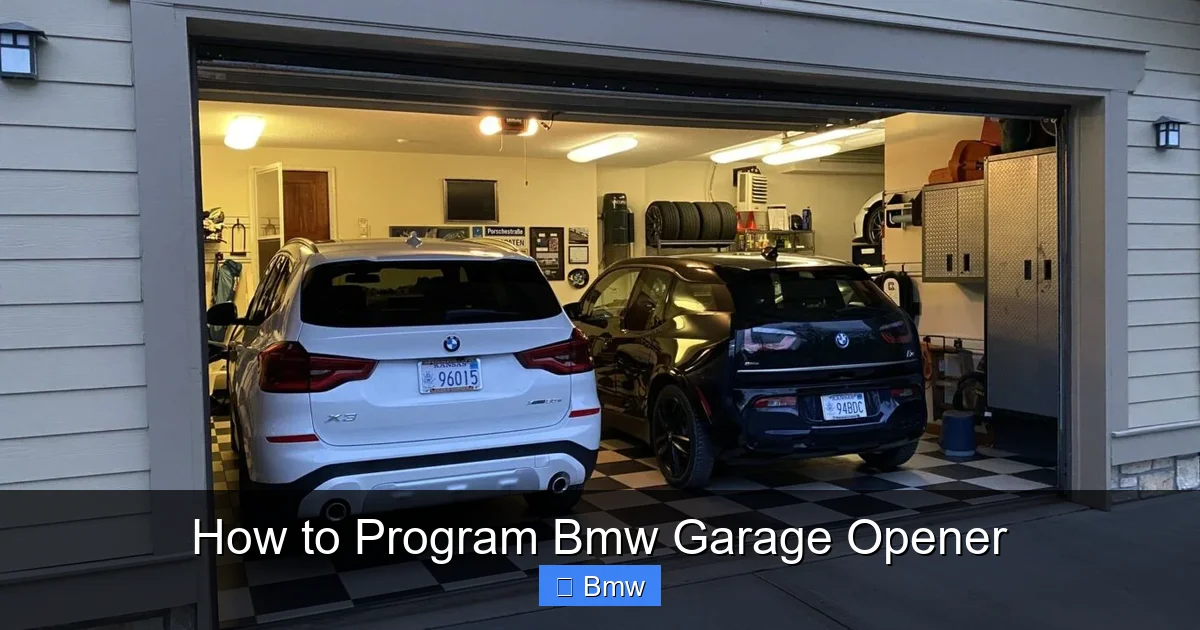
Before we dive into button presses, it’s crucial to understand what’s actually inside your BMW. The system is not a BMW-exclusive technology; it’s a universal standard called Homelink, developed by a consortium of car manufacturers. This is great news for you because it means your BMW will work with the vast majority of garage door openers sold in North America and Europe for the last three decades. However, the physical location and the method of programming differ based on your BMW’s model year and whether it has the iDrive infotainment system.
Visual guide about How to Program Bmw Garage Opener
Image source: cdn.bmwblog.com
The Two Primary Programming Locations
You’ll find the Homelink controls in one of two places:
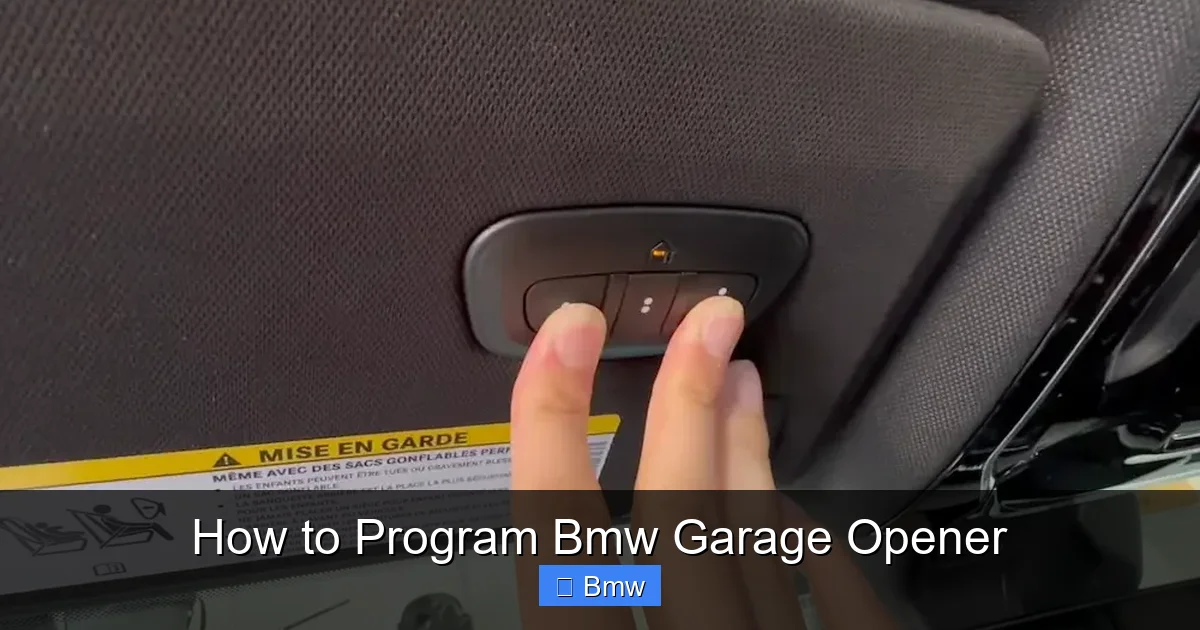
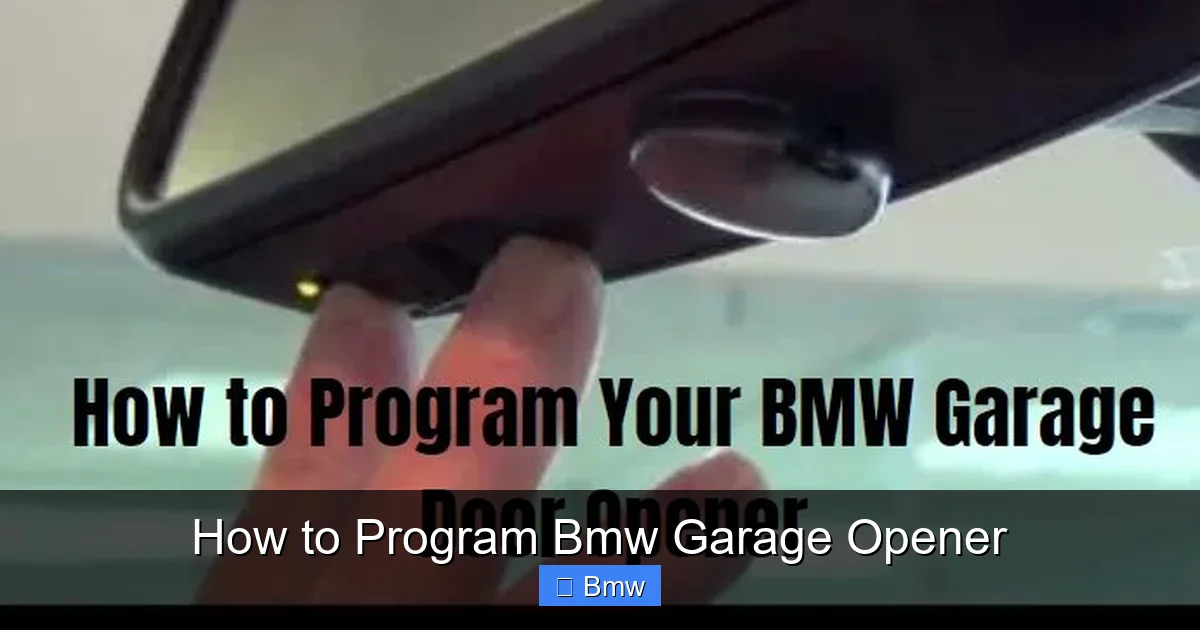
- The Rearview Mirror (Models ~1995-2015, and many current): This is the classic setup. You’ll see three small, usually black or silver, buttons on the base of the auto-dimming rearview mirror. These are your Homelink buttons. This method is direct and uses only the buttons on the mirror.
- The iDrive Menu (Models ~2012-Present with iDrive): In many newer BMWs, especially those with the large central display, the Homelink function is nested within the “Car” or “Vehicle” settings menu in iDrive. You’ll use the iDrive controller knob to navigate and program, and the actual “transmit” button might be on the steering wheel or the iDrive controller itself. This method is more menu-driven but often includes on-screen instructions.
Pro Tip: If you’re unsure, check your owner’s manual under “Garage Door Opener” or “Homelink.” If you don’t have the manual, a quick online search for “[Your Year, Make, Model] Homelink location” will yield pictures and forums filled with specific answers.
Compatibility is Nearly Universal
Homelink works with all major brands like LiftMaster, Chamberlain, Craftsman, Genie, and Overhead Door. The only real compatibility hurdle is the type of coding your garage door opener uses:
- Fixed Code: The older, simpler system where the remote’s code never changes. Programming is a one-step process of “teaching” the Homelink the signal.
- Rolling Code (or “Security+”): This is the modern standard for security. The code changes every time you press the remote. Programming requires you to also press a “Learn” button on the garage door opener’s motor unit. Don’t worry if you see this button; we’ll cover the exact steps for it.
For a deeper dive into universal remote systems across different brands, our guide on how to program a key fob to your car explains the underlying radio frequency principles that apply here as well.
Essential Preparation: Clearing and Safety Before You Start
Skipping preparation is the #1 reason for failed programming. Taking five minutes to set up correctly saves you from frustration later.
Visual guide about How to Program Bmw Garage Opener
Image source: cartipsdaily.com
Step 1: The Mandatory System Reset
If your BMW’s Homelink buttons have ever been used before—even if it was for a previous owner’s garage—you must clear the memory first. Leftover codes can confuse the system and prevent it from learning a new signal. Here’s how:
- For Button-Based Systems: Turn the ignition to the “ON” position (dashboard lights on, engine off). Press and hold the two outer buttons (usually Button 1 and Button 3) simultaneously. Hold for about 10-20 seconds until the indicator LED on the mirror starts flashing rapidly. Once it flashes, release the buttons. The system is now cleared.
- For iDrive Systems: Navigate to Menu > Vehicle > Garage Door Opener (or Homelink) > Clear All. The system will confirm the action.
This reset wipes the slate clean, ensuring your BMW is ready to accept a fresh signal.
Step 2: Gather Your Tools and Have Your Remote Ready
You’ll need:
- Your existing working garage door remote control.
- The garage door opener’s motor unit (the big box in your garage) accessible, especially if it has a “Learn” button.
- Your BMW’s owner’s manual (for model-specific nuances).
- A ladder might be helpful to reach the “Learn” button on the opener.
Step 3: Safety First
Never program the garage door opener while the garage door is in motion or people/pets are in its path. During the learning phase, the door may activate unexpectedly. Stand clear of the door’s path and ensure it’s fully closed or disengaged if possible. It’s also smart to temporarily disable the door’s auto-reverse safety sensors if you’re concerned, but remember to re-enable them immediately after programming.
Step-by-Step Programming: The Definitive Methods
Now for the main event. Follow the method that matches your BMW’s setup. The process is the same for garage doors, gates, and even some home lighting systems.
Visual guide about How to Program Bmw Garage Opener
Image source: atlantagaragedoorsinc.com
Method 1: Programming the Classic Button-Based System (Rearview Mirror)
This is the most common method for BMWs built before the widespread adoption of iDrive, but many current models still use it.
- Position Your Vehicles: Park your BMW in your driveway, ideally facing the garage door. You may need to be very close (within a few feet) for the first attempt. Have your handheld remote ready.
- Ignition & Initial Press: Turn the ignition to the “ON” position. Choose which of the three Homelink buttons you want to program (e.g., the middle one). Press and release that button. The indicator LED on the mirror will start to blink slowly, indicating it’s in “learning mode.”
- Transmit the Signal: While the Homelink LED is blinking, take your handheld garage door remote and press its button once. Hold it about 1-3 inches from the Homelink button on the mirror. You’re trying to “teach” the Homelink the radio frequency signal.
- Watch for Confirmation: The Homelink LED should switch from a slow blink to a rapid flash, and then you may hear a click from the garage door motor. This means the signal was learned. The rapid flash usually lasts for about 20 seconds.
- Test It: Press the programmed Homelink button on your mirror. The garage door should operate. If it doesn’t, repeat steps 2-4. Sometimes holding the remote button for 2-3 seconds instead of a quick press works better.
For Rolling Code Systems: After step 3 above, if your garage door does not move, it’s likely a rolling code system. You must now:
- Go to your garage door opener’s motor unit.
- Locate the “Learn” or “Smart” button (usually a colored button near the antenna wire).
- Press and release that “Learn” button. You typically have 30 seconds to return to your car.
- Return to your BMW and press and hold the Homelink button you were programming for 2-3 seconds. The door should now activate. You may need to press and hold it a second time to complete the pairing.
Method 2: Programming via iDrive (The Guided Menu)
For BMWs with iDrive (systems like iDrive 6.0 or 7.0), the process is more structured.
- Start the Car: Turn the ignition on. You don’t always need the engine running, but it’s recommended to avoid battery drain.
- Navigate the Menu: Use the iDrive controller to go to Menu > Vehicle > Garage Door Opener (or sometimes under “Comfort” or “Driver Assistance”).
- Select “Add New Device”: The system will prompt you to choose a button (e.g., Button 1, Button 2). Select one.
- Follow On-Screen Prompts: iDrive will tell you to “Press the button on the hand-held remote.” It will have a countdown timer. Have your remote ready and press its button when prompted.
- Rolling Code Step: If the system detects a rolling code signal (often indicated by a message), it will then instruct you to “Press the LEARN button on the garage door opener.” Go do that quickly, then return and press the iDrive controller or a designated “Transmit” button on the steering wheel as directed.
- Confirmation: The iDrive screen will show a success message. Test the button.
The iDrive method is advantageous because it often provides real-time feedback and troubleshooting tips directly on the screen.
Method 3: For Older or Edge-Case BMWs
Some very early BMWs (early 1990s) or certain market-specific models might have a slightly different procedure, such as holding the Homelink button while simultaneously pressing the remote, or requiring the car to be in “Accessory” mode only. Your owner’s manual is your ultimate authority here. If you’ve lost it, BMW digital manuals are available for purchase, or enthusiast forums like BimmerPost are incredible resources where you can find model-year-specific threads with exact button sequences.
Troubleshooting: Why Your Programming Might Fail and How to Fix It
Don’t panic if it doesn’t work on the first try. These are the most common hurdles and their solutions.
The Homelink LED Won’t Stop Blinking or Won’t Learn
Cause: The signal from your remote is too weak, or there’s too much distance/interference.
Fix: Move your BMW closer to the garage door opener motor unit (within 3-5 feet). Hold the remote directly against the Homelink button on the mirror. Try a fresh battery in your handheld remote. Also, make sure you cleared the Homelink memory first!
The Door Activates During Programming But Won’t Respond to the Homelink Button After
Cause: For rolling code systems, the “Learn” button sequence was incomplete or timed out.
Fix: You must clear the Homelink button again and restart the entire process. This time, after pressing the “Learn” button on the opener, immediately return to the car and press/hold the Homelink button. You have less than 30 seconds. Some openers require you to press the “Learn” button twice—once for the first Homelink button and again for a second. Consult your opener’s manual.
iDrive Shows an Error or “No Signal Detected”
Cause: The iDrive system can be sensitive. It might also be a temporary software glitch.
Fix: First, perform a soft reset of iDrive. The reset procedure varies (often holding down the iDrive knob or a specific button combo for 10 seconds). Our detailed guide on resetting iDrive covers the exact steps for all BMW models. After the reset, try programming again. If the problem persists, try the classic button method if your car has those buttons as an alternative.
It Works Once, Then Stops
Cause: A weak battery in the original remote or in the BMW’s Homelink system (some mirrors have a backup battery).
Fix: Replace the battery in your handheld remote with a fresh one (usually a CR2032). For the mirror system, if the LED is very dim, the mirror’s internal battery may be dead. This is a less common issue but requires a professional to replace.
Advanced Tips and Best Practices for Your BMW Garage Opener
Once you’ve mastered the basic programming, level up with these pro tips.
Programming Multiple Doors or Gates
Your BMW has three Homelink buttons for a reason. You can program each one to a different device—a main garage door, a secondary door, a gate, or even a security system panic button. Simply repeat the entire programming process for each button, clearing each specific button’s memory first by pressing and holding that single button until the LED flashes rapidly (for button systems). In iDrive, you’ll just select a different “Button” slot when adding a new device.
Security and Resetting When Selling Your Car
Your Homelink codes are stored in the car. If you ever sell your BMW, you must clear all Homelink codes (as described in the preparation section). This prevents the new owner from having access to your home. It’s a simple but critical security step. Similarly, if you move or change your garage door code, you’ll need to reprogram the Homelink with the new remote signal.
Dealing with Non-Responsive Openers: The Last Resort
If you’ve tried everything and your BMW simply will not learn the signal from your remote, the issue might be with the remote itself or an incompatible frequency. Some very old or proprietary openers (like some European models) use frequencies outside the standard Homelink range. In this case, your options are:
- Use a universal remote that is explicitly “Homelink-compatible” as a bridge.
- Install a new garage door opener receiver that is Homelink-compatible.
- As a final step, a BMW dealer can sometimes use proprietary diagnostic tools to force the programming, but this is rare and often not covered under warranty for this feature.
For context on the costs associated with key and fob services, you can read about how much it costs to program a car key, which can give you an idea of potential dealer fees if you’re ever stuck.
Conclusion: Your Key to Seamless Entry
Programming your BMW’s garage door opener is one of the most satisfying simple DIY tasks you can accomplish with your vehicle. It transforms a daily annoyance into a moment of quiet luxury. Remember the core sequence: Clear First, Ignition On, Press Homelink Button, Transmit Remote Signal, Repeat if Needed. Whether you’re using the classic three-button mirror setup or navigating the iDrive menus, the principle remains the same. By understanding your system, preparing correctly, and knowing how to troubleshoot the common rolling code issue, you’ll have it working in minutes. This small act of personalization is what makes a car truly feel like yours. Now, go enjoy that rain-free entry into your garage—you’ve earned it.
Frequently Asked Questions
Can I program any garage door opener to my BMW?
Yes, almost all. BMW’s Homelink system is compatible with over 99% of garage door and gate openers manufactured since 1985. The only exceptions are some very old or non-standard frequency systems, which are rare.
What if my BMW doesn’t have visible Homelink buttons on the mirror?
Your BMW likely programs the opener through the iDrive menu. Navigate to Menu > Vehicle > Garage Door Opener. The system will guide you through using the iDrive controller and a “Transmit” button (often on the steering wheel) instead of mirror buttons.
How do I clear a previously programmed code from my BMW’s Homelink?
For button systems: With the ignition ON, press and hold the two outer Homelink buttons simultaneously until the LED flashes rapidly (about 10-20 seconds). For iDrive: Go to the Garage Door Opener menu and select “Clear All.” This must be done before programming a new device.
Why is my garage door not responding after I programmed it?
The most common reason is a rolling code system where you missed the step to press the “Learn” button on the garage door opener’s motor unit. Another reason is a weak battery in your handheld remote. Replace the remote battery and try the process again, ensuring you hold the Homelink button for 2-3 seconds during the rolling code step.
Can I program a second or third garage door to my BMW?
Absolutely. Your BMW has three Homelink buttons (or slots in iDrive) for this purpose. Simply repeat the entire programming process for the next available button, making sure to clear that specific button’s memory first by pressing and holding it until the LED flashes.
Do I need a professional to program my BMW garage opener?
Almost never. The process is designed for car owners to do themselves. A dealer or technician is only needed in extremely rare cases of incompatible frequencies or if the Homelink module itself has failed, which is uncommon.