How to Open the Hood on a Toyota Forklift

Contents
- 1 Key Takeaways
- 2 📑 Table of Contents
- 3 Why Knowing How to Open the Hood Matters
- 4 Safety First: Preparing to Open the Hood
- 5 Locating the Hood Release Lever
- 6 Releasing the Secondary Latch (If Applicable)
- 7 Lifting and Securing the Hood
- 8 Model-Specific Instructions
- 9 Common Mistakes to Avoid
- 10 Maintenance Tips After Opening the Hood
- 11 Conclusion
- 12 Frequently Asked Questions
Foam Cannon

Liquid Car Polish

Car Ambient Light Kit

OBD2 Scanner Tool
Opening the hood on a Toyota forklift is essential for routine maintenance, inspections, and repairs. This guide walks you through the process with clear steps, safety tips, and model-specific advice to ensure you do it right—every time.
Key Takeaways
- Always park on level ground and turn off the engine before attempting to open the hood to prevent accidents.
- Locate the hood release lever inside the operator’s cabin—it’s usually near the steering column or dashboard.
- Some models require a secondary latch under the hood that must be manually released after pulling the interior lever.
- Use proper lifting technique when raising the hood, as it can be heavy and may require support.
- Check your owner’s manual for model-specific instructions, as designs vary across Toyota forklift series.
- Never force the hood open—if it doesn’t release easily, double-check for hidden latches or obstructions.
- Secure the hood in the open position using the built-in prop rod or hydraulic support to avoid injury.
📑 Table of Contents
Why Knowing How to Open the Hood Matters
If you operate or maintain a Toyota forklift, knowing how to open the hood isn’t just a convenience—it’s a necessity. Whether you’re checking engine oil, inspecting belts and hoses, topping off fluids, or performing routine maintenance, accessing the engine compartment is a daily task for many warehouse and industrial workers. Yet, despite its importance, many operators—especially new ones—struggle with this seemingly simple step.
Toyota forklifts are known for their reliability, durability, and user-friendly design. However, the hood release mechanism can vary slightly between models, and failing to follow the correct procedure can lead to frustration, damage, or even injury. That’s why understanding the proper way to open the hood is critical. It ensures safety, protects your equipment, and helps you maintain your forklift efficiently. In this guide, we’ll walk you through everything you need to know—from basic safety precautions to model-specific tips—so you can confidently access your forklift’s engine bay every time.
Safety First: Preparing to Open the Hood

Visual guide about How to Open the Hood on a Toyota Forklift
Image source: i.ytimg.com
Before you even think about lifting the hood, safety should be your top priority. Forklifts are powerful machines, and even when turned off, they can pose risks if not handled properly. Taking a few extra seconds to prepare can prevent accidents and keep you and your equipment safe.
Park on Level Ground
Always park your Toyota forklift on a flat, level surface. This prevents the machine from rolling or shifting while you’re working. If you’re on an incline, even a slight one, the forklift could move unexpectedly, especially if the parking brake isn’t fully engaged. Use wheel chocks if you’re working on a slope or in an area with potential traffic.
Turn Off the Engine and Remove the Key
Make sure the engine is completely off and the key is removed from the ignition. This eliminates the risk of accidental startup while you’re near the engine. Even if you’re just checking fluids, it’s not worth the risk. Some newer Toyota forklifts have electronic systems that can remain active even when the engine is off, so removing the key ensures full shutdown.
Engage the Parking Brake
Always set the parking brake before exiting the operator’s seat. This adds an extra layer of security, especially if the forklift is on a slight incline or near other equipment. A disengaged brake could allow the forklift to roll, potentially causing injury or damage.
Allow the Engine to Cool
If the forklift has been running, give the engine time to cool down. Opening the hood immediately after operation can expose you to hot surfaces, steam, or pressurized fluids. Wait at least 10–15 minutes after shutdown, especially in hot weather or after heavy use. This reduces the risk of burns and allows any built-up pressure in the cooling system to release.
Wear Appropriate PPE
While opening the hood doesn’t typically require full protective gear, it’s smart to wear gloves and safety glasses. You’ll be reaching into tight spaces and handling potentially greasy or sharp components. Gloves improve grip and protect your hands, while safety glasses shield your eyes from debris or fluid splashes.
Locating the Hood Release Lever
Visual guide about How to Open the Hood on a Toyota Forklift
Image source: i.ytimg.com
Once you’ve taken the necessary safety precautions, the next step is finding the hood release lever. On most Toyota forklifts, this lever is located inside the operator’s cabin—usually within easy reach of the driver’s seat. However, its exact position can vary depending on the model and year.
Common Locations for the Release Lever
In most Toyota forklift models—such as the 8-Series, 7-Series, and older 6-Series—the hood release lever is mounted near the steering column, often just below the dashboard on the left or right side. It’s typically a small, pull-style lever made of metal or plastic, sometimes labeled with a hood icon or the word “HOOD.”
For example, on the Toyota 8FGU25 (a popular 5,000 lb capacity model), the release lever is located on the left side of the steering column, slightly behind the brake pedal. On the 7FBRE15 electric forklift, it’s found under the dashboard on the right side, near the fuse panel.
Some compact models, like the Toyota Traigo 80, may have the lever integrated into the floor panel or behind a small access cover. If you can’t find it immediately, don’t panic—check your owner’s manual or look for a small, recessed handle.
How to Operate the Release Lever
Once you’ve located the lever, pull it firmly toward you. You should hear a audible “click” as the primary latch releases. On most models, this is all you need to do to unlock the hood. However, some forklifts—especially older or heavy-duty models—have a secondary safety latch that must be manually disengaged after the interior lever is pulled.
If the hood doesn’t pop open after pulling the lever, don’t force it. Instead, move to the front of the forklift and check for a secondary latch under the hood’s leading edge. This is common on models like the Toyota 6HBE30 or 7HBE40 electric forklifts.
Releasing the Secondary Latch (If Applicable)
Visual guide about How to Open the Hood on a Toyota Forklift
Image source: youcanic.com
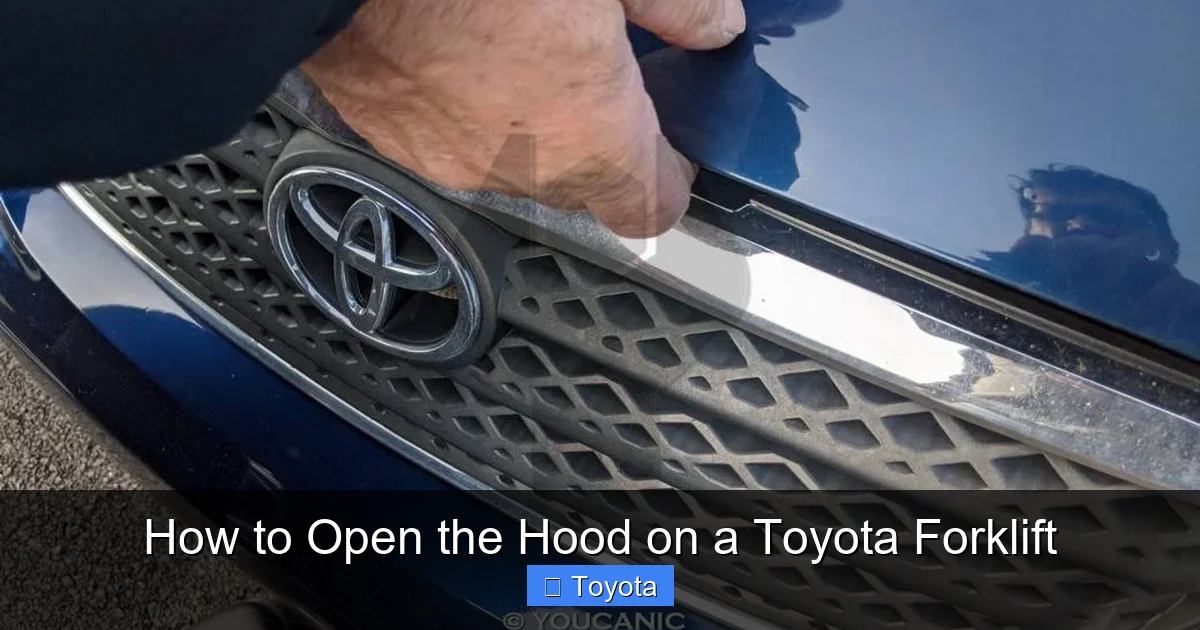
Not all Toyota forklifts require a secondary latch, but many do—especially those with reinforced hoods or hydraulic systems. This extra step is a safety feature designed to prevent the hood from accidentally opening during operation.
Finding the Secondary Latch
After pulling the interior release lever, walk to the front of the forklift and look along the bottom edge of the hood. You’re looking for a small, spring-loaded latch or a push-button mechanism. It’s often centered or slightly off-center, depending on the model.
On the Toyota 8FG25, for instance, the secondary latch is a small metal tab located just below the Toyota logo on the grille. You’ll need to press or slide it to the side to fully release the hood. On electric models like the 7HBE35, it might be a recessed button that requires a firm push with your thumb.
How to Release It Safely
Use your fingers or a flat tool (like a screwdriver, if necessary) to disengage the secondary latch. Be gentle—forcing it can bend or break the mechanism. Once released, you should feel the hood lift slightly. If it doesn’t move, double-check that both the interior lever and secondary latch are fully disengaged.
Tip: If you’re working in a dimly lit area, use a flashlight to clearly see the latch. Some older models have latches that are hard to spot without proper lighting.
Lifting and Securing the Hood
With both latches released, it’s time to lift the hood. This step requires care, as hoods on forklifts can be heavy and awkward to handle—especially on larger models.
Proper Lifting Technique
Stand directly in front of the forklift, facing the hood. Place one hand on each side of the hood’s leading edge, near the corners. Lift evenly and steadily, using your legs—not your back—to avoid strain. Most Toyota forklift hoods are designed to lift smoothly, but they can weigh 30–50 pounds depending on the model and materials.
If the hood feels unusually heavy or stiff, stop and check for obstructions. Sometimes, cables, hoses, or brackets can get caught under the hood, preventing it from opening fully.
Using the Prop Rod or Hydraulic Support
Once the hood is open, you must secure it in place. Most Toyota forklifts come equipped with a built-in prop rod—a metal or composite rod that swings out from under the hood to hold it upright. Locate the rod, pull it free from its clip, and insert the end into the designated socket on the chassis or hood support.
On newer models, such as the Toyota 8-Series, the hood may be supported by a hydraulic or gas-charged strut. These automatically hold the hood open and require no manual prop rod. However, always check that the strut is functioning properly. A failing strut can cause the hood to fall unexpectedly.
Never rely on your body or tools to hold the hood open. If the prop rod is missing or broken, replace it immediately before performing any maintenance.
Clearing the Work Area
Before you begin working, make sure the area around the open hood is clear. Remove any tools, debris, or loose items that could fall into the engine compartment. Also, ensure there’s enough overhead clearance—especially if you’re working under a low ceiling or in a confined space.
Model-Specific Instructions
While the general process is similar across Toyota forklifts, there are important differences between models. Here’s a quick breakdown of how to open the hood on some of the most common Toyota forklift series.
Toyota 8-Series (e.g., 8FGU25, 8FBE20)
The 8-Series is one of Toyota’s most popular lines, known for its ergonomic design and easy access.
– Interior lever: Located on the left side of the steering column.
– Secondary latch: Centered under the grille; press to the right to release.
– Hood support: Hydraulic strut—no prop rod needed.
Tip: The hood opens wide, giving excellent access to the engine bay. Always check fluid levels with the hood fully open and secured.
Toyota 7-Series (e.g., 7FGU25, 7FBRE15)
The 7-Series is a predecessor to the 8-Series but shares many design features.
– Interior lever: Under the dashboard on the right side.
– Secondary latch: Small push-button near the center of the grille.
– Hood support: Manual prop rod stored under the hood.
Note: Some 7-Series models have a slightly heavier hood—use both hands and lift carefully.
Toyota Electric Models (e.g., 7HBE35, 8HBE40)
Electric forklifts often have quieter operation and different access points.
– Interior lever: May be recessed or behind a panel.
– Secondary latch: Often a sliding tab or hidden button.
– Hood support: Gas struts or prop rods, depending on the model.
Tip: Electric models may have high-voltage components near the hood—always follow lockout/tagout procedures if working on electrical systems.
Toyota Traigo 80 Series
Designed for heavy-duty applications, the Traigo 80 has a reinforced hood.
– Interior lever: Located near the floor on the left side.
– Secondary latch: Dual latches on larger models—check both sides.
– Hood support: Heavy-duty prop rod or hydraulic assist.
Caution: The hood on Traigo models can be very heavy—consider having a second person assist.
Common Mistakes to Avoid
Even experienced operators can make mistakes when opening the hood. Here are some common pitfalls and how to avoid them.
Forcing the Hood Open
If the hood doesn’t open after pulling the lever, don’t yank or pry it. This can damage the latch mechanism or bend the hood. Instead, double-check that both the interior lever and secondary latch are fully disengaged. Sometimes, the secondary latch is stiff and requires a firm push.
Ignoring the Prop Rod
Failing to secure the hood with the prop rod is a major safety hazard. A falling hood can cause serious injury to your hands, head, or face. Always use the prop rod or confirm the hydraulic strut is functioning before leaning into the engine bay.
Working on a Hot Engine
Opening the hood immediately after operation can expose you to burns from hot engine parts or pressurized coolant. Always allow the engine to cool for at least 10–15 minutes. If you must work quickly, use gloves and avoid touching metal surfaces.
Skipping the Owner’s Manual
Every Toyota forklift model has slight variations in design. Relying on memory or guesswork can lead to errors. Keep a copy of your owner’s manual in the cab or maintenance area, and refer to it whenever you’re unsure.
Not Checking for Obstructions
Before lifting the hood, glance underneath to ensure no tools, hoses, or debris are blocking the path. A stuck cable or loose bracket can prevent the hood from opening fully and may cause damage if forced.
Maintenance Tips After Opening the Hood
Once the hood is open and secured, you’re ready to perform inspections or maintenance. Here are some quick tips to make the most of your access.
Check Fluid Levels
Use the dipstick to check engine oil, and inspect coolant, hydraulic fluid, and brake fluid reservoirs. Top off as needed, using the correct type of fluid specified in your manual.
Inspect Belts and Hoses
Look for cracks, fraying, or leaks in belts and hoses. Replace any damaged components promptly to avoid breakdowns.
Clean the Engine Bay
Use compressed air or a soft brush to remove dust, dirt, and debris from the engine and surrounding areas. A clean engine runs cooler and is easier to inspect.
Listen for Unusual Noises
With the hood open, start the engine and listen for squealing, grinding, or knocking sounds. These could indicate worn belts, loose components, or other issues.
Close the Hood Properly
When finished, lower the hood slowly and evenly. Make sure it’s fully seated and both latches are engaged. A loose hood can rattle during operation or even come open unexpectedly.
Conclusion
Knowing how to open the hood on a Toyota forklift is a fundamental skill for any operator or maintenance technician. It’s not just about accessing the engine—it’s about doing so safely, efficiently, and correctly. By following the steps outlined in this guide—parking safely, locating the release lever, checking for secondary latches, and securing the hood—you can perform routine maintenance with confidence.
Remember, every Toyota forklift model is slightly different, so always consult your owner’s manual for specific instructions. And never skip safety steps—your well-being and the longevity of your equipment depend on it. With practice, opening the hood will become second nature, allowing you to keep your forklift running smoothly for years to come.
Frequently Asked Questions
Where is the hood release lever on a Toyota forklift?
The hood release lever is typically located inside the operator’s cabin, near the steering column or under the dashboard. On most models, it’s on the left or right side, within easy reach of the driver’s seat.
Do all Toyota forklifts have a secondary latch?
No, not all models have a secondary latch, but many do—especially older or heavy-duty forklifts. Always check under the hood’s leading edge after pulling the interior lever to see if a secondary release is needed.
Can I open the hood while the engine is running?
No, you should never open the hood while the engine is running. Always turn off the engine, remove the key, and allow it to cool before accessing the engine compartment.
What if the hood won’t open after pulling the lever?
If the hood doesn’t open, check for a secondary latch under the grille. Also, ensure the forklift is on level ground and the parking brake is engaged. Never force the hood—this can damage the latch or hinges.
How do I secure the hood once it’s open?
Use the built-in prop rod or hydraulic strut to hold the hood in place. Never rely on your body or tools to keep it open, as this can lead to injury if the hood falls.
Is it safe to work under the hood of a Toyota forklift?
Yes, as long as you follow safety procedures: turn off the engine, use the prop rod, wear gloves and safety glasses, and allow the engine to cool. Always be aware of moving parts and electrical components.