How to Open the Hood on a Jeep Compass

Contents
- 1 Key Takeaways
- 2 📑 Table of Contents
- 3 Introduction: Why Knowing This Skill Matters
- 4 Understanding Your Jeep Compass’s Hood Mechanism
- 5 Step-by-Step Guide to Opening the Hood
- 6 Safety Precautions Every Driver Should Know
- 7 Troubleshooting Common Hood Issues
- 8 Maintenance Tips for Longevity and Ease of Use
- 9 Conclusion: Confidence Under the Hood
- 10 Frequently Asked Questions


Opening the hood on your Jeep Compass is a simple two-step process: first, pull the interior release lever, then slide the secondary latch under the front edge of the hood. Always ensure your vehicle is on level ground, the engine is cool, and you use the provided prop rod securely before reaching into the engine bay. This guide walks you through each step with clear instructions and safety tips.
Key Takeaways
- Two-Stage Release: The Jeep Compass uses a primary release inside the cabin and a secondary latch under the hood for safety.
- Primary Release Location: Find the hood release lever on the lower left side of the driver’s footwell, near the door.
- Secondary Latch: After the initial pop, slide the latch under the front center of the hood to fully disengage it.
- Secure with Prop Rod: Always insert the hood prop rod into the designated hole on the hood’s underside or support bracket.
- Never Force It: If the hood sticks, don’t pry it. Check for cable tension, latch corrosion, or obstructions instead.
- Cool Engine First: Ensure the engine is completely off and cool to prevent burns or damage.
- Regular Maintenance: Lubricate the latch mechanism periodically to prevent sticking, especially in harsh weather.
[FEATURED_IMAGE_PLACEHOLDER]
📑 Table of Contents
Introduction: Why Knowing This Skill Matters
Let’s be honest, pop the hood on your Jeep Compass might not be the first thing on your mind. But when you need to check the oil, top up the coolant, or just peek at the engine for a strange noise, that simple action becomes crucial. It’s your direct gateway to the heart of your vehicle. For a reliable, everyday SUV like the Compass, being able to access the engine bay quickly and safely is a fundamental piece of automotive self-sufficiency. It saves you time, money, and the anxiety of waiting for help on the side of the road. This guide is designed for everyone—the complete beginner who just got their first Compass, the experienced owner who wants a refresher, or anyone who’s ever stared at that hood wondering, “Now what?” We’ll break it down into crystal-clear steps, explain the “why” behind each motion, and arm you with the confidence to do it solo every single time.
Think of this as a friendly, hands-on tutorial. We’ll cover the exact locations, the feel of the mechanisms, and the little quirks your specific model year might have. By the end, you won’t just know how to open the hood; you’ll understand the system, making troubleshooting a breeze if something ever goes wrong. So, grab your keys, and let’s get that hood up.
Understanding Your Jeep Compass’s Hood Mechanism
Before we start pulling and sliding, it helps to know what you’re working with. Your Jeep Compass, like most modern vehicles, uses a two-stage hood release system. This isn’t random complexity; it’s a critical safety feature. The first stage prevents the hood from flying up accidentally at high speeds. The second stage ensures you have a secure point to engage the prop rod. Let’s dissect both parts.
Visual guide about How to Open the Hood on a Jeep Compass
Image source: 2carpros.com
The Primary Release: Your Inside Lever
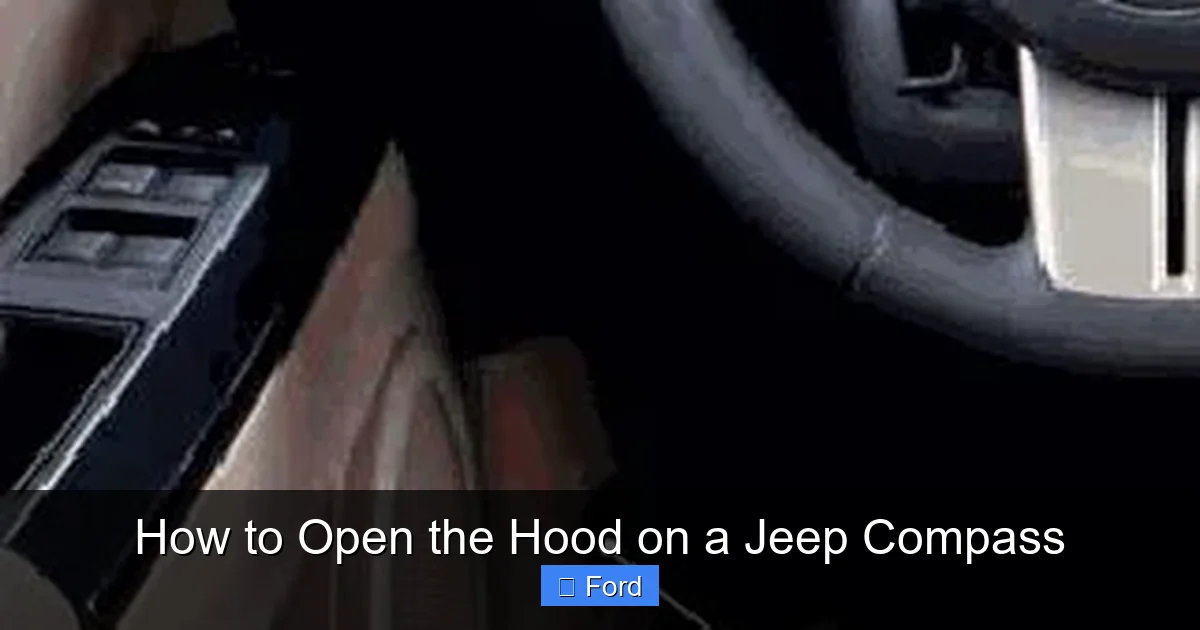
The first stop is inside your cozy cabin. Look to the lower left side, right where your left foot rests near the door. You’ll find a small, unassuming lever, often with a little hood icon on it. This is your primary release. When you pull this lever (usually upward or toward you), it disengages the first latch mechanism. You should hear and feel a distinct pop or clunk from the front of the vehicle. That’s the hood springing up about an inch, freed from its primary catch. It will not stay all the way up on its own—this is normal and by design. If you don’t hear that pop, don’t yank harder. Ensure you’re pulling the correct lever and that you’re applying steady pressure.
The Secondary Latch: The Final Disengage
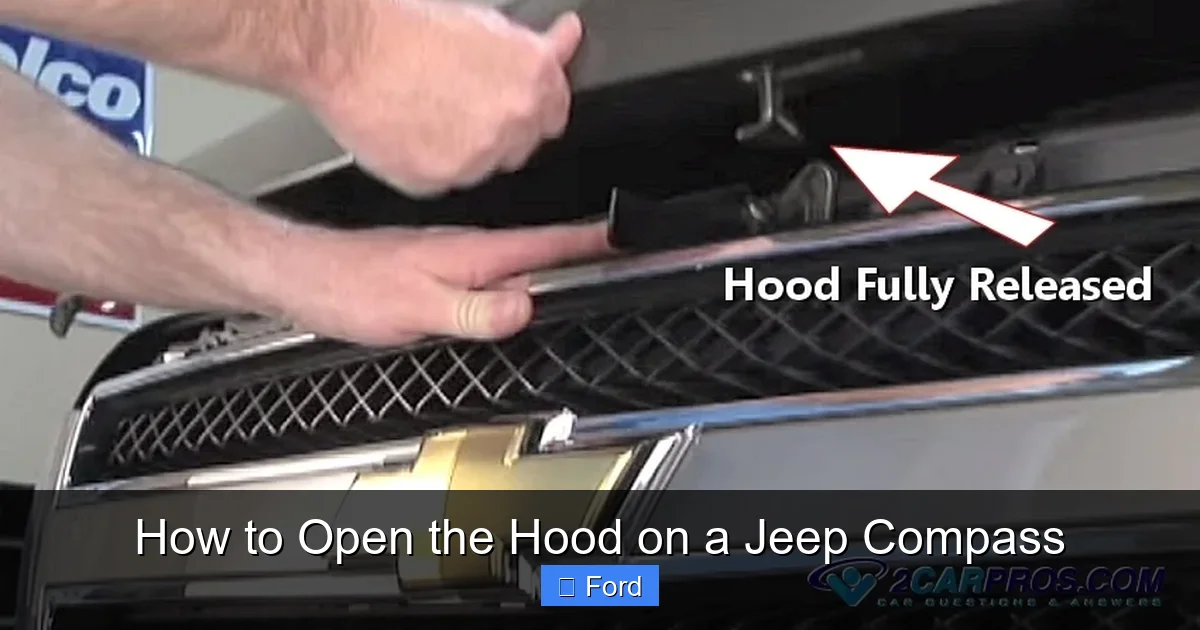
Now, step outside to the front of your Compass. That 1-2 inch gap you just created? Peer into it, right at the center front edge of the hood. You’ll see a metal arm or lever—this is the secondary latch. Its job is to hold the hood fully down until you manually release it. To open the hood completely, you need to slide this latch to one side (typically to your left, toward the driver’s side). The motion is usually a firm push or slide. You might need to use your fingers to get a good grip. Once you slide it, the hood will lift freely. This two-step process ensures the hood cannot open while you’re driving, which is a vital safety standard.
It’s worth noting that the exact design of this secondary latch can vary slightly between model years. Some have a simple flat tab, while others have a more hook-shaped lever. The principle, however, remains identical: pop inside, then slide outside.
Step-by-Step Guide to Opening the Hood
Alright, theory aside. Let’s get practical. Here is the definitive, foolproof sequence for getting that hood open on your Jeep Compass.

Visual guide about How to Open the Hood on a Jeep Compass
Image source: automadesimply.com
Step 1: Prepare Your Vehicle and Yourself
Safety first, always. Park your Compass on a level, solid surface. Engage the parking brake firmly. Turn off the engine and remove the keys. This is non-negotiable. A running engine or a vehicle that can roll is a major hazard. Next, let the engine cool. If you’ve just driven, wait at least 30 minutes. Modern engines run extremely hot, and touching the wrong component can cause serious burns. Finally, take a quick glance around the engine bay. Is there any obvious debris, like leaves or trash, that could interfere with the hood closing properly later? Clear it if needed.
Step 2: Locate and Pull the Primary Release Lever
Sit in the driver’s seat. Lean forward and look at the area where your left foot would rest. The lever is typically integrated into the lower dashboard panel or the kick panel beside the door. It may have a small hood symbol. Grasp it firmly and pull it steadily toward you or upward, depending on your model’s design. You should hear a solid CLUNK from the front of the car. That’s your signal that the first latch has released. If you hear nothing, double-check you’re pulling the correct lever (sometimes the fuel door release is nearby). Do not use excessive force; the lever should move easily.
Step 3: Navigate to the Front and Release the Secondary Latch
Exit the vehicle and walk to the front. You’ll see the hood has raised about 1-2 inches. You need to reach your hand into that gap. Feel around the center of the hood’s front edge. You’re looking for a metal lever or tab. It’s usually about 6-8 inches wide. Once you find it, grip it and slide it sideways (almost always to the left/driver’s side). You’ll feel it move a couple of inches and then stop. This disengages the final catch. The hood should now be free to lift. If it doesn’t budge, don’t force it up. Instead, gently wiggle the hood itself side-to-side while attempting to slide the latch again. Sometimes the latch and its socket need a tiny bit of alignment.
Step 4: Lift the Hood and Secure It with the Prop Rod
This is the most critical step for safety. With the secondary latch disengaged, grasp the hood firmly with both hands on the sides (avoid the center, as it can flex). Lift it straight up. Most Compass hoods are well-balanced and will stay up on their own for a moment, but you must use the prop rod. Look under the hood’s leading edge. You’ll see a small bracket or a hole. There is also a metal prop rod, usually clipped to the side of the engine bay or the underside of the hood. Unclip it, insert the hooked end into the designated hole or bracket, and let the other end rest on the engine bay structure. You should feel it lock into place. Give the hood a gentle tug downward to confirm it’s secure. A falling hood can cause catastrophic damage and injury. If your prop rod is missing or broken, do not work under the hood. Use a sturdy, non-flammable support (like a metal bar) as a temporary measure, but replace the rod immediately.
Safety Precautions Every Driver Should Know
We touched on this, but it bears repeating and expanding. Opening the hood is routine, but complacency leads to accidents. Here is your mandatory safety checklist.
Visual guide about How to Open the Hood on a Jeep Compass
Image source: sherrychrysler.com
The Golden Rules
- Cool Engine Only: Never open the hood on a hot engine. Components like the exhaust manifold, radiator, and engine block retain immense heat for a long time. Steam or contact can cause severe burns. Patience is a virtue here.
- Park and Brake: Always use the parking brake. On an incline, wheel chocks behind the rear tires are a smart addition.
- Prop Rod is Non-Negotiable: The hood’s weight is significant. The prop rod is engineered to hold it. Never rely on a hood that’s only partially lifted or propped with a makeshift tool. If the prop rod doesn’t seem to fit correctly, recheck the holes. Forcing it can cause the rod to slip.
- Clear the Area: Before closing the hood, double-check that all tools, rags, and your own hands are clear of the engine bay and the hood’s path. It’s easy to leave a wrench sitting on the engine.
- Secure Loose Items: Long hair, loose scarves, or jacket drawstrings can get caught in moving parts if the engine is accidentally started. Tie them back.
What to Do If You’re Alone
Opening the hood solo is standard. However, if you’re working on something that requires you to be under the hood for a while, consider having someone with you. They can hand you tools, call for help in an emergency, and simply provide an extra set of eyes. If you must be alone, keep your cell phone in your pocket. Let someone know where you are and what you’re doing.
Troubleshooting Common Hood Issues
Sometimes, the simple act of popping the hood doesn’t go as planned. Here’s how to handle the most common hiccups without panic.
“I Pulled the Lever, But Nothing Happened.”
First, confirm you pulled the correct lever. In the Compass, it’s almost always the leftmost lever in the driver’s footwell. Listen carefully. If you hear a faint sound but no pop, the primary cable might be loose or stretched. You can sometimes have a helper pull the lever while you press down firmly on the front center of the hood (just above the grille) to help the latch engage and disengage. If that fails, the cable may be broken or disconnected, requiring professional attention. Interestingly, owners of other SUVs like the Subaru Forester report similar issues with primary cable tension over time.
“The Hood Pops, But I Can’t Find or Move the Secondary Latch.”
Ensure the hood has actually popped up enough. Sometimes it only raises a half-inch, making the latch hard to see. Use a flashlight. The latch is always at the very front, center. If you find it but it won’t slide, it may be corroded or gunked up. Try spraying a small amount of penetrating lubricant (like WD-40) on the latch mechanism and let it sit for a few minutes. Then, attempt to slide it again while wiggling the hood. In extremely cold climates, ice can fuse the latch. A hairdryer on low heat aimed at the latch area can melt the ice without forcing parts.
“The Hood Won’t Stay Up; The Prop Rod Won’t Engage.”
Inspect the prop rod and its mounting points. The rod should have a curved hook at one end. The hood underside has a matching bracket or hole. If the hole is damaged or the bracket is bent, the rod won’t seat. You might also be trying to insert it into the wrong hole—some models have a dummy hole. Consult your owner’s manual for the exact location. If the rod itself is bent, carefully straighten it. A compromised prop rod is a serious safety risk and must be replaced. The process for securing a hood is similar across many vehicles; for example, Toyota RAV4 owners follow an almost identical prop rod procedure.
“The Hood is Stuck Completely Shut.”
This is rare but frustrating. It usually stems from a failed primary release mechanism. You might need a helper. One person pulls the interior lever firmly while the other, positioned at the front, tries to lift the hood with both hands (using the sides, not the center grille). The combined force can sometimes overcome a stuck latch. If this fails, the latch itself may be mechanically broken. At this point, it’s time to call a mechanic. Do not attempt to pry the hood with a crowbar or screwdriver, as you will dent the body or damage the latch beyond repair.
Maintenance Tips for Longevity and Ease of Use
An ounce of prevention makes opening your Compass hood a breeze for years to come. Incorporate these simple checks into your routine.
Lubricate the Latch Mechanism
Twice a year, especially before winter and after spring, spray a light lubricant like a silicone spray or a dedicated latch lube onto the secondary latch under the hood and into the primary cable’s access point (sometimes there’s a small opening near the lever). Work the latch by pulling the interior lever and sliding the secondary latch a few times to work the lubricant in. This prevents rust and seizing, which are the top causes of stuck hoods. It’s a 30-second job that saves hours of frustration.
Inspect the Cable and Lever
Periodically, with the hood open, have someone operate the interior lever while you watch the primary latch mechanism under the hood (you may need to remove a plastic cover). Ensure the cable moves smoothly and the latch arm engages/disengages fully. Look for fraying on the cable housing or kinks. A failing cable will show signs of stress and should be replaced before it snaps.
Keep the Latch Area Clean
Road grime, leaves, and dirt can accumulate around the secondary latch and its socket, creating resistance. When washing your car, pay special attention to the front edge of the hood and the grille area. A quick blast with a hose (avoid high pressure directly into the latch) can wash away debris that would otherwise cause sticking.
Check the Prop Rod
Every time you open the hood, give the prop rod a glance. Ensure the rubber caps on the ends are intact (they prevent scratching) and that the rod is straight. A bent rod is weaker and more likely to fail. Also, make sure the clip that holds it to the engine bay is secure.
For owners of other models, these maintenance principles are universal. Whether you’re caring for a Toyota Tacoma or a sedan, a clean and lubricated latch is the key to reliability.
Conclusion: Confidence Under the Hood
Opening the hood on your Jeep Compass is a foundational skill that unlocks a world of basic maintenance and understanding for your vehicle. It’s a two-step dance: the interior lever pop, followed by the exterior latch slide, and always finished with the secure placement of the prop rod. Remember the core safety pillars: a cool engine, a level surface, and a steadfast prop rod. By familiarizing yourself with the locations and motions, you transform a routine task into an automatic, confident action.
Don’t let a stuck latch or an unfamiliar mechanism intimidate you. With the troubleshooting steps provided, you can diagnose and often resolve common issues yourself. And with simple, regular maintenance—a spray of lubricant here, a clean-out there—you’ll ensure that this access point remains reliable for the life of your Compass. This knowledge empowers you. It means you can check your oil before a long trip, top up the washer fluid on a dusty day, or simply satisfy your curiosity about what’s under the hood. Now, go give it a try. Pop that hood, secure that rod, and take a look. You’ve got this.
Frequently Asked Questions
Where exactly is the hood release lever inside my Jeep Compass?
It’s located on the lower left side of the driver’s footwell, near the door. Look for a small lever with a hood icon on it. You pull it upward or toward you to release the first latch.
What should I do if my Jeep Compass hood won’t stay up on the prop rod?
First, ensure the prop rod is fully inserted into the correct hole or bracket on the hood’s underside. If the hole is damaged or the rod is bent, it won’t hold. Do not use the vehicle until the rod is secure or replaced, as a falling hood is extremely dangerous.
Can I open the hood if my car battery is dead?
Yes, absolutely. The hood release is a purely mechanical system. It does not require any electrical power. You can always open the hood using the interior lever and secondary latch, even with a completely dead battery.
How do I properly close the hood after I’m done?
First, remove the prop rod and secure it back in its clip. Then, lower the hood slowly until it’s about a foot above the closed position. Let it drop the rest of the way to engage the latches—do not slam it down. Finally, press down on the front center to ensure it’s fully latched. Listen for a solid click.
Why is my hood latch making a squeaking or grinding noise when I open it?
This is almost always due to a lack of lubrication. The metal parts of the latch mechanism need a thin film of lubricant to move smoothly. Spray a silicone-based lubricant on the secondary latch and work it a few times. Avoid thick grease, which can attract dirt.
Is it normal for the hood to feel slightly loose when it’s propped open?
A small amount of movement is normal due to the design. However, if it feels unstable, wobbles significantly, or you hear a metallic clunk, stop working immediately. Re-check the prop rod’s engagement. If it’s secure but the hood still moves oddly, the hinge pins or bracket may be worn and need inspection by a professional.