
How to Open a Toyota Car Door with a Dead Key Fob Battery

Don’t panic if your Toyota key fob battery dies. Most Toyota vehicles are equipped with a hidden mechanical key and a corresponding lock cylinder. You simply need to locate the small release button or cover on your key fob to extract the physical key, then find and use the often-concealed door lock. If your model lacks an external keyhole, alternative methods like accessing the trunk or using a spare key fob become essential. Always carry a spare key and replace your fob battery proactively to avoid lockouts.
It’s a moment of pure frustration. You’re standing by your Toyota, groceries in hand, rain starting to fall, and you press the unlock button on your key fob. Nothing happens. You press it again, maybe even the panic button by accident. Still nothing. The cruel truth dawns: your key fob battery is dead. Before you imagine the costly tow truck or the hours spent waiting for a locksmith, take a deep breath. Your Toyota was designed with this exact scenario in mind. The solution is almost always right there in your hand, hidden in plain sight. This guide will walk you through every method, step-by-step, to get you back inside your car quickly, safely, and without damage.
Key Takeaways
- Your Toyota key fob almost always hides a physical key: Look for a small release button or slider on the fob itself to extract the metal emergency key.
- The door lock hole is cleverly concealed: It’s typically hidden under a plastic cap or rubber cover on the driver’s door handle, near the key cylinder.
- Insert and turn the mechanical key like a traditional house key: It directly operates the door’s lock mechanism, bypassing the dead electronics.
- Some newer models may lack an external keyhole: In this case, your primary solutions are using a spare fob, accessing the interior via the trunk, or calling for professional lockout service.
- Avoid forcing anything: If you can’t find the keyhole or the key doesn’t turn smoothly, stop to prevent damage to the lock or cover.
- Prevention is key: Keep a spare mechanical key in your wallet or with a trusted person, and replace your key fob battery at the first sign of weakening range.
- You can often still start the car: Once inside, many Toyotas have a designated spot (e.g., near the start button) to place the dead fob for engine ignition.
📑 Table of Contents
- Understanding Your Toyota’s Key System: It’s Designed for This
- Step 1: Extracting the Hidden Mechanical Key from Your Fob
- Step 2: Finding and Using the Concealed Door Lock Cylinder
- What If There’s No Visible Keyhole? Alternative Entry Methods
- Once You’re In: Starting the Car with a Dead Fob
- Prevention and Long-Term Solutions: Be Prepared
- Conclusion: You Have the Power to Solve This
Understanding Your Toyota’s Key System: It’s Designed for This
Modern Toyota vehicles use “smart key” or “keyless entry” systems. The key fob communicates with the car via a low-power radio frequency. When the battery in the fob gets low, this communication fails. However, Toyota engineers knew a dead battery is a common failure point. Therefore, every Toyota key fob for a model with external door handles contains a physical, emergency mechanical key inside it. Furthermore, the vehicle itself has a traditional, mechanical lock cylinder on at least the driver’s door, designed to work with that hidden key. This is your primary and most reliable backup system. The process feels like a secret agent movie once you know where to look.
The Two-Part System: Fob Key & Door Lock
Think of it as a two-part puzzle. Part one is the key stored within your fob. Part two is the tiny, often color-matched lock hole on your car. Both parts exist to solve the exact problem you’re facing. The system works independently of the car’s main battery, so even if your car’s battery is also dead (a separate issue), this manual method will still open the door. This is different from older cars where the key was always visible; here, it’s a hidden tool for emergencies only.
Step 1: Extracting the Hidden Mechanical Key from Your Fob
The first task is to get the physical key out of your seemingly solid plastic fob. The mechanism is simple but varies slightly by model year and fob style.
Visual guide about How to Open a Toyota Car Door with a Dead Key Fob Battery
Image source: i.ytimg.com
Locating the Release Mechanism
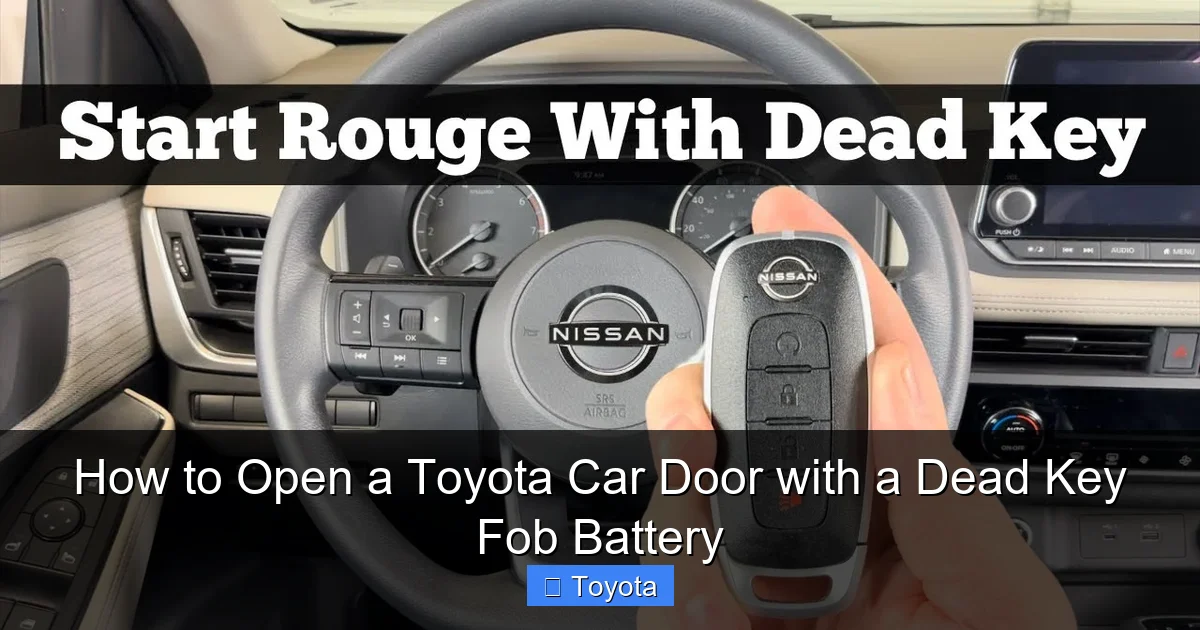
Examine your key fob closely. Look along the sides, top, or bottom for a small button, a thin slot, or a sliding panel. On many Toyota fobs (like those for the Camry, Corolla, RAV4, and Highlander), there is a small rectangular button on the side. Pressing this button will cause a small, physical key to pop out from the opposite side of the fob. On other models, there might be a thin slot where you can slide a fingernail or a small flat object to release a cover, revealing the key folded inside.
- For Button-Release Fobs: Press the small button firmly. The metal key blade, which is usually folded flat against the fob, will spring out a few millimeters. Grip it and pull it fully out.
- For Slide-Release or Cover Fobs: Use your fingernail or a plastic pry tool to gently slide or pop off the thin plastic cover. Inside, you’ll find the key blade folded. Unfold it.
Pro Tip: If you’ve never done this before, do it now with a working fob, just to practice. Familiarize yourself with the mechanism before you’re actually locked out. This simple act of preparedness can save you 20 minutes of frantic searching later.
Step 2: Finding and Using the Concealed Door Lock Cylinder
Now you have the key. Next, you need to find the lock it fits into. Toyota is very good at hiding this lock to maintain the car’s sleek, keyless appearance.
Visual guide about How to Open a Toyota Car Door with a Dead Key Fob Battery
Image source: i.ytimg.com
Where to Look: The Driver’s Door Handle is Key
The lock cylinder is almost always located on the driver’s side door. Your first inspection point is the door handle itself. Look at the backside of the handle, the part you grasp to open the door. You may see a small, round or oval rubber or plastic plug. It’s often the same color as the handle (black, silver, body-colored) and blends in perfectly. This plug covers the keyhole.
On some models, particularly older ones or certain SUVs, the lock cylinder might be located on the door’s edge—the part that meets the door jamb when closed. Check along the rear edge of the door frame for a similar covered hole.
Removing the Cover and Unlocking
Once you’ve identified the small plug, you need to remove it. There is usually a tiny notch or gap on one side. Use your fingernail, the edge of the mechanical key itself, or a flat plastic tool to gently pry the cover off. It should pop out with moderate pressure. Do not use metal tools that could scratch the paint if you slip.
Underneath, you’ll find a traditional keyhole. Simply insert the mechanical key you extracted from the fob and turn it clockwise (to the right). You should feel and hear the door lock mechanism disengage. Pull the door handle to open. That’s it! You’re in.
Important Note: On some newer Toyotas (like certain 2020+ models), the keyhole might be on the passenger door instead of the driver’s. Check both doors if the driver’s side has no visible cover. The owner’s manual will specify the exact location for your specific model and year.
What If There’s No Visible Keyhole? Alternative Entry Methods
A small but growing number of Toyota models, especially those with completely seamless door handles (like some Prius variants or the bZ4X), may not have an external keyhole at all. If you’ve searched the driver’s and passenger door handles and edges and found no removable cover, don’t force anything. Here are your next steps.
Visual guide about How to Open a Toyota Car Door with a Dead Key Fob Battery
Image source: ebaymotorsblog.com
Method 1: Use a Spare Key Fob
This is the simplest solution if you have one. Do you keep a spare fob at home, with a family member, or in your desk at work? Now is the time to call and have someone bring it to you or, if you’re at home, retrieve it. A spare fob with a good battery will unlock the car normally. This is why keeping a spare in a secure, known location is a critical backup plan.
Method 2: Access Through the Trunk
Many Toyota sedans and SUVs have a rear seat that folds down, and a trunk that can be opened from the outside with a separate, physical trunk key (often the same mechanical key from your fob) or even a hidden trunk release lever. If you can gain access to the trunk, you might be able to fold down the rear seats and crawl into the passenger compartment to unlock the doors from the inside.
How to check: Locate the trunk lock cylinder (often on the trunk lid itself, under a small cover). Use your mechanical key to open the trunk. Once inside, look for release levers or handles for the rear seats. Pull them to fold the seats forward and create an access path into the back seat area. From there, you can reach the front door locks or interior door handles.
For specific instructions on accessing a Toyota trunk with a dead battery, models like the Sienna have a dedicated process that may involve a hidden trunk release inside the cabin or under the rear bumper.
Method 3: The Roadside Assistance or Professional Locksmith Call
If you have no spare fob and cannot access the trunk, your last resort is professional help. If you have a roadside assistance plan (through your insurance, auto club, or car manufacturer’s warranty), call them. They often provide lockout service. Alternatively, a reputable automotive locksmith can use specialized tools to unlock your door without damaging it. Always verify their credentials and pricing before they begin work. This will cost money, but it’s often cheaper and faster than a tow.
Once You’re In: Starting the Car with a Dead Fob
Opening the door is only half the battle. You now need to start the car to drive home or to the auto shop. The good news: Toyota has you covered here too.
The “Key Fob Slot” or Proximity Method
For vehicles with a push-button start system, the key fob (even with a dead battery) still contains a passive transponder chip. The car’s system has a designated spot where it can “read” this chip. This is usually a small, dimpled area on the steering column or center console, often marked with a key icon. The owner’s manual will show the exact location.
The process is simple: with the dead fob in this specific spot, press the brake pedal and the engine start/stop button as you normally would. The car will recognize the transponder and start the engine. You are now free to drive to your destination. Note that the keyless entry functions (like remote lock/unlock) will remain non-functional until you replace the fob battery, but the car will run normally.
If your Toyota has a traditional ignition slot (less common on newer models), you would insert the mechanical key directly into the ignition to start the car. However, most modern Toyotas use the push-button system described above. For more detailed guidance on this process, you can refer to resources on how to start a car with a key fob.
Prevention and Long-Term Solutions: Be Prepared
Experiencing a dead key fob battery is a nuisance, but it’s also a valuable reminder to be prepared. Here are proactive steps to ensure you’re never stranded again.
1. Know Your Fob’s Battery Life and Replace Proactively
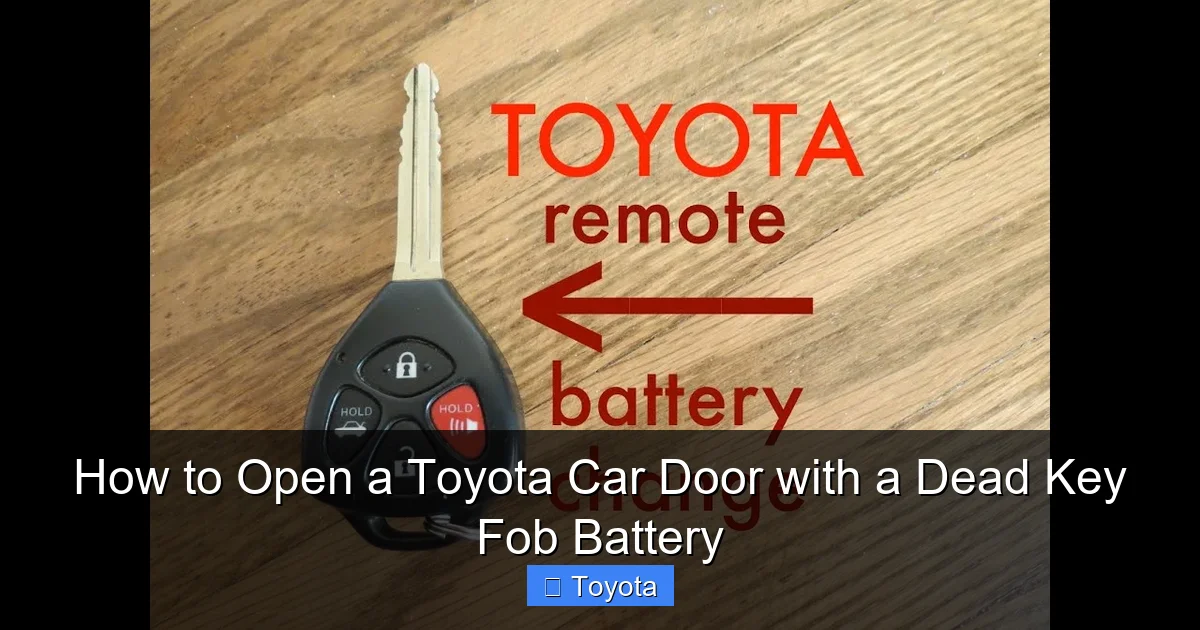
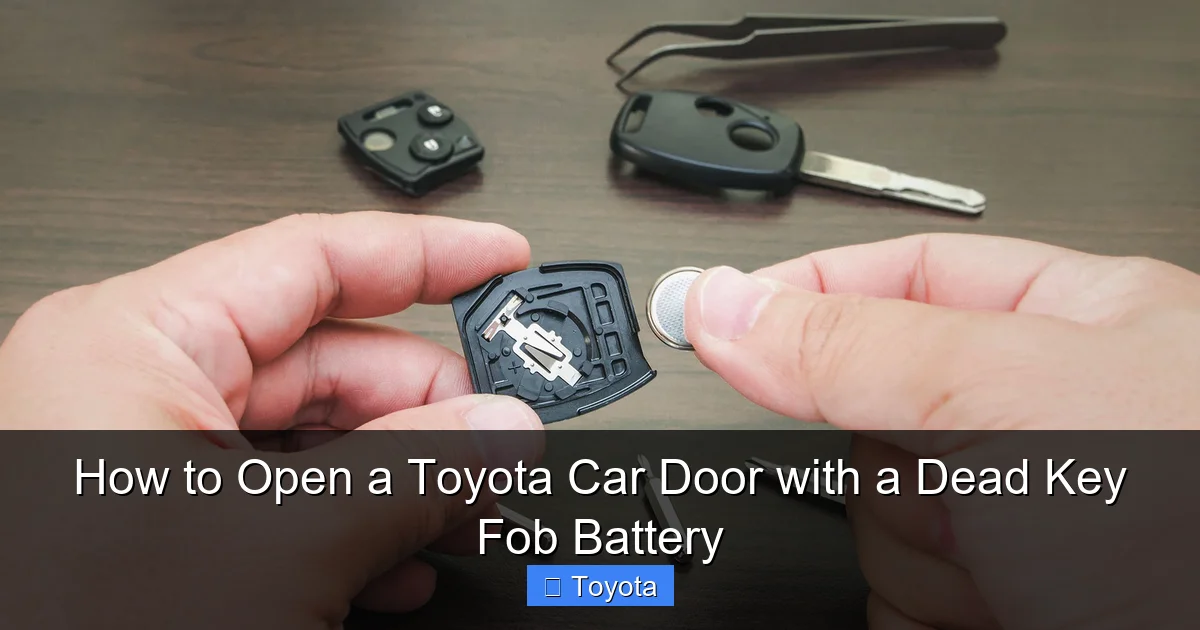
Key fob batteries typically last 2-4 years. Signs of a weakening battery include having to be much closer to the car for it to respond, or the need to press the button multiple times. Don’t wait for a complete failure. Replacing the battery is a cheap and easy DIY task. You can find instructions specific to your model year by searching for how to change the battery in your specific Toyota key fob. Most use a standard CR2032 3V lithium battery, available at any pharmacy or hardware store for a few dollars.
2. Carry a Spare Mechanical Key
Even if your car has no external keyhole, the mechanical key from your fob is invaluable. Consider having a second, identical mechanical key cut and store it in your wallet or with a trusted neighbor. It costs little at a locksmith or dealership and provides a guaranteed physical backup.
3. Store a Spare Fob Strategically
If your budget allows, a second key fob is the ultimate backup. Keep it charged and stored in a known, accessible location—not in the car you’re locked out of! A desk drawer at work, with a spouse, or in a magnetic box under your car (if you have a secure, hidden spot) are common solutions.
4. Understand Your Specific Model
Take 10 minutes now, with your car in the driveway, to locate the hidden keyhole and practice extracting the emergency key. Consult your owner’s manual—it has the definitive diagrams and instructions for your exact vehicle. Knowing this beforehand transforms a panic situation into a simple, 60-second task.
Conclusion: You Have the Power to Solve This
A dead key fob battery is one of the most common and easily solvable car problems. It’s not a sign of a broken car; it’s a signal to use the manual backup system that was always there. By following the steps in this guide—extracting the hidden key, finding the concealed lock cylinder, and turning it—you can regain entry to your Toyota in under two minutes. If your model lacks an external keyhole, your plans B and C (spare fob, trunk access, professional help) are clear. The real lesson is preparedness: replace that fob battery at the first sign of weakness, keep a spare key, and know your car’s emergency features. Now, go check that key fob battery. You’ve got this.
Frequently Asked Questions
What if my Toyota doesn’t have a visible keyhole on the driver’s door?
Check the passenger door handle and edges. If still none, your model may be designed without one. Your primary options are using a spare key fob, accessing the interior via the trunk (if possible), or calling a locksmith or roadside assistance. Consult your owner’s manual for the exact emergency entry procedure for your model.
Can I still drive my Toyota if the key fob battery is dead?
Yes, absolutely. Once you’ve manually unlocked the door and are inside, you can start the car. With the dead fob in the designated slot or near the start button (check your manual for the exact location), press the brake and push the start button. The car will recognize the fob’s passive chip and start normally.
My key fob has a physical key, but I can’t find the lock hole. Where else could it be?
>While the driver’s door handle is the most common location, also inspect the passenger door, the rear tailgate (on SUVs), and the trunk lid. On some older models, it might be on the rear side of the front fender near the door. The cover is always a small, removable plastic or rubber plug. If you cannot find it, your owner’s manual is the best resource.
Will using the mechanical key set off my car’s alarm?
It might. Using the mechanical key to unlock the door can trigger the alarm because it’s not the normal, coded signal from the fob. The alarm will usually stop once you insert the key into the ignition (or place it in the fob slot) and turn the car on. You can also try unlocking with the mechanical key and then immediately pressing the lock button on the fob (if it has any charge) or the interior door lock button to silence the alarm.
How do I know my key fob battery is low before it dies completely?
You’ll notice you have to stand much closer to the car for the remote lock/unlock to work—often within 5-10 feet instead of the usual 30-50 feet. You may also need to press the button multiple times. Some vehicles display a warning message on the driver’s screen (“Key Fob Battery Low”). If you experience these signs, replace the battery immediately.
How often should I replace my Toyota key fob battery?
There’s no set schedule, as it depends on usage and battery quality. On average, a key fob battery lasts 2 to 4 years. A good practice is to proactively replace it every 3 years, or at the first sign of reduced range. Replacing it is a simple, inexpensive DIY task that prevents unexpected lockouts.
