How to Open a Jeep Trunk from Inside

Contents
- 1 Key Takeaways
- 2 📑 Table of Contents
- 3 Understanding Your Jeep’s Trunk System: It’s Not One-Size-Fits-All
- 4 Model-by-Model Breakdown: Where’s That Release?
- 5 Emergency Scenario: Your Battery is Dead
- 6 Safety Considerations and What NOT to Do
- 7 Prevention and Maintenance: Keep Your Release Working
- 8 Conclusion: Knowledge is Your Key
- 9 Frequently Asked Questions
Car Neck Pillow
Car Phone Holder

Windshield Washer Fluid
Side Window Sunshade
Being able to open your Jeep’s trunk from the inside is a crucial safety and convenience skill. The method varies significantly by model year and trim, from a simple latch to a complex electronic release. This guide covers every Jeep model from the Wrangler to Grand Cherokee, detailing the location and operation of the interior trunk release, manual override procedures for dead batteries, and essential safety tips. Knowing these steps ensures you’re never locked out of your cargo space.
Picture this: you’re on a rugged trail in your Jeep Wrangler, or maybe you’re cleaning out the Grand Cherokee at home. You close the trunk to keep gear secure, and then you hear it—the unmistakable *click* of the latch engaging behind you. You’re on the inside, and the trunk is now securely shut. Panic can set in fast. But take a deep breath. Every Jeep built for the modern era has a designed, safe way to get back out. Knowing how to open a Jeep trunk from inside isn’t just a party trick; it’s a vital piece of automotive self-rescue knowledge. This comprehensive guide will walk you through the exact steps for every major Jeep model, from the latest Grand Cherokee to the classic Wrangler, ensuring you’re never trapped.
We’ll demystify the electronic buttons, the hidden manual releases, and the all-important backup plan of folding your seats. We’ll also tackle the dreaded dead battery scenario, where your power locks and electronic releases become useless paperweights. By the end, you’ll be a certified expert on your Jeep’s interior cargo access, turning a potential nightmare into a simple, solved problem. Let’s pop that hood of knowledge and get started.
Key Takeaways
- Location is Model-Dependent: The interior trunk release button or lever location changes between Jeep Wrangler, Cherokee, Grand Cherokee, and Compass models. Always consult your owner’s manual first.
- Electronic vs. Manual Systems: Newer Jeeps use an electronic button that requires battery power. Older models often have a manual mechanical latch you can pull or turn.
- Dead Battery Protocol: If your Jeep’s battery is dead, the electronic release won’t work. You must use the manual trunk key slot (if equipped) or access the trunk via the rear seat fold-down.
- Safety First: Never attempt to force a stuck mechanism. Forcing it can break the release cable or latch, leading to costly repairs.
- Folding Seats are Your Backup: In most modern Jeeps, the primary emergency access method is folding down the rear seats to crawl into the trunk compartment.
📑 Table of Contents
Understanding Your Jeep’s Trunk System: It’s Not One-Size-Fits-All
Jeep doesn’t make just one vehicle. The solution to “how to open a jeep trunk from inside” depends entirely on which vehicle you’re sitting in. The core principle is the same—there’s a latch mechanism holding the decklid closed, and there’s a way to trip it from the passenger cabin—but the implementation differs. Broadly, we can categorize modern Jeeps (roughly 2000s onward) into two groups: those with a direct interior release button/lever, and those that rely on folding the rear seats as the primary interior access point. Many models actually use a hybrid system.
The Two Primary Mechanisms
Direct Interior Release: Found in most sedans and SUVs, this is a physical button (often lit) or a mechanical lever located on the driver’s side door panel, the dashboard near the steering wheel, or sometimes on the rear bulkhead (the wall behind the rear seats). Pressing or pulling it sends a signal or cable pull to release the trunk latch.
Rear Seat Fold-Down Access: This is Jeep’s preferred method for many of its SUVs, especially the Grand Cherokee and Cherokee. The rear seats are designed to fold completely flat, creating a large opening into the trunk cargo area. The “release from inside” is therefore the seat release handle itself. You’re not opening the trunk lid; you’re creating a portal into the trunk space.
Why the Difference?
Jeep prioritizes security and a clean interior design. A simple button on the door can be accidentally pressed. Folding seats provide a more deliberate, robust access method and maintain the structural integrity of the rear cargo wall. It also means there’s no long, fragile release cable running from the dashboard to the trunk lid, which can break over time—a common issue in older vehicles. For a deeper dive into how different manufacturers handle interior trunk access, you can see how other brands like Nissan or Toyota engineer their systems, which often follow similar principles of either direct buttons or seat-fold access.
Model-by-Model Breakdown: Where’s That Release?
Let’s get specific. We’ll cover the most common Jeeps on the road. If your model isn’t listed, the principles will still apply, but your owner’s manual is the final authority.
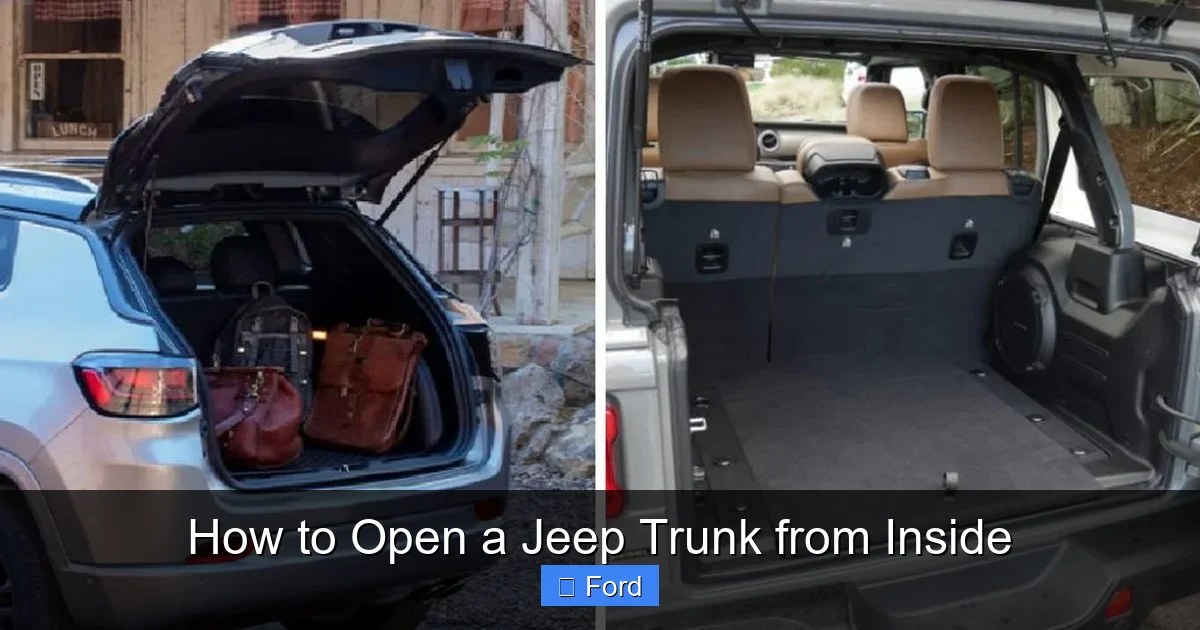
Visual guide about How to Open a Jeep Trunk from Inside
Image source: jeepfixes.com
Jeep Wrangler (JL and Earlier)
The Wrangler is unique because its “trunk” is often an open cargo area with a removable hard top or a soft top with a rear window. The concept of being “trapped inside” the cargo area is less common, as you can usually climb out over the tailgate or through the rear side windows if they’re down. However, if you have a hardtop with a rear hatch (on 4-door models) and you’re inside the cab with the hatch closed:
- Location: Look for a small, round, black plastic button on the driver’s door panel, near the power window switches. It’s usually unmarked or has a trunk icon.
- Operation: Press and hold the button for 1-2 seconds. You should hear the trunk latch release. If it doesn’t work, the issue is likely power-related (see the Dead Battery section below).
- Manual Override: The Wrangler typically does NOT have a mechanical keyhole on the trunk lid itself for the interior release. Your only manual option is the exterior keyhole on the tailgate (if equipped) or folding the rear seats (in 4-door models) to access the cargo area from the cabin side. The rear seats in a Wrangler are not always easily foldable from inside the cargo area.
Jeep Grand Cherokee (All Generations, Especially 2014+)
This is the most common scenario for the “trapped in trunk” question. The Grand Cherokee almost universally uses the rear seat fold-down as the primary interior access method.
- Primary Method (Folding Seats): From inside the passenger cabin, locate the release handle for the rear seats. It’s typically on the top of the rear seatback, near the center (for 50/50 split seats) or on the side panels. Pull the handle, and the seatback will fold forward and down, creating a large, flat opening into the cargo hold. You can then climb over the seatback into the trunk. This is the intended, foolproof design.
- Secondary Electronic Button: Many Grand Cherokees also have an electronic trunk release button on the driver’s door panel or the dashboard. This opens the *decklid* from inside the cabin. However, if you are physically *inside the cargo compartment* with the decklid closed, this button is on the wrong side of the sealed rear bulkhead. It’s useless to you in that specific scenario. Its purpose is for opening the trunk while you’re sitting in the front seats.
- Manual Key Slot: On the trunk lid (decklid), there is a small, round cover. Pry it off with a flathead screwdriver or your fingernail to reveal a keyhole. You can use your physical key (if you have one) to manually unlock and open the trunk from the *outside*. This does not help you from the inside, but it’s what a passerby or roadside assistance would use.
Jeep Cherokee (KL Model, 2014-2023)
The Cherokee follows the same philosophy as the Grand Cherokee.
- Primary Method: Fold the rear seats. The release levers are on the top of the rear seatbacks. Pull them, and the seats fold down, granting access to the cargo area from the cabin.
- Electronic Button: Like the Grand Cherokee, a button on the driver’s door opens the trunk lid from the front seats. It is not accessible from within the cargo hold.
- Note: Some Cherokee trims may have a smaller cargo area, but the seat-fold mechanism is standard.
Jeep Compass
Similar to its siblings.
- Primary Method: Use the rear seatback release handles (located on the top of the seats) to fold them down into the cargo floor.
- Electronic Release: A button on the driver’s door panel operates the trunk lid from the front cabin.
- Trunk Key Slot: Available on the decklid for external manual operation.
Jeep Renegade
The smallest Jeep has a slightly different setup.
- Primary Method: The rear seats fold down. The release is a fabric strap or plastic handle on the side of the seat cushion or the seatback. Pull it to fold the seat forward.
- Electronic Button: Located on the driver’s door.
- Manual Key Slot: Present on the trunk lid.
The Critical Exception: Jeep Gladiator
The Gladiator is a pickup truck with a separate bed. The “trunk” is the truck bed, which is always accessible from the outside via the tailgate. There is no enclosed “trunk” compartment that you can be locked inside of. The cabin and bed are separate. If you’re in the cabin, you simply open the door. If you’re in the bed, you open the tailgate. This scenario doesn’t apply.
Emergency Scenario: Your Battery is Dead
Here’s the plot twist that turns a simple button press into a puzzle. All those lovely electronic trunk release buttons on the door panel? They need battery power to work. If your Jeep’s battery is completely dead, those buttons are inert. You’ll press them and hear nothing, see no light. This is a very common reason people get stuck. Here’s your battle plan:
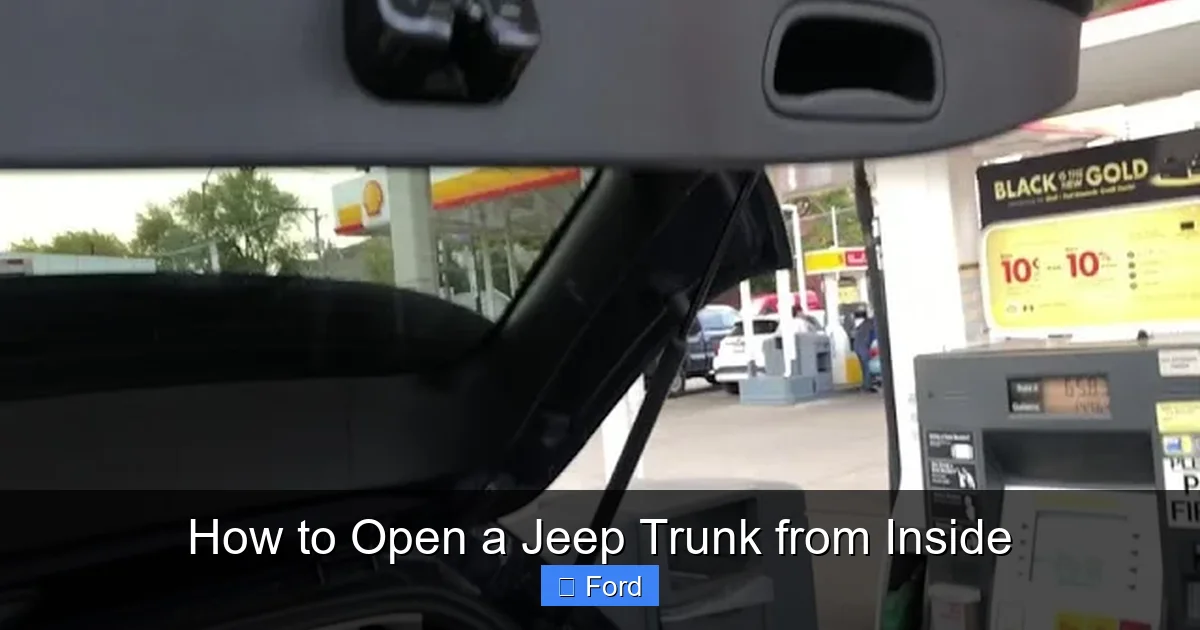
Visual guide about How to Open a Jeep Trunk from Inside
Image source: adventurejeep.com
Step 1: The Manual Key Slot on the Trunk Lid
As mentioned, every Jeep (except perhaps some base-model Wranglers) has a hidden keyhole on the trunk lid itself. It’s hidden under a small, round plastic cap. Use your physical key (the one that comes with the fob, often a hidden metal key inside the fob) to unlock the trunk manually from the *outside*. This is the fastest solution if you can get to the outside of the vehicle.
Step 2: Access via Folding Rear Seats
This is your go-to interior solution when the electronic button is dead. The beauty of the folding seat design is that it requires no power. The seat release mechanisms are purely mechanical—a lever or strap connected to a hinge. You can be in the cabin with a dead battery, pull the rear seat release handle, fold the seats down, and climb into the cargo area. Once in the cargo area, you can then manually open the decklid from the inside by finding the interior trunk release latch (which is often a simple mechanical pull cable or lever located on the inside of the decklid itself, near the center). Important: Not all Jeeps have an interior mechanical pull cable *inside the trunk lid*. In many, the only way to open the lid from the cargo area is to reach up and manually lift the latch mechanism by hand, which can be tricky. The seat-fold method primarily gets you *into* the cargo space. Opening the lid from there may still require the external key or finding the latch arm.
For specific models like a Toyota Sienna or a Subaru Outback, the process is similar: rely on the mechanical seat release and manual key slot.
Step 3: Jump Start the Vehicle
If you can get into the cabin (you’re not trapped in the trunk), a jump start will restore power to the electronic release button. This is often the easiest fix if you have jumper cables and another vehicle or a portable jump starter.
Safety Considerations and What NOT to Do
When you’re in a confined, dark space, it’s easy to panic. A clear head is your best tool. Here’s what to avoid:

Visual guide about How to Open a Jeep Trunk from Inside
Image source: i.ytimg.com
- DO NOT try to pry open the trunk lid from the inside with tools. The interior of the decklid is thin sheet metal. You’ll likely dent it, break interior trim pieces, and possibly damage the latch mechanism, making the problem much worse and more expensive.
- DO NOT repeatedly slam or kick the rear seats or bulkhead. You could break the seatback release mechanism or the seat itself.
- DO NOT assume all models have a direct interior trunk release cable. Forcing a pull on a non-existent cable will break whatever you’re pulling on.
- DO take a flashlight (keep one in your glove box!) to see the seat release handles and latch mechanisms clearly.
- DO remember that in most modern Jeeps, the rear seat fold-down is the primary, designed method for interior access. This is what the engineers want you to use. It’s safe, reliable, and doesn’t require power.
Understanding your vehicle’s design is key. For instance, in some sedans, accessing the trunk from the back seat is a standard feature, as explained in guides for vehicles like the Toyota Camry. Your Jeep’s rear seats serve the same fundamental purpose.
Prevention and Maintenance: Keep Your Release Working
An ounce of prevention is worth a pound of panic. Here’s how to ensure your interior trunk release works when you need it most.
- Test It Monthly: While parked safely, close the trunk and then use the interior button or seat release to open it. Do this for both the electronic button (if you have one) and the mechanical seat fold. Make sure the seat folds smoothly and locks back into place upright.
- Listen and Feel: When you press the electronic button, you should hear a distinct “thunk” or solenoid click from the trunk area. If you hear nothing, the button may be faulty, the fuse blown, or the wiring issue. If you hear a click but the trunk doesn’t open, the latch itself may be jammed or misaligned.
- Lubricate the Latch: Once a year, spray a dry Teflon lubricant (like PB Blaster) into the trunk latch mechanism (with the trunk open). Cycle the latch open and closed 5-10 times. This prevents rust and grime from causing a stuck latch.
- Check Fuses: If the electronic release fails, the culprit is often a blown fuse. Your owner’s manual will have a fuse box diagram (usually under the dash and in the engine compartment). Find the fuse labeled “TRUNK” or “DEICER” (sometimes shared) and check it. Spare fuses are usually in the fuse box.
- Inspect Seat Mechanisms: Ensure nothing is stored on top of the folded rear seats that would prevent them from folding. Check that the seat release levers/straps are not frayed or damaged.
For other common Jeep maintenance queries, like how to open a hood on various brands, our site has detailed guides that follow similar principles of locating release levers and safety catches.
Conclusion: Knowledge is Your Key
Being locked out of your Jeep’s trunk from the inside is a rare but solvable situation. The solution always circles back to two things: understanding your specific model’s design and having a calm, methodical approach. For the vast majority of modern Jeep SUVs—Grand Cherokee, Cherokee, Compass, Renegade—the answer is beautifully simple: find the rear seat release handle and fold the seats down. It’s a mechanical, power-free system that works every time. For the Wrangler 4-door, it’s the door panel button, with the seat-fold as a potential backup. The dead battery scenario simply adds one more step: locate the manual key slot on the outside of the trunk lid.
Take five minutes today, with your Jeep parked and empty, to locate the rear seat release handles and the trunk release button on your door. Test them. This tiny investment of time transforms a potential panic-inducing lock-in into a non-event. You’ll know exactly what to do, and that confidence is worth more than any tool in your glove box. Now, go enjoy your Jeep, secure in the knowledge that you’ve got this.
Frequently Asked Questions
What if my Jeep has no obvious trunk button on the door?
If you drive a Grand Cherokee, Cherokee, or Compass, the primary interior access is via the folding rear seats, not a direct trunk lid button. Look for the seat release handles on the top of the rear seatbacks. Pull them to fold the seats and create an opening into the cargo area.
My electronic trunk button doesn’t work. What could be wrong?
First, check the fuse for the trunk or body control module in your fuse box (see owner’s manual). A dead battery will also disable it. If power is good, the button itself, the wiring, or the trunk latch solenoid may be faulty and need professional diagnosis.
Can I lock the trunk from the inside while I’m in the cargo area?
Generally, no. The trunk latch is designed to be locked and unlocked from the outside via key/fob or from the front cabin via the button. Once you’re inside the cargo compartment, there is typically no lock mechanism on the inside of the decklid. You close it, and it latches. You must use the methods described to reopen it.
Is it safe to fold the rear seats while someone is sitting in them?
Absolutely not. The seat folding mechanisms are not designed for occupied seats. Ensure the rear seat area is completely empty before folding the seats down. The release leches are also not meant to bear weight; they are for releasing the latch mechanism only.
My Jeep’s battery is dead, and I’m locked in the cargo area. Now what?
First, try to fold the rear seats down from the cabin side using the mechanical release handles (this works with no power). Once the seats are down, you can climb into the cargo area. Then, locate the trunk latch on the inside of the decklid. You may need to manually lift the latch arm by hand. Your final resort is for someone to use the manual key slot on the outside of the trunk lid to open it.
Do all Jeeps have a manual key slot on the trunk?
Almost all do, but it’s often hidden under a small plastic cap on the trunk lid. Some very new models may rely solely on keyless entry and a hidden emergency key inside the fob for the doors, but the trunk lid itself almost always retains a physical keyhole for security and emergency access. Your owner’s manual will confirm its exact location.