How to Jump-start a Lexus Ct200h

Contents
- 1 Key Takeaways
- 2 📑 Table of Contents
- 3 Introduction: Why Jump-Starting a Lexus CT200h Is Different
- 4 Understanding the Lexus CT200h’s Electrical System
- 5 Tools and Preparation: What You’ll Need
- 6 Step-by-Step Guide: How to Jump-Start a Lexus CT200h
- 7 Common Mistakes to Avoid
- 8 Preventing Future Dead Batteries
- 9 When to Call a Professional
- 10 Conclusion: Stay Prepared and Drive Confidently
- 11 Frequently Asked Questions

Foam Cannon

Brake Cleaner Spray

Car GPS Navigator
Fuel Injector Cleaner
Jump-starting a Lexus CT200h requires extra care due to its hybrid system. Unlike traditional cars, the 12-volt battery is separate from the high-voltage hybrid battery and is often located in the trunk. With the right tools and knowledge, you can safely revive your CT200h and get back on the road quickly.
Key Takeaways
- Locate the 12-volt battery in the trunk: The Lexus CT200h stores its auxiliary 12-volt battery in the trunk, not under the hood, which is critical for jump-starting.
- Use jumper cables and a donor vehicle: A conventional gasoline-powered car with a healthy 12-volt battery is ideal for providing the jump.
- Follow the correct connection sequence: Connect red to positive, black to negative, and ground the final clamp to the donor car’s engine block to prevent sparks near the battery.
- Never jump the high-voltage hybrid battery: Only the 12-volt auxiliary battery needs a jump; the hybrid system should never be connected to external power.
- Allow time for the system to reset: After jump-starting, let the car idle for 15–30 minutes to recharge the 12-volt battery and allow the hybrid system to reinitialize.
- Check for underlying issues: A dead 12-volt battery may signal a faulty alternator, parasitic drain, or aging battery that needs replacement.
- Use a portable jump starter as an alternative: A compact lithium-ion jump starter can be a safer, more convenient option for hybrid vehicles.
📑 Table of Contents
- Introduction: Why Jump-Starting a Lexus CT200h Is Different
- Understanding the Lexus CT200h’s Electrical System
- Tools and Preparation: What You’ll Need
- Step-by-Step Guide: How to Jump-Start a Lexus CT200h
- Common Mistakes to Avoid
- Preventing Future Dead Batteries
- When to Call a Professional
- Conclusion: Stay Prepared and Drive Confidently
Introduction: Why Jump-Starting a Lexus CT200h Is Different
Imagine this: you’re running late for work, you hop into your sleek Lexus CT200h, turn the key—or press the start button—and nothing happens. No dashboard lights, no engine cranking, just silence. Your first thought might be, “Great, the battery’s dead.” But before you grab the jumper cables, take a breath. Jump-starting a Lexus CT200h isn’t quite like jump-starting a traditional gasoline car. Why? Because the CT200h is a hybrid, and its electrical system is more complex.
The Lexus CT200h uses a high-voltage hybrid battery to power its electric motor, but it also relies on a standard 12-volt auxiliary battery for starting the system, running lights, infotainment, and other electronics. This 12-volt battery is what typically dies when the car won’t start—not the big hybrid battery. However, because of the hybrid design, the location of this 12-volt battery is unconventional, and the jump-starting process requires extra caution. If done incorrectly, you could damage sensitive electronics or even risk injury.
In this guide, we’ll walk you through everything you need to know about how to jump-start a Lexus CT200h safely and effectively. Whether you’re stranded in a parking lot or helping a friend, this step-by-step guide will give you the confidence to handle the situation like a pro. We’ll cover where to find the battery, how to connect the cables, what to avoid, and how to prevent future dead batteries. Let’s get started.
Understanding the Lexus CT200h’s Electrical System
Before jumping into the jump-start process, it’s important to understand how the Lexus CT200h’s electrical system works. This knowledge will help you avoid mistakes and ensure a safe, successful jump.
Visual guide about How to Jump-start a Lexus Ct200h
Image source: i.ytimg.com
The Dual-Battery Setup
The CT200h features a dual-battery system. The main power source is the high-voltage hybrid battery, typically rated around 201.6 volts, which powers the electric motor and assists the gasoline engine. This battery is self-sustaining during normal operation and is charged through regenerative braking and the internal combustion engine. It’s sealed, maintenance-free, and should never be accessed or jumped by the average driver.
The second battery is the 12-volt auxiliary battery. This is the one that powers the car’s starter system (in hybrids, it initiates the startup sequence), lights, radio, climate control, and other electronics. When this battery dies, the car won’t start—even though the hybrid battery may be fully charged. This is a common point of confusion for hybrid owners.
Where Is the 12-Volt Battery Located?
Unlike most cars where the 12-volt battery sits under the hood, the Lexus CT200h hides it in the trunk. Specifically, it’s located on the right-hand side (passenger side) of the trunk, behind a plastic cover. To access it, open the trunk, remove the floor mat, and look for a rectangular plastic panel. Unclip or unscrew it to reveal the battery.
This placement is intentional. Lexus designed it this way to protect the battery from engine heat and to optimize weight distribution. However, it means you’ll need to access the trunk to jump-start the car—even if the hood is closed. Keep this in mind when positioning your vehicle near a donor car.
Why Can’t You Jump the Hybrid Battery?
Some drivers mistakenly believe they need to jump the high-voltage hybrid battery. This is not only unnecessary but also extremely dangerous. The hybrid battery is managed by a sophisticated computer system and is not designed to be connected to external power sources. Attempting to do so can cause severe electrical damage, void your warranty, or even result in electric shock.
Only the 12-volt auxiliary battery needs a jump. Once it’s recharged, the car’s onboard systems can restart, and the hybrid battery will resume normal operation. Think of the 12-volt battery as the “key” that unlocks the hybrid system—without it, the car remains dormant.
Tools and Preparation: What You’ll Need
Jump-starting a Lexus CT200h requires more than just a set of jumper cables. Proper preparation ensures safety and increases your chances of success on the first try.

Visual guide about How to Jump-start a Lexus Ct200h
Image source: i.ytimg.com
Essential Tools
- Heavy-duty jumper cables: Look for cables with thick gauge (6-gauge or lower) and strong clamps. Thin cables may not deliver enough current.
- A donor vehicle: A conventional gasoline or diesel car with a healthy 12-volt battery works best. Avoid using another hybrid unless you’re certain of the procedure.
- Safety gloves and goggles: Protect your hands and eyes from sparks or battery acid.
- A flashlight: Especially useful if you’re jump-starting at night or in low-light conditions.
- Owner’s manual: Keep it handy for reference, particularly for fuse box locations and emergency procedures.
Pre-Jump Safety Checks
Before connecting anything, perform these safety checks:
- Turn off both vehicles: Ensure both the CT200h and the donor car are powered off. Remove keys or press the power button to the “off” position.
- <Check for damage: Inspect the 12-volt battery in the CT200h for cracks, leaks, or bulging. If you see any, do not attempt to jump-start—call a professional.
- Ensure proper positioning: Park the donor car close enough for the cables to reach, but not so close that the bumpers touch. Both cars should be in “Park” (or “Neutral” with parking brake on for manuals).
- Remove metal jewelry: Rings, bracelets, and watches can conduct electricity and increase shock risk.
Alternative: Portable Jump Starters
If you don’t have access to another vehicle, a portable jump starter is an excellent alternative. These compact, battery-powered devices are designed specifically for jump-starting cars, including hybrids. They’re safe, easy to use, and eliminate the need for a second car.
Look for a jump starter with at least 1000 peak amps and built-in safety features like reverse polarity protection and spark-proof clamps. Many modern models also include USB ports for charging phones, making them handy for emergencies.
Step-by-Step Guide: How to Jump-Start a Lexus CT200h
Now that you’re prepared, let’s walk through the jump-start process step by step. Follow these instructions carefully to avoid damage or injury.

Visual guide about How to Jump-start a Lexus Ct200h
Image source: noahthoughts.net
Step 1: Access the 12-Volt Battery
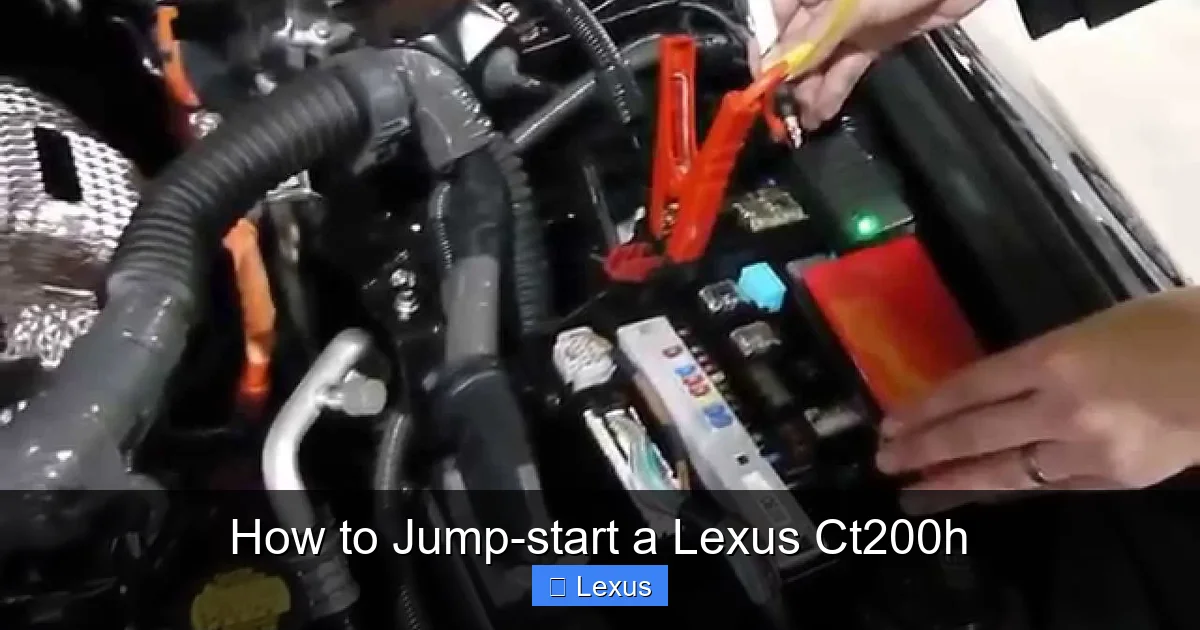
Open the trunk of your Lexus CT200h and locate the right-side panel. Remove the floor mat and unscrew or unclip the plastic cover. You should now see the 12-volt battery. It will have two terminals: positive (+) and negative (−), usually marked in red and black.
Note: Some models may have a remote positive terminal under the hood for jump-starting. Check your owner’s manual. If available, you can use this terminal instead of the one in the trunk. However, the negative terminal must still be grounded properly.
Step 2: Position the Donor Vehicle
Park the donor car so that the jumper cables can reach both batteries. Turn off both vehicles and engage the parking brakes. Make sure the donor car’s engine is off—do not start it yet.
Step 3: Connect the Jumper Cables
Follow this exact sequence to prevent sparks near the battery:
- Connect the red (positive) clamp to the positive terminal of the dead battery in the CT200h.
- Connect the other red clamp to the positive terminal of the donor car’s battery.
- Connect the black (negative) clamp to the negative terminal of the donor car’s battery.
- Connect the final black clamp to an unpainted metal surface on the CT200h’s engine block or chassis. This acts as a ground and reduces the risk of sparks near the battery. Do not connect it to the negative terminal of the dead battery.
Why ground to the engine block? Because the 12-volt battery in the CT200h is in the trunk, far from the engine. Grounding to a metal part of the car’s frame completes the circuit safely.
Step 4: Start the Donor Vehicle
Start the donor car and let it run for 3–5 minutes. This allows the alternator to charge the dead battery through the jumper cables. You may notice the CT200h’s dashboard lights flicker—this is normal.
Step 5: Attempt to Start the CT200h
Now, try to start your Lexus CT200h. Press the start button (with your foot on the brake) or turn the key. If the car starts, you’ll hear the hybrid system initialize—usually a series of beeps and dashboard lights.
If it doesn’t start after the first attempt, wait another 2–3 minutes and try again. Sometimes the 12-volt battery needs a bit more charge.
Step 6: Disconnect the Cables Safely
Once the CT200h is running, disconnect the jumper cables in reverse order:
- Remove the black clamp from the grounded metal surface on the CT200h.
- Remove the black clamp from the donor car’s negative terminal.
- Remove the red clamp from the donor car’s positive terminal.
- Remove the red clamp from the CT200h’s positive terminal.
Never let the clamps touch each other or any metal surface while connected to a live battery.
Step 7: Let the CT200h Run
Keep the CT200h running for at least 15–30 minutes. This allows the car’s alternator to recharge the 12-volt battery. Avoid turning off the car during this time, as the battery may not have enough charge to restart.
If the car stalls or won’t stay running, the 12-volt battery may be too weak or damaged and may need replacement.
Common Mistakes to Avoid
Even experienced drivers can make errors when jump-starting a hybrid like the CT200h. Here are the most common pitfalls and how to avoid them.
Connecting to the Wrong Terminals
Reversing the positive and negative clamps can cause a short circuit, damage electronics, or even explode the battery. Always double-check the colors and markings before connecting.
Grounding to the Dead Battery
Never connect the final black clamp to the negative terminal of the dead battery. This creates a spark near the battery, which can ignite hydrogen gas and cause an explosion. Always ground to a metal part of the engine or chassis.
Using a Weak Donor Battery
If the donor car’s battery is old or weak, it may not provide enough current to jump the CT200h. Use a vehicle with a strong, well-maintained battery. If possible, rev the donor engine slightly (around 1500–2000 RPM) while attempting to start the CT200h.
Ignoring the Hybrid System
After jump-starting, don’t assume everything is fine. The hybrid system may need time to reinitialize. If warning lights appear on the dashboard (like the “Check Hybrid System” light), have the car inspected by a technician.
Not Recharging the Battery
Driving for a short distance (like around the block) may not be enough to fully recharge the 12-volt battery. Take a longer drive (20–30 minutes) or use a battery charger to ensure it’s fully restored.
Preventing Future Dead Batteries
A dead 12-volt battery is often a symptom of a larger issue. Here’s how to prevent it from happening again.
Check Battery Age
Most 12-volt batteries last 3–5 years. If your CT200h is older than that, consider replacing the battery proactively. Lexus recommends using an AGM (Absorbent Glass Mat) battery for optimal performance.
Inspect for Parasitic Drain
A parasitic drain occurs when something in the car continues to draw power even when the engine is off. Common culprits include aftermarket electronics (dash cams, alarms), faulty relays, or interior lights that won’t turn off. A mechanic can perform a parasitic draw test to identify the source.
Use a Battery Maintainer
If you don’t drive your CT200h frequently, consider using a battery maintainer or trickle charger. These devices keep the 12-volt battery charged without overcharging it. They’re especially useful for hybrids, which may not drive enough to fully recharge the auxiliary battery.
Keep the Car in a Garage
Extreme temperatures—especially cold—can reduce battery performance. Parking in a garage or covered area helps maintain battery health.
Schedule Regular Maintenance
During routine service, ask your technician to check the 12-volt battery’s voltage and condition. Early detection of a weak battery can prevent unexpected breakdowns.
When to Call a Professional
Jump-starting is usually a DIY task, but there are times when you should call for help.
The Battery Is Swollen or Leaking
If the 12-volt battery shows signs of physical damage—bulging sides, cracks, or acid leaks—do not attempt to jump-start it. This could indicate a dangerous internal failure. Call a tow truck and have the battery replaced by a professional.
The Car Won’t Start After Multiple Attempts
If the CT200h still won’t start after several jump attempts, the issue may not be the battery. It could be a faulty starter, alternator, or hybrid system problem. A certified Lexus technician can diagnose the issue safely.
You’re Uncomfortable with the Process
If you’re unsure about any step, it’s better to call roadside assistance. Many insurance policies and Lexus warranty plans include free towing and jump-start services.
Conclusion: Stay Prepared and Drive Confidently
Jump-starting a Lexus CT200h may seem intimidating at first, but with the right knowledge and tools, it’s a manageable task. The key is understanding the hybrid system, locating the 12-volt battery in the trunk, and following the correct connection sequence. Always prioritize safety—wear protective gear, avoid sparks near the battery, and never attempt to jump the high-voltage hybrid battery.
By preparing ahead of time—keeping jumper cables or a portable jump starter in your trunk, knowing your battery’s location, and understanding the basics of your car’s electrical system—you can handle a dead battery with confidence. And remember, a dead 12-volt battery is often a sign that it’s time for maintenance or replacement. Regular check-ups can save you from being stranded in the future.
Whether you’re a long-time CT200h owner or new to hybrids, this guide equips you with everything you need to know about how to jump-start a Lexus CT200h. Stay safe, stay informed, and keep enjoying the smooth, efficient ride your hybrid was designed to deliver.
Frequently Asked Questions
Can I jump-start a Lexus CT200h with another hybrid?
Yes, but it’s not recommended unless you’re certain both vehicles have compatible 12-volt systems. Using a conventional gasoline car is safer and more reliable.
How long should I drive after jump-starting?
Drive for at least 20–30 minutes to allow the alternator to fully recharge the 12-volt battery. Short trips may not provide enough charge.
Can I use a portable jump starter on a CT200h?
Absolutely. Portable jump starters are safe for hybrids and eliminate the need for a second vehicle. Just follow the manufacturer’s instructions.
Why won’t my CT200h start even after jump-starting?
This could indicate a deeper issue, such as a faulty alternator, bad starter, or hybrid system故障. Have it inspected by a Lexus technician.
Is it safe to jump-start in the rain?
Yes, but take extra precautions. Keep the battery terminals dry, wear gloves, and avoid standing in water. Moisture increases the risk of electrical shock.
How often should I replace the 12-volt battery?
Every 3–5 years, or sooner if you notice slow starts, dim lights, or frequent jumps. AGM batteries are recommended for the CT200h.