
How to Fill Out Title to Sell Car

Filling out a car title correctly is essential for a legal and hassle-free sale. This guide walks you through every step, from verifying ownership to signing over the title, so you can sell your car safely and efficiently.
Selling a car can be exciting—finally getting that upgrade, downsizing, or just making some extra cash. But before you hand over the keys, there’s one critical step you can’t skip: filling out the title correctly. The title is the legal document that proves ownership, and transferring it properly ensures the sale is official and protects both you and the buyer from future problems.
Many people underestimate how important this step is. A small mistake—like a missing signature or incorrect mileage—can delay the transfer, cause legal headaches, or even lead to fines. Worse, if the title isn’t filled out right, the buyer might not be able to register the car, and you could still be held responsible for parking tickets, accidents, or toll violations. That’s why taking the time to do it right the first time is so important.
In this guide, we’ll walk you through exactly how to fill out a title to sell a car, step by step. Whether you’re selling privately, trading in, or gifting your vehicle, these tips will help you avoid common pitfalls and ensure a smooth, legal transfer. We’ll cover everything from verifying ownership to understanding state-specific rules, so you can sell with confidence.
Key Takeaways
- Verify ownership first: Only the legal owner listed on the title can sell the vehicle—double-check names and spelling.
- Complete all required fields: Odometer reading, sale date, sale price, and buyer/seller info must be filled out accurately.
- Sign in the right places: Both buyer and seller must sign the title in the designated sections—missing signatures can void the transfer.
- Check your state’s rules: Title transfer requirements vary by state, so review local DMV guidelines before selling.
- Avoid common mistakes: Don’t leave blanks, use correction fluid, or write “gift” unless it’s actually a gift—these can delay or invalidate the sale.
- Provide a bill of sale: While not always required, a bill of sale adds legal protection for both parties.
- Submit paperwork promptly: The buyer should register the car quickly to avoid liability issues for you as the seller.
📑 Table of Contents
Understanding the Car Title and Its Importance
A car title, also known as a certificate of title, is a legal document issued by your state’s Department of Motor Vehicles (DMV) that proves you own the vehicle. It includes key details like the vehicle identification number (VIN), make, model, year, and the names of the registered owners. When you sell your car, you must transfer this title to the new owner to complete the sale.
Think of the title as the car’s birth certificate—it’s the official record of who owns it. Without a properly transferred title, the buyer can’t legally register the vehicle, get insurance, or drive it on public roads. And as the seller, you remain legally tied to the car until the title is officially transferred. That means if the buyer gets into an accident or racks up parking tickets, you could still be held liable.
What Information Is on a Car Title?
Most car titles include the following information:
- Vehicle Identification Number (VIN): A unique 17-character code that identifies the car.
- Make, Model, and Year: The brand, model name, and manufacturing year of the vehicle.
- Body Style and Engine Size: Details like sedan, SUV, or truck, and engine displacement.
- Owner Names: The full legal names of the registered owners. If there are multiple owners, it will show whether they hold the title as “and” (both must sign) or “or” (either can sign).
- Lienholder Information: If you financed the car, the lender’s name and address will be listed until the loan is paid off.
- Title Number: A unique identifier for the document.
- Issue Date: When the title was originally issued.
Types of Titles
Not all titles are the same. Depending on the car’s history, you might have one of the following:
- Clean Title: The car has no major damage or salvage history. This is the most common type.
- Salvage Title: The car was declared a total loss by an insurance company due to damage (e.g., from an accident or flood). It may have been repaired and rebuilt.
- Rebuilt Title: A salvaged vehicle that has been repaired and passed inspection to be roadworthy again.
- Reconstructed Title: Similar to rebuilt, but used in some states for vehicles that were heavily damaged and restored.
- Lemon Title: Issued to vehicles that had repeated, unfixable defects under warranty.
If your car has a salvage or rebuilt title, you must disclose this to the buyer. Failing to do so can lead to legal consequences and damage your reputation as a seller.
Preparing to Fill Out the Title

Visual guide about How to Fill Out Title to Sell Car
Image source: i.ytimg.com
Before you even pick up a pen, take a few minutes to prepare. Rushing through this step is how mistakes happen. Here’s what you need to do before filling out the title.
Gather Required Documents
Make sure you have the following:
- The original car title: Photocopies or digital scans won’t work—most states require the physical document.
- Valid ID: Your driver’s license or state ID to verify your identity.
- Bill of sale (recommended): While not always required, this document records the sale details and protects both parties.
- Odometer disclosure statement (if applicable): Required in most states for vehicles under 10 years old.
- Release of liability form (if required by your state): This protects you from future liability after the sale.
Verify Ownership and Title Status
Only the person(s) listed on the title can sell the car. If your name doesn’t match exactly—say, you go by “Mike” but the title says “Michael”—you may need to provide additional proof, like a marriage certificate or court order.
Also, check if there’s a lien on the title. If you still owe money on the car, the lender holds the title until the loan is paid off. In that case, you’ll need to pay off the loan before selling, or work with the lender to release the title at the time of sale.
Check for Errors on the Title
Look over the title carefully. Are the names spelled correctly? Is the VIN accurate? If you spot a mistake, contact your local DMV to correct it before selling. Trying to sell a car with an incorrect title can delay the process or even result in the sale being rejected.
Step-by-Step Guide to Filling Out the Title
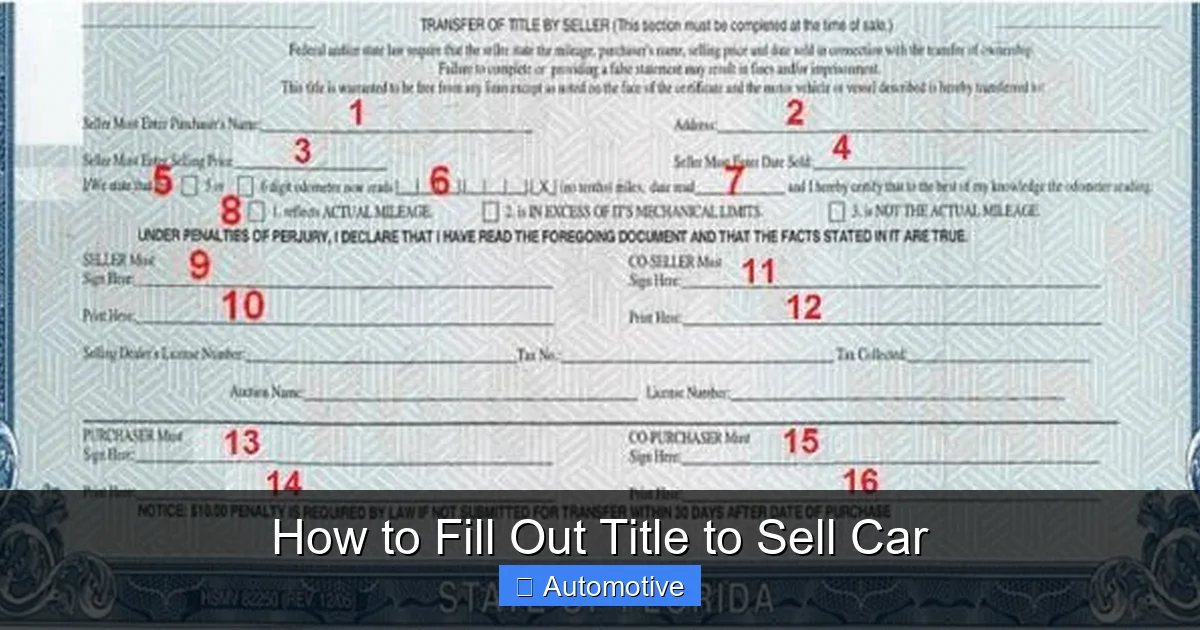
Visual guide about How to Fill Out Title to Sell Car
Image source: pinellastaxcollector.gov
Now that you’re prepared, it’s time to fill out the title. Follow these steps carefully to ensure everything is done correctly.
Step 1: Locate the “Assignment of Title” Section
Turn to the back of the title. Most titles have a section labeled “Assignment of Title by Registered Owner” or something similar. This is where you’ll transfer ownership to the buyer.
Step 2: Fill in the Buyer’s Information
Enter the buyer’s full legal name and address exactly as they appear on their ID. Use the full name—no nicknames or abbreviations. For example, write “Jennifer Marie Thompson” instead of “Jen Thompson.”
If the buyer is purchasing the car with someone else (like a spouse or partner), include both names. Make sure to indicate whether they are buying as “and” (both must sign for future transactions) or “or” (either can act alone).
Step 3: Enter the Sale Date
Write the date of the sale—this is the day you hand over the car and keys. Use the format required by your state (usually MM/DD/YYYY). Don’t backdate or postdate the sale.
Step 4: Record the Odometer Reading
Most states require you to disclose the current mileage. Write the exact number shown on the odometer—no rounding. If the odometer is broken or the car has exceeded 999,999 miles, check your state’s rules for how to handle it.
In some states, you’ll also need to check a box indicating whether the mileage is accurate, exceeds mechanical limits, or is not actual (e.g., if the odometer was replaced).
Step 5: Enter the Sale Price
Write the total amount the buyer is paying for the car. This should match the amount stated in the bill of sale. Don’t write “$1” or “gift” unless it’s actually a gift—doing so to avoid taxes is illegal and can trigger an audit.
Step 6: Sign the Title
As the seller, sign your name exactly as it appears on the front of the title. If there are multiple owners, all must sign unless the title specifies “or” between names.
Use blue or black ink—never pencil or correction fluid. Sign in the designated area. If you sign in the wrong spot or make a mistake, don’t try to fix it. Instead, request a new title from the DMV.
Step 7: Have the Buyer Sign (If Required)
Some states require the buyer to sign the title as well. Check your state’s rules. Even if it’s not required, having the buyer sign can add an extra layer of protection.
Step 8: Complete Additional Sections (If Applicable)
Some titles have extra sections for:
- Lien release: If there was a loan, the lender must sign off.
- Notarization: A few states require the seller’s signature to be notarized.
- Witness signature: Rare, but some states ask for a witness.
Check your state’s DMV website to see if any of these apply.
State-Specific Requirements and Variations

Visual guide about How to Fill Out Title to Sell Car
Image source: vehiclesforveterans.org
Every state has its own rules for title transfers. What works in Texas might not work in New York. Here’s what to keep in mind.
States That Require Notarization
A handful of states—including Arizona, Montana, and Oklahoma—require the seller’s signature to be notarized. This means you’ll need to visit a notary public (often available at banks or UPS stores) to have your signature officially verified.
States with Electronic Titles
Some states, like California and Florida, use electronic titles (e-titles). In these cases, the DMV handles the transfer digitally, and you may not receive a physical title until the sale is complete. If you’re in one of these states, contact the DMV to learn the proper procedure.
States That Require a Bill of Sale
While most states don’t require a bill of sale, some—like Texas and Virginia—do. Even in states where it’s optional, we highly recommend using one. It documents the sale terms and can help resolve disputes.
Odometer Disclosure Laws
Federal law requires odometer disclosure for vehicles under 10 years old. Most states enforce this strictly. If your car is newer than 10 years, you may not need to disclose mileage—but it’s still a good idea to include it.
Gift Transfers
If you’re giving the car as a gift (not selling it), the process is different. You’ll typically write “gift” in the sale price field and may need to complete a separate gift affidavit. Some states also require gift tax forms if the car’s value exceeds a certain amount.
Common Mistakes to Avoid
Even small errors can cause big problems. Here are the most common mistakes sellers make—and how to avoid them.
Leaving Blanks on the Title
Never leave any section blank. If a field doesn’t apply, write “N/A” or “Not Applicable.” Leaving spaces open invites tampering or confusion.
Using Correction Fluid or Pencil
DMVs reject titles with whiteout, tape, or pencil markings. If you make a mistake, don’t try to fix it—get a new title.
Incorrect Signatures
Sign exactly as your name appears on the title. If you’ve changed your name (e.g., after marriage), bring proof of the name change.
Forgetting to Remove License Plates
In most states, you must remove your license plates before handing over the car. The buyer will need to get new ones. Leaving them on could lead to liability issues.
Not Providing a Release of Liability
Many states allow you to file a release of liability form online or by mail after the sale. This protects you if the buyer doesn’t register the car right away. Don’t skip this step!
After the Sale: What to Do Next
Your job isn’t done once the title is signed. Take these final steps to protect yourself.
Provide the Buyer with Necessary Documents
Give the buyer:
- The signed title
- A bill of sale (if you made one)
- The owner’s manual and maintenance records (if available)
- Any warranty information
Cancel Your Insurance
Once the car is sold, contact your insurance company to cancel or transfer coverage. Don’t wait—driving an uninsured vehicle is illegal.
Notify the DMV (If Required)
Some states require sellers to notify the DMV of the sale. Check your local rules. Even if it’s not required, filing a release of liability is a smart move.
Keep Records
Save copies of the title, bill of sale, and any DMV forms for at least a few years. You may need them if a dispute arises.
Final Tips for a Smooth Car Sale
Selling a car doesn’t have to be stressful. Follow these tips to make the process as smooth as possible:
- Meet in a safe, public place: Police stations often have designated areas for private sales.
- Accept secure payment: Cash, cashier’s check, or bank transfer are safest. Avoid personal checks.
- Test drive with caution: Always go with the buyer and verify their license first.
- Be honest about the car’s condition: Disclose any known issues to avoid legal trouble later.
- Double-check everything: Before handing over the keys, review the title, bill of sale, and payment one last time.
Selling your car is a big step, but with the right preparation, it can be a positive experience. By filling out the title correctly and following your state’s rules, you’ll protect yourself, help the buyer, and close the deal with confidence.
Frequently Asked Questions
Do I need to fill out the title if I’m trading in my car?
No, if you’re trading in your car at a dealership, they will handle the title transfer for you. However, you should still sign the title and provide any required documents.
Can I sell a car if the title is lost?
Yes, but you’ll need to apply for a duplicate title from your state’s DMV before selling. This usually involves filling out a form and paying a small fee.
What if the buyer doesn’t register the car right away?
As the seller, you’re still liable until the title is officially transferred. File a release of liability with your DMV as soon as possible to protect yourself.
Can I sell a car with a lien on the title?
Only if the lien is released. You’ll need to pay off the loan or work with the lender to transfer the title at the time of sale.
Is a bill of sale legally required?
It depends on your state. Some require it, others don’t. Even when it’s optional, a bill of sale is highly recommended for legal protection.
What happens if I make a mistake on the title?
Don’t try to correct it. Instead, contact your DMV to request a new title. Most mistakes can’t be fixed with edits or whiteout.