
How to Engage 4 Wheel Drive on a 2004 Dodge Ram

Contents



Engaging 4 wheel drive on a 2004 Dodge Ram is straightforward once you understand the system type and proper procedure. Whether you’re using a manual shift or electronic switch, following the correct steps ensures smooth engagement and protects your drivetrain.
If you own a 2004 Dodge Ram, you’ve got one of the most capable full-size trucks of its era—especially when it comes to off-road performance and towing power. One of the key features that sets this truck apart is its four-wheel-drive (4WD) system. Whether you’re navigating snowy mountain roads, muddy trails, or just need extra traction for a heavy load, knowing how to engage 4 wheel drive on a 2004 Dodge Ram is essential.
But here’s the thing: not all 4WD systems are the same. Depending on your trim level and options, your Ram might have a manual shift transfer case or an electronic shift-on-the-fly system. And even within those categories, there are differences between part-time and full-time 4WD setups. That’s why it’s crucial to understand your specific configuration before flipping switches or moving levers.
In this guide, we’ll walk you through everything you need to know—from identifying your transfer case to safely engaging and disengaging 4WD in various conditions. We’ll cover both manual and electronic systems, explain when to use high-range (4H) versus low-range (4L), and share practical tips to keep your drivetrain running smoothly for years to come. Whether you’re a seasoned off-roader or a first-time Ram owner, this guide will help you master your truck’s 4WD capabilities with confidence.
Key Takeaways
- Know your 4WD system: The 2004 Dodge Ram comes with either part-time (NV241) or full-time (NV241OR) transfer cases—each requires different engagement methods.
- Use the right gear: Always shift into 4WD while in 2H (2-wheel drive high) and at low speeds (under 55 mph) to avoid damage.
- Manual vs. electronic shift: Models with floor shifters require physical movement, while electronic switch models use a dashboard button or dial.
- Engage on loose surfaces: For part-time 4WD, engage 4H or 4L on gravel, snow, or dirt—not dry pavement—to prevent binding.
- Use 4L for extreme conditions: Low-range 4WD (4L) provides maximum torque for steep hills, deep snow, or heavy towing.
- Disengage properly: Return to 2H when road conditions improve to reduce wear and improve fuel economy.
- Regular maintenance matters: Check fluid levels and inspect transfer case components annually to ensure reliable 4WD performance.
📑 Table of Contents
Understanding Your 2004 Dodge Ram’s 4WD System
Before you can engage 4 wheel drive on a 2004 Dodge Ram, you need to know what kind of system you’re working with. Dodge offered two primary transfer cases for the 2004 Ram 1500 and 2500 models: the NV241 (part-time 4WD) and the NV241OR (full-time or “OR” for Off-Road). Each has its own design, capabilities, and engagement procedures.
The NV241 is the more common setup and is typically found on base and mid-level trims. It’s a part-time 4WD system, meaning it’s designed to be used only when extra traction is needed—like in snow, mud, or off-road terrain. You should not drive in 4H or 4L on dry pavement with this system, as it can cause drivetrain binding and potential damage.
The NV241OR, on the other hand, is a full-time 4WD system often paired with the Quadra-Trac II package. This system allows you to drive in 4H on dry pavement without issues, making it more versatile for daily driving in variable weather. It also includes a low-range gear (4L) for extreme off-road situations.
To identify which system you have, check your owner’s manual or look for labels near the transfer case under the truck. You can also tell by the shifter or switch configuration: manual floor shifters usually indicate a part-time system, while dashboard buttons or rotary dials often point to electronic full-time setups.
Understanding these differences is the first step to using your 4WD safely and effectively. Using the wrong mode in the wrong conditions can lead to expensive repairs—so take a moment to confirm your system type before hitting the trails.
Manual vs. Electronic Shift Systems
Another key distinction is whether your 2004 Dodge Ram uses a manual shift lever or an electronic switch to engage 4WD. This affects not only how you operate the system but also when and how you should engage it.
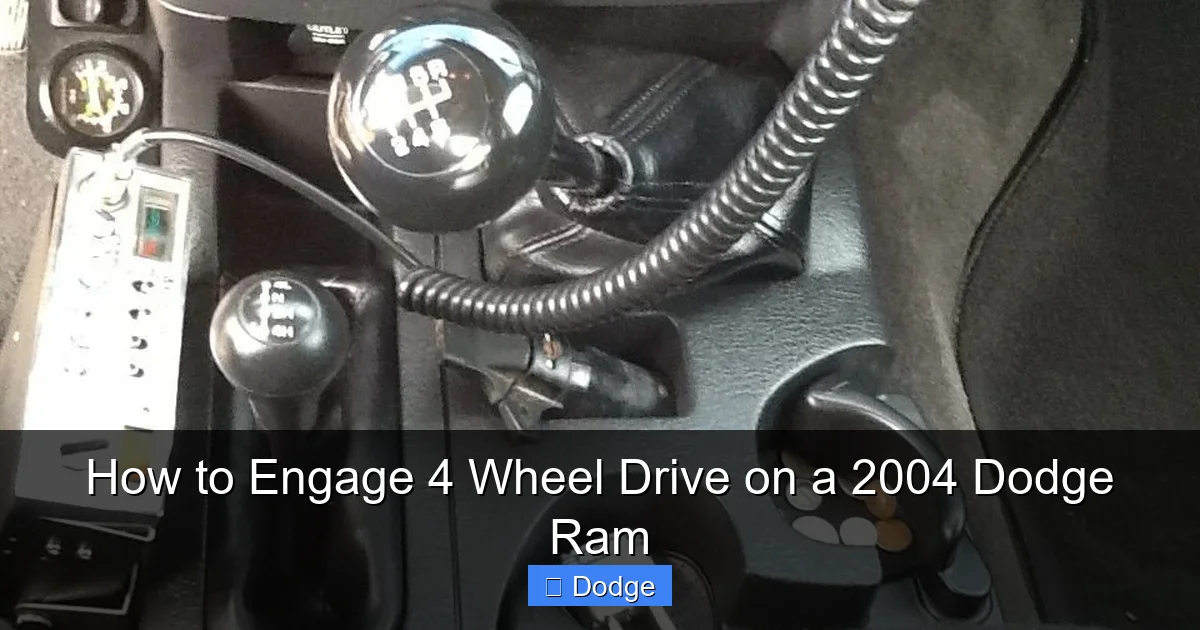
Manual shift systems feature a floor-mounted lever located between the front seats. To engage 4H or 4L, you typically need to come to a complete stop or slow to a crawl, depending on the model. These systems are robust and reliable, often preferred by off-road enthusiasts for their simplicity and mechanical directness.
Electronic shift-on-the-fly systems, by contrast, use a dashboard-mounted button or rotary dial. These allow you to engage 4H while driving at speeds up to 55 mph, making them more convenient for sudden changes in road conditions—like hitting a patch of ice or snow. However, they still require you to stop or slow down significantly before shifting into 4L.
One common mistake drivers make is trying to shift into 4L while moving too fast. This can grind gears and damage the transfer case. Always follow the manufacturer’s recommended procedure: for 4H, you can often shift on the fly (hence the name), but for 4L, a complete stop is usually required.
If you’re unsure which type your truck has, look for the shifter. A mechanical lever means manual shift; a button or dial means electronic. Knowing this will help you follow the correct engagement steps and avoid costly mistakes.
Step-by-Step Guide to Engaging 4WD on a 2004 Dodge Ram
Visual guide about How to Engage 4 Wheel Drive on a 2004 Dodge Ram
Image source: tenwheel.com
Now that you understand your system, let’s walk through the actual process of engaging 4 wheel drive on a 2004 Dodge Ram. The steps vary slightly depending on whether you have a manual or electronic system, so we’ll cover both.
For Manual Shift Systems (Floor Lever)
If your Ram has a manual transfer case with a floor shifter, here’s how to engage 4WD safely:
1. **Start in 2H (2-wheel drive high):** Make sure your truck is in 2H before attempting any shifts. This is the default mode for normal driving.
2. **Slow down or stop:** For shifting into 4H, you can often do so at low speeds (under 10 mph). However, for 4L, come to a complete stop.
3. **Press the clutch (if manual transmission):** If your Ram has a manual transmission, press the clutch pedal fully. Automatic transmissions don’t require this step.
4. **Shift the transfer case lever:** Move the lever from 2H to 4H. You should feel a firm click as it engages. For 4L, continue moving the lever to the lowest position.
5. **Resume driving:** Once engaged, you can accelerate normally. You’ll notice increased traction and a slight change in steering feel.
Tip: If the lever won’t move easily, don’t force it. Try rocking the truck slightly forward and backward while gently applying pressure. This can help align the gears.
For Electronic Shift Systems (Dashboard Switch)
If your truck uses an electronic switch, the process is a bit more automated:
1. **Ensure you’re in 2H:** The system should default to 2H when you start the truck.
2. **Drive under 55 mph:** You can engage 4H while moving, but keep speeds reasonable.
3. **Press the 4H button or turn the dial:** Locate the 4WD switch on the dashboard (usually labeled “4H” or “4WD”). Press it or turn the dial to 4H. You may hear a brief clunk as the front axle engages.
4. **For 4L, stop completely:** To shift into low range, bring the truck to a full stop, shift the transmission into neutral (or park for automatics), then press the 4L button or turn the dial.
5. **Shift back into drive and continue:** Once in 4L, you’ll have maximum torque for steep climbs or heavy loads.
Note: Some electronic systems have a “4 Auto” mode, which automatically distributes power between front and rear axles. This is great for variable conditions but doesn’t offer the same locking capability as 4H or 4L.
When to Use 4H vs. 4L
Knowing when to use high-range (4H) versus low-range (4L) 4WD is just as important as knowing how to engage it.
Use **4H** for:
– Snow-covered roads
– Wet or muddy trails
– Gravel or dirt roads
– Light off-roading
Use **4L** for:
– Steep inclines or declines
– Deep snow or mud
– Rock crawling
– Heavy towing or hauling
4L provides a significant gear reduction, multiplying engine torque for maximum pulling power. However, it also limits your top speed—usually to under 30 mph—and should only be used in extreme conditions.
A common mistake is using 4L on flat, dry roads. This can overheat the transfer case and cause premature wear. Always shift back to 4H or 2H when conditions improve.
Safety Tips and Best Practices for 4WD Use
Visual guide about How to Engage 4 Wheel Drive on a 2004 Dodge Ram
Image source: 2carpros.com
Engaging 4 wheel drive on a 2004 Dodge Ram is only half the battle—using it safely and responsibly is just as important. Here are some key tips to keep in mind:
Avoid Dry Pavement in Part-Time 4WD
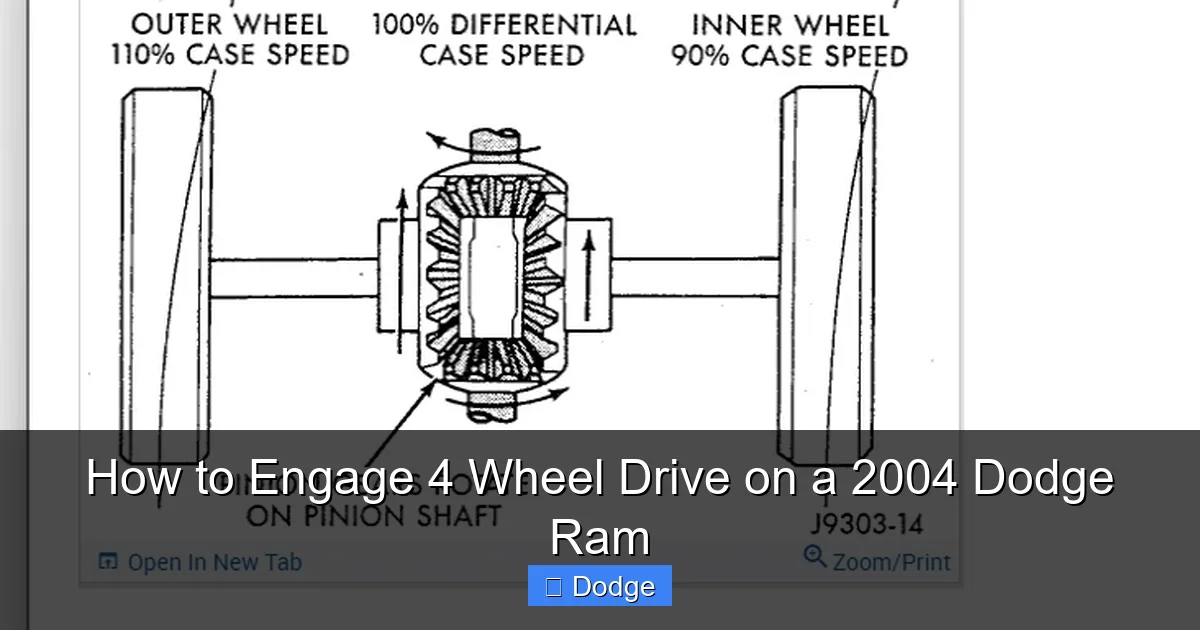
If your truck has a part-time 4WD system (NV241), never drive in 4H or 4L on dry, paved roads. The lack of a center differential means the front and rear axles are locked together, which can cause binding during turns. This leads to tire scrubbing, drivetrain stress, and potential damage.
Instead, use 4H only on loose or slippery surfaces where the tires can slip slightly to accommodate the locked axles. When you return to pavement, shift back to 2H as soon as possible.
Don’t Force the Shift
If the transfer case lever or electronic switch won’t engage, don’t force it. This could indicate a mechanical issue or that you’re moving too fast. Try slowing down, shifting the transmission into neutral, or rocking the truck gently. Forcing the shift can damage internal components.
Check Fluid Levels Regularly
The transfer case and front axle require proper lubrication to function smoothly. Check the fluid levels at least once a year or every 15,000 miles. Use the recommended fluid type (usually ATF+4 or specific 4WD fluid) and top off if low. Low fluid can lead to overheating and premature wear.
Inspect for Leaks and Noise
Listen for unusual noises—grinding, whining, or clunking—when engaging or driving in 4WD. These could signal worn gears, low fluid, or damaged seals. Also, inspect under the truck for fluid leaks around the transfer case and front differential.
Practice in a Safe Area
If you’re new to 4WD, practice engaging and disengaging in an empty parking lot or quiet dirt road. This helps you get familiar with the feel of the system and ensures you can operate it confidently in real-world conditions.
Common Mistakes to Avoid
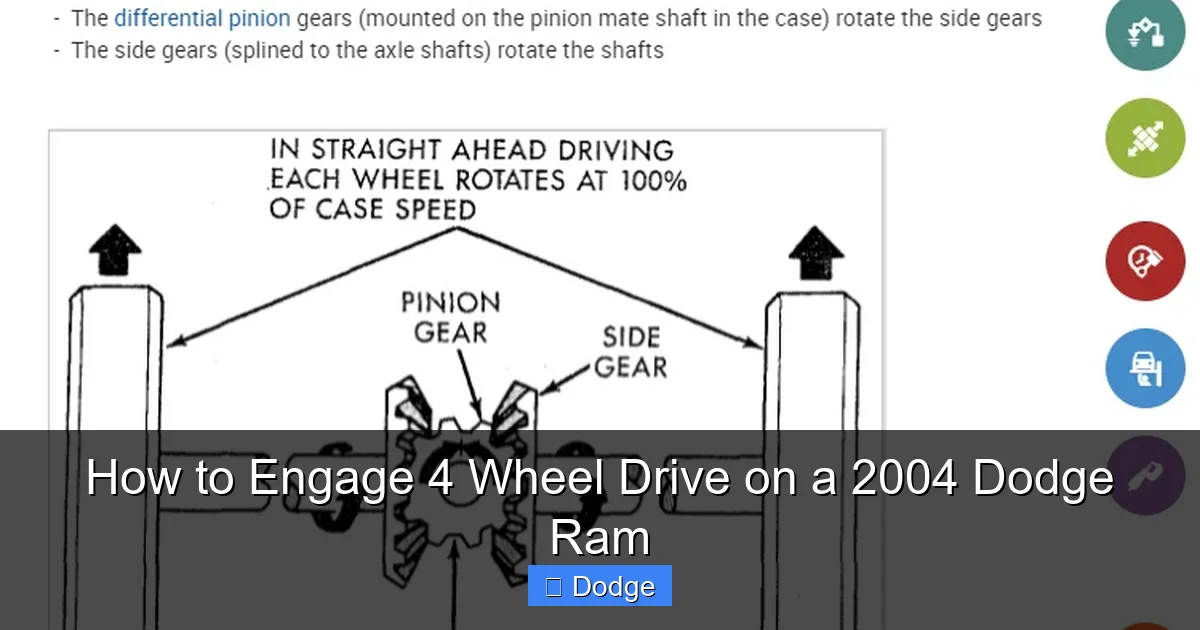
Visual guide about How to Engage 4 Wheel Drive on a 2004 Dodge Ram
Image source: 2carpros.com
Even experienced drivers can make errors when using 4WD. Here are some of the most common mistakes and how to avoid them:
– **Engaging 4L at high speed:** Always stop before shifting into 4L. High-speed shifts can destroy the transfer case.
– **Leaving 4WD on unnecessarily:** Running in 4H on dry pavement increases fuel consumption and wears out components. Only use it when needed.
– **Ignoring warning lights:** If your 4WD indicator light flashes or stays on, have the system checked immediately. It could indicate a malfunction.
– **Using the wrong fluid:** Always use the manufacturer-recommended fluid. Using the wrong type can lead to poor lubrication and damage.
– **Not disengaging after use:** Forgetting to shift back to 2H can cause drivetrain stress and reduce fuel efficiency. Make it a habit to check your mode after off-road trips.
Maintaining Your 4WD System
To keep your 2004 Dodge Ram’s 4WD system in top shape, regular maintenance is essential. Here’s a simple checklist:
– **Check transfer case fluid:** Inspect level and condition every 15,000 miles or annually.
– **Inspect front axle fluid:** The front differential also needs proper lubrication.
– **Test 4WD function:** Engage and disengage 4H and 4L periodically to keep components moving freely.
– **Lubricate shift linkage (manual systems):** Apply grease to the shift linkage to prevent sticking.
– **Scan for codes:** Use an OBD2 scanner to check for any 4WD-related trouble codes.
A well-maintained 4WD system will last for hundreds of thousands of miles and provide reliable performance when you need it most.
Conclusion
Mastering how to engage 4 wheel drive on a 2004 Dodge Ram is a valuable skill that enhances your truck’s versatility and safety. Whether you’re facing a snowy commute or tackling a rugged trail, knowing your system type, following the correct procedure, and practicing safe habits will ensure smooth operation and long-term reliability.
Remember: always identify your transfer case, use the right mode for the conditions, and maintain your system regularly. With these tips, your Ram will be ready for whatever the road—or off-road—throws at it.
Frequently Asked Questions
Can I engage 4WD while driving my 2004 Dodge Ram?
Yes, but only for 4H (high range) and only at speeds under 55 mph. For 4L (low range), you must come to a complete stop before shifting.
Is it safe to drive in 4H on dry pavement?
Only if your Ram has a full-time 4WD system (NV241OR). Part-time systems (NV241) should not be used on dry pavement to avoid drivetrain damage.
Why won’t my 4WD engage?
Common causes include moving too fast, low transfer case fluid, or a faulty shift mechanism. Try slowing down, checking fluid levels, or having the system inspected.
How often should I check my transfer case fluid?
Check it at least once a year or every 15,000 miles. Low or dirty fluid can lead to overheating and component failure.
Can I use 4WD in the rain?
Yes, 4H is safe to use in wet conditions, especially if you have a full-time system. It improves traction on slippery roads.
What’s the difference between 4H and 4L?
4H provides extra traction at normal speeds, while 4L offers maximum torque for extreme conditions like steep hills or deep mud, but limits speed to under 30 mph.


