
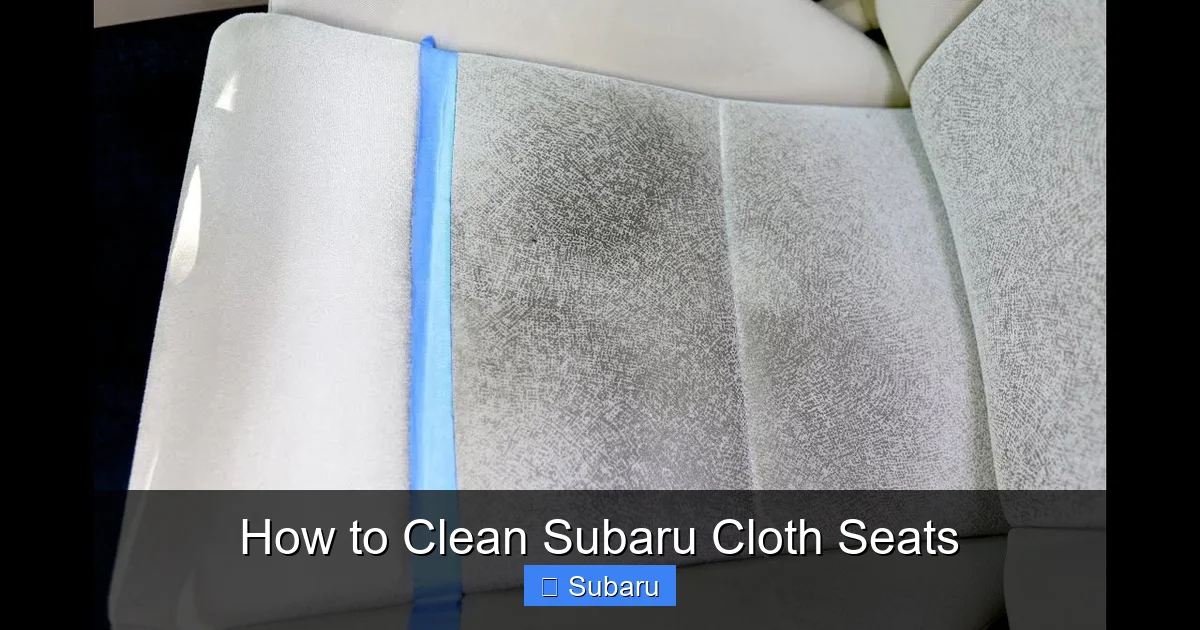
How to Clean Subaru Cloth Seats
Contents
- 1 Key Takeaways
- 2 📑 Table of Contents
- 3 Why Cleaning Subaru Cloth Seats Matters
- 4 Understanding Your Subaru Cloth Upholstery
- 5 Tools and Supplies You’ll Need
- 6 Step-by-Step Guide to Cleaning Subaru Cloth Seats
- 7 Special Cleaning Scenarios
- 8 Preventive Maintenance Tips
- 9 When to Call a Professional
- 10 Conclusion
- 11 Frequently Asked Questions
Keeping your Subaru’s cloth seats clean doesn’t have to be a chore. With the right tools, techniques, and a little know-how, you can restore your seats to like-new condition and protect them from future stains. This guide walks you through everything you need to know—from spot cleaning to deep cleaning—so your Subaru stays fresh, comfortable, and looking great.
Key Takeaways
- Act fast on spills: The sooner you treat a stain, the easier it is to remove—don’t let dirt or liquids sit on your Subaru cloth seats.
- Use gentle, pH-neutral cleaners: Harsh chemicals can damage fabric fibers and fade colors; opt for cleaners designed for automotive upholstery.
- Vacuum regularly: Weekly vacuuming prevents dirt from embedding into the fabric, making deep cleaning less frequent and more effective.
- Test cleaners in hidden areas: Always do a patch test before applying any cleaning solution to avoid discoloration or damage.
- Avoid over-wetting: Excess moisture can lead to mold, odors, and fabric damage—use minimal water and dry thoroughly.
- Protect with fabric guard: After cleaning, apply a fabric protector to repel future stains and make maintenance easier.
- Know when to call a pro: For stubborn stains or large areas, professional detailers have tools and expertise to safely restore your seats.
📑 Table of Contents
Why Cleaning Subaru Cloth Seats Matters
Your Subaru is more than just a vehicle—it’s your adventure companion, daily driver, and sometimes even a mobile office or snack station. Over time, cloth seats absorb spills, crumbs, pet hair, sweat, and everyday grime. Left unchecked, this buildup doesn’t just look bad; it can lead to unpleasant odors, fabric deterioration, and even allergens lingering in your cabin.
Cleaning your Subaru cloth seats isn’t just about aesthetics. It’s about preserving the interior’s value, maintaining a healthy environment, and ensuring comfort for every ride. Whether you drive a Crosstrek, Outback, Forester, or Impreza, the cloth upholstery in Subarus is designed for durability—but it still needs proper care. With regular maintenance and the right approach, you can keep your seats looking fresh for years to come.
Understanding Your Subaru Cloth Upholstery
Before diving into cleaning, it’s important to understand what your seats are made of. Most Subaru models come with durable, stain-resistant cloth upholstery—often a blend of polyester and nylon. These fabrics are engineered to withstand daily wear and tear, but they’re not indestructible. Unlike leather, cloth is porous, meaning it absorbs liquids and odors more easily.

Visual guide about How to Clean Subaru Cloth Seats
Image source: 2040-cars.com
Types of Subaru Cloth Seats
Subaru offers different cloth seat options depending on the trim level and model year. Some common types include:
- Standard Cloth: Found in base trims, this fabric is durable and easy to maintain but may show stains more readily.
- Performance Cloth (in WRX and other sport trims): Slightly more textured and often treated with additional stain resistance.
- All-Weather Cloth: Available in some trims, this version is designed to resist moisture and is ideal for drivers in rainy or snowy climates.
Regardless of the type, all Subaru cloth seats benefit from regular cleaning. The key is knowing how to treat them without causing damage.
Common Issues with Cloth Seats
Over time, you might notice a few recurring problems:
- Stains from food and drinks: Coffee, soda, juice, and grease can leave behind stubborn marks.
- Ground-in dirt and dust: Especially around the seat edges and crevices where feet rest.
- Pet hair and dander: A nightmare for pet owners, but manageable with the right tools.
- Odors: Caused by trapped moisture, spills, or bacteria buildup.
- Fading or discoloration: From sun exposure or using harsh cleaners.
Recognizing these issues early helps you choose the right cleaning method and prevent long-term damage.
Tools and Supplies You’ll Need
You don’t need a professional detailing setup to clean your Subaru cloth seats effectively. A few essential tools and products will do the trick. Here’s what to gather before you start:
Visual guide about How to Clean Subaru Cloth Seats
Image source: i.ytimg.com
Basic Cleaning Kit
- Vacuum cleaner with upholstery attachment: A handheld or portable vacuum works great for reaching tight spaces.
- Soft-bristle brush: Ideal for loosening dirt without damaging fabric.
- Microfiber cloths: Use these for blotting, wiping, and drying—avoid paper towels, which can leave lint.
- Spray bottle: For mixing and applying cleaning solutions.
- White vinegar: A natural deodorizer and mild cleaner.
- Baking soda: Great for absorbing odors and lifting stains.
- Mild dish soap: Like Dawn—gentle yet effective on grease.
Recommended Cleaning Products
For best results, consider using cleaners specifically formulated for automotive upholstery. Some top-rated options include:
- Chemical Guys Lightning Fast Stain Extractor: Works well on food, drink, and pet stains.
- Meguiar’s Carpet & Upholstery Cleaner: Foam-based and safe for most fabrics.
- Armor All OXI Clean Carpet & Upholstery Cleaner: Oxygen-powered for deep cleaning.
- Folex Instant Carpet Spot Remover: Non-toxic and effective on fresh stains.
Always check the label to ensure the product is safe for cloth and won’t leave residue or discolor the fabric.
Optional but Helpful Tools
- Steam cleaner: For deep sanitizing and loosening tough grime (use with caution to avoid over-wetting).
- Fabric protector spray: Like Scotchgard or 303 Fabric Guard to repel future stains.
- Pet hair roller or rubber glove: Handy for removing stubborn pet fur.
- Portable fan or hair dryer: To speed up drying time.
Having the right tools on hand makes the process faster, safer, and more effective.
Step-by-Step Guide to Cleaning Subaru Cloth Seats
Now that you’re equipped with the right knowledge and supplies, let’s walk through the cleaning process step by step. Whether you’re tackling a fresh spill or doing a full deep clean, these steps will help you get the best results.
Visual guide about How to Clean Subaru Cloth Seats
Image source: images.squarespace-cdn.com
Step 1: Remove Loose Debris
Start by clearing out any loose dirt, crumbs, or debris. Use your vacuum’s upholstery attachment to go over the entire seat—don’t forget the crevices, seatbacks, and under the cushions. If you have pets, use a rubber glove or pet hair roller to lift embedded fur before vacuuming.
Step 2: Spot Test Your Cleaner
Before applying any cleaning solution, test it on a small, hidden area—like the back of the seat or under the headrest. Wait 5–10 minutes to ensure there’s no discoloration or damage. This simple step can save you from ruining your upholstery.
Step 3: Treat Stains Immediately
If you’re dealing with a fresh spill, act fast. Blot (don’t rub!) the area with a clean microfiber cloth to absorb as much liquid as possible. For food or drink stains, mix a solution of 1 cup warm water, 1 tablespoon mild dish soap, and 1 tablespoon white vinegar. Spray lightly on the stain and gently scrub with a soft brush. Blot with a dry cloth to remove moisture.
Step 4: Deep Clean the Entire Seat
For a full clean, follow this method:
- Mix your chosen upholstery cleaner with water as directed (or use a pre-mixed spray).
- Spray lightly onto the seat—don’t soak it.
- Use a soft-bristle brush to work the cleaner into the fabric in circular motions.
- Let it sit for 3–5 minutes to break down dirt.
- Blot with a damp microfiber cloth to lift the grime.
- Repeat if necessary for heavily soiled areas.
Work in small sections to ensure even cleaning and avoid over-wetting.
Step 5: Tackle Odors with Baking Soda
If your seats have lingering smells, sprinkle baking soda liberally over the fabric. Let it sit for at least 30 minutes (or overnight for strong odors), then vacuum it up. Baking soda neutralizes odors without harsh chemicals.
Step 6: Dry Thoroughly
This step is crucial. Use dry microfiber cloths to blot excess moisture, then allow the seats to air dry completely. Crack the windows or use a fan to improve airflow. Never use a seat until it’s fully dry—trapped moisture can lead to mold and mildew.
Step 7: Apply Fabric Protector
Once the seats are dry, consider applying a fabric protector. Spray it evenly over the surface and let it dry according to the product instructions. This creates an invisible barrier that repels liquids and makes future cleaning easier.
Special Cleaning Scenarios
Not all stains are created equal. Some require special attention or techniques. Here’s how to handle common challenges.
Grease and Oil Stains
Grease from snacks or hands can leave shiny, dark spots. Start by blotting with a paper towel to absorb excess oil. Then, sprinkle cornstarch or baking soda on the stain and let it sit for 15–20 minutes to draw out the grease. Vacuum it up, then clean with a mild soap solution. Avoid using water-heavy cleaners, as they can spread the oil.
Pet Accidents
If your furry friend has an accident, act immediately. Blot the area with a cloth, then clean with an enzymatic cleaner designed for pet stains. These break down urine proteins and eliminate odors at the source. Regular cleaners won’t remove the smell, which can encourage repeat accidents.
Red Wine or Coffee Stains
These are among the toughest stains. For fresh spills, blot and apply a mixture of hydrogen peroxide (3%) and a drop of dish soap. Test on a hidden area first—hydrogen peroxide can bleach some fabrics. Let it sit for 5 minutes, then blot and rinse with a damp cloth.
Mud and Dirt from Outdoor Adventures
After a hike or camping trip, mud can dry and harden on your seats. Let it dry completely, then brush off as much as possible with a soft brush. Vacuum, then treat any remaining residue with a damp cloth and mild cleaner. Avoid scrubbing wet mud, as it can push dirt deeper into the fabric.
Sun Fading and Discoloration
Prolonged sun exposure can fade cloth seats, especially on the driver’s side. While you can’t reverse fading, you can prevent it by using sunshades, parking in the shade, or applying UV-protectant fabric sprays. Regular cleaning also helps maintain color vibrancy.
Preventive Maintenance Tips
Cleaning doesn’t have to be a monthly ordeal. With a few smart habits, you can keep your Subaru cloth seats looking great with minimal effort.
Vacuum Weekly
Set a reminder to vacuum your seats once a week. This prevents dirt from settling in and reduces the need for deep cleaning. Focus on high-traffic areas like the driver’s seat and rear bench.
Use Seat Covers
Consider investing in custom-fit cloth or neoprene seat covers. They protect your original upholstery from spills, pet hair, and wear. Plus, they’re easy to remove and wash.
Keep Cleaning Supplies in Your Car
Store a small kit with a microfiber cloth, stain remover wipes, and a travel-sized vacuum in your trunk. This way, you can tackle spills immediately—before they set.
Rotate Passengers
If possible, rotate who sits where to distribute wear evenly. This is especially helpful if you have kids or pets who tend to make a mess.
Avoid Eating in the Car
It’s tempting, but snacking while driving increases the risk of spills. If you must eat, use a spill-proof container and keep napkins handy.
Schedule Seasonal Deep Cleans
Even with regular maintenance, do a full deep clean every 3–6 months. This keeps your seats fresh and extends their lifespan.
When to Call a Professional
Sometimes, DIY cleaning isn’t enough. If you’re dealing with large stains, persistent odors, or delicate fabric, it’s worth calling in a professional detailer. They have industrial-grade extractors, steam cleaners, and specialized products that can safely restore your seats without risk of damage.
Professionals can also treat issues like mold, deep-set stains, or fabric damage that home methods can’t fix. While it’s an added expense, it’s often worth it for peace of mind and long-term seat preservation.
Conclusion
Cleaning your Subaru cloth seats doesn’t have to be overwhelming. With the right approach, a few quality products, and consistent care, you can keep your interior looking and smelling fresh. Remember: act fast on spills, use gentle cleaners, avoid over-wetting, and protect your seats after cleaning.
Your Subaru is built for adventure—and that means getting a little dirty sometimes. But with these tips, you’ll be ready to tackle any mess life throws your way. Whether you’re prepping for a road trip or just want a cleaner cabin, taking care of your cloth seats is a small effort with big rewards. So grab your vacuum, mix up a cleaning solution, and give your Subaru the TLC it deserves.
Frequently Asked Questions
Can I use bleach to clean Subaru cloth seats?
No, bleach is too harsh and can damage fabric fibers, cause discoloration, and weaken the material. Stick to mild, pH-neutral cleaners designed for upholstery.
How often should I clean my Subaru cloth seats?
Vacuum weekly and do a deep clean every 3–6 months. Spot clean spills as soon as they happen to prevent stains from setting.
Will cleaning remove old stains?
It depends on the stain and how long it’s been there. Fresh stains are easier to remove, but older ones may require multiple treatments or professional help.
Can I use a steam cleaner on Subaru cloth seats?
Yes, but use it carefully. Steam can loosen dirt and sanitize fabric, but too much moisture can damage the seats or promote mold. Always dry thoroughly afterward.
Do I need to remove the seats to clean them?
No, you don’t need to remove the seats. Most cleaning can be done in place with the right tools and techniques. Only consider removal for extreme cases or professional detailing.
Will fabric protector make my seats waterproof?
Not completely waterproof, but it will repel liquids and make spills easier to wipe away. It’s a great preventive measure, especially for families or pet owners.