How to Check Voltage of Car Battery

Knowing how to check voltage of car battery is essential for preventing unexpected breakdowns and maintaining your vehicle’s health. This guide walks you through simple, safe methods using a multimeter, explains what readings mean, and helps you decide when it’s time for a replacement.
In This Article
- 1 Key Takeaways
- 2 📑 Table of Contents
- 3 Why Checking Your Car Battery Voltage Matters
- 4 Tools You’ll Need to Check Car Battery Voltage
- 5 Step-by-Step Guide to Checking Car Battery Voltage
- 6 Understanding What Your Voltage Reading Means
- 7 Common Mistakes to Avoid When Checking Battery Voltage
- 8 When to Replace Your Car Battery
- 9 Tips for Maintaining a Healthy Car Battery
- 10 Conclusion
- 11 Frequently Asked Questions
Key Takeaways
- Use a digital multimeter: It’s the most accurate and affordable tool for checking car battery voltage at home.
- Check voltage when the engine is off: A resting voltage reading gives the truest picture of your battery’s state.
- 12.6V or higher means fully charged: Anything below 12.4V suggests the battery is partially discharged or failing.
- Test under load for deeper insight: A load test reveals how well the battery holds voltage under stress, like starting the engine.
- Clean terminals before testing: Corrosion can interfere with readings and reduce battery performance.
- Replace batteries older than 3–5 years: Even if voltage looks good, age affects reliability and cold-weather performance.
- Seek professional help if unsure: If readings are inconsistent or the battery struggles to hold a charge, consult a mechanic.
📑 Table of Contents
- Why Checking Your Car Battery Voltage Matters
- Tools You’ll Need to Check Car Battery Voltage
- Step-by-Step Guide to Checking Car Battery Voltage
- Understanding What Your Voltage Reading Means
- Common Mistakes to Avoid When Checking Battery Voltage
- When to Replace Your Car Battery
- Tips for Maintaining a Healthy Car Battery
- Conclusion
Why Checking Your Car Battery Voltage Matters
Your car battery is the silent powerhouse behind every start, every light, and every electronic feature in your vehicle. Without it, your car simply won’t run—no matter how well the engine is tuned or how full the gas tank is. That’s why knowing how to check voltage of car battery is one of the most practical skills any car owner can have. It’s not just about avoiding the frustration of a dead battery on a cold morning; it’s about preventing costly repairs, extending your battery’s life, and ensuring your safety on the road.
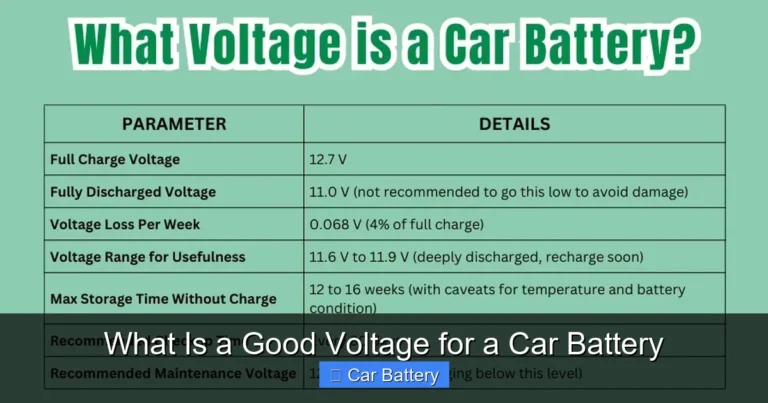
A healthy car battery should maintain a voltage between 12.4 and 12.7 volts when the engine is off. This range indicates that the battery is fully or nearly fully charged. If the voltage drops below 12.4 volts, it’s a red flag. The battery may be losing its ability to hold a charge, which could lead to starting problems, especially in extreme temperatures. On the other hand, if the voltage reads significantly higher—say, over 13 volts with the engine off—it could indicate overcharging by the alternator, which can damage the battery over time.
But here’s the thing: many drivers only think about their battery when it fails. By then, it’s often too late. A simple voltage check takes less than five minutes and can save you from being stranded. Whether you’re preparing for winter, noticing slow engine cranking, or just doing routine maintenance, checking your battery voltage is a smart, proactive step. And the best part? You don’t need to be a mechanic to do it. With the right tools and a little know-how, anyone can perform this essential check at home.
Tools You’ll Need to Check Car Battery Voltage
Visual guide about How to Check Voltage of Car Battery
Image source: i.ytimg.com
Before diving into the actual process, it’s important to gather the right tools. The good news is that you don’t need a full garage setup or expensive equipment. In fact, most of what you need can be found at your local auto parts store or online for under $20.
Digital Multimeter (Recommended)
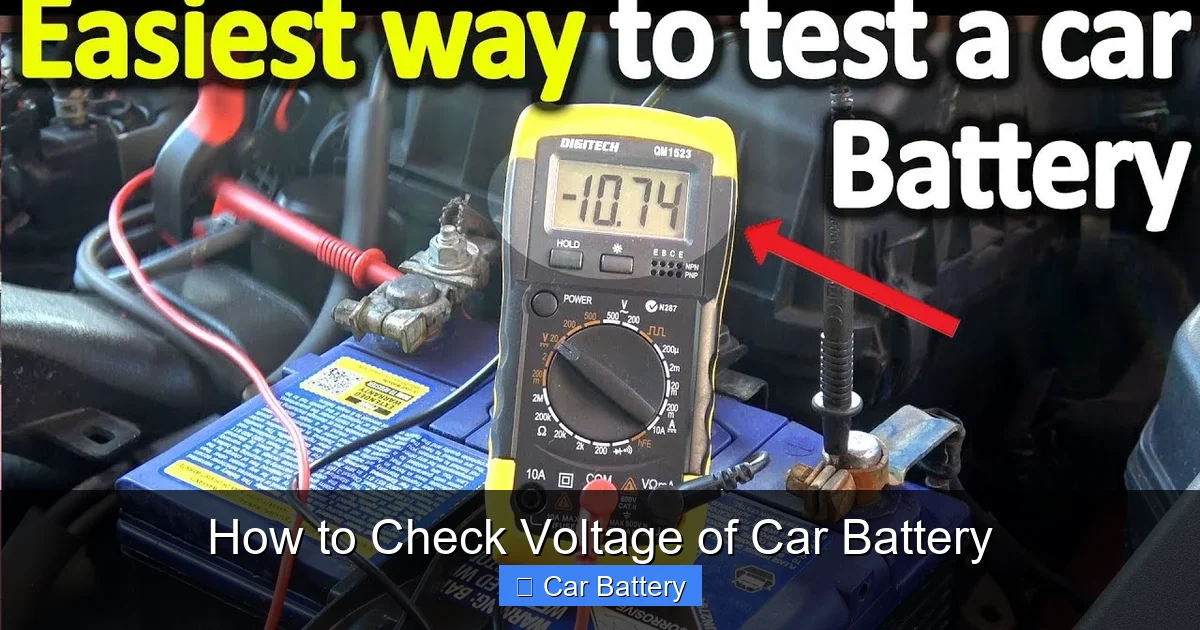
The most accurate and widely used tool for checking car battery voltage is a digital multimeter. This handheld device measures voltage, current, and resistance, but for our purposes, we’ll focus on voltage. Look for a basic model with a DC voltage setting (usually marked as “V~” or “V with a straight line”). Many multimeters come with auto-ranging, which means they automatically select the correct voltage range—this makes them beginner-friendly.
When shopping, avoid analog multimeters (the ones with a needle). They’re less precise and harder to read. A digital display gives you a clear, instant reading, which is crucial when diagnosing battery health. Brands like AstroAI, Klein Tools, and Fluke offer reliable, affordable options. You can often find a decent multimeter for $15–$25.
Analog Voltmeter (Alternative)
If you already have an analog voltmeter, you can use it—but again, digital is preferred. Analog meters require you to manually set the voltage range, which increases the chance of error. Also, the needle can be hard to read accurately, especially in low light. Still, if it’s all you have, make sure it’s set to DC voltage and a range higher than 15 volts (since car batteries typically read around 12–14 volts).
Battery Terminal Cleaner (Optional but Helpful)
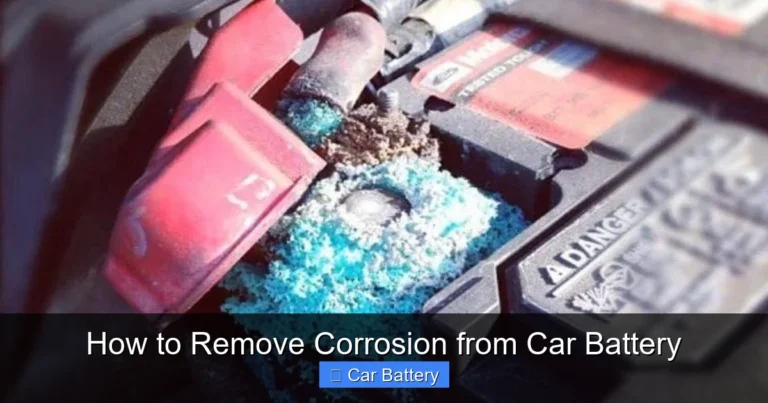
Before testing, inspect your battery terminals. If you see a white, powdery substance (corrosion), it can interfere with your readings and reduce the battery’s efficiency. A battery terminal cleaner or a simple mixture of baking soda and water can help remove this buildup. Use a wire brush to scrub the terminals gently, then wipe them clean with a cloth. This ensures a solid connection when you attach your multimeter probes.
Safety Gear
While checking battery voltage is generally safe, it’s wise to take precautions. Wear safety glasses to protect your eyes from any accidental sparks or acid splashes. Also, avoid wearing jewelry, especially rings or bracelets, as they can conduct electricity. Work in a well-ventilated area, and never smoke or use open flames near the battery—hydrogen gas can be released during charging.
Owner’s Manual (For Reference)
Your car’s owner’s manual may include specific instructions or voltage recommendations for your battery type. Some vehicles have maintenance-free batteries, while others require periodic checks. The manual can also help you locate the battery, especially in cars where it’s not under the hood (some are in the trunk or under the rear seat).
Step-by-Step Guide to Checking Car Battery Voltage
Visual guide about How to Check Voltage of Car Battery
Image source: i.ytimg.com
Now that you have your tools ready, let’s walk through the process of checking your car battery voltage. This method uses a digital multimeter and assumes the engine is off—this is known as a “resting voltage” test, and it gives the most accurate baseline reading.
Step 1: Turn Off the Engine and All Electronics
Start by turning off your car completely. Remove the keys from the ignition, and make sure all lights, radio, air conditioning, and other electronics are off. Even small draws on the battery—like a clock or alarm system—can slightly lower the voltage reading. For the most accurate result, wait at least 30 minutes after turning off the car. This allows the battery to “rest” and gives a true reading of its state of charge.
Step 2: Locate the Battery and Identify Terminals
Pop the hood and locate your car battery. It’s usually a rectangular box with two cables attached—one red (positive) and one black (negative). The positive terminal is marked with a “+” sign and often has a red cover or cap. The negative terminal is marked with a “–” sign and is usually black.
If you’re unsure which is which, look for the cables: the red cable connects to the positive terminal, and the black cable connects to the negative. Never assume—double-check to avoid reversing the probes, which can damage your multimeter or give incorrect readings.
Step 3: Set Up Your Multimeter
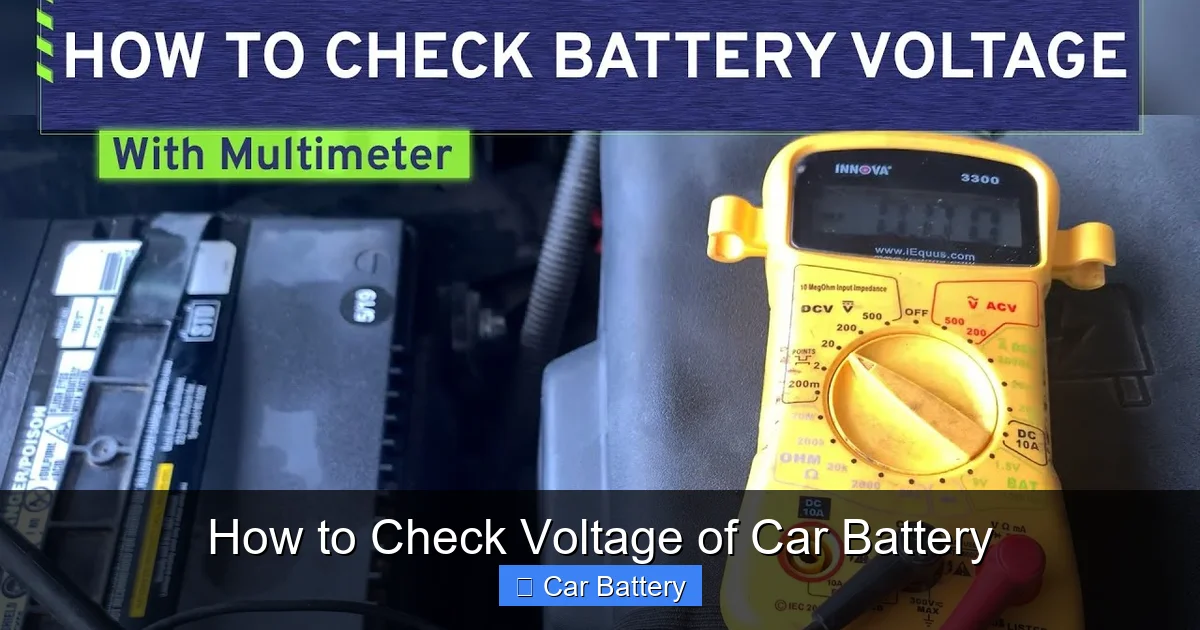
Turn on your digital multimeter. Set it to DC voltage mode. This is usually indicated by a “V” with a straight line (not a wavy line, which is for AC voltage). If your multimeter has multiple voltage ranges (like 2V, 20V, 200V), select the 20V setting. This gives you the best resolution for reading a 12-volt battery.
If your multimeter is auto-ranging, you don’t need to worry about this step—it will automatically detect the correct range.
Step 4: Connect the Probes
Take the red probe (positive) and touch it to the positive terminal of the battery. Then take the black probe (negative) and touch it to the negative terminal. Make sure the probes make firm contact—don’t just rest them on the surface. A loose connection can result in a false reading.
Hold the probes steady for a few seconds until the reading stabilizes. Most digital multimeters will display the voltage within 1–2 seconds.
Step 5: Read and Interpret the Voltage
Here’s what your reading means:
– 12.6V to 12.7V: Fully charged. Your battery is in excellent condition.
– 12.4V to 12.5V: About 75% charged. Still acceptable, but consider recharging soon.
– 12.2V to 12.3V: About 50% charged. The battery is partially discharged and may struggle in cold weather.
– 12.0V to 12.1V: About 25% charged. The battery is weak and should be recharged immediately.
– Below 12.0V: Severely discharged or failing. The battery may not start your car and likely needs replacement.
If your reading is below 12.4V, try charging the battery with a battery charger and test again after a few hours. If it still reads low, the battery may be nearing the end of its life.
Step 6: Perform a Load Test (Optional but Recommended)
A resting voltage test tells you the state of charge, but not how well the battery performs under stress. That’s where a load test comes in. This test simulates the demand of starting your car and reveals whether the battery can maintain voltage when it matters most.
To perform a basic load test:
1. Start your car and let it run for 2–3 minutes to ensure the battery is charged.
2. Turn off the engine.
3. Reconnect your multimeter to the battery terminals as before.
4. Have someone turn the ignition to the “start” position (but don’t let the engine start—just crank it for 2–3 seconds).
5. Watch the multimeter reading during the crank.
A healthy battery should drop to around 9.6V to 10.5V during cranking and quickly recover. If it drops below 9.6V or takes a long time to recover, the battery is weak and may need replacement.
Note: This test puts stress on the battery, so don’t repeat it multiple times in a row. If you’re unsure, consider having a professional perform a full load test with a dedicated battery tester.
Understanding What Your Voltage Reading Means

Visual guide about How to Check Voltage of Car Battery
Image source: s3.amazonaws.com
Once you’ve checked your battery voltage, the next step is understanding what that number really means. Voltage is just one piece of the puzzle—it tells you the electrical potential, but not the overall health or capacity of the battery. Still, it’s a powerful indicator when interpreted correctly.
Resting Voltage vs. Charging Voltage
It’s important to distinguish between resting voltage (engine off) and charging voltage (engine running). When the engine is running, the alternator charges the battery, so the voltage should read between 13.7V and 14.7V. If it’s below 13.7V, the alternator may not be charging properly. If it’s above 14.7V, the battery could be overcharging, which can cause damage over time.
To check charging voltage, repeat the multimeter test with the engine running. Make sure all accessories (lights, AC, radio) are off during this test for accuracy.
Temperature Effects on Voltage
Cold weather reduces a battery’s efficiency. A battery that reads 12.4V in summer might struggle to start your car in winter, even though the voltage seems acceptable. That’s because chemical reactions inside the battery slow down in the cold, reducing its ability to deliver power.
If you live in a cold climate, consider checking your battery voltage more frequently in winter. A battery that’s borderline in summer may fail when temperatures drop.
Battery Age and Voltage
Even if your voltage reading looks good, age matters. Most car batteries last 3–5 years. After that, their ability to hold a charge diminishes, even if they still show 12.6V at rest. Internal corrosion, plate degradation, and sulfation (a buildup of lead sulfate crystals) can reduce performance over time.
If your battery is more than three years old and you’re seeing voltage fluctuations or slow cranking, it’s wise to have it tested professionally or consider replacement.
Parasitic Drain and Voltage Drop
Sometimes, a battery loses charge even when the car is off. This is called parasitic drain, and it can be caused by faulty electronics, a stuck relay, or aftermarket accessories (like dash cams or alarms). If your battery voltage drops significantly overnight—say, from 12.6V to 12.0V—there may be a drain issue.
To check for parasitic drain, you’ll need a multimeter set to measure current (amps), not voltage. This is a more advanced test and may require disconnecting the battery. If you’re not comfortable doing this, take your car to a mechanic.
Common Mistakes to Avoid When Checking Battery Voltage
Even simple tasks can go wrong if you’re not careful. Here are some common mistakes people make when checking car battery voltage—and how to avoid them.
Testing Immediately After Driving
One of the biggest mistakes is checking the battery voltage right after turning off the car. The battery may still be “surface charged” from the alternator, giving a falsely high reading. Always wait at least 30 minutes after driving before testing. This allows the surface charge to dissipate and gives a true resting voltage.
Reversing the Probes
Connecting the red probe to the negative terminal and the black probe to the positive terminal can damage your multimeter or give a negative reading. While most modern multimeters can handle this briefly, it’s best to avoid it. Always double-check your connections before touching the probes to the terminals.
Ignoring Corrosion
Corrosion on the battery terminals can create resistance, leading to inaccurate readings. Even a thin layer of buildup can interfere with the connection. Always clean the terminals before testing. Use a wire brush and a mixture of baking soda and water (one tablespoon of baking soda per cup of water) to neutralize acid and remove corrosion.
Using the Wrong Voltage Setting
If your multimeter has manual range settings, make sure you’re using the correct one. Setting it too low (like 2V) can overload the meter and damage it. Setting it too high (like 200V) reduces accuracy. For car batteries, the 20V DC setting is ideal.
Not Testing Under Load
A resting voltage test is a good start, but it doesn’t tell the whole story. A battery might show 12.6V at rest but drop to 8V when starting the engine—a sign of internal failure. Always consider doing a load test, especially if your battery is more than three years old or you’re experiencing starting issues.
Assuming a Low Reading Means a Bad Battery
Sometimes, a low voltage reading is due to a discharged battery, not a faulty one. If your car hasn’t been driven in a week or you’ve left lights on, the battery may simply need a recharge. Try charging it with a battery charger and test again after a few hours. If it still reads low, then it’s likely time for a replacement.
When to Replace Your Car Battery
Knowing how to check voltage of car battery is helpful, but it’s only useful if you act on the results. So, when should you replace your battery?
Age is a Major Factor
Even if your voltage looks good, most batteries don’t last more than 5 years. Heat, vibration, and charge cycles take a toll over time. If your battery is more than 3 years old and you’re seeing any warning signs—slow cranking, dim lights, or voltage below 12.4V—it’s time to start shopping for a replacement.
Repeated Low Voltage Readings
If your battery consistently reads below 12.4V even after charging, it’s not holding a charge. This is a clear sign of failure. Internal components may be worn out, or the battery may be sulfated.
Swelling or Leaking
Physically inspect your battery. If the case is swollen, cracked, or leaking fluid, replace it immediately. These are signs of overcharging or internal damage and can be dangerous.
Failed Load Test
If your battery drops below 9.6V during a load test or takes more than 10 seconds to recover, it’s not strong enough to start your car reliably. Replace it before it leaves you stranded.
Extreme Weather Performance
If your car struggles to start in cold weather—even with a good voltage reading—the battery may not have enough cold cranking amps (CCA) for your climate. Consider upgrading to a battery with a higher CCA rating.
Tips for Maintaining a Healthy Car Battery
Prevention is always better than cure. Here are some simple tips to keep your battery in top shape and extend its life.
Drive Regularly
Short trips don’t give the alternator enough time to fully recharge the battery. If you only drive a few miles at a time, consider taking longer drives once a week or using a battery maintainer (also called a trickle charger) to keep the battery topped up.
Turn Off Accessories When Idling
Leaving lights, radio, or AC on while the engine is off drains the battery quickly. Get in the habit of turning off everything before shutting off the engine.
Keep Terminals Clean
Check your battery terminals every few months. Clean any corrosion with a baking soda solution and a wire brush. You can also apply a thin layer of petroleum jelly to the terminals to prevent future buildup.
Secure the Battery
A loose battery can vibrate and damage internal components. Make sure it’s securely mounted in its tray. If the hold-down clamp is loose, tighten it.
Check the Charging System
A faulty alternator can overcharge or undercharge your battery. If you notice flickering lights, a battery warning light on the dashboard, or consistently low voltage with the engine running, have your charging system checked.
Use a Battery Maintainer in Storage
If you’re storing your car for weeks or months, use a battery maintainer to keep it charged. These devices provide a low, steady charge and prevent sulfation.
Conclusion
Learning how to check voltage of car battery is a simple yet powerful skill that every driver should have. It takes just a few minutes, requires minimal tools, and can save you from the hassle and expense of a dead battery. By understanding what your voltage reading means, avoiding common mistakes, and knowing when to replace your battery, you’ll keep your car running smoothly for years to come.
Remember, a healthy battery starts with regular checks and good habits. Don’t wait for a breakdown to take action. Make battery maintenance part of your routine—check the voltage every few months, especially before winter, and keep an eye on your battery’s age and performance.
With the right knowledge and a little effort, you can ensure your car starts every time, no matter the weather or how long it’s been sitting. So grab your multimeter, pop the hood, and give your battery the attention it deserves. Your future self will thank you.
Frequently Asked Questions
How often should I check my car battery voltage?
It’s a good idea to check your car battery voltage every 3–6 months, especially before winter or long trips. If your battery is more than 3 years old, consider checking it monthly.
Can I check battery voltage with the engine running?
Yes, but this tests the charging system, not the battery’s state of charge. With the engine running, voltage should be between 13.7V and 14.7V. For battery health, always check with the engine off.
What does a 12.0V reading mean?
A reading of 12.0V means your battery is about 25% charged and severely depleted. It may not start your car, especially in cold weather, and should be recharged immediately.
Is it safe to check battery voltage myself?
Yes, as long as you follow safety precautions: wear safety glasses, avoid sparks, and don’t touch both probes with your hands at the same time. Work in a well-ventilated area.
Can a bad alternator affect battery voltage?
Yes. A faulty alternator may not charge the battery properly, leading to low voltage readings even after driving. If voltage stays low with the engine running, have your alternator tested.
Do I need a special multimeter for car batteries?
No. Any digital multimeter with a DC voltage setting will work. Look for one with auto-ranging for easier use, and make sure it can measure up to at least 20 volts.