How to Check Transmission Fluid on a Kia Sorento

Contents
- 1 Key Takeaways
- 2 📑 Table of Contents
- 3 Why Checking Transmission Fluid Matters on Your Kia Sorento
- 4 Understanding Your Kia Sorento’s Transmission System
- 5 When and How Often to Check Transmission Fluid
- 6 Step-by-Step Guide: How to Check Transmission Fluid on a Kia Sorento
- 7 What to Do If Your Transmission Fluid Is Low or Bad
- 8 Tips for Maintaining Healthy Transmission Fluid


Checking the transmission fluid on your Kia Sorento is a simple yet vital maintenance task that ensures smooth shifting and prevents costly repairs. This guide walks you through the process safely and accurately, whether you’re a seasoned DIYer or a first-time car owner.
Key Takeaways
- Check fluid when the engine is warm: For accurate readings, always check transmission fluid after driving for at least 10–15 minutes so the fluid is at operating temperature.
- Use the correct dipstick or inspection method: Most Kia Sorento models from 2011–2020 use a sealed transmission without a traditional dipstick—check via the fill plug or use a scan tool.
- Look for proper color and smell: Healthy transmission fluid is bright red and smells slightly sweet; dark, burnt, or gritty fluid indicates a problem.
- Never overfill: Adding too much fluid can cause foaming, overheating, and transmission damage—add gradually and recheck.
- Follow your owner’s manual: Always refer to your specific model year and trim for exact procedures, as methods vary between generations.
- When in doubt, consult a professional: If you’re unsure about the process or notice leaks, strange noises, or slipping gears, visit a certified Kia technician.
- Regular checks extend transmission life: Checking fluid every 30,000 miles or annually helps catch issues early and keeps your Sorento running smoothly.
📑 Table of Contents
- Why Checking Transmission Fluid Matters on Your Kia Sorento
- Understanding Your Kia Sorento’s Transmission System
- When and How Often to Check Transmission Fluid
- Step-by-Step Guide: How to Check Transmission Fluid on a Kia Sorento
- What to Do If Your Transmission Fluid Is Low or Bad
- Tips for Maintaining Healthy Transmission Fluid
- Conclusion
Why Checking Transmission Fluid Matters on Your Kia Sorento
Your Kia Sorento is built for reliability, comfort, and performance—whether you’re navigating city streets or tackling weekend adventures. But like any vehicle, it needs regular maintenance to keep running at its best. One of the most overlooked yet critical aspects of that maintenance is checking the transmission fluid. This often-underappreciated fluid plays a huge role in how smoothly your Sorento shifts gears, how efficiently it transfers power, and how long the transmission lasts.
Transmission fluid does more than just lubricate moving parts. It also cools the transmission, cleans internal components, and helps transmit hydraulic pressure for gear changes. Over time, this fluid can break down, get contaminated, or leak out—leading to rough shifting, slipping gears, overheating, and even complete transmission failure. The good news? Catching these issues early is as simple as checking the fluid regularly. And while it might seem intimidating at first, especially if you’re new to car maintenance, it’s actually a straightforward process once you know what to look for.
The Risks of Neglecting Transmission Fluid
Ignoring your transmission fluid is like skipping oil changes—it might not cause immediate problems, but the long-term damage can be severe. Low or degraded fluid increases friction and heat inside the transmission, which accelerates wear on clutches, seals, and gears. In extreme cases, this can lead to a complete transmission breakdown, requiring a costly rebuild or replacement that could run thousands of dollars.
Even if your Sorento seems to be shifting fine, internal damage might already be occurring. Transmission issues often develop silently, with symptoms appearing only after significant wear has taken place. That’s why proactive checks are so important. A quick 10-minute inspection every few months can save you from major headaches down the road.
Understanding Your Kia Sorento’s Transmission System
Visual guide about How to Check Transmission Fluid on a Kia Sorento
Image source: teon-files.s3.amazonaws.com
Before diving into the how-to, it’s helpful to understand how your Sorento’s transmission works and what type of system it uses. Kia has used different transmission designs across various model years, and the method for checking fluid depends heavily on which one your vehicle has.
Most Kia Sorento models from 2011 to 2020 are equipped with a 6-speed automatic transmission (A6LF2 or A6LF3), while newer models (2021 and later) often feature an 8-speed automatic (A8LF1). Importantly, many of these transmissions are “sealed” systems—meaning they don’t have a traditional dipstick like older vehicles. Instead, the fluid level is checked through a fill plug or using a diagnostic tool.
Sealed vs. Dipstick Transmissions
If you’re used to checking engine oil with a dipstick, the idea of a sealed transmission might seem confusing. But it’s actually a design choice meant to reduce contamination and prevent overfilling. In a sealed system, the transmission is filled to the correct level at the factory, and the fluid is meant to last the life of the vehicle under normal conditions. However, leaks, overheating, or excessive wear can still cause fluid loss, so periodic checks are still necessary.
For Sorento models with a dipstick (typically pre-2011 models), the process is more familiar: you pull the dipstick, wipe it, reinsert it, and check the level and condition. But for newer models, you’ll need to access the transmission through the engine bay or underneath the vehicle, depending on the design.
Know Your Model Year
It’s crucial to know your exact model year and transmission type before attempting to check the fluid. For example:
– 2002–2009 Kia Sorento: Usually has a dipstick.
– 2011–2020 Kia Sorento: Most have sealed transmissions without a dipstick.
– 2021–2024 Kia Sorento: Typically sealed, with some models requiring a scan tool for accurate readings.
Always consult your owner’s manual or a reliable Kia service guide to confirm your transmission type. This ensures you use the correct method and avoid damaging your vehicle.
When and How Often to Check Transmission Fluid
Visual guide about How to Check Transmission Fluid on a Kia Sorento
Image source: teon-files.s3.amazonaws.com
Now that you understand the basics, let’s talk timing. How often should you check your transmission fluid, and under what conditions?
Recommended Frequency
As a general rule, check your transmission fluid every 30,000 miles or once a year—whichever comes first. However, if you frequently drive in severe conditions—such as towing, stop-and-go traffic, extreme heat, or mountainous terrain—you may want to check it more often, like every 15,000 miles.
Severe driving puts extra stress on the transmission, causing the fluid to degrade faster. If you use your Sorento for hauling trailers, driving in dusty areas, or idling for long periods, don’t wait for the annual check—make it a habit to inspect the fluid every few months.
Best Time of Day to Check
The most accurate fluid level reading comes when the transmission is at normal operating temperature. That means you should drive your Sorento for at least 10–15 minutes before checking. This allows the fluid to expand and circulate fully, giving you a true reading.
Avoid checking the fluid when the engine is cold—especially first thing in the morning. Cold fluid contracts and may give a falsely high reading, leading you to believe the level is fine when it’s actually low. Similarly, don’t check immediately after a long drive and shutting off the engine—wait 5–10 minutes to let the fluid settle.
Signs It’s Time for a Check
Even if you’re following a schedule, certain symptoms should prompt an immediate fluid check:
– Rough or delayed shifting
– Slipping gears (engine revs but the car doesn’t accelerate)
– Unusual noises (whining, grinding, or clunking)
– Transmission overheating warning light
– Visible fluid leaks under the vehicle
If you notice any of these signs, don’t wait—check the fluid right away. Early detection can prevent minor issues from becoming major repairs.
Step-by-Step Guide: How to Check Transmission Fluid on a Kia Sorento
Visual guide about How to Check Transmission Fluid on a Kia Sorento
Image source: i.pinimg.com
Now for the main event: how to actually check the transmission fluid on your Kia Sorento. The steps vary slightly depending on your model year and transmission type, so we’ll cover both dipstick and sealed systems.
For Models with a Dipstick (Pre-2011 Sorento)
If your Sorento has a traditional dipstick, the process is similar to checking engine oil—but with a few key differences.
Step 1: Park on a Level Surface
Make sure your vehicle is parked on a flat, level surface. This ensures an accurate reading. Engage the parking brake and turn off the engine.
Step 2: Warm Up the Engine
Start the engine and let it run for 10–15 minutes to bring the transmission fluid to operating temperature. You can also drive the vehicle around the block if needed.
Step 3: Locate the Transmission Dipstick
Open the hood and look for the transmission dipstick. It’s usually labeled and located near the back of the engine bay, often with a red or yellow handle (different from the engine oil dipstick, which is typically yellow or orange).
Step 4: Remove and Wipe the Dipstick
Pull the dipstick out completely and wipe it clean with a lint-free cloth or paper towel.
Step 5: Reinsert and Remove Again
Push the dipstick all the way back in, then pull it out again to check the fluid level. The dipstick will have “Full” and “Add” markings. The fluid should be between these two lines.
Step 6: Check Fluid Condition
Look at the color and smell of the fluid. Healthy transmission fluid is bright red and translucent. If it’s dark brown, black, or has a burnt smell, it’s time for a fluid change. Also check for particles or metal shavings, which indicate internal wear.
Step 7: Add Fluid if Needed
If the level is low, add the recommended transmission fluid (usually Dexron III or equivalent) through the dipstick tube using a funnel. Add a little at a time, rechecking the level after each addition. Never overfill.
For Sealed Transmissions (2011–2024 Sorento)
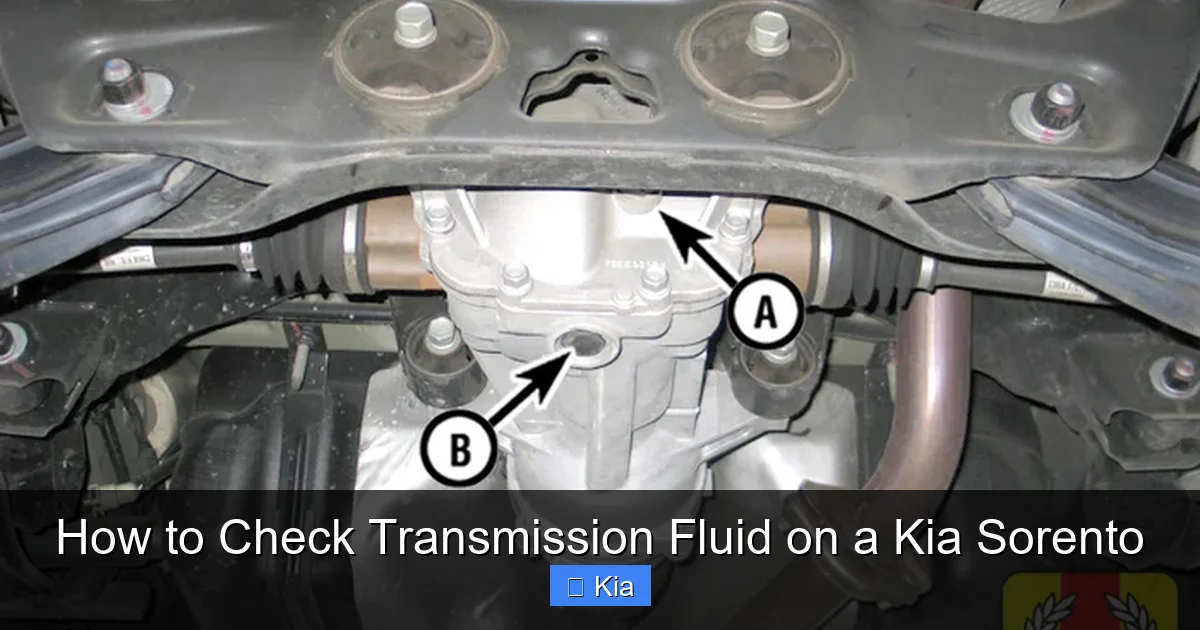
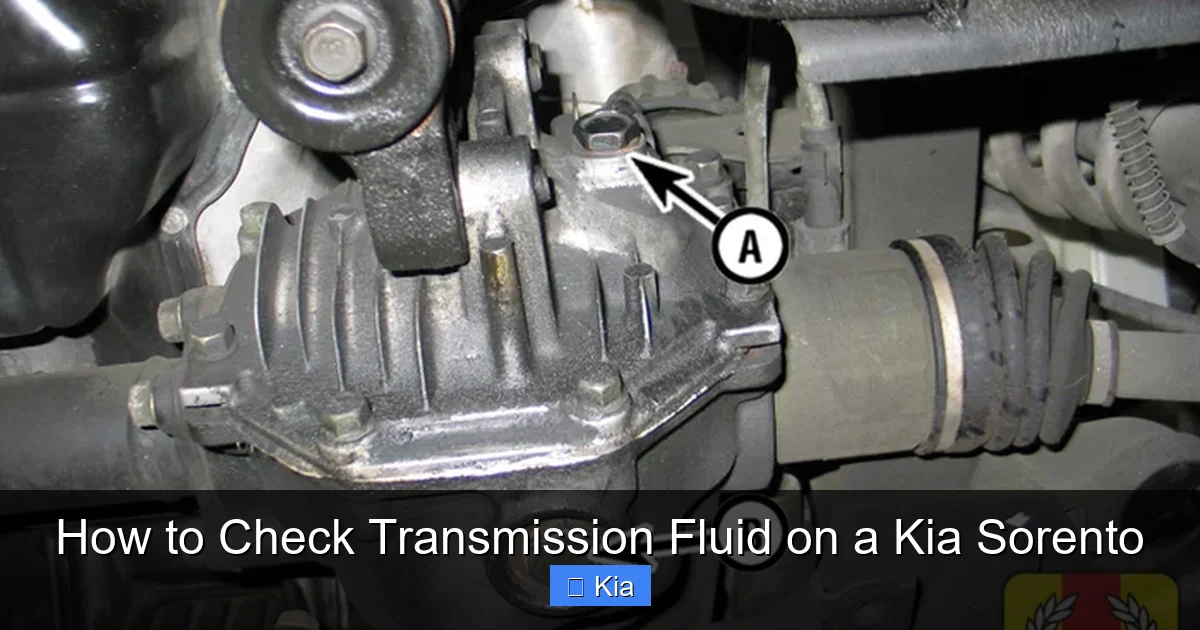
Most modern Kia Sorentos don’t have a dipstick. Instead, the fluid level is checked through the fill plug, usually located on the side of the transmission.
Step 1: Warm Up the Vehicle
Drive your Sorento for 10–15 minutes to bring the transmission to operating temperature. Then park on a level surface and turn off the engine.
Step 2: Locate the Fill Plug
The fill plug is typically a 17mm or 19mm bolt on the side of the transmission, near the front axle. It may be labeled or marked with a yellow cap. Refer to your owner’s manual or a service diagram if you’re unsure.
Step 3: Prepare to Check
Place a drain pan underneath the fill plug to catch any fluid that may drip out. You’ll also need a wrench or socket to remove the plug.
Step 4: Remove the Fill Plug
Carefully loosen and remove the fill plug. If the fluid level is correct, a small amount of fluid should drip out—just enough to indicate the level is at the bottom of the fill hole. If nothing comes out, the fluid is low. If it gushes out, it may be overfilled.
Step 5: Add Fluid if Necessary
If the fluid is low, use a fluid pump or funnel with a long tube to add the correct type of transmission fluid (usually Kia Genuine ATF or equivalent) through the fill hole. Add slowly and recheck by removing the plug again.
Step 6: Reinstall the Plug
Once the fluid level is correct, reinstall the fill plug and tighten it to the manufacturer’s torque specification (usually around 15–20 ft-lbs). Wipe away any spilled fluid.
Using a Scan Tool (Advanced Method)
Some newer Kia Sorento models (especially 2021 and later) require a diagnostic scan tool to check the transmission fluid level accurately. This is because the system monitors fluid temperature and level electronically.
In this case, you’ll need access to a Kia-compatible scan tool (like the Kia KDS or a professional-grade OBD2 scanner with transmission functions). The tool will display the fluid level and temperature, allowing for a precise check. This method is typically used by dealerships and certified technicians, but some advanced DIYers may have access to compatible tools.
What to Do If Your Transmission Fluid Is Low or Bad
Finding low or degraded transmission fluid is a red flag—but it doesn’t always mean disaster. Here’s how to respond based on what you discover.
Low Fluid Level
If the fluid is low, the first step is to identify the cause. Common reasons include:
– Normal evaporation or minor leaks
– Worn seals or gaskets
– Damaged transmission pan or cooler lines
Start by inspecting the transmission for visible leaks. Look under the vehicle for red or brown fluid stains. Check the transmission pan, cooler lines, and seals. If you find a leak, it should be repaired before adding fluid.
Once the leak is fixed (or if no leak is found), top off the fluid using the correct type. Always use the manufacturer-recommended fluid—using the wrong kind can damage the transmission.
Dark or Burnt Fluid
Dark, smoky, or burnt-smelling fluid indicates overheating or internal wear. This fluid has lost its lubricating properties and can no longer protect the transmission effectively.
In this case, a simple top-off won’t solve the problem. You’ll need a full transmission fluid change—preferably a flush, which removes all old fluid and replaces it with fresh fluid. A flush is more thorough than a drain-and-fill and helps remove contaminants.
However, if the transmission is already showing signs of damage (like slipping or noise), a flush may not be enough. Consult a professional to assess the condition of internal components.
Contaminated Fluid
If the fluid contains metal particles, sludge, or a gritty texture, it’s a sign of serious internal wear. This could mean damaged clutches, bearings, or gears. Continuing to drive with contaminated fluid can cause catastrophic failure.
Stop driving the vehicle immediately and have it towed to a certified Kia service center. A transmission rebuild or replacement may be necessary.
Tips for Maintaining Healthy Transmission Fluid
Prevention is always better than repair. Here are some practical tips to keep your transmission fluid—and your Sorento—in top shape.
Use the Right Fluid
Always use the transmission fluid specified in your owner’s manual. For most Kia Sorentos, this is Kia Genuine ATF or a compatible Dexron III equivalent. Avoid generic or off-brand fluids, as they may not meet the required specifications.
Change Fluid on Schedule
Even sealed transmissions benefit from fluid changes. While Kia claims the fluid is “lifetime,” most experts recommend changing it every 60,000 to 100,000 miles, especially if you drive in severe conditions.
Avoid Overheating
High temperatures are the enemy of transmission fluid. Avoid towing heavy loads in hot weather, and consider installing an auxiliary transmission cooler if you frequently haul or drive in mountainous areas.
Watch for Leaks
Regularly inspect under your vehicle for fluid leaks. Early detection can prevent low fluid levels and costly repairs.
Drive Smoothly
Aggressive driving—like rapid acceleration and hard braking—puts extra stress on the transmission. Drive gently to extend the life of your fluid and transmission.
Conclusion
Even sealed transmissions benefit from fluid changes. While Kia claims the fluid is “lifetime,” most experts recommend changing it every 60,000 to 100,000 miles, especially if you drive in severe conditions.
Avoid Overheating
High temperatures are the enemy of transmission fluid. Avoid towing heavy loads in hot weather, and consider installing an auxiliary transmission cooler if you frequently haul or drive in mountainous areas.
Watch for Leaks
Regularly inspect under your vehicle for fluid leaks. Early detection can prevent low fluid levels and costly repairs.
Drive Smoothly
Aggressive driving—like rapid acceleration and hard braking—puts extra stress on the transmission. Drive gently to extend the life of your fluid and transmission.
Conclusion
Regularly inspect under your vehicle for fluid leaks. Early detection can prevent low fluid levels and costly repairs.
Drive Smoothly
Aggressive driving—like rapid acceleration and hard braking—puts extra stress on the transmission. Drive gently to extend the life of your fluid and transmission.
Conclusion
Checking the transmission fluid on your Kia Sorento might not be as routine as checking the oil, but it’s just as important for your vehicle’s health. Whether your model has a dipstick or a sealed system, knowing how and when to inspect the fluid can save you from expensive repairs and keep your Sorento shifting smoothly for years to come.
By following the steps in this guide—warming up the engine, using the correct method for your model, and paying attention to fluid condition—you’ll be well-equipped to maintain your transmission proactively. And remember, when in doubt, don’t hesitate to visit a certified Kia technician. A little attention now can prevent big problems later.
Your Kia Sorento is designed to take you wherever life leads—don’t let a simple maintenance task stand in the way of that journey.
Frequently Asked Questions
Can I check transmission fluid on a cold engine?
No, you should never check transmission fluid on a cold engine. The fluid needs to be at operating temperature for an accurate reading. Drive the vehicle for 10–15 minutes before checking.
What color should Kia Sorento transmission fluid be?
Healthy transmission fluid is bright red and translucent. If it’s dark brown, black, or has a burnt smell, it’s time for a change.
Can I use any transmission fluid in my Kia Sorento?
No, always use the fluid specified in your owner’s manual, such as Kia Genuine ATF or Dexron III equivalent. Using the wrong fluid can damage the transmission.
How do I know if my Sorento has a dipstick?
Models before 2011 typically have a dipstick. Newer models (2011 and later) usually have sealed transmissions without one. Check your owner’s manual to confirm.
What happens if I overfill the transmission fluid?
Overfilling can cause foaming, overheating, and transmission damage. Always add fluid gradually and recheck the level to avoid this.
Do I need a special tool to check fluid on a sealed transmission?
For most sealed systems, you only need a wrench to remove the fill plug. However, some newer models require a scan tool for accurate readings—consult a professional if unsure.