
How to Check Tire Pressure on Audi Q5

Checking tire pressure on your Audi Q5 is quick, easy, and essential for safety, fuel efficiency, and tire longevity. With the built-in tire pressure monitoring system (TPMS), you can monitor pressure in real time, but manual checks with a gauge ensure accuracy. Simply locate the valve stem, attach a reliable tire gauge, and compare readings to the recommended PSI listed in your owner’s manual or driver’s door jamb—adjust as needed for optimal performance.
Key Takeaways
- Check tire pressure monthly to ensure optimal performance and safety.
- Use the recommended PSI listed in the driver’s door jamb or manual.
- Inspect tires when cold for the most accurate pressure readings.
- Utilize the Audi MMI system to monitor real-time tire pressure alerts.
- Carry a portable gauge for manual checks when needed.
- Adjust pressure before long trips to improve fuel efficiency and tire life.
📑 Table of Contents
- How to Check Tire Pressure on Audi Q5
- Why Tire Pressure Matters for Your Audi Q5
- Understanding Your Audi Q5’s Recommended Tire Pressure
- Tools You’ll Need to Check Tire Pressure
- Step-by-Step Guide to Checking Tire Pressure on Your Audi Q5
- Using Your Audi Q5’s Built-In Tire Pressure Monitoring System (TPMS)
- Common Mistakes to Avoid When Checking Tire Pressure
- Maintenance Schedule and Best Practices
- Data Table: Recommended Tire Pressure by Audi Q5 Model Year
- Conclusion
How to Check Tire Pressure on Audi Q5
There’s something deeply satisfying about driving an Audi Q5—the smooth ride, the quiet cabin, the way it handles corners like it’s hugging the road. But as much as we love the luxury and performance, there’s one humble component that often gets overlooked: the tires. And not just their tread or alignment, but something even more fundamental—tire pressure. I learned this the hard way during a weekend road trip when my Q5 started feeling a little sluggish and the dashboard lit up like a Christmas tree with warning lights. Turns out, one of my tires was dangerously underinflated. That moment was a wake-up call. I realized how crucial it is to regularly check tire pressure on an Audi Q5—not just for safety, but for fuel efficiency, tire longevity, and overall driving comfort.
Whether you’re a new Audi Q5 owner or you’ve been driving one for years, knowing how to check tire pressure properly can save you from unexpected blowouts, poor handling, and even costly repairs down the line. The good news? It’s not complicated. With a few simple tools and a little know-how, you can make tire pressure checks a regular part of your vehicle maintenance routine. In this guide, I’ll walk you through everything you need to know—from understanding why tire pressure matters to step-by-step instructions, tools you’ll need, and even how to use your Q5’s built-in tire pressure monitoring system (TPMS). By the end, you’ll feel confident keeping your Audi Q5 rolling safely and efficiently, mile after mile.
Why Tire Pressure Matters for Your Audi Q5
Let’s start with the basics: why should you even care about tire pressure? After all, your Audi Q5 is packed with advanced technology, so surely it can handle a little underinflation, right? Not quite. Tire pressure plays a critical role in how your vehicle performs, and even small deviations from the recommended PSI can have noticeable effects. Think of your tires as the only point of contact between your car and the road. If they’re not properly inflated, that connection weakens—and so does your control.
Visual guide about How to Check Tire Pressure on Audi Q5
Image source: i.ytimg.com
Safety First: The Risks of Incorrect Tire Pressure
Underinflated tires are one of the leading causes of tire failure. When a tire doesn’t have enough air, the sidewalls flex more than they’re designed to, generating excess heat. Over time, this heat buildup can lead to tread separation or even a blowout—especially at highway speeds. I remember a friend who had a near-miss on the freeway when his rear tire suddenly went flat. He later found out it had been underinflated for weeks. On the flip side, overinflated tires are stiffer and more prone to damage from potholes or road debris. They also have a smaller contact patch with the road, which reduces traction and increases stopping distance.
Fuel Efficiency and Environmental Impact
Did you know that underinflated tires can reduce your fuel economy by up to 3%? That might not sound like much, but over a year of driving, it adds up—both in dollars and carbon emissions. Your Audi Q5 is engineered for efficiency, and maintaining proper tire pressure helps it live up to that promise. Every time you drive with low tire pressure, your engine has to work harder to overcome the increased rolling resistance. It’s like running with heavy shoes—you’re expending more energy for the same distance.
Tire Longevity and Cost Savings
Properly inflated tires wear more evenly. When one side of a tire is underinflated, it bears more of the vehicle’s weight, causing uneven tread wear. This not only shortens the life of your tires but can also lead to vibrations and a rougher ride. Replacing a set of premium Audi Q5 tires can cost anywhere from $600 to over $1,200, depending on the model and tire type. By checking tire pressure regularly, you can extend the life of your tires and avoid premature replacements.
Handling and Ride Comfort
Your Audi Q5 is known for its balanced handling and smooth ride. But that experience depends heavily on proper tire inflation. Underinflated tires make the steering feel sluggish and less responsive, while overinflated tires can make the ride feel harsh and bouncy. I noticed this firsthand when I accidentally overinflated my tires before a long drive. The car felt like it was skipping over every bump, and I had to constantly correct the steering. It was uncomfortable and unsafe. Once I adjusted the pressure back to the recommended level, the difference was night and day.
Understanding Your Audi Q5’s Recommended Tire Pressure
Now that you know why tire pressure matters, let’s talk about what the right pressure actually is for your Audi Q5. This isn’t a one-size-fits-all number—it depends on your specific model year, trim level, and even the type of tires you’re using. But don’t worry, Audi makes it easy to find the correct PSI.
Visual guide about How to Check Tire Pressure on Audi Q5
Image source: carnewsbox.com
Where to Find the Recommended PSI
The most reliable source for your Audi Q5’s tire pressure is the sticker located on the driver’s side door jamb. Open the door and look for a small white or yellow label near the latch. It will list the recommended cold tire pressure for both the front and rear tires. For most Audi Q5 models (2017–2023), the standard recommendation is around 35 PSI for all four tires, but this can vary. For example, some higher-performance trims or models with larger wheels may require 38 PSI or more.
It’s important to note that this number is for cold tires—meaning the vehicle hasn’t been driven for at least three hours or has been driven less than one mile. Tire pressure increases as the tires heat up during driving, so checking them when they’re warm can give you a falsely high reading.
Front vs. Rear Tire Pressure
In some Audi Q5 models, especially those with all-wheel drive or different wheel sizes front and rear, the recommended pressure may differ between the front and rear tires. Always follow the values listed on the door jamb sticker. For instance, a 2020 Audi Q5 45 TFSI might recommend 35 PSI in the front and 38 PSI in the rear. Ignoring this difference can affect handling, especially during acceleration or cornering.
Seasonal Adjustments and Load Considerations
Tire pressure can fluctuate with temperature changes. For every 10°F drop in ambient temperature, tire pressure decreases by about 1 PSI. That means if you check your tires in the summer at 80°F and then again in winter at 30°F, you could be looking at a 5 PSI difference—enough to trigger a TPMS warning. It’s a good idea to check your tire pressure more frequently during seasonal transitions.
Additionally, if you’re carrying extra weight—like passengers, luggage, or towing a trailer—you may need to increase the tire pressure slightly. Audi often provides a “loaded” pressure recommendation on the same door jamb sticker. For example, if you’re driving with a full load, you might need to inflate your tires to 41 PSI instead of 35 PSI. Always refer to the manufacturer’s guidelines to avoid overinflation.
Tools You’ll Need to Check Tire Pressure
Checking tire pressure on your Audi Q5 doesn’t require a trip to the mechanic or a fancy garage setup. With just a few basic tools, you can do it yourself in under 10 minutes. The key is having the right equipment and knowing how to use it properly.
Visual guide about How to Check Tire Pressure on Audi Q5
Image source: size-tire.com
Digital Tire Pressure Gauge
A digital tire pressure gauge is the most accurate and user-friendly option. Unlike old-school analog gauges, digital models give you a clear, easy-to-read display with precise measurements down to the decimal. I personally use a EPAuto Digital Tire Pressure Gauge, which costs around $15 and has held up well over the years. It’s compact, fits easily in the glove compartment, and even has a built-in flashlight for nighttime checks.
When choosing a gauge, look for one with a range of at least 0–60 PSI (most Audi Q5 tires fall between 32–40 PSI) and a backlit display. Some models also feature a bleed valve to release excess air, which can be helpful if you accidentally overinflate.
Analog (Dial) Tire Pressure Gauge
If you prefer a more traditional tool, a dial-style analog gauge is a reliable alternative. These are often more durable than digital ones and don’t require batteries. However, they can be slightly less accurate and harder to read in low light. I’ve used a Accutire MS-4021B analog gauge before, and while it works fine, I find myself squinting to read the needle sometimes.
Built-In TPMS vs. Manual Checks
Your Audi Q5 comes equipped with a Tire Pressure Monitoring System (TPMS) that alerts you when one or more tires are significantly underinflated. The dashboard warning light looks like a flat tire with an exclamation point inside. While this system is helpful, it’s not a substitute for manual checks. TPMS typically only triggers when tire pressure drops by 25% or more below the recommended level—meaning you could be driving with low pressure for days without knowing it.
Think of TPMS as a safety net, not a maintenance tool. It’s there to catch serious issues, but it won’t tell you if your tires are just a few PSI low. That’s why regular manual checks are essential.
Air Compressor or Portable Inflator
If you find that your tires need air, you’ll need a way to add it. Many gas stations have public air pumps, but they’re not always reliable or clean. I recommend investing in a portable 12V tire inflator that plugs into your car’s cigarette lighter. The VIAIR 85P is a popular choice—it’s compact, powerful, and can inflate a flat tire from 0 to 35 PSI in about 5 minutes.
Some newer models even come with built-in pressure gauges and automatic shut-off features, so you can set the desired PSI and let the inflator do the work. This is especially useful if you’re checking tire pressure at home or on a road trip.
Step-by-Step Guide to Checking Tire Pressure on Your Audi Q5
Now that you have the right tools, let’s walk through the process of checking tire pressure on your Audi Q5. It’s a simple routine that takes less than 10 minutes, but doing it correctly ensures accurate results.
Step 1: Park on a Level Surface and Let Tires Cool
Start by parking your Audi Q5 on a flat, level surface—like a driveway or garage. Make sure the engine is off and the vehicle hasn’t been driven for at least three hours. This ensures the tires are cold and the pressure reading is accurate. If you’ve just driven, wait at least 30 minutes before checking.
Step 2: Locate the Valve Stem and Remove the Cap
Each tire has a small rubber valve stem on the side of the wheel. It looks like a tiny metal tube with a cap on top. Twist the cap counterclockwise to remove it. Keep the cap in a safe place—like your pocket or glove box—so you don’t lose it. The valve stem is where you’ll attach your pressure gauge.
Step 3: Attach the Pressure Gauge and Read the PSI
Press the tire pressure gauge firmly onto the valve stem. You’ll hear a brief hiss of air—that’s normal. Hold it steady for a second or two until the reading stabilizes. On a digital gauge, the number will appear on the screen. On an analog gauge, note where the needle points. Record the PSI for each tire.
Pro tip: If you’re using a digital gauge, make sure it’s set to the correct unit (PSI, not BAR or kPa). Most U.S. models use PSI.
Step 4: Compare to Recommended Pressure
Check the reading against the recommended PSI from your door jamb sticker. For example, if your Q5 calls for 35 PSI and your gauge reads 32 PSI, you’re 3 PSI underinflated. That’s enough to affect handling and fuel economy.
Step 5: Add or Release Air as Needed
If a tire is underinflated, use your portable inflator or visit a gas station air pump to add air. Attach the inflator nozzle to the valve stem and turn it on. Add air in short bursts, checking the pressure frequently to avoid overinflation. If you go too high, use the gauge’s bleed valve (if it has one) or press the center pin of the valve stem to release a small amount of air.
If a tire is overinflated, simply press the center pin of the valve stem with the tip of your gauge or a small tool to let out air. Recheck the pressure until it matches the recommended level.
Step 6: Replace the Valve Cap and Repeat
Once all four tires are at the correct pressure, screw the valve cap back on tightly. This keeps dirt and moisture out of the valve stem. Repeat the process for each tire—front left, front right, rear left, and rear right.
Step 7: Reset the TPMS (If Necessary)
After adjusting tire pressure, your Audi Q5’s TPMS may still show a warning light. To reset it, turn the ignition to the “on” position (without starting the engine) and press and hold the TPMS reset button—usually located under the steering column or in the infotainment menu. Hold it for 3–5 seconds until the light blinks and turns off. If your Q5 has the MMI system, you can also reset it through the vehicle settings menu.
Using Your Audi Q5’s Built-In Tire Pressure Monitoring System (TPMS)
Your Audi Q5 is equipped with a sophisticated Tire Pressure Monitoring System (TPMS) that helps keep you safe on the road. While it’s not a replacement for manual checks, understanding how it works can help you respond quickly to potential issues.
How TPMS Works
The TPMS in your Q5 uses sensors mounted inside each tire (usually attached to the valve stem) to monitor air pressure in real time. These sensors send data wirelessly to the vehicle’s computer, which displays the information on the dashboard or infotainment screen. If the pressure in any tire drops below a certain threshold—typically 25% below the recommended level—the TPMS warning light will illuminate.
Types of TPMS in Audi Q5
There are two main types of TPMS: direct and indirect. The Audi Q5 uses a direct TPMS, which means each tire has its own sensor that measures pressure directly. This is more accurate than indirect systems, which estimate pressure based on wheel speed sensors.
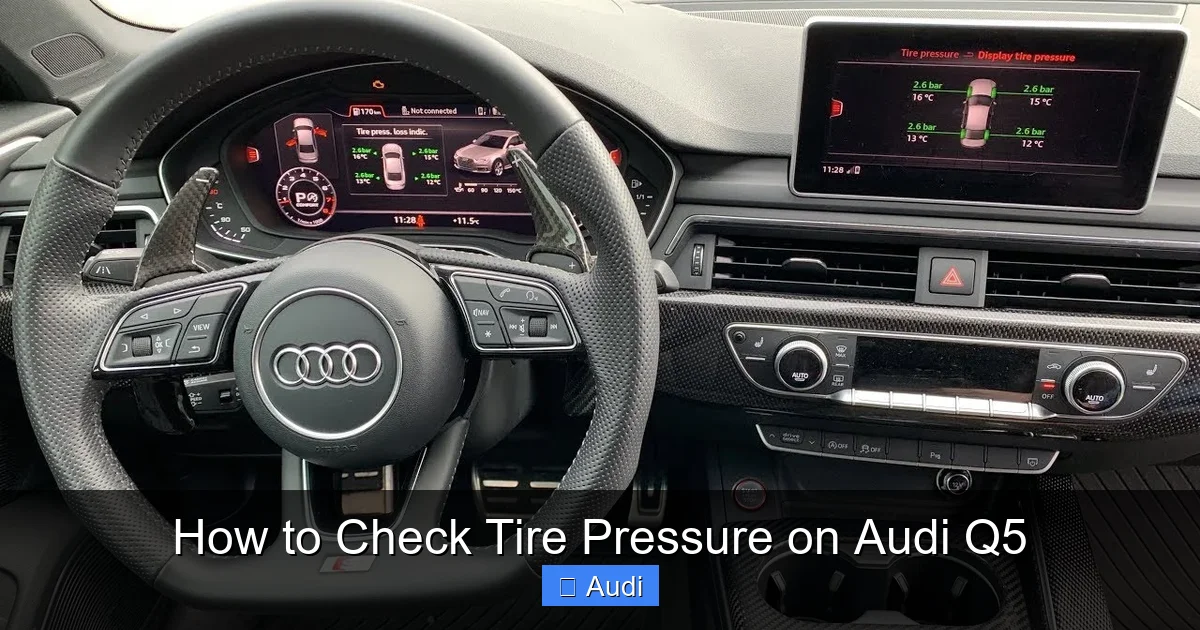
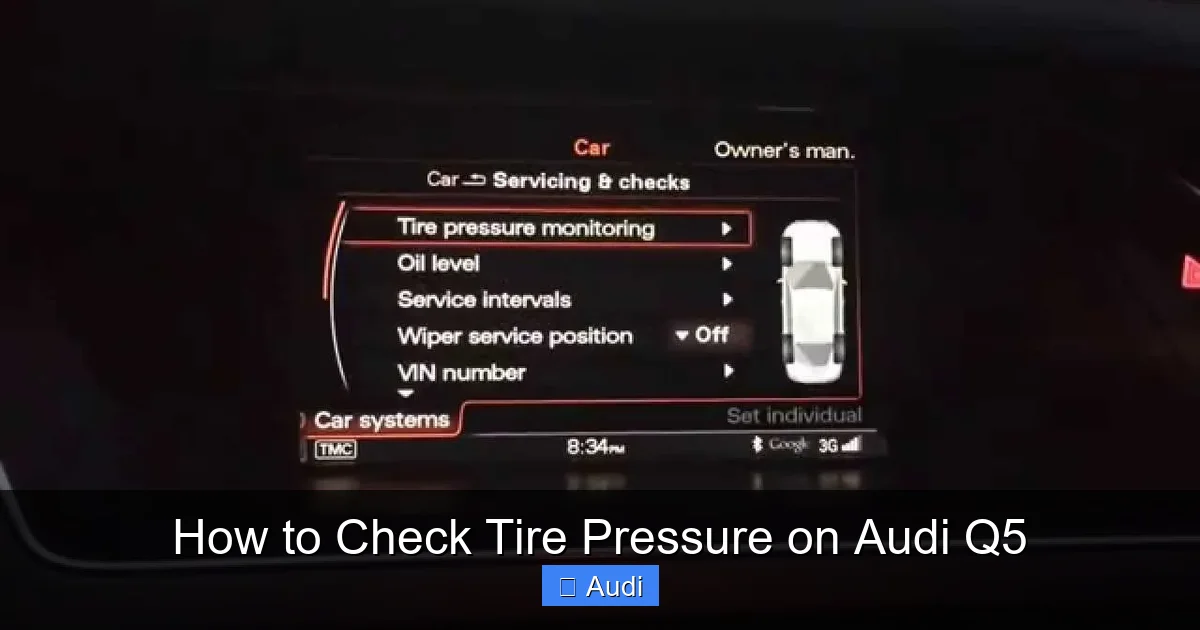
Some newer Q5 models (2021 and later) also offer TPMS with individual tire pressure display. This feature allows you to see the exact PSI of each tire through the MMI infotainment system. To access it, go to Vehicle > Service & Care > Tire Pressure. This is incredibly convenient for quick checks without leaving the car.
Responding to a TPMS Warning Light
If the TPMS light comes on, don’t panic—but don’t ignore it either. Pull over safely as soon as possible and check the tire pressure manually. The light could indicate a slow leak, a puncture, or simply that the tires are cold and need air. If one tire is significantly lower than the others, inspect it for damage like nails, cracks, or bulges.
If the light flashes for about a minute and then stays on, it could mean a TPMS sensor is malfunctioning. In that case, visit an Audi service center for diagnosis and repair.
Maintaining Your TPMS Sensors
TPMS sensors are powered by small batteries that last about 5–7 years. When the battery dies, the sensor will stop transmitting data, and the TPMS light may come on. Replacing a sensor can cost $100–$200 per tire, including labor. Some owners choose to replace all four sensors at once to avoid future issues.
It’s also worth noting that TPMS sensors can be damaged during tire changes or repairs. Always inform your tire technician that your Q5 has TPMS sensors to ensure they’re handled carefully.
Common Mistakes to Avoid When Checking Tire Pressure
Even with the best intentions, it’s easy to make mistakes when checking tire pressure. Here are some common pitfalls and how to avoid them.
Checking Tires When They’re Warm
One of the biggest mistakes is checking tire pressure right after driving. As mentioned earlier, tire pressure increases with heat. A tire that reads 38 PSI after a 20-minute drive might actually be 35 PSI when cold. Always check pressure when the tires are cold for the most accurate reading.
Ignoring the Spare Tire
Many people forget about the spare tire—but it’s just as important. A flat spare is useless in an emergency. Check your spare tire pressure every few months, especially if you live in a climate with extreme temperature swings.
Using the Wrong Pressure Gauge
Not all gauges are created equal. Cheap or worn-out gauges can give inaccurate readings. Invest in a quality digital or analog gauge and test it periodically by comparing it to a known accurate source (like a service station pump).
Overinflating to “Be Safe”
Some drivers think that inflating tires slightly above the recommended PSI will improve performance or prevent flats. This is a myth. Overinflated tires reduce traction, increase wear in the center of the tread, and make the ride harsher. Stick to the manufacturer’s recommendation.
Not Checking All Four Tires
It’s easy to assume that if one tire is low, the others are fine. But uneven pressure can indicate a slow leak or alignment issue. Always check all four tires—and the spare—during each inspection.
Maintenance Schedule and Best Practices
To keep your Audi Q5 running smoothly, make tire pressure checks a regular part of your maintenance routine. Here’s a simple schedule to follow:
- Monthly: Check tire pressure on all four tires (and the spare) when cold.
- Before Long Trips: Always check pressure before driving more than 200 miles.
- Seasonal Changes: Recheck pressure when temperatures shift significantly (e.g., spring to summer, fall to winter).
- After Tire Repairs or Rotations: Verify pressure after any service involving the tires.
Keeping a tire pressure log in your glove box or phone can help you track changes over time and spot trends—like a slow leak or seasonal fluctuations.
Data Table: Recommended Tire Pressure by Audi Q5 Model Year
| Model Year | Trim Level | Recommended Front PSI | Recommended Rear PSI | Notes |
|---|---|---|---|---|
| 2017–2018 | Premium / Premium Plus | 35 | 35 | Standard for most trims |
| 2019–2020 | Premium Plus / Prestige | 35 | 38 | Higher rear pressure for AWD models |
| 2021–2023 | Premium / Premium Plus / Prestige | 35 | 35–38 | Varies by wheel size and load |
| 2023 | S line / Sport | 38 | 38 | Performance-oriented trims |
Always refer to the door jamb sticker for the most accurate information for your specific vehicle.
Conclusion
Checking tire pressure on your Audi Q5 might seem like a small task, but it’s one of the most impactful things you can do for your vehicle’s safety, performance, and longevity. From preventing blowouts to improving fuel economy and extending tire life, proper inflation touches every aspect of your driving experience. And the best part? It’s quick, easy, and doesn’t require any special skills.
By following the steps in this guide—using the right tools, checking when tires are cold, and staying consistent with your routine—you’ll keep your Audi Q5 running at its best. Don’t wait for the TPMS light to come on. Make tire pressure checks a habit, and you’ll enjoy smoother rides, better handling, and peace of mind every time you get behind the wheel. After all, your Audi Q5 deserves nothing less than the best care—and so do you.
Frequently Asked Questions
How do I check the tire pressure on an Audi Q5?
To check the tire pressure on your Audi Q5, locate the tire pressure monitoring system (TPMS) in the vehicle’s infotainment menu or use a manual tire pressure gauge at each valve stem. Ensure the tires are cold for the most accurate reading.
Where is the tire pressure sensor located in an Audi Q5?
The tire pressure sensors in an Audi Q5 are built into each wheel’s valve stem and communicate wirelessly with the car’s onboard computer. You can view real-time pressure readings through the MMI system under “Vehicle Status” or “Tire Pressure.”
What is the recommended tire pressure for an Audi Q5?
The recommended tire pressure for an Audi Q5 typically ranges between 32 and 36 PSI, depending on the model year and tire size. Check the label on the driver’s side door jamb or the owner’s manual for the exact specification.
Can I check Audi Q5 tire pressure without a gauge?
Yes, you can check the tire pressure on your Audi Q5 using the built-in TPMS, which displays pressure levels on the dashboard or infotainment screen. However, for precise measurements, especially during seasonal changes, a manual gauge is recommended.
How often should I check tire pressure on my Audi Q5?
It’s best to check your Audi Q5 tire pressure at least once a month and before long trips. Fluctuations in temperature can affect pressure, so more frequent checks are advised during seasonal transitions.
Why does my Audi Q5 tire pressure light keep coming on?
The tire pressure light on your Audi Q5 may illuminate due to low pressure, a faulty sensor, or temperature changes affecting air volume. Reset the system after inflating tires to the correct PSI, or have a technician inspect persistent warnings.
