How to Charge an Audi E-tron

Contents
- 1 Key Takeaways
- 2 📑 Table of Contents
- 3 Introduction to the Audi e-Tron and Its Charging Needs
- 4 Understanding Charging Levels: What You Need to Know
- 5 How to Charge Your Audi e-Tron at Home
- 6 Charging on the Go: Public and Fast Charging Options
- 7 Maximizing Battery Life and Charging Efficiency
- 8 Common Charging Challenges and How to Solve Them
- 9 Conclusion: Charging Your Audi e-Tron with Confidence
- 10 Frequently Asked Questions

Tool Roll Bag
Car Phone Holder

Rear View Camera

Car Floor Mats (Universal)
Charging your Audi e-tron doesn’t have to be complicated. Whether you’re plugging in at home, using a public station, or taking advantage of fast DC charging on the go, this guide covers all the essentials to keep your electric SUV powered up and ready for the road.
Key Takeaways
- Understand your charging options: The Audi e-tron supports Level 1, Level 2, and DC fast charging, each suited for different needs and locations.
- Home charging is the most convenient: Installing a Level 2 home charger allows you to wake up to a fully charged vehicle every morning.
- Use the myAudi app for smart charging: Monitor charging status, schedule sessions, and locate nearby stations directly from your smartphone.
- Fast charging saves time on road trips: With up to 150 kW charging capability, the e-tron can gain up to 80% charge in about 30 minutes at compatible stations.
- Maintain battery health: Avoid frequent 100% charges and extreme temperatures to prolong battery life and performance.
- Know your connectors: The e-tron uses a CCS (Combined Charging System) plug for fast charging and a Type 2 connector for AC charging.
- Plan ahead for long drives: Use route planning tools to locate charging stations and optimize your travel time.
📑 Table of Contents
- Introduction to the Audi e-Tron and Its Charging Needs
- Understanding Charging Levels: What You Need to Know
- How to Charge Your Audi e-Tron at Home
- Charging on the Go: Public and Fast Charging Options
- Maximizing Battery Life and Charging Efficiency
- Common Charging Challenges and How to Solve Them
- Conclusion: Charging Your Audi e-Tron with Confidence
Introduction to the Audi e-Tron and Its Charging Needs
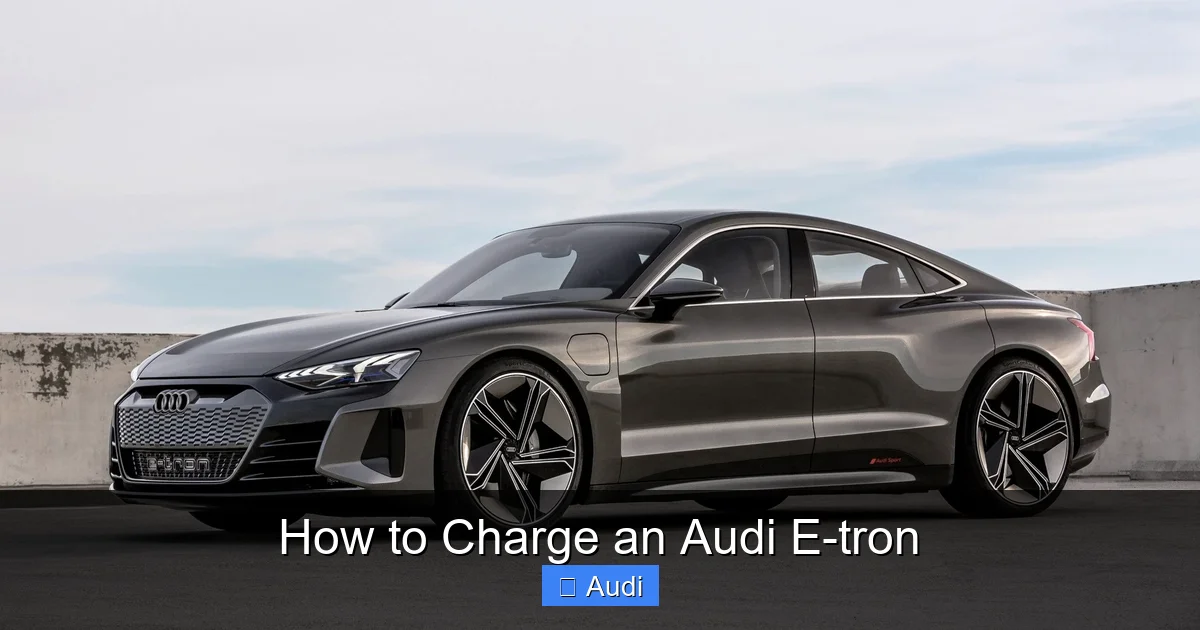
The Audi e-tron is more than just a luxury SUV—it’s a statement of innovation, sustainability, and performance. As Audi’s flagship electric vehicle, the e-tron combines the brand’s signature craftsmanship with cutting-edge EV technology. Whether you’re driving the e-tron SUV, the sportier e-tron Sportback, or the high-performance e-tron GT, one thing remains constant: the need to keep it charged.
But charging an electric vehicle like the Audi e-tron isn’t as simple as filling up at a gas station. It requires a bit of planning, the right equipment, and an understanding of how electric charging works. The good news? Once you get the hang of it, charging your e-tron becomes second nature—and often more convenient than refueling a traditional car.
Unlike internal combustion engines, electric vehicles rely entirely on stored electrical energy. The Audi e-tron comes with a large battery pack—typically around 95 kWh (usable capacity varies slightly by model)—that powers dual electric motors for all-wheel drive. This setup delivers impressive range, smooth acceleration, and a quiet, refined driving experience. But to keep that power flowing, you need a reliable charging strategy.
Understanding Charging Levels: What You Need to Know
Visual guide about How to Charge an Audi E-tron
Image source: images.caricos.com
Before you plug in, it’s important to understand the different levels of EV charging and how they apply to your Audi e-tron. Not all charging is created equal, and knowing the differences can save you time, money, and frustration.
Level 1 Charging: The Slowest Option
Level 1 charging uses a standard 120-volt household outlet—the same kind you use for lamps or phone chargers. It’s the most basic form of EV charging and requires no special equipment beyond the portable charging cable that comes with your e-tron.
While convenient for occasional top-ups, Level 1 charging is extremely slow. You’ll gain roughly 2–3 miles of range per hour of charging. That means a full charge from empty could take 30 hours or more. For most e-tron owners, Level 1 is best used as a backup option—like when you’re visiting a friend who doesn’t have a dedicated EV charger.
Level 2 Charging: The Sweet Spot for Daily Use
Level 2 charging uses a 240-volt circuit—similar to what powers your dryer or oven—and delivers significantly faster charging speeds. Most home charging setups and public charging stations operate at Level 2.
With a Level 2 charger, your Audi e-tron can gain about 20–25 miles of range per hour. That means you can fully recharge the battery overnight, even if you’ve driven a long distance during the day. For daily commuters and regular drivers, Level 2 is the most practical and efficient option.
Installing a Level 2 charger at home typically involves hiring a licensed electrician to set up a dedicated circuit and wall-mounted charging unit. Popular brands like ChargePoint, JuiceBox, and Grizzl-E offer smart chargers that integrate with the myAudi app for remote monitoring and scheduling.
DC Fast Charging: Speed for Long-Distance Travel
When you’re on a road trip or need a quick top-up, DC fast charging (also known as Level 3) is your best friend. These high-powered stations use direct current (DC) to charge the battery much faster than AC-based Level 1 or 2 chargers.
The Audi e-tron supports DC fast charging up to 150 kW, which allows it to charge from 10% to 80% in approximately 30 minutes at compatible stations. That’s enough time to stretch your legs, grab a coffee, and check your route before hitting the road again.
However, it’s important to note that frequent use of fast charging can impact long-term battery health. Audi recommends using DC fast charging primarily for long trips and relying on slower, gentler Level 2 charging for daily use.
How to Charge Your Audi e-Tron at Home

Visual guide about How to Charge an Audi E-tron
Image source: cimg0.ibsrv.net
For most e-tron owners, home charging is the foundation of their EV lifestyle. It’s convenient, cost-effective, and ensures your vehicle is always ready to go. But setting up a home charging station requires a bit of preparation.
Choosing the Right Home Charger
When selecting a home charger, look for a Level 2 unit with at least 32 amps of output. This will deliver around 7.7 kW of power, which is ideal for the e-tron’s charging capabilities. Some models, like the e-tron GT, can accept up to 11 kW on AC charging, so a higher-output charger (40–48 amps) may be worth considering if you plan to upgrade in the future.
Smart chargers are highly recommended. These devices connect to Wi-Fi and allow you to monitor charging progress, set schedules, and even take advantage of off-peak electricity rates. Many also offer app integration with the myAudi system, so you can manage everything from one place.
Installation Tips and Safety
Installing a home charger isn’t a DIY project—unless you’re a licensed electrician. You’ll need a dedicated 240-volt circuit, proper grounding, and compliance with local electrical codes. Most installers can complete the job in a few hours, often in a single visit.
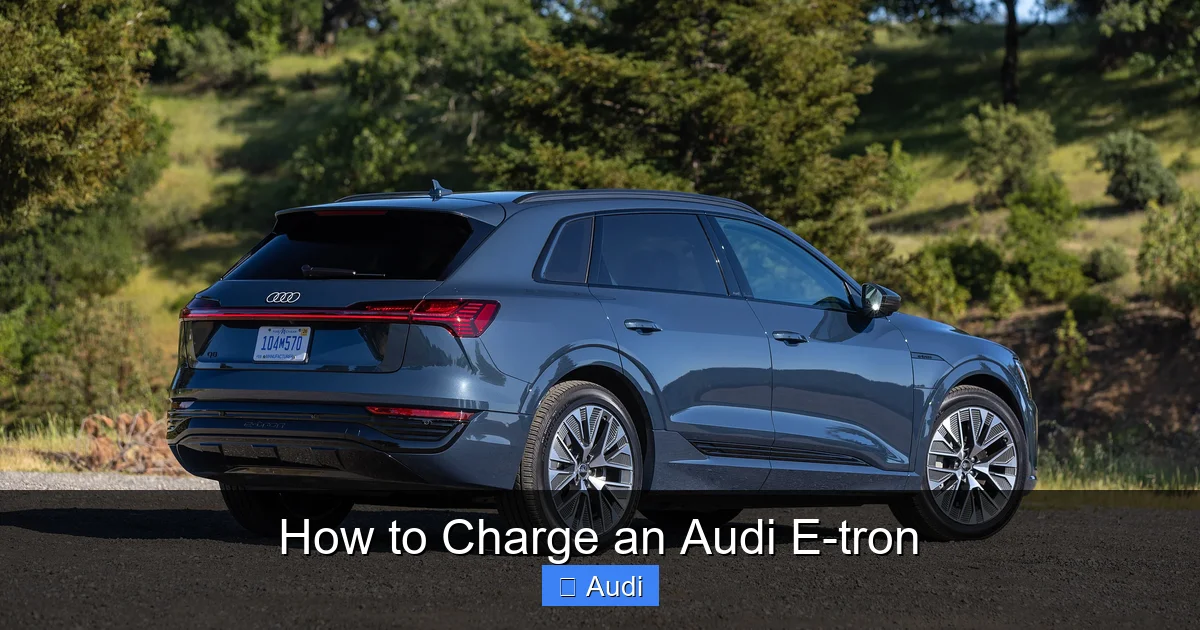
Location matters too. Install your charger in a dry, accessible spot—preferably in your garage or under a carport. Avoid areas prone to flooding or extreme heat. And make sure the charging cable can comfortably reach your e-tron’s charging port, which is typically located on the front fender or driver’s side.
Using the myAudi App for Smart Charging
The myAudi app is a powerful tool for managing your e-tron’s charging. Once your vehicle and home charger are connected to the app, you can:
– Start or stop charging remotely
– Set charging schedules to take advantage of lower electricity rates
– Monitor battery level and estimated range
– Receive notifications when charging is complete
For example, if your utility offers cheaper electricity between 11 PM and 6 AM, you can program your e-tron to begin charging at 11:15 PM—ensuring a full battery by morning without paying peak rates.
Charging on the Go: Public and Fast Charging Options

Visual guide about How to Charge an Audi E-tron
Image source: autozonic.com
While home charging covers most of your needs, there will be times when you need to charge away from home—whether you’re running errands across town or embarking on a cross-country adventure.
Finding Public Charging Stations
The Audi e-tron is compatible with most public charging networks in North America and Europe, including Electrify America, EVgo, ChargePoint, and Ionity. These networks offer a mix of Level 2 and DC fast charging stations.
To find nearby stations, use the built-in navigation system in your e-tron or the myAudi app. The app shows real-time availability, pricing, and connector types. You can also filter results by charging speed, network, and amenities like restrooms or food options.
Using DC Fast Chargers: A Step-by-Step Guide
Charging at a DC fast station is simple, but there are a few steps to follow:
1. Park and locate the charger: Pull into a designated EV spot and find the charging port on your e-tron (usually on the front fender).
2. Unlock the charging port: Press the button on the door or use the key fob to open the charging flap.
3. Connect the CCS plug: The e-tron uses a CCS (Combined Charging System) connector for fast charging. Align the plug with the port and push it in until it clicks.
4. Start the session: Use the station’s touchscreen, mobile app, or RFID card to initiate charging. Some networks allow plug-and-charge functionality, where the car automatically authenticates and begins charging.
5. Monitor progress: The dashboard will show charging speed, time remaining, and battery percentage. Most fast chargers slow down after 80% to protect the battery, so don’t expect a full 100% charge in 30 minutes.
6. Disconnect safely: Once charging is complete, press the stop button on the screen or app, then unplug the cable. Close the charging port and stow the cable properly.
Tips for Efficient Public Charging
– Plan your route: Use apps like A Better Routeplanner (ABRP) or PlugShare to map out charging stops based on your destination and current battery level.
– Charge to 80%, not 100%: Fast charging slows significantly after 80%, so it’s often more efficient to charge to 80% and continue driving, then recharge later.
– Check for idle fees: Some stations charge a fee if you leave your car plugged in after charging is complete. Move your vehicle promptly to avoid extra costs.
– Bring a backup payment method: Not all stations accept the same apps or cards. Carry a credit card or RFID tag from multiple networks to ensure access.
Maximizing Battery Life and Charging Efficiency
Taking care of your e-tron’s battery is essential for long-term performance and range. While modern EV batteries are designed to last, certain charging habits can help extend their lifespan.
Avoid Frequent 100% Charges
Lithium-ion batteries, like the one in your e-tron, prefer partial charges. Charging to 100% regularly can cause stress on the battery cells, especially when combined with fast charging. For daily use, aim to keep your battery between 20% and 80%.
The myAudi app allows you to set a charging limit—say, 80%—so you don’t accidentally overcharge. Reserve 100% charges for long trips when you need maximum range.
Mind the Temperature
Extreme heat and cold can affect charging speed and battery health. In cold weather, the battery may take longer to charge, and range can drop significantly. Preconditioning your cabin while plugged in helps warm the battery and improve efficiency.
In hot climates, park in the shade or use a sunshade to keep the interior cool. High temperatures can degrade battery performance over time, so avoid leaving your e-tron in direct sunlight for extended periods.
Use Scheduled Charging
Charging during off-peak hours not only saves money but also reduces strain on the electrical grid. Many utilities offer lower rates at night, making it the ideal time to charge your e-tron.
With the myAudi app, you can set your car to start charging at a specific time—like 11 PM—even if you plug in earlier. This ensures you’re using cheaper electricity without having to stay up late.
Common Charging Challenges and How to Solve Them
Even with the best planning, you might run into charging issues. Here are some common problems and how to fix them.
Charger Not Recognizing the Car
If the charger doesn’t start when you plug in, check the following:
– Is the charging port clean and free of debris?
– Is the cable fully inserted and locked?
– Is the station powered on and operational?
Try unplugging and reconnecting the cable. If the problem persists, use the station’s app or call customer support.
Slow Charging Speeds
Several factors can affect charging speed:
– Battery temperature: Cold batteries charge slower. Preconditioning helps.
– State of charge: Charging slows as the battery fills up, especially above 80%.
– Charger output: Not all stations deliver maximum power. Check the station’s rating (e.g., 50 kW vs. 150 kW).
If you’re consistently getting slow speeds, try a different station or time of day.
App Connectivity Issues
The myAudi app requires a stable internet connection. If it’s not updating, try:
– Restarting the app
– Checking your phone’s data or Wi-Fi
– Ensuring your car is within range of a cellular signal
Sometimes, simply driving around can help the car reconnect to the network.
Conclusion: Charging Your Audi e-Tron with Confidence
Charging an Audi e-tron is simpler than it seems—once you understand the basics. With the right setup at home, access to public networks, and a few smart habits, you can enjoy all the benefits of electric driving without the stress.
Whether you’re plugging in overnight or grabbing a quick charge on a road trip, the e-tron is designed to make the process seamless. Use the myAudi app to stay in control, protect your battery with smart charging practices, and always plan ahead for longer journeys.
The future of driving is electric, and the Audi e-tron is leading the way. With this guide, you’re ready to charge with confidence and enjoy every mile of your EV experience.
Frequently Asked Questions
How long does it take to charge an Audi e-tron?
Charging time depends on the method. Level 1 charging takes 30+ hours for a full charge, Level 2 takes about 10–12 hours, and DC fast charging can reach 80% in around 30 minutes.
Can I charge my Audi e-tron at home?
Yes, you can charge your e-tron at home using a standard outlet (Level 1) or a dedicated 240-volt Level 2 charger. A home charger is the most convenient option for daily use.
What type of charging plug does the Audi e-tron use?
The Audi e-tron uses a CCS (Combined Charging System) connector for DC fast charging and a Type 2 connector for AC charging at public and home stations.
Is it bad to charge my e-tron to 100% every time?
Frequent 100% charges can stress the battery over time. It’s better to charge to 80% for daily use and reserve full charges for long trips.
Can I use any public charging station with my Audi e-tron?
Yes, the e-tron is compatible with most public networks like Electrify America, EVgo, and ChargePoint, as long as they offer CCS connectors.
How do I find charging stations near me?
Use the myAudi app, the car’s built-in navigation, or third-party apps like PlugShare or A Better Routeplanner to locate nearby charging stations.