
How to Charge a Toyota Hybrid Battery

Charging a Toyota hybrid battery doesn’t require plugging in—most models recharge automatically while you drive. This guide explains how the system works, what to do if the battery weakens, and how to maintain long-term health.
Key Takeaways
- Most Toyota hybrids don’t need external charging: They use regenerative braking and the gasoline engine to recharge the battery while driving.
- Plug-in hybrids (PHEVs) like the Prius Prime require charging: Use a standard wall outlet, Level 2 charger, or public station for faster results.
- Monitor battery health via the dashboard: Watch for warning lights or reduced fuel efficiency as signs of battery issues.
- Avoid deep discharges: Letting the battery run too low can shorten its lifespan—drive regularly to keep it active.
- Use genuine Toyota parts and software: For diagnostics or replacements, rely on certified technicians to ensure compatibility and safety.
- Climate affects performance: Extreme cold or heat can reduce efficiency—park in shade or garage when possible.
- Regular maintenance extends battery life: Follow the owner’s manual schedule and keep software updated.
📑 Table of Contents
Understanding How Toyota Hybrid Batteries Work
Toyota has been a pioneer in hybrid technology since launching the first-generation Prius in 1997. Today, their hybrid lineup includes popular models like the Camry Hybrid, RAV4 Hybrid, Highlander Hybrid, and the plug-in Prius Prime. But here’s the big question many new owners ask: *Do I need to charge my Toyota hybrid battery?* The short answer is—it depends on the model.
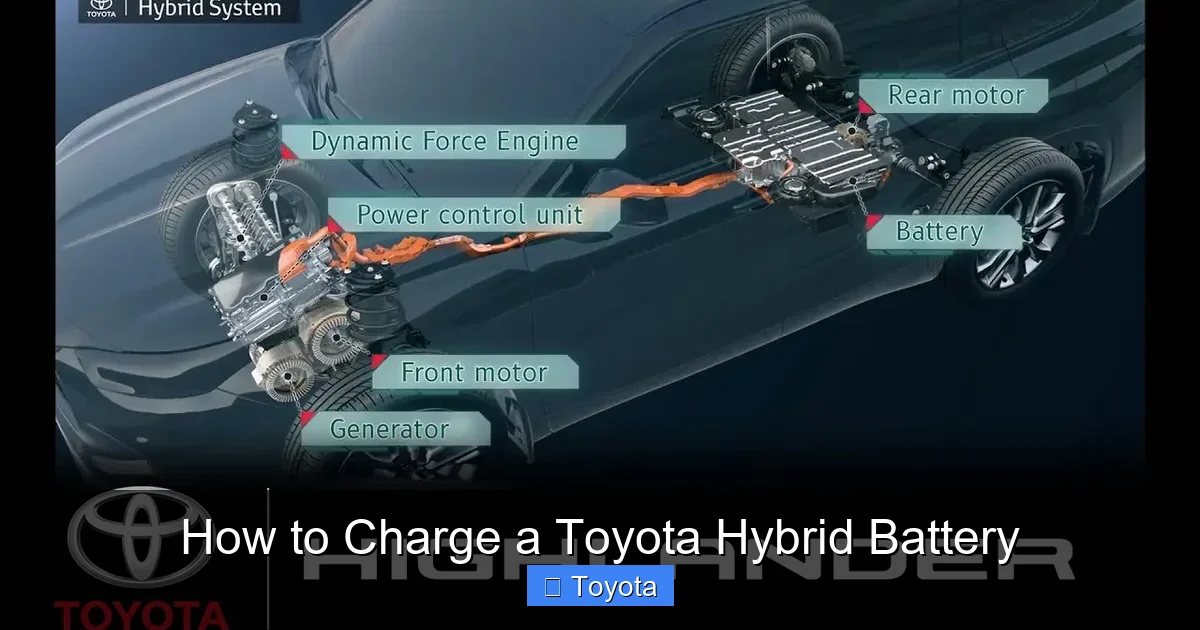
Most Toyota hybrids, such as the standard Prius, Camry Hybrid, or RAV4 Hybrid, are **self-charging**. That means they don’t require you to plug them into an outlet. Instead, they use a clever combination of regenerative braking and the internal combustion engine to keep the hybrid battery topped up. When you brake or coast, the electric motor acts as a generator, converting kinetic energy back into electricity and storing it in the battery. Meanwhile, the gas engine also helps recharge the battery during highway driving or when extra power is needed.
This system is designed to be seamless and automatic. You drive just like a regular car—no cords, no charging stations, no range anxiety. The vehicle’s computer manages everything, deciding when to use electricity, gasoline, or both, based on driving conditions, speed, and battery level.
However, if you own a **Toyota plug-in hybrid (PHEV)**, like the Prius Prime or RAV4 Prime, the story changes. These models have larger batteries that can be charged externally to extend their all-electric driving range—up to 40 miles in some cases. For PHEVs, charging is not just optional—it’s essential to get the full benefit of the hybrid system.
Understanding the difference between self-charging hybrids and plug-in hybrids is the first step in knowing how to care for your Toyota’s battery. It also helps set realistic expectations about performance, fuel economy, and maintenance.
Do You Need to Plug In a Toyota Hybrid?
Visual guide about How to Charge a Toyota Hybrid Battery
Image source: i.ytimg.com
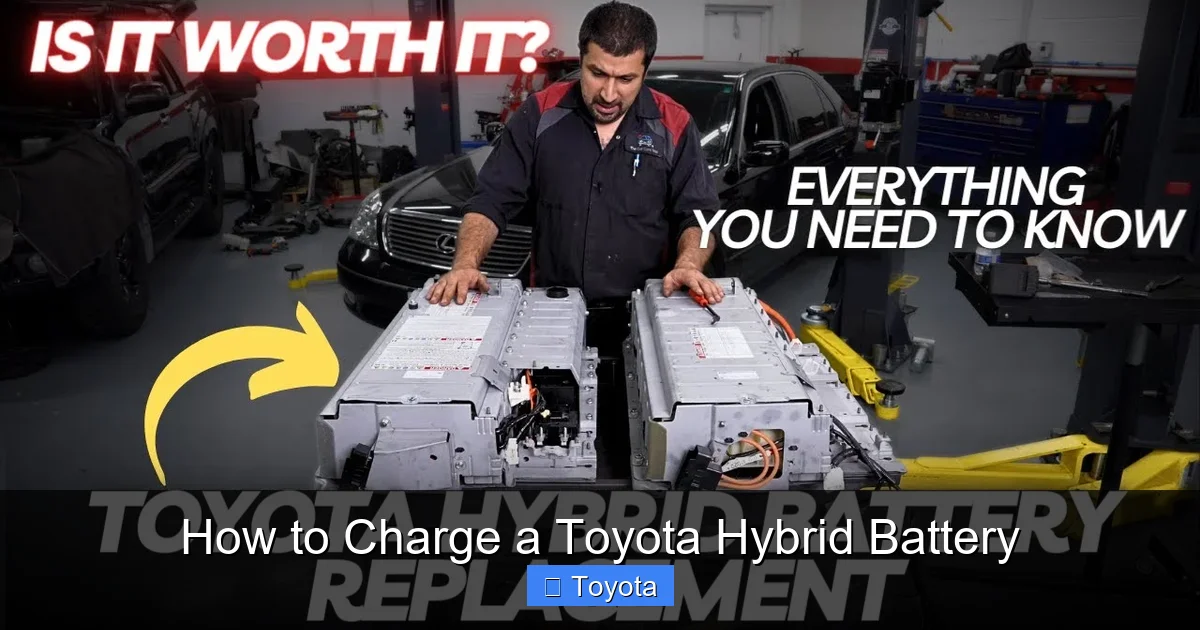
This is one of the most common questions from new Toyota hybrid owners. And the answer is: **only if you have a plug-in hybrid (PHEV)**.
Let’s break it down.
Standard Toyota hybrids—like the Prius, Corolla Hybrid, or Highlander Hybrid—are **not plug-in vehicles**. They don’t have a charging port, and you should never try to charge them externally. Their batteries are smaller and designed to be recharged solely through regenerative braking and the gasoline engine. Trying to “charge” them with an external power source isn’t possible and could damage the system.
On the other hand, **plug-in hybrids (PHEVs)** like the Prius Prime and RAV4 Prime come with a charging port and a larger lithium-ion battery. These vehicles can run on electricity alone for a significant distance before switching to hybrid mode. To maximize electric range and fuel savings, you *should* charge them regularly.
For example, if you drive a RAV4 Prime and charge it overnight, you might get up to 42 miles of all-electric driving the next day—perfect for commuting without using a drop of gas. But if you never plug it in, it will still work as a regular hybrid, just with less electric range and lower overall efficiency.
So, how do you know which type you have? Check your owner’s manual or look for a charging port on the side of the vehicle. If there’s a port, you have a PHEV and should charge it. If not, your hybrid recharges automatically—no plug needed.
How to Charge a Toyota Plug-In Hybrid (PHEV)
Visual guide about How to Charge a Toyota Hybrid Battery
Image source: i.ytimg.com
If you own a Toyota plug-in hybrid like the Prius Prime or RAV4 Prime, charging is simple—but it helps to understand your options.
Charging at Home with a Standard Outlet
The easiest way to charge your PHEV is at home using a standard 120-volt wall outlet (Level 1 charging). All Toyota PHEVs come with a portable charging cable that plugs directly into a regular household outlet. This method is convenient and requires no special installation.
However, it’s also the slowest. A full charge can take **5 to 6 hours**, depending on the battery size and current charge level. For example, a RAV4 Prime with a 18.1 kWh battery might take about 5.5 hours to go from 0% to 100% using Level 1 charging.
This method works well if you charge overnight. Plug in when you get home, and wake up to a fully charged battery. It’s ideal for daily commutes under 30 miles.
Using a Level 2 Charger for Faster Charging
For faster charging, consider installing a **Level 2 charger** (240-volt) at home. These units are similar to what you’d use for an electric vehicle (EV) and can fully charge a PHEV in **2 to 3 hours**.
A Level 2 charger requires professional installation and a dedicated circuit, but many homeowners find the investment worthwhile. It’s especially useful if you have a longer commute, drive frequently, or want to top up quickly during the day.
Toyota recommends using a **SAE J1772-compliant charger**, which is the standard for North America. Many third-party brands like ChargePoint, JuiceBox, or Grizzl-E offer reliable and user-friendly options. Some even connect to Wi-Fi for scheduling and energy tracking.
Public Charging Stations
When you’re away from home, public charging stations can be a great backup. Apps like PlugShare, ChargePoint, or Electrify America help you locate nearby stations. Most public chargers are Level 2, so you’ll get a full charge in a few hours.
Some fast-charging stations (DC fast chargers) are available, but **Toyota PHEVs are not designed for DC fast charging**. Using one could damage the battery or charging system. Stick to Level 1 or Level 2 chargers only.
Always carry your charging cable in the car. While many public stations provide cords, it’s smart to have your own just in case.
Charging Etiquette and Tips
When using public chargers, be mindful of others. Don’t leave your car plugged in longer than necessary—once charged, move it so someone else can use the spot. Also, avoid charging if you only need a small top-up unless it’s convenient.
For home charging, consider charging during off-peak hours (usually late at night) to save on electricity costs. Some utility companies offer special rates for EV owners.
Maintaining Your Toyota Hybrid Battery
Visual guide about How to Charge a Toyota Hybrid Battery
Image source: diycarexpert.com
Whether your Toyota hybrid is self-charging or plug-in, proper maintenance is key to long battery life and optimal performance.
Drive Regularly
One of the simplest ways to keep your hybrid battery healthy is to **drive your car regularly**. Letting a hybrid sit unused for weeks or months can cause the battery to slowly discharge. Even self-charging hybrids need movement to regenerate power.
If you’re going on vacation or won’t drive for a while, consider starting the car once a week and letting it run for 10–15 minutes. This helps keep the battery active and prevents deep discharge.
Avoid Extreme Temperatures
Hybrid batteries are sensitive to temperature. In **cold weather**, chemical reactions in the battery slow down, reducing efficiency and range. In **hot climates**, excessive heat can degrade battery cells over time.
To protect your battery:
– Park in a garage or shaded area when possible.
– Use a sunshade to reduce cabin and battery compartment heat.
– In winter, pre-warm the car while plugged in (for PHEVs) to improve efficiency.
Toyota designs its hybrids to handle a range of climates, but extreme conditions will always have some impact.
Monitor Battery Health
Your Toyota’s dashboard provides real-time feedback on battery status. Look for the **hybrid system indicator** and **energy monitor** on the display. These show how much charge is available and whether the battery is charging or discharging.
If you notice:
– Reduced fuel economy
– Frequent engine starts
– Warning lights (like the “Check Hybrid System” light)
– Sluggish acceleration
…it could indicate a battery issue. Don’t ignore these signs. Have your vehicle inspected by a certified Toyota technician.
Use Genuine Parts and Software
If your battery ever needs service or replacement, always use **genuine Toyota parts** and have the work done at a certified dealership. Third-party batteries or uncertified repairs can void your warranty and may not meet Toyota’s performance standards.
Toyota also releases **software updates** for hybrid systems. These can improve efficiency, fix bugs, or enhance battery management. Make sure your vehicle is up to date by visiting a dealer or checking for updates through the Toyota app (if available).
Follow the Maintenance Schedule
Your owner’s manual includes a recommended maintenance schedule. Stick to it. While hybrid batteries are designed to last 10–15 years or more, regular check-ups help catch problems early.
Typical maintenance includes:
– Inspecting the battery cooling system
– Checking electrical connections
– Updating software
– Testing battery performance
Most Toyota hybrids come with an **8-year/100,000-mile hybrid battery warranty**, and many batteries last well beyond that with proper care.
Signs Your Toyota Hybrid Battery Needs Attention
Even with the best care, hybrid batteries can degrade over time. Knowing the warning signs helps you act before a small issue becomes a big problem.
Decreased Fuel Efficiency
One of the first signs of a weakening battery is a drop in miles per gallon (MPG). If your Prius used to get 50 MPG and now struggles to hit 40, the battery may not be holding a charge as well as it should.
Frequent Engine Starts
In a healthy hybrid, the gas engine starts and stops smoothly based on need. If you notice the engine kicking on more often—even at low speeds or when stopped—it could mean the battery isn’t providing enough power.
Warning Lights on the Dashboard
Pay attention to the **“Check Hybrid System”** or **“Maintenance Required”** lights. These indicate a problem with the hybrid system, which could include the battery, inverter, or related components.
Don’t panic—these lights don’t always mean a costly repair. Sometimes, it’s a software glitch or a loose connection. But it’s always best to get it checked.
Reduced Electric-Only Driving (PHEVs)
If you own a plug-in hybrid and notice the electric range shrinking—say, from 30 miles to 15 miles on a full charge—the battery may be losing capacity.
Unusual Noises or Smells
While rare, a failing battery can sometimes produce a burning smell or make unusual sounds from under the hood. If you notice anything out of the ordinary, stop driving and contact a technician immediately.
What to Do If You Suspect a Problem
If you notice any of these signs:
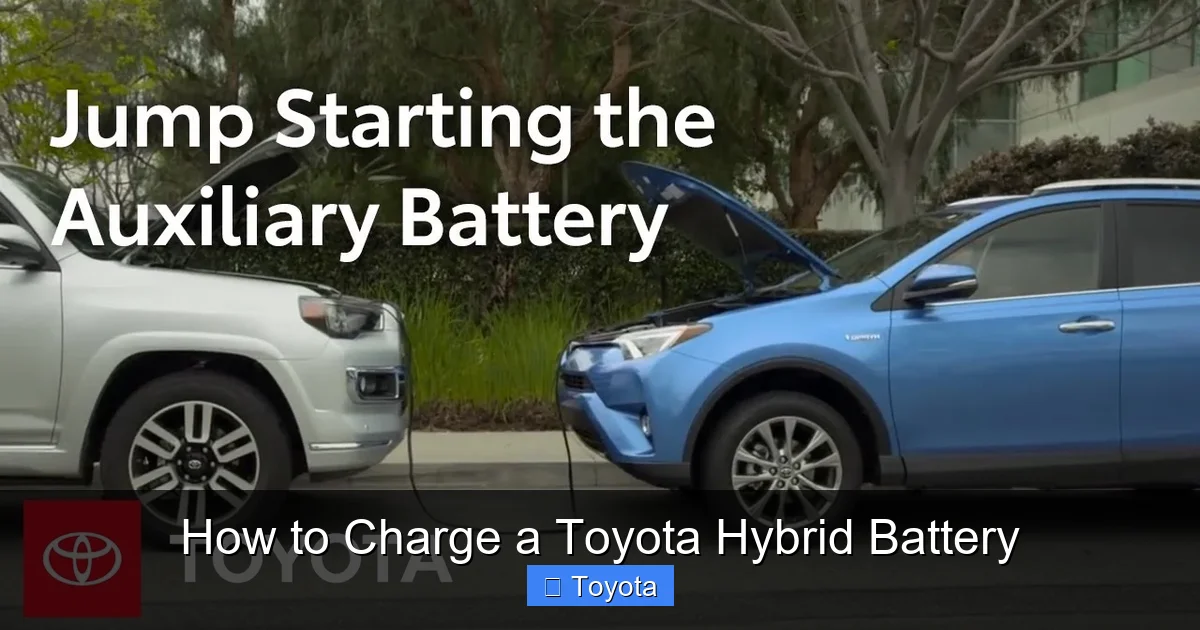
1. **Check the basics:** Is the charging port clean? Is the 12-volt auxiliary battery weak? (A weak 12V battery can mimic hybrid issues.)
2. **Use the onboard diagnostics:** Some Toyota models let you run a self-test through the dashboard menu.
3. **Visit a certified Toyota dealer:** They have the tools and expertise to run a full battery diagnostic.
Early detection can save you money and prevent breakdowns.
Maximizing Battery Life and Performance
With proper care, a Toyota hybrid battery can last 150,000 to 200,000 miles or more. Here’s how to get the most out of it.
Drive Smoothly
Aggressive acceleration and hard braking waste energy and strain the battery. Instead, drive smoothly:
– Accelerate gradually
– Anticipate stops and coast when possible
– Use regenerative braking by easing off the accelerator early
This not only saves fuel but also reduces wear on the battery and brakes.
Use Eco Mode
Most Toyota hybrids have an **Eco Mode** that optimizes throttle response, climate control, and battery usage for maximum efficiency. It’s a simple switch that can improve MPG by 5–10%.
Keep Tires Properly Inflated
Underinflated tires increase rolling resistance, forcing the engine and battery to work harder. Check tire pressure monthly and keep it at the recommended level (found on the driver’s door jamb).
Avoid Overloading the Vehicle
Carrying heavy loads increases energy demand. Remove unnecessary items from the trunk and roof rack when not in use.
Charge Smart (for PHEVs)
If you have a plug-in hybrid:
– Charge to 80–90% for daily use (full charges can stress the battery over time)
– Avoid letting the battery sit at 0% for long periods
– Use scheduled charging to take advantage of off-peak electricity rates
Stay Updated
Toyota occasionally releases technical service bulletins (TSBs) or software updates for hybrid systems. Staying informed helps you address potential issues before they affect performance.
Conclusion
Charging a Toyota hybrid battery is simpler than most people think. For standard hybrids, no charging is needed—the system recharges itself automatically. For plug-in hybrids, charging at home or on the go is easy and highly recommended to maximize electric range and fuel savings.
The key to long-term battery health is regular driving, proper maintenance, and attention to warning signs. By following the tips in this guide, you’ll keep your Toyota hybrid running efficiently for years to come.
Whether you’re driving a Prius through city streets or a RAV4 Prime on a weekend road trip, understanding your hybrid system helps you get the most out of every mile. And with Toyota’s proven reliability and innovative technology, you can trust your hybrid to deliver performance, efficiency, and peace of mind.
Frequently Asked Questions
Do I need to charge my Toyota hybrid every night?
Only if you have a plug-in hybrid (PHEV) like the Prius Prime or RAV4 Prime. Standard hybrids recharge automatically and don’t require nightly charging.
Can I charge a Toyota hybrid with a regular outlet?
Yes, plug-in hybrids can be charged using a standard 120-volt household outlet. It takes about 5–6 hours for a full charge.
How long does a Toyota hybrid battery last?
Most Toyota hybrid batteries last 10–15 years or 150,000–200,000 miles with proper maintenance. Many outlast the vehicle itself.
What happens if my hybrid battery dies?
The car may not start or could enter a “limp mode.” In most cases, the battery can be recharged by driving or jump-starting. Severe failures require professional service.
Can I replace the hybrid battery myself?
It’s not recommended. Hybrid batteries are complex and high-voltage. Always have replacement done by a certified Toyota technician.
Does cold weather affect hybrid battery performance?
Yes, cold temperatures reduce battery efficiency and electric range. Parking in a garage and pre-warming the car (if plugged in) can help.