How Often to Change Oil in a Bmw 3 Series

Contents
- 1 Key Takeaways
- 2 📑 Table of Contents
- 3 How Often to Change Oil in a BMW 3 Series: The Complete Guide
- 4 Understanding BMW’s Oil Change Recommendations
- 5 Factors That Affect Oil Change Frequency
- 6 DIY vs. Professional Oil Changes
- 7 Signs You Need an Oil Change Sooner
- 8 The Long-Term Benefits of Regular Oil Changes
- 9 Conclusion
- 10 Frequently Asked Questions

Portable Work Light

Jack Stands

Car Scratch Remover

Car Neck Pillow
Regular oil changes are essential for keeping your BMW 3 Series running smoothly and efficiently. While BMW recommends oil changes every 10,000 to 15,000 miles under normal conditions, driving habits, climate, and model year can affect this interval. Sticking to a proper maintenance schedule helps protect your engine and maintain your vehicle’s performance and longevity.
Key Takeaways
- BMW recommends oil changes every 10,000 to 15,000 miles under normal driving conditions, thanks to advanced engine technology and high-quality synthetic oil.
- Driving style and environment matter—frequent short trips, stop-and-go traffic, or extreme temperatures may require more frequent changes.
- Use only BMW-approved synthetic oil (typically 5W-30 or 0W-30) to ensure engine protection and warranty compliance.
- The Oil Service indicator light on your dashboard is your best guide—don’t ignore it, even if you haven’t hit the mileage mark.
- Older models (pre-2010) may need oil changes sooner, often every 7,500 miles, due to less advanced engine designs.
- DIY oil changes are possible but require precision—improper disposal or incorrect oil type can damage your engine.
- Regular oil changes improve fuel efficiency, reduce emissions, and extend engine life—making them a smart investment in your BMW’s health.
📑 Table of Contents
How Often to Change Oil in a BMW 3 Series: The Complete Guide
Owning a BMW 3 Series is more than just driving a car—it’s about experiencing precision engineering, luxury, and performance. From the smooth acceleration to the responsive handling, every component is designed to deliver an exceptional driving experience. But like any high-performance machine, your BMW needs regular care to keep it running at its best. One of the most critical aspects of that care? Oil changes.
You might be wondering: How often should I change the oil in my BMW 3 Series? The answer isn’t as straightforward as it is for many other vehicles. BMW has engineered its engines to go longer between oil changes, thanks to advanced technology and high-quality synthetic oils. However, that doesn’t mean you can ignore maintenance altogether. In fact, skipping or delaying oil changes can lead to serious engine problems down the road.
In this guide, we’ll walk you through everything you need to know about oil change intervals for your BMW 3 Series. Whether you drive a 2006 E90, a 2015 F30, or a brand-new G20 model, we’ll cover the recommended schedules, factors that affect oil life, and tips to keep your engine in top shape. By the end, you’ll have a clear understanding of when—and why—you should change your oil.
Understanding BMW’s Oil Change Recommendations

Visual guide about How Often to Change Oil in a Bmw 3 Series
Image source: i.ytimg.com
BMW has long been a pioneer in engine technology, and its approach to oil changes reflects that innovation. Unlike many automakers that stick to a rigid 3,000- or 5,000-mile rule, BMW uses a condition-based maintenance system. This means your car monitors real-time data—like engine temperature, driving patterns, and oil condition—to determine when an oil change is truly needed.
For most modern BMW 3 Series models (2010 and newer), the manufacturer recommends an oil change interval of **10,000 to 15,000 miles** under normal driving conditions. This extended interval is made possible by the use of high-performance synthetic oil and advanced engine management systems. The car’s onboard computer calculates oil degradation and alerts you via the dashboard when service is due.
But what counts as “normal” driving? BMW defines it as a mix of highway and city driving, with occasional short trips and moderate loads. If your driving habits fall outside this range—say, you mostly drive in stop-and-go traffic or frequently tow heavy loads—you may need to change your oil more often.
It’s also worth noting that BMW’s recommendations are based on using **BMW-approved synthetic oil**, typically a 5W-30 or 0W-30 formulation. Using the wrong type of oil—or skipping the recommended service—can void your warranty and lead to engine damage.
The Role of the Oil Service Indicator
One of the most helpful features in your BMW 3 Series is the **Oil Service indicator**. This dashboard light or message appears when the car’s computer determines that the oil has degraded to a point where a change is necessary. It’s not based solely on mileage—it considers factors like engine load, temperature, and driving duration.
When the indicator comes on, it’s time to schedule an oil change—even if you’ve only driven 7,000 miles since the last one. Ignoring this warning can lead to reduced engine performance, increased wear, and even costly repairs.
Some drivers make the mistake of resetting the service light themselves without actually changing the oil. This is a big no-no. The system is designed to protect your engine, and bypassing it defeats the purpose. Always follow up the light with a proper oil change at a qualified service center or, if you’re doing it yourself, ensure you use the correct oil and filter.
Why Synthetic Oil Matters
BMW engines are built for performance, and that means they operate at higher temperatures and pressures than many other vehicles. Conventional motor oil simply can’t handle these conditions over long periods. That’s why BMW requires the use of **full synthetic oil**.
Synthetic oil offers several advantages:
– It resists breakdown at high temperatures.
– It flows better in cold weather, ensuring quick lubrication at startup.
– It provides superior protection against sludge and deposits.
– It lasts longer than conventional oil, supporting extended change intervals.
Using the wrong oil—even if it’s synthetic but not BMW-approved—can cause problems. For example, some aftermarket oils may not meet BMW’s Longlife certification standards (like LL-01 or LL-04). Always check your owner’s manual or consult a BMW specialist to ensure you’re using the right product.
Factors That Affect Oil Change Frequency

Visual guide about How Often to Change Oil in a Bmw 3 Series
Image source: myusedcar.ca
While BMW’s recommended interval is a great starting point, it’s not one-size-fits-all. Several real-world factors can shorten the time between oil changes. Understanding these can help you make smarter decisions about your maintenance schedule.
Driving Habits and Conditions
Your daily driving routine plays a huge role in how quickly your oil degrades. If you frequently take short trips—say, less than 10 miles—your engine doesn’t have time to reach optimal operating temperature. This leads to moisture and fuel dilution in the oil, which reduces its effectiveness.
Similarly, if you often drive in heavy traffic, your engine runs at low speeds with frequent stops and starts. This increases engine load and heat, accelerating oil breakdown. The same goes for towing, hauling heavy loads, or driving aggressively (hard acceleration, high RPMs).
In these cases, BMW recommends reducing your oil change interval to **every 7,500 to 10,000 miles**, even if the service light hasn’t come on yet.
Climate and Environment
Where you live also matters. Extreme temperatures—both hot and cold—can affect oil performance.
In cold climates, oil thickens, making it harder to circulate during startup. This increases wear on engine components. While synthetic oil handles cold better than conventional oil, frequent cold starts can still degrade it faster.
In hot climates, high ambient temperatures cause oil to oxidize more quickly. This leads to sludge formation and reduced lubrication. If you live in a desert region or frequently drive in summer heat, consider changing your oil closer to the 10,000-mile mark.
Dust and pollution are other environmental factors. If you drive on dirt roads or in areas with high air pollution, contaminants can enter the engine and mix with the oil, reducing its effectiveness.
Vehicle Age and Model Year
Older BMW 3 Series models—especially those from the 2000s and early 2010s—may not have the same advanced engine management systems as newer ones. For example, the E90 generation (2006–2011) often benefits from more frequent oil changes, typically every **7,500 to 10,000 miles**, even under normal conditions.
Additionally, older engines may have more wear and tear, which can lead to increased oil consumption and contamination. If your BMW burns oil or you notice a drop in the oil level between changes, it’s a sign that more frequent maintenance is needed.
Newer models, like the G20 (2019–present), are built with even more efficient engines and better oil monitoring. These can often go the full 15,000 miles—but only if driven under ideal conditions.
Oil Consumption and Leaks
Some BMW 3 Series models are known for higher oil consumption, especially certain turbocharged engines like the N20 or B48. If your car uses more than a quart of oil every 1,000 miles, it’s a red flag.
High oil consumption can be due to worn piston rings, valve seals, or PCV system issues. While it doesn’t necessarily mean you need more frequent oil changes, it does mean you should check your oil level regularly—ideally every 1,000 miles or before long trips.
Leaks are another concern. Even a small leak can lead to low oil levels, which increases engine wear. If you notice oil spots under your car or a burning smell while driving, have it inspected immediately.
DIY vs. Professional Oil Changes
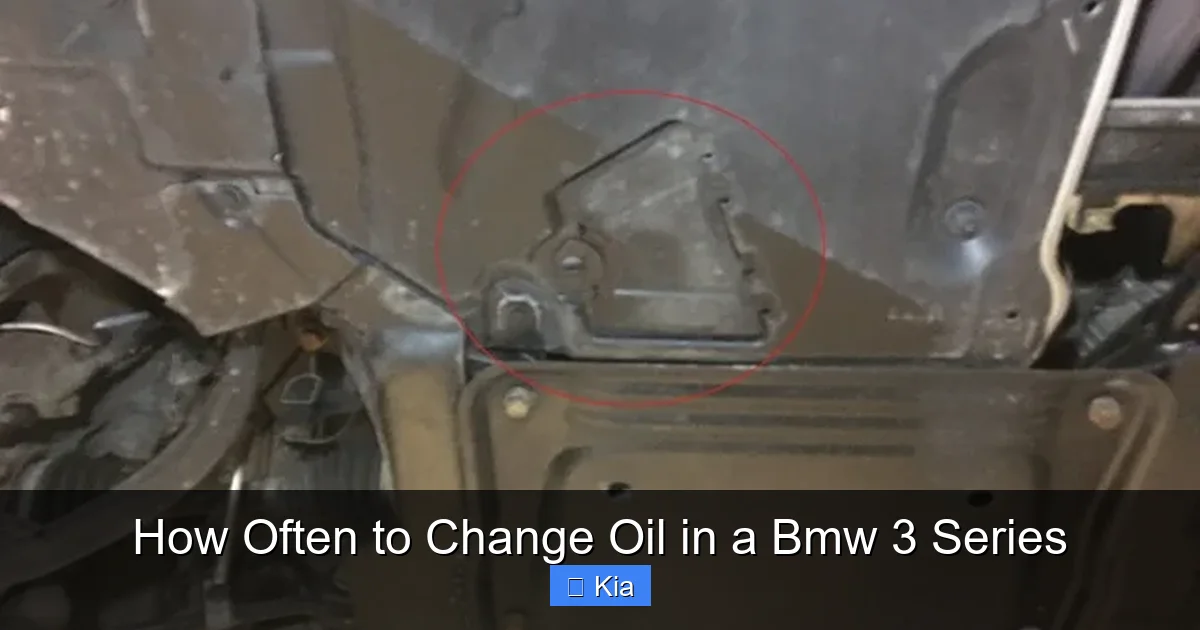
Visual guide about How Often to Change Oil in a Bmw 3 Series
Image source: myusedcar.ca
One of the big questions BMW owners face is whether to change their oil themselves or take it to a professional. Both options have pros and cons, and the right choice depends on your skills, tools, and comfort level.
The Case for DIY Oil Changes
Changing your own oil can save you money and give you more control over the process. A DIY oil change for a BMW 3 Series typically costs between $50 and $80 for parts (oil, filter, drain plug washer), compared to $100–$150 at a dealership.
To do it yourself, you’ll need:
– BMW-approved synthetic oil (usually 5 quarts of 5W-30 or 0W-30)
– A high-quality oil filter (OEM or equivalent)
– A socket wrench and oil filter wrench
– An oil drain pan
– A funnel
– Gloves and safety glasses
The process involves:
1. Warming up the engine to thin the oil.
2. Lifting the car safely (use jack stands—never rely on just a jack).
3. Removing the drain plug and letting the oil drain completely.
4. Replacing the oil filter (apply a thin layer of oil to the new filter’s gasket).
5. Reinstalling the drain plug with a new washer.
6. Adding the correct amount of oil through the filler cap.
7. Starting the engine and checking for leaks.
8. Resetting the service indicator (if applicable).
While it’s doable, DIY oil changes require precision. Over-tightening the drain plug can strip the oil pan threads. Using the wrong oil or filter can damage the engine. And improper disposal of used oil is harmful to the environment.
Why Professional Service Might Be Better
For many BMW owners, the peace of mind that comes with professional service is worth the extra cost. Certified BMW technicians have the tools, training, and access to genuine parts to do the job right.
At a dealership or independent BMW specialist, you can expect:
– Use of OEM (Original Equipment Manufacturer) oil and filters.
– Proper disposal of used oil and filters.
– Inspection of other components (air filter, cabin filter, belts, etc.).
– Reset of the service indicator.
– Documentation for warranty and resale purposes.
Additionally, professional shops often use vacuum oil extractors, which can remove more old oil than draining alone—especially important in BMWs with complex oil passages.
If you’re not confident in your mechanical skills, or if your car is still under warranty, professional service is the safer choice.
Signs You Need an Oil Change Sooner
Even with BMW’s advanced monitoring system, there are times when you should change your oil before the service light comes on. Pay attention to these warning signs:
Dark, Sludgy Oil
Check your dipstick regularly. If the oil looks dark, thick, or gritty, it’s time for a change. Clean oil should be amber or light brown and translucent.
Engine Noise or Knocking
Low or degraded oil can cause increased engine noise, especially during startup. If you hear ticking or knocking sounds, it could mean the oil isn’t lubricating properly.
Oil Smell or Smoke
If you smell burning oil inside the cabin or see smoke from the engine bay, there may be a leak or oil burning in the combustion chamber. This requires immediate attention.
Check Engine or Oil Pressure Light
These dashboard warnings should never be ignored. They could indicate low oil level, low pressure, or other serious issues.
Reduced Fuel Economy
Dirty oil increases engine friction, which can reduce fuel efficiency. If you notice a sudden drop in miles per gallon, it might be time for an oil change.
The Long-Term Benefits of Regular Oil Changes
Changing your oil on schedule isn’t just about following the manual—it’s about protecting your investment. A well-maintained BMW 3 Series can last 200,000 miles or more, but only if you take care of the engine.
Regular oil changes:
– **Extend engine life** by reducing wear on moving parts.
– **Improve performance** by ensuring smooth operation.
– **Enhance fuel efficiency** by reducing internal friction.
– **Reduce emissions** by keeping the engine clean and efficient.
– **Maintain resale value** by showing consistent maintenance.
Think of oil changes as a small price to pay for years of reliable, enjoyable driving. Skipping them might save you $100 today, but it could cost you thousands in repairs tomorrow.
Conclusion
So, how often should you change the oil in your BMW 3 Series? The short answer: **every 10,000 to 15,000 miles under normal conditions, or when the service indicator says so**. But the real answer depends on how you drive, where you live, and the age of your vehicle.
By following BMW’s recommendations, using the right oil, and paying attention to your car’s signals, you can keep your 3 Series running like new for years to come. Whether you choose DIY or professional service, the key is consistency and care.
Remember, your BMW isn’t just a car—it’s a masterpiece of engineering. Treat it well, and it will reward you with every mile.
Frequently Asked Questions
How often should I change the oil in a BMW 3 Series?
BMW recommends changing the oil every 10,000 to 15,000 miles under normal driving conditions. However, if you drive in severe conditions—like frequent short trips, heavy traffic, or extreme temperatures—you may need to change it every 7,500 to 10,000 miles.
Can I use regular motor oil in my BMW 3 Series?
No. BMW requires the use of high-quality full synthetic oil that meets specific Longlife certifications (like LL-01 or LL-04). Using conventional or non-approved oil can damage the engine and void your warranty.
What happens if I don’t change the oil in my BMW 3 Series?
Skipping oil changes can lead to sludge buildup, increased engine wear, reduced performance, and even engine failure. Over time, degraded oil loses its ability to lubricate and protect critical components.
Can I reset the oil service light without changing the oil?
No. Resetting the service light without performing an oil change is dangerous and defeats the purpose of the monitoring system. Always change the oil when the light comes on.
Is it safe to change my own oil in a BMW 3 Series?
Yes, if you have the right tools, knowledge, and use the correct oil and filter. However, improper procedures can cause leaks or damage. If you’re unsure, it’s safer to have a professional do it.
Why does my BMW 3 Series burn oil?
Some BMW engines, especially turbocharged ones, are prone to higher oil consumption due to worn piston rings or valve seals. Regular oil level checks and timely maintenance can help manage this issue.