
How Often to Change Fuel Filter

Changing your fuel filter at the right intervals is essential for engine health, fuel efficiency, and preventing costly repairs. Most vehicles need a new fuel filter every 20,000 to 40,000 miles, but driving conditions and fuel quality can affect this. Regular maintenance ensures clean fuel delivery and protects critical engine components.
Key Takeaways
- Replace every 20,000–40,000 miles: This is the standard interval for most gasoline and diesel vehicles, but always check your owner’s manual.
- Check your owner’s manual first: Manufacturers provide specific recommendations based on your vehicle’s make, model, and engine type.
- Driving conditions matter: Frequent short trips, dusty roads, or poor fuel quality may require more frequent changes.
- Watch for warning signs: Hard starting, engine hesitation, or reduced fuel economy can signal a clogged filter.
- Use quality replacement filters: Cheap filters may fail early or restrict fuel flow, hurting performance.
- Consider professional inspection: If you’re unsure, a mechanic can test fuel pressure to determine if a change is needed.
- Don’t ignore diesel engines: Diesel fuel filters often include water separators and may need changing more frequently.
📑 Table of Contents
Why the Fuel Filter Matters More Than You Think
Your car’s fuel filter might not be the most glamorous part under the hood, but it plays a quiet yet critical role in keeping your engine healthy. Think of it as the gatekeeper between your gas tank and your engine. Its job is simple: trap dirt, rust, debris, and other contaminants before they reach the fuel injectors or carburetor. Without a clean filter, these particles can clog fuel lines, damage injectors, and even cause your engine to stall.
Over time, the filter becomes saturated with gunk. When that happens, it can’t do its job properly. Fuel flow gets restricted, your engine doesn’t get the clean fuel it needs, and performance starts to suffer. You might notice sluggish acceleration, rough idling, or even difficulty starting your car. In extreme cases, a severely clogged filter can starve the engine of fuel, leading to complete engine shutdown.
But here’s the good news: replacing a fuel filter is usually a straightforward and affordable maintenance task. And doing it on schedule can save you from much bigger—and more expensive—problems down the road. Whether you drive a compact sedan, a heavy-duty truck, or a diesel-powered workhorse, understanding how often to change the fuel filter is a smart move for any vehicle owner.
How Often Should You Change Your Fuel Filter?
Visual guide about How Often to Change Fuel Filter
Image source: toolknows.com
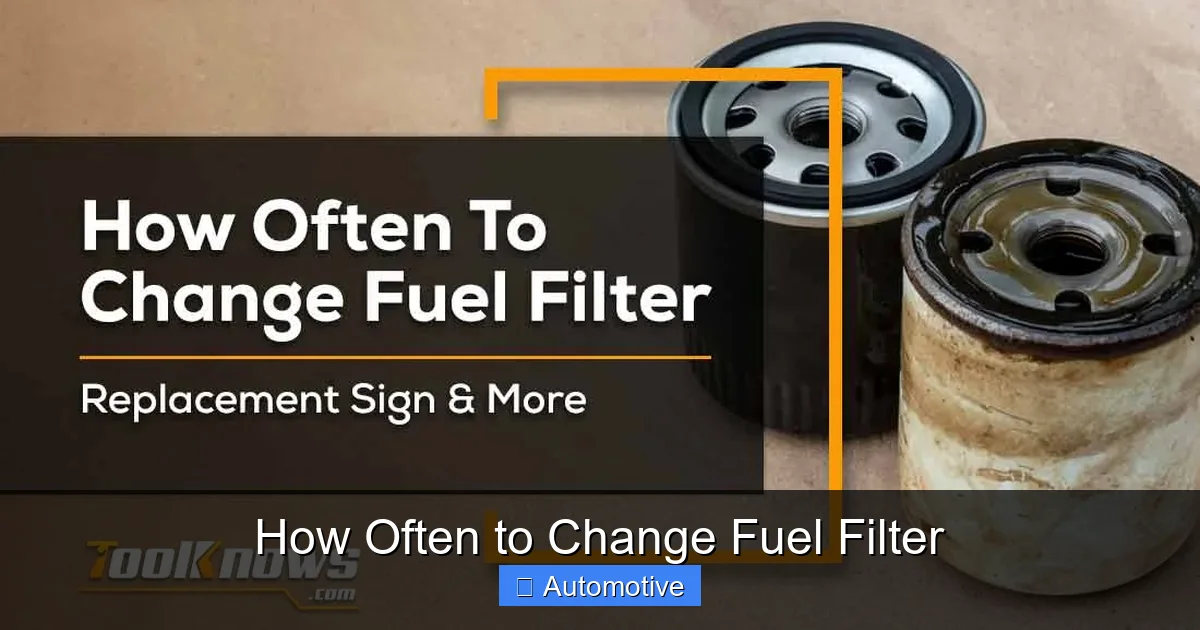
So, how often should you actually change your fuel filter? The short answer: it depends. But for most modern gasoline-powered vehicles, the general rule of thumb is every 20,000 to 40,000 miles. That’s roughly every two to three years for the average driver. Diesel engines, however, often require more frequent changes—sometimes as often as every 10,000 to 15,000 miles—because diesel fuel tends to contain more impurities and moisture.
But mileage isn’t the only factor. Your driving habits, fuel quality, and even where you live can influence how quickly your filter gets dirty. For example, if you frequently drive on unpaved roads or in dusty environments, your filter may clog faster. Similarly, if you often fill up at discount gas stations with lower-quality fuel, you might see more contaminants entering your system.
Check Your Owner’s Manual
The best place to start is your vehicle’s owner’s manual. Manufacturers design their engines with specific fuel systems in mind, and they provide recommended maintenance schedules based on real-world testing. For instance, Honda might suggest a fuel filter change every 30,000 miles for a Civic, while a Ford F-250 with a diesel engine could recommend every 15,000 miles.
Some newer vehicles even have maintenance reminders built into the dashboard. These systems monitor driving conditions and mileage to alert you when it’s time for service. If your car has this feature, pay attention to it—it’s tailored to your specific usage.
Factors That Affect Filter Lifespan
Let’s break down the key factors that can shorten or extend your fuel filter’s life:
– **Fuel Quality:** Not all gas is created equal. Premium stations often have better filtration and additives, while cheaper fuels may contain more sediment. If you notice your filter clogging faster than expected, consider switching to a higher-quality fuel brand.
– **Driving Conditions:** Short trips, stop-and-go traffic, and extreme temperatures can all impact fuel system health. Short trips don’t allow the engine to reach optimal operating temperature, which can lead to moisture buildup in the fuel tank—especially in diesel engines.
– **Age of the Vehicle:** Older cars with carbureted engines or less advanced fuel systems may be more sensitive to dirty filters. Even if the manual says 40,000 miles, an older vehicle might benefit from earlier changes.
– **Fuel Type:** Gasoline and diesel filters are not interchangeable, and diesel filters often include water separators. Water in diesel fuel is a common issue and can lead to corrosion and microbial growth if not removed regularly.
Signs Your Fuel Filter Needs Replacing
Visual guide about How Often to Change Fuel Filter
Image source: tnstatic.net
Even if you’re diligent about maintenance, it’s smart to watch for symptoms that your fuel filter might be failing. Ignoring these signs can lead to bigger problems, so it’s worth paying attention.
Engine Hesitation or Stumbling
One of the most common signs of a clogged fuel filter is hesitation during acceleration. You might press the gas pedal and feel a delay before the car responds, or the engine might stumble when you try to speed up. This happens because the engine isn’t getting enough fuel to maintain smooth combustion.
Imagine trying to drink through a straw that’s half-blocked. You can still get some liquid, but not enough to satisfy your thirst. That’s what’s happening inside your engine. The fuel pump is working harder, but the restricted flow means the engine isn’t getting the fuel it needs at the right time.
Difficulty Starting the Engine
If your car cranks but takes longer than usual to start—especially when it’s cold—it could be a sign of fuel delivery issues. A clogged filter can prevent fuel from reaching the engine quickly, making startup sluggish. This is more noticeable in the morning or after the car has been sitting for a while.
In some cases, the engine might not start at all. This usually happens when the filter is severely blocked and the fuel pump can’t overcome the restriction. If you’re repeatedly having trouble starting your car, it’s worth checking the fuel filter as part of your troubleshooting.
Rough Idling or Stalling
A healthy engine should idle smoothly, with minimal vibration. If you notice your car shaking or running unevenly when stopped at a red light, a dirty fuel filter could be the culprit. When the engine isn’t getting a consistent fuel supply, it can misfire or even stall completely.
Stalling is especially dangerous if it happens while driving. If your car suddenly cuts out on the highway or in traffic, it’s not just inconvenient—it’s a safety risk. Don’t ignore this symptom. Have your fuel system inspected right away.
Reduced Fuel Economy
A clogged filter forces the fuel pump to work harder to push fuel through. This increased workload can reduce your overall fuel efficiency. You might notice you’re filling up more often than usual, even if your driving habits haven’t changed.
While many factors affect gas mileage—tire pressure, driving style, air filter condition—fuel delivery issues are a common but often overlooked cause. If your MPG has dropped significantly, consider checking the fuel filter as part of your diagnostic process.
Check Engine Light
Modern vehicles are equipped with sensors that monitor fuel pressure and engine performance. If the fuel filter is severely restricted, it can trigger the check engine light. The onboard computer might detect low fuel pressure or inconsistent fuel delivery and store a diagnostic trouble code (DTC).
Common codes related to fuel delivery include P0087 (low fuel rail pressure) or P0171 (system too lean). While these can have other causes, a clogged fuel filter is a likely suspect—especially if you haven’t changed it in a long time.
How to Change a Fuel Filter (Step-by-Step Guide)
Visual guide about How Often to Change Fuel Filter
Image source: bryansgarage.com
If you’re comfortable working on your car, changing a fuel filter can be a DIY project. But safety is key—fuel is flammable, and fuel systems are under pressure. Always follow proper procedures and wear protective gear.
Gather Your Tools and Parts
Before you start, make sure you have:
– A new fuel filter (check your owner’s manual for the correct part number)
– Safety glasses and gloves
– A wrench or socket set
– A container to catch fuel
– Rags or paper towels
– A fire extinguisher (just in case)
Relieve Fuel System Pressure
This is the most important step. Modern fuel systems operate under high pressure—up to 60 psi in some vehicles. If you disconnect the filter without releasing the pressure, fuel can spray out dangerously.
To relieve pressure:
1. Turn off the engine and remove the key.
2. Locate the fuel pump fuse or relay in the fuse box (check your manual).
3. Start the engine and let it run until it stalls. This burns off the remaining fuel in the lines.
4. Turn the ignition off and disconnect the battery for extra safety.
Locate the Fuel Filter
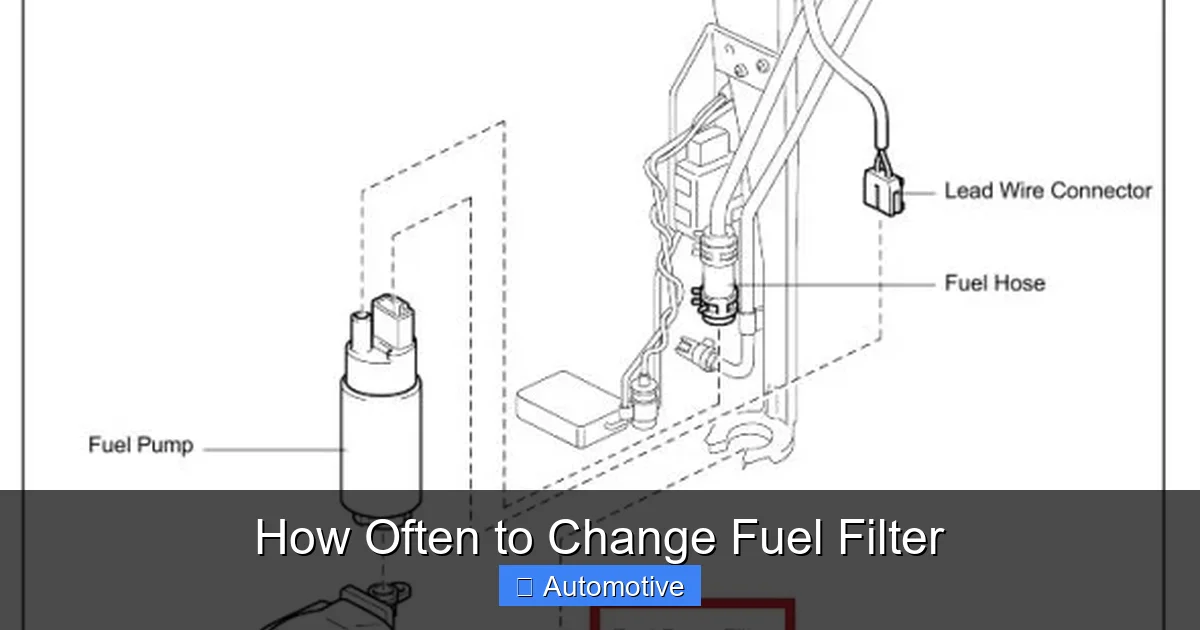
Fuel filters are usually found along the fuel line, either under the car near the fuel tank or in the engine bay. Some vehicles have them inside the fuel tank (especially newer models), which makes replacement more complex and often requires professional help.
Look for a cylindrical component with fuel lines connected to both ends. It may be mounted with brackets or clips.
Remove the Old Filter
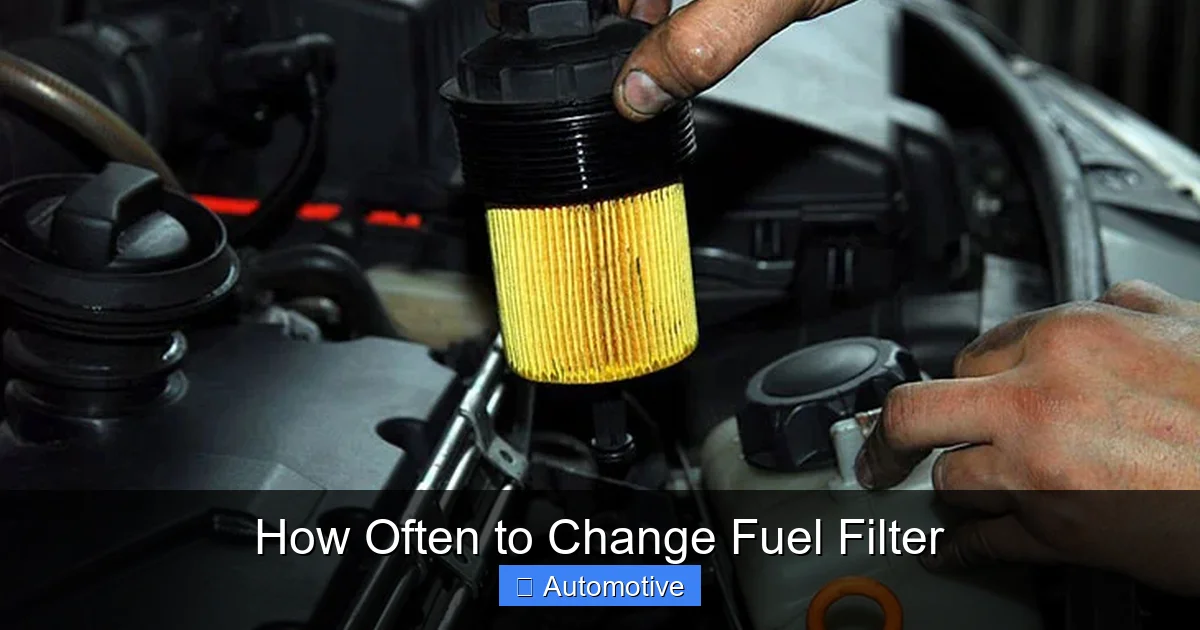
Place your container underneath to catch any spilled fuel. Use your wrench to loosen the fuel line fittings. Some filters use quick-connect fittings that require a special tool to release—don’t force them.
Once the lines are disconnected, remove the filter from its mounting bracket. Be careful not to spill fuel on hot engine parts or your skin.
Install the New Filter
Before installing the new filter, check the direction of fuel flow. Most filters have an arrow indicating which way the fuel should flow (from tank to engine). Installing it backward can restrict flow and damage the system.
Secure the new filter in the bracket and reconnect the fuel lines. Tighten fittings to the manufacturer’s torque specifications—don’t overtighten.
Test the System
Reconnect the battery and fuel pump fuse. Turn the ignition to “on” (but don’t start the engine) for a few seconds to let the fuel pump pressurize the system. Check for leaks around the connections.
Then, start the engine and let it idle for a few minutes. Listen for unusual noises and watch for leaks. If everything looks good, take the car for a short test drive to ensure smooth operation.
When to Call a Professional
While many fuel filter replacements are DIY-friendly, some situations call for a mechanic. If your vehicle has an in-tank fuel filter, for example, the job requires dropping the fuel tank—a complex and potentially hazardous task. Similarly, diesel trucks with high-pressure common rail systems often need specialized tools and knowledge.
If you’re not confident in your mechanical skills, or if you’ve tried replacing the filter and still have performance issues, it’s worth getting a professional inspection. A mechanic can test fuel pressure, check for leaks, and ensure the system is working properly.
Tips for Maintaining a Healthy Fuel System
Changing the fuel filter is just one part of fuel system care. To keep your engine running smoothly, follow these best practices:
– **Use quality fuel:** Choose reputable gas stations and consider using fuel additives occasionally to clean injectors.
– **Replace the air filter regularly:** A dirty air filter can cause the engine to run rich, increasing carbon buildup and strain on the fuel system.
– **Keep the fuel tank above ¼ full:** This reduces moisture buildup in the tank, especially in humid climates.
– **Inspect fuel lines and hoses:** Look for cracks, leaks, or soft spots during routine maintenance.
– **Follow the maintenance schedule:** Stick to your manufacturer’s recommended service intervals for all fuel system components.
Conclusion
Knowing how often to change your fuel filter is a simple but powerful way to protect your engine and save money in the long run. While the standard interval is every 20,000 to 40,000 miles, your specific vehicle, driving habits, and fuel quality all play a role. Pay attention to warning signs like hard starting, hesitation, or reduced fuel economy, and don’t ignore the check engine light.
Whether you tackle the job yourself or leave it to a professional, regular fuel filter maintenance ensures clean fuel delivery, better performance, and fewer surprises on the road. It’s a small investment of time and money that pays big dividends in reliability and peace of mind.
Frequently Asked Questions
How do I know if my fuel filter is clogged?
You may notice symptoms like engine hesitation, difficulty starting, rough idling, or reduced fuel economy. A clogged filter restricts fuel flow, making it harder for the engine to run smoothly. If you experience these issues, have your filter inspected.
Can I drive with a bad fuel filter?
You might be able to drive short distances, but it’s not recommended. A severely clogged filter can cause stalling, loss of power, or engine damage. Replace it as soon as possible to avoid breakdowns or costly repairs.
Is it hard to replace a fuel filter myself?
For many vehicles, yes—it’s a manageable DIY job if you have basic tools and follow safety steps. However, if the filter is inside the fuel tank or requires special tools, it’s best left to a professional.
Do all cars have replaceable fuel filters?
Most do, but some newer models have filters integrated into the fuel pump inside the tank. These usually require more complex service and are often replaced only during major repairs.
Can a bad fuel filter cause the check engine light to come on?
Yes. A clogged filter can trigger codes related to low fuel pressure or lean engine conditions. If the light comes on, have the fuel system checked—don’t assume it’s unrelated.
Should I change my fuel filter more often in winter?
Cold weather can increase moisture in the fuel system, especially in diesel engines. If you live in a cold climate, consider checking or replacing the filter more frequently to prevent ice formation and fuel line blockages.
