
How Often Should You Change the Cabin Air Filter on a Toyota Corolla

Maintaining your Toyota Corolla’s cabin air filter is crucial for clean interior air and HVAC system health. The general recommendation is to change it every 12,000 to 15,000 miles or once a year, but harsh conditions like heavy traffic, dusty roads, or high pollen areas require more frequent changes. A clogged filter reduces airflow, strains the blower motor, and allows pollutants into your cabin. You can often replace it yourself in under 30 minutes with basic tools, saving money and ensuring you breathe easier on every drive.
Key Takeaways
- Standard Interval: Replace the cabin air filter in your Toyota Corolla every 12,000 to 15,000 miles or annually, whichever comes first, as a baseline maintenance practice.
- Driving Conditions Matter: Frequent driving in heavy traffic, on unpaved roads, in areas with high pollen or pollution, or with pets in the car drastically shortens filter life and may require changes every 6,000-10,000 miles.
- DIY-Friendly Job: The cabin air filter location in a Corolla (typically behind the glovebox) is accessible for most DIYers; the job usually takes 15-30 minutes with simple tools, making it a perfect entry-level maintenance task.
- Watch for Warning Signs: Reduced HVAC airflow, musty odors, foggy windows, or increased dust inside the car are clear indicators the filter is clogged and needs immediate replacement, regardless of mileage.
- Health & System Protection: A clean filter blocks pollen, dust, soot, and allergens, protecting passengers with allergies or respiratory issues and preventing premature wear on your car’s heating and cooling system components.
- Filter Type Varies by Year: Your Corolla’s specific filter type (standard particulate vs. activated carbon for odors) depends on the model year and trim; always consult your owner’s manual or an OEM parts catalog for the correct replacement.
📑 Table of Contents
- Breathing Easy: Why Your Toyota Corolla’s Cabin Air Filter Isn’t a “Set It and Forget It” Part
- What Exactly is a Cabin Air Filter and What Does it Do?
- Manufacturer’s Recommendations: The Official Toyota Guidance
- Factors That Shorten Your Replacement Interval: It’s All About the Environment
- 5 Unmistakable Signs Your Cabin Air Filter is Past Its Prime
- How to Change the Cabin Air Filter on a Toyota Corolla: A DIY Guide
- The Tangible Benefits of Sticking to the Schedule
- Conclusion: Make It Part of Your Routine
Breathing Easy: Why Your Toyota Corolla’s Cabin Air Filter Isn’t a “Set It and Forget It” Part
You change your engine oil, rotate your tires, and maybe even think about your brake pads. But when was the last time you gave a thought to that little panel hidden behind your glovebox? The cabin air filter—sometimes called a pollen filter or HVAC filter—is the unsung hero of your Toyota Corolla’s comfort system. Its job is simple but vital: to act as a gatekeeper for the air you and your passengers breathe. It traps pollen, dust, soot, brake dust, and even some airborne pollutants before they can enter your car’s interior through the heating, ventilation, and air conditioning (HVAC) system. Yet, because it works silently in the background, it’s one of the most neglected maintenance items on a vehicle. Understanding how often to change the cabin air filter on a Toyota Corolla isn’t just about keeping the air fresh; it’s about protecting your health, your car’s HVAC system, and even your vehicle’s resale value. Let’s clear the air on this essential, yet often overlooked, piece of routine maintenance.
What Exactly is a Cabin Air Filter and What Does it Do?
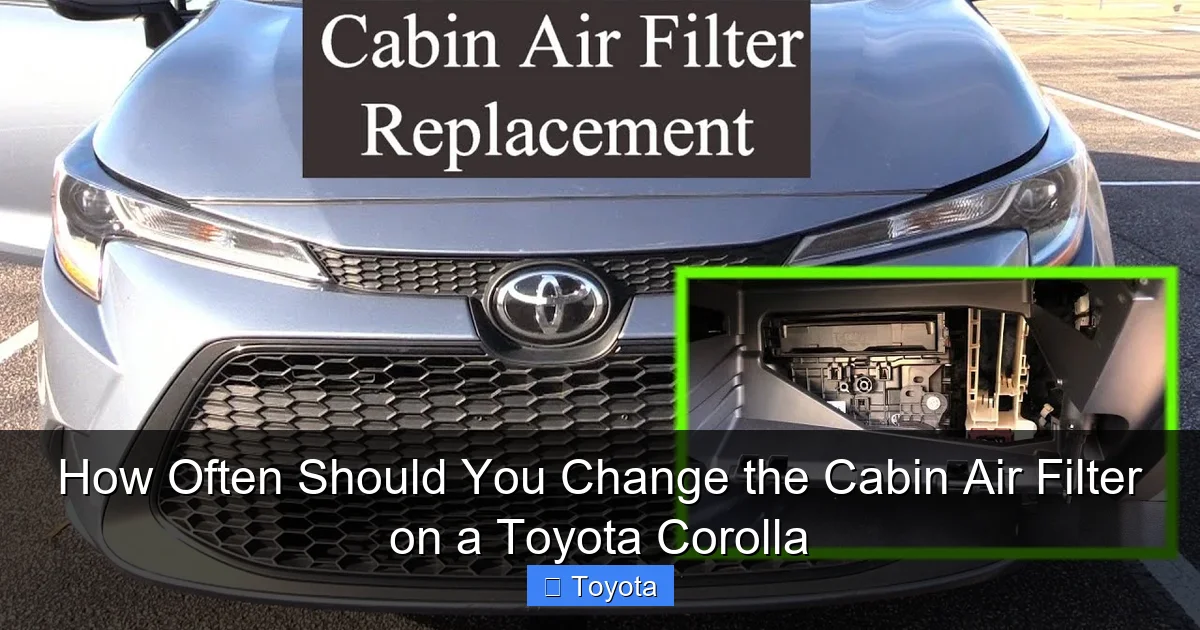
Before we talk schedule, let’s understand the part itself. A cabin air filter is typically a pleated, fibrous material—often engineered media or sometimes a combination of media and activated carbon—housed in a plastic frame. It’s installed in the HVAC system’s intake duct, usually behind the glove compartment or under the dashboard on the passenger side. As your Corolla’s blower fan pushes outside air into the cabin, that air must first pass through this filter.
Visual guide about How Often Should You Change the Cabin Air Filter on a Toyota Corolla
Image source: i.ytimg.com
The Filtration Process: More Than Just Dust
Modern cabin filters are sophisticated. The primary job is mechanical filtration: the fibrous material physically captures particles as small as a few microns in size. This includes common allergens like pollen and mold spores, coarse dust, and road grime kicked up by other vehicles. Many filters, especially those in higher-trim Corollas or recommended for urban driving, also incorporate a layer of activated carbon. This carbon layer doesn’t filter particles but instead adsorbs gaseous pollutants, exhaust fumes, and unpleasant odors (like that of a skunk or a diesel truck) before they can infiltrate your car’s interior. So, a good filter is your first line of defense against both particulate matter and chemical irritants.
What Happens When It Gets Clogged?
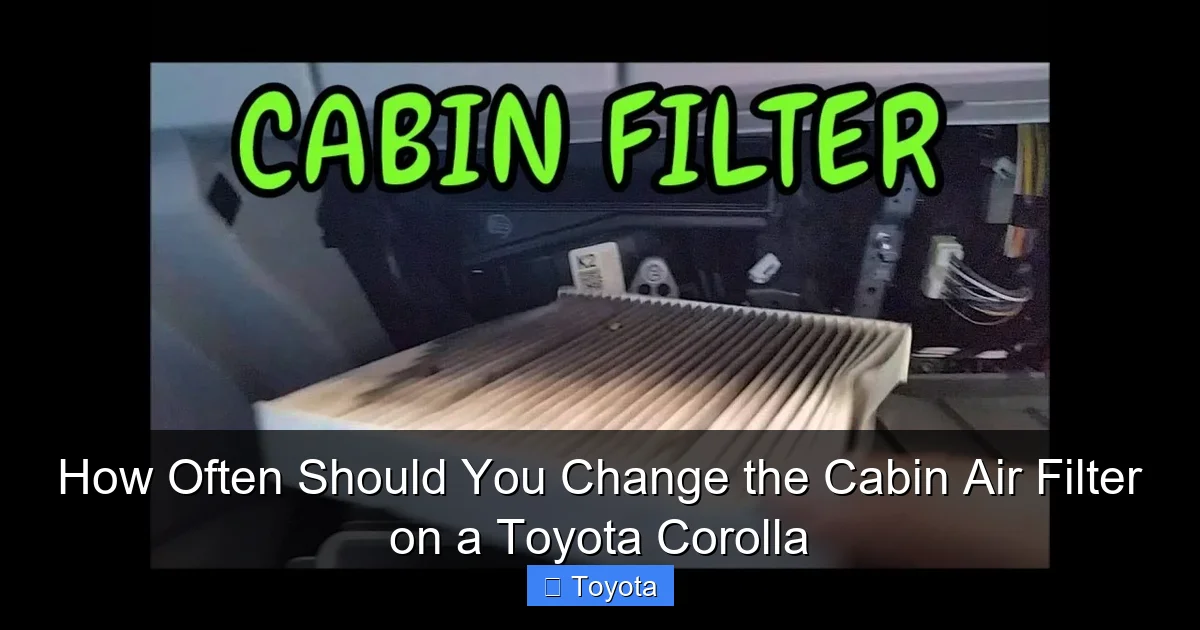
Over time, the filter becomes a saturated mat of captured debris. Think of it like a vacuum cleaner bag that’s completely full. A clogged cabin filter creates a bottleneck in the airflow. Your HVAC blower motor has to work exponentially harder to push air through this dense obstacle. This leads to several problems: noticeably weaker airflow from your vents (even on high fan speed), a strained and noisier blower motor that may fail prematurely, and a system that can’t effectively heat or cool the cabin because it can’t move enough air. Furthermore, a saturated filter loses its ability to trap new particles, allowing them to bypass the media and settle on your dash, seats, and, ultimately, in your lungs. It can also trap moisture, becoming a breeding ground for mold and mildew, which is often the source of that persistent musty ” gym sock” smell when you turn on the AC.
Manufacturer’s Recommendations: The Official Toyota Guidance
So, what does Toyota itself say? The official recommendation found in most Toyota Corolla owner’s manuals is to inspect the cabin air filter every 12 months or 15,000 miles and replace it as needed. This is your fundamental, baseline guideline. It’s a conservative estimate designed for “normal” driving conditions. But what constitutes “normal”? In the world of cabin filters, “normal” is a relative term. Toyota’s engineers have to provide a one-size-fits-all number for the entire global market, which is why this interval is a starting point, not a universal rule.
Visual guide about How Often Should You Change the Cabin Air Filter on a Toyota Corolla
Image source: i.ytimg.com
Finding Your Corolla’s Specific Recommendation
Your first step is always to crack open your owner’s manual. Look in the “Maintenance and Care” or “Specifications” section. You’ll find a maintenance schedule chart. For the cabin air filter (it may be listed as “Cabin Air Filter” or “Pollen Filter”), it will list the inspection/replacement interval. Some newer Corolla models with advanced filtration systems might even have a service reminder that appears on the multi-information display, though this is less common than for engine oil changes. If your manual is long gone, a quick search for “[Your Corolla’s Year] Toyota Corolla owner’s manual PDF” will usually yield a digital copy from Toyota’s official resources.
The “Normal” vs. “Severe” Service Schedule
Many manufacturers, including Toyota, implicitly or explicitly define a “severe service” schedule. This schedule shortens intervals for many fluids and filters. While cabin filter intervals aren’t always explicitly doubled in the severe service chart, the conditions that define severe service directly impact filter life. If your driving matches the “severe” criteria for other items (like oil changes), you should assume your cabin filter is aging faster. Severe service typically includes:
- Frequent trips of less than 5-10 miles in cold weather.
- Extensive idling or stop-and-go traffic in heavy congestion.
- Driving in extremely dusty or sandy environments (construction zones, desert areas, rural dirt roads).
- Operating the vehicle in areas with high airborne pollution or pollen counts for most of the year.
- Using the vehicle for commercial purposes like taxi or delivery service.
If this sounds like your daily drive, you should be prepared to change your filter much more often than the 15,000-mile mark.
Factors That Shorten Your Replacement Interval: It’s All About the Environment
This is the most critical section for tailoring the maintenance to your real-world use. The 12k/15k mile rule is for a Corolla driving in ideal, rural, low-pollution conditions. For the vast majority of drivers, the true interval is shorter. Here are the key environmental factors that load up your filter with debris faster than a Thanksgiving plate with gravy.
Visual guide about How Often Should You Change the Cabin Air Filter on a Toyota Corolla
Image source: i.ytimg.com
Geography and Season: Pollen, Dust, and Pollution
Urban & High-Traffic Areas: Living in a major city means constant exposure to brake dust (from countless stop-and-go intersections), tire particulate, diesel soot, and general industrial pollution. These fine particles are excellent at clogging filter media. If you commute on highways like the 405 or I-95, your filter is under constant assault.
Rural & Unpaved Roads: While you might avoid brake dust, you’re subject to massive amounts of dust, dirt, and sand. A single drive down a county gravel road can deposit a thick layer of material on your filter. Farmers or those with properties on dirt lanes are in this high-wear category.
Pollen Seasons: If you live in the “Pollen Belt” (the eastern and central U.S.) or any region with high tree, grass, or ragweed counts, your filter can become a solid mat of yellow/green pollen in a matter of weeks during peak season. For allergy sufferers, changing the filter at the start and end of pollen season is a wise health investment.
Wildfire Smoke: In regions prone to wildfires, the airborne particulate matter (PM2.5) from smoke is extremely fine and can rapidly saturate a filter, reducing its effectiveness and creating a lingering smoky odor inside the car.
Your Personal Cargo: Pets and Smoking
Pets: Dogs and cats are wonderful, but they are shedding, dander-producing, odor-carrying machines. Pet hair clogs the outer pre-filter layers, while dander (tiny skin flakes) is a potent allergen that can penetrate deep. If your Corolla regularly transports pets, add 3,000-5,000 miles to your “change sooner” mental clock. Consider a filter specifically designed for pet allergen reduction.
In-Car Smoking: If anyone smokes or vapes in the vehicle, the tar and nicotine residues quickly coat the filter media. This not only reduces airflow but creates a permanent, stubborn stale smell that is very difficult to remove completely. A new filter will help somewhat, but the odor permeates the entire HVAC ductwork. The only real fix is to ban smoking in the car and replace the filter frequently.
The Climate Control Factor: How You Use Your System
Believe it or not, your HVAC settings can influence filter life. Running the fan on a lower speed constantly means air moves slower, allowing more time for particles to settle into the filter fibers rather than passing through. In contrast, using the “Max” or “High” fan setting regularly can help blow some loose debris out, but it also forces more total air volume through the filter, loading it up faster overall. The biggest impact comes from the “Recirculate” vs. “Fresh Air” mode. Using the recirculate mode (which pulls air from inside the cabin) means your filter isn’t doing any work at all, preserving its life. However, this also means you’re breathing the same stale, polluted interior air. For maximum filter life and air quality, use fresh air mode moderately, but be aware it will load your filter faster.
5 Unmistakable Signs Your Cabin Air Filter is Past Its Prime
Don’t wait for the mileage sticker on your windshield. Your Corolla will give you clear, physical signs that the filter is overdue. Heeding these warnings can save you from a costly blower motor repair and improve your driving comfort immediately.
1. Dramatically Reduced Airflow from the Vents
This is the #1, most obvious symptom. You turn the fan to “High,” but it feels like a gentle breeze. The air just isn’t pushing out with any authority. This is the classic sign of a severely clogged filter. The blower motor is fighting a brick wall of debris. If you’ve ruled out a bad blower motor resistor (which causes only certain fan speeds to fail), the filter is the prime suspect.
2. Unusual Noises from the HVAC System
A healthy system is relatively quiet. A clogged filter forces the blower motor to labor harder, often creating a new, noticeable whirring, straining, or even a faint grinding noise. You might hear it change pitch when you adjust the fan speed. This is your blower motor crying for help—give it a new filter to reduce the load.
3. Persistent Musty or Mildew Smells
When you first turn on the AC, a brief odor is normal. But if a dank, wet-dog, or “old gym sock” smell lingers and doesn’t go away after a few minutes, your cabin filter is likely a petri dish. Moisture from the AC’s evaporator coils gets trapped in the saturated filter media, promoting mold and mildew growth. Replacing the filter is the first and most crucial step in eliminating this odor. Often, you’ll also need to clean the evaporator drain tube, but start with the filter.
4. Foggy Windows That Won’t Defog Quickly
Your Corolla’s defroster/defogger system works by blowing warm, dry air onto the windshield. A clogged cabin filter severely restricts the volume of air the system can move. On a cold, humid morning, you’ll find your windows fog up instantly and stay foggy, even with the defroster on full blast. The system simply can’t push enough air to clear the condensation efficiently.
5. Visible Debris or Discoloration on the Filter Itself
If you’re already considering a DIY change, you’ll see the proof. A new filter is typically off-white or light gray. A used filter that’s 12,000 miles old in moderate conditions will be a uniform gray. A filter that’s 20,000+ miles old in bad conditions will be jet black, caked with dirt, covered in pollen, or visibly matted with pet hair. Sometimes you can even see leaves or twigs stuck in the pleats. If it looks dirty, it’s way past due.
How to Change the Cabin Air Filter on a Toyota Corolla: A DIY Guide
For most Corolla models from the early 2000s onward, this is a classic beginner-friendly DIY job. You don’t need to get under the car or deal with engine components. The entire process is confined to the passenger compartment. The exact location and procedure vary slightly by generation, but the principle is the same. Here’s a general guide that applies to the vast majority of Corollas (E120, E140, E210 generations, etc.). Always consult your owner’s manual for the exact procedure and part number for your specific year and trim.
Step-by-Step Replacement Process
- Locate the Filter Housing: Open the passenger door and fully lower the glovebox. On almost all Corollas, the cabin filter housing is directly behind the glovebox. You’ll see a plastic cover (often rectangular) held in place by one or two plastic clips or a single screw. Some models have a small access panel on the side of the housing itself.
- Access the Filter: Release the clips or remove the screw. Gently pull the cover off. You may need to wiggle it a bit. If your glovebox has a damper or a stop cord that limits its drop, you may need to gently disconnect it to get enough clearance. Be careful not to break plastic tabs.
- Remove the Old Filter: Note the orientation of the old filter before removing it. There is almost always an arrow printed on the filter frame that indicates the direction of airflow (points toward the cabin/blower motor). Slide the old filter out. It will be full of debris. Have a bag ready to contain the mess.
- Clean the Housing: Use a vacuum cleaner with a brush attachment to clean out any loose debris, leaves, or dirt from the filter housing and the HVAC intake duct. This is a perfect chance to prevent old dirt from falling into the system when the new filter is installed. Wipe the plastic housing with a damp cloth if needed.
- Install the New Filter: Take your new, correct replacement filter. It must match the exact dimensions and type (standard vs. carbon) of the old one. Insert it into the housing, ensuring the airflow arrow is pointing in the same direction as the old one was (typically toward the center of the car/blower motor). A backwards filter will restrict airflow severely.
- Reassemble: Snap or screw the plastic cover back into place securely. Reconnect the glovebox damper if you disconnected it. Close the glovebox. That’s it!
Tools, Parts, and Pro-Tips
What You’ll Need: A new cabin air filter (OEM Toyota part or a high-quality equivalent from brands like Fram, K&N, WIX, or Bosch), a flat-head screwdriver (sometimes needed for clips), and a vacuum cleaner. Gloves and a shop towel are optional but handy.
Where to Buy: Your local Toyota dealership parts department will have the exact OEM filter. Auto parts stores (AutoZone, Advance, O’Reilly) and online retailers (Amazon, RockAuto) carry excellent aftermarket options. Use your Corolla’s year, make, model, and engine size to find the right part.
Cost: A quality filter typically costs between $15 and $40. Doing it yourself saves $50-$100 in labor compared to a quick-lube shop or dealer.
Pro-Tip: If you’re already under there, take the opportunity to check and clear the AC evaporator drain tube. This is a small rubber hose under the car, near the firewall on the passenger side. Gently insert a flexible wire or use compressed air to clear any clogs. This helps prevent water from backing up into your cabin and causing that musty smell.
For a visual, step-by-step guide specific to your model, our detailed tutorial on how to change the cabin air filter on a Toyota RAV4 follows an identical process for most modern Toyota vehicles, including the Corolla. The glovebox removal and filter location are virtually the same across the Toyota lineup.
The Tangible Benefits of Sticking to the Schedule
Why go through the trouble? The benefits extend far beyond just “having clean air.” Regularly replacing this inexpensive filter pays dividends in comfort, health, and vehicle longevity.
Immediate Improvement in HVAC Performance
The most noticeable change is the return of strong, powerful airflow from your vents. Your AC will feel colder, and your heater will feel warmer, because the system can now move the designed volume of air. Defogging windows becomes instant. Your cabin will reach the desired temperature faster, which can slightly improve fuel economy since the HVAC system doesn’t have to run as long or as hard.
Protection for Expensive HVAC Components
The blower motor is not designed to strain against a solid wall of debris. A chronically clogged filter causes the motor to overheat and wear out prematurely. Replacing a blower motor can cost $300-$800 in parts and labor. The cabin filter, at $20, is the ultimate cheap insurance policy for this component. You’re also protecting the intricate blend door actuators and the evaporator core from excessive dust buildup that can insulate them and reduce efficiency.
A Healthier Driving Environment
For allergy and asthma sufferers, this is non-negotiable. A fresh, high-quality filter is your primary barrier against pollen, grass, and ragweed. For everyone, it means less dust settling on your dashboard, seats, and electronics. It reduces your exposure to brake dust (which contains heavy metals like copper and barium) and diesel particulate matter, which is classified as a carcinogen. If you have children, elderly parents, or anyone with respiratory concerns in the car, a clean cabin filter is a critical health and safety component.
Preserving Your Car’s Resale Value
When it’s time to sell or trade your Corolla, a well-documented maintenance history that includes regular cabin filter changes is a subtle but positive signal to a buyer. It shows you were meticulous about all aspects of the car’s care. More importantly, a vehicle that has no musty odors, has clear airflow, and shows no signs of HVAC system failure (like a noisy blower) is simply more pleasant to test drive and commands a higher price. A car that smells bad or has weak AC is a major red flag that can kill a sale or lower the offer.
Odor Elimination and Prevention
If you’re battling a persistent musty smell, the first and most critical step is a new filter. Combined with running the AC on fresh air mode with the fan on high for a few minutes after driving (to dry out the evaporator case), a new filter can eliminate the source of many odors. Proactively changing it before smells start is the best policy, especially if you often have wet dogs, sports equipment, or take long trips with the AC on recirc.
Conclusion: Make It Part of Your Routine
The Toyota Corolla is renowned for its reliability and low cost of ownership. Part of upholding that reputation is staying on top of the small, easy maintenance items that prevent big, expensive problems. The cabin air filter is the epitome of such an item. While the official 15,000-mile interval is a good baseline, your personal driving environment is the true determinant. If your life involves city traffic, country roads, allergy seasons, or furry copilots, plan on changing it every 12 months or 10,000-12,000 miles. The good news is that for the vast majority of Corolla owners, this is a 20-minute, $25 DIY job that you can easily tackle over a weekend. By making it a regular part of your maintenance routine—perhaps tied to your oil change or seasonal tire swap—you protect your investment, safeguard your health, and ensure every journey in your Corolla is a fresh, comfortable one. Don’t let this small filter have a big, negative impact. Check it, change it, and breathe easy.
Frequently Asked Questions
Can I drive with a clogged cabin air filter?
You can drive, but you shouldn’t. A severely clogged filter strains the blower motor, reduces HVAC effectiveness, and fails to clean the air. It’s best to replace it as soon as you notice symptoms like weak airflow or odors to prevent potential damage to more expensive components.
Is the cabin air filter the same as the engine air filter?
No, they are completely different. The engine air filter cleans the air entering your engine for combustion. The cabin air filter cleans the air entering your passenger compartment through the HVAC vents. They are located in separate systems and have different replacement intervals.
Do I need a special tool to change the cabin air filter in my Corolla?
Usually, no. Most Corolla models only require you to release plastic clips or a single screw to access the glovebox and filter housing. A flat-head screwdriver can help with stubborn clips, but many pop open by hand. No wrenches or sockets are typically needed.
Will a new cabin filter improve my gas mileage?
Not directly, but there can be a minor benefit. A clogged filter makes the HVAC blower motor work harder, which draws a small amount of extra power from the engine (especially on older models with engine-driven accessories). A new filter reduces this parasitic drain, potentially improving fuel economy by a negligible amount (less than 1%). The primary benefits are comfort and system protection.
How much does a Toyota Corolla cabin air filter cost to replace professionally?
At a dealership or quick-lube shop, the total cost (parts + labor) typically ranges from $70 to $120. The part itself is usually $20-$40. The high cost is for the minimal labor time (often billed at a 0.5 to 1.0 hour rate). Doing it yourself saves you 60-80%.
Can a dirty cabin filter make my allergies worse?
Absolutely. A saturated filter loses its ability to trap pollen, dust mites, and mold spores. Instead of capturing these allergens, it allows them to circulate into your cabin. For allergy sufferers, a fresh filter is one of the most effective and inexpensive ways to create a cleaner air environment inside your car, especially during peak pollen seasons.