How Often Should I Oil Change My 2016 Toyota Corolla

Contents
- 1 Key Takeaways
- 2 📑 Table of Contents
- 3 Understanding the “Official” Word: Your Owner’s Manual & Toyota’s Recommendations
- 4 The Real-World Factors That Should Shorten Your Interval
- 5 Synthetic vs. Conventional: It’s Not Just a Price Difference
- 6 The DIY vs. Professional Oil Change Debate
- 7 The High Cost of Neglect: What Happens If You Wait Too Long?
- 8 Creating Your Personal Oil Change Plan
- 9 Frequently Asked Questions


Your 2016 Toyota Corolla’s oil change interval isn’t a one-size-fits-all number. While the traditional 3,000-mile rule is outdated, the modern recommendation is typically 5,000 to 10,000 miles when using full synthetic oil, but your personal driving habits and conditions are the final deciding factor. Always consult your owner’s manual and consider severe driving conditions which may require more frequent changes.
So, you’re staring at the sticker in your windshield, or maybe the “Maintenance Required” light just flickered on. The big question pops into your head: “How often should I oil change my 2016 Toyota Corolla?” It’s a simple question with a more nuanced answer than you might think. The reliable Corolla is known for its longevity, and proper oil changes are the single most important routine maintenance you can do to unlock that potential. Let’s break down everything you need to know, from factory specs to real-world driving, so you can make the smartest decision for your car and your wallet.
Key Takeaways
- Modern Intervals Are Longer: With full synthetic oil, your 2016 Corolla can often go 7,500-10,000 miles between changes under ideal conditions, a big leap from the old 3,000-mile myth.
- “Severe” Driving Is Common: Most drivers experience “severe” conditions (short trips, stop-and-go traffic, extreme temps), which can shorten the recommended interval to 5,000 miles or less.
- Your Manual Is Your Bible: The factory’s specific recommendation in your owner’s manual is the primary guide. Ignoring it can affect your warranty and engine longevity.
- Oil Type Dictates Schedule: The difference between conventional, synthetic blend, and full synthetic oil is huge. Full synthetic allows for the longest intervals and offers superior protection.
- The Oil Filter Changes Every Time: A new oil filter is non-negotiable with every oil change. A clogged filter defeats the purpose of fresh oil. Learn more about how often to change an oil filter.
- It’s Not Just About Miles: Time matters too. Oil degrades with age. Even if you drive very little, change your oil at least once a year.
- Neglecting Changes Costs More: Skipping oil changes leads to sludge, increased wear, poor fuel economy, and eventually, catastrophic engine failure—a far more expensive repair than routine maintenance.
📑 Table of Contents
- Understanding the “Official” Word: Your Owner’s Manual & Toyota’s Recommendations
- The Real-World Factors That Should Shorten Your Interval
- Synthetic vs. Conventional: It’s Not Just a Price Difference
- The DIY vs. Professional Oil Change Debate
- The High Cost of Neglect: What Happens If You Wait Too Long?
- Creating Your Personal Oil Change Plan
Understanding the “Official” Word: Your Owner’s Manual & Toyota’s Recommendations
Before we dive into opinions or general advice, we must start with the source of truth for your specific vehicle: the owner’s manual. For the 2016 Toyota Corolla, Toyota provides a maintenance schedule based on two primary driving condition categories: “Normal” and “Severe.” It’s crucial to understand what these categories actually mean in practice.
The “Normal” Schedule
The “Normal” or “Standard” schedule is a bit of a misnomer. It assumes you drive in relatively ideal conditions: consistent highway speeds, minimal stop-and-go traffic, ambient temperatures that aren’t extreme, and minimal dust or dirt. Under this ideal—and frankly, rare—scenario, Toyota recommended oil changes every 10,000 miles or 12 months for models equipped with full synthetic oil (which was the recommended and standard fill for most 2016 Corolla trims). If your manual specifies a conventional oil interval, it’s typically 5,000 miles or 6 months.
The “Severe” Schedule (Spoiler: This Is Probably You)
Here’s the reality check. Toyota defines “Severe” driving conditions broadly, and it includes most of how people actually drive. Your driving likely falls into this category if you:
- Make frequent short trips (less than 5 miles) where the engine doesn’t fully warm up.
- Drive in stop-and-go traffic or heavy congestion daily.
- Drive in extremely hot (above 90°F/32°C) or extremely cold (below 10°F/-12°C) temperatures.
- Drive on dusty, sandy, or muddy roads.
- Tow a trailer or carry heavy loads regularly.
- Idle for extended periods (like a taxi or security vehicle).
If you check even one or two of these boxes—and most urban and suburban drivers do—you are under the “Severe” schedule. For the 2016 Corolla with full synthetic oil under severe conditions, Toyota’s recommendation drops significantly to every 5,000 miles or 6 months. This is the schedule you should almost certainly be following. It’s conservative, but it’s designed to protect your engine when it’s working the hardest and exposed to the harshest conditions.
Decoding the Oil Type: 0W-20 and Why It Matters
Your 2016 Corolla almost certainly calls for 0W-20 full synthetic oil. This isn’t just a suggestion; it’s a requirement for the engine’s design and for meeting its fuel economy and emissions targets. The “0W” means it flows like a thin oil in cold starts (the “W” stands for winter), protecting engine parts immediately. The “20” is its viscosity at operating temperature. Using the correct 0W-20 synthetic oil is what allows for the longer 7,500-10,000 mile intervals under normal conditions. Using a different weight or type of oil can cause damage and void your warranty. You can learn more about the exact oil capacity and specifications for your model in your manual.
The Real-World Factors That Should Shorten Your Interval
Even if you follow the “Severe” schedule, some driving habits and conditions are so tough that you might consider an even more proactive approach. Think of these as the “super-severe” factors. Your engine is a complex machine, and the quality of the oil is its lifeblood. When that blood is contaminated or broken down prematurely, wear accelerates.
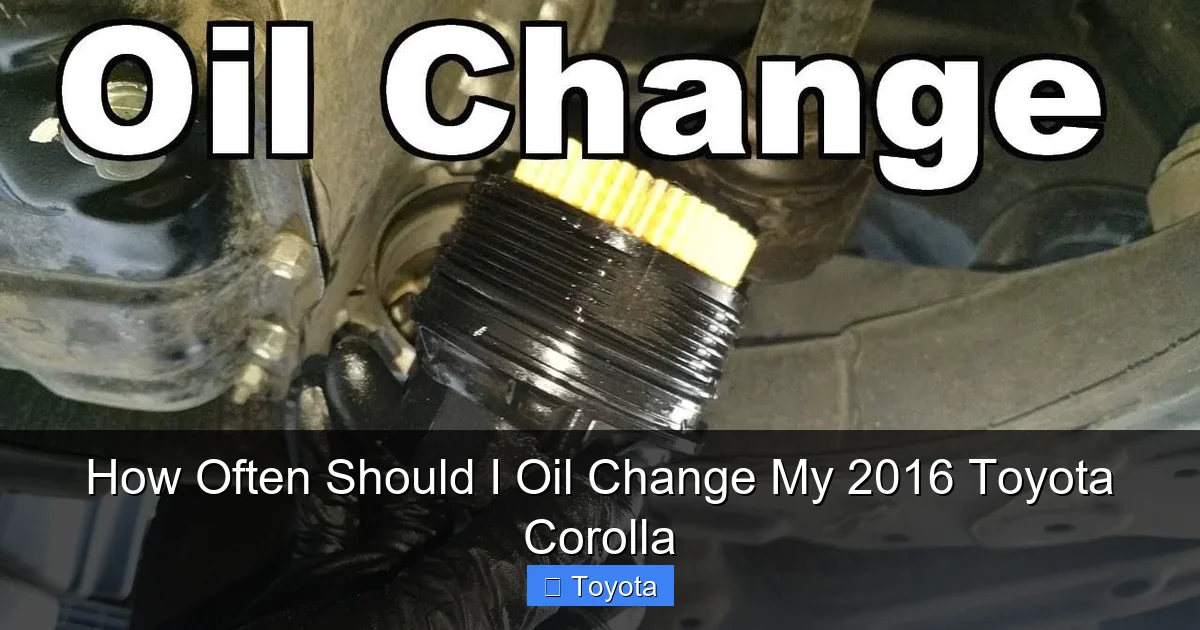
Visual guide about How Often Should I Oil Change My 2016 Toyota Corolla
Image source: i.ytimg.com
1. The Commuter’s Curse: Endless Short Trips
This is the number one engine killer for many drivers. If your daily drive is a 2-mile run to the grocery store and back, your engine oil never reaches its full operating temperature. At lower temps, fuel and water vapor from combustion can condense in the oil, forming a dilute that washes away protective additives and promotes sludge. The oil also isn’t hot enough to effectively burn off contaminants. For drivers whose trips are always under 10-15 minutes, changing oil every 3,000-4,000 miles is a wise insurance policy, even with synthetic oil. It’s a small, regular cost to avoid a huge future one.
2. Climate Extremes: Scorching Heat and Biting Cold
Extreme heat thins oil, reducing its ability to form a protective film between metal parts. It also accelerates oxidation, causing the oil to break down and turn darker faster. In freezing cold, as mentioned, oil flow is the issue, but also, the engine runs richer (more fuel) to warm up, leading to more fuel dilution in the oil. If you live in Arizona or Minnesota, stick to the shorter end of your schedule’s range.
3. Dust, Dirt, and Construction Zones
Driving on unpaved roads or through areas with high dust counts means more abrasive particles are getting past the air filter and into your combustion chambers. These microscopic particles can end up in your oil, acting like grinding paste. If you frequently drive on dirty roads, don’t push your luck on the interval.
4. Heavy Loads and High RPMs
While the Corolla isn’t a truck, regularly packing it with five adults and luggage for long trips, or using it to tow a small utility trailer, puts extra thermal stress on the engine and oil. The same goes for drivers who consistently drive at high RPMs (sporty driving). More heat and stress mean faster oil degradation.
Synthetic vs. Conventional: It’s Not Just a Price Difference
This is a critical distinction for your 2016 Corolla. Toyota’s long intervals are predicated on using full synthetic oil. Here’s a simple breakdown:

Visual guide about How Often Should I Oil Change My 2016 Toyota Corolla
Image source: shstreetcar.com
- Conventional Oil: Refined from crude oil. It has a narrower temperature range, breaks down faster, and provides less protection against sludge and wear. Not recommended for your 2016 Corolla. If you use it, you must change it every 3,000-5,000 miles.
- Synthetic Blend: A mix of conventional and synthetic base stocks. Offers better performance than conventional but not as good as full synthetic. A middle-ground option if full synthetic is unavailable, but you should still follow a 5,000-mile max interval.
- Full Synthetic Oil: Chemically engineered molecules. It has superior high-temperature stability, low-temperature flow, resistance to oxidation, and better additive packages. This is what your engine was designed for, and it’s what enables the 7,500-10,000 mile interval under normal conditions. The interval for changing synthetic oil is significantly longer for good reason.
Bottom Line: For your 2016 Corolla, always use the Toyota-approved 0W-20 full synthetic oil. The small extra cost per quart is an investment in your engine’s health and longevity.
The DIY vs. Professional Oil Change Debate
Now that you know the “when” and “why,” let’s talk about the “who.” Changing your own oil is a classic rite of passage for car enthusiasts. It’s cheaper in terms of parts (you buy the oil and filter) and gives you complete control over the quality of products used. You can use a premium filter and the exact oil you want. However, it requires tools, a safe workspace, proper disposal of the old oil (a major legal and environmental responsibility), and time.

Visual guide about How Often Should I Oil Change My 2016 Toyota Corolla
Image source: i.ytimg.com
Going to a professional—whether a quick-lube shop, an independent mechanic, or a Toyota dealership—is convenient and often includes a multi-point inspection (checking fluids, belts, tires, etc.). The dealership will use Toyota OEM filters and oil and reset your maintenance light correctly. Independent shops can offer a great balance of cost and service. The key is to choose a reputable provider who uses quality oil and filters. If you do go the DIY route, remember that a proper oil change includes changing the oil filter. You can find details on other simple maintenance tasks for your Corolla on our site.
The High Cost of Neglect: What Happens If You Wait Too Long?
It’s time for a stern talk. The oil change sticker is not a suggestion. Modern engines have tighter tolerances than ever, but they still rely on a film of oil to prevent metal-on-metal contact. As oil ages, it breaks down. Its ability to lubricate, cool, clean, and seal diminishes.
The Stages of Oil Degradation
First, the additives that clean and neutralize acids get used up. Then, the oil itself starts to oxidize and form varnish and sludge. This sludge can clog oil passages, preventing oil from reaching critical areas like the camshaft and crankshaft bearings. Eventually, the oil can’t maintain its viscosity, leading to metal-to-metal contact, scoring, and eventually, bearing failure. An engine seizure from lack of oil is terminal. The cost of a new or rebuilt engine will be thousands of dollars—the equivalent of hundreds of oil changes.
Other Side Effects of Old Oil
Even before catastrophic failure, you’ll notice:
- Decreased Fuel Economy: Thick, sludgy oil creates more internal friction, making your engine work harder and burn more gas.
- Increased Exhaust Emissions: Poorly lubricated engines run less efficiently and can burn more oil, leading to blue smoke and failing emissions tests.
- Hard Starts & Noise: You might hear more ticking or tapping on cold starts as oil takes longer to reach the top of the engine.
- Voided Warranty: If your Corolla is still under warranty, neglecting the scheduled maintenance in your manual is grounds for denying a warranty claim for engine-related repairs.
Creating Your Personal Oil Change Plan
Armed with all this knowledge, you can now create a smart, personalized schedule. Here is a step-by-step plan:
- Open Your Owner’s Manual. Find the exact maintenance schedule table for your 2016 Corolla’s specific engine (likely the 1.8L 2ZR-FE). Note the intervals for “Normal” and “Severe” conditions.
- Be Honest About Your Driving. Do you fit the “Severe” criteria? For 95% of us, the answer is yes. If you’re unsure, default to the Severe schedule. It’s better to be safe.
- Choose Your Oil Wisely. Commit to using the specified 0W-20 full synthetic oil from a reputable brand. Don’t cheap out here.
- Set a Reminder. Use a smartphone app, calendar alert, or write it in your notebook. Don’t rely on memory. When you get the oil changed, make sure the service center resets the “Maintenance Required” light on your dashboard. If they don’t, you can reset it yourself using the procedure in your manual (it’s similar across recent model years).
- Don’t Forget the Filter. Always replace the oil filter. A cheap filter can restrict flow or allow contaminants through, negating the benefit of your expensive synthetic oil. Understanding the role and replacement schedule of the oil filter is part of being an informed owner.
- Check Your Oil Monthly. Get in the habit of checking your oil level with the dipstick at least once a month. Clean it, reinsert it, and check the level. It should be between the marks. Also, look at its color and smell. Fresh synthetic oil is amber and translucent. If it’s pitch black, smells burnt, or looks milky (indicating coolant), get it changed immediately.
For a 2016 Toyota Corolla, a safe, all-around recommendation that covers nearly every driver is to perform a full synthetic oil and filter change every 6,000 miles or 6 months, whichever comes first. This splits the difference between the Normal and Severe schedules and provides excellent protection without being excessive. If your driving is truly gentle highway-only, you might stretch to 7,500 miles. If it’s brutal, stop-and-go city traffic, consider 4,000-5,000 miles.
Frequently Asked Questions
Can I use conventional oil in my 2016 Toyota Corolla?
While it’s physically possible, it’s not recommended. Your Corolla’s engine is designed for 0W-20 full synthetic oil to achieve optimal performance, fuel economy, and the longer service intervals. Using conventional oil means you must change it every 3,000-5,000 miles and may not provide the same level of protection against wear and sludge.
My “Maintenance Required” light came on. Does it mean I need an oil change immediately?
Yes, the light is a reminder that your programmed maintenance interval (based on mileage and time) has been reached. It’s a prompt to schedule your oil change and other scheduled services. While it’s not an emergency that requires you to pull over, you should plan to get the service done within the next 100-200 miles to avoid potential engine wear.
What happens if I go over the recommended mileage by a thousand or so?
Occasionally going a thousand miles over is unlikely to cause immediate harm, but it does increase risk. The longer oil is in the engine, the more its protective additives are depleted and the more contaminants are present. Making a habit of exceeding the interval will lead to accelerated engine wear and sludge buildup over time, shortening your engine’s life.
Is it okay to change my oil more often than recommended?
Absolutely. Changing your oil more frequently (e.g., every 4,000 miles) is not harmful. It’s an extra cost, but it provides maximum protection, especially if you do a lot of severe driving. It’s a “can’t hurt” approach that some owners prefer for complete peace of mind.
Should I change my oil before a long road trip?
It’s an excellent idea. Fresh oil is at its cleanest and most effective. Getting an oil change before a long journey ensures your engine has the best possible lubrication and protection for the high-stress, high-temperature operation of highway driving. It’s a simple, smart pre-trip checklist item.
If I add a quart of oil between changes, does that reset the clock?
No. Adding oil is not the same as changing it. The oil filter remains full of old, contaminated oil and sludge. The additive package is still depleted. The only way to refresh the entire system is to drain the old oil and replace it with new oil and a new filter. You should check your oil level monthly and top it off as needed with the correct 0W-20 synthetic, but this does not extend the drain interval.