
How Often Should I Change the Oil in My Toyota Corolla?

The standard oil change interval for a modern Toyota Corolla using synthetic oil is typically every 10,000 miles or 12 months. However, this can vary based on your model year, driving habits, and whether you use conventional or synthetic oil. Severe driving conditions, like short trips or extreme temperatures, often require more frequent changes every 5,000-7,500 miles. Always prioritize your owner’s manual and consider factors like oil type and vehicle age for optimal engine health.
Key Takeaways
- Modern Standard: For Corollas from 2014 onward using 0W-16 or 0W-20 synthetic oil, Toyota often recommends 10,000-mile/12-month intervals.
- Oil Type is Key: Synthetic oil lasts significantly longer than conventional oil; using the correct type for your engine is non-negotiable for longevity.
- “Severe Service” Shortens Intervals: Frequent short trips, stop-and-go traffic, extreme heat/cold, or dusty conditions may require changes every 5,000-7,500 miles.
- Never Skip the Filter: Always replace the oil filter with every oil change; a clogged filter defeats the purpose of fresh oil.
- Your Manual is Law: Your specific Corolla’s owner’s manual contains the definitive interval for your exact model year and engine.
- Older Corollas Need More Attention: Models before 2014, or those with high mileage, often benefit from 5,000-mile intervals even with synthetic oil.
- Listen to Your Car: Unusual noises, oil level drops, or a maintenance light are signals not to ignore, regardless of mileage.
[FEATURED_IMAGE_PLACEHOLDER]
📑 Table of Contents
- Toyota’s Official Recommendations: Factory Guidelines for Your Corolla
- Synthetic vs. Conventional Oil: What’s Best for Your Corolla?
- Severe Driving Conditions: When to Shorten Your Interval
- The Oil Filter: A Critical Partner in Your Oil Change
- Decoding Your Owner’s Manual and Maintenance Light
- Signs Your Corolla Needs an Oil Change Immediately
- Putting It All Together: Your Personal Oil Change Plan
Toyota’s Official Recommendations: Factory Guidelines for Your Corolla
Let’s start with the source: Toyota itself. The engineers who designed and built your Corolla have a pretty good idea of what it needs. Their recommendations, found in your owner’s manual, are based on extensive testing of the engine’s design, the materials used, and the recommended lubricants. For most Corolla owners, this is your first and most important stop.
For newer models (roughly 2014 and later), Toyota has been moving toward longer intervals, especially when using the factory-recommended full synthetic oil. You’ll often see a recommendation of 10,000 miles or 12 months, whichever comes first. This is a significant jump from the old “3,000-mile myth” that persisted for decades. This change is possible because modern synthetic oils are vastly superior in resisting breakdown, maintaining viscosity, and keeping engines clean.
The 10,000-Mile Myth vs. Reality
Here’s the critical nuance: that 10,000-mile interval is often presented as the maximum under ideal driving conditions. What Toyota defines as “normal” driving might not match your daily reality. The manual will have a separate, shorter interval for “severe” or “adverse” driving conditions. It’s not about babying your car; it’s about matching maintenance to actual wear and tear. Many drivers who assume they have “normal” driving actually fall into the “severe” category, which we’ll detail shortly.
For Corollas from the late 1990s through the early 2010s, the factory recommendation was typically more conservative, often in the 5,000 to 7,500-mile range with conventional oil. If you own an older Corolla and are still using conventional oil, sticking to a 5,000-mile interval is a very safe and wise practice. Upgrading to a high-quality synthetic oil in an older engine can provide better protection and potentially extend that interval slightly, but engine wear and seal condition are factors.
Model Year Differences (2014+ vs. Older)
The shift to longer intervals coincides with the adoption of more advanced engine designs and tighter emissions controls. The 2ZR-FE and 2ZR-FXE (hybrid) engines in the 9th and 10th generation Corollas were engineered with tighter tolerances and often require specific low-viscosity oils like 0W-16 or 0W-20. These oils are formulated specifically for fuel efficiency and longevity in these engines. Using the wrong oil grade can harm your engine and void your warranty. You can learn more about the importance of using the correct oil grade in our detailed guide on what oil you should use for your car.
If you have a Corolla from 2020 or newer, it likely has the 2ZR-FXE hybrid engine or the updated 2ZR-FAE. These have their own specific Toyota formulations (like Toyota Genuine Motor Oil or equivalents meeting Toyota’s TSNM standards). Always use an oil that meets the specification listed in your manual, typically something like “API SP” and “ILSAC GF-6” along with the Toyota specification.
Synthetic vs. Conventional Oil: What’s Best for Your Corolla?
This is the single biggest factor determining your oil change interval. The difference isn’t just about longevity; it’s about fundamental chemical composition and performance.
Visual guide about How Often Should I Change the Oil in My Toyota Corolla?
Image source: i.ytimg.com
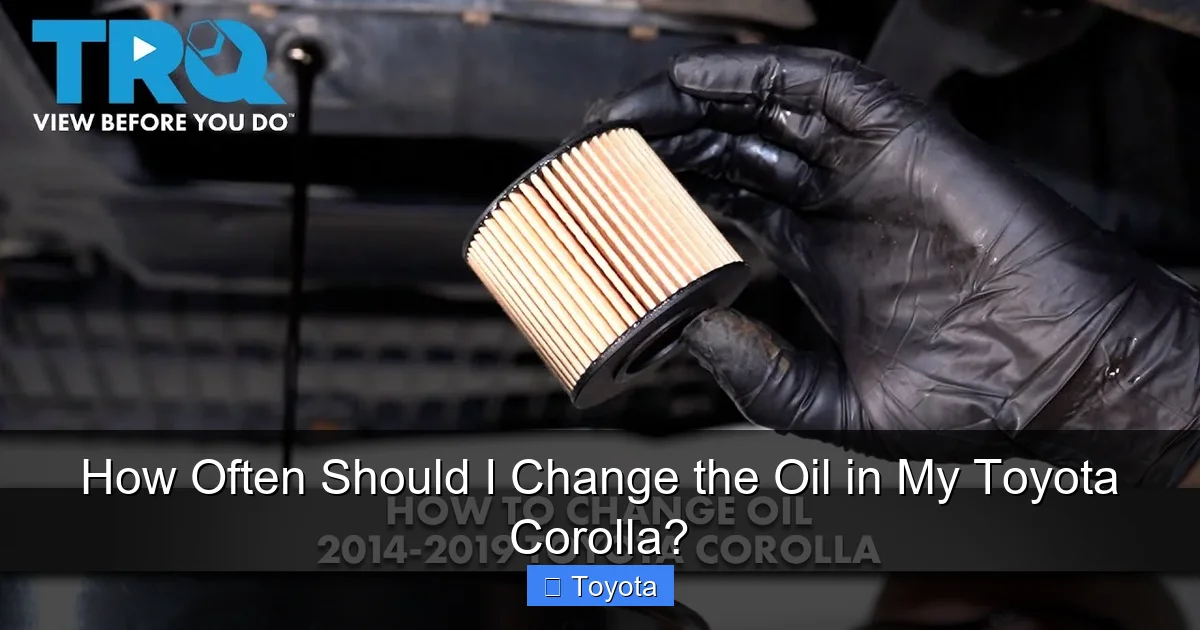
Conventional Oil is refined from crude oil. It works fine, but it breaks down faster under heat and shear stress. It also contains more impurities and is more susceptible to forming sludge and varnish if not changed regularly. For a Corolla using conventional oil, a 5,000-mile interval is a responsible standard. Some high-quality conventional brands might claim 7,500 miles, but this is pushing the limit for most driving.
Full Synthetic Oil is manufactured from base stocks that are highly refined, synthesized, and often from non-petroleum sources. This process results in molecules that are uniform in size and shape. The benefits are huge: superior high-temperature stability, better cold-weather flow, reduced engine wear, improved fuel economy, and dramatically longer resistance to oxidative breakdown. This is why manufacturers can recommend 10,000-mile (or even longer in some cases) intervals with synthetics.
Benefits of Full Synthetic Oil for Your Corolla
For the Toyota Corolla, known for its reliability and efficiency, synthetic oil is an excellent match. The cleaner-burning, more stable nature of synthetics helps keep the sensitive engine components—like variable valve timing systems—operating smoothly. It also provides better protection during the critical cold starts that cause the most engine wear. If you want to extend your drain interval safely and give your engine the best possible protection, switching to a full synthetic that meets Toyota’s specifications is one of the best upgrades you can make. For a deeper dive into how synthetic oil changes the game, our article on how often to change synthetic oil in a car covers the science and practical benefits in detail.
When Conventional Oil is Still Acceptable
If you have an older Corolla (pre-2014) with high mileage (say, over 150,000 miles) and the engine is using a small amount of oil, switching to a high-mileage conventional or synthetic blend oil might be a better choice than a full synthetic. These oils have seal conditioners that can help reduce minor leaks and consumption. However, the interval should still be conservative, around 5,000 miles. The cost savings of conventional oil are minimal compared to the potential long-term benefits of synthetic for most modern Corollas.
Severe Driving Conditions: When to Shorten Your Interval
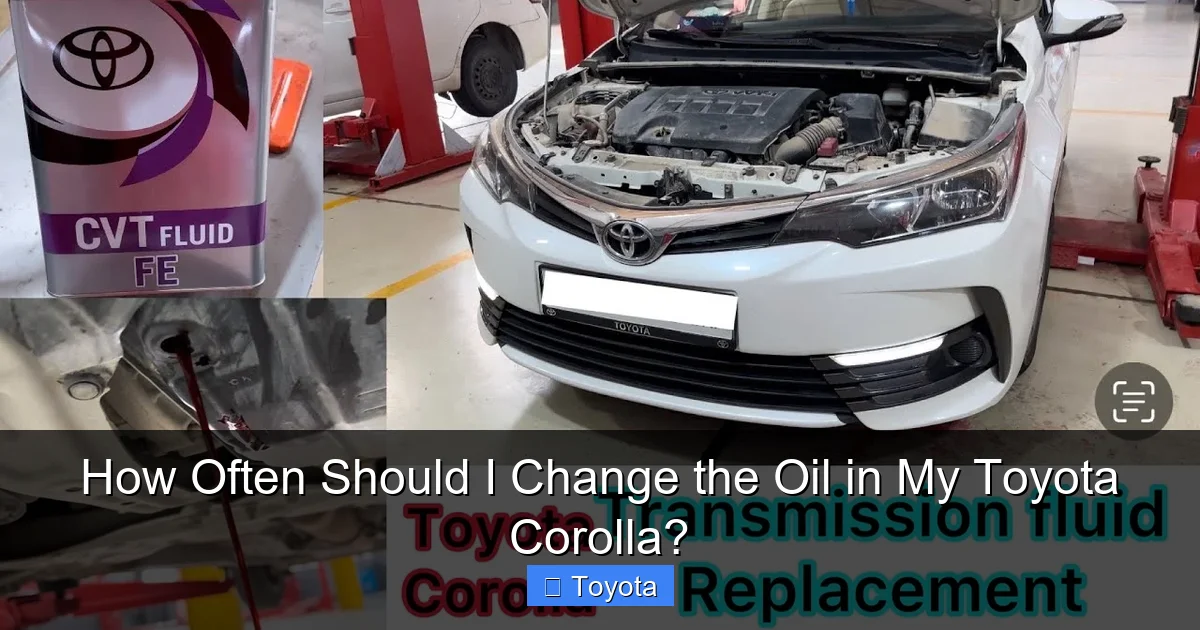
This is where many people get it wrong. You might think your commute is “normal,” but if it involves any of the following, Toyota classifies it as severe service. This means you should shorten your recommended oil change interval by 25-50%.
Visual guide about How Often Should I Change the Oil in My Toyota Corolla?
Image source: i.ytimg.com
Defining “Severe” in Everyday Terms
Think of “severe” as any condition that prevents your engine oil from reaching its full, stable operating temperature regularly or exposes it to extra contaminants. The oil needs to get hot enough to burn off moisture and fuel dilution. Short trips don’t allow this.
- Frequent Short Trips: Driving less than 5-10 miles at a time, especially in cold weather. The engine never fully warms up, leading to fuel dilution and water accumulation in the oil.
- Extreme Temperatures: Consistently driving in very hot (over 90°F/32°C) or very cold (below 0°F/-18°C) climates. Heat thins oil and accelerates oxidation; cold makes oil thicker and strains the engine on startup.
- Stop-and-Go Traffic: City driving with constant idling and acceleration. This creates high engine temperatures and shear forces on the oil.
- Dusty or Sandy Conditions: Driving on unpaved roads or in areas with a lot of airborne particulates. These can bypass the air filter and contaminate the oil.
- Towing or Carrying Heavy Loads: Using your Corolla to haul a trailer or carry significant weight. This puts extra load and heat on the engine.
- Aggressive Driving: Frequent high RPM driving and hard acceleration increases engine stress and temperature.
Common Scenarios That Qualify
Let’s make it real. Do you fit any of these profiles?
- Your daily commute is 4 miles each way, and you grab groceries on the way home. That’s severe.
- You live in Arizona and your car sits outside in 110°F sun all day. That’s severe.
- You’re a delivery driver or rideshare operator in a big city. That’s severe.
- You drive your Corolla on rural, gravel roads to visit family. That’s severe.
If you answered “yes” to any of these, aim for an oil change interval of 5,000 to 7,500 miles with synthetic oil, or stick to 5,000 miles with conventional. It’s a small extra cost for massive peace of mind and engine protection. You can also check out our general guide on how often you should change the oil in your car, which covers these concepts for all vehicles.
The Oil Filter: A Critical Partner in Your Oil Change
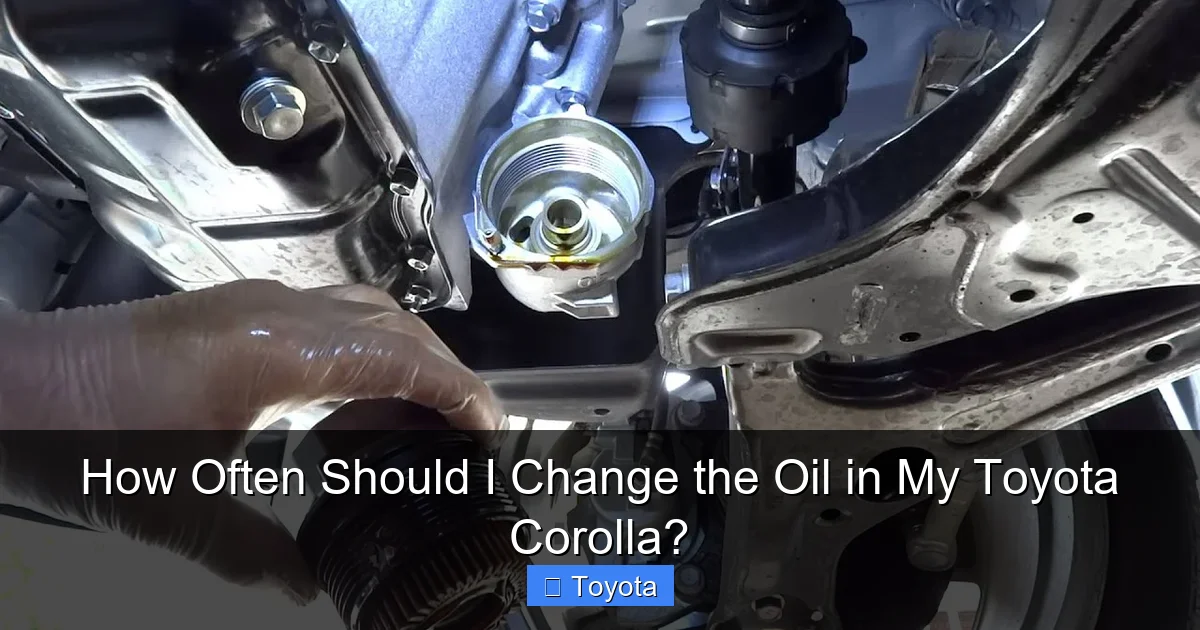
Changing the oil but reusing the old filter is like taking a shower in dirty water. It makes no sense. The oil filter’s job is to trap metal shavings, dirt, soot, and other contaminants that the oil picks up as it circulates. A clogged or saturated filter restricts oil flow, causing dangerous oil pressure drops and allowing dirty oil to circulate through your engine’s tight tolerances.
Visual guide about How Often Should I Change the Oil in My Toyota Corolla?
Image source: i.ytimg.com
Why the Filter Matters as Much as the Oil
Modern oil filters are “spin-on” canisters that are designed for easy replacement. They contain a filtration media (usually a blend of cellulose and synthetic fibers) and a pressure relief valve. As the filter clogs, the valve opens to allow oil to flow without filtering—a last-ditch effort to prevent engine seizure, but it means your engine is now bathing in dirty oil. Always replace the filter with every oil change. No exceptions.
When buying a filter, don’t just grab the cheapest one. Stick with reputable brands like Toyota Genuine, WIX, Fram, Mobil 1, or K&N. A poor-quality filter can have inferior media that doesn’t trap small particles effectively or a weak anti-drain back valve that allows oil to drain out of the filter when the engine is off, causing a brief moment of no oil pressure on startup. For specific recommendations for your Corolla’s model year and engine, your local parts store can look up the correct OEM or equivalent part number. We have a dedicated article on how often to change an oil filter in a car that explains its crucial role.
Choosing the Right Replacement Filter
For most Corollas, a standard cellulose filter is fine for normal driving. If you have a turbocharged Corolla (like the older 2ZZ-GE in some sport trims) or frequently drive in severe conditions, consider an upgrade to a filter with a synthetic media, which offers higher efficiency and greater dirt-holding capacity. Some high-performance filters also have a stronger steel canister to withstand higher pressures. The key is matching the filter’s specifications (thread size, gasket type, pressure relief valve setting) exactly to what your engine requires. When in doubt, use the part number from your owner’s manual or from the filter currently on your car.
Decoding Your Owner’s Manual and Maintenance Light
Your Toyota Corolla’s owner’s manual is the ultimate authority. It’s not just a booklet to throw in the glove box. It contains the specific, warranty-approved maintenance schedule for your exact vehicle, identified by its Vehicle Identification Number (VIN) and model year.
How to Find the Exact Recommendation for Your VIN
Open your manual to the “Maintenance” or “Scheduled Maintenance” section. You’ll find a chart or table broken down by mileage intervals (e.g., 5,000 miles, 10,000 miles, 15,000 miles, etc.). Under each interval, it lists required services. Look for “Engine Oil & Filter” or “Lubrication.” It will specify the oil type (e.g., 0W-16, 0W-20) and the recommended change interval. Pay close attention to any notes about “severe” vs. “normal” driving schedules. The severe schedule is almost always shorter. If you’ve lost your manual, Toyota often has digital PDFs available on their owner’s portal, or you can find a physical copy online. You can also often get this information by calling a Toyota dealer’s service department with your VIN.
Resetting the Maintenance Required Light
Many Corollas have a “MAINT REQD” or maintenance required light that illuminates based on a mileage counter, not an oil life sensor. It’s a simple reminder based on a preset interval (often 5,000 miles). After you change the oil, you must manually reset this light. The procedure varies by year but typically involves turning the ignition on (not starting), setting the odometer to “Trip A,” turning the key off, then holding the trip/reset button while turning the key back to the “on” position until the light blinks and goes out. Your owner’s manual has the exact steps for your model year. This is a crucial step—if you forget to reset it, the light will come back on well before your next actual oil change, causing unnecessary confusion. If you’re unsure about the process for your specific Corolla, we have guides for various models, such as how to change settings in a 2022 Toyota Corolla, which may include similar reset procedures.
Signs Your Corolla Needs an Oil Change Immediately
While sticking to a schedule is best, your car can give you urgent signals that it’s overdue. Never ignore these:
Unusual Noises and What They Mean
Listen to your engine. A healthy engine with good oil should run smoothly and quietly. If you start hearing a ticking or tapping noise, especially on cold starts that doesn’t go away as the engine warms up, it could be a sign of low oil pressure or oil that has thinned out too much. The oil isn’t providing a sufficient cushion between the valve train components. A knocking or rumbling noise is even more serious and could indicate catastrophic bearing wear. If you hear any new, rhythmic engine noise, check your oil level immediately.
Visual Checks: Oil Color and Level
Make a habit of checking your oil level at least once a month, or every other gas fill-up. Park on level ground, wait a few minutes after turning off the engine, then pull the dipstick, wipe it clean, reinsert it fully, and pull it out again. Look at two things:
- Level: The oil should be between the “Low” and “Full” marks. Consistently low oil levels between changes indicate a leak or, more worryingly, that the engine is burning oil.
- Color & Clarity: Fresh synthetic oil is typically a clear, amber color. As it ages, it darkens to a deep brown or black. This is normal. However, if it looks milky or foamy, that’s a sign of coolant contamination (a serious problem like a blown head gasket). If it’s full of gritty particles or looks sludge-like, it’s way past due.
Also, if you notice a distinct smell of oil inside the car (like hot oil or burning), it could be a leak dripping on hot engine parts. Get it checked.
Putting It All Together: Your Personal Oil Change Plan
So, how often should you change the oil in your Toyota Corolla? Let’s create a simple decision tree.
Step 1: Identify Your Car. What is your model year and engine size? (2.0L, 1.8L, Hybrid?). Find this in your manual or on the engine bay sticker.
Step 2: Identify Your Oil. What oil are you currently using? Check the oil cap or your last receipt. Is it conventional (often 5W-30) or synthetic (often 0W-20 or 0W-16)? If you don’t know, default to the recommendation in your manual for your engine.
Step 3: Assess Your Driving. Are your trips mostly highway, 20+ miles? You’re likely “normal.” Are they mostly short, under 10 miles, with lots of stops? You’re “severe.” Be honest.
Step 4: Apply the Interval.
- Newer Corolla (2014+) + Full Synthetic (0W-16/20) + Normal Driving: 10,000 miles / 12 months.
- Newer Corolla (2014+) + Full Synthetic + Severe Driving: 5,000 – 7,500 miles.
- Older Corolla (Pre-2014) + Conventional Oil: 5,000 miles.
- Older Corolla + Full Synthetic + Normal Driving: 7,500 – 10,000 miles (monitor closely).
- High-Mileage Corolla (150k+ miles): Lean toward the shorter end of the range for your oil type, regardless of driving.
Final Pro-Tip: When in doubt, change it sooner. The cost of an extra oil change every few thousand miles is trivial compared to the cost of an engine rebuild or replacement. It’s the single most effective and affordable form of preventative maintenance you can perform. If you’re considering doing it yourself, our step-by-step guide on how to change your oil can walk you through the process, saving you money and giving you a deeper connection to your vehicle.
Frequently Asked Questions
Can I use conventional oil in my newer Toyota Corolla that recommends synthetic?
Technically, you can, but it’s not advisable. Newer Corolla engines are designed with tighter tolerances for synthetic oil’s superior properties. Using conventional oil may lead to increased wear, sludge formation, and you’ll need to change it much more frequently (every 5,000 miles). Stick with the recommended synthetic to ensure engine longevity and warranty compliance.
What happens if I go 12,000 miles without changing the oil in my Corolla?
You’re risking significant engine damage. Oil breaks down over time and use, losing its ability to lubricate and clean. At 12,000 miles, the oil is likely heavily contaminated and its viscosity has changed. This leads to increased metal-on-metal contact, sludge buildup, and potentially seized components. The cost of a new engine far outweighs the cost of a timely oil change.
How do I reset the “MAINT REQD” light after an oil change?
The procedure varies slightly by year. Generally: Turn ignition to “ON” (do not start). Ensure odometer displays “Trip A.” Turn ignition “OFF.” Press and hold the trip/reset button, then turn ignition back to “ON.” Continue holding until the light blinks and goes out (about 5-10 seconds). Release the button. Always confirm this in your specific owner’s manual.
My 2010 Corolla has 120,000 miles. Should I still use 5W-30 conventional oil?
At that mileage, your engine may have some wear. While conventional 5W-30 is acceptable, many owners in your situation switch to a high-mileage synthetic or synthetic blend oil (like 5W-20 or 5W-30 high-mileage formula). These have seal conditioners and additives that can help reduce minor oil consumption and leaks. A 5,000-mile interval is still recommended.
Is it better to change my oil at the dealership or a quick-lube shop?
Both can be fine if they use the correct oil and filter. A dealership has technicians trained specifically on your model and uses genuine Toyota parts, but it’s often more expensive. A reputable independent shop or quick-lube can be more affordable. The key is ensuring they use the exact oil specification (e.g., Toyota-approved 0W-16) and a quality filter. Always ask to see the oil bottle and filter box before they start.
My Corolla is using a quart of oil every 1,000 miles. Is an oil change still useful?
Yes, but it points to an underlying issue. Oil consumption this high is not normal and suggests internal engine wear (worn piston rings, valve seals) or potentially a leak. You must check the oil level frequently (every 1,000 miles or at every gas fill-up) and top it up as needed. Have a mechanic diagnose the cause. Continue with your regular oil change interval, but using a high-mileage or thicker viscosity oil (as recommended by your mechanic) might help slow the consumption.