
How Much Is It to Make a Copy of a Car Key

Making a copy of a car key typically costs between $5 and $500, depending on the key type, vehicle make, and service provider. While basic keys are affordable, high-tech transponder or smart keys can be pricey—but knowing your options helps you save time and money.
So, you’ve lost your car key—or maybe you just want a spare for your partner or teen driver. No matter the reason, one question pops into your mind: *How much is it to make a copy of a car key?* The answer isn’t as simple as you might think. Unlike duplicating a house key at the hardware store, car keys have evolved into complex pieces of technology. From basic metal blades to high-tech fobs with encrypted chips, the cost to copy a car key can vary wildly—from just a few bucks to hundreds of dollars.
In this guide, we’ll break down everything you need to know about car key duplication. We’ll explore the different types of car keys, what affects their price, where you can get them copied, and how to avoid overpaying. Whether you’re driving a 1995 Honda Civic or a 2024 Tesla Model Y, understanding your key type and your options will save you time, stress, and money. Plus, we’ll share practical tips to help you make the smartest choice for your situation.
By the end of this article, you’ll know exactly how much it is to make a copy of a car key—and how to get the best deal without compromising security or convenience.
Key Takeaways
- Basic mechanical keys cost $5–$25: These simple metal keys require only cutting and no programming, making them the cheapest option.
- Transponder keys range from $50–$200: These include a chip that communicates with your car’s immobilizer system and need professional programming.
- Smart keys (key fobs) can cost $100–$500+: These advanced keys offer push-button start and remote features, requiring specialized equipment and expertise.
- Dealerships are often the most expensive: While reliable, they charge premium prices—sometimes double other options—for key duplication.
- Local locksmiths offer great value: Many can cut and program keys on-site for less than dealerships, with faster service.
- DIY kits exist but come with risks: You can buy blank keys online, but improper programming may damage your vehicle’s electronics.
- Always keep a spare key: Having a backup prevents costly emergency lockout services and gives peace of mind.
📑 Table of Contents
Understanding the Different Types of Car Keys
Not all car keys are created equal. Over the past few decades, automotive technology has transformed the humble car key from a simple metal tool into a sophisticated electronic device. To understand how much it is to make a copy of a car key, you first need to know what kind of key you have. Let’s walk through the most common types.
1. Traditional Mechanical Keys
These are the oldest and simplest type of car keys. Made entirely of metal, they have a unique cut pattern that fits into the ignition and door locks. If your car was made before the mid-1990s, chances are it uses a mechanical key. Examples include older models of Ford, Chevrolet, and Toyota vehicles.
Because they contain no electronics, duplicating a mechanical key is straightforward. You can walk into almost any hardware store, big-box retailer, or locksmith and get a copy made in minutes. The process involves placing the original key into a duplicating machine that traces its shape and cuts a new blank to match.
Pros: Inexpensive, widely available, no programming needed.
Cons: No anti-theft features, easily duplicated by thieves.
2. Transponder Keys
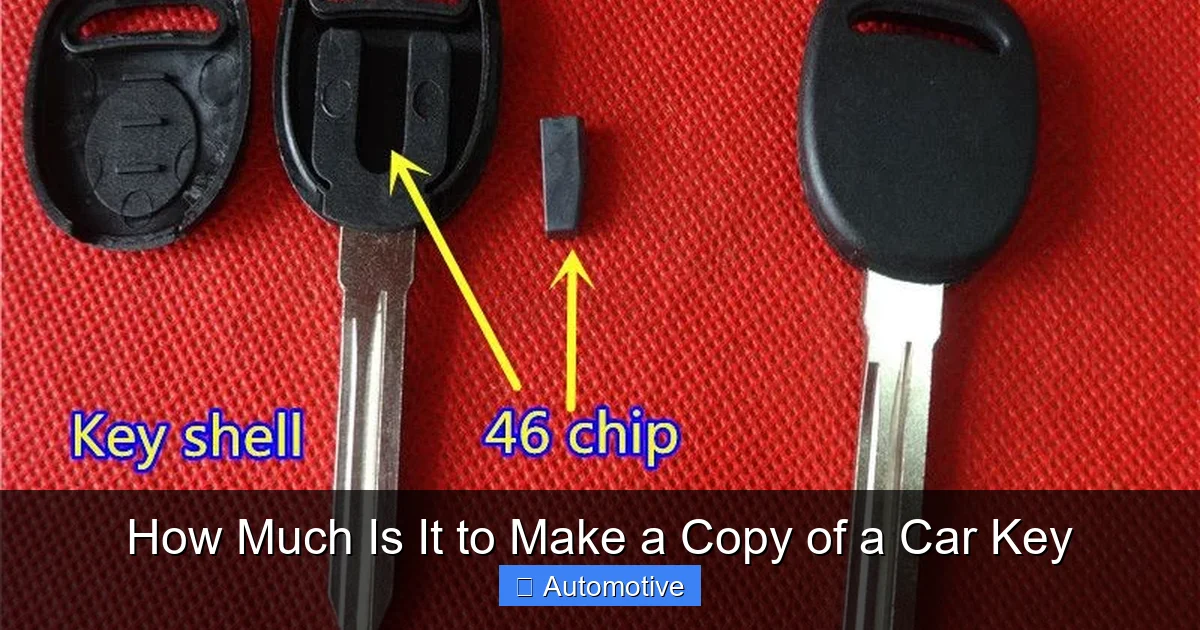
Introduced in the early 1990s, transponder keys revolutionized car security. These keys look similar to mechanical keys but contain a small electronic chip embedded in the plastic head. When you insert the key into the ignition, the car’s immobilizer system sends a radio signal to the chip. If the chip responds with the correct code, the engine will start. If not, the car won’t turn over—even if the key fits perfectly.
This technology drastically reduced car theft, as hot-wiring or using a copied metal key no longer works. Most cars made from the mid-1990s to the early 2010s use transponder keys. Examples include the Honda Accord, Ford F-150, and Toyota Camry.
Copying a transponder key isn’t just about cutting the metal blade. The chip must be programmed to match your vehicle’s system. This requires specialized equipment and knowledge, which is why you can’t just use a standard key-cutting machine.
Pros: Enhanced security, widely supported.
Cons: More expensive to duplicate, requires programming.
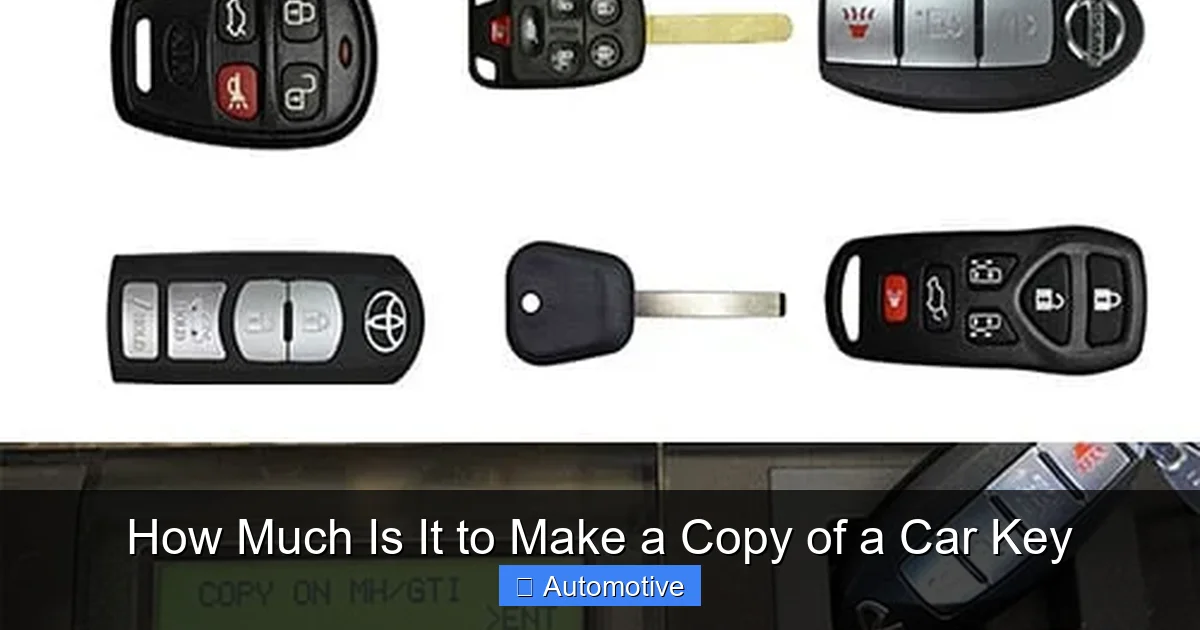
3. Remote Key Fobs (Smart Keys)
Also known as keyless entry fobs or smart keys, these devices combine a transponder chip with remote control functions. They allow you to lock, unlock, and sometimes even start your car from a distance. Many modern fobs also feature a flip-out metal key blade for manual entry.
Smart keys are common in vehicles from the 2000s onward, especially in brands like BMW, Mercedes-Benz, Audi, and Hyundai. Some high-end models even offer proximity sensors—just walk up with the fob in your pocket, and the car unlocks automatically.
Duplicating a smart key is complex. Not only does the fob need to be programmed to communicate with your car’s computer, but the remote functions must also be synchronized. This often requires dealership-level diagnostic tools or advanced locksmith equipment.
Pros: Convenient, high-security, multiple functions.
Cons: Expensive to replace or copy, requires professional programming.
4. Proximity Keys (Keyless Go / Push-to-Start)
The latest evolution in car keys, proximity keys (also called keyless go or push-to-start systems) eliminate the need for physical insertion altogether. These small, rectangular fobs stay in your pocket or bag. When you’re near the car, sensors detect the fob and allow you to unlock the doors by touching a handle. Once inside, you can start the engine with the push of a button.
These keys are found in luxury and modern vehicles like the Tesla Model 3, Lexus RX, and Ford Mustang Mach-E. They contain advanced encryption and rolling codes to prevent hacking.
Copying a proximity key is the most challenging and costly process. It often requires access to the vehicle’s onboard computer, manufacturer-specific software, and sometimes even a dealership login. Some systems allow limited self-programming, but most need professional intervention.
Pros: Maximum convenience and security.
Cons: Very expensive to duplicate, limited DIY options.
Factors That Affect the Cost of Copying a Car Key
Visual guide about How Much Is It to Make a Copy of a Car Key
Image source: i.ytimg.com
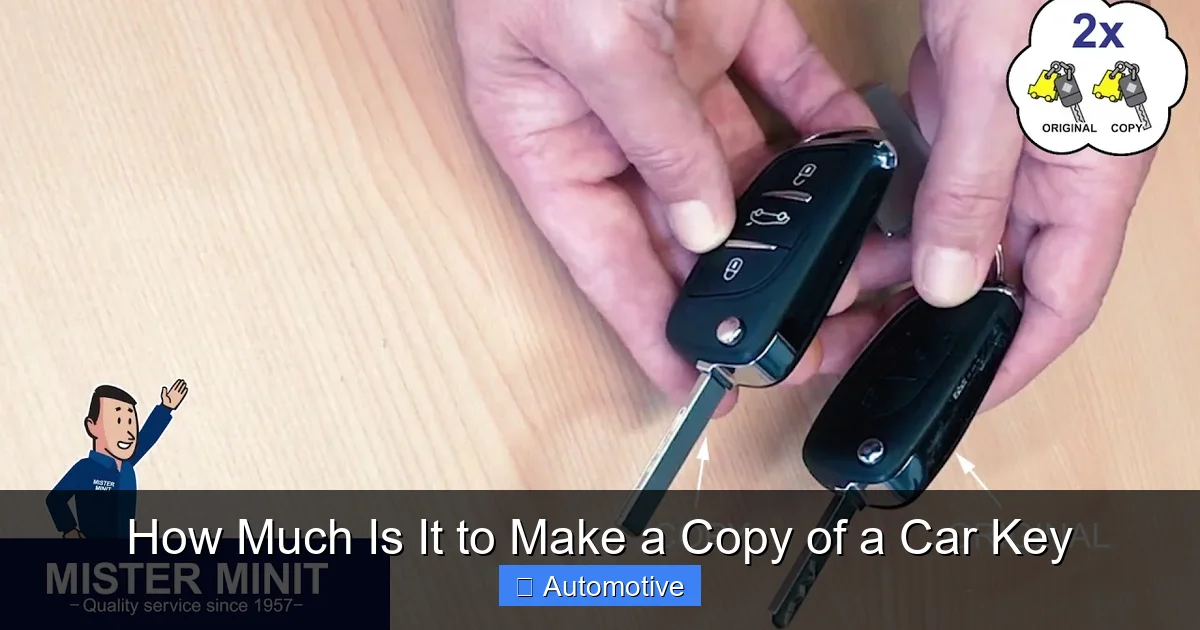
Now that you know the types of keys, let’s talk money. How much is it to make a copy of a car key? The answer depends on several key factors. Understanding these will help you estimate costs and avoid surprises.
1. Key Type and Technology
This is the biggest factor. A basic mechanical key might cost $5 to $15 to copy, while a proximity key for a luxury vehicle can run $300 to $500 or more. The more technology packed into the key, the higher the price.
For example:
– A 1998 Honda Civic mechanical key: $8 at a hardware store.
– A 2010 Toyota Camry transponder key: $75–$150 at a locksmith.
– A 2022 BMW X5 smart key: $350–$500 at a dealership.
2. Vehicle Make and Model
Luxury and import brands often use more complex key systems. German automakers like BMW and Mercedes-Benz are known for high-security keys that require proprietary programming tools. Even some mainstream brands like Hyundai and Kia have introduced advanced fobs in recent models.
Additionally, newer vehicles (2015 and later) tend to have more encrypted systems, making duplication harder and more expensive.
3. Service Provider
Where you get your key copied makes a huge difference in price:
– **Hardware stores (e.g., Home Depot, Lowe’s):** Great for basic mechanical keys. Prices: $5–$15. No programming.
– **Big-box retailers (e.g., Walmart, Costco):** Offer key cutting for simple keys. Some locations have basic transponder programming, but limited.
– **Local locksmiths:** Can handle most key types, including transponders and some smart keys. Prices: $50–$200. Often mobile service available.
– **Automotive dealerships:** Full programming capability, but highest prices. Expect to pay $100–$500+, especially for smart keys.
– **Online key services:** Some companies mail you a programmed key after you provide your VIN and proof of ownership. Prices vary, but can be competitive.
4. Location and Urgency
Geographic location affects pricing. Urban areas with more competition may have lower prices, while rural areas might charge more due to limited service providers.
Emergency services—like getting a key copied at 2 a.m. after a lockout—will cost extra. Mobile locksmiths often charge a service fee ($50–$100) on top of the key cost.
5. Programming Requirements
If your key needs programming, that adds to the cost. Some vehicles allow “on-board programming,” where you can program a new key yourself by following a sequence (e.g., turning the ignition on and off multiple times). This can save money if you buy a blank key online.
However, many cars require a diagnostic tool (like an OBD2 scanner) or dealership access to program the key. This equipment is expensive, so providers pass the cost to you.
6. Number of Keys Already Present
Some vehicles require at least one working key to program a new one. If you’ve lost all your keys, the process becomes more complex and costly. You may need to reprogram the entire immobilizer system, which can add $100–$200 to the total.
For example, if you have one working key, a locksmith might charge $100 to add a second. But if you have no keys, the same service could cost $250 or more.
Where to Get a Car Key Copied (And How Much It Costs)
Visual guide about How Much Is It to Make a Copy of a Car Key
Image source: midamlockkc.com
Now that you understand the factors, let’s look at your options for getting a copy made—and how much each one typically costs.
1. Hardware Stores and Big-Box Retailers
Best for: Mechanical keys only.
Average cost: $5–$25.
Examples: Home Depot, Lowe’s, Walmart, Ace Hardware.
These stores are perfect if you just need a spare metal key. They use automated key-cutting machines that can duplicate most standard patterns in under five minutes. No appointment needed, and you walk out with your new key.
However, they cannot program transponder or smart keys. If your key has a chip, this option won’t work.
Tip: Bring your original key and double-check the cut before leaving. Some machines can make minor errors.
2. Local Locksmiths
Best for: Transponder keys, some smart keys, emergency services.
Average cost: $50–$200.
Examples: Pop-A-Lock, Mr. Locks, independent locksmiths.
Local locksmiths are often the best value for modern keys. Many are mobile, meaning they come to your home, office, or roadside. They carry portable programming tools and can handle most domestic and import vehicles.
For example, a locksmith might charge $80 to cut and program a transponder key for a 2012 Ford Focus. That’s significantly less than a dealership, which could charge $150–$250.
Tip: Call ahead to confirm they service your vehicle make and model. Ask about mobile fees and whether they offer a warranty.
3. Automotive Dealerships
Best for: Smart keys, proximity keys, full system programming.
Average cost: $100–$500+.
Examples: Ford, Toyota, BMW, Tesla service centers.
Dealerships have the most advanced tools and access to manufacturer databases. If you have a high-end smart key or have lost all your keys, they’re often the only option.
However, they’re also the most expensive. A new key fob for a 2020 Honda CR-V might cost $200 at a dealership, while a locksmith could do it for $120.
Tip: Ask if they offer discounts for multiple keys or service packages. Some dealerships will program a second key for free if you buy the first.
4. Online Key Services
Best for: Pre-planned duplication, cost savings.
Average cost: $30–$150 (plus shipping).
Examples: KeylessRide, CarKeyDirect, Amazon.
Some online companies sell pre-cut and pre-programmed keys. You provide your vehicle’s VIN and proof of ownership, and they mail you a working key. This can be cheaper than local options, especially for transponder keys.
However, it takes time (5–10 days), and you must ensure the service is reputable. There’s also a small risk of compatibility issues.
Tip: Read reviews and check if they offer a money-back guarantee. Avoid sites that don’t require proof of ownership—this could indicate illegal activity.
5. DIY Programming (With Caution)
Best for: Tech-savvy owners with one working key.
Average cost: $10–$50 (for a blank key).
Examples: Buying a blank transponder key online and programming it yourself.
Some vehicles allow you to program a new key using a specific sequence. For example, in many Toyotas, you can insert the working key, turn it on and off several times, then insert the new key to program it.
This can save you $50–$100, but it only works if your car supports it. Attempting DIY programming on a system that requires a diagnostic tool can damage your immobilizer.
Tip: Check your owner’s manual or search online for your vehicle’s programming procedure. If in doubt, call a professional.
How to Save Money When Copying a Car Key
Visual guide about How Much Is It to Make a Copy of a Car Key
Image source: i.pinimg.com
No one likes paying more than necessary. Here are practical tips to reduce the cost of copying your car key—without sacrificing quality or security.
1. Know Your Key Type Before You Shop
Don’t walk into a store guessing. Identify your key type first. Look for a chip in the head (transponder), remote buttons (fob), or a sleek design (proximity key). This helps you choose the right service and avoid wasting time.
2. Get Quotes from Multiple Providers
Call at least two locksmiths and one dealership to compare prices. Mention your vehicle make, model, year, and key type. Some locksmiths offer price matching.
3. Avoid Emergency Situations
The best time to copy a key is before you need it. If you wait until you’re locked out at midnight, you’ll pay a premium. Keep a spare key in a safe place—like a magnetic box under the car or with a trusted friend.
4. Buy a Blank Key Online
Blank transponder keys can be found on Amazon or eBay for $10–$30. Then, take it to a locksmith for cutting and programming. This often costs less than buying a pre-made key.
5. Check for Warranty or Insurance Coverage
Some auto insurance policies cover key replacement, especially if it’s due to theft or damage. Extended warranties or vehicle service plans may also include key duplication.
6. Use On-Board Programming When Possible
If your car allows it, program the new key yourself. This eliminates labor costs. Just make sure you follow the steps exactly.
7. Consider a Valet Key
Some cars come with a valet key—a limited-function key that only starts the car and unlocks the driver’s door. It’s cheaper to copy and useful for parking attendants or mechanics.
Real-Life Examples: How Much It Really Costs
Let’s look at a few real-world scenarios to see how much it is to make a copy of a car key.
Scenario 1: 2005 Honda Accord (Transponder Key)
– Key type: Transponder with remote.
– Options:
– Dealership: $180 (key + programming).
– Local locksmith: $110 (mobile service included).
– Online blank + locksmith: $40 (blank) + $60 (programming) = $100.
– Best choice: Online blank + locksmith. Saves $80.
Scenario 2: 2021 Tesla Model 3 (Proximity Key)
– Key type: Keyless go fob.
– Options:
– Tesla Service Center: $450 (includes programming and activation).
– Third-party locksmith: Not available (Tesla uses proprietary system).
– Online service: $300–$400, but risky and may not work.
– Best choice: Tesla Service Center. Only reliable option.
Scenario 3: 1999 Ford F-150 (Mechanical Key)
– Key type: Basic metal key.
– Options:
– Home Depot: $8.
– Local locksmith: $12 (includes polishing).
– Best choice: Home Depot. Fast, cheap, no frills.
These examples show that the right choice depends on your vehicle, budget, and urgency.
Final Thoughts: Is It Worth the Cost?
So, how much is it to make a copy of a car key? The short answer: it depends. But the long answer is that it’s almost always worth the investment.
A spare key prevents lockouts, reduces stress, and can save you hundreds in emergency towing or locksmith fees. Think of it as a small insurance policy for your vehicle.
While basic keys are cheap and easy to copy, modern keys require more effort and expense. But with the right knowledge, you can find affordable, reliable options—whether you go to a locksmith, dealership, or online service.
The key (pun intended) is to act before you’re in a crisis. Identify your key type, compare prices, and keep a backup in a safe place. That way, when life throws you a curveball—like losing your keys at the beach—you’ll be ready.
And remember: the cost of copying a car key is far less than the cost of being stranded without one.
Frequently Asked Questions
Can I copy my car key at home?
Only if it’s a basic mechanical key. You can buy a blank and use a file or DIY kit, but it’s not recommended. For transponder or smart keys, you need professional equipment and programming.
How long does it take to copy a car key?
Mechanical keys take 2–5 minutes. Transponder keys take 10–30 minutes. Smart keys can take 30–60 minutes, especially if programming is required.
Do I need the original key to make a copy?
For mechanical keys, yes. For transponder and smart keys, you usually need at least one working key. If you’ve lost all keys, programming becomes more complex and costly.
Can I use a copied key if the original is damaged?
Yes, as long as the copy is accurately cut and properly programmed. A damaged original won’t affect the new key’s functionality.
Are copied car keys less secure?
No. A properly copied and programmed key is just as secure as the original. The risk comes from unauthorized duplication, so always use trusted providers.
What if my car doesn’t start with the new key?
Double-check that the key was cut correctly and programmed to your vehicle. If problems persist, return to the provider—most offer a warranty or refund.