How Much Is a Subaru Outback Catalytic Converter Worth?

Contents
- 1 Key Takeaways
- 2 📑 Table of Contents
- 3 What Is a Catalytic Converter and Why Does It Matter?
- 4 Factors That Determine the Value of a Subaru Outback Catalytic Converter
- 5 How Much Is a Subaru Outback Catalytic Converter Worth in Scrap?
- 6 Replacement Costs: How Much Does It Cost to Install a New One?
- 7 Why Are Subaru Outback Catalytic Converters Targeted by Thieves?
- 8 Environmental and Legal Considerations
- 9 Final Thoughts: Making the Right Decision
- 10 Frequently Asked Questions

Car Ambient Light Kit

Car Hydraulic Jack

Emergency First Aid Kit

Side Mirror Rain Guard
The value of a Subaru Outback catalytic converter depends on its model year, engine size, and precious metal content. On average, scrap prices range from $200 to $800, while replacement costs can exceed $2,000. Understanding these factors helps you make informed decisions about repairs, recycling, or resale.
If you’ve ever owned a Subaru Outback—or even just driven one—you know it’s a reliable, rugged SUV built for adventure. Whether you’re cruising down the highway or navigating mountain trails, the Outback has earned its reputation as a go-anywhere vehicle. But like any car, it’s not immune to mechanical issues, and one of the most expensive and frequently discussed components is the catalytic converter.
You might be wondering: *How much is a Subaru Outback catalytic converter worth?* The answer isn’t a simple number. It depends on several factors, including your vehicle’s year, engine size, and whether you’re looking at scrap value or replacement cost. In this guide, we’ll break down everything you need to know—from how catalytic converters work to why they’re so valuable, and what you can do if yours fails or gets stolen.
Catalytic converters are essential for reducing harmful emissions. They convert toxic gases like carbon monoxide and nitrogen oxides into less harmful substances before they exit your tailpipe. Because they contain precious metals like platinum, palladium, and rhodium, they’re not only important for the environment but also quite valuable—especially in today’s metal market. Unfortunately, that value also makes them a target for thieves, particularly on vehicles like the Outback that sit higher off the ground and are easier to crawl under.
Whether you’re dealing with a check engine light, a rattling noise under your car, or a recent theft, understanding the worth of your catalytic converter can save you time, money, and stress. Let’s dive into the details.
Key Takeaways
- Scrap Value Varies Widely: A Subaru Outback catalytic converter can fetch between $200 and $800 at a scrap yard, depending on the year and engine type.
- Higher Value for Newer Models: Converters from newer Outbacks (2015–2024) with larger engines contain more precious metals, increasing their worth.
- Replacement Costs Are High: Installing a new OEM catalytic converter can cost $1,500–$2,500, including parts and labor.
- Aftermarket Options Save Money: High-quality aftermarket converters cost $500–$1,200 and often meet EPA standards.
- Theft Is a Real Risk: Due to their value, catalytic converters are prime targets for thieves—especially on SUVs like the Outback with higher ground clearance.
- Recycling Pays Off: Selling your old converter to a certified recycler ensures you get fair value and supports eco-friendly practices.
- Know Your Model: The 2.5L and 3.6L engines have different converter setups, affecting both value and replacement complexity.
📑 Table of Contents
- What Is a Catalytic Converter and Why Does It Matter?
- Factors That Determine the Value of a Subaru Outback Catalytic Converter
- How Much Is a Subaru Outback Catalytic Converter Worth in Scrap?
- Replacement Costs: How Much Does It Cost to Install a New One?
- Why Are Subaru Outback Catalytic Converters Targeted by Thieves?
- Environmental and Legal Considerations
- Final Thoughts: Making the Right Decision
What Is a Catalytic Converter and Why Does It Matter?
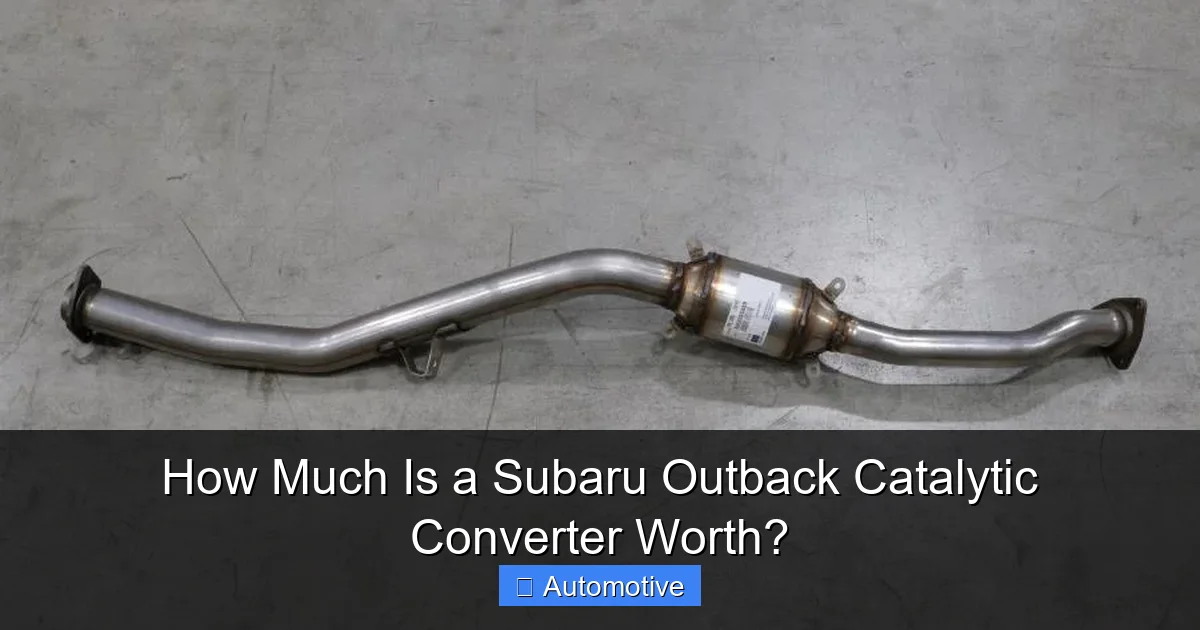
A catalytic converter is a key part of your vehicle’s exhaust system. It’s usually located underneath the car, between the engine and the muffler. Its main job is to reduce harmful emissions by converting pollutants into less toxic gases through a chemical reaction. This process happens inside a honeycomb-like structure coated with precious metals that act as catalysts.
In the Subaru Outback, the catalytic converter plays a critical role in meeting federal and state emissions standards. Without it, your vehicle would release significantly more pollutants into the air—and you’d likely fail an emissions test. That’s why it’s not just a good idea to keep it in working order; it’s legally required in most states.
But beyond environmental and legal reasons, the catalytic converter is valuable because of what it’s made of. The internal substrate is often coated with platinum, palladium, and rhodium—metals that are rare, expensive, and in high demand for industrial and technological applications. These metals are what give the converter its scrap value and make it a target for theft.
How Catalytic Converters Work
Inside the converter, exhaust gases pass over the catalyst-coated honeycomb. As they do, chemical reactions occur:
– **Oxidation:** Carbon monoxide (CO) is converted into carbon dioxide (CO₂).
– **Reduction:** Nitrogen oxides (NOx) are broken down into nitrogen (N₂) and oxygen (O₂).
– **Unburned Hydrocarbons:** These are turned into water (H₂O) and CO₂.
This process happens quickly and efficiently, but over time, the catalyst can degrade due to heat, contamination, or physical damage. When that happens, the converter loses effectiveness, leading to poor performance, reduced fuel economy, and increased emissions.
Signs Your Catalytic Converter Is Failing
Knowing when your catalytic converter is going bad can help you address the issue before it leads to more serious problems. Common symptoms include:
– **Check Engine Light:** Often triggered by an oxygen sensor detecting inefficient emissions.
– **Reduced Engine Performance:** Sluggish acceleration or difficulty starting.
– **Rattling Noise:** A loose internal component can create a metallic rattle, especially when the car is idling.
– **Strong Sulfur Smell:** A rotten egg odor from the exhaust may indicate a failing converter.
– **Failed Emissions Test:** If your car doesn’t pass inspection, the converter is a likely culprit.
If you notice any of these signs, it’s time to get your vehicle inspected. Ignoring the problem can lead to engine damage or even a complete breakdown.
Factors That Determine the Value of a Subaru Outback Catalytic Converter
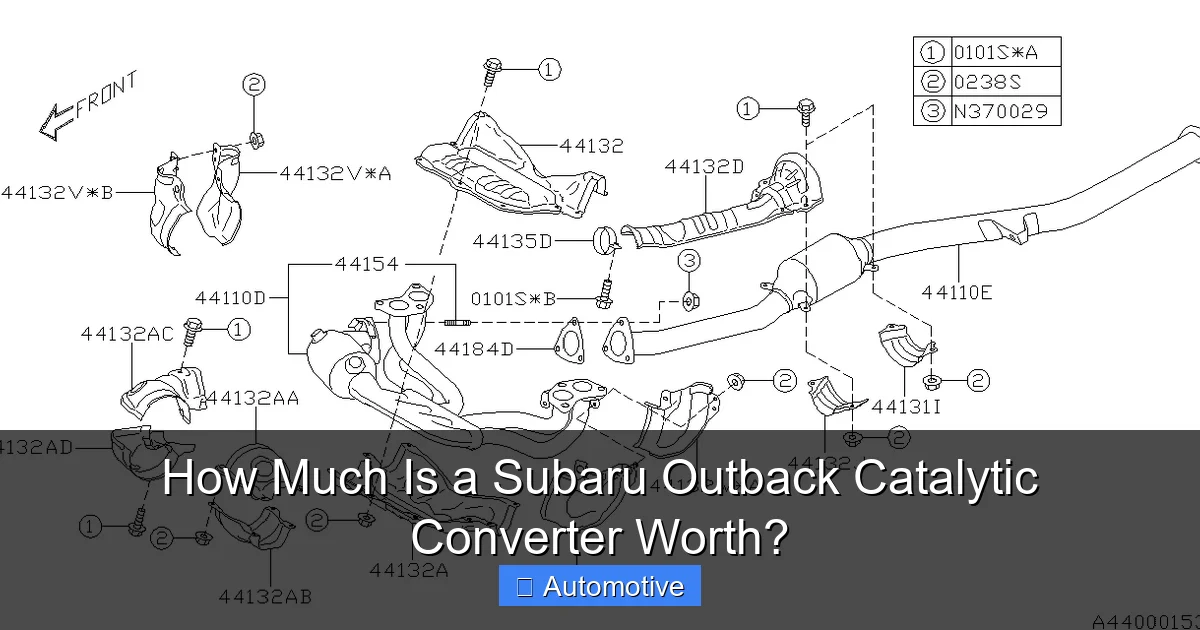
Visual guide about How Much Is a Subaru Outback Catalytic Converter Worth?
Image source: images.simplepart.com
Now that you understand what a catalytic converter does, let’s talk about what it’s worth. The value of a Subaru Outback catalytic converter isn’t fixed—it varies based on several key factors. Understanding these will help you estimate how much you might get if you sell it for scrap or how much you’ll pay to replace it.
Model Year and Engine Size
One of the biggest factors is your Outback’s model year and engine type. Subaru has offered different engines over the years, and each has a different catalytic converter setup.
– **2.5L 4-Cylinder Engine:** Found in most base and mid-level Outbacks from 2000 to 2024. These engines typically have one or two catalytic converters, depending on the year and emissions standards.
– **3.6L 6-Cylinder Engine:** Available in higher trims (like the Limited and Touring) from 2010 to 2019. These models often have dual converters or a more complex setup, increasing their scrap value.
Newer models (2015 and later) tend to have higher-value converters because they contain more precious metals to meet stricter emissions standards. For example, a 2020 Outback with a 2.5L engine might have a converter worth $400–$600 in scrap, while a 2015 3.6L model could fetch $600–$800.
OEM vs. Aftermarket Converters
Original Equipment Manufacturer (OEM) converters are made by Subaru or its suppliers and are designed to meet exact specifications. They’re typically more expensive but offer better performance and longevity.
Aftermarket converters are made by third-party companies and are often cheaper. While some are high quality and EPA-compliant, others may not meet the same standards. When it comes to scrap value, OEM converters usually fetch a higher price because they’re known to contain more consistent levels of precious metals.
Condition and Mileage
A converter that’s been well-maintained and hasn’t overheated or been contaminated will retain more of its precious metal content. High-mileage converters (over 150,000 miles) may have degraded substrates, reducing their value.
Physical damage—like dents, cracks, or melted internals—can also lower the price. Scrap yards and recyclers inspect converters for damage before pricing them.
Current Market Prices for Precious Metals
The value of platinum, palladium, and rhodium fluctuates based on global supply and demand. For example, palladium prices surged in the 2020s due to increased demand from the automotive industry. When these metals are expensive, catalytic converter scrap prices rise accordingly.
As of 2024, palladium is trading at around $1,000 per ounce, while rhodium can exceed $6,000 per ounce. This directly impacts how much recyclers are willing to pay for converters.
Location and Scrap Yard Policies
Prices can vary by region. Urban areas with more scrap yards may offer competitive pricing, while rural areas might have fewer options. Additionally, some scrap yards require proof of ownership before purchasing a catalytic converter to prevent theft.
Always call ahead or check online to compare prices and policies in your area.
How Much Is a Subaru Outback Catalytic Converter Worth in Scrap?
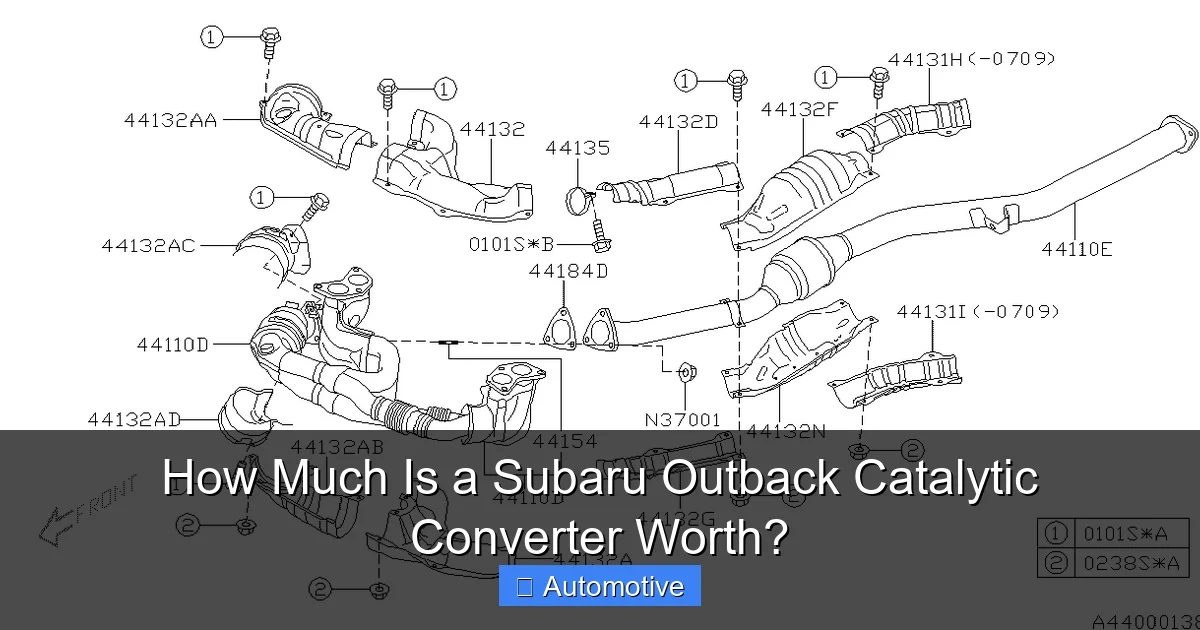
Visual guide about How Much Is a Subaru Outback Catalytic Converter Worth?
Image source: images.simplepart.com
If you’re looking to sell your old catalytic converter for scrap, you’re probably wondering: *How much can I actually get?* The answer depends on the factors we just discussed, but here’s a general breakdown based on recent market data.
Average Scrap Prices by Model
Here’s a rough estimate of what you might expect for a used Subaru Outback catalytic converter in good condition:
– **2000–2009 Outback (2.5L):** $200–$400
– **2010–2014 Outback (2.5L):** $300–$500
– **2010–2014 Outback (3.6L):** $500–$700
– **2015–2019 Outback (2.5L):** $400–$600
– **2015–2019 Outback (3.6L):** $600–$800
– **2020–2024 Outback (2.5L):** $500–$750
These prices assume the converter is intact, not damaged, and comes from a vehicle with reasonable mileage. If your converter is from a hybrid or turbocharged model (though the Outback doesn’t currently offer these), values could be even higher.
How to Get the Best Price
To maximize your return, follow these tips:
1. **Clean the Converter:** Remove dirt, rust, and debris. A clean converter is easier to inspect and more appealing to buyers.
2. **Keep Documentation:** If possible, provide proof of ownership (like a vehicle title or registration) to avoid suspicion of theft.
3. **Shop Around:** Get quotes from multiple scrap yards or online recyclers. Some companies, like Catalytic Converter Recycling or Greentec, offer mail-in services with prepaid shipping.
4. **Sell in Bulk:** If you have multiple converters (from a repair shop or fleet), you may qualify for volume discounts.
5. **Time Your Sale:** Monitor metal prices. If palladium or rhodium prices spike, it might be a good time to sell.
Online vs. Local Scrap Yards
Selling online can sometimes yield higher prices because recyclers specialize in processing converters and have access to better refining technology. However, local scrap yards offer instant cash and no shipping hassle.
Weigh the pros and cons based on your location, the number of converters, and how quickly you need the money.
Replacement Costs: How Much Does It Cost to Install a New One?

Visual guide about How Much Is a Subaru Outback Catalytic Converter Worth?
Image source: images.simplepart.com
While scrap value is important, most Outback owners are more concerned with replacement costs. If your converter fails, you’ll need to replace it—and that can be expensive.
OEM Replacement Costs
Buying a brand-new OEM catalytic converter from Subaru is the most reliable option, but also the most expensive. Here’s what you can expect:
– **Parts:** $1,200–$2,000
– **Labor:** $300–$500 (1–2 hours of work)
– **Total:** $1,500–$2,500
Labor costs vary by shop, but catalytic converter replacement is relatively straightforward on the Outback, especially compared to front-wheel-drive cars where access is tighter.
Aftermarket and Universal Options
Aftermarket converters are significantly cheaper and often just as effective. High-quality brands like MagnaFlow, Walker, and Eastern Catalytic offer EPA-compliant converters that meet federal emissions standards.
– **Parts:** $500–$1,200
– **Labor:** $200–$400
– **Total:** $700–$1,600
Universal converters are even cheaper ($300–$600) but may require custom welding and aren’t always legal in states with strict emissions laws (like California).
Reconditioned or Used Converters
Some shops offer reconditioned or used converters from salvage yards. These can cost $400–$800, including installation. While they’re cheaper, there’s a risk of premature failure, so make sure the part comes with a warranty.
DIY Installation: Is It Worth It?
If you’re mechanically inclined, you might consider replacing the converter yourself. The Outback’s undercarriage is relatively accessible, and the job involves unbolting the old unit and installing the new one.
However, you’ll need:
– Jack stands or a lift
– Wrenches and sockets
– Penetrating oil (for rusted bolts)
– Safety gear (gloves, goggles)
Even then, improper installation can lead to leaks, check engine lights, or damage to the oxygen sensors. Unless you’re experienced, it’s usually better to leave it to a professional.
Why Are Subaru Outback Catalytic Converters Targeted by Thieves?
Catalytic converter theft has surged in recent years, and the Subaru Outback is a frequent target. In fact, according to the National Insurance Crime Bureau (NICB), converter thefts increased by over 300% between 2019 and 2022.
Why the Outback?
Several factors make the Outback attractive to thieves:
– **Higher Ground Clearance:** Unlike low-slung sedans, the Outback sits higher off the ground, making it easier to slide under and cut out the converter with a reciprocating saw.
– **High Metal Content:** Newer models contain more palladium and rhodium, increasing their black-market value.
– **Popularity:** The Outback is one of Subaru’s best-selling models, meaning there are more on the road—and more potential targets.
How Thieves Operate
Most thefts happen in parking lots, driveways, or on quiet streets. Thieves can remove a converter in under two minutes using basic tools. They then sell the part to unscrupulous scrap yards or online buyers who don’t ask questions.
How to Protect Your Outback
While you can’t eliminate the risk entirely, you can reduce it:
– **Park in Well-Lit Areas:** Choose spots with security cameras or high foot traffic.
– **Install a Catalytic Converter Shield:** Companies like CatClamp or Spark Plug offer anti-theft devices that make removal much harder.
– **Etch Your VIN:** Some police departments offer free etching services to mark your converter with your vehicle’s VIN. This makes it harder to sell and easier to trace if stolen.
– **Use Motion Sensor Lights:** Deter thieves with outdoor lighting that activates when someone approaches.
– **Consider Insurance:** Comprehensive auto insurance often covers catalytic converter theft, but check your policy for details.
Environmental and Legal Considerations
Beyond cost and theft, there are important environmental and legal aspects to consider when dealing with a catalytic converter.
Environmental Impact
Catalytic converters reduce harmful emissions by up to 90%. Replacing a failed converter isn’t just about performance—it’s about protecting air quality and public health. Recycling old converters also helps recover precious metals, reducing the need for mining and conserving natural resources.
Legal Requirements
In most states, it’s illegal to drive without a functioning catalytic converter. Tampering with or removing it can result in fines, failed inspections, or even registration suspension. Some states, like California, have even stricter rules under the California Air Resources Board (CARB).
Always ensure any replacement converter is EPA-compliant or CARB-certified if required in your area.
Warranty and Emissions Coverage
Under federal law, catalytic converters are covered by an emissions warranty for 8 years or 80,000 miles—whichever comes first. If your converter fails within that period, Subaru may cover the replacement cost, even if you’re not the original owner.
Check your vehicle’s warranty status and keep records of any repairs.
Final Thoughts: Making the Right Decision
So, how much is a Subaru Outback catalytic converter worth? The answer depends on your situation. If you’re selling it for scrap, you could get anywhere from $200 to $800. If you’re replacing it, expect to pay $700 to $2,500, depending on the parts and labor.
The key is to stay informed. Know your vehicle’s specs, monitor metal prices, and protect your car from theft. Whether you’re recycling an old converter or installing a new one, making smart choices saves money and supports a cleaner environment.
Remember, the catalytic converter is more than just a metal box under your car—it’s a vital part of your vehicle’s emissions system and a valuable asset. Treat it with care, and it’ll keep your Outback running smoothly for years to come.
Frequently Asked Questions
How much is a Subaru Outback catalytic converter worth in scrap?
The scrap value of a Subaru Outback catalytic converter typically ranges from $200 to $800, depending on the model year, engine size, and current precious metal prices. Newer models with 3.6L engines tend to be worth more.
Can I replace my catalytic converter myself?
Yes, but it requires mechanical skill, proper tools, and safety precautions. While the Outback’s undercarriage is accessible, improper installation can cause leaks or damage. Most owners prefer professional installation.
Is it legal to drive without a catalytic converter?
No, it’s illegal in most states to operate a vehicle without a functioning catalytic converter. Doing so can result in fines, failed inspections, and registration issues.
How can I prevent catalytic converter theft on my Outback?
Park in well-lit areas, install a protective shield, etch your VIN on the converter, and consider comprehensive insurance. These steps deter thieves and increase recovery chances if stolen.
Are aftermarket catalytic converters reliable?
High-quality aftermarket converters from reputable brands are reliable and often EPA-compliant. They’re a cost-effective alternative to OEM parts, but avoid cheap, non-certified options.
Does insurance cover catalytic converter theft?
Comprehensive auto insurance typically covers catalytic converter theft, but coverage varies by policy. Check with your insurer to confirm what’s included.