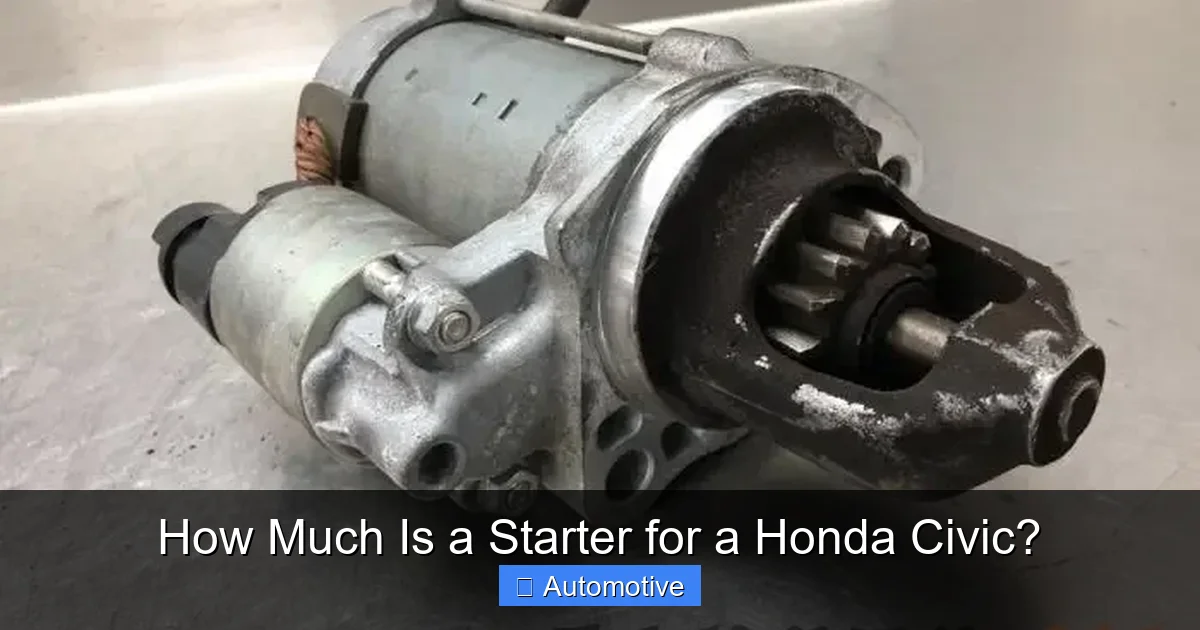
How Much Is a Starter for a Honda Civic?

Contents
- 1 Key Takeaways
- 2 📑 Table of Contents
- 3 How Much Is a Starter for a Honda Civic? A Complete Guide
- 4 What Is a Starter and Why Does It Matter?
- 5 Average Cost to Replace a Honda Civic Starter
- 6 Factors That Affect Starter Replacement Cost
- 7 Signs Your Honda Civic Starter Is Failing
- 8 DIY vs. Professional Installation: Which Is Right for You?
- 9 Tips to Extend the Life of Your Honda Civic Starter
- 10 Conclusion
- 11 Frequently Asked Questions


Replacing a starter in your Honda Civic can cost between $200 and $600, depending on the model year, part type, and labor rates. This guide breaks down pricing, signs of failure, DIY tips, and how to choose the right replacement to keep your Civic running smoothly.
Key Takeaways
- Starter cost varies by model year: Older Honda Civics (1990s–2000s) typically have lower part costs, while newer models (2016–2023) may require more expensive OEM or upgraded components.
- Labor adds $100–$300: Professional installation usually takes 1–2 hours, with labor rates varying by location and shop.
- OEM vs. aftermarket parts: OEM starters cost more but offer reliability; aftermarket options are cheaper but quality varies.
- Signs of a failing starter: Clicking noise, slow cranking, or no response when turning the key are common symptoms.
- DIY installation saves money: With basic tools and mechanical knowledge, you can replace the starter yourself for under $150 in parts.
- Warranty matters: Aftermarket starters often come with 1–3 year warranties, so check coverage before buying.
- Preventive maintenance helps: Regular inspections and cleaning connections can extend starter life.
📑 Table of Contents
- How Much Is a Starter for a Honda Civic? A Complete Guide
- What Is a Starter and Why Does It Matter?
- Average Cost to Replace a Honda Civic Starter
- Factors That Affect Starter Replacement Cost
- Signs Your Honda Civic Starter Is Failing
- DIY vs. Professional Installation: Which Is Right for You?
- Tips to Extend the Life of Your Honda Civic Starter
- Conclusion
How Much Is a Starter for a Honda Civic? A Complete Guide
If your Honda Civic won’t start and you hear a clicking sound when you turn the key, the starter might be the culprit. The starter is a small but mighty component that cranks the engine to life. When it fails, your car becomes a very expensive paperweight. But how much is a starter for a Honda Civic? The answer isn’t one-size-fits-all—it depends on your car’s year, engine type, where you live, and whether you go the DIY route or hire a mechanic.
In this guide, we’ll walk you through everything you need to know about Honda Civic starter replacement. From average costs and part options to installation tips and warning signs, we’ve got you covered. Whether you’re driving a 1995 Civic DX or a 2022 Civic Sport, understanding your starter’s role and replacement cost can save you time, money, and frustration.
What Is a Starter and Why Does It Matter?
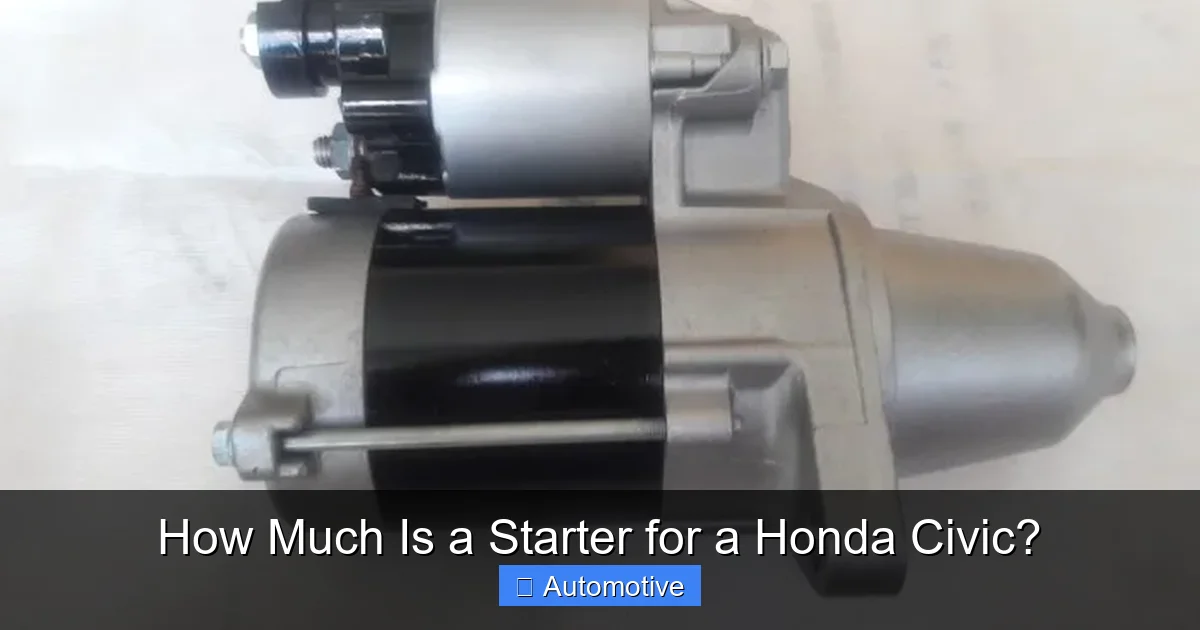
Visual guide about How Much Is a Starter for a Honda Civic?
Image source: down-id.img.susercontent.com
The starter motor is an electric motor that turns the engine’s flywheel when you turn the ignition key. This initial rotation starts the combustion process, allowing your car to run. Without a working starter, your engine won’t crank—no matter how good your battery or fuel system is.
In a Honda Civic, the starter is typically mounted near the transmission, under the intake manifold or near the engine block. It’s connected to the battery via a heavy-duty cable and activated by a solenoid when you turn the key. Over time, the starter’s internal components—like the armature, brushes, and solenoid—can wear out due to heat, age, or electrical issues.
A failing starter doesn’t always mean complete failure. Sometimes, it may work intermittently or make unusual noises. Ignoring these signs can leave you stranded, so early diagnosis is key. And when it’s time to replace it, knowing how much a starter for a Honda Civic costs helps you budget and avoid overpaying.
Average Cost to Replace a Honda Civic Starter
Visual guide about How Much Is a Starter for a Honda Civic?
Image source: japotoparts.com
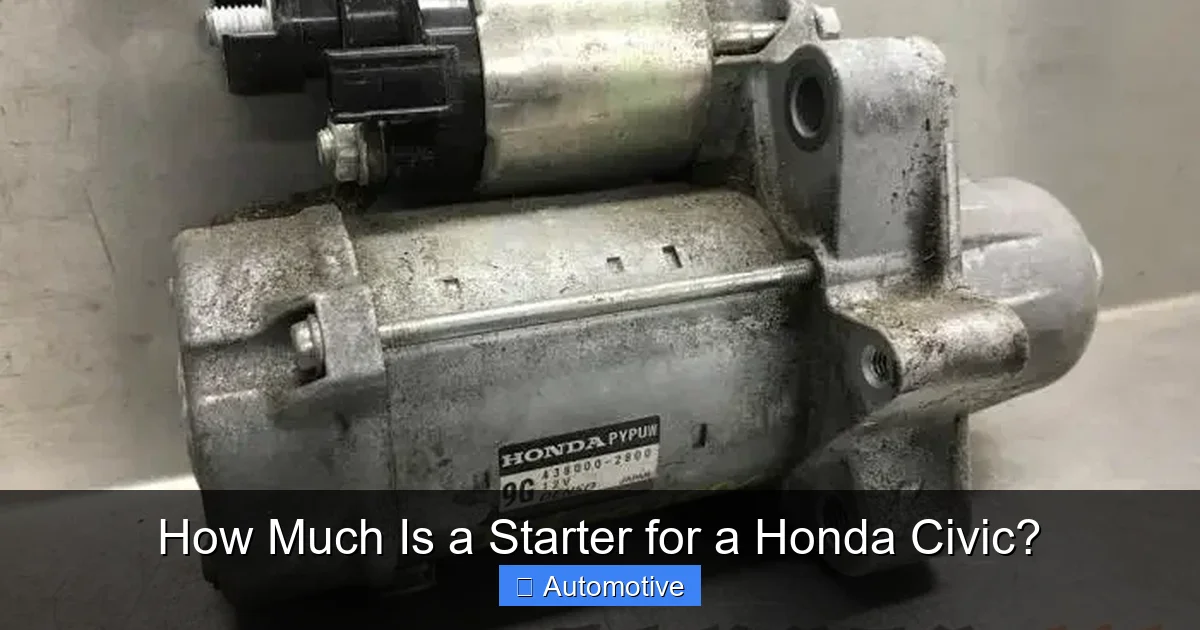
So, how much is a starter for a Honda Civic? On average, you can expect to pay between $200 and $600 for a complete starter replacement. This includes both the part and labor. However, the final price depends on several factors.
Parts Cost Breakdown
The starter itself typically costs between $80 and $300. Here’s how pricing breaks down by type:
– Aftermarket starters: $80–$150. These are made by third-party manufacturers and are often the most affordable option. Brands like Duralast, Bosch, and ACDelco offer reliable aftermarket starters for many Civic models. While they may not last as long as OEM parts, they’re a solid choice for budget-conscious drivers.
– OEM (Original Equipment Manufacturer) starters: $200–$300. These are made by Honda or its suppliers and are identical to the part that came with your car. OEM starters are more expensive but offer better fit, finish, and longevity. If you plan to keep your Civic for many years, this might be the best investment.
– Rebuilt or remanufactured starters: $100–$200. These are used starters that have been refurbished with new internal components. They’re cheaper than new OEM parts and often come with a warranty. Just make sure the seller is reputable—some rebuilt starters may fail prematurely.
Labor Costs
Labor typically adds $100 to $300 to the total cost. Most mechanics charge $80–$150 per hour, and replacing a starter usually takes 1–2 hours. The exact time depends on your Civic’s model year and engine layout.
For example:
– A 2001 Honda Civic with a 1.7L engine may take 1 hour to replace, costing around $100 in labor.
– A 2018 Honda Civic with a 1.5L turbo engine might take 1.5–2 hours due to tighter engine compartments, pushing labor to $150–$200.
Labor costs also vary by location. Mechanics in urban areas like Los Angeles or New York may charge more than those in rural towns. Always get a written estimate before agreeing to work.
Total Replacement Cost Examples
Here are a few real-world examples based on model year and part type:
– 1998 Honda Civic EX (1.6L): Aftermarket starter ($90) + labor ($100) = $190 total.
– 2006 Honda Civic LX (1.8L): OEM starter ($220) + labor ($120) = $340 total.
– 2016 Honda Civic EX (2.0L): Remanufactured starter ($130) + labor ($150) = $280 total.
– 2021 Honda Civic Sport (1.5L Turbo): OEM starter ($280) + labor ($180) = $460 total.
As you can see, newer Civics with turbocharged engines tend to cost more due to complexity and OEM pricing.
Factors That Affect Starter Replacement Cost
Visual guide about How Much Is a Starter for a Honda Civic?
Image source: cdn.onderdelenlijn.nl
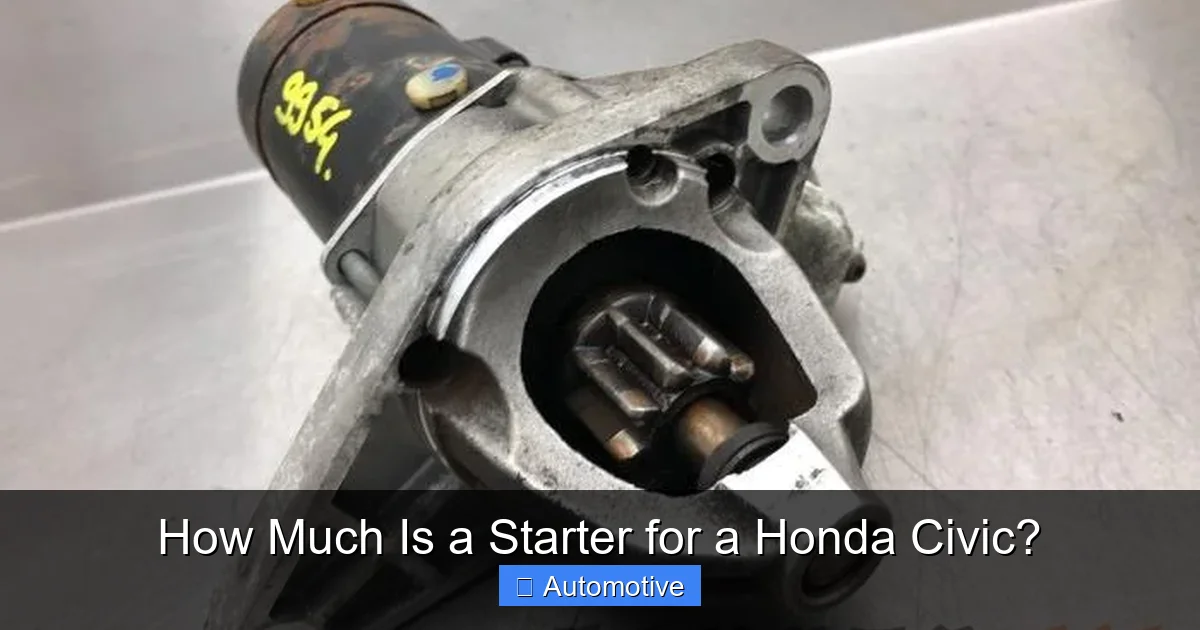
Several factors influence how much a starter for a Honda Civic will cost. Understanding these can help you make informed decisions and avoid surprise expenses.
Model Year and Engine Type
Older Honda Civics (1990s–early 2000s) generally have simpler engine layouts and lower part costs. Starters for these models are widely available and often cheaper. For example, a 1995 Civic DX uses a basic 1.5L engine with an easy-to-access starter, making replacement straightforward and affordable.
Newer Civics, especially those with turbocharged engines (like the 1.5L in 2016+ models), have tighter engine bays and more complex electronics. This can increase labor time and part cost. Additionally, some newer models use push-button start systems, which may require additional diagnostics or programming when replacing the starter.
OEM vs. Aftermarket Parts
Choosing between OEM and aftermarket parts is one of the biggest cost decisions. OEM parts are more expensive but offer peace of mind. They’re designed specifically for your Civic and often come with a 12-month/unlimited mileage warranty.
Aftermarket parts are cheaper and widely available, but quality can vary. Some brands, like Bosch and Duralast, are known for reliability. Others may be hit-or-miss. Always check reviews and warranty terms before buying.
Remanufactured starters are a middle ground. They’re cheaper than new OEM parts and often come with a 1–3 year warranty. However, they may not last as long as a brand-new starter.
Labor Rates and Shop Type
Labor costs depend on where you go:
– Independent mechanics: Usually charge $80–$120/hour. They’re often more affordable than dealerships and can offer personalized service.
– Dealerships: Charge $120–$180/hour. They use OEM parts and factory-trained technicians but are the most expensive option.
– Chain repair shops (e.g., Midas, Pep Boys): Rates vary, but they often offer competitive pricing and promotions.
Always ask for a detailed estimate that breaks down parts and labor. Some shops may charge extra for diagnostics or disposal fees.
Geographic Location
Labor rates vary by region. In high-cost areas like California or the Northeast, expect to pay more. In the Midwest or South, labor may be cheaper. For example, a starter replacement in Phoenix might cost $250, while the same job in Detroit could be $350.
Additional Repairs
Sometimes, replacing the starter reveals other issues. For example, corroded wiring, a weak battery, or a damaged flywheel can affect starter performance. If your mechanic finds these problems, they may recommend additional repairs, increasing the total cost.
Always ask if any related components need attention. A thorough inspection can prevent future breakdowns.
Signs Your Honda Civic Starter Is Failing
Knowing the symptoms of a bad starter can help you catch the problem early and avoid being stranded. Here are the most common signs:
Clicking Noise When Turning the Key
A rapid clicking sound when you turn the ignition is a classic sign of a failing starter or a weak battery. If the battery is strong (you can check with a multimeter), the starter solenoid may be faulty. The solenoid is responsible for engaging the starter motor—if it’s not working, you’ll hear clicks but the engine won’t crank.
Engine Doesn’t Crank at All
If you turn the key and nothing happens—no sound, no cranking—the starter may be completely dead. This could also be due to a bad ignition switch or wiring issue, so have it diagnosed properly.
Slow or Labored Cranking
If the engine cranks slowly or struggles to turn over, the starter motor may be worn. This is often accompanied by dimming lights or a weak battery. However, if the battery and alternator are fine, the starter is likely the culprit.
Grinding or Whining Noise
A grinding noise during startup could mean the starter gear isn’t engaging properly with the flywheel. This can damage both components and should be addressed immediately.
Starter Stays On After Engine Starts
In rare cases, the starter may continue to run even after the engine starts. This is dangerous and can destroy the starter and flywheel. If you notice this, turn off the engine immediately and seek professional help.
Intermittent Starting Issues
If your Civic starts sometimes but not others, the starter may have internal electrical faults. Heat can worsen the problem—your car might start when cold but fail when hot.
If you notice any of these signs, don’t wait. A failing starter can leave you stranded at the worst possible time.
DIY vs. Professional Installation: Which Is Right for You?
One of the biggest decisions when replacing a starter is whether to do it yourself or hire a mechanic. Both options have pros and cons.
DIY Installation: Save Money, Gain Skills
Replacing a starter on a Honda Civic is considered a moderate DIY job. If you have basic mechanical skills, a socket set, and a jack, you can do it in 1–2 hours.
Tools You’ll Need:
– Socket wrench set (10mm, 12mm, 14mm)
– Jack and jack stands
– Screwdrivers
– Wire brush (for cleaning connections)
– Safety gloves and glasses
Steps to Replace the Starter:
1. Disconnect the negative battery cable to prevent electrical shock.
2. Locate the starter (usually near the transmission, under the intake manifold).
3. Remove the electrical connections (battery cable and solenoid wire).
4. Unbolt the starter (typically 2–3 bolts).
5. Remove the old starter and install the new one.
6. Reconnect wires and bolts.
7. Reconnect the battery and test the ignition.
Cost Savings: By doing it yourself, you save $100–$300 in labor. A new aftermarket starter might cost $100, bringing your total to under $150.
Risks: If you’re not confident, you could damage wiring or misalign the starter. Always consult a repair manual (like Haynes or Chilton) for your specific model.
Professional Installation: Peace of Mind
Hiring a mechanic ensures the job is done correctly and safely. They’ll also diagnose related issues and may offer a warranty on labor.
When to Go Pro:
– You’re not comfortable working under the car.
– The starter is hard to access (e.g., in turbo models).
– You want OEM parts and a warranty.
– You’re short on time or tools.
While more expensive, professional installation reduces the risk of mistakes and gives you confidence in the repair.
Tips to Extend the Life of Your Honda Civic Starter
A little maintenance can go a long way in preventing starter failure. Here are some tips to keep your starter running smoothly:
Keep Connections Clean
Corrosion on the battery terminals or starter cables can reduce electrical flow. Clean the connections with a wire brush and apply dielectric grease to prevent rust.
Check the Battery
A weak battery forces the starter to work harder. Test your battery annually and replace it every 3–5 years. A healthy battery reduces strain on the starter.
Avoid Short Trips
Frequent short trips don’t allow the battery to fully recharge, which can weaken it over time. If possible, take longer drives occasionally to keep the battery charged.
Listen for Warning Signs
Don’t ignore clicking, grinding, or slow cranking. Early diagnosis can prevent a complete breakdown.
Use Quality Parts
Whether you choose OEM or aftermarket, invest in a reputable brand. Cheap starters may save money upfront but fail sooner.
Conclusion
So, how much is a starter for a Honda Civic? The answer ranges from $200 to $600, depending on your model year, part choice, and labor rates. Older Civics are cheaper to repair, while newer turbo models cost more due to complexity and OEM pricing.
You can save money by choosing aftermarket or remanufactured parts and doing the job yourself—if you’re comfortable with basic mechanics. But if you prefer peace of mind, a professional mechanic ensures a proper installation with a warranty.
Regardless of your approach, paying attention to warning signs and maintaining your electrical system can extend your starter’s life and keep your Civic running reliably for years to come. Don’t wait until you’re stranded—be proactive, stay informed, and make smart decisions when it comes to starter replacement.
Frequently Asked Questions
How long does a Honda Civic starter last?
A starter in a Honda Civic typically lasts 100,000 to 150,000 miles. With proper maintenance, some can last even longer. However, electrical issues, heat, and wear can cause earlier failure.
Can I drive with a bad starter?
No, you cannot drive with a completely failed starter. The engine won’t crank, so the car won’t start. If the starter is intermittent, it may fail completely at any time, leaving you stranded.
Is it hard to replace a starter on a Honda Civic?
Replacing a starter on most Honda Civics is a moderate DIY job. It requires basic tools and about 1–2 hours. Newer turbo models may be tighter, but it’s still doable with patience.
Will a bad starter drain my battery?
A faulty starter won’t drain the battery when the car is off, but it can cause excessive current draw during startup, which may weaken the battery over time. Always test the battery when diagnosing starter issues.
Should I buy an OEM or aftermarket starter?
OEM starters offer the best fit and reliability but cost more. Aftermarket starters are cheaper and often good quality—just choose a reputable brand and check the warranty.
Can a bad alternator cause starter problems?
Indirectly, yes. A failing alternator can’t recharge the battery, leading to low voltage that affects starter performance. Always test the alternator and battery when diagnosing starting issues.