How Much Is a 2008 Mazda 3 Worth

Contents
- 1 Key Takeaways
- 2 📑 Table of Contents
- 3 Understanding the 2008 Mazda 3 Market Value
- 4 Factors That Influence the Value of a 2008 Mazda 3
- 5 2008 Mazda 3 Trim Comparison and Pricing
- 6 How to Determine the Value of a Specific 2008 Mazda 3
- 7 Tips for Selling Your 2008 Mazda 3
- 8 Tips for Buying a 2008 Mazda 3
- 9 Common Issues with the 2008 Mazda 3
- 10 Conclusion
- 11 Frequently Asked Questions


The value of a 2008 Mazda 3 depends on trim, mileage, condition, and location, typically ranging from $3,000 to $7,000. Well-maintained models with lower mileage and popular trims like the Sport or Grand Touring can command higher prices, while high-mileage or damaged examples may sell for under $2,500.
If you’re wondering, “How much is a 2008 Mazda 3 worth?” you’re not alone. This compact car has remained a favorite among drivers who value reliability, style, and driving enjoyment. Even over a decade after its release, the 2008 Mazda 3 continues to hold its value better than many competitors in its class. Whether you’re buying, selling, or just curious, understanding its current market worth is essential.
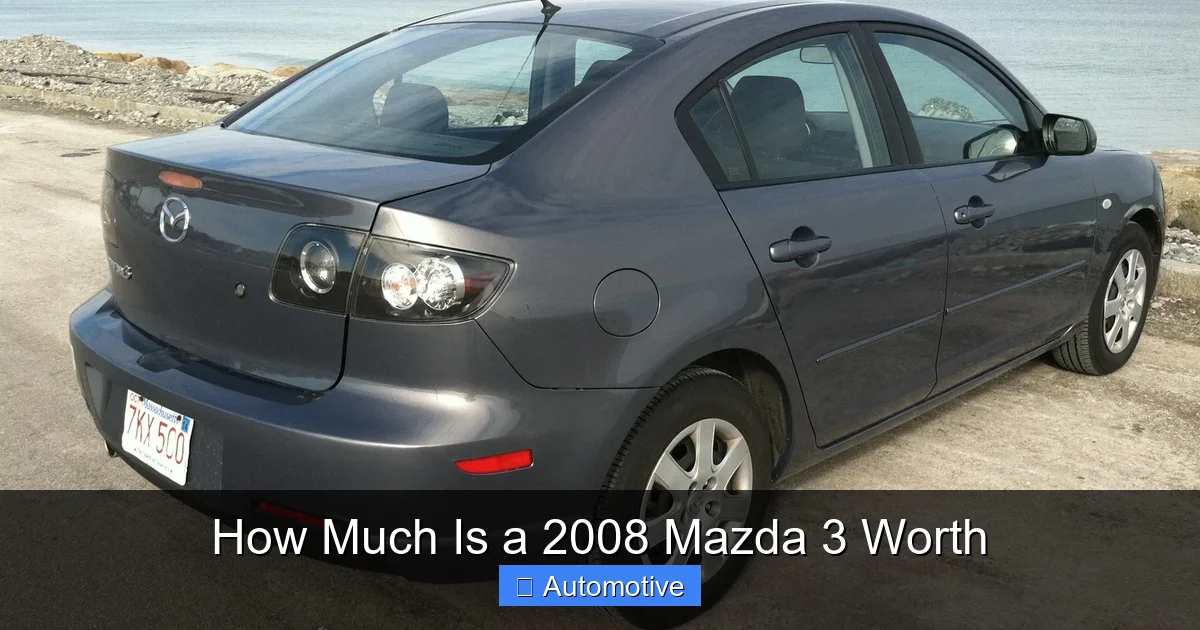
The 2008 Mazda 3 was part of the second generation (BL series), which brought a more refined design, improved interior materials, and a sportier driving experience compared to its predecessor. Available in sedan and hatchback body styles, it came with a choice of two engines: a 2.0-liter four-cylinder and a more powerful 2.3-liter four-cylinder. With trims ranging from the base iSV to the well-equipped Grand Touring, there’s a version for nearly every budget and preference.
But value isn’t just about what the car originally cost—it’s about what it’s worth today. Factors like mileage, maintenance, accident history, and even the time of year can influence pricing. In this guide, we’ll break down everything you need to know to determine how much a 2008 Mazda 3 is worth in today’s used car market.
Key Takeaways
- Price Range: Most 2008 Mazda 3s sell between $3,000 and $7,000, depending on condition and options.
- Trim Matters: Higher trims like Grand Touring and Sport hold more value than base models.
- Mileage Impact: Vehicles under 100,000 miles are worth significantly more than those over 150,000.
- Maintenance History: A clean service record can increase resale value by up to 15%.
- Market Trends: Demand is steady due to the model’s reliability and fun-to-drive nature.
- Private vs. Dealer: Private sellers often get $500–$1,000 more than trade-in or dealer offers.
- Regional Differences: Prices vary by region—urban areas and mild climates see higher demand.
📑 Table of Contents
- Understanding the 2008 Mazda 3 Market Value
- Factors That Influence the Value of a 2008 Mazda 3
- 2008 Mazda 3 Trim Comparison and Pricing
- How to Determine the Value of a Specific 2008 Mazda 3
- Tips for Selling Your 2008 Mazda 3
- Tips for Buying a 2008 Mazda 3
- Common Issues with the 2008 Mazda 3
- Conclusion
Understanding the 2008 Mazda 3 Market Value
When evaluating how much a 2008 Mazda 3 is worth, it’s important to start with a realistic baseline. According to data from Kelley Blue Book (KBB), Edmunds, and recent private sales, the average price for a 2008 Mazda 3 in good condition ranges from $3,500 to $6,500. However, this can vary widely based on several key factors.
For example, a low-mileage (under 80,000 miles) Grand Touring hatchback in excellent condition with a clean title might fetch $7,000 or more from a private buyer. On the other hand, a high-mileage (over 150,000 miles) base model sedan with minor cosmetic damage and no service records could sell for as little as $2,200.
The used car market has seen fluctuations in recent years due to supply chain issues and increased demand for affordable vehicles. While prices for newer models have spiked, older, reliable cars like the 2008 Mazda 3 have remained relatively stable. This makes them an attractive option for budget-conscious buyers who want something fun and dependable without breaking the bank.
Why the 2008 Mazda 3 Still Holds Value
One reason the 2008 Mazda 3 retains value is its reputation for reliability. Unlike some compact cars of its era, the Mazda 3 was built with solid engineering and quality materials. The 2.0L and 2.3L engines are known for lasting well over 200,000 miles with proper maintenance. Additionally, the car’s suspension and steering offer a more engaging drive than many rivals, earning praise from critics and owners alike.
Another factor is its practicality. The hatchback version, in particular, offers impressive cargo space for its size, making it a great choice for students, commuters, or small families. The interior, while not luxurious, is well-designed with intuitive controls and decent sound insulation for the class.
Finally, the 2008 model year benefited from Mazda’s focus on safety. It earned a “Good” rating in frontal crash tests from the Insurance Institute for Highway Safety (IIHS) and came standard with dual front airbags, ABS, and optional side airbags. These features add to its appeal, especially for safety-conscious buyers.
Factors That Influence the Value of a 2008 Mazda 3
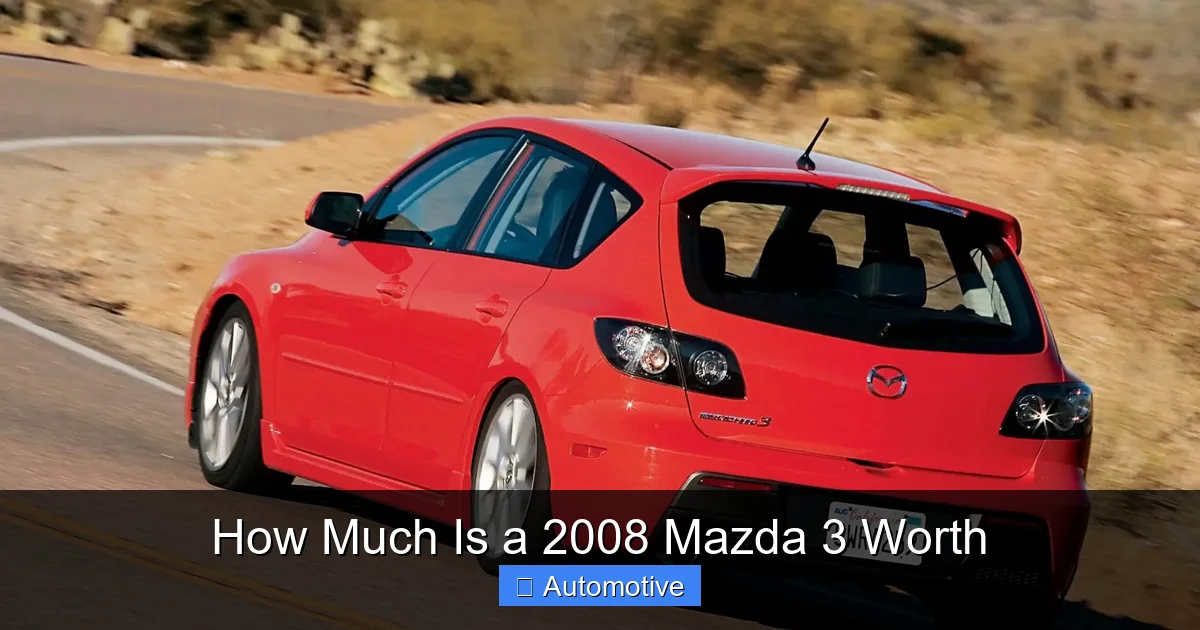
Visual guide about How Much Is a 2008 Mazda 3 Worth
Image source: yoursydneymate.com
Several variables can significantly affect how much a 2008 Mazda 3 is worth. Understanding these can help you make a smarter buying or selling decision.
Mileage
Mileage is one of the biggest determinants of value. As a general rule, lower mileage means higher value. A 2008 Mazda 3 with under 100,000 miles is considered low mileage for its age and will command a premium. In contrast, vehicles with over 150,000 miles are nearing the end of their expected lifespan and will be priced accordingly.
For example, a 2008 Mazda 3 with 75,000 miles might sell for $6,000, while a similar model with 160,000 miles might only fetch $3,200—even if both are in good condition. This $2,800 difference highlights how critical mileage is in pricing.
Trim Level and Options
The trim level plays a major role in value. The 2008 Mazda 3 was offered in several trims:
– iSV (base model, 2.0L engine, manual transmission)
– i Sport (2.0L, more features)
– s Sport (2.3L, sport-tuned suspension, hatchback available)
– s Grand Touring (2.3L, leather, sunroof, premium audio)
Higher trims like the s Grand Touring come with more features and a more powerful engine, which increases their desirability and resale value. A Grand Touring model can be worth $1,000–$1,500 more than a base iSV with similar mileage.
Options also matter. A sunroof, leather seats, upgraded audio system, or alloy wheels can add value, especially if they’re factory-installed. Aftermarket modifications, however, may not increase value and could even deter some buyers.
Vehicle Condition
Condition encompasses both mechanical and cosmetic aspects. A car that runs smoothly, has no warning lights, and passes a pre-purchase inspection will be worth more than one with known issues.
Cosmetic condition includes paint, interior wear, and body damage. Minor scratches or dents might not drastically affect value, but rust, large dents, or a worn interior can lower it significantly. For instance, a car with faded paint and torn seats might lose $500–$800 in value compared to a well-maintained example.
Service and Maintenance History
A documented service history is a huge plus. Buyers want to see records of oil changes, timing belt replacements (if applicable), brake jobs, and other routine maintenance. A car with a full service log can sell for 10–15% more than one with no records.
The 2.3L engine in the s models uses a timing chain, which typically lasts the life of the engine, but the 2.0L uses a timing belt that should be replaced every 60,000–100,000 miles. If the belt hasn’t been replaced and is due, it could cost $500–$800, which buyers will factor into their offer.
Accident and Title History
A clean title is essential for maximum value. Cars with salvage, rebuilt, or flood titles are worth significantly less—often 20–40% less than clean-title equivalents. Even minor accidents can affect value if repairs were poorly done or structural damage is suspected.
Always check the vehicle history report (e.g., Carfax or AutoCheck) before buying or selling. A clean report can boost confidence and justify a higher price.
Location and Market Demand
Where you live affects pricing. In urban areas with high demand for compact cars, prices may be higher. In rural areas or regions with harsh winters (where rust is common), prices may be lower.
For example, a 2008 Mazda 3 in Seattle might sell for $5,500, while the same car in a rust-prone area like Buffalo might only get $4,200 due to potential undercarriage corrosion.
Seasonality also plays a role. Convertibles and sporty cars like the Mazda 3 often see higher demand in spring and summer, which can push prices up slightly.
2008 Mazda 3 Trim Comparison and Pricing
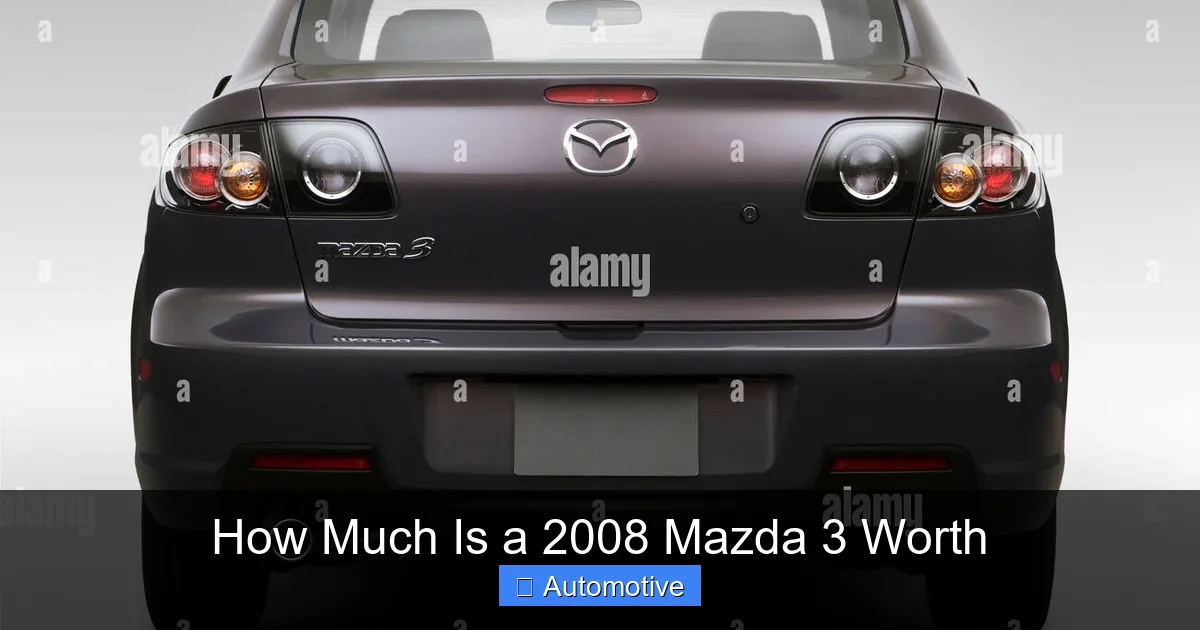
Visual guide about How Much Is a 2008 Mazda 3 Worth
Image source: c8.alamy.com
To better understand how much a 2008 Mazda 3 is worth, let’s break down the different trims and their typical values.
iSV (Base Model)
The iSV is the most basic trim, aimed at budget buyers. It comes with a 2.0L engine (148 hp), manual transmission, cloth seats, and minimal features. Air conditioning, power windows, and a CD player are often optional.
– Average Mileage: 120,000–150,000
– Typical Price: $2,800–$4,000
– Best For: First-time buyers, students, or those needing a simple, reliable commuter
While it lacks power and features, the iSV is fuel-efficient (24/32 mpg) and cheap to maintain. It’s a solid choice if you’re on a tight budget.
i Sport
The i Sport adds more standard features, including power accessories, cruise control, and upgraded audio. It still uses the 2.0L engine but offers a more comfortable ride.
– Average Mileage: 100,000–130,000
– Typical Price: $3,500–$5,000
– Best For: Drivers who want more comfort without the higher cost of the s trims
This trim strikes a good balance between affordability and features, making it a popular choice.
s Sport
The s Sport steps up to the 2.3L engine (156 hp), which provides better acceleration and towing capacity. It also includes sport-tuned suspension, larger wheels, and available hatchback body style.
– Average Mileage: 90,000–120,000
– Typical Price: $4,500–$6,000
– Best For: Enthusiasts who want a fun-to-drive compact car
The hatchback version is especially desirable for its versatility and sporty look.
s Grand Touring
The top-of-the-line Grand Touring trim includes leather seats, a sunroof, Bose audio, automatic climate control, and more. It’s the most luxurious and powerful option.
– Average Mileage: 80,000–110,000
– Typical Price: $5,500–$7,000+
– Best For: Buyers who want a premium experience in a compact package
Well-maintained Grand Touring models with low mileage can even approach $7,500 in strong markets.
How to Determine the Value of a Specific 2008 Mazda 3
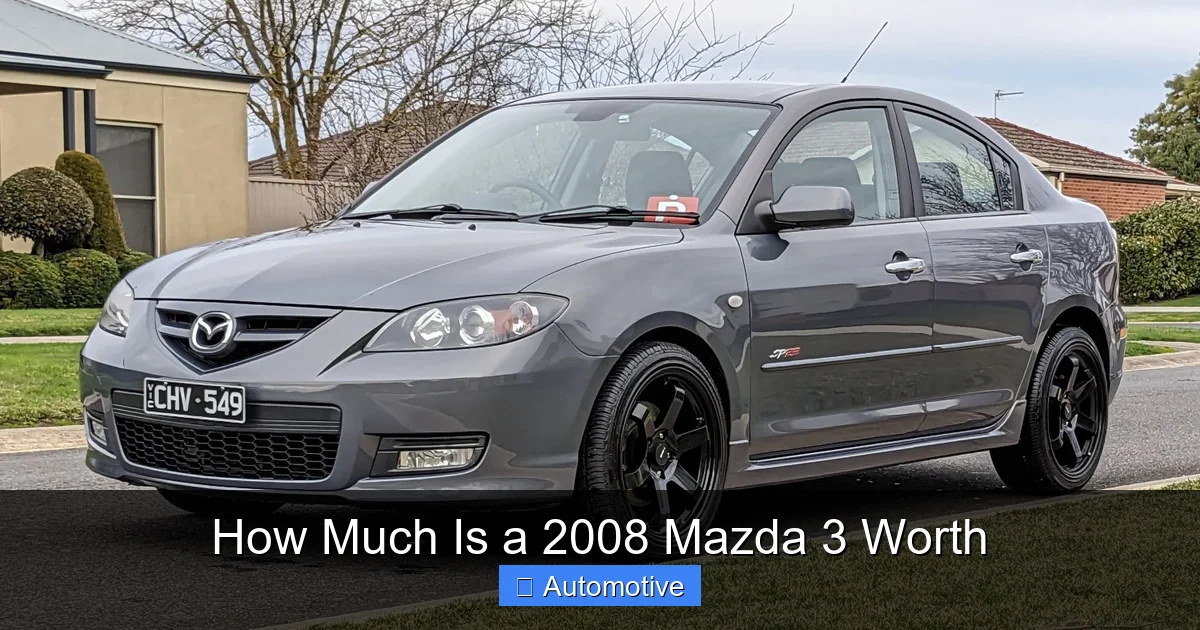
Visual guide about How Much Is a 2008 Mazda 3 Worth
Image source: assets.shannons.com.au
If you’re looking to buy or sell a specific 2008 Mazda 3, here’s how to get an accurate valuation.
Use Online Valuation Tools
Start with trusted sources like Kelley Blue Book (KBB), Edmunds, and NADA Guides. Enter the VIN, trim, mileage, condition, and location to get a personalized estimate.
For example, a 2008 Mazda 3 s Grand Touring with 85,000 miles, clean title, and excellent condition in Atlanta, GA, might be valued at $6,200 (private party) or $5,400 (trade-in).
Remember, these tools provide estimates. Actual sale prices depend on negotiation, market conditions, and the car’s specifics.
Check Recent Sales
Look at completed listings on sites like Autotrader, Cars.com, Craigslist, and Facebook Marketplace. Filter by year, model, trim, and mileage to see what similar cars have sold for.
For instance, if three 2008 Mazda 3 s Sport hatchbacks with 95,000 miles sold for $5,200, $5,500, and $5,800 in your area, you can assume a fair price is around $5,500.
Get a Pre-Purchase Inspection
If you’re buying, always have a trusted mechanic inspect the car. They can identify hidden issues like transmission problems, suspension wear, or engine leaks that could affect value.
A $100–$150 inspection could save you thousands in repair costs and give you leverage in negotiations.
Consider Private Sale vs. Trade-In
Private sellers typically get more money than trading in. For example, a car worth $5,500 privately might only get $4,000 as a trade-in.
However, private sales take more time and effort. You’ll need to handle advertising, meet potential buyers, and manage paperwork.
If convenience is a priority, a trade-in or dealer offer might be worth the lower price.
Tips for Selling Your 2008 Mazda 3
If you’re selling, here’s how to maximize your return.
Clean and Detail the Car
First impressions matter. Wash, wax, and vacuum the interior. Remove personal items and odors. A clean car looks well-cared-for and can increase perceived value.
Consider professional detailing for $100–$200. It’s a small investment that can pay off.
Fix Minor Issues
Repair small problems like burnt-out bulbs, worn wiper blades, or cracked trim. These are inexpensive fixes that show you’ve maintained the car.
Avoid major repairs unless necessary. For example, don’t replace the transmission just to sell—it may not increase the sale price enough to justify the cost.
Gather Documentation
Have your service records, owner’s manual, and title ready. A complete history builds trust and justifies a higher price.
If you’ve kept receipts for major repairs or upgrades, include them.
Price Competitively
Set a price slightly above your target to allow room for negotiation. For example, if you want $5,500, list it at $5,800.
Research similar listings and price yours in the middle range—not the highest, not the lowest.
Advertise Effectively
Use high-quality photos from multiple angles, including interior, engine, and trunk. Write a clear, honest description highlighting key features, condition, and recent maintenance.
Post on multiple platforms: Craigslist, Facebook Marketplace, Autotrader, and local car groups.
Tips for Buying a 2008 Mazda 3
If you’re in the market to buy, here’s how to get the best deal.
Set a Budget
Include not just the purchase price, but also taxes, registration, insurance, and potential repairs. A $5,000 car might cost $6,000+ out the door.
Prioritize Needs vs. Wants
Decide what’s essential: low mileage, specific trim, hatchback, automatic transmission? Be flexible on less important features to expand your options.
Inspect Thoroughly
Check for rust (especially on wheel wells and undercarriage), fluid leaks, tire wear, and dashboard warning lights. Test drive to assess acceleration, braking, and handling.
Listen for unusual noises from the engine, transmission, or suspension.
Negotiate Smartly
Use your research to justify your offer. If similar cars sell for $5,500, don’t offer $6,000 unless it’s exceptional.
Point out any flaws or needed repairs to lower the price.
Complete the Transaction Safely
Meet in a public place, bring a friend, and verify the seller’s ID and ownership. Use a secure payment method like cashier’s check or bank transfer.
Complete the title transfer and registration promptly to avoid legal issues.
Common Issues with the 2008 Mazda 3
While the 2008 Mazda 3 is generally reliable, it’s not without its problems. Being aware of common issues can help you avoid costly repairs.
Engine Oil Consumption
Some 2.3L engines are known to consume oil, especially as they age. Check the dipstick regularly and top off as needed. Excessive consumption could indicate internal wear.
Suspension Wear
Front control arm bushings and struts can wear out by 100,000 miles. Listen for clunking noises over bumps and inspect for uneven tire wear.
Transmission Issues
Automatic transmissions may develop shifting problems or slipping. Manual transmissions are generally more reliable but check for clutch wear.
Rust
While not as bad as some older cars, rust can appear on wheel wells, rocker panels, and undercarriage—especially in snowy climates. Inspect carefully.
Electrical Glitches
Some owners report issues with power windows, door locks, or the audio system. These are usually fixable but can be annoying.
Regular maintenance and prompt repairs can prevent most of these issues from becoming major problems.
Conclusion
So, how much is a 2008 Mazda 3 worth? The answer depends on a mix of factors, but most models sell between $3,000 and $7,000. Higher trims, lower mileage, and excellent condition push prices toward the top end, while high mileage, damage, or missing records lower them.
Despite being over 15 years old, the 2008 Mazda 3 remains a smart choice for buyers seeking an affordable, reliable, and fun-to-drive compact car. Its strong resale value is a testament to its quality and enduring appeal.
Whether you’re buying or selling, do your research, inspect thoroughly, and price fairly. With the right approach, you can get the best possible deal on this beloved Mazda.
Frequently Asked Questions
What is the average price of a 2008 Mazda 3?
The average price ranges from $3,500 to $6,500, depending on trim, mileage, and condition. Lower-mileage, higher-trim models can exceed $7,000.
Is the 2008 Mazda 3 reliable?
Yes, the 2008 Mazda 3 is known for its reliability, especially with proper maintenance. The 2.0L and 2.3L engines can last over 200,000 miles.
Which trim holds its value best?
The s Grand Touring and s Sport trims hold value best due to their more powerful engines, additional features, and sportier styling.
Should I buy a 2008 Mazda 3 with high mileage?
It depends on condition and maintenance history. A well-maintained high-mileage car can still be a good buy, but factor in potential repair costs.
How much more is a hatchback worth than a sedan?
Hatchbacks typically sell for $300–$800 more due to their versatility and popularity, especially in the Sport and Grand Touring trims.
Can I negotiate the price of a 2008 Mazda 3?
Yes, most sellers expect negotiation. Use comparable listings, vehicle condition, and needed repairs to justify a lower offer.