
How Much Is a 2006 Honda Civic Worth?

The value of a 2006 Honda Civic depends on trim, mileage, condition, and location. On average, it ranges from $3,500 to $7,500, with well-maintained models fetching higher prices. This guide breaks down everything you need to know to assess your Civic’s true worth.
[FEATURED_IMAGE_PLACEOLDER]
Key Takeaways
- Trim Level Matters: Higher trims like the EX and Si command higher prices than base LX models due to added features and performance.
- Mileage Is a Major Factor: Civics with under 100,000 miles typically sell for significantly more than those with 150,000+ miles.
- Condition Drives Value: A clean, accident-free Civic with full service history can be worth 20–30% more than a similar model with wear or damage.
- Manual Transmissions Hold Value Better: Stick-shift models, especially the sporty Si, are rarer and often sell for a premium.
- Geographic Location Affects Price: Civics in mild climates with less rust tend to be more valuable than those from snowy or coastal regions.
- Market Trends Fluctuate: Used car prices rose during the pandemic and are stabilizing in 2024—timing your sale or purchase wisely can save money.
- Use Multiple Valuation Tools: Kelley Blue Book (KBB), Edmunds, and NADA Guides offer different estimates—compare them for the most accurate value.
📑 Table of Contents
- How Much Is a 2006 Honda Civic Worth?
- Understanding the 2006 Honda Civic Trim Levels
- Mileage and Its Impact on Value
- Condition: The Make-or-Break Factor
- Transmission Type: Manual vs. Automatic
- Geographic Location and Market Trends
- How to Determine the Value of Your 2006 Honda Civic
- Tips for Selling or Buying a 2006 Honda Civic
- Conclusion
How Much Is a 2006 Honda Civic Worth?
If you’re wondering, “How much is a 2006 Honda Civic worth?” you’re not alone. This compact car has been a favorite among drivers for nearly two decades, thanks to its reliability, fuel efficiency, and low cost of ownership. Whether you’re looking to sell your old Civic, buy a used one, or just curious about its current market value, understanding what affects its price is essential.
The 2006 Honda Civic was part of the seventh generation, which introduced a bold new design, improved safety features, and more powerful engine options. It came in several body styles—sedan, coupe, and even a hybrid version—giving buyers plenty of choices. Today, it’s considered a classic example of a dependable, no-frills commuter car that still holds up well if properly maintained.
But here’s the thing: not all 2006 Civics are created equal. A base-model LX sedan with high mileage and minor cosmetic flaws won’t fetch the same price as a well-kept EX coupe with low miles and a manual transmission. So, while the average value might fall between $3,500 and $7,500 in 2024, your specific Civic could be worth more—or less—depending on a handful of key factors.
In this guide, we’ll walk you through everything that influences the value of a 2006 Honda Civic. From trim levels and mileage to condition and location, we’ll break down the details so you can get a realistic estimate. We’ll also share practical tips for maximizing your car’s resale value or finding the best deal if you’re buying. Let’s dive in.
Understanding the 2006 Honda Civic Trim Levels
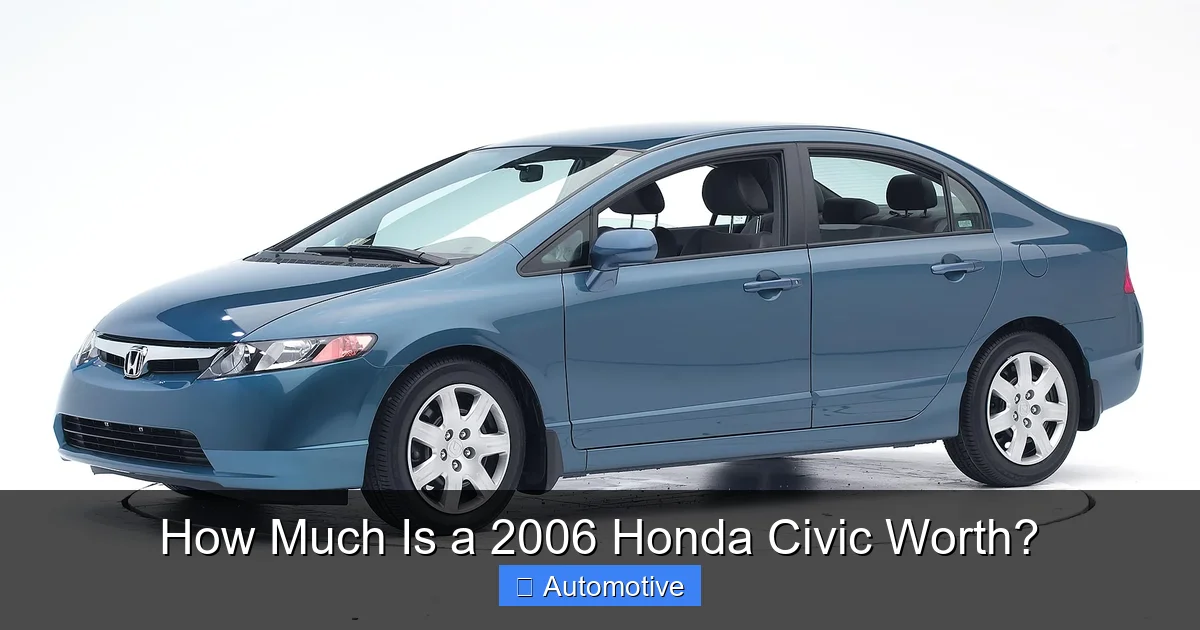
Visual guide about How Much Is a 2006 Honda Civic Worth?
Image source: i2.wp.com
One of the biggest factors in determining how much a 2006 Honda Civic is worth is the trim level. Honda offered several trims that year, each with different features, engine options, and price points. Knowing the differences can help you understand why two Civics from the same year might have very different values.
Base LX Trim
The LX was the entry-level model, designed for practicality and affordability. It came standard with a 1.8-liter four-cylinder engine producing 115 horsepower, a five-speed manual or optional four-speed automatic transmission, and basic features like air conditioning, power steering, and a four-speaker audio system. While it lacked luxury amenities, the LX was known for its simplicity and reliability—perfect for students, first-time car buyers, or anyone on a tight budget.
Because of its no-frills approach, LX models tend to have lower resale values. In 2024, a well-maintained LX with average mileage (around 120,000 miles) might sell for $3,500 to $4,500. However, if it’s in excellent condition with low mileage, it could edge closer to $5,500.
Mid-Level EX Trim
Stepping up to the EX trim added significant value—both in features and resale price. The EX included upgrades like power windows and locks, a six-speaker sound system, cruise control, and a sunroof. It also had a slightly more refined interior with better materials and optional leather-wrapped steering wheel.
The EX was available in both sedan and coupe body styles, and some models came with the optional automatic transmission. Because of these added comforts, EX trims are more desirable on the used market. Expect to pay $5,000 to $6,500 for a clean EX with average mileage. Low-mileage examples (under 100,000 miles) can command $7,000 or more, especially if they’ve been well cared for.
Sporty Si Trim
For driving enthusiasts, the Si (Sport injected) was the crown jewel of the 2006 Civic lineup. It featured a high-revving 2.0-liter four-cylinder engine with 197 horsepower, a six-speed manual transmission, sport-tuned suspension, larger wheels, and a more aggressive exterior design. The Si was only available as a coupe, making it a rare find today.
Due to its performance credentials and limited availability, the Si holds its value exceptionally well. A clean, unmodified Si with under 120,000 miles can easily sell for $6,500 to $8,000. Low-mileage examples (under 80,000 miles) have been known to fetch $9,000 or more, especially if they’re stock and have a full service history. Modifications can either increase or decrease value—enthusiasts love tasteful upgrades, but excessive modifications may scare off buyers.
Hybrid Trim
The 2006 Civic Hybrid was Honda’s answer to rising fuel prices and environmental concerns. It combined a 1.3-liter gasoline engine with an electric motor for a total output of 110 horsepower and impressive fuel economy—up to 49 mpg on the highway. It also came with unique styling cues, a digital instrument cluster, and regenerative braking.
While the Hybrid was innovative for its time, battery degradation over the years has become a concern. Many 2006 hybrids now have failing or degraded batteries, which can cost $1,500–$3,000 to replace. As a result, hybrid models often sell for less than their gasoline counterparts unless the battery has been recently replaced. A well-maintained hybrid with a new battery might go for $4,500 to $6,000, but one with a weak battery could drop to $3,000 or lower.
Mileage and Its Impact on Value
Mileage is one of the most straightforward indicators of a car’s wear and tear—and it plays a huge role in how much a 2006 Honda Civic is worth. Generally, the lower the mileage, the higher the value. But it’s not just about the number on the odometer; how the car was driven and maintained matters just as much.
Low Mileage (Under 100,000 Miles)
Civics with under 100,000 miles are considered low-mileage for a 18-year-old car. These vehicles often appeal to buyers who want a reliable commuter without the risk of major repairs. A 2006 Civic with 80,000 miles, for example, might have plenty of life left—especially if it’s been driven mostly on highways and maintained regularly.
In 2024, a low-mileage Civic in good condition can command a premium. An LX with 85,000 miles might sell for $5,000, while an EX with 75,000 miles could go for $6,500. The Si, with its performance appeal, could easily hit $7,500 or more. Buyers are often willing to pay more for lower mileage because it suggests less wear on the engine, transmission, and suspension.
Average Mileage (100,000–150,000 Miles)
This is the sweet spot for most used 2006 Civics. Many of these cars have been driven responsibly and are still in solid mechanical condition. At this mileage range, the engine and transmission are likely still strong, especially if the owner followed the maintenance schedule.
A Civic with 120,000 miles in good condition might sell for $4,000 to $5,500, depending on trim and features. The key here is documentation—cars with service records, oil change logs, and repair history tend to sell faster and for higher prices. Buyers want proof that the car wasn’t neglected.
High Mileage (Over 150,000 Miles)
Once a Civic crosses the 150,000-mile mark, its value drops significantly. While Honda engines are known for longevity—many Civics last 200,000 miles or more—high mileage raises concerns about future repairs. Common issues at this stage include worn suspension components, transmission wear (especially in automatics), and potential engine leaks.
A high-mileage Civic might sell for $2,500 to $4,000, depending on condition. However, if it’s been exceptionally well maintained—think regular oil changes, timing belt replacements, and no major accidents—it could still fetch $4,500 or more. The key is transparency: sellers should disclose any known issues and provide maintenance records to build trust.
The Myth of “High Mileage = Bad Car”
It’s important to remember that mileage isn’t the only factor. A Civic with 140,000 miles that’s been driven gently and maintained meticulously can be a better buy than a 100,000-mile car that was abused or poorly serviced. Always consider the full picture—mileage, condition, history, and maintenance.
Condition: The Make-or-Break Factor
When it comes to used cars, condition often matters more than mileage or trim. A 2006 Honda Civic in pristine condition can easily outvalue a higher-trim model that’s been neglected. Here’s how to assess and improve your Civic’s condition to maximize its worth.
Exterior Condition
The exterior is the first thing buyers notice. Dents, scratches, rust, and faded paint can significantly reduce a car’s value. The 2006 Civic, especially in northern states, is prone to rust on the wheel wells, rocker panels, and undercarriage. A car with minimal rust and a clean, shiny paint job will always attract more interest.
If your Civic has minor scratches or chips, consider getting them touched up. A professional detail—including waxing and polishing—can make a huge difference. For rust issues, address them early. Surface rust can be treated, but structural rust may require professional repair and can hurt resale value.
Interior Condition
The interior tells a story about how the car was treated. Stains, odors, cracked dashboards, and worn seats can turn buyers away. The 2006 Civic’s interior is durable, but over time, the upholstery can fade, and the plastic trim can crack.
Cleaning the interior thoroughly—vacuuming, shampooing carpets, and wiping down surfaces—can boost appeal. If the seats are torn, consider seat covers or professional reupholstering. A fresh cabin air filter and odor eliminator can also help eliminate musty smells.
Mechanical Condition
This is where the real value lies. A Civic that runs smoothly, shifts properly, and has no warning lights is worth far more than one with mechanical issues. Common problems in 2006 Civics include:
– Transmission issues: Automatic models may develop shifting problems or slipping.
– Engine oil consumption: Some 1.8L engines burn oil over time.
– Suspension wear: Struts and bushings wear out, leading to a rough ride.
– Electrical gremlins: Faulty sensors or wiring can cause check engine lights.
Before selling, consider getting a pre-purchase inspection (PPI) from a trusted mechanic. Fixing minor issues—like replacing spark plugs, fixing a small oil leak, or replacing worn brakes—can increase your car’s value by hundreds of dollars.
Accident History and Title Status
A clean title with no accident history is a major selling point. Cars with salvage titles, flood damage, or major accidents are worth significantly less—often 20–40% less than clean counterparts. Always disclose any accidents honestly. Buyers appreciate transparency, and hiding damage can lead to legal issues or failed sales.
Transmission Type: Manual vs. Automatic
Believe it or not, the type of transmission in your 2006 Honda Civic can affect its value—especially in today’s market. While most buyers prefer automatics for convenience, manual transmissions are becoming rarer and more desirable, particularly among enthusiasts.
Manual Transmission Advantages
Manual Civics, especially the Si model, are sought after for their driving engagement and fuel efficiency. They’re also less prone to the transmission issues that plague some automatic models. Because fewer people know how to drive stick, manual cars often sit on lots longer—but when they sell, they can command a premium.
A manual 2006 Civic EX or Si with low mileage might sell for $500 to $1,000 more than an automatic equivalent. Enthusiasts are willing to pay extra for the driving experience and perceived reliability.
Automatic Transmission Considerations
Automatic Civics are more common and appeal to a broader audience. However, the four-speed automatic in the 2006 model is known for occasional shifting issues and lower fuel economy compared to manuals. If the transmission has been well maintained—regular fluid changes, no slipping or jerking—it shouldn’t be a major concern.
Still, automatics generally depreciate faster than manuals. If you’re selling an automatic Civic, emphasize its ease of use and reliability, especially for city driving.
Geographic Location and Market Trends
Where you live can influence how much a 2006 Honda Civic is worth. Prices vary by region due to climate, demand, and local market conditions.
Climate and Rust
Civics in mild, dry climates—like California, Arizona, or Texas—tend to have less rust and corrosion, making them more valuable. In contrast, cars from snowy states like Minnesota, Michigan, or New York often suffer from salt damage, which accelerates rust.
A rust-free Civic from the Southwest might sell for $1,000 more than an identical model from the Northeast with surface rust.
Urban vs. Rural Demand
In urban areas, compact cars like the Civic are popular for their fuel efficiency and ease of parking. In rural areas, trucks and SUVs dominate, so Civics may sit longer on the market—potentially lowering prices.
Market Trends in 2024
The used car market has cooled slightly after the pandemic-driven price surge. In 2024, prices are stabilizing, and buyers are more selective. This means well-maintained Civics still sell well, but overpriced or neglected models may linger.
Timing your sale during spring or summer—when demand for used cars peaks—can help you get top dollar.
How to Determine the Value of Your 2006 Honda Civic
Now that you understand the factors that affect value, here’s how to get an accurate estimate for your Civic.
Use Online Valuation Tools
Start with trusted sources like Kelley Blue Book (KBB), Edmunds, and NADA Guides. Enter your car’s details—trim, mileage, condition, options, and location—to get a range. Each tool uses slightly different data, so compare all three.
For example, KBB might estimate your EX sedan at $5,200, while Edmunds says $5,600 and NADA lists $5,000. The average of these gives you a realistic ballpark.
Check Local Listings
Search Craigslist, Facebook Marketplace, and Autotrader for similar 2006 Civics in your area. Note the asking prices and how long they’ve been listed. If a car has been up for months, it might be overpriced.
Get a Professional Appraisal
For high-value models like the Si or low-mileage examples, consider a professional appraisal. This is especially useful if you’re selling privately and want to justify a higher price.
Adjust for Condition and Upgrades
If your Civic has new tires, a recent brake job, or aftermarket upgrades (like a performance exhaust or alloy wheels), you can adjust the value upward—but don’t overdo it. Most buyers won’t pay extra for mods unless they’re tasteful and functional.
Tips for Selling or Buying a 2006 Honda Civic
Whether you’re selling or buying, these tips can help you get the best deal.
For Sellers:
– Clean the car thoroughly: A detailed interior and washed exterior make a great first impression.
– Gather maintenance records: Proof of regular oil changes, timing belt replacements, and repairs builds trust.
– Fix minor issues: Replace burnt-out bulbs, fix small dents, and top off fluids.
– Price competitively: Research similar listings and price slightly below market to attract buyers quickly.
– Be honest: Disclose any problems upfront to avoid disputes later.
For Buyers:
– Get a pre-purchase inspection: Spend $100–$150 to have a mechanic check the car before buying.
– Check the VIN: Use services like Carfax or AutoCheck to verify accident and title history.
– Test drive thoroughly: Listen for unusual noises, test the transmission, and check all electronics.
– Negotiate based on condition: Use any flaws or needed repairs as leverage to lower the price.
Conclusion
So, how much is a 2006 Honda Civic worth? The answer isn’t one-size-fits-all. Depending on trim, mileage, condition, transmission, and location, values in 2024 typically range from $3,500 to $7,500—with exceptional examples reaching $8,000 or more.
The 2006 Civic remains a smart choice for budget-conscious buyers who value reliability and low operating costs. Whether you’re selling yours or looking to buy one, understanding the factors that influence value will help you make a confident decision.
Remember: a well-maintained Civic with a clean history will always be worth more than a neglected one—no matter the mileage. Take care of your car, and it will take care of you. And if you’re in the market, don’t overlook this underrated gem of a compact car. It might just be the perfect ride for your next chapter.
Frequently Asked Questions
What is the average price of a 2006 Honda Civic in 2024?
The average price of a 2006 Honda Civic in 2024 ranges from $3,500 to $7,500, depending on trim, mileage, and condition. Well-maintained, low-mileage models can exceed $7,000.
Is a 2006 Honda Civic reliable?
Yes, the 2006 Honda Civic is known for its reliability, especially with regular maintenance. Many owners report driving their Civics well over 200,000 miles without major issues.
Which 2006 Civic trim holds its value best?
The Si trim holds its value best due to its performance features, manual transmission, and enthusiast appeal. EX trims also retain value well thanks to their added features.
Should I buy a 2006 Honda Civic with high mileage?
It depends on condition and maintenance history. A high-mileage Civic with full service records and no major issues can still be a good buy, but budget for potential repairs.
How much does it cost to maintain a 2006 Honda Civic?
Maintenance costs are generally low. Routine services like oil changes, brakes, and tires cost less than $500 annually for most owners, making it an affordable used car option.
Can I still get parts for a 2006 Honda Civic?
Yes, parts are widely available through Honda dealers, auto parts stores, and online retailers. The Civic’s popularity ensures strong aftermarket and OEM support.