
How Much Is a 2004 Dodge Durango Worth

The value of a 2004 Dodge Durango depends on trim level, mileage, condition, and location. On average, expect to pay between $2,500 and $6,500, with well-maintained models reaching up to $8,000. Understanding key factors like engine type and market trends helps you make a smart purchase or sale.
Thinking about buying or selling a 2004 Dodge Durango? You’re not alone. This rugged, full-size SUV from the early 2000s still has a loyal following thanks to its powerful engine options, spacious interior, and capable towing capacity. But how much is a 2004 Dodge Durango worth today? The answer isn’t as simple as checking a single price guide. Like any used vehicle, its value depends on a mix of factors including condition, mileage, trim level, and even where you live.
The 2004 Dodge Durango was part of the second generation of this popular SUV, which ran from 1998 to 2003 before a refresh in 2004. That year brought subtle styling updates, improved safety features, and continued availability of strong V8 engines. It was available in three main trims—Base (ST), SLT, and Limited—and offered either rear-wheel drive or four-wheel drive. With seating for up to eight passengers and a towing capacity of up to 7,500 pounds (with the right setup), the Durango was a favorite among families and outdoor adventurers alike.
But nearly two decades later, these vehicles are no longer new, and their values have dropped significantly from their original MSRP of $25,000–$35,000. Today, you’ll find 2004 Durangos listed anywhere from $2,000 to $8,000, depending on the specifics. So how do you figure out what your Durango—or one you’re eyeing—is really worth? Let’s break it down.
Key Takeaways
- Trim and engine matter: The SLT and Limited trims with the 4.7L or 5.7L V8 engines typically hold more value than base models.
- Mileage is a major factor: Lower-mileage Durangos (under 100,000 miles) command higher prices, often $1,000–$2,000 more than high-mileage examples.
- Condition drives price: A clean interior, rust-free body, and full service history can increase value by 20–30%.
- Geographic location affects pricing: Prices vary by region—rural areas may offer lower prices, while urban markets see higher demand.
- Market trends shift: As older SUVs gain nostalgic appeal, well-kept Durangos are becoming more desirable among collectors and off-road enthusiasts.
- Selling privately yields more: Private sales usually return 10–15% more than trade-ins or dealer purchases.
- Maintenance costs add up: Factor in potential repairs like transmission or suspension work when budgeting for a 2004 Durango.
📑 Table of Contents
Factors That Determine the Value of a 2004 Dodge Durango
When evaluating how much a 2004 Dodge Durango is worth, several key factors come into play. These aren’t just details—they can make a difference of thousands of dollars in the final price.
Trim Level and Engine Options
The trim level is one of the biggest indicators of value. The base ST model came with a 3.7L V6 engine, producing around 210 horsepower. While adequate for daily driving, it lacks the muscle that many Durango buyers are after. As a result, ST models typically sell for the lowest prices—often under $3,500 unless they’re in exceptional condition.
The SLT and Limited trims, on the other hand, usually came equipped with the 4.7L V8 engine (235–245 hp) or the more powerful 5.7L Hemi V8 (345 hp in later models). These engines not only deliver better performance but also increase resale value. A 2004 Durango with the 5.7L Hemi, especially in Limited trim, can easily fetch $6,000–$8,000 if it’s well-maintained.
For example, a 2004 Durango SLT with the 4.7L V8, 90,000 miles, and a clean Carfax report might sell for around $5,200 privately. The same vehicle in ST trim with the 3.7L V6 and 130,000 miles? Closer to $3,000.
Mileage and Overall Condition
Mileage is a critical factor in any used car’s value, and the Durango is no exception. On average, a 2004 Durango with under 100,000 miles will be worth significantly more than one with 150,000+ miles. Why? Because these vehicles are known for certain wear-and-tear issues that become more likely as mileage climbs.
High-mileage Durangos often face problems like transmission slippage, suspension wear, and electrical gremlins. A well-documented service history can help offset these concerns, but even then, buyers are wary. A Durango with 80,000 miles and full maintenance records might sell for $6,000, while a similar model with 140,000 miles—even if running—might only get $3,500.
Condition goes beyond mileage. A Durango with a clean interior, no rust (especially in the wheel wells and undercarriage), and a freshly detailed exterior will always command a premium. Rust is a major issue in colder climates where road salt is used, so inspect carefully if you’re buying from the Northeast or Midwest.
Geographic Location and Market Demand
Believe it or not, where you live can affect how much a 2004 Dodge Durango is worth. In rural areas or regions with harsh winters, older SUVs like the Durango are in higher demand for their durability and four-wheel-drive capability. This can drive prices up.
Conversely, in urban areas with strict emissions standards or limited parking, large SUVs may be less desirable, lowering demand and prices. For instance, a Durango in Denver, Colorado—where outdoor activities are popular—might sell for $1,000 more than the same vehicle in New York City.
Additionally, local market trends matter. In recent years, there’s been a growing interest in “budget off-roaders” and retro SUVs. The 2004 Durango, with its body-on-frame construction and available 4WD, fits this niche. Enthusiasts looking for a capable, affordable project vehicle are willing to pay more for a solid example.
Service History and Modifications
A complete service history can boost a Durango’s value by 15–20%. Buyers want to see regular oil changes, timing belt replacements (if applicable), and transmission fluid changes. The 4.7L and 5.7L V8 engines are generally reliable, but they do require consistent maintenance.
On the flip side, excessive modifications can hurt value—unless they’re tasteful and functional. A Durango with a mild lift kit, all-terrain tires, and a roof rack might appeal to off-road buyers. But one with a loud exhaust, neon underglow, and a poorly installed stereo system? That could scare away serious buyers.
Always ask for maintenance records when buying, and if you’re selling, gather all your receipts and documentation. It shows you’ve cared for the vehicle and can justify a higher asking price.
Average Pricing for a 2004 Dodge Durango in 2024
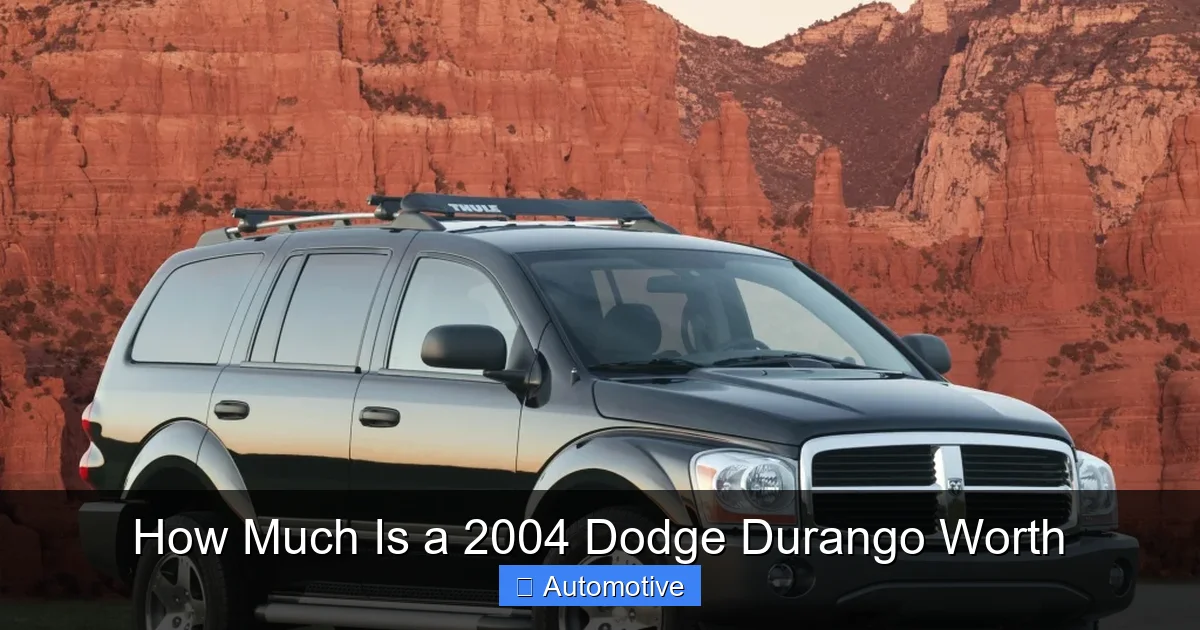
Visual guide about How Much Is a 2004 Dodge Durango Worth
Image source: s1.cdn.autoevolution.com
So, what’s the real-world price range for a 2004 Dodge Durango today? Based on recent listings from sources like Kelley Blue Book (KBB), Edmunds, and private sale platforms like Facebook Marketplace and Craigslist, here’s a realistic breakdown.
Price Ranges by Condition and Trim
– **Base (ST) Trim, 3.7L V6, High Mileage (130,000+ miles):** $2,000–$3,500
These are typically project cars or daily drivers on a tight budget. Expect some wear and potential mechanical issues.
– **SLT Trim, 4.7L V8, Moderate Mileage (90,000–120,000 miles): $4,500–$6,000
This is the sweet spot for most buyers. Good power, decent features, and reasonable pricing.
– **Limited Trim, 5.7L Hemi V8, Low Mileage (under 100,000 miles): $6,000–$8,000
These are the cream of the crop. Well-maintained, loaded with options, and increasingly rare.
– **Project or Non-Running Durango:** $1,000–$2,500
Ideal for mechanics or DIY enthusiasts looking for a restoration project.
Keep in mind that these are private sale prices. If you’re buying from a dealer, expect to pay $500–$1,500 more due to overhead and profit margins. Trade-in values will be lower—typically 10–20% less than private sale prices.
Real-World Examples
Let’s look at a few real examples to illustrate how pricing works in practice.
– A 2004 Dodge Durango SLT with 98,000 miles, 4.7L V8, 4WD, and a clean title sold on Facebook Marketplace in Ohio for $5,400. The seller included service records and recent brake work.
– A 2004 Durango Limited with 112,000 miles and the 5.7L Hemi was listed in Arizona for $7,200. The vehicle had no rust, a new transmission at 90,000 miles, and leather seats in excellent condition.
– A base model ST with 145,000 miles and a slipping transmission was offered in Michigan for $2,800. The seller disclosed the issue and priced it accordingly.
These examples show how condition, mileage, and transparency directly impact value.
Common Issues and Maintenance Costs
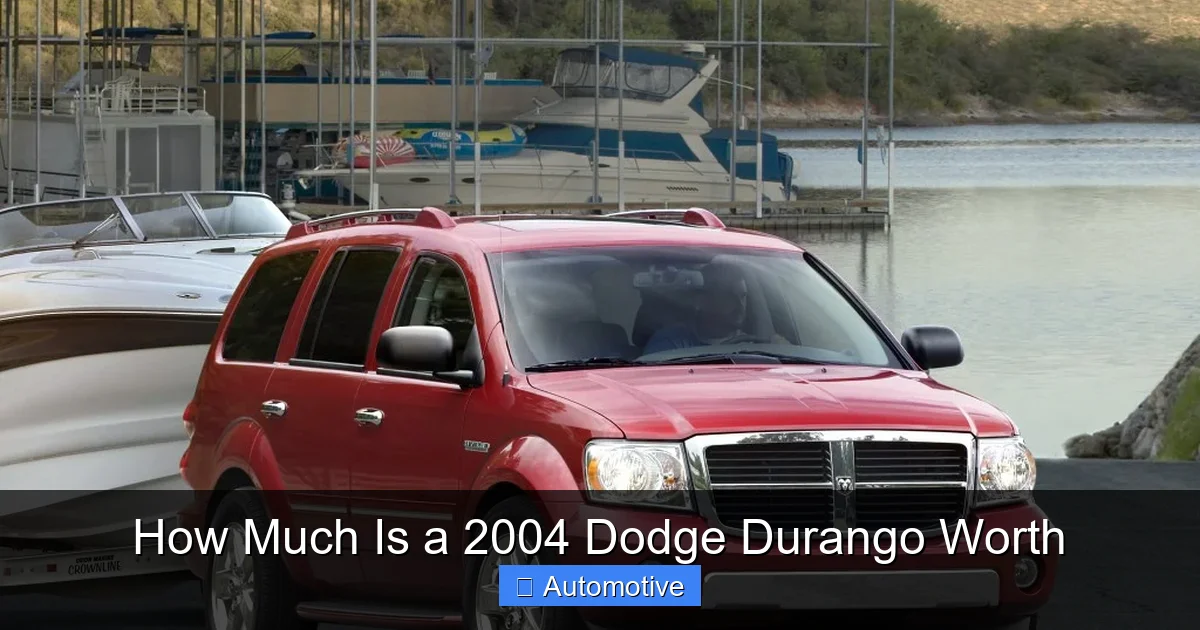
Visual guide about How Much Is a 2004 Dodge Durango Worth
Image source: s1.cdn.autoevolution.com
Before you decide how much a 2004 Dodge Durango is worth to you, it’s important to understand the common problems these vehicles face. While generally reliable, they’re not without their quirks—especially as they age.
Transmission Problems
One of the most frequent issues with the 2004 Durango is transmission failure, particularly in models with the 4.7L or 5.7L V8. Symptoms include slipping, delayed shifting, or a harsh jerk when accelerating. The 45RFE and 545RFE transmissions used in these models are known to wear out around 100,000–130,000 miles if not properly maintained.
Rebuilding or replacing a transmission can cost $2,500–$4,000. That’s a major expense that can wipe out any savings from buying a cheaper Durango. Always have a pre-purchase inspection (PPI) done by a trusted mechanic, especially one familiar with Dodge trucks.
Suspension and Steering Wear
The Durango’s suspension components—ball joints, control arms, and sway bar links—tend to wear out over time. This leads to a rough ride, uneven tire wear, and poor handling. Replacing these parts can cost $800–$1,500 depending on labor rates.
Additionally, the power steering pump and rack can develop leaks or fail, especially in high-mileage vehicles. A new pump runs about $300–$500 installed.
Electrical and Sensor Issues
Older Durangos are prone to electrical gremlins. Common problems include faulty oxygen sensors, malfunctioning dashboard lights, and issues with the body control module (BCM). These aren’t always expensive to fix, but they can be time-consuming to diagnose.
The check engine light is common on these vehicles, often due to minor sensor failures. A $50 OBD2 scan can reveal the issue, but don’t assume it’s always cheap to fix.
Rust and Body Damage
Rust is a serious concern, especially in regions with snow and salt. Check the frame, wheel wells, rocker panels, and undercarriage. Surface rust can be treated, but structural rust compromises safety and value.
Body damage from accidents also affects price. A Durango with a clean title and no major accidents will always be worth more than one with a salvage title or repair history.
Tips for Buying a 2004 Dodge Durango
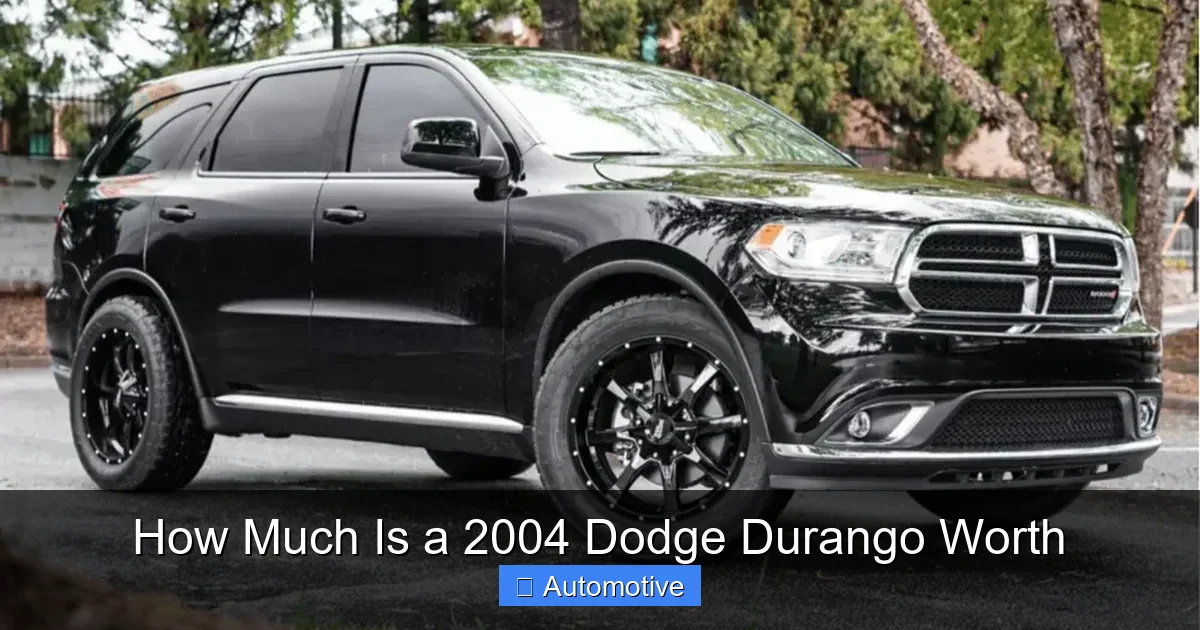
Visual guide about How Much Is a 2004 Dodge Durango Worth
Image source: images.trailbuiltoffroad.com
If you’re in the market for a 2004 Durango, here are some practical tips to help you get the best deal and avoid costly mistakes.
Set a Realistic Budget
Start by deciding how much you’re willing to spend—not just on the purchase, but on potential repairs. Add 10–15% to your budget for unexpected fixes. For example, if you find a Durango for $5,000, plan to spend up to $5,750 total.
Get a Pre-Purchase Inspection (PPI)
Never skip the PPI. A qualified mechanic can spot hidden issues like transmission wear, suspension problems, or frame damage. The cost ($100–$150) is well worth it to avoid buying a money pit.
Check the Vehicle History Report
Use services like Carfax or AutoCheck to review the vehicle’s history. Look for accidents, title issues, odometer discrepancies, and service records. A clean report adds confidence and value.
Test Drive Thoroughly
Take the Durango for a long test drive—on highways, city streets, and rough roads if possible. Listen for unusual noises, feel for vibrations, and test the transmission under load. Pay attention to how it handles and brakes.
Negotiate Based on Condition
Use any issues you find as leverage in negotiations. If the tires are worn or the AC doesn’t work, ask for a price reduction. Most private sellers are open to reasonable offers.
Tips for Selling Your 2004 Dodge Durango
If you’re selling, you want to maximize your return. Here’s how to get the best price for your Durango.
Clean and Detail the Vehicle
First impressions matter. Wash the exterior, vacuum the interior, and clean the engine bay. A $100 detailing job can increase perceived value by hundreds of dollars.
Fix Minor Issues
Replace burnt-out bulbs, fix cracked windshield wipers, and top off fluids. These small fixes show you care and can justify a higher price.
Gather Documentation
Collect all service records, owner’s manuals, and repair receipts. Organize them in a folder to present to buyers. This builds trust and supports your asking price.
Price Competitively
Research similar listings in your area and price your Durango fairly. Overpricing leads to long listing times; underpricing leaves money on the table. Aim for the middle of the market range.
Advertise Effectively
Use high-quality photos from multiple angles—inside and out. Write a detailed description highlighting key features, recent repairs, and condition. Post on multiple platforms: Facebook Marketplace, Craigslist, Autotrader, and local classifieds.
Is a 2004 Dodge Durango Worth Buying in 2024?
So, after all this, is a 2004 Dodge Durango a good buy? The answer depends on your needs and budget.
For under $6,000, you can get a capable, spacious SUV with V8 power and towing ability. It’s great for hauling trailers, camping gear, or a family of six. If you’re handy with tools or have access to affordable repairs, the Durango can be a reliable workhorse for years.
However, if you’re looking for fuel efficiency, modern safety features, or a hassle-free ownership experience, this might not be the right choice. The Durango averages 13–16 mpg, and advanced driver aids like blind-spot monitoring or automatic emergency braking aren’t available.
But for nostalgia, utility, and value, the 2004 Dodge Durango still holds up. As long as you go in with eyes open and a realistic budget, it can be a smart purchase.
Conclusion
So, how much is a 2004 Dodge Durango worth? On average, between $2,500 and $6,500, with top-tier examples reaching $8,000. The final price depends on trim, engine, mileage, condition, and location. A well-maintained Limited with the 5.7L Hemi and low mileage will always be worth more than a high-mileage base model.
Whether you’re buying or selling, do your homework. Get a pre-purchase inspection, check the vehicle history, and price competitively. And remember—while the 2004 Durango may be old, it’s far from obsolete. With proper care, it can still deliver years of reliable service.
If you’re looking for a rugged, affordable SUV with real capability, the 2004 Dodge Durango deserves a spot on your shortlist. Just make sure you know what you’re getting into—and how much it’s really worth.
Frequently Asked Questions
What is the average price of a 2004 Dodge Durango?
The average price ranges from $2,500 to $6,500, depending on trim, mileage, and condition. Well-maintained models with the 5.7L Hemi can reach up to $8,000.
Is the 2004 Dodge Durango reliable?
The Durango is generally reliable if properly maintained. The 4.7L and 5.7L V8 engines are durable, but watch for transmission and suspension issues at higher mileages.
What engine does a 2004 Dodge Durango have?
It came with a 3.7L V6 (base model), 4.7L V8 (SLT and Limited), or 5.7L Hemi V8 (Limited trim). The V8 options offer better towing and performance.
How many miles can a 2004 Dodge Durango last?
With good maintenance, a 2004 Durango can last 150,000–200,000 miles. Some well-cared-for examples exceed 200,000 miles, especially with V8 engines.
Should I buy a 2004 Dodge Durango in 2024?
Yes, if you need a budget-friendly, capable SUV and are prepared for potential repairs. It’s ideal for towing, off-roading, or large families on a budget.
What are common problems with the 2004 Dodge Durango?
Common issues include transmission failure, suspension wear, electrical glitches, and rust. Always get a pre-purchase inspection before buying.
