
How Much Is a 1988 Toyota Pickup Worth?

The value of a 1988 Toyota Pickup ranges from $3,000 to over $15,000, depending on condition, mileage, drivetrain, and originality. Well-maintained, low-mileage models—especially 4WD and diesel variants—are highly sought after by collectors and off-road enthusiasts.
Key Takeaways
- Condition is king: A rust-free, mechanically sound 1988 Toyota Pickup commands a premium, especially with original parts and low mileage.
- 4WD models are more valuable: Four-wheel-drive versions typically sell for 30–50% more than two-wheel-drive counterparts due to off-road appeal.
- Diesel engines boost value: The 1988 Toyota Pickup with a 2L or 2L-T diesel engine is rarer and more desirable, often fetching higher prices.
- Originality matters: Unmodified trucks with factory paint, interior, and components are preferred by collectors and appraisers.
- Market demand is strong: Classic Toyota trucks are experiencing a resurgence, with prices rising steadily over the past decade.
- Location affects price: Trucks in dry climates (like Arizona or California) with minimal rust sell for significantly more than those in snowy or coastal areas.
- Documentation adds value: Service records, original manuals, and ownership history can increase resale value by 10–20%.
📑 Table of Contents
- How Much Is a 1988 Toyota Pickup Worth?
- Understanding the 1988 Toyota Pickup: A Brief Overview
- Factors That Influence the Value of a 1988 Toyota Pickup
- Current Market Prices for a 1988 Toyota Pickup
- Why Are 1988 Toyota Pickups So Popular?
- Tips for Buying or Selling a 1988 Toyota Pickup
- Future Value Outlook
- Conclusion
How Much Is a 1988 Toyota Pickup Worth?
If you’ve ever stumbled across a dusty 1988 Toyota Pickup parked in a field or tucked away in a garage, you might have wondered: “How much is this old truck actually worth?” The answer isn’t as simple as checking a price guide. Unlike modern vehicles with standardized depreciation curves, classic trucks like the 1988 Toyota Pickup have values that swing dramatically based on a mix of condition, rarity, and market trends.
These trucks, part of the legendary fifth-generation Hilux series, were built to last. Known for their rugged simplicity, bulletproof engines, and off-road capability, they’ve earned a cult following among off-roaders, restorers, and collectors. Whether you’re looking to buy, sell, or just appreciate one, understanding what drives the value of a 1988 Toyota Pickup is essential.
In this guide, we’ll break down everything you need to know—from average market prices and key value factors to tips for maximizing resale or making a smart purchase. Whether you’re eyeing a lifted 4×4 with a snorkel or a stock short-bed with original paint, this article will help you navigate the world of vintage Toyota trucks with confidence.
Understanding the 1988 Toyota Pickup: A Brief Overview
Visual guide about How Much Is a 1988 Toyota Pickup Worth?
Image source: automotivian.com
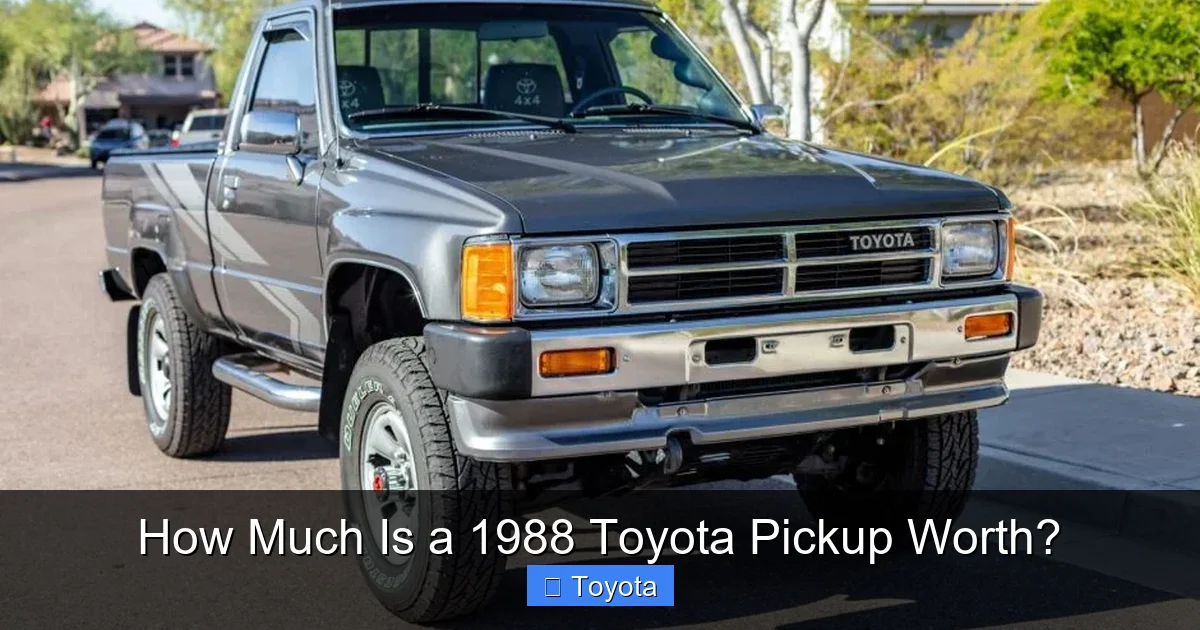
Before diving into pricing, it’s helpful to understand what makes the 1988 Toyota Pickup unique. This model year falls within the fifth generation of the Toyota Hilux, which was sold in the U.S. as the Toyota Pickup from 1984 to 1988. These trucks were available in a variety of configurations, including short-bed and long-bed versions, regular and extended cabs, and multiple engine and drivetrain options.
Engine and Drivetrain Options
The 1988 Toyota Pickup came with several engine choices, each influencing value differently:
– **22R 2.4L Inline-4 Gasoline Engine:** This was the most common engine, known for its reliability and ease of maintenance. It produced around 105 horsepower and 137 lb-ft of torque. While not a powerhouse, it’s durable and fuel-efficient, making it a favorite for daily drivers and overlanders.
– **2L 2.4L Inline-4 Diesel Engine:** A rarer option, the 2L diesel delivered about 85 horsepower and 120 lb-ft of torque. It’s highly valued for its longevity and fuel economy, especially among long-distance travelers and off-grid enthusiasts.
– **2L-T 2.4L Turbo Diesel Engine:** Even rarer than the 2L, the turbocharged version offered improved performance and torque. These engines are highly sought after and can significantly increase a truck’s value.
Drivetrain options included rear-wheel drive (2WD) and four-wheel drive (4WD). The 4WD models, especially those with the manual transfer case and solid front axle, are particularly prized for off-road use.
Body Styles and Trim Levels
The 1988 Toyota Pickup was available in several body styles:
– **Regular Cab Short Bed:** The most common and classic configuration, ideal for light hauling and daily use.
– **Regular Cab Long Bed:** Offers more cargo space and is preferred by contractors and farmers.
– **Extended Cab (Xtra Cab):** Introduced in the late 1980s, this version added small rear seats or storage, making it more versatile.
Trim levels were relatively basic, with most trucks sold in standard or deluxe configurations. Deluxe models often included features like vinyl upholstery, upgraded trim, and optional air conditioning.
Why the 1988 Model Year Stands Out
The 1988 model year is often considered a sweet spot for Toyota Pickup enthusiasts. It was the final year of the fifth-generation design, meaning it benefited from years of refinement while retaining the simplicity and durability of earlier models. Additionally, many 1988 trucks were built with high-quality materials and minimal electronics, making them easier to maintain and repair than newer vehicles.
Factors That Influence the Value of a 1988 Toyota Pickup
Visual guide about How Much Is a 1988 Toyota Pickup Worth?
Image source: media.carsandbids.com
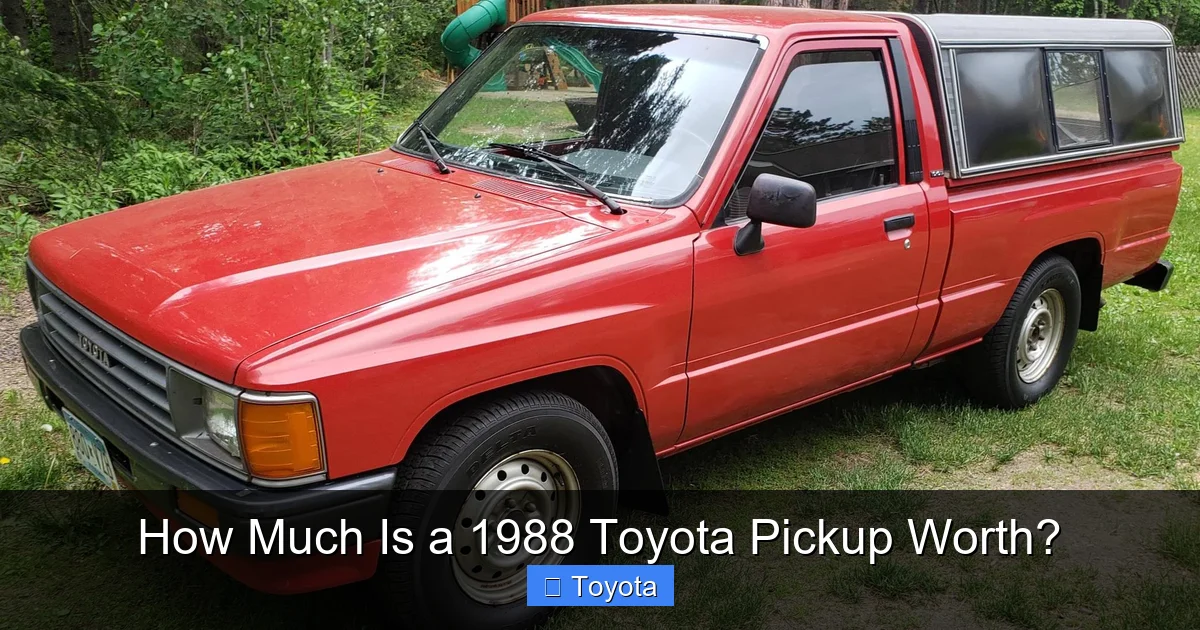
The value of a 1988 Toyota Pickup isn’t determined by a single factor. Instead, it’s a combination of several variables that collectors, buyers, and appraisers consider when evaluating a truck. Understanding these can help you assess whether a listing is fair, or whether your own truck is worth more than you thought.
1. Condition: The Most Important Factor
When it comes to classic vehicles, condition trumps everything else. A 1988 Toyota Pickup in excellent condition—both mechanically and cosmetically—can be worth two to three times more than one in poor shape.
– **Rust:** Rust is the enemy of any older truck. Surface rust on bumpers or trim is manageable, but frame rust, especially around the cab mounts, bed mounts, or wheel wells, can drastically reduce value. Trucks from dry climates like Arizona, Nevada, or Southern California often command higher prices due to minimal corrosion.
– **Mechanical Condition:** A truck that runs smoothly, shifts properly, and has no major leaks or engine issues will always be more valuable. Rebuilt engines, transmissions, or differentials can add value if done correctly and documented.
– **Interior Condition:** Original upholstery, uncracked dashboards, and functional gauges are highly desirable. Replacements or modifications can detract from value unless they’re period-correct or high-quality upgrades.
2. Mileage: Lower Is Better, But Not Everything
Mileage plays a role, but it’s not the only indicator of value. A well-maintained truck with 150,000 miles can be worth more than a neglected one with 80,000 miles.
– **Low-Mileage Examples:** Trucks with under 100,000 miles, especially if they’ve been garage-kept and regularly serviced, are rare and valuable. These often sell for $10,000–$15,000 or more.
– **High-Mileage but Well-Cared-For:** Many Toyota Pickups have exceeded 200,000 miles and still run strong. If the engine and transmission are original and in good shape, high mileage isn’t a dealbreaker.
3. Drivetrain: 4WD vs. 2WD
Four-wheel-drive models are significantly more valuable than their 2WD counterparts. The 4WD system in the 1988 Toyota Pickup is robust, featuring a manual transfer case and solid front axle, making it ideal for off-roading.
– **4WD Premium:** Expect to pay 30–50% more for a 4WD model. A clean 4WD short-bed in good condition can easily fetch $12,000–$18,000, depending on other factors.
– **2WD Value:** While still reliable, 2WD models are more common and typically sell for $3,000–$8,000 in decent condition.
4. Originality and Modifications
Originality is a major factor in collector value. Trucks that retain their factory paint, interior, and mechanical components are preferred.
– **Unmodified Trucks:** A stock 1988 Toyota Pickup with original engine, transmission, and body panels is highly desirable. These are often restored to factory specs or preserved as-is.
– **Modified Trucks:** Lift kits, aftermarket wheels, and engine swaps can appeal to some buyers, but they often reduce value for purists. However, tasteful, well-documented modifications (like a period-correct lift or diesel swap) can maintain or even increase value if done professionally.
5. Documentation and History
A well-documented history can add 10–20% to a truck’s value. Buyers love knowing a vehicle has been cared for.
– **Service Records:** Regular oil changes, timing belt replacements, and brake work show responsible ownership.
– **Ownership History:** Single-owner trucks or those with a clear chain of ownership are more trustworthy.
– **Original Manuals and Tools:** Including the owner’s manual, warranty booklet, and factory tools can be a nice bonus.
Current Market Prices for a 1988 Toyota Pickup
Visual guide about How Much Is a 1988 Toyota Pickup Worth?
Image source: cdn.dealeraccelerate.com
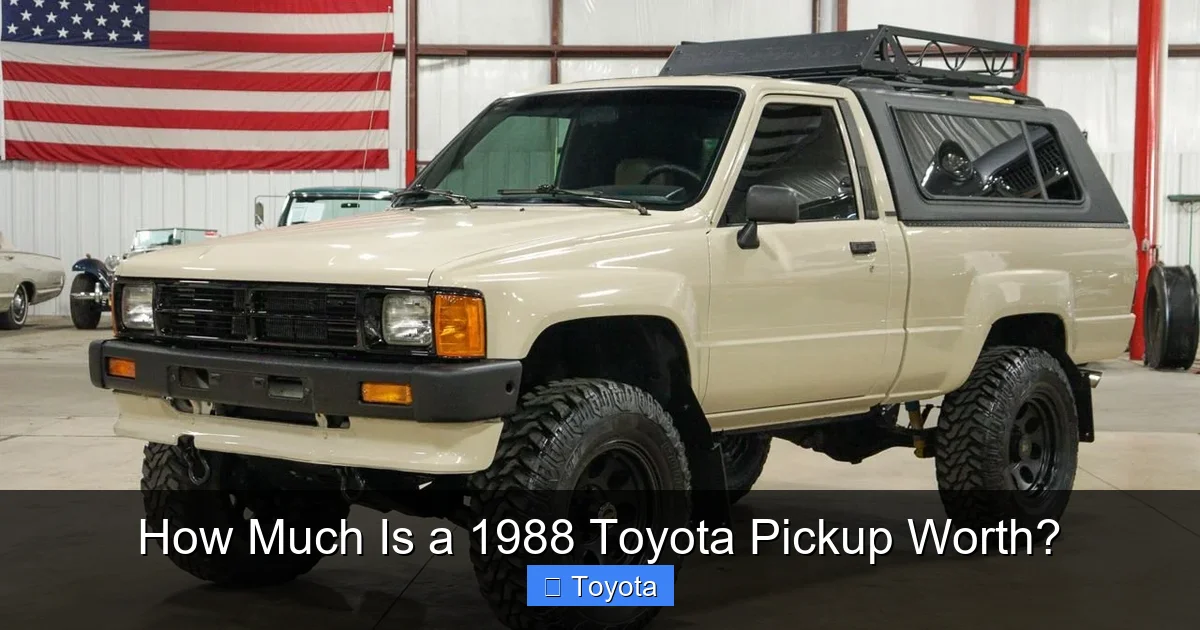
So, how much can you expect to pay—or receive—for a 1988 Toyota Pickup in 2024? Prices vary widely, but here’s a realistic breakdown based on recent sales data from platforms like Bring a Trailer, eBay Motors, and classic car auctions.
Average Price Ranges
– **Project or Parts Truck (Poor Condition):** $1,500–$3,500
These trucks often have significant rust, mechanical issues, or missing parts. Ideal for restorers or those looking for a donor vehicle.
– **Fair to Good Condition (Daily Driver):** $4,000–$8,000
Runs and drives, may have minor rust or cosmetic flaws. Common for 2WD models with moderate mileage.
– **Very Good Condition (Well-Maintained):** $8,000–$12,000
Minimal rust, good mechanicals, clean interior. Often 4WD models with service records.
– **Excellent to Showroom Condition (Low Mileage, Original):** $12,000–$18,000+
Rare finds with under 100,000 miles, original paint, and full documentation. Diesel or turbo diesel models can exceed $20,000.
Real-World Examples
– A 1988 Toyota Pickup 4WD with 95,000 miles, original paint, and a clean Carfax sold for $14,200 on Bring a Trailer in early 2024.
– A diesel-powered 2L long-bed with 180,000 miles and full service records fetched $11,500 at a regional classic truck show.
– A heavily modified 4WD with a 3-inch lift, new tires, and a rebuilt engine sold for $9,800—lower than expected due to non-original parts.
Regional Price Differences
Location plays a big role in pricing. Trucks in the Southwest and West Coast—where rust is less common—sell for 20–30% more than those in the Northeast or Midwest.
– **High-Value Regions:** Arizona, California, Texas, Nevada
– **Lower-Value Regions:** Michigan, New York, Minnesota (due to road salt and humidity)
Why Are 1988 Toyota Pickups So Popular?
The enduring popularity of the 1988 Toyota Pickup isn’t just nostalgia—it’s rooted in real-world performance and reliability.
Legendary Durability
Toyota’s reputation for building vehicles that last is well-earned, and the 1988 Pickup is a prime example. The 22R engine, in particular, is known for running for 300,000+ miles with basic maintenance. Many owners report driving their trucks daily for decades with minimal issues.
Off-Road Capability
With a solid front axle, high ground clearance, and simple mechanical systems, the 1988 Pickup is a favorite among overlanders and off-roaders. It’s easy to modify, repair in the field, and trust in remote areas.
Simplicity and Ease of Repair
Unlike modern trucks packed with electronics, the 1988 model is refreshingly simple. Most repairs can be done with basic tools and minimal expertise. This makes it ideal for DIY enthusiasts and those in areas with limited access to specialized mechanics.
Growing Collector Interest
Classic trucks are having a moment. As younger buyers seek affordable, reliable, and stylish vehicles, vintage Toyotas have become increasingly popular. The 1988 Pickup, with its boxy design and utilitarian charm, fits perfectly into the retro-modern trend.
Tips for Buying or Selling a 1988 Toyota Pickup
Whether you’re in the market to buy or ready to sell, these practical tips can help you get the best deal.
For Buyers: What to Look For
– **Inspect for Rust:** Check the frame, cab corners, bed mounts, and wheel wells. Use a flashlight and mirror to see hidden areas.
– **Test Drive:** Listen for unusual noises, check for smooth shifting, and test 4WD engagement if applicable.
– **Verify Engine and Transmission:** Ask for compression test results or a pre-purchase inspection by a mechanic familiar with older Toyotas.
– **Check Documentation:** Request service records, title history, and any restoration photos.
For Sellers: How to Maximize Value
– **Clean and Detail:** A thorough wash, wax, and interior cleaning can make a big difference in perceived value.
– **Fix Minor Issues:** Replace burnt-out bulbs, fix small leaks, and address cosmetic flaws like cracked dashboards.
– **Gather Documentation:** Compile service records, manuals, and photos of the truck over time.
– **Advertise Smartly:** Use high-quality photos, mention key features (4WD, diesel, low mileage), and list on platforms like Bring a Trailer, Hemmings, or local classic car groups.
Future Value Outlook
The value of classic Toyota trucks is expected to continue rising, especially as supply dwindles and demand grows. Well-preserved 1988 models—particularly 4WD and diesel versions—are likely to become even more valuable in the coming years.
Factors that could influence future prices include:
– **Increased Interest in Overlanding:** As more people seek adventure vehicles, simple, reliable trucks like the 1988 Pickup will remain in demand.
– **Scarcity of Rust-Free Examples:** As older trucks succumb to rust or are scrapped, clean survivors will become rarer.
– **Cultural Nostalgia:** The retro aesthetic and “built tough” reputation of Toyota trucks resonate with younger buyers.
Conclusion
So, how much is a 1988 Toyota Pickup worth? The short answer: it depends. But with values ranging from $3,000 for a project truck to over $15,000 for a pristine, low-mileage example, these trucks offer incredible value for the right buyer.
What makes the 1988 Toyota Pickup special isn’t just its price—it’s the combination of durability, simplicity, and timeless design. Whether you’re restoring one for weekend adventures, using it as a daily driver, or adding it to a collection, this truck represents a piece of automotive history that continues to earn its keep.
If you’re thinking about buying or selling, focus on condition, originality, and documentation. And remember: a well-cared-for 1988 Toyota Pickup isn’t just a vehicle—it’s a legacy on wheels.
Frequently Asked Questions
What is the average price of a 1988 Toyota Pickup?
The average price ranges from $4,000 to $12,000, depending on condition, mileage, and drivetrain. Well-maintained 4WD models typically sell for $10,000 or more.
Are 1988 Toyota Pickups reliable?
Yes, they are known for exceptional reliability. The 22R gasoline engine and 2L diesel engine are both durable and long-lasting with proper maintenance.
Is a 1988 Toyota Pickup good for off-roading?
Absolutely. The 4WD models with solid front axles and high ground clearance are excellent for off-road use and popular among overlanders.
What engine does a 1988 Toyota Pickup have?
Most came with the 2.4L 22R gasoline engine, but diesel (2L) and turbo diesel (2L-T) versions were also available and are more valuable.
How can I increase the value of my 1988 Toyota Pickup?
Keep it rust-free, maintain service records, preserve original parts, and avoid excessive modifications. A clean, documented history adds significant value.
Where can I sell a 1988 Toyota Pickup?
Popular platforms include Bring a Trailer, eBay Motors, Hemmings, and local classic car auctions or enthusiast forums.
