
How Much Freon Does a 2005 Dodge Ram Take?

If you’re wondering how much Freon a 2005 Dodge Ram takes, the answer depends on your specific model and engine size. Most 2005 Dodge Rams with R-134a systems hold between 18 to 24 ounces (1.125 to 1.5 pounds) of refrigerant. Always check your owner’s manual or service label for precise specs before recharging.
If your 2005 Dodge Ram’s air conditioning isn’t blowing cold air like it used to, you’re probably wondering: *How much Freon does a 2005 Dodge Ram take?* You’re not alone. Many truck owners face this question when their AC starts acting up, especially during hot summer months. But before you grab a can of refrigerant and start spraying, it’s important to understand the facts—starting with the fact that your truck doesn’t actually use “Freon” in the traditional sense.
That’s right—despite the common use of the term “Freon,” modern vehicles like the 2005 Dodge Ram use R-134a refrigerant, a more environmentally friendly alternative to the older R-12 (which was actually branded as Freon). The shift happened in the mid-1990s as part of global efforts to protect the ozone layer. So while people still say “Freon” when talking about AC refrigerant, your Dodge Ram runs on R-134a. Knowing this distinction is crucial because using the wrong type can damage your system or violate environmental laws.
Now, let’s get to the real question: how much R-134a does your 2005 Dodge Ram actually need? The answer isn’t one-size-fits-all. It depends on several factors, including your engine size (3.7L V6, 4.7L V8, or 5.7L Hemi), whether you have a single or dual-zone climate control system, and whether your truck came with factory-installed rear air conditioning. Most standard configurations hold between 18 and 24 ounces (that’s 1.125 to 1.5 pounds) of refrigerant. But we’ll break down the specifics shortly.
Key Takeaways
- Refrigerant Type: The 2005 Dodge Ram uses R-134a refrigerant, not the older R-12 (Freon), which was phased out due to environmental concerns.
Most models require between 18 and 24 ounces (1.125 to 1.5 pounds) of R-134a, depending on engine size and AC system configuration. - Check the Label: Look for the refrigerant capacity label under the hood—usually on the radiator support or firewall—for exact specifications.
- DIY Recharge Risks: Overcharging can damage the AC compressor; always use a gauge and follow proper procedures.
- Professional Help Recommended: If the system is low due to a leak, have it inspected and repaired by a certified technician to avoid recurring issues.
- Use Quality Kits: When recharging at home, choose R-134a recharge kits with built-in pressure gauges and UV dye for leak detection.
- Environmental Responsibility: Never vent refrigerant into the atmosphere—it’s illegal and harmful to the environment.
📑 Table of Contents
- Understanding Your 2005 Dodge Ram’s AC System
- How Much Refrigerant Does a 2005 Dodge Ram Actually Take?
- Signs Your 2005 Dodge Ram Needs a Refrigerant Recharge
- Choosing the Right Refrigerant and Recharge Kit
- Maintaining Your AC System for Long-Term Performance
- Final Thoughts: Know Your Numbers, Protect Your Truck
Understanding Your 2005 Dodge Ram’s AC System
Before diving into refrigerant capacity, it helps to understand how your truck’s air conditioning system works. The AC system in your 2005 Dodge Ram is a closed loop that circulates refrigerant to absorb heat from inside the cabin and release it outside. This process involves several key components: the compressor, condenser, expansion valve (or orifice tube), evaporator, and receiver-drier or accumulator.
The compressor is the heart of the system—it pressurizes the refrigerant and keeps it moving. The condenser, located in front of the radiator, cools the hot gas and turns it into a liquid. From there, the refrigerant passes through the expansion valve, where it rapidly expands and cools before entering the evaporator inside the cabin. As air blows over the cold evaporator, it cools the air that comes out of your vents. Finally, the refrigerant returns to the compressor to start the cycle again.
One important thing to note is that the system must be properly charged with the correct amount of refrigerant to function efficiently. Too little, and your AC won’t cool well. Too much, and you risk damaging the compressor or other components due to excessive pressure. That’s why knowing the exact capacity for your specific model is so important.
Why the Term “Freon” Is Misleading
You’ve probably heard people say, “My AC needs more Freon,” but technically, that’s not accurate for vehicles made after 1994. Freon is a brand name for a group of chlorofluorocarbon (CFC) refrigerants, most notably R-12, which was widely used in automotive AC systems until the 1990s. However, R-12 was found to deplete the ozone layer, leading to international bans under the Montreal Protocol.
By 1994, automakers had transitioned to R-134a, a hydrofluorocarbon (HFC) refrigerant that doesn’t harm the ozone layer. While R-134a has a high global warming potential, it’s still the standard for most vehicles today—including your 2005 Dodge Ram. So when people say “Freon,” they’re usually referring to refrigerant in general, not the specific chemical. It’s a common misnomer, but one that can lead to confusion when shopping for recharge kits or discussing repairs.
How to Identify Your AC System Type
Not all 2005 Dodge Rams are created equal when it comes to air conditioning. Some models came with basic single-zone climate control, while others had dual-zone systems or even rear AC units for passengers in the back seat. These variations affect the total refrigerant capacity.
To determine your system type, check your owner’s manual or look for labels under the hood. You can also inspect the dashboard: if you have separate temperature controls for the driver and passenger sides, you likely have a dual-zone system. Additionally, if your truck has rear vents and a separate AC control panel in the back, it probably includes a rear evaporator, which increases the total refrigerant needed.
Another clue is the engine size. Trucks with larger engines—like the 5.7L Hemi—often have more robust AC systems to handle the increased cabin heat, especially when towing or driving in hot climates. These systems may require slightly more refrigerant than those in smaller engines.
How Much Refrigerant Does a 2005 Dodge Ram Actually Take?
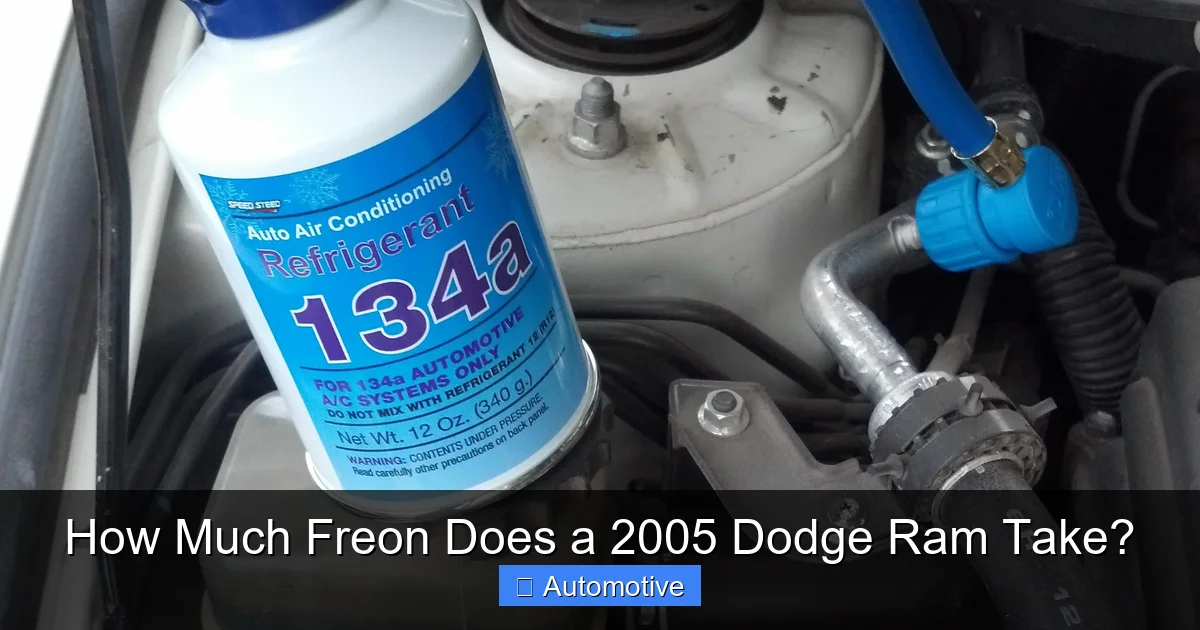
Visual guide about How Much Freon Does a 2005 Dodge Ram Take?
Image source: content.instructables.com
Now for the million-dollar question: how much R-134a does your 2005 Dodge Ram need? As mentioned earlier, the answer varies, but here’s a general breakdown based on common configurations:
– **3.7L V6 Engine (Standard AC):** Approximately 18 to 20 ounces (1.125 to 1.25 pounds)
– **4.7L V8 Engine (Standard AC):** Approximately 20 to 22 ounces (1.25 to 1.375 pounds)
– **5.7L Hemi V8 (Standard AC):** Approximately 22 to 24 ounces (1.375 to 1.5 pounds)
– **Dual-Zone or Rear AC Systems:** Add 2 to 4 ounces (0.125 to 0.25 pounds) to the above amounts
These numbers are estimates based on factory specifications and service manuals. However, the most accurate way to find your truck’s exact refrigerant capacity is to check the label under the hood. Look for a sticker on the radiator support, firewall, or near the AC compressor. It should list the refrigerant type (R-134a) and the total charge in ounces or grams.
For example, you might see something like:
“Refrigerant: R-134a – 22 oz (624 g)”
This tells you exactly how much your system holds when properly charged.
Why Capacity Varies by Model
The reason refrigerant capacity differs between models comes down to system design and cooling demands. Larger engines generate more heat, and trucks with extended cabs or crew cabs have bigger cabins to cool. Dual-zone systems use additional components like separate evaporators and blend doors, which require more refrigerant to operate efficiently.
Rear AC systems are another factor. These add a second evaporator in the back of the truck, along with extra lines and valves. As a result, the total refrigerant charge increases to ensure both the front and rear systems get adequate cooling.
Even small differences in hose length, accumulator size, or compressor type can affect the total charge. That’s why it’s so important not to rely on generic “average” numbers. Always verify your specific capacity before adding refrigerant.
How to Find the Official Specifications
If you can’t find the label under the hood, don’t worry—there are other ways to get the correct information. Start by consulting your owner’s manual. Most manuals include a section on climate control that lists the refrigerant type and capacity.
If you no longer have the manual, you can download a digital copy from the Dodge website or third-party sources like ManualsLib or AutoZone. Just search for “2005 Dodge Ram owner’s manual” and enter your VIN or model details.
Another option is to check a factory service manual. These are more detailed than owner’s manuals and are used by professional technicians. You can find them online or at auto parts stores. Look for the HVAC (Heating, Ventilation, and Air Conditioning) section, which will have exact specifications for your truck’s AC system.
Finally, if you’re still unsure, take your truck to a certified mechanic or dealership. They can quickly identify your system type and confirm the correct refrigerant charge using diagnostic tools.
Signs Your 2005 Dodge Ram Needs a Refrigerant Recharge

Visual guide about How Much Freon Does a 2005 Dodge Ram Take?
Image source: appgecet.co.in
Even if you know how much refrigerant your truck takes, you still need to know when it’s time to recharge. Low refrigerant levels are one of the most common causes of poor AC performance, but they’re not the only issue. Here are some telltale signs that your system may be low:
– **Warm Air from Vents:** If your AC is blowing air that’s only slightly cooler than outside air, or if it starts cold but warms up after a few minutes, low refrigerant could be the culprit.
– **Longer Cooling Times:** It takes longer than usual for the cabin to cool down, especially on hot days.
– **Hissing Sounds:** A hissing noise near the AC components could indicate a refrigerant leak.
– **Frost on AC Lines:** Ice or frost buildup on the evaporator or suction line suggests low refrigerant and improper pressure.
– **AC Compressor Cycling Frequently:** The compressor turns on and off more often than normal, which can strain the system.
Keep in mind that low refrigerant is often a symptom of a leak, not the root cause. Refrigerant doesn’t “wear out” or evaporate on its own—it stays in the system unless there’s a breach. Common leak points include O-rings, seals, the compressor shaft seal, the condenser, or the evaporator core.
DIY Recharge vs. Professional Service
If you’re handy with tools and want to save money, you might consider recharging your AC system yourself. R-134a recharge kits are widely available at auto parts stores and online. They typically include a can of refrigerant, a hose with a pressure gauge, and sometimes a trigger dispenser.
However, DIY recharging comes with risks. Overcharging is a real danger—adding too much refrigerant can cause high pressure in the system, leading to compressor failure or blown seals. Undercharging won’t cool effectively and may cause the compressor to overheat.
To recharge safely, follow these steps:
1. Park your truck on level ground and let the engine cool.
2. Locate the low-pressure service port (usually on the suction line near the compressor—look for a blue or black cap).
3. Attach the recharge hose to the port and shake the can well.
4. Start the engine and turn the AC to max cool with the fan on high.
5. Slowly open the valve on the recharge can and monitor the pressure gauge. Stop when the pressure reaches the recommended range (usually 25–45 psi, depending on ambient temperature).
6. Do not exceed the total capacity listed for your truck.
Even if you recharge successfully, it’s wise to have a professional inspect the system for leaks. Many auto shops offer AC leak detection services using UV dye or electronic sniffers. Fixing the leak ensures your recharge lasts longer and prevents further refrigerant loss.
Why You Should Never Ignore a Leak
Refrigerant leaks aren’t just inconvenient—they’re harmful to the environment and illegal to ignore. Releasing R-134a into the atmosphere contributes to global warming, and in many places, it’s against the law to vent refrigerant without proper recovery equipment.
More importantly, a leaking AC system won’t cool properly, no matter how much refrigerant you add. The leak will continue to drain the system, leading to repeated recharges and potential damage to the compressor. In severe cases, moisture can enter the system through the leak, causing corrosion and acid buildup that ruins internal components.
If you suspect a leak, don’t just “top off” the refrigerant. Have a technician perform a leak test and repair the issue. Common fixes include replacing O-rings, sealing the condenser, or replacing the evaporator core. While these repairs can be costly, they’re far cheaper than replacing a failed compressor or entire AC system.
Choosing the Right Refrigerant and Recharge Kit

Visual guide about How Much Freon Does a 2005 Dodge Ram Take?
Image source: airconmag.com
When it’s time to recharge your 2005 Dodge Ram’s AC system, you’ll need the right products. Here’s what to look for:
– **R-134a Refrigerant:** Make sure the can is labeled R-134a and is intended for automotive use. Avoid “stop-leak” additives unless recommended by a professional—they can clog the system.
– **Recharge Kit with Gauge:** Choose a kit that includes a pressure gauge so you can monitor system pressure in real time. This helps prevent overcharging.
– **UV Dye (Optional):** Some kits include UV dye that helps detect leaks when viewed under a blacklight. This is useful if you’re unsure where the leak is coming from.
– **Quality Brand:** Stick with reputable brands like Interdynamics, Arctic Freeze, or ACDelco. Cheap kits may have faulty gauges or contaminated refrigerant.
Avoid universal or “all-in-one” refrigerants that claim to work with multiple systems. These often contain additives or incompatible chemicals that can damage your AC components.
Can You Use R-12 in a 2005 Dodge Ram?
Absolutely not. Your 2005 Dodge Ram is designed for R-134a, and using R-12 (the old “Freon”) will not only damage the system but is also illegal in most countries. R-12 requires different oils, seals, and system pressures, and it’s incompatible with R-134a components.
Some older vehicles can be retrofitted to use R-134a, but your truck was built for it from the factory. There’s no need—or excuse—to use R-12.
What About R-1234yf?
R-1234yf is a newer, more environmentally friendly refrigerant used in some modern vehicles. However, it’s not compatible with older systems like the one in your 2005 Dodge Ram. Using R-1234yf in an R-134a system can cause chemical reactions, seal degradation, and compressor failure.
Stick with R-134a unless a professional technician recommends otherwise.
Maintaining Your AC System for Long-Term Performance
Recharging your AC is just one part of keeping it running smoothly. Regular maintenance can extend the life of your system and prevent future issues. Here are some tips:
– **Run the AC Regularly:** Even in winter, turn on the AC for 10–15 minutes every few weeks. This keeps the compressor lubricated and prevents seals from drying out.
– **Replace the Cabin Air Filter:** A dirty filter restricts airflow, reducing cooling efficiency. Check it every 12,000 miles or once a year.
– **Inspect Belts and Hoses:** Look for cracks, wear, or loose connections in the AC compressor belt and refrigerant lines.
– **Clean the Condenser:** Dirt, bugs, and debris can block airflow through the condenser. Use a garden hose to gently clean it from front to back.
– **Check for Leaks Annually:** Have a technician inspect your system during routine maintenance, especially if you notice reduced cooling.
When to See a Professional
While DIY recharging is possible, some situations require professional help:
– The system won’t hold a charge after recharging
– You hear unusual noises from the compressor
– There’s visible damage to AC components
– The AC blows warm air even after a full recharge
– You suspect electrical issues (e.g., blower motor, relays, or switches)
A certified HVAC technician has the tools and expertise to diagnose and repair complex issues safely and legally.
Final Thoughts: Know Your Numbers, Protect Your Truck
So, how much Freon does a 2005 Dodge Ram take? The short answer: it doesn’t use Freon at all—it uses R-134a, and the amount depends on your engine and AC configuration, typically ranging from 18 to 24 ounces. Always check your owner’s manual or under-hood label for the exact specification.
Recharging your AC can restore cool air to your cabin, but it’s not a permanent fix if there’s a leak. Take the time to inspect your system, use quality products, and consider professional help when needed. Your truck—and the environment—will thank you.
Frequently Asked Questions
How much R-134a does a 2005 Dodge Ram 1500 take?
A 2005 Dodge Ram 1500 typically takes between 18 and 24 ounces of R-134a, depending on the engine size and AC system. Most standard models require about 20 to 22 ounces.
Can I recharge my 2005 Dodge Ram’s AC myself?
Yes, you can recharge it yourself using an R-134a kit with a pressure gauge. However, always monitor the pressure and avoid overcharging to prevent damage.
What happens if I put too much refrigerant in my Dodge Ram?
Overcharging can cause high system pressure, leading to compressor failure, blown seals, or even a ruptured hose. Always follow the recommended capacity.
Why is my AC still not cold after recharging?
If the AC still doesn’t cool after a recharge, there’s likely a leak, a faulty compressor, or a clogged expansion valve. Have a technician inspect the system.
Is it legal to recharge my own AC system?
Yes, it’s legal to recharge your own AC system as long as you don’t vent refrigerant into the atmosphere. Use proper recovery methods if removing refrigerant.
How often should I recharge my 2005 Dodge Ram’s AC?
You shouldn’t need to recharge it regularly. If the system loses refrigerant, it indicates a leak that needs repair. Recharge only when performance drops.