How Much Does Ppf Cost for a Tesla?

Contents
- 1 Key Takeaways
- 2 📑 Table of Contents
- 3 What Is Paint Protection Film (PPF)?
- 4 Factors That Influence PPF Cost for a Tesla
- 5 Breakdown of PPF Pricing for Tesla Models
- 6 Partial vs. Full-Body PPF: Which Is Right for You?
- 7 DIY vs. Professional Installation: Why You Should Go Pro
- 8 Maintaining Your Tesla’s PPF
- 9 Is PPF Worth It for Your Tesla?
- 10 Final Thoughts
- 11 Frequently Asked Questions

Jack Stands
Reflective Safety Triangle
Dash Cam

OBD2 Scanner Tool
Paint Protection Film (PPF) for a Tesla typically costs between $1,500 and $5,000, depending on coverage level, film quality, and installation expertise. Full-body wraps offer maximum defense against chips and scratches, while partial kits protect high-impact zones affordably.
So, you’ve just driven your brand-new Tesla off the lot—sleek, silent, and stunning. But now you’re wondering: how do I keep that showroom shine intact? Enter Paint Protection Film, or PPF. It’s like a superhero cape for your car’s paint, shielding it from rock chips, bug splatter, bird droppings, and even minor scratches. And if you own a Tesla—whether it’s a Model 3, Y, S, or X—you’re not alone in wanting to protect your investment.
But here’s the big question everyone asks: *How much does PPF cost for a Tesla?* The answer isn’t one-size-fits-all. It depends on several factors—from how much of the car you want covered to the brand of film you choose and who installs it. In this guide, we’ll break down everything you need to know about PPF pricing for Teslas, so you can make an informed decision without breaking the bank or compromising on quality.
Whether you’re a daily commuter navigating highway debris or a weekend road-tripper exploring scenic routes, protecting your Tesla’s paint is smart. And with electric vehicles holding their value exceptionally well, maintaining that flawless exterior can pay off big time when it comes to resale. So let’s dive into the nitty-gritty of PPF costs, what influences them, and how to get the best protection for your money.
Key Takeaways
- PPF cost varies widely: Prices range from $1,500 for partial coverage to $5,000+ for full-body installation on a Tesla.
- Film quality matters: Premium brands like XPEL, SunTek, and Llumar offer superior clarity, self-healing, and UV resistance.
- Installation is critical: Professional installation ensures seamless application and longevity—DIY kits often lead to bubbles and peeling.
- Coverage options include: Partial (hood, fenders, mirrors), full front, or full-body wraps—each with different price points.
- Tesla-specific kits available: Many installers offer pre-cut patterns designed specifically for Model 3, Y, S, and X body lines.
- Long-term savings: PPF prevents costly paint repairs and helps maintain resale value by preserving factory finish.
- Maintenance is minimal: Wash regularly with pH-neutral soap; avoid abrasive cleaners to extend film life (typically 7–10 years).
📑 Table of Contents
- What Is Paint Protection Film (PPF)?
- Factors That Influence PPF Cost for a Tesla
- Breakdown of PPF Pricing for Tesla Models
- Partial vs. Full-Body PPF: Which Is Right for You?
- DIY vs. Professional Installation: Why You Should Go Pro
- Maintaining Your Tesla’s PPF
- Is PPF Worth It for Your Tesla?
- Final Thoughts
What Is Paint Protection Film (PPF)?
Paint Protection Film is a transparent, thermoplastic urethane layer applied directly to your vehicle’s painted surfaces. Think of it as a nearly invisible shield that absorbs impacts and resists damage from everyday hazards. Originally developed for military helicopters during the Vietnam War to protect rotor blades from debris, PPF has evolved into a high-tech automotive accessory used by enthusiasts and daily drivers alike.
Modern PPF is engineered with advanced features like self-healing properties—minor scratches disappear when exposed to heat (like sunlight or warm water). It also blocks harmful UV rays, preventing paint fading and oxidation. Unlike wax or ceramic coatings, which sit *on top* of the paint, PPF bonds directly to the surface, offering physical barrier protection.
For Tesla owners, PPF is especially valuable. Teslas have large, smooth panels and often feature unique paint finishes like Deep Blue Metallic or Red Multi-Coat, which can be expensive to repair if chipped or scratched. Plus, because Teslas are built with minimal body lines and seamless designs, even small imperfections stand out more—making protection all the more important.
How PPF Works
PPF works by acting as a sacrificial layer. When a rock hits your hood at highway speeds, the film takes the hit instead of your paint. High-quality films are thick enough (usually 6–8 mils, or thousandths of an inch) to absorb impact without transferring force to the underlying paint. Many premium films also include a topcoat that resists staining from tree sap, road tar, and acidic contaminants.
The self-healing feature is particularly impressive. If you accidentally brush against a shopping cart or get light swirl marks from washing, applying heat—say, parking in the sun or using a hair dryer—can make those fine scratches vanish within minutes. This isn’t magic; it’s science. The film’s polymer structure allows it to “flow” back into place when warmed.
Why Teslas Benefit from PPF
Teslas are more than just cars—they’re statements. Their minimalist design, falcon-wing doors, and panoramic glass roofs draw attention. But that same design makes them vulnerable. For example, the Model Y’s large front bumper and low-slung profile are prime targets for road debris. The Model S’s long hood is another hotspot.
Additionally, Tesla’s paint process involves multiple layers and sometimes special metallic or pearlescent finishes. Touch-up jobs are tricky and often noticeable, especially on lighter colors. A single rock chip on a white Model 3 might seem minor, but over time, chips can lead to rust, peeling, and costly repaints—especially if the damage reaches the primer or metal underneath.
PPF prevents this by sealing the paint completely. It’s also compatible with Tesla’s Autopilot sensors and cameras when applied correctly, so you don’t lose functionality. Many professional installers use precision-cut templates that avoid sensor zones, ensuring your Summon and Sentry Mode features work flawlessly.
Factors That Influence PPF Cost for a Tesla
Visual guide about How Much Does Ppf Cost for a Tesla?
Image source: koala.sh
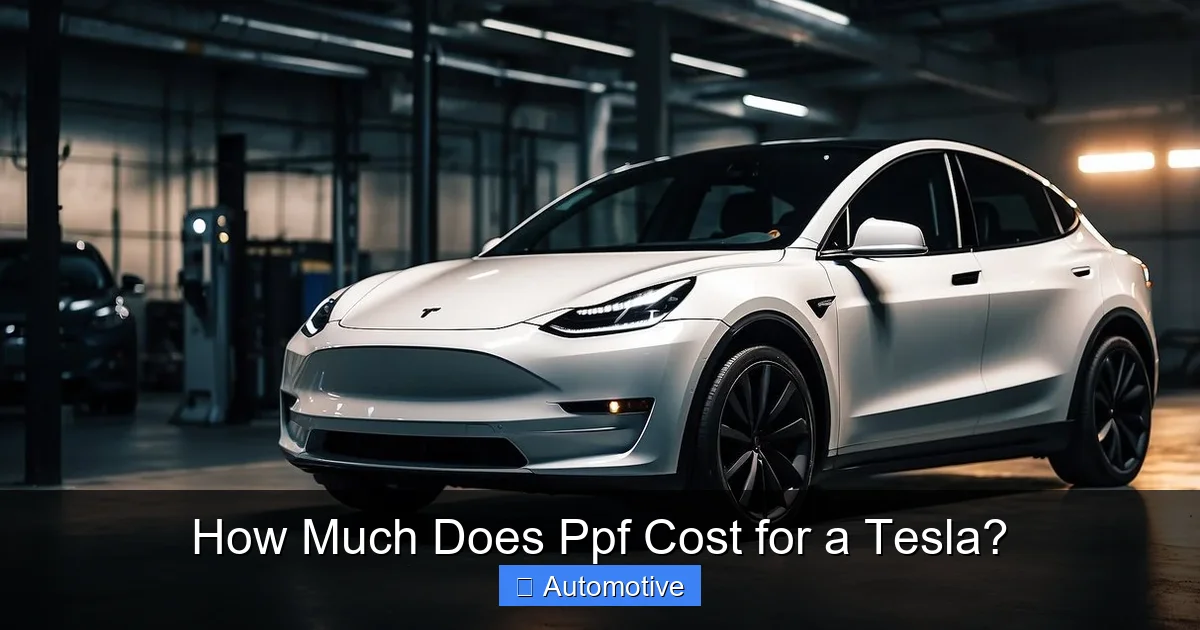
Now that you understand what PPF is and why it’s valuable for your Tesla, let’s talk money. The cost of PPF isn’t fixed—it fluctuates based on several key variables. Understanding these will help you budget wisely and avoid overspending (or underprotecting).
1. Coverage Area
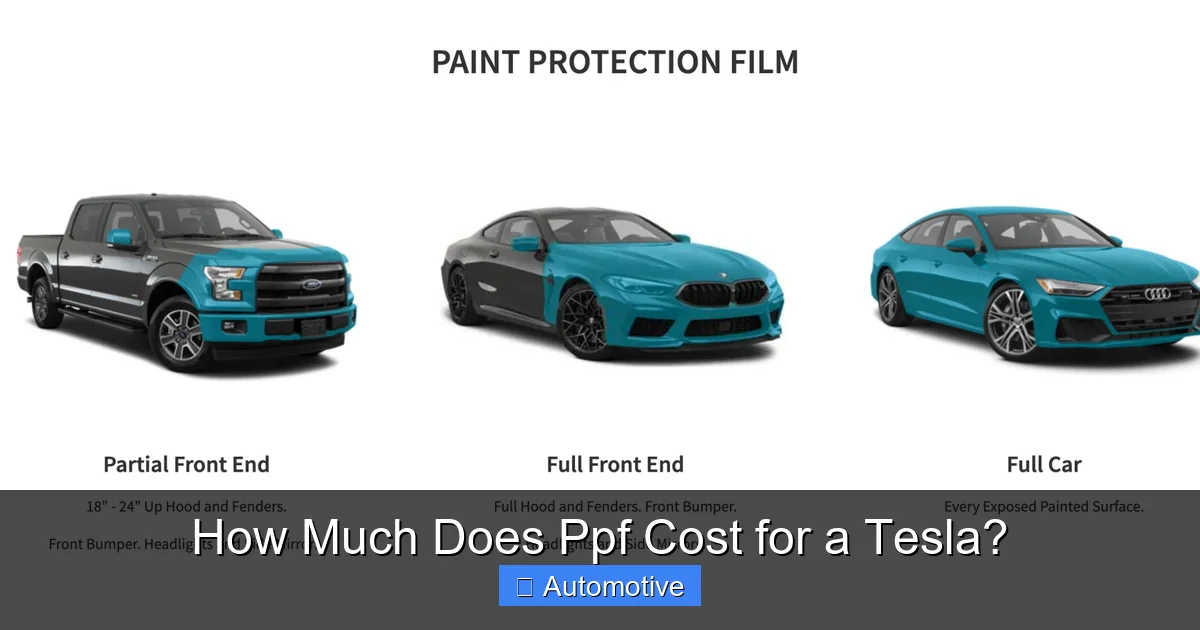
This is the biggest cost driver. PPF can be applied in different configurations:
– **Partial Coverage**: Typically includes the front bumper, hood, fenders, side mirrors, and door edges. This is the most common and affordable option, ranging from $1,500 to $2,500.
– **Full Front Coverage**: Adds the entire front end—including headlights and lower rocker panels. Expect to pay $2,500 to $3,500.
– **Full-Body Wrap**: Covers every painted surface—doors, trunk, roof, pillars, and even wheel arches. This is the ultimate protection, costing $4,000 to $5,000 or more.
For most Tesla owners, full-front coverage strikes the best balance between cost and protection. The front of the car takes 80% of the abuse, so covering just that area gives you serious peace of mind without the full-body price tag.
2. Film Brand and Quality
Not all PPF is created equal. Premium brands invest heavily in R&D to create films that are clearer, more durable, and easier to install. Here’s a quick rundown of top-tier options:
– **XPEL Ultimate Plus**: Industry leader with excellent self-healing, 10-year warranty, and near-invisible finish. Often the go-to for luxury EVs like Teslas.
– **SunTek Ultra**: Comparable to XPEL in performance, with strong UV protection and stain resistance.
– **Llumar Platinum**: Offers great clarity and durability, with a solid warranty and good value.
– ** cheaper alternatives**: Brands like Vivid or generic films may cost less upfront but often yellow over time, peel at edges, or lack self-healing.
Using a premium film can add $300–$800 to your total cost, but it’s worth it for longevity and aesthetics. A cloudy or yellowing film ruins the look of your Tesla—and defeats the purpose.
3. Installation Expertise
You can buy the best film in the world, but if it’s installed poorly, it’ll look terrible and fail prematurely. Professional installation is non-negotiable for Teslas.
Certified installers use climate-controlled environments, precision cutting tools, and years of experience to ensure a bubble-free, edge-sealed application. They also know how to work around Tesla’s complex curves, door handles, and sensor arrays.
Expect to pay $200–$500 more for a top-tier installer versus a budget shop. But consider this: a bad install might require redoing the entire job—costing you double in time and money. Look for installers certified by XPEL, SunTek, or Llumar, and check reviews on Google or Tesla forums.
4. Tesla Model and Year
Different Tesla models have varying surface areas and design complexities. A Model 3 is smaller and simpler than a Model X with its falcon-wing doors and larger panels. As a result, PPF costs can vary:
– **Model 3 / Model Y**: $1,500–$4,000 (depending on coverage)
– **Model S**: $2,000–$4,500
– **Model X**: $2,500–$5,000+
Newer models may also have updated body shapes that require custom-cut kits, which can slightly increase labor time and cost.
5. Geographic Location
Labor rates vary by region. Installing PPF in Los Angeles or New York City will cost more than in a smaller Midwest town. Urban areas also tend to have more certified installers, giving you better options—but at a premium.
Additionally, if you live in an area with harsh winters (salt, gravel, ice) or lots of highway driving, you may want more coverage—which increases cost. Conversely, city dwellers who park in garages might opt for partial coverage to save money.
Breakdown of PPF Pricing for Tesla Models
Visual guide about How Much Does Ppf Cost for a Tesla?
Image source: static.wixstatic.com
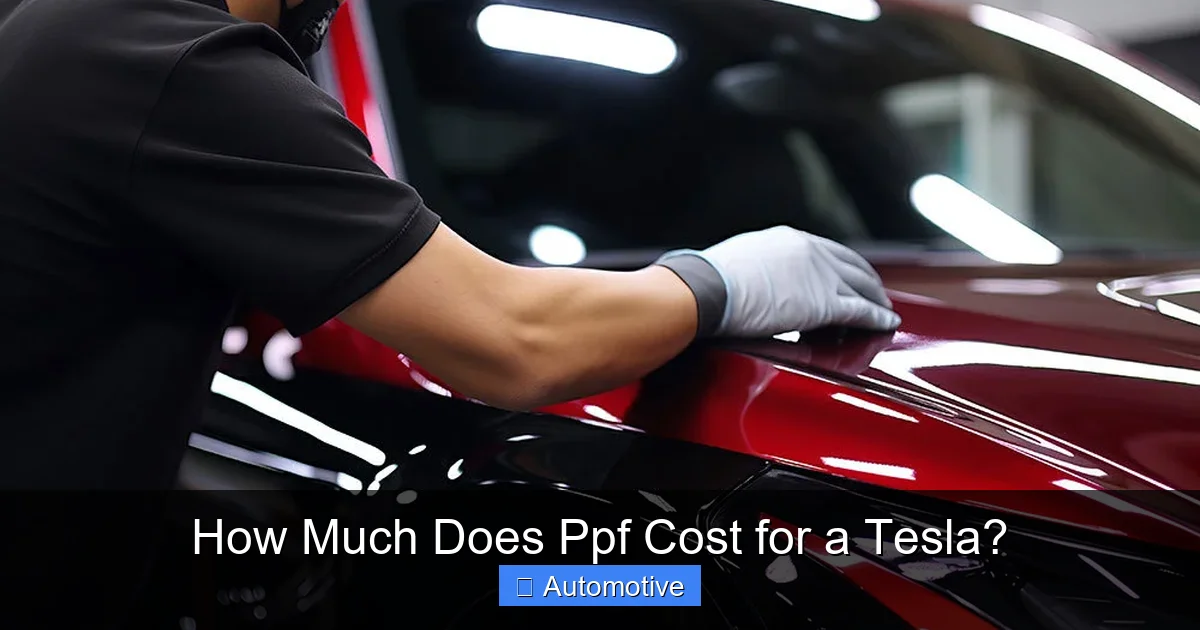
Let’s get specific. Here’s a realistic cost breakdown for each Tesla model based on current market rates (2024):
Tesla Model 3
– **Partial Coverage (hood, fenders, mirrors, bumper)**: $1,600–$2,200
– **Full Front (including headlights and rocker panels)**: $2,400–$3,200
– **Full-Body Wrap**: $3,800–$4,800
The Model 3’s compact size and flat panels make it one of the more affordable Teslas to wrap. Many owners choose full-front coverage for daily driving protection.
Tesla Model Y
– **Partial Coverage**: $1,700–$2,400
– **Full Front**: $2,600–$3,500
– **Full-Body Wrap**: $4,000–$5,000
The Model Y shares much of its design with the Model 3 but has a taller profile and larger rear hatch—adding slightly to material and labor costs.
Tesla Model S
– **Partial Coverage**: $2,000–$2,800
– **Full Front**: $3,000–$4,000
– **Full-Body Wrap**: $4,500–$5,500
The Model S’s long hood and sweeping curves require more precision during installation, increasing labor time.
Tesla Model X
– **Partial Coverage**: $2,300–$3,200
– **Full Front**: $3,500–$4,500
– **Full-Body Wrap**: $5,000–$6,500
The falcon-wing doors and complex rear structure make the Model X the most challenging—and expensive—Tesla to wrap. Full-body jobs here are rare but doable with expert hands.
*Note: These prices include premium film (XPEL or equivalent) and professional installation. DIY kits are cheaper ($500–$1,200) but not recommended for Teslas due to the risk of errors.*
Partial vs. Full-Body PPF: Which Is Right for You?

Visual guide about How Much Does Ppf Cost for a Tesla?
Image source: autofilmspecialists.com
Choosing between partial and full-body PPF comes down to your driving habits, budget, and how much you value your Tesla’s appearance.
Partial Coverage: The Practical Choice
If you’re on a budget or primarily drive in urban areas, partial coverage is a smart move. It protects the most vulnerable areas—front bumper, hood, fenders, and mirrors—where 90% of rock chips occur. It’s also easier to maintain and replace if needed.
Many Tesla owners start with partial coverage and upgrade later. Some installers even offer “upgrade paths,” where you can add door panels or rear bumper coverage down the line.
Full-Body Wrap: The Ultimate Protection
If you’re a perfectionist, frequently drive on highways, or plan to keep your Tesla for 5+ years, full-body PPF is worth the investment. It ensures every inch of paint is shielded, maintaining that factory-fresh look.
Full wraps are especially popular among Tesla owners who lease their vehicles—since lease returns are graded on condition, a protected car can mean lower wear-and-tear fees.
However, full-body jobs take 2–4 days to complete and require meticulous attention to detail. They’re also harder to remove if you ever want to sell the car (though most buyers appreciate the protection).
Hybrid Options
Some installers offer custom “hybrid” packages. For example:
– Full front + door edges + rear bumper = ~$3,200
– Full front + rocker panels + mirrors = ~$2,800
These let you tailor protection to your needs without going full-body.
DIY vs. Professional Installation: Why You Should Go Pro
You might be tempted by DIY PPF kits sold online for under $1,000. But before you grab your squeegee, consider this: **Teslas are not DIY-friendly when it comes to PPF.**
The Risks of DIY PPF
– **Bubbles and Wrinkles**: Without a dust-free environment and proper technique, air gets trapped under the film.
– **Misalignment**: Pre-cut kits may not fit Tesla’s exact contours, leading to gaps or overlaps.
– **Edge Lifting**: Improper sealing causes film to peel at edges, especially in heat or rain.
– **Sensor Interference**: Cutting too close to cameras or radar sensors can disrupt Autopilot.
We’ve seen cases where DIYers spent $800 on a kit, ruined their paint during removal, and ended up paying $3,000 to have a pro fix it.
Benefits of Professional Installation
– **Climate-Controlled Booths**: Reduces dust and ensures adhesion.
– **Precision Cutting**: Plotters use digital patterns specific to your Tesla model and year.
– **Warranty Coverage**: Most pros offer 5–10 year warranties against yellowing, peeling, or cracking.
– **Post-Install Support**: Need a touch-up? Certified shops often provide free minor repairs.
Look for installers with Tesla-specific experience. Many post before-and-after photos on Instagram or Tesla forums—check those out before booking.
Maintaining Your Tesla’s PPF
Once your PPF is installed, keeping it in top shape is easy—but requires some care.
Washing Tips
– Use a pH-neutral car shampoo (avoid dish soap—it strips protective oils).
– Wash every 1–2 weeks to prevent buildup.
– Use the two-bucket method (one for soap, one for rinse) to avoid scratching.
– Dry with a microfiber towel or air blower.
What to Avoid
– Automatic car washes with harsh brushes (touchless is okay).
– Abrasive polishes or waxes with fillers (they can cloud the film).
– Parking under trees for long periods (sap and bird droppings eat through film over time).
Self-Healing Maintenance
If you notice light scratches, park in the sun or use a heat gun (on low) to activate the self-healing layer. For deeper marks, consult your installer—they may offer touch-up services.
Most PPF lasts 7–10 years with proper care. After that, it can be safely removed without damaging the paint.
Is PPF Worth It for Your Tesla?
Let’s cut to the chase: **Yes, PPF is worth it for most Tesla owners.**
Consider the cost of a single paint repair. A rock chip on a Tesla Model 3 hood can cost $300–$600 to fix properly—and that’s just one spot. Multiply that by dozens of chips over time, and PPF pays for itself.
Plus, Teslas hold their value better than most cars. A well-maintained, chip-free Tesla can fetch thousands more on the used market. PPF helps preserve that resale value.
And let’s not forget peace of mind. Knowing your Tesla is protected lets you enjoy the drive—without constantly worrying about every pebble on the road.
If you’re still on the fence, start with partial coverage. It’s affordable, effective, and reversible. You can always expand later.
Final Thoughts
So, how much does PPF cost for a Tesla? As we’ve seen, the answer ranges from $1,500 to $5,000+, depending on your model, coverage needs, and choice of film and installer. While it’s not cheap, it’s one of the best investments you can make to protect your EV’s paint, performance, and value.
Remember: skimping on quality or installation can cost you more in the long run. Choose a reputable brand, find a certified installer, and opt for the coverage that matches your lifestyle.
Your Tesla deserves to look as good in five years as it did the day you drove it home. With PPF, it can.
Frequently Asked Questions
How long does PPF last on a Tesla?
High-quality PPF typically lasts 7 to 10 years with proper maintenance. Premium films like XPEL come with a 10-year warranty against yellowing, peeling, or cracking.
Can PPF be removed from a Tesla without damaging the paint?
Yes, professionally installed PPF can be safely removed by a certified technician using heat and gentle tools, leaving the original paint intact.
Will PPF affect my Tesla’s Autopilot sensors or cameras?
No, when installed correctly, PPF avoids sensor and camera zones. Reputable installers use precise patterns to ensure full functionality of Autopilot features.
Is PPF better than ceramic coating for a Tesla?
PPF offers physical protection against chips and scratches, while ceramic coating provides hydrophobic shine and UV resistance. Many owners use both—PPF for protection, ceramic for gloss.
Can I install PPF myself on my Tesla?
DIY kits are available, but professional installation is strongly recommended. Teslas have complex curves and sensors, making DIY prone to errors and damage.
Does Tesla offer PPF installation at service centers?
No, Tesla does not currently offer PPF installation at its service centers. However, many third-party shops specialize in Tesla-specific PPF applications.