How Much Does It Cost to Replace a Timing Belt on a Toyota 4runner?

Contents
- 1 Key Takeaways
- 2 📑 Table of Contents
- 3 Understanding the Timing Belt: Your 4Runner’s Heartbeat
- 4 When Should You Replace the Timing Belt on a Toyota 4Runner?
- 5 Breaking Down the Cost: Parts, Labor, and Total
- 6 Factors That Can Increase or Decrease Your Final Bill
- 7 The Replacement Process: What to Expect
- 8 DIY vs. Professional: Which Path Should You Choose?
- 9 Pro Tips to Save Money and Extend Your Timing Belt’s Life
- 10 Frequently Asked Questions



Replacing the timing belt on a Toyota 4Runner is a critical maintenance task that typically costs between $500 and $1,200. The exact price depends on your model year, engine type, and labor rates in your area. Neglecting this service can lead to catastrophic engine damage, making timely replacement essential for avoiding costly repairs.
If you own a Toyota 4Runner, especially one from the 2003 to 2013 model years with the 4.0L V6 engine, the timing belt is one of the most critical maintenance items you’ll face. It’s not a part that fails often, but when it does, the consequences can be devastating and astronomically expensive. Understanding the cost to replace a timing belt on a Toyota 4Runner isn’t just about budgeting—it’s about protecting your investment and ensuring your reliable SUV keeps running for years to come. This guide will walk you through every aspect of that cost, from the parts in the box to the mechanic’s hourly rate, and give you the knowledge to make a smart decision.
Key Takeaways
- Typical Cost Range: Expect to pay $500–$1,200 for a complete timing belt replacement on a Toyota 4Runner, with V6 engines generally costing more than four-cylinder models.
- Replacement Interval: Toyota recommends replacing the timing belt every 60,000 to 90,000 miles, depending on the model year and engine type. Always check your owner’s manual.
- Labor is the Major Cost: Over 50% of the total cost is labor, as the job is labor-intensive and can take 4–8 hours, requiring removal of many engine components.
- Parts Bundle Recommended: Replace the timing belt kit, which includes the belt, tensioner, and pulleys. Skipping these can lead to premature failure and negate the service.
- Failure Consequences: On interference engines (most 4Runner V6s), a broken timing belt causes severe piston and valve damage, often resulting in a totaled engine requiring replacement.
- DIY Can Save Money: With mechanical skill and the right tools, you can reduce costs by 40–60% by doing it yourself, but it’s a complex, high-stakes job not for beginners.
- Model Year Matters: The 4Runner switched from a timing belt (2003–2013 models) to a timing chain (2014+). Verify your engine type before budgeting.
📑 Table of Contents
- Understanding the Timing Belt: Your 4Runner’s Heartbeat
- When Should You Replace the Timing Belt on a Toyota 4Runner?
- Breaking Down the Cost: Parts, Labor, and Total
- Factors That Can Increase or Decrease Your Final Bill
- The Replacement Process: What to Expect
- DIY vs. Professional: Which Path Should You Choose?
- Pro Tips to Save Money and Extend Your Timing Belt’s Life
Understanding the Timing Belt: Your 4Runner’s Heartbeat
Before we dive into dollars and cents, let’s get clear on what a timing belt actually does. Think of your 4Runner’s engine as a finely tuned orchestra. The timing belt is the conductor, synchronizing the rotation of the crankshaft (which controls the pistons) and the camshaft (which controls the valves). This precise timing ensures the intake and exhaust valves open and close at the exact right moment relative to the piston’s position. If this synchronization is lost even by a millisecond, the engine runs poorly or not at all. If the belt snaps entirely, the pistons can collide with the open valves, causing massive internal damage. This is why the timing belt replacement cost is often called “insurance” for your engine.
Interference vs. Non-Interference Engines
This distinction is crucial for understanding the risk. In an interference engine, the pistons and valves occupy the same space in the cylinder at different times. If the timing belt breaks, they collide violently. The 4.0L V6 engine found in most 4Runners from 2003–2013 is an interference design. The 2.7L 4-cylinder available in some earlier models is a non-interference engine, meaning a broken belt will simply stop the engine but won’t cause internal collision damage. This is why the cost to replace a timing belt on a Toyota 4Runner with a V6 is considered non-negotiable insurance. The potential $5,000+ engine damage far outweighs the $800 service. Later 4Runners (2014+) with the 4.0L V6 switched to a timing chain system, which is designed to last the life of the engine and eliminates this specific service.
When Should You Replace the Timing Belt on a Toyota 4Runner?
Timing belts don’t last forever. They are made of rubber and reinforced fibers that degrade with heat, oil, and age. Toyota’s official maintenance schedule for the 4Runner’s 4.0L V6 (2003-2013) recommends replacement every 90,000 miles. For the 2.7L 4-cylinder (available until 2009), the interval is every 60,000 miles. However, these are maximum intervals. Many mechanics and Toyota service bulletins suggest replacing the belt at 60,000 to 75,000 miles as a preventative measure, especially in harsh climates with extreme heat or cold, which accelerates rubber degradation. If you’ve purchased a used 4Runner with unknown service history, verifying the timing belt status should be your top priority, regardless of mileage.

Visual guide about How Much Does It Cost to Replace a Timing Belt on a Toyota 4runner?
Image source: i.ytimg.com
Warning Signs Your Timing Belt Is Failing
Unlike some components that give clear warnings, timing belts often fail without noticeable symptoms. However, you might observe:
- Ticking or tapping noises from the engine, especially on startup. This can indicate a worn tensioner or belt.
- Visible cracks, fraying, or glazing on the belt during a visual inspection (requires removal of covers).
- Engine misfires or rough running. This can be a sign the belt has jumped a tooth, altering timing.
- Oil leaks from the front seal or camshaft seals, which can degrade the belt.
If any of these appear, get the belt inspected immediately. Waiting is a gamble with your engine’s life.
Breaking Down the Cost: Parts, Labor, and Total
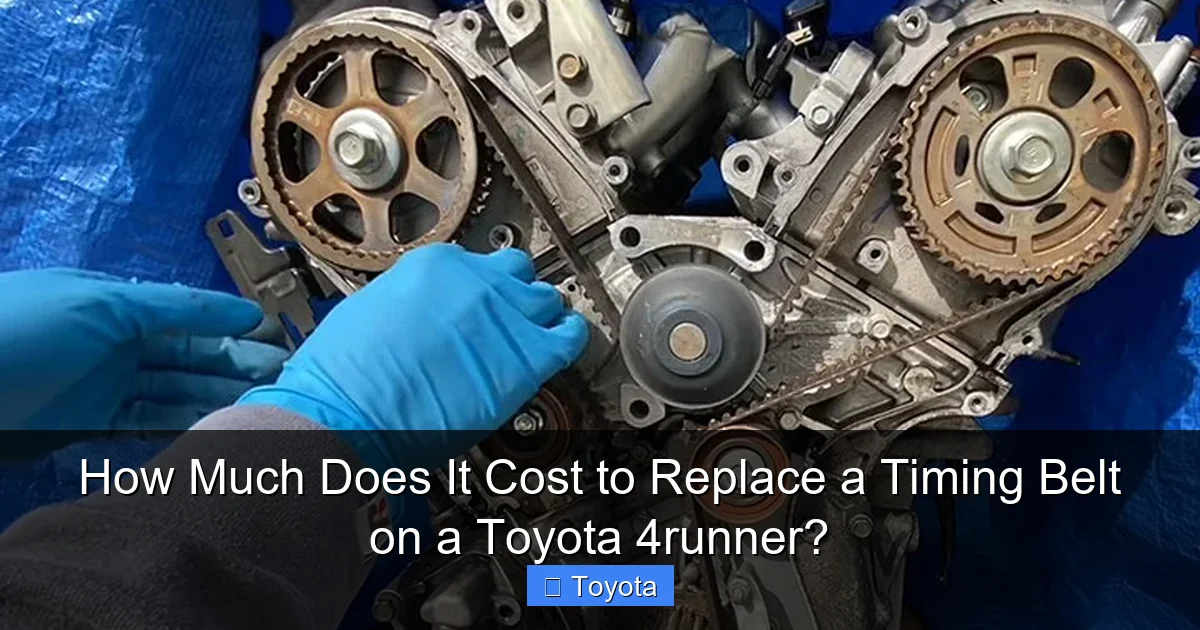
So, what’s the final number? The total cost to replace a timing belt on a Toyota 4Runner typically falls between $500 and $1,200 for the V6. The 4-cylinder is less common but generally runs $400–$900. This wide range depends on three core factors: parts quality, labor time, and your location. Let’s break it down.
Visual guide about How Much Does It Cost to Replace a Timing Belt on a Toyota 4runner?
Image source: hondatheotherside.com
Parts Cost: OEM vs. Aftermarket
The timing belt itself is relatively inexpensive—$40 to $90 for a quality aftermarket brand like Gates or Aisin. However, you should never replace just the belt. The belt drives the water pump, tensioner, and idler pulleys. These components wear at the same rate. Replacing only the belt leaves you with old, potentially failing parts that could snap the new belt. A complete timing belt kit, which includes the belt, tensioner, and all necessary pulleys (and sometimes a water pump), is the smart buy.
- OEM (Toyota) Kit: $250–$450. Highest quality, guaranteed compatibility, but premium price.
- Premium Aftermarket Kit (Gates, Aisin, Continental): $150–$300. Excellent quality, often with better materials than OEM, and significantly cheaper.
- Water Pump: If your 4Runner has a water pump driven by the timing belt (it does), you should replace it at the same time. This adds $80–$150 for the part. The labor is already being done, so it’s a huge value add to prevent a future $1,000+ water pump job that requires the same teardown.
Parts Total Estimate: $200–$550 (depending on kit choice and water pump inclusion).
Labor: Why It’s So Time-Consuming
This is where the real cost lies. Replacing a timing belt on a 4Runner is not a simple swap. The engine must be carefully aligned using special locking tools, and dozens of components must be removed to access the belt covers. This includes the alternator, power steering pump, air conditioning compressor, and various brackets. The labor time quoted by manufacturers for a 4Runner 4.0L V6 is typically 4.0 to 5.5 hours. At an average shop labor rate of $100 to $150 per hour (higher in metropolitan areas), that’s $400 to $825 in labor alone. Independent shops may be on the lower end, while dealerships command the higher rate. Always get a detailed estimate that breaks out parts and labor.
Total Cost Range for Different 4Runner Models
Putting it all together, here are realistic total cost ranges (parts + labor) for a Toyota 4Runner:
- 4Runner V6 (4.0L, 2003-2013): $650 – $1,200. This is the most common scenario. The higher end includes OEM parts, a water pump, and dealership labor.
- 4Runner 4-Cylinder (2.7L, pre-2010): $500 – $950. Less labor time required, slightly cheaper parts.
- Dealership vs. Independent Shop: A dealership using all OEM parts will be 20–30% more expensive than a reputable independent shop using premium aftermarket parts. The quality of the aftermarket parts is often comparable.
- Geographic Impact: In high-cost areas like California or New York, add 15–25% to the totals above. In rural Midwest or Southern states, you might find the lower end of the range.
Pro Tip: Always ask if the estimate includes the water pump, tensioner, and idler pulleys. If they quote a price for “belt only,” run. It’s an incomplete job.
Factors That Can Increase or Decrease Your Final Bill
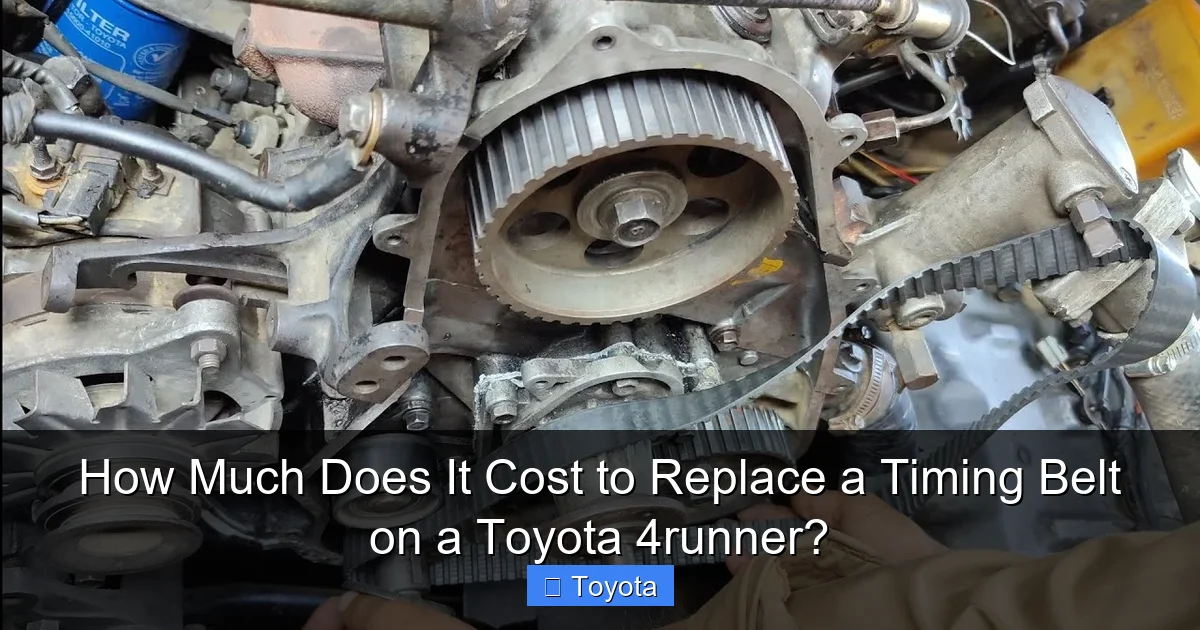
Beyond the basic parts and labor, several variables can swing your final invoice up or down. Being aware of these helps you negotiate and avoid surprises.
Visual guide about How Much Does It Cost to Replace a Timing Belt on a Toyota 4runner?
Image source: i.ytimg.com
Model Year and Engine Type
As noted, the V6 is more complex and expensive than the 4-cylinder. Also, earlier models (2003–2005) might have slightly different part numbers or procedures than later ones (2010–2013), which can affect parts availability and labor time. Always provide your exact VIN when getting a quote to ensure accuracy. If your 4Runner is a 2014 or newer model, you likely have a timing chain, not a belt, so this entire service is not applicable. Confirm by checking your owner’s manual or having a mechanic look.
Additional Parts That Often Need Replacement
A thorough mechanic will inspect all related components. While the belt, tensioner, and pulleys are the core, other items may be worn:
- Front Crankshaft Seal & Camshaft Seals: These rubber seals sit right where the belt runs. They dry out and leak over time. Replacing them during the belt job adds minimal labor (they’re already exposed) but $20–$50 in parts. It’s highly recommended to do them preventatively.
- Thermostat Housing/Gasket: Often located near the timing cover. If it’s leaking, replace it now.
- Drive Belts (Serpentine Belt): Since the front of the engine is already disassembled, replacing the accessory drive belt for $30–$60 is smart preventative maintenance.
Ask for a “complete inspection” when the timing cover is off. Addressing these small items now saves hundreds in future labor.
Your Geographic Location and Shop Choice
Labor rates are the biggest variable. A dealership in Los Angeles might charge $180/hour, while a trusted local shop in Austin might charge $110/hour. That $70 difference over 5 hours is $350. Don’t choose a shop based on price alone. Look for reviews specifically mentioning “timing belt” or “4Runner.” A botched timing job will destroy your engine. Also, independent shops specializing in Japanese vehicles often have more experience with 4Runners than a generalist shop. For those in colder climates, consider that shops may be busier in spring/fall, affecting availability and pricing.
The Replacement Process: What to Expect
Knowing the steps involved helps you understand why it costs what it does and what to look for in a quote. Here is a simplified overview of the process for a 4.0L V6 4Runner.
Tools and Equipment Needed
This is not a socket-wrench-only job. Required tools include:
- Specialty Tools: Crankshaft and camshaft locking tools (Toyota-specific). These are mandatory for proper alignment.
- Standard Tools: Full socket set, torque wrench, breaker bars, screwdrivers, pliers.
- Lifting Equipment: Jack, jack stands, and possibly an engine support bar to hold the engine while removing motor mounts.
The need for these specialized locking tools is a major reason many DIYers opt for a professional—they can cost $200–$400 to purchase for a one-time job.
Detailed Replacement Steps
- Preparation: Disconnect the battery. Drain coolant if the water pump is being replaced. Remove the serpentine belt and all accessories (alternator, PS pump, AC compressor) from the front of the engine.
- Access: Remove the timing belt covers (usually two or three pieces). This exposes the belt and components.
- Locking: This is the most critical step. Using the special tools, lock the crankshaft in position (usually at top dead center for cylinder #1). Then lock both camshafts. If this is done wrong, the engine will be out of time.
- Removal: Release the tensioner, remove the old belt, and take off the tensioner and idler pulleys.
- Installation: Install the new idler pulleys and tensioner (torque to spec). Place the new belt following the exact routing diagram (often under the hood or in the service manual). Apply tension with the new tensioner.
- Verification: Double-check that all timing marks are aligned. Rotate the crankshaft two full revolutions by hand to ensure no binding and that marks return to correct positions.
- Reassembly: Reinstall all covers, accessories, belts, and reconnect the battery. Refill coolant if drained.
- Start and Check: Start the engine, listen for abnormal noises, and check for leaks. A subsequent alignment check is wise as removing front-end components can affect steering geometry.
Why Professional Installation Is Often Recommended
The process is intricate. A single mistake—like a camshaft not properly locked, a bolt torqued incorrectly, or a belt installed one tooth off—can result in bent valves and ruined pistons. The cost of a professional timing belt replacement is cheap insurance against a $5,000+ engine replacement. Professionals have the experience, the specific factory manuals, and the calibrated tools to do it right the first time. For a vehicle like the 4Runner, which is often used for off-road adventures and towing, you cannot afford a reliability issue stemming from a DIY timing job gone wrong.
DIY vs. Professional: Which Path Should You Choose?
Given the high labor cost, many mechanically inclined owners consider doing it themselves. Here’s a realistic look at both sides.
Skills and Tools Required for DIY
To attempt this job, you should be an advanced DIYer with extensive experience in engine repair. You need to understand engine timing, be meticulous with documentation (taking photos of every step), and have a deep socket set and torque wrench. Crucially, you must acquire the official Toyota factory service manual for your specific model year—it’s the only reliable guide for this job. The special locking tools are non-negotiable. Budget $300–$500 for these tools if you don’t have them. Total DIY cost (parts + tool rental/purchase) could be $250–$450, a significant saving over professional labor.
Risks of a DIY Timing Belt Replacement
The risks are extreme. The primary risk is incorrect timing. If the crankshaft and camshafts are not perfectly synchronized when you start the engine, interference engines will self-destruct in seconds. Second, improper torque on the tensioner pulley or camshaft gear bolts can cause them to fail later. Third, damaging components during reassembly (like overtightening a cover bolt and cracking it) is easy. Finally, if you make a mistake, your insurance won’t cover it, and you’ll be faced with a full engine rebuild or replacement. For most people, this risk is not worth the savings.
When to Definitely Call a Professional
Call a professional if:
- You have never set engine timing before.
- You do not have or cannot obtain the factory service manual and special tools.
- Your 4Runner is your daily driver or primary vehicle with no backup transportation.
- The engine has high mileage (200,000+ miles). Additional wear on bearings and seals makes the job more sensitive.
- You simply value peace of mind and warranty on the work. Many reputable shops offer a 12-month/12,000-mile warranty on their timing belt work.
Bottom Line: If you have to ask if you’re qualified, you probably aren’t. This is a “hire a professional” job for 95% of owners. The cost of a professional is the price of certainty.
Pro Tips to Save Money and Extend Your Timing Belt’s Life
Even if you go pro, you can optimize the value and longevity of the service.
Shop Around for the Best Deal
Get at least three detailed, written estimates. Ensure each quote specifies: exact part numbers (or brand names), inclusion of tensioner/pulleys/water pump, labor hours, and labor rate. A phone call to a few independent shops specializing in Toyotas will often yield the best combination of price and expertise. Don’t be afraid to politely negotiate, especially if you’re a repeat customer or can pay cash.
Consider a Timing Belt Kit
Never buy just the belt. Always purchase a complete timing belt kit. These kits are engineered so all components wear at the same rate and are guaranteed to work together. Buying individual parts might save $20 upfront but risks mismatched components or a future failure of an old tensioner that destroys your new belt. The kit is the only sensible choice.
Regular Maintenance to Avoid Premature Wear
You can help your timing belt reach its intended service life by:
- Avoiding oil and coolant leaks. These fluids degrade rubber. Fix any front main seal, cam seal, or water pump leaks immediately.
- Replacing the serpentine belt and tensioner on schedule. A slipping accessory belt can cause excessive heat near the timing cover.
- Not overheating the engine. A consistently high-running engine cooks the timing belt. Maintain your cooling system.
- Following the replacement interval strictly. Don’t “stretch” it to 100,000 miles. The cost of a belt is trivial compared to an engine.
By being proactive, you ensure your 4Runner’s heart keeps beating strong without unexpected, budget-busting repairs. Remember, the cost to replace a timing belt on a Toyota 4Runner is a planned expense—a necessary investment in your vehicle’s future reliability and your peace of mind.
Frequently Asked Questions
What is the average cost to replace a timing belt on a Toyota 4Runner?
The average cost for a Toyota 4Runner with the 4.0L V6 engine (2003-2013) is between $650 and $1,200. This includes a complete kit with a new water pump, tensioner, and pulleys. The 4-cylinder model is slightly less expensive, typically $500–$900.
How do I know if my 4Runner has a timing belt or chain?
4Runners from the 2003–2013 model years with the 4.0L V6 engine have a timing belt. The 2.7L 4-cylinder (available until 2009) also uses a belt. All 4Runner models from 2014 onward use a maintenance-free timing chain. Check your owner’s manual or look for a timing belt cover on the front of the engine.
What happens if the timing belt breaks on my 4Runner?
On 4Runner models with the 4.0L V6 (an interference engine), a broken timing belt causes the pistons to collide with the open valves. This results in severe bent valves, damaged pistons, and likely a destroyed cylinder head. The repair cost often exceeds $5,000, making the belt replacement a critical preventative service.
Can I replace the timing belt on my 4Runner myself to save money?
While possible for advanced DIYers with the proper tools (special locking tools, torque wrench) and the factory service manual, it is a high-risk job. One mistake can destroy the engine. For most owners, the risk far outweighs the 40–60% potential savings. Professional installation is strongly recommended.
Should I replace the water pump at the same time as the timing belt?
Absolutely yes. The water pump is driven by the timing belt on the 4Runner. The labor to replace it separately is identical to the belt job, as the engine must be disassembled either way. Replacing it with the belt adds minimal parts cost but prevents a future, identical labor bill and potential overheating disaster.
What are the signs that my timing belt is failing?
Warning signs are rare but can include a ticking noise from the engine, visible cracks or fraying on the belt (during inspection), engine misfires, or oil/coolant leaks from the front seals. However, timing belts often fail without warning. Strict adherence to the replacement interval is the only reliable prevention strategy.