
How Much Does It Cost to Fix an Overheating Car?

An overheating car can lead to serious engine damage if ignored. Repair costs vary widely—from $100 for a thermostat to over $2,000 for a blown head gasket—depending on the root cause and vehicle type.
Key Takeaways
- Costs range from $100 to $2,500+ depending on the issue, with minor fixes like coolant leaks being affordable and major engine repairs being expensive.
- Common causes include low coolant, faulty thermostats, radiator problems, and water pump failure—each with different repair price tags.
- Ignoring overheating can cause catastrophic engine damage, turning a $200 fix into a $5,000+ rebuild or replacement.
- DIY fixes can save money for simple issues like topping off coolant or replacing a radiator cap, but complex repairs should go to a professional.
- Regular maintenance prevents overheating—checking coolant levels, hoses, and the radiator can avoid costly repairs down the road.
- Labor costs significantly impact total price, especially for hard-to-reach components like the water pump or head gasket.
- Older or high-mileage vehicles may cost more to repair due to worn parts and compatibility issues with modern components.
📑 Table of Contents
How Much Does It Cost to Fix an Overheating Car?
You’re driving down the highway, enjoying the breeze through your open window, when suddenly—your temperature gauge spikes into the red. Your engine starts to whine, steam pours from under the hood, and panic sets in. You pull over, heart racing, wondering: How much is this going to cost me?
An overheating car is one of the most stressful automotive emergencies a driver can face. It’s not just inconvenient—it can lead to serious, expensive damage if not addressed quickly. The cost to fix an overheating car varies dramatically, ranging from as little as $100 for a simple part replacement to over $2,500 for major engine repairs. The final price depends on the root cause, your vehicle’s make and model, labor rates in your area, and whether you choose to DIY or hire a professional mechanic.
In this guide, we’ll break down the most common causes of car overheating, explain what each repair typically costs, and offer practical tips to help you avoid future problems. Whether you’re dealing with a minor coolant leak or a blown head gasket, understanding your options can save you time, money, and a lot of stress.
Common Causes of Car Overheating and Their Repair Costs
Not all overheating issues are created equal. Some are quick fixes; others require extensive work. Let’s look at the most frequent culprits behind engine overheating and how much each repair might set you back.
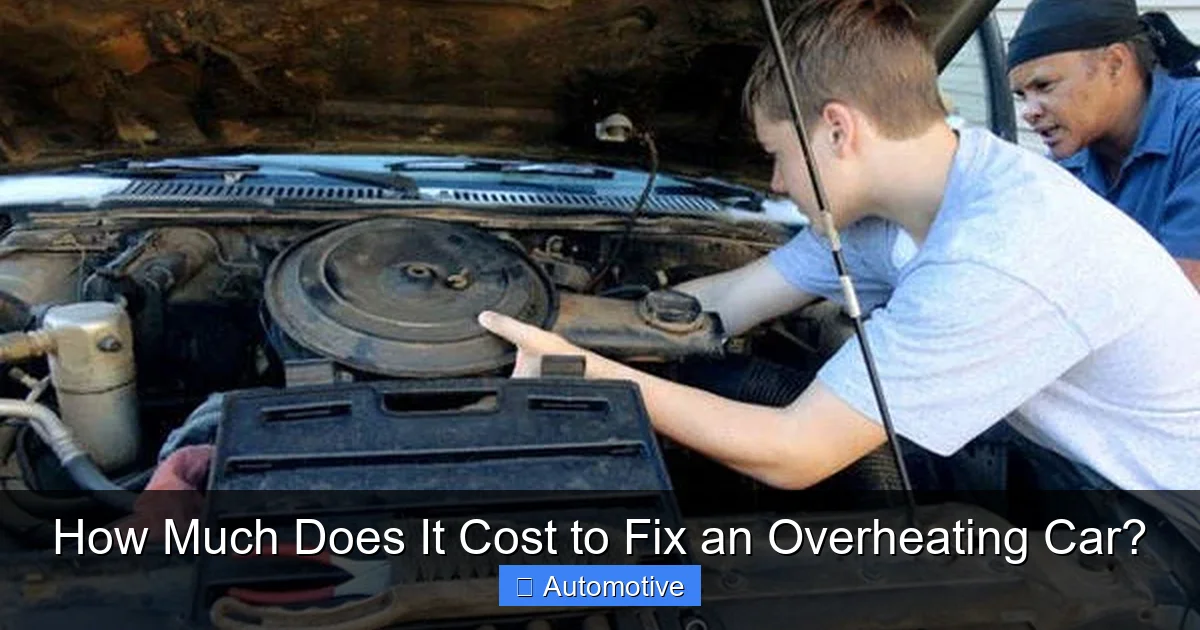
Visual guide about How Much Does It Cost to Fix an Overheating Car?
Image source: images03.military.com
Low Coolant Level
One of the simplest and most common reasons a car overheats is low coolant (also called antifreeze). Coolant circulates through the engine, absorbing heat and transferring it to the radiator, where it’s cooled by airflow. If the coolant level drops too low—due to a leak, evaporation, or improper maintenance—the engine can’t stay cool.
Repair Cost: $50–$150
This includes the cost of coolant (around $20–$40 for a gallon) and labor to refill the system and check for leaks. If there’s a small leak in a hose or radiator cap, that might add another $50–$100. Most mechanics can top off coolant and inspect the system in under 30 minutes.
DIY Tip: You can check and refill coolant yourself if your vehicle has a coolant reservoir with “min” and “max” markings. Just make sure the engine is cool before opening the cap—hot coolant can spray and cause burns.
Faulty Thermostat
The thermostat is a small but critical component that regulates coolant flow. When the engine is cold, it stays closed to help the engine warm up quickly. Once the engine reaches operating temperature, the thermostat opens, allowing coolant to flow through the radiator. If it gets stuck closed, coolant can’t circulate, and the engine overheats.
Repair Cost: $100–$300
The thermostat itself is inexpensive—usually $20–$50—but labor can add up, especially if it’s located in a hard-to-reach spot. On some vehicles, the thermostat is housed inside the engine block or intake manifold, requiring partial disassembly. Labor typically takes 1–2 hours.
Example: On a Honda Civic, replacing a thermostat might cost around $150 total. On a Ford F-150 with a complex cooling system, it could run closer to $250.
Radiator Problems
The radiator is the heart of your car’s cooling system. It’s a network of thin tubes and fins that dissipate heat from the coolant. Over time, radiators can clog with debris, rust, or sediment, reducing their efficiency. A cracked or leaking radiator can also cause coolant loss and overheating.
Repair Cost: $200–$800
A clogged radiator might only need a flush ($80–$150), but a damaged one usually requires replacement. A new radiator costs $150–$500, and labor adds another $100–$300. Aluminum radiators are more expensive than older copper-brass models but are more efficient and lighter.
DIY Tip: You can try a radiator flush at home using a cooling system cleaner, but if the radiator is physically damaged, replacement is the only safe option.
Water Pump Failure
The water pump circulates coolant through the engine and radiator. If it fails—due to a broken impeller, worn bearings, or a leaking seal—coolant stops flowing, and the engine overheats quickly.
Repair Cost: $300–$900
The water pump itself costs $50–$200, but labor is the big expense. On many vehicles, the water pump is driven by the timing belt and located behind the engine, requiring significant disassembly. Labor can take 3–6 hours, especially if the timing belt needs replacing at the same time (which is often recommended).
Example: Replacing a water pump on a Toyota Camry might cost $500–$700. On a BMW or Audi, where parts and labor are pricier, it could exceed $1,000.
Blown Head Gasket
This is the worst-case scenario. The head gasket seals the engine block and cylinder head. If it fails, combustion gases can enter the cooling system, causing overheating, white smoke from the exhaust, and coolant contamination (often appearing as a milky oil residue).
Repair Cost: $1,500–$2,500+
This is one of the most expensive car repairs. The head gasket itself is only $50–$150, but labor is intense—mechanics must remove the cylinder head, resurface it, replace the gasket, and reassemble everything. Labor alone can cost $1,000–$2,000. On some high-performance or luxury vehicles, the cost can exceed $3,000.
Warning Sign: If your car overheats repeatedly or you notice bubbles in the coolant overflow tank, get it checked immediately—delaying a head gasket repair can warp the engine block.
Cooling Fan Issues
The radiator fan pulls air through the radiator when the car is idling or moving slowly. If the fan doesn’t turn on—due to a bad motor, relay, or temperature sensor—the engine can overheat in traffic.
Repair Cost: $100–$400
A new fan motor costs $50–$150, and a relay or sensor might be $20–$50. Labor is usually 1–2 hours. Some vehicles have dual fans, which can double the cost.
DIY Tip: You can test the fan by turning on the AC—if the fan doesn’t spin, the issue might be electrical. Check fuses and relays first before replacing the motor.
Clogged or Leaking Hoses
Coolant hoses carry fluid between the engine, radiator, and heater core. Over time, they can crack, swell, or develop leaks. A burst hose can cause rapid coolant loss and overheating.
Repair Cost: $100–$300
A new hose costs $10–$50, and labor is minimal (30–60 minutes). Mechanics often replace all hoses during a cooling system service to prevent future failures.
Factors That Influence Repair Costs
Even for the same problem, repair costs can vary widely. Here’s what affects the final price tag.
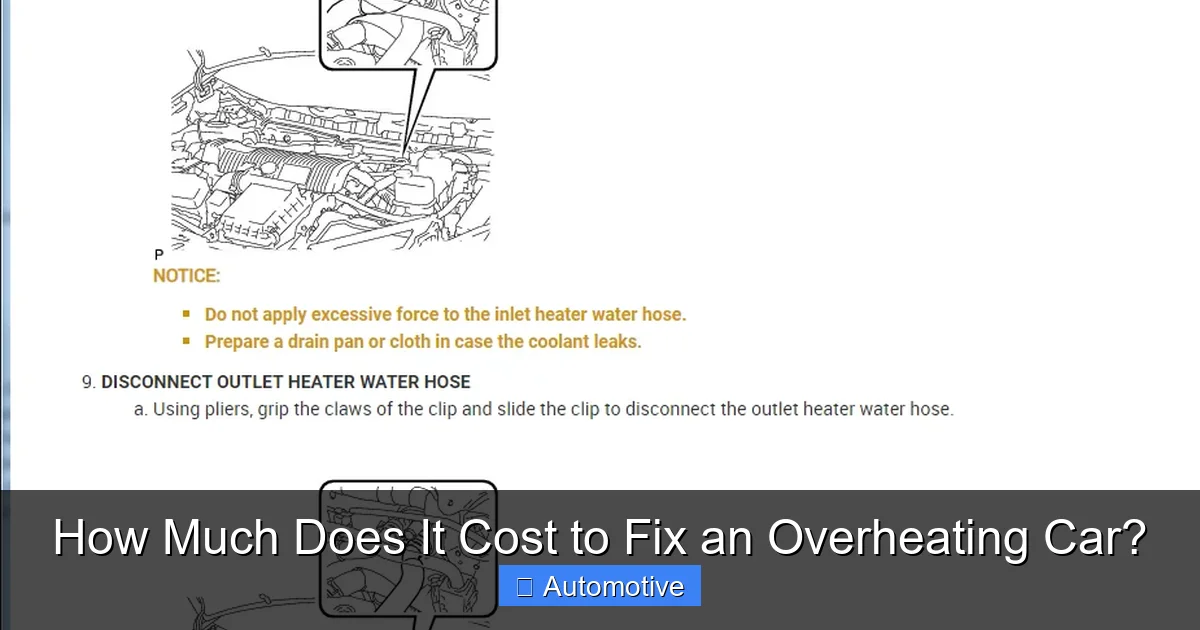
Visual guide about How Much Does It Cost to Fix an Overheating Car?
Image source: 2carpros.com
Vehicle Make and Model
Luxury, performance, and imported vehicles often have higher parts and labor costs. For example, replacing a thermostat on a Toyota Corolla might cost $150, while the same job on a Mercedes-Benz could run $300 or more due to specialized tools and harder access.
Labor Rates
Labor costs depend on your location and the shop you choose. Dealerships charge $100–$200 per hour, while independent mechanics might charge $70–$120. Rural areas tend to have lower rates than big cities.
Parts Quality
OEM (original equipment manufacturer) parts are more expensive than aftermarket ones. While OEM ensures compatibility, quality aftermarket parts can save money without sacrificing performance.
Additional Repairs
Sometimes, fixing one issue reveals another. For example, replacing a water pump might uncover a worn timing belt that needs replacement too. Always ask for a full inspection to avoid surprise costs.
DIY vs. Professional Repairs: What You Should Know
Some overheating fixes are simple enough for a weekend mechanic. Others require specialized tools and expertise.
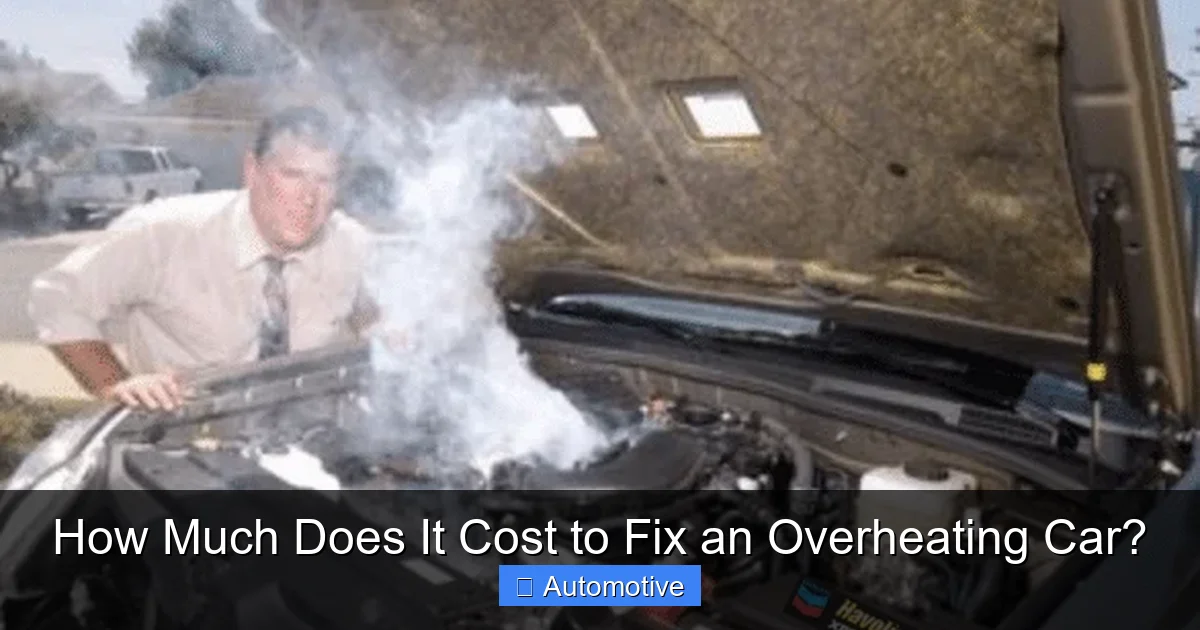
Visual guide about How Much Does It Cost to Fix an Overheating Car?
Image source: kernersvilleautocenter.com
DIY-Friendly Repairs
- Topping off coolant
- Replacing a radiator cap
- Flushing the cooling system
- Changing coolant hoses (if accessible)
These tasks can save you $50–$150 in labor. Just make sure to use the correct coolant type and bleed air from the system properly.
Leave It to the Pros
- Water pump replacement
- Head gasket repair
- Thermostat replacement (if hard to access)
- Electrical diagnostics (fan, sensor, relay issues)
These jobs involve complex disassembly, precise torque specs, and risk of further damage if done incorrectly.
How to Prevent Your Car from Overheating
An ounce of prevention is worth a pound of cure—especially when it comes to engine repairs.
Regular Maintenance
Check your coolant level monthly and top it off if low. Have the cooling system flushed every 30,000–50,000 miles. Inspect hoses and belts for cracks or wear.
Watch for Warning Signs
Early signs of overheating include:
- Rising temperature gauge
- Sweet smell (from leaking coolant)
- Steam or smoke from under the hood
- Reduced engine power
If you notice any of these, pull over safely and turn off the engine.
Use the Right Coolant
Always use the coolant type specified in your owner’s manual. Mixing types can cause corrosion or gel formation, clogging the system.
Don’t Ignore the Radiator Cap
A faulty radiator cap can’t maintain proper pressure, leading to coolant boiling and overheating. Replace it every 5 years or if it’s cracked or worn.
When to Call a Mechanic Immediately
Some overheating issues can’t wait. Call a tow truck and a mechanic if:
- The temperature gauge stays in the red
- You see steam or smoke
- Coolant is bubbling or smells burnt
- Your car loses power or stalls
Continuing to drive can warp the cylinder head or crack the engine block—repairs that cost thousands.
Conclusion
The cost to fix an overheating car depends on what’s causing the problem. Simple fixes like topping off coolant or replacing a thermostat are affordable and often DIY-friendly. But if the issue is a blown head gasket or failed water pump, you could be looking at a major repair bill.
The key is to act quickly. Overheating doesn’t just damage your engine—it can leave you stranded and facing emergency towing and repair costs. Regular maintenance, paying attention to warning signs, and addressing small issues early can save you hundreds, if not thousands, in the long run.
Remember: your car’s cooling system is its lifeline. Treat it with care, and it’ll keep you cool—on the road and in your wallet.
Frequently Asked Questions
How much does it cost to fix an overheating car?
The cost to fix an overheating car ranges from $100 for minor issues like low coolant to over $2,500 for major repairs like a blown head gasket. The exact price depends on the cause, vehicle type, and labor rates.
Can I drive my car if it’s overheating?
No. Driving an overheating car can cause severe engine damage, including warped cylinder heads or cracked engine blocks. Pull over safely, turn off the engine, and call for help.
What are the first signs of an overheating engine?
Common signs include a rising temperature gauge, steam or smoke from under the hood, a sweet smell (from coolant leaks), and reduced engine performance.
Can I fix an overheating car myself?
Simple fixes like refilling coolant or replacing a radiator cap can be done at home. However, complex repairs like water pump or head gasket replacement should be handled by a professional mechanic.
How often should I check my coolant level?
Check your coolant level at least once a month and before long trips. Also inspect hoses and the radiator cap for cracks or leaks during routine maintenance.
Is a blown head gasket covered by warranty?
It depends on your vehicle’s age, mileage, and warranty terms. New car warranties often cover head gasket repairs, but older or high-mileage vehicles may not be eligible.
