How Much Does It Cost to Change Transmission Fluid in a Toyota Camry

Contents
- 1 Key Takeaways
- 2 📑 Table of Contents
- 3 Why Transmission Fluid is Your Camry’s Lifeline
- 4 Breaking Down the Cost: Professional vs. DIY
- 5 Key Factors That Influence Your Final Price
- 6 How Often Should You Really Change It? (The Interval)
- 7 Warning Signs Your Camry Needs Immediate Attention
- 8 The Step-by-Step: What Happens During a Service
- 9 Conclusion: A Smart Investment in Peace of Mind
- 10 Frequently Asked Questions

Car Jump Starter

Car Back Support Cushion

Tire Pressure Monitoring System (TPMS)

Car Windshield Wiper Blades
Changing the transmission fluid in a Toyota Camry typically costs between $150 and $350 when done professionally at a repair shop or dealership. A DIY approach can save you money, costing only $50 to $100 for the fluid and filter, but requires mechanical skill and proper tools. The exact price depends heavily on your Camry’s model year, engine, and whether it has a standard or automatic transmission. Ignoring this service can lead to expensive transmission damage, making it a critical part of your vehicle’s long-term health.
Key Takeaways
- Average Professional Cost: Expect to pay $150 to $350 for a professional transmission fluid change on a Toyota Camry, with dealerships often on the higher end.
- DIY Savings: You can perform the service yourself for $50 to $100 in parts (fluid and filter), but it requires mechanical aptitude and safety precautions.
- Model Year Matters: Newer Camrys (2018+) with complex 8-speed or 10-speed automatics often cost more and may require specialized procedures or scan tools.
- Fluid Type is Specific: Always use Toyota-approved transmission fluid (like WS or ATF WS). Using the wrong type can cause severe damage and void warranties.
- Not All Services Are Equal: A simple “drain and fill” is cheaper but only replaces 40-50% of old fluid. A full “flush” or “service” with a machine replaces nearly all fluid and is recommended for high-mileage vehicles.
- Cost vs. Consequence: Spending $250 now on a fluid change is vastly cheaper than the $3,000 to $5,000 cost of a transmission rebuild or replacement caused by neglected maintenance.
- Severe Service Shortens Intervals: If you frequently tow, drive in stop-and-go traffic, or operate in extreme heat/cold, you may need to change the fluid every 60,000 miles instead of the recommended 100,000.
📑 Table of Contents
- Why Transmission Fluid is Your Camry’s Lifeline
- Breaking Down the Cost: Professional vs. DIY
- Key Factors That Influence Your Final Price
- How Often Should You Really Change It? (The Interval)
- Warning Signs Your Camry Needs Immediate Attention
- The Step-by-Step: What Happens During a Service
- Conclusion: A Smart Investment in Peace of Mind
Why Transmission Fluid is Your Camry’s Lifeline
Let’s talk about the lifeblood of your Toyota Camry’s transmission. No, it’s not gasoline. It’s the transmission fluid, a specially engineered liquid that does far more than just lubricate. Think of it as the hydraulic fluid, coolant, and lubricant all in one for your car’s complex gearbox. In your Camry, whether it’s the smooth-shifting 6-speed automatic in a 2012 model or the sophisticated 8-speed in a 2024, this fluid is under constant stress.
Over time, that fluid breaks down. It gets contaminated with tiny metal shavings from normal wear and loses its ability to properly cool and lubricate. This degradation is silent but deadly. It leads to increased friction, overheating, and erratic shifting—the classic signs of a transmission on its last legs. Proactively changing this fluid isn’t an optional luxury; it’s a non-negotiable maintenance item that directly protects one of your car’s most expensive components. For a deeper dive into routine car upkeep, understanding the cost to change oil in a car is a great starting point, as it shares the same philosophy of preventive care.
The Dual Role: Lubrication and Hydraulics
In an automatic transmission, fluid pressure is what actually makes the gears change. The fluid’s viscosity and chemical composition are precisely calibrated to create the right pressure in the valve body. As it ages and thins out, that pressure becomes inconsistent. You might feel a harsh “clunk” into drive, a delay before it engages, or a shudder between shifts. These are your transmission’s cries for help. For manual transmission Camrys (less common but available in older models), the fluid’s primary job is lubrication, but the principle of contamination and breakdown still applies.
Breaking Down the Cost: Professional vs. DIY
So, you’ve decided to be proactive. The first question is always “how much?” The answer splits cleanly into two paths: handing your keys to a professional or rolling up your own sleeves. Let’s dissect both.
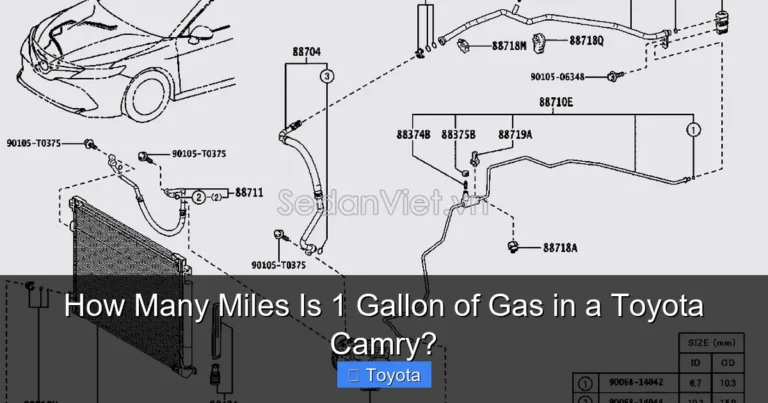
Visual guide about How Much Does It Cost to Change Transmission Fluid in a Toyota Camry
Image source: images.saymedia-content.com
The Professional Route: Dealership vs. Independent Shop
Taking your Camry to a professional is the path of least resistance and highest assurance. Costs vary significantly by location and establishment type.
- Toyota Dealership: Here, you’re paying for brand-specific expertise, OEM (Original Equipment Manufacturer) fluid, and often a more comprehensive service that includes pan removal, filter replacement, and a full fluid exchange using a machine. For a typical 2015-2020 Camry with a 6-speed automatic, expect a bill of $250 to $400. For a newer model with an 8 or 10-speed, it can creep toward $450 due to higher fluid capacity (often 10-12 quarts vs. 6-8) and more complex procedures. The dealership is the safest bet for warranty compliance and correct procedure, especially on newer vehicles.
- Independent Repair Shop / Quick Lube Center: A reputable independent mechanic focused on Japanese imports will often charge $150 to $300. They typically use high-quality aftermarket fluid (like Valvoline or Pennzoil formulations that meet Toyota specs) and may perform a drain-and-fill or a flush. Be cautious with generic quick-lube chains; while their advertised price for a “transmission service” might be $99, they often use inferior fluid and may not replace the filter, which is a critical part of the service on most Camrys.
What’s typically included in a proper professional service? The best practice is a transmission service, not just a drain-and-fill. This involves: 1) Removing the transmission pan, 2) Replacing the fluid filter (and sometimes the pan gasket), 3) Using a machine to pump new fluid through the system while old fluid exits, exchanging nearly 100% of the fluid, and 4) Checking for metal debris in the old pan—a key diagnostic indicator. Always ask exactly what the shop’s “service” entails.
The DIY Path: Savings and Serious Responsibility
For the mechanically inclined, changing your own transmission fluid is a rewarding and cost-effective project. Your main costs are parts:
- Transmission Fluid: You’ll need about 6-12 quarts, depending on the model. Genuine Toyota WS fluid is the gold standard, costing $8-$12 per quart. High-quality equivalents like Valvoline MaxLife ATF are often $6-$9 per quart and are perfectly acceptable. Budget $50 to $120 for fluid.
- Filter & Gasket: The transmission filter kit (filter + pan gasket) runs $15 to $40 on average. Never reuse the old gasket.
- Tools: You’ll need a large drain pan, a socket set, a torque wrench, and possibly a fluid pump for the fill procedure (many Camrys require filling from the dipstick tube, which is tedious without a pump). If you don’t have these, you’re looking at another $50-$150 in tool investment.
Total DIY Cost: $65 to $160, potentially saving you $100+ over a professional. However, the risks are real. Overfilling or underfilling is catastrophic. Spilling fluid on hot exhaust components is a fire hazard. Stripping the drain plug or cross-threading the fill tube leads to leaks. If you’ve never done this before, watch multiple model-specific videos, read your factory service manual, and consider having an experienced friend supervise. One mistake can turn a $100 project into a $3,000 repair.
Key Factors That Influence Your Final Price
Why does one Camry owner pay $180 and another pay $380 for the same service? Several variables are at play, and understanding them helps you get an accurate quote.

Visual guide about How Much Does It Cost to Change Transmission Fluid in a Toyota Camry
Image source: i.ytimg.com
Model Year and Transmission Type
This is the biggest factor. The Toyota Camry has used several different automatic transmissions over the years:
- 4-Speed (Pre-2002): Simple, robust, and cheap to service. Fluid capacity is low (~6 quarts).
- 5-Speed (2002-2011): The workhorse U250E/U760E. Very common, parts are plentiful and inexpensive. A standard service is on the lower end of the cost spectrum.
- 6-Speed (2012-2017): The U660E. Requires a filter change and more fluid (~8-9 quarts). Still very common and affordable to service.
- 8-Speed (2018-2023 V6 models): The Direct Shift-8AT (UA80E). This is a more complex, electronically controlled transmission. It holds more fluid (~10 quarts) and the procedure is more involved. This pushes costs up significantly.
- 10-Speed (2024+ V6): The new Direct Shift-10AT. Brand new technology, fluid capacity is higher, and specialized knowledge/tools are required, making it the most expensive to service currently.
- e-CVT (Hybrid Models): The Hybrid Synergy Drive uses a “power-split device” and specific “Hybrid Transaxle Fluid” (HTF). It’s not a conventional automatic. Service intervals and costs are unique—often higher due to the fluid’s specialized nature and the transmission’s complexity. Never assume a standard automatic service applies.
Geographic Location and Shop Type
Labor rates dictate a huge portion of the bill. In a major metropolitan area like Los Angeles or New York, independent shop labor can be $120-$180/hour. In a smaller town in the Midwest, it might be $80-$110/hour. A job that takes 2 hours in a high-cost area adds $240-$360 in labor alone, versus $160-$220 elsewhere. Dealerships universally charge higher labor rates but offer more specialized training.
The “Flush” vs. “Drain and Fill” Debate
This is a critical distinction that affects both cost and effectiveness.
- Drain and Fill (Pan Drop): The technician removes the transmission pan, replaces the filter and gasket, drains the old fluid from the pan (which holds about 40-50% of the total), and refills. This is the traditional method. It’s cheaper (less fluid, less machine time) but leaves a significant amount of old, degraded fluid in the torque converter and internal passages. Cost: $150 – $250.
- Full Fluid Exchange (Flush): A specialized machine is connected to the transmission’s cooler lines. It simultaneously pumps new fluid in while siphoning old fluid out, eventually exchanging 95%+ of the total volume. This is far more effective at removing contaminants and is the recommended service for high-mileage vehicles or those with shifting issues. It uses more fluid and machine time. Cost: $250 – $400+.
Our Recommendation: For a Camry with over 80,000 miles that has never had a proper service, opt for the full exchange if your budget allows. For a well-maintained vehicle on a regular interval, a drain and fill with filter replacement is perfectly adequate. When getting quotes, always ask “Is a filter included and is this a drain-and-fill or a full exchange?”
How Often Should You Really Change It? (The Interval)
Your owner’s manual is the bible. For many 2012-2017 Toyota Camry models, Toyota states “Every 60,000 miles under severe service” and “Every 100,000 miles under normal service.” But what does “severe service” mean? It’s not just towing a trailer. Toyota’s definition includes:

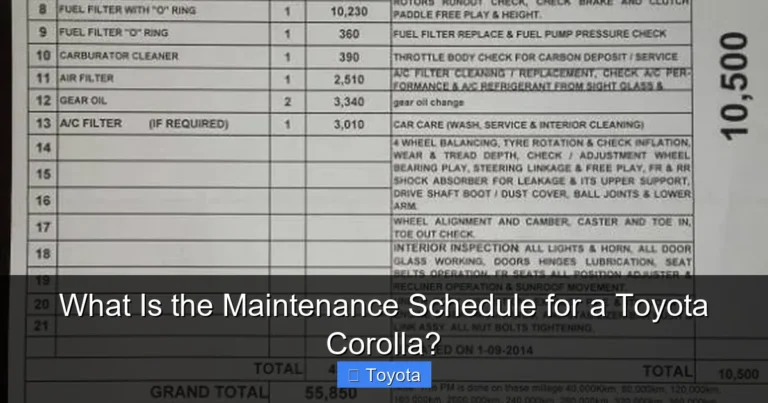
Visual guide about How Much Does It Cost to Change Transmission Fluid in a Toyota Camry
Image source: i.ytimg.com
- Mostly short trips (less than 5 miles) in cold weather.
- Extensive idling or prolonged operation in heavy traffic.
- Driving in extremely hot or cold climates.
- Operating in mountainous areas or dusty conditions.
- Delayed Engagement: You shift into Drive or Reverse, and there’s a 2-3 second delay before the car moves. This is a classic sign of low pressure from worn-out fluid.
- Harsh or Slipping Shifts: Shifts feel like a hard kick or jolt. Or, the engine RPMs surge high without a corresponding increase in speed (the transmission is slipping).
- Transmission Whine or Hum: A new, constant mechanical noise (different from the engine note) that changes pitch with engine speed often indicates fluid starvation or worn bearings.
- Fluid Leaks: Look for bright red (new) or dark brown/black (old) fluid under the car, typically near the transmission pan or cooler lines. Low fluid level is a guaranteed path to destruction.
- Burnt Smell: A sweet, burnt odor (like overheating oil) inside the car is a dire warning. The fluid has overheated and is breaking down internally.
- Vehicle Inspection & Warm-Up: The car is driven to bring the transmission to operating temperature. The technician checks for leaks and scans for any transmission-related trouble codes.
- Pan Removal: The transmission pan is unbolted. Old fluid and any debris drain out. The pan gasket is discarded.
- Filter Replacement: The old transmission filter, which traps metal particles, is unscrewed and replaced. This is a non-negotiable step for a complete service.
- Pan Cleaning & Reinstallation: The pan is meticulously cleaned, the new gasket is installed (or RTV sealant is applied per specs), and the pan is torqued to the manufacturer’s specification (over-torquing cracks pans; under-torquing causes leaks).
- Fluid Exchange: A flushing machine is connected to the transmission’s cooler line fittings. The machine cycles new fluid through while siphoning out the old, until the fluid coming out is clean and red.
- Final Fill & Check: The transmission is topped off via the dipstick tube to the exact “hot” level mark. The engine is run, shifted through all gears, and the level is re-checked and adjusted.
- Scan Tool Verification (on newer models): On CAN-bus vehicles (2018+), a scan tool may be needed to verify transmission temperature and ensure the level check is performed correctly, as the dipstick method can be inaccurate.
- Warm up the car, safely raise and support it, and place a large drain pan under the transmission pan.
- Remove all pan bolts except one on each side to let the fluid drain slowly and avoid a sudden splash.
- Once drained, carefully lower the pan, replace the filter and gasket, and reinstall the pan using a torque wrench.
- This is the tricky part: Using a fluid pump, slowly add new Toyota WS fluid through the dipstick tube. You will likely overfill it initially.
- Start the engine, let it idle in Park, and shift through all gears. The level will drop as the torque converter and internal galleries fill. Keep checking and adding until the level is correct on the dipstick when hot.
- Check meticulously for leaks around the pan and filter area.
For the average driver in a moderate climate with mostly highway miles, the 100,000-mile interval is a safe maximum. However, many mechanics and transmission specialists will tell you that for a car you plan to keep past 150,000 miles, shortening that interval to every 60,000-70,000 miles is a smart, cost-insurance move. The fluid is cheap; a transmission is not. For the latest models, always check your manual, as some newer recommendations extend to 120,000+ miles, but this is often based on the improved durability of the new fluid and transmission designs. When in doubt, err on the side of caution. This mindset applies to other maintenance too; for instance, knowing the cost to fix a tire with a nail in it helps you budget for those unexpected but common repairs.
Warning Signs Your Camry Needs Immediate Attention
Don’t wait for the mileage. Your transmission will give you clues. If you notice any of these, get the fluid checked and likely changed immediately:
The Classic Symptoms
Check the Fluid Yourself
You can perform a simple check. With the engine warmed up and running, park on level ground, shift through all gears, and then return to Park. Pull the dipstick (usually red-handled, near the back of the engine bay). Wipe it clean, reinsert fully, and pull it out again. The fluid should be bright red and smell slightly sweet. If it’s dark brown/black, smells burnt, or has metal particles glittering in it, it’s overdue for a change. If the level is low, you have a leak that must be found and fixed first.
The Step-by-Step: What Happens During a Service
Understanding the process helps you know what you’re paying for and validates a mechanic’s work. Here is the gold-standard procedure for a typical 6-speed automatic Camry (e.g., 2015 SE).
Professional Process (The Correct Way)
The DIY Process (A Condensed Overview)
If you’re confident, the steps are similar but without the machine:
Pro DIY Tip: Buy a case of fluid. You’ll likely need more than you think for the initial fill and subsequent top-offs. Never start this job without knowing exactly where your fill and dipstick tube are located for your specific year and engine.
Conclusion: A Smart Investment in Peace of Mind
The cost to change transmission fluid in your Toyota Camry is not an expense; it’s an insurance policy for your vehicle’s future. Whether you pay a professional $250 for a peace-of-mind full service or invest $80 and a Saturday to do it yourself, the return on that investment is immense. You are safeguarding a component whose replacement cost can exceed the value of an older Camry. The simple act of maintaining this fluid according to the schedule—or even slightly ahead of schedule if your driving is harsh—is the single most effective thing you can do to ensure your Camry’s transmission reliably carries you for another 100,000 miles or more. Don’t be fooled by “lifetime” fluid claims from some manufacturers; even those fluids degrade. For your Toyota, a disciplined fluid change schedule is a cornerstone of smart, long-term ownership. It keeps your shifting smooth, your fuel economy optimal, and your repair bills at zero for the transmission. That’s a value that’s truly priceless.
Frequently Asked Questions
Can I skip changing my transmission fluid if my Camry is shifting fine?
No. By the time you feel shifting problems, internal damage has likely already started. Fluid degradation is a chemical process that happens before symptoms appear. Skipping the service risks turning a $250 maintenance item into a $4,000 transmission rebuild.
What’s the difference between a transmission flush and a drain and fill?
A drain and fill removes and replaces about 40-50% of the old fluid (the amount in the pan) and replaces the filter. A full flush uses a machine to exchange nearly 100% of the fluid. The flush is more thorough and recommended for high-mileage vehicles, but both are valid services when done correctly.
Is it okay to use non-Toyota transmission fluid in my Camry?
It depends. You must use a fluid that meets Toyota’s specific specification (e.g., WS, ATF WS, or for some older models, Type T-IV). High-quality brands like Valvoline MaxLife ATF or Pennzoil Platinum ATF state they meet these specs and are generally safe. Avoid generic “universal” fluids. When in doubt, use genuine Toyota fluid for guaranteed compatibility.
My 2018 Camry has a sealed transmission. Do I still need to change the fluid?
Yes. “Sealed” means there’s no traditional dipstick for easy checking, not that the fluid is “lifetime.” Toyota still recommends a fluid change at 60,000-100,000 miles (check your manual). This service requires a professional with the proper scan tool to monitor transmission temperature and level during the procedure.
How can I tell if my transmission fluid is bad?
Check it if your car has a dipstick. Good fluid is bright red and smells slightly sweet. Bad fluid is dark brown or black, smells burnt, and may have a gritty or metallic feel. If you can’t check it, any of the driving symptoms—slipping, harsh shifts, delays—are strong indicators that the fluid is overdue for service.
Will changing the transmission fluid fix my shifting problems?
It might, if the issue is solely due to old, degraded fluid. However, if the transmission has already sustained internal damage (worn clutches, damaged solenoids), a fluid change will only provide temporary improvement or no improvement at all. It’s best as a preventive measure, not a cure for severe mechanical failure.