
How Much Does a Volkswagen Beetle Weigh

The weight of a Volkswagen Beetle varies significantly depending on the model year, trim level, and body style. From the lightweight original air-cooled models to modern turbocharged variants, understanding the Beetle’s weight helps with performance, fuel economy, and towing considerations.
Key Takeaways
- Original Beetles weighed around 1,800–2,000 pounds: Early models (1938–1979) were lightweight due to simple construction and air-cooled engines.
- New Beetle (1998–2011) weighed 2,600–3,000 pounds: Based on the Golf platform, it was heavier due to modern safety features and comfort upgrades.
- Final Generation Beetle (2012–2019) ranged from 3,000–3,300 pounds: Larger size, turbocharged engines, and added tech increased overall weight.
- Weight affects fuel efficiency and handling: Heavier Beetles consume more fuel and may have slower acceleration.
- Curb weight vs. gross vehicle weight matters: Curb weight is the car’s standard weight; GVWR includes passengers, cargo, and fluids.
- Convertible models are slightly heavier than coupes: The retractable roof mechanism adds structural reinforcement and weight.
- Trim level and options impact weight: Higher trims with leather, sunroofs, and premium audio systems add pounds.
📑 Table of Contents
- How Much Does a Volkswagen Beetle Weigh? A Complete Guide
- The Original Volkswagen Beetle: Lightweight and Simple
- The New Beetle: A Modern Take with Added Pounds
- The Final Generation Beetle: Heavier, More Powerful, and Tech-Savvy
- Factors That Influence Volkswagen Beetle Weight
- Why Beetle Weight Matters: Practical Implications
- Conclusion: Choosing the Right Beetle for Your Needs
How Much Does a Volkswagen Beetle Weigh? A Complete Guide
If you’ve ever wondered how much a Volkswagen Beetle weighs, you’re not alone. Whether you’re considering buying one, towing it, or just curious about its performance, weight plays a crucial role in how a car drives, handles, and performs. The Volkswagen Beetle—iconic for its rounded shape and cheerful personality—has evolved dramatically since its debut in the late 1930s. With such a long history, it’s no surprise that the Beetle’s weight has changed significantly across generations.
From the tiny, air-cooled original models to the modern, tech-packed final generation, the Beetle has grown in size, power, and complexity. And with that growth comes added weight. But why does weight matter? Well, it affects everything from fuel economy and acceleration to braking distance and handling. A lighter car typically uses less fuel and feels more nimble, while a heavier one may offer more stability at high speeds but could be slower to respond. Understanding the weight of your Beetle helps you make informed decisions about maintenance, modifications, and even insurance.
In this comprehensive guide, we’ll break down the weight of the Volkswagen Beetle across all major generations, explore what contributes to its heft, and explain how weight impacts real-world driving. Whether you’re a longtime Beetle fan or just exploring this beloved car for the first time, this article will give you everything you need to know.
The Original Volkswagen Beetle: Lightweight and Simple
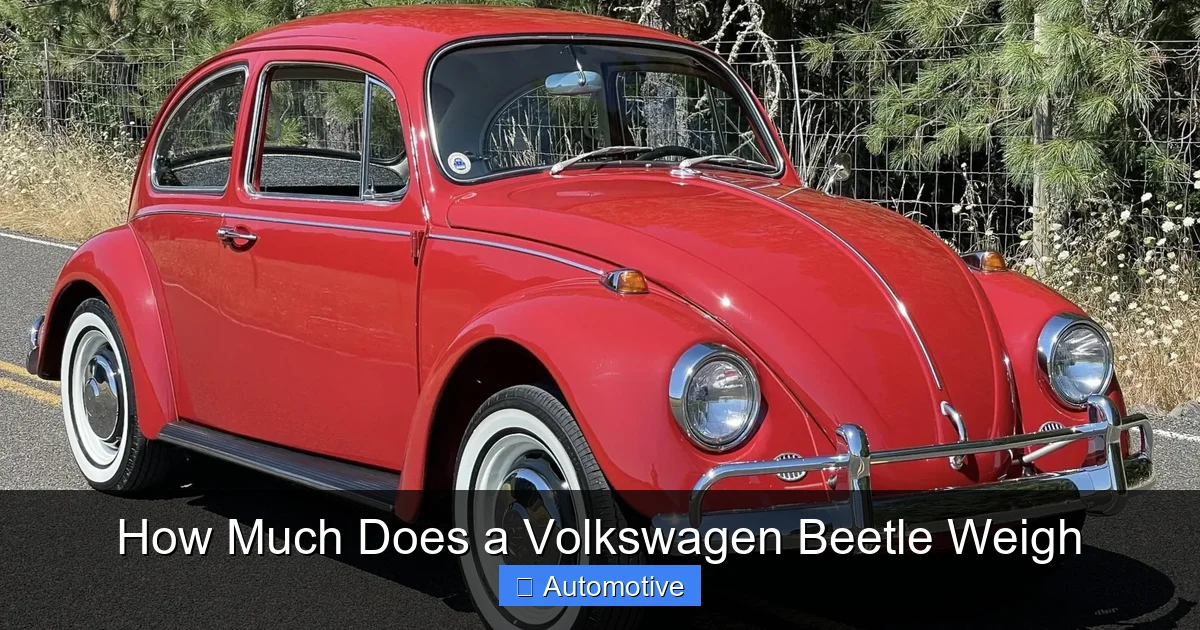
Visual guide about How Much Does a Volkswagen Beetle Weigh
Image source: bringatrailer.com
When Ferdinand Porsche designed the original Volkswagen Beetle in the 1930s, his goal was to create an affordable, reliable car for the average family. Known in German as the “Käfer” (meaning “beetle”), this car was built to be simple, durable, and lightweight. And it delivered on all fronts.
Weight Range of the Original Beetle
The original Volkswagen Beetle, produced from 1938 to 2003 (with the final models made in Mexico), typically weighed between 1,800 and 2,000 pounds (about 816 to 907 kilograms). Early models, especially those from the 1940s and 1950s, were on the lighter end of that range. As the car evolved, minor upgrades and safety improvements added a bit of weight over the decades, but it remained remarkably light compared to modern vehicles.
For example, a 1967 Volkswagen Beetle with a 1.5-liter air-cooled engine weighed approximately 1,900 pounds. That’s lighter than many modern compact cars today. The secret to its low weight? A simple steel unibody construction, minimal interior features, and an engine that sat in the rear, eliminating the need for a heavy driveshaft.
Why Was the Original Beetle So Light?
Several design choices contributed to the Beetle’s lightweight nature:
– Air-cooled engine: Unlike modern water-cooled engines, the Beetle’s rear-mounted engine didn’t require a radiator, coolant, or complex plumbing. This saved both weight and space.
– Minimalist interior: Early Beetles had basic seats, no power accessories, and little sound insulation. There were no touchscreens, navigation systems, or heated seats—just the essentials.
– Compact size: The Beetle was small by design, measuring about 14 feet long and 5.5 feet wide. Less metal and glass meant less weight.
– Simple suspension: The torsion bar suspension system was lightweight and reliable, though not as refined as modern setups.
This lightweight construction gave the original Beetle a fun, nimble feel on the road. It wasn’t fast—most models produced between 30 and 50 horsepower—but it was efficient and easy to maneuver in tight city spaces.
Real-World Impact of the Beetle’s Weight
The low weight of the original Beetle had several practical benefits:
– Fuel efficiency: With a curb weight under 2,000 pounds, the Beetle could achieve 25–30 miles per gallon, which was excellent for its time.
– Easy to park and drive: Its small size and light steering made it ideal for urban driving.
– Lower maintenance costs: Fewer components and simpler systems meant fewer things could go wrong.
However, the lightweight design also had drawbacks. The car could feel unstable at high speeds, especially in crosswinds. And with minimal crash protection, safety was a concern—especially as traffic speeds increased in the latter half of the 20th century.
Still, for millions of drivers around the world, the original Beetle’s charm and simplicity outweighed its limitations. Its low weight was part of what made it so accessible and enjoyable to drive.
The New Beetle: A Modern Take with Added Pounds
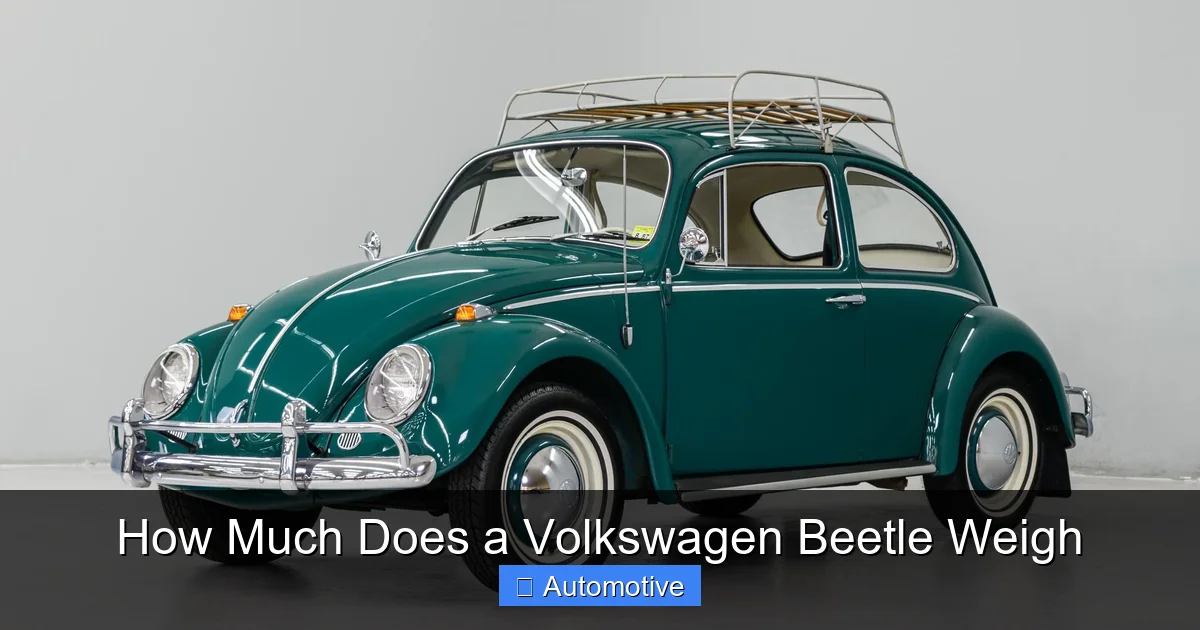
Visual guide about How Much Does a Volkswagen Beetle Weigh
Image source: cdn.dealeraccelerate.com
In 1998, Volkswagen revived the Beetle with the introduction of the “New Beetle.” This wasn’t just a retro-styled car—it was a completely modern vehicle built on the Volkswagen Golf platform. With updated safety features, a water-cooled engine, and a host of comfort options, the New Beetle was a significant departure from its predecessor.
Weight Range of the New Beetle (1998–2011)
The New Beetle weighed considerably more than the original, tipping the scales between 2,600 and 3,000 pounds (about 1,179 to 1,361 kilograms). The base models started around 2,600 pounds, while higher trims with automatic transmissions, sunroofs, and premium audio could reach up to 3,000 pounds.
For example, a 2005 Volkswagen New Beetle with a 2.0-liter inline-4 engine and manual transmission weighed approximately 2,750 pounds. A similar model with an automatic transmission and leather interior might weigh closer to 2,900 pounds.
Why Did the New Beetle Weigh More?
Several factors contributed to the increased weight:
– Modern safety features: The New Beetle came with dual airbags, anti-lock brakes (ABS), and reinforced side-impact beams—all of which added weight.
– Water-cooled engine: Unlike the original’s air-cooled engine, the New Beetle used a front-mounted, water-cooled engine. This required a radiator, coolant system, and more complex engine bay components.
– Improved comfort and convenience: Features like power windows, air conditioning, cruise control, and upgraded audio systems added pounds.
– Larger body and glass: The New Beetle was wider and taller than the original, with more glass area for better visibility and a more spacious interior.
Even though it was heavier, the New Beetle retained the classic Beetle silhouette, complete with the rounded roof and distinctive front end. It was a hit with buyers who wanted nostalgia with modern reliability.
Performance and Efficiency Trade-Offs
The added weight did impact performance. While the New Beetle offered more power—ranging from 115 to 150 horsepower depending on the engine—it was slower than one might expect. A 0–60 mph time of around 9–10 seconds was typical, which was adequate but not thrilling.
Fuel economy also took a hit. The New Beetle averaged about 22–28 miles per gallon, depending on the engine and transmission. That’s still respectable, but not as efficient as the original.
On the plus side, the New Beetle offered a smoother ride, better handling, and much improved safety. It was a car that could handle highway driving with confidence, something the original Beetle struggled with.
The Final Generation Beetle: Heavier, More Powerful, and Tech-Savvy
Visual guide about How Much Does a Volkswagen Beetle Weigh
Image source: i.ytimg.com
In 2012, Volkswagen introduced the final generation of the Beetle, often called the “Beetle A5.” This model was larger, more powerful, and packed with modern technology. It was available as both a coupe and a convertible, and it offered turbocharged engines for the first time in the Beetle’s history.
Weight Range of the Final Generation Beetle (2012–2019)
The final generation Beetle was the heaviest of all, weighing between 3,000 and 3,300 pounds (about 1,361 to 1,497 kilograms). The base 2.5-liter engine models started around 3,000 pounds, while the turbocharged 2.0T models and convertibles could reach up to 3,300 pounds.
For instance, a 2015 Volkswagen Beetle 2.5L coupe weighed approximately 3,050 pounds, while a 2017 Beetle 2.0T convertible came in at about 3,280 pounds.
What Made This Beetle Heavier?
Several upgrades contributed to the increased weight:
– Turbocharged engines: The 2.0-liter turbocharged engine produced up to 210 horsepower, but it also required stronger engine mounts, a more robust cooling system, and additional components.
– Larger dimensions: The final Beetle was longer, wider, and taller than the New Beetle, offering more interior space and cargo room.
– Advanced technology: Features like touchscreen infotainment, Bluetooth, navigation, and premium sound systems added weight.
– Convertible mechanism: The retractable soft-top on convertible models required reinforced body structures and a complex hydraulic system, adding significant weight.
– Enhanced safety systems: Side airbags, electronic stability control, and advanced braking systems were standard, further increasing the curb weight.
How Weight Affected Performance and Driving Experience
Despite the added weight, the final generation Beetle offered improved performance. The turbocharged models could accelerate from 0 to 60 mph in about 6.5 seconds—a significant improvement over earlier versions.
However, the increased weight did affect fuel economy. The 2.5L engine averaged around 22–28 mpg, while the 2.0T managed 24–30 mpg. That’s still decent, but not as efficient as smaller, lighter cars in its class.
The heavier chassis did provide a more stable ride at highway speeds, and the improved suspension made it more comfortable on rough roads. But some enthusiasts missed the light, playful feel of the original Beetle.
Factors That Influence Volkswagen Beetle Weight
While generation and model year are the biggest factors in a Beetle’s weight, several other elements can cause variations. Understanding these can help you estimate the weight of a specific Beetle you’re looking at.
Trim Level and Options
Higher trim levels typically come with more features, which means more weight. For example:
– Base models: Usually have cloth seats, manual windows, and basic audio systems. These are the lightest versions.
– Mid and high trims: Add leather seats, power accessories, sunroofs, and upgraded audio. Each of these adds pounds.
– Special editions: Limited-run models often include unique wheels, interior trim, and tech packages that increase weight.
A Beetle with a sunroof, for instance, can weigh 50–100 pounds more than an identical model without one.
Transmission Type
Automatic transmissions are generally heavier than manual ones. A Beetle with an automatic transmission can weigh 30–50 pounds more than the same model with a manual gearbox.
Convertible vs. Coupe
Convertible models are almost always heavier than their coupe counterparts. The retractable roof mechanism, reinforced frame, and additional structural supports add weight. On average, a Beetle convertible weighs about 150–200 pounds more than a coupe.
Engine Type
Larger or more powerful engines add weight. For example:
– The 2.5-liter 5-cylinder engine is heavier than the 2.0-liter turbocharged 4-cylinder, even though the turbo engine makes more power.
– Diesel engines, though rare in the Beetle, are typically heavier than gasoline engines due to their robust construction.
Aftermarket Modifications
If you’re buying a used Beetle, be aware that aftermarket parts can affect weight. Adding a custom sound system, larger wheels, or performance suspension can increase the car’s weight. Conversely, some enthusiasts remove unnecessary components to reduce weight, though this is less common.
Why Beetle Weight Matters: Practical Implications
Knowing how much a Volkswagen Beetle weighs isn’t just trivia—it has real-world implications for ownership and driving.
Fuel Economy
Weight directly impacts fuel efficiency. Heavier cars require more energy to move, which means more fuel consumption. A Beetle weighing 3,300 pounds will use more gas than one weighing 2,600 pounds, all else being equal.
If fuel economy is a priority, consider a lighter model—like an early New Beetle or a base trim final generation.
Performance and Handling
A lighter Beetle accelerates faster and handles more responsively. The original Beetle, despite its low power, felt quick because it was so light. Modern Beetles, while more powerful, can feel sluggish due to their weight.
For spirited driving, a lighter model or one with a turbocharged engine offers the best balance.
Towing and Hauling
If you plan to tow a trailer or carry heavy loads, you need to know the Beetle’s gross vehicle weight rating (GVWR). This is the maximum weight the car can safely carry, including passengers, cargo, and fuel.
Most Beetles have a GVWR of around 4,000–4,200 pounds. That means a 3,200-pound Beetle can safely carry about 800–1,000 pounds of people and gear.
Exceeding the GVWR can damage the suspension, brakes, and tires, and it’s unsafe.
Insurance and Registration
Heavier cars often cost more to insure and register, especially if they have high-performance engines. While the Beetle isn’t typically classified as a sports car, a turbocharged model may have higher premiums than a base model.
Parking and Maneuverability
Lighter Beetles are easier to park and maneuver in tight spaces. If you live in a city or frequently drive in traffic, a lighter model may be more convenient.
Conclusion: Choosing the Right Beetle for Your Needs
So, how much does a Volkswagen Beetle weigh? The answer depends on which Beetle you’re talking about. From the featherlight original models at 1,800 pounds to the modern final generation at over 3,300 pounds, the Beetle’s weight has evolved alongside its design and technology.
If you’re drawn to the Beetle for its charm and history, the original or New Beetle might be your best bet. They’re lighter, more efficient, and full of character. But if you want modern safety, comfort, and performance, the final generation offers a compelling package—even with the added weight.
Ultimately, the right Beetle for you depends on your priorities. Do you value fuel economy and agility? Go lighter. Do you want power and tech? A heavier model might suit you better.
No matter which Beetle you choose, understanding its weight helps you appreciate what makes this iconic car so special. It’s not just a car—it’s a piece of automotive history, and its weight tells the story of how it’s changed over time.
Frequently Asked Questions
How much does a 1970 Volkswagen Beetle weigh?
A 1970 Volkswagen Beetle typically weighs around 1,900 pounds (862 kg). This includes the standard air-cooled engine, basic interior, and minimal features. Weight can vary slightly depending on options and condition.
Is the Volkswagen Beetle heavy for its size?
Compared to modern compact cars, the Beetle is average to slightly heavy. The original Beetle was very light for its time, but newer models are heavier due to safety features and technology. Still, it’s not considered a heavy vehicle overall.
Does the Beetle convertible weigh more than the coupe?
Yes, the Beetle convertible weighs about 150–200 pounds more than the coupe. The retractable roof mechanism and reinforced frame add significant weight to maintain structural integrity.
How does weight affect the Beetle’s fuel economy?
Heavier Beetles consume more fuel because the engine must work harder to move the car. A lighter Beetle will generally get better gas mileage, especially in city driving.
Can I tow with a Volkswagen Beetle?
The Beetle is not designed for towing. While it can carry passengers and cargo up to its GVWR (around 4,000–4,200 pounds), it lacks the power and cooling systems needed for safe towing. It’s best used as a passenger vehicle only.
What is the heaviest Volkswagen Beetle ever made?
The heaviest Beetle was the final generation (2012–2019) convertible with the 2.0T engine, weighing up to 3,300 pounds. This model combined turbo power, a retractable roof, and modern tech, making it the heaviest in the lineup.