
How Much Does a Toyota Rav4 Weigh?

The Toyota RAV4 weighs between 3,370 and 3,630 pounds depending on the model, trim, and drivetrain. Factors like engine type, AWD, and added features influence the final weight, impacting fuel economy and performance.
Key Takeaways
- Base RAV4 curb weight starts at 3,370 lbs: The lightest models are front-wheel drive (FWD) LE trims with the standard 2.5L 4-cylinder engine.
- All-wheel drive (AWD) adds 100–150 lbs: AWD systems increase weight due to additional components like a rear differential and driveshaft.
- Hybrid and Prime models are heavier: The RAV4 Hybrid weighs around 3,630 lbs, while the plug-in RAV4 Prime can exceed 4,000 lbs due to battery packs.
- Trim level affects weight: Higher trims like Limited and TRD Off-Road include more features, increasing overall mass.
- Gross Vehicle Weight Rating (GVWR) matters: GVWR ranges from 4,500 to 4,800 lbs, determining safe cargo and passenger limits.
- Weight impacts fuel efficiency and handling: Heavier models may have slightly lower MPG and different driving dynamics.
- Towing capacity is tied to weight and drivetrain: AWD models can tow up to 3,500 lbs, while FWD models are typically limited to 1,500–2,000 lbs.
📑 Table of Contents
- How Much Does a Toyota RAV4 Weigh? A Complete Guide
- What Is Curb Weight and Why Does It Matter?
- Toyota RAV4 Weight by Model Year and Trim
- Factors That Influence RAV4 Weight
- RAV4 Weight and Its Impact on Performance
- How to Check Your RAV4’s Exact Weight
- Tips for Managing RAV4 Weight and Performance
- Conclusion: Weight Matters—But So Do Your Needs
How Much Does a Toyota RAV4 Weigh? A Complete Guide
If you’re thinking about buying a Toyota RAV4—or you already own one and are curious about its specs—you’ve probably wondered: *How much does a Toyota RAV4 weigh?* It’s a fair question. Weight affects everything from fuel economy and handling to towing capacity and safety. Whether you’re hauling gear, planning a road trip, or just comparing SUVs, knowing your vehicle’s weight gives you a clearer picture of what to expect behind the wheel.
The Toyota RAV4 is one of the most popular compact SUVs on the road today. Known for its reliability, fuel efficiency, and versatility, it’s a favorite among families, commuters, and outdoor enthusiasts alike. But not all RAV4s are created equal when it comes to weight. Depending on the model year, trim level, engine, and drivetrain, the RAV4’s curb weight can vary significantly. In this guide, we’ll break down exactly how much a Toyota RAV4 weighs—by model, configuration, and use case—so you can make informed decisions about your next vehicle.
What Is Curb Weight and Why Does It Matter?
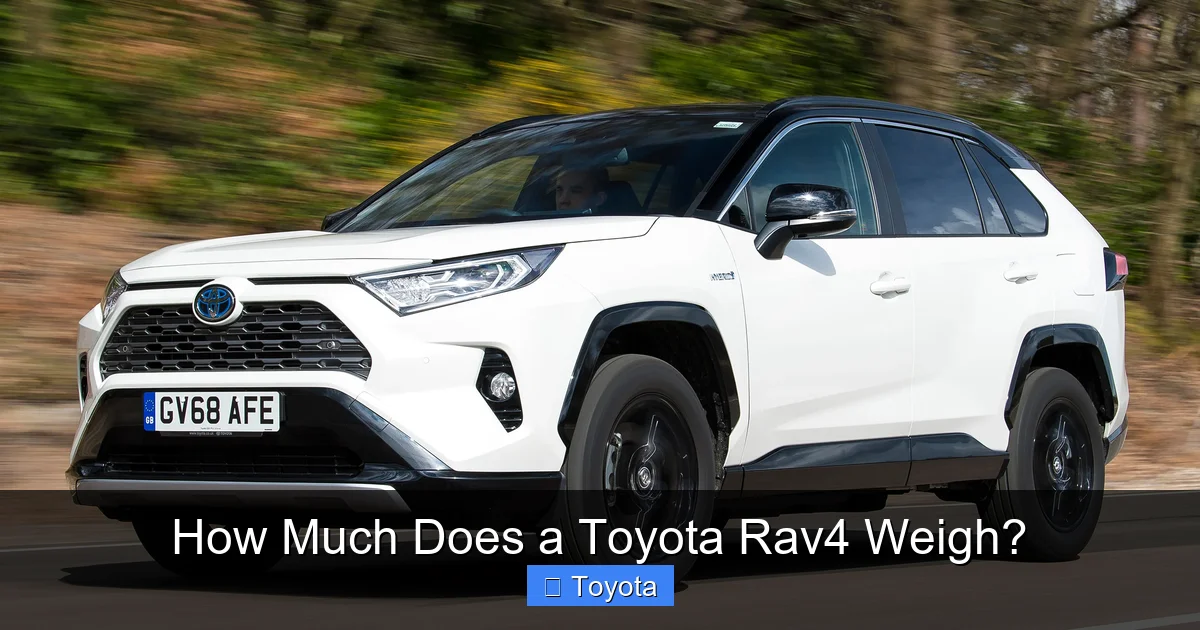
Visual guide about How Much Does a Toyota Rav4 Weigh?
Image source: media.autoexpress.co.uk
Before diving into specific numbers, it’s important to understand what “curb weight” means. Curb weight refers to the total weight of a vehicle with all standard equipment, a full tank of fuel, and essential fluids (like oil and coolant), but without passengers or cargo. It’s the weight of the car as it sits in the showroom or dealership lot.
Knowing the curb weight of your RAV4 is crucial for several reasons. First, it directly impacts fuel efficiency. Heavier vehicles require more energy to move, which can reduce miles per gallon (MPG). Second, weight affects handling and braking. A lighter vehicle may feel more agile and responsive, while a heavier one might offer better stability at high speeds or in windy conditions. Third, curb weight plays a role in safety. Heavier vehicles often perform better in crashes due to greater mass, though modern engineering ensures even lighter models meet high safety standards.
Finally, curb weight is a key factor when calculating your vehicle’s payload capacity—the amount of weight it can safely carry, including passengers, luggage, and gear. This ties into the Gross Vehicle Weight Rating (GVWR), which we’ll cover later. So, while curb weight might seem like a minor detail, it’s actually a foundational spec that influences nearly every aspect of your driving experience.
Toyota RAV4 Weight by Model Year and Trim

Visual guide about How Much Does a Toyota Rav4 Weigh?
Image source: m.media-amazon.com
The weight of a Toyota RAV4 isn’t fixed—it changes from year to year and across different trims. Toyota regularly updates the RAV4’s design, adding new features, improving aerodynamics, and sometimes increasing or decreasing overall mass. Let’s look at how weight varies across recent model years and popular trims.
2023–2024 Toyota RAV4 Weight Breakdown
The latest RAV4 models (2023 and 2024) offer a range of configurations. The base model—RAV4 LE with front-wheel drive (FWD)—starts at around 3,370 pounds. This is the lightest version available and ideal for drivers who prioritize fuel economy and lower operating costs.
Moving up to the XLE trim with FWD adds about 50–70 pounds, bringing the total to roughly 3,440 pounds. The extra weight comes from upgraded interior materials, additional tech features, and slightly more robust suspension components.
If you opt for all-wheel drive (AWD), expect an increase of 100–150 pounds. The RAV4 XLE AWD, for example, weighs approximately 3,550 pounds. The AWD system includes a rear differential, additional driveshaft, and electronic controls, all of which add mass.
Higher trims like the Limited and Adventure models are even heavier. The RAV4 Limited AWD tips the scales at about 3,630 pounds. These models come with premium features like leather seats, larger wheels, advanced safety tech, and upgraded audio systems—all contributing to the added weight.
RAV4 Hybrid and Prime: Heavier but More Efficient
The RAV4 Hybrid is a standout in the lineup, offering excellent fuel economy without sacrificing performance. However, it’s also heavier than the standard gas model. The 2023 RAV4 Hybrid LE FWD weighs around 3,630 pounds, while the Hybrid Limited AWD can reach up to 3,750 pounds.
Why the extra weight? The hybrid system includes a larger battery pack, an electric motor, and additional cooling components. Despite the added mass, the hybrid powertrain delivers impressive efficiency—up to 40 MPG combined—making it a smart choice for eco-conscious drivers.
Then there’s the RAV4 Prime, Toyota’s plug-in hybrid (PHEV) version. The Prime is the heaviest of the bunch, with a curb weight of approximately 4,050 to 4,200 pounds. This is due to a much larger battery pack (18.1 kWh vs. 1.6 kWh in the standard hybrid), which enables up to 42 miles of all-electric range. While the Prime is heavier, it also offers more power—302 horsepower—and can be charged at home or public stations, reducing reliance on gasoline.
Older Models: How Weight Has Changed Over Time
It’s also worth noting how the RAV4’s weight has evolved. The first-generation RAV4 (1996–2000) weighed just over 2,600 pounds—significantly lighter than today’s models. As safety standards improved and features became more advanced, the vehicle grew in size and weight.
By the third generation (2006–2012), the RAV4 weighed between 3,200 and 3,500 pounds. The fourth generation (2013–2018) saw further increases, with weights ranging from 3,300 to 3,600 pounds. The current fifth generation (2019–present) continues this trend, with the heaviest models now exceeding 4,000 pounds.
This gradual increase reflects broader industry trends: vehicles are getting safer, more comfortable, and more technologically advanced—but also heavier. While this can impact fuel economy, Toyota has offset some of the weight gains with more efficient engines and hybrid technology.
Factors That Influence RAV4 Weight

Visual guide about How Much Does a Toyota Rav4 Weigh?
Image source: m.media-amazon.com
Now that we’ve seen the numbers, let’s explore the key factors that determine how much a Toyota RAV4 weighs. Understanding these variables can help you choose the right model for your needs—and explain why two seemingly similar RAV4s might have different weights.
1. Drivetrain: FWD vs. AWD
One of the biggest contributors to weight differences is the drivetrain. Front-wheel drive (FWD) models are lighter because they don’t include the components needed to power the rear wheels. A typical RAV4 LE FWD weighs about 3,370 pounds.
In contrast, all-wheel drive (AWD) models add 100–150 pounds. This is due to the rear differential, driveshaft, and additional control systems that distribute power to all four wheels. AWD improves traction in snow, rain, or off-road conditions, but it comes at the cost of added weight and slightly reduced fuel economy.
For example, the 2023 RAV4 LE FWD weighs 3,370 lbs, while the LE AWD weighs 3,480 lbs—a difference of 110 pounds. That might not sound like much, but over time, it can affect acceleration, braking, and MPG.
2. Engine Type: Gas vs. Hybrid vs. Plug-In Hybrid
The engine and powertrain configuration also play a major role. The standard 2.5L 4-cylinder engine is relatively lightweight, contributing to the lower end of the RAV4’s weight range.
The RAV4 Hybrid uses the same engine but adds an electric motor and battery pack. This increases weight by about 250–300 pounds compared to the gas-only model. However, the hybrid system delivers better fuel economy and lower emissions, making it a popular choice.
The RAV4 Prime takes it a step further. Its larger battery and more powerful electric motor add significant mass—up to 600 pounds more than the base model. While this affects weight and efficiency, the Prime offers the best of both worlds: electric-only driving for short trips and gasoline power for longer journeys.
3. Trim Level and Features
Higher trim levels come with more features—and more weight. For instance, the RAV4 LE is the most basic trim, with cloth seats, a smaller infotainment screen, and minimal extras. It’s also the lightest.
As you move up to XLE, Limited, or TRD Off-Road trims, you get upgrades like leather upholstery, heated seats, panoramic sunroofs, larger wheels, and advanced driver-assistance systems. Each of these adds weight. A panoramic sunroof alone can add 50–70 pounds due to the reinforced roof structure and motorized glass panel.
The TRD Off-Road trim, designed for light off-roading, includes skid plates, all-terrain tires, and a more robust suspension—all of which increase weight. The 2023 RAV4 TRD Off-Road AWD weighs around 3,680 pounds, making it one of the heavier non-hybrid models.
4. Model Year and Design Changes
Toyota periodically updates the RAV4’s design, which can affect weight. For example, the 2019 redesign introduced a more rugged exterior, updated interior, and new safety tech. These changes added about 100–150 pounds compared to the previous generation.
Similarly, the 2023 model year saw minor updates to the infotainment system and driver aids, with negligible impact on weight. However, future models may incorporate lighter materials (like aluminum or high-strength steel) to reduce mass without compromising safety.
5. Optional Equipment and Packages
Even within the same trim, optional packages can change the weight. For example, adding the Weather Package (heated seats, heated steering wheel, and rain-sensing wipers) adds a few pounds. The Premium Audio Package with a subwoofer and upgraded speakers adds more.
Towing packages, which include a trailer hitch and wiring harness, also increase weight slightly. While the hitch itself isn’t heavy, the reinforced frame and cooling systems needed for towing add mass.
RAV4 Weight and Its Impact on Performance
So, how does all this weight affect how the RAV4 drives? Let’s break it down by performance category.
Fuel Economy
Weight is a major factor in fuel efficiency. Heavier vehicles require more energy to accelerate and maintain speed, which reduces MPG. For example, the 2023 RAV4 LE FWD gets an EPA-estimated 27 MPG city / 35 MPG highway. The heavier RAV4 Limited AWD gets 27/34 MPG—slightly lower on the highway due to added weight and AWD drag.
The RAV4 Hybrid, despite being heavier, achieves up to 41 MPG combined thanks to its efficient electric motor and regenerative braking. The Prime, while heaviest, offers 94 MPGe (miles per gallon equivalent) when running on electricity, making it the most efficient in the lineup—when charged regularly.
Acceleration and Handling
A lighter RAV4 will feel more responsive during acceleration and cornering. The base model can go from 0 to 60 mph in about 8.5 seconds, while the heavier AWD and hybrid models take slightly longer—around 8.8 to 9.2 seconds.
Handling is also affected. The RAV4’s suspension is tuned for comfort, but added weight can make it feel less nimble, especially in tight turns. However, the difference is subtle and may not be noticeable to most drivers.
Towing and Payload Capacity
Weight directly impacts how much your RAV4 can tow and carry. The Gross Vehicle Weight Rating (GVWR) is the maximum safe weight of the vehicle, including passengers, cargo, and fuel. For most RAV4 models, GVWR ranges from 4,500 to 4,800 pounds.
Payload capacity—the difference between GVWR and curb weight—varies by model. The RAV4 LE FWD has a payload of about 1,130 pounds, while the heavier Limited AWD has around 1,050 pounds. This means you can safely carry up to four passengers and luggage without exceeding limits.
Towing capacity depends on drivetrain and equipment. FWD models can typically tow 1,500–2,000 pounds, while AWD models can handle up to 3,500 pounds—especially with the optional towing package. The RAV4 Prime, despite its weight, can also tow 3,500 pounds, thanks to its powerful hybrid system.
Safety and Stability
Heavier vehicles often perform better in collisions due to greater mass. The RAV4 has earned top safety ratings from the IIHS and NHTSA, in part because of its sturdy construction and advanced safety features.
However, weight isn’t the only factor. The RAV4’s high-strength steel frame, airbags, and Toyota Safety Sense 2.0 suite (with automatic emergency braking, lane departure warning, and adaptive cruise control) all contribute to its safety profile.
In windy conditions or at high speeds, a heavier RAV4 may feel more stable and less affected by crosswinds. This can be a plus for highway driving or towing.
How to Check Your RAV4’s Exact Weight
If you already own a RAV4 and want to know its exact weight, there are a few ways to find out.
First, check the owner’s manual. Toyota lists curb weight, GVWR, and payload capacity in the specifications section. You can also find this information on the vehicle’s door jamb sticker—usually on the driver’s side door frame. This sticker includes the VIN, tire size, and GVWR.
For a precise measurement, you can visit a public scale. Many truck stops, recycling centers, and agricultural facilities offer weigh stations for a small fee. Drive your RAV4 onto the scale with a full tank of gas and no passengers or cargo to get an accurate curb weight.
Keep in mind that aftermarket modifications—like roof racks, bull bars, or larger tires—can increase weight. If you’ve added accessories, factor them into your calculations.
Tips for Managing RAV4 Weight and Performance
Whether you’re buying a new RAV4 or optimizing your current one, here are some practical tips to manage weight and get the best performance:
- Choose FWD if you don’t need AWD: Unless you live in a snowy or off-road area, FWD saves weight and improves fuel economy.
- Skip unnecessary options: Avoid heavy packages like panoramic sunroofs or premium audio if you don’t need them.
- Keep it clean: Remove heavy items from your cargo area when not in use. Even 50 pounds of gear can reduce MPG.
- Use the right tires: Larger or all-terrain tires add weight and rolling resistance. Stick to the recommended size for better efficiency.
- Charge the Prime regularly: If you own a RAV4 Prime, charging it often maximizes electric range and reduces gasoline use, offsetting the weight penalty.
- Check tire pressure: Underinflated tires increase rolling resistance and reduce fuel economy. Check pressure monthly.
Conclusion: Weight Matters—But So Do Your Needs
So, how much does a Toyota RAV4 weigh? The answer depends on the model, but most fall between 3,370 and 3,630 pounds for gas models, with hybrids and the Prime pushing past 4,000 pounds. While weight affects fuel economy, handling, and towing, it’s just one piece of the puzzle.
The RAV4’s popularity comes from its balance of size, efficiency, and versatility. Whether you choose the lightweight LE FWD for city driving or the powerful Prime for electric adventures, there’s a RAV4 that fits your lifestyle.
Ultimately, the best way to decide is to test drive a few models and consider your priorities. Do you need AWD for winter driving? Are you planning to tow a trailer? Do you want maximum fuel economy? Answering these questions will help you pick the right RAV4—and understand why its weight matters.
Frequently Asked Questions
What is the lightest Toyota RAV4 model?
The lightest RAV4 is the base LE trim with front-wheel drive, weighing approximately 3,370 pounds. It features the standard 2.5L 4-cylinder engine and minimal optional equipment.
How much heavier is the RAV4 Hybrid compared to the gas model?
The RAV4 Hybrid is about 250–300 pounds heavier than the standard gas model due to the electric motor and battery pack. For example, the Hybrid LE weighs around 3,630 pounds.
Can the RAV4 Prime really weigh over 4,000 pounds?
Yes, the RAV4 Prime plug-in hybrid weighs between 4,050 and 4,200 pounds. Its large 18.1 kWh battery and powerful electric motor contribute to the increased weight.
Does AWD make the RAV4 significantly heavier?
Yes, AWD adds 100–150 pounds compared to FWD models. This is due to the rear differential, driveshaft, and electronic control systems required for all-wheel drive.
How does weight affect the RAV4’s fuel economy?
Heavier models generally have slightly lower fuel economy. For example, the RAV4 LE FWD gets 35 MPG highway, while the heavier Limited AWD gets 34 MPG.
What is the GVWR of a Toyota RAV4?
The Gross Vehicle Weight Rating (GVWR) ranges from 4,500 to 4,800 pounds, depending on the model. This determines the maximum safe weight including passengers and cargo.
