
How Much Does a Jeep Wrangler Weigh?

The weight of a Jeep Wrangler varies by model, trim, and drivetrain, typically ranging from 3,900 to 4,600 pounds. Factors like engine size, body style (two-door vs. four-door), and added features significantly influence its overall mass. Understanding these details helps with towing, fuel economy, and off-road performance.
Key Takeaways
- Weight Range: Jeep Wranglers weigh between 3,900 and 4,600 pounds depending on model and configuration.
- Body Style Matters: Two-door models are lighter (around 3,900–4,200 lbs), while four-door Unlimited versions are heavier (4,300–4,600 lbs).
- Engine and Drivetrain Impact: Larger engines like the 3.6L V6 or 2.0L turbo add weight, as do 4×4 systems and heavy-duty axles.
- Trim Level Influence: Higher trims like Rubicon or Sahara include more features, increasing curb weight.
- GVWR vs. Curb Weight: Gross Vehicle Weight Rating (GVWR) can exceed 5,500 lbs, allowing for passengers, cargo, and gear.
- Off-Road Implications: Heavier Wranglers may have better stability but reduced fuel efficiency and agility on tight trails.
- Model Year Changes: Newer models (especially post-2018) are slightly heavier due to added safety and tech features.
📑 Table of Contents
How Much Does a Jeep Wrangler Weigh?
If you’re thinking about buying a Jeep Wrangler—or you already own one and are curious about its specs—you’ve probably asked: *How much does a Jeep Wrangler weigh?* It’s a great question, and the answer isn’t as simple as you might think. Unlike some vehicles with a single standard weight, the Jeep Wrangler comes in many shapes, sizes, and configurations, each affecting its overall mass.
From the compact two-door Wrangler to the roomier four-door Unlimited, and from the base Sport model to the trail-ready Rubicon, every variation has its own weight profile. Add in different engines, transmissions, and optional equipment, and you’ve got a wide range of possible weights. Understanding how much your Wrangler weighs isn’t just trivia—it affects everything from fuel economy and handling to towing capacity and off-road performance.
In this guide, we’ll break down the weight of the Jeep Wrangler by model, trim, and configuration. We’ll explain what “curb weight” and “GVWR” mean, how different features add pounds, and why weight matters when you’re driving on or off the pavement. Whether you’re comparing models, planning a camping trip, or just satisfying your curiosity, this article will give you the full picture.
Understanding Jeep Wrangler Weight Basics
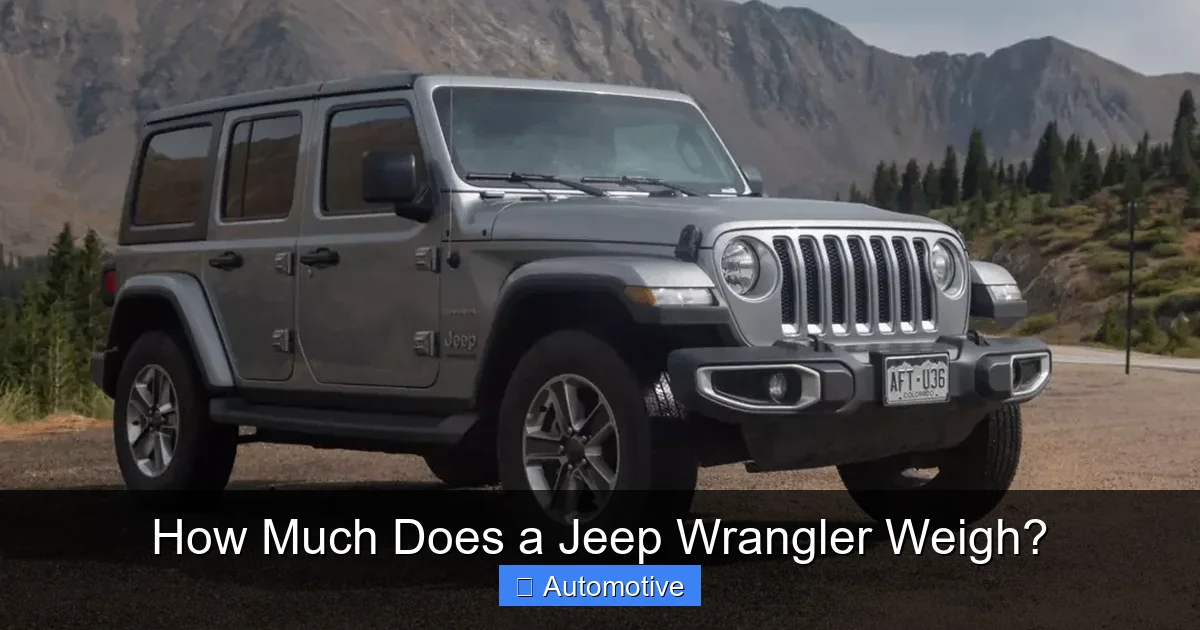
Visual guide about How Much Does a Jeep Wrangler Weigh?
Image source: jeepoffroads.com
Before diving into specific numbers, it’s important to understand the different types of weight measurements used for vehicles like the Jeep Wrangler. The two most common terms you’ll encounter are **curb weight** and **gross vehicle weight rating (GVWR)**.
Curb weight refers to the total weight of the vehicle with all standard equipment, a full tank of fuel, and all fluids (oil, coolant, etc.), but without passengers or cargo. It’s essentially the weight of the vehicle as it sits in the showroom or driveway. This is the number most people think of when asking, “How much does a Jeep Wrangler weigh?”
GVWR, on the other hand, is the maximum safe weight the vehicle can carry, including passengers, luggage, towing load, and any modifications. It’s set by the manufacturer and stamped on the driver’s side door jamb. Exceeding GVWR can compromise safety, handling, and braking performance.
For example, a 2023 Jeep Wrangler Sport two-door might have a curb weight of around 3,950 pounds, but a GVWR of 5,000 pounds. That means you can safely add up to 1,050 pounds of people, gear, and accessories. Knowing both numbers helps you plan trips, install aftermarket parts, and stay within safe operating limits.
Why Weight Matters for Jeep Owners
Weight plays a crucial role in how a Jeep Wrangler performs on and off the road. A heavier vehicle may feel more stable at highway speeds, but it can also reduce fuel efficiency and make tight off-road maneuvers more challenging. Conversely, a lighter Wrangler might be more nimble on trails but could feel less planted on the highway.
For off-roading, weight distribution is just as important as total weight. A well-balanced Wrangler with weight centered low to the ground will handle rocks, mud, and steep inclines better than one that’s top-heavy. That’s why some enthusiasts remove hard tops or heavy bumpers to reduce weight and improve center of gravity.
Towing capacity is another area where weight matters. The Jeep Wrangler isn’t designed for heavy towing like a pickup truck, but it can still pull small trailers, boats, or ATVs. However, the more weight you add—whether in the cabin or on a trailer—the more strain you put on the engine, transmission, and brakes.
Finally, fuel economy is directly affected by weight. Every extra pound requires more energy to move, which means lower miles per gallon. If you’re trying to maximize efficiency, choosing a lighter configuration can make a noticeable difference over time.
Jeep Wrangler Weight by Model and Body Style
One of the biggest factors influencing how much a Jeep Wrangler weighs is its body style. Jeep offers two main versions: the traditional two-door Wrangler and the longer four-door Wrangler Unlimited. Each has distinct weight characteristics.
Two-Door Wrangler Weight
The two-door Wrangler is the original icon of the lineup—compact, rugged, and built for adventure. Thanks to its shorter wheelbase and lighter frame, it’s the lightest version available. Most two-door models weigh between **3,900 and 4,200 pounds**, depending on the trim and options.
For example, a 2023 Jeep Wrangler Sport two-door with the standard 2.0L turbocharged four-cylinder engine and manual transmission has a curb weight of approximately **3,950 pounds**. Step up to the Rubicon trim with the 3.6L V6, electronic locking differentials, and heavier off-road components, and the weight increases to around **4,150 pounds**.
The two-door’s lighter weight gives it an edge in agility, especially on narrow trails or during quick maneuvers. It’s also easier to park and store, making it a favorite among city dwellers who still want off-road capability.
Four-Door Wrangler Unlimited Weight
The Wrangler Unlimited offers more interior space, seating for five, and a larger cargo area—but all that extra room comes with added weight. The four-door Unlimited typically weighs between **4,300 and 4,600 pounds**, making it noticeably heavier than its two-door sibling.
A 2023 Wrangler Unlimited Sport with the 2.0L engine starts at about **4,350 pounds**. The Rubicon Unlimited, with its reinforced axles, disconnecting sway bar, and heavier-duty suspension, can reach **4,550 pounds or more**. Even the base engine and trim add significant mass due to the extended frame and additional body panels.
While the added weight reduces some off-road agility, it improves high-speed stability and passenger comfort. Families and long-distance travelers often prefer the Unlimited for its practicality, even if it means sacrificing a bit of trail finesse.
Weight Differences Across Model Years
It’s also worth noting that Jeep Wrangler weights have increased slightly over the years. The current fourth-generation Wrangler (JL), introduced in 2018, is heavier than the previous JK model due to added safety features, improved materials, and more advanced technology.
For instance, a 2015 Wrangler Sport two-door weighed around 3,850 pounds, while a comparable 2023 model is closer to 3,950 pounds—a 100-pound increase. Similarly, the Unlimited models have gained 50–100 pounds over the same period.
This trend reflects broader industry shifts toward stronger safety standards, better crash protection, and more standard tech (like touchscreens, backup cameras, and advanced driver aids). While these additions improve safety and convenience, they do contribute to the overall weight.
How Engine and Drivetrain Affect Weight
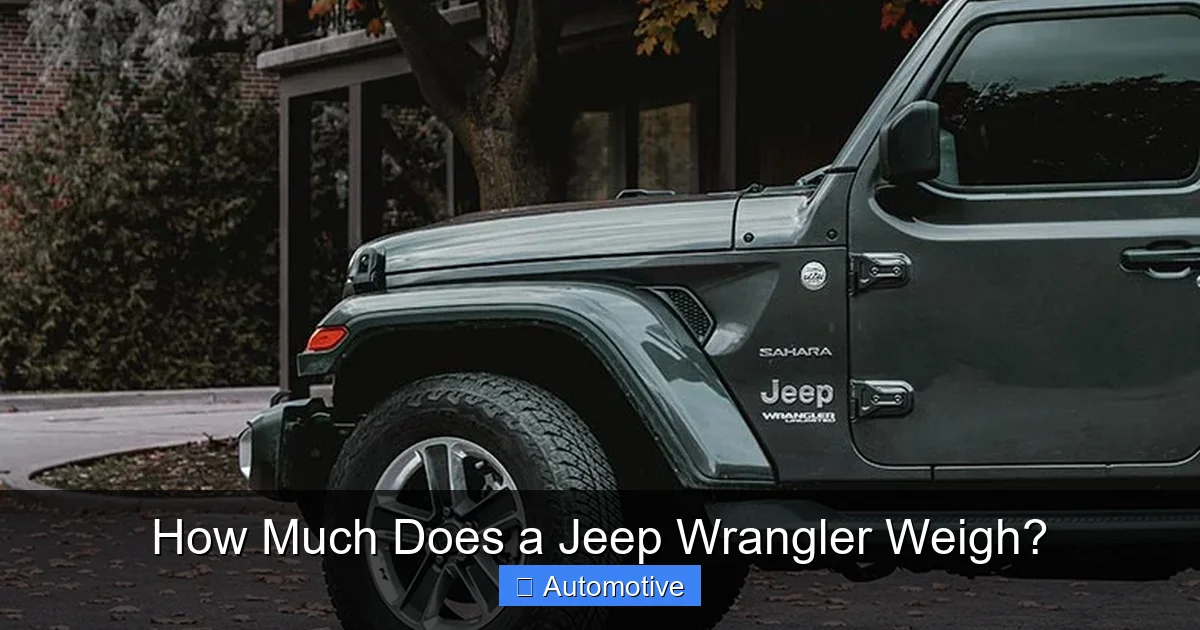
Visual guide about How Much Does a Jeep Wrangler Weigh?
Image source: offroadingpro.com
The engine and drivetrain you choose have a direct impact on how much your Jeep Wrangler weighs. Jeep offers several engine options across the Wrangler lineup, each with different weights and performance characteristics.
Engine Options and Their Weight Impact
As of 2023, the Jeep Wrangler is available with three main engines:
– **2.0L Turbocharged Four-Cylinder:** This engine is lightweight and efficient, helping keep the overall curb weight down. It’s standard on most trims and contributes to the lower end of the weight range.
– **3.6L Pentastar V6:** A popular choice for its balance of power and reliability, the V6 is heavier than the 2.0L turbo. It adds roughly 50–70 pounds to the vehicle, depending on the configuration.
– **3.0L EcoDiesel V6:** Available on select Unlimited models, the diesel engine is the heaviest option. It adds over 200 pounds compared to the gas engines, primarily due to the robust block, emissions equipment, and larger cooling system.
Choosing the diesel might improve torque and fuel economy on long trips, but it also increases weight, which can affect handling and acceleration.
4×4 Systems and Transfer Cases
All Wranglers come with four-wheel drive, but the type of 4×4 system varies by trim. The base Command-Trac system is lighter and simpler, while the Rubicon’s Rock-Trac system includes a heavier-duty transfer case, low-range gearing, and electronic locking differentials.
These off-road enhancements add weight but significantly improve capability. For example, the Rock-Trac transfer case alone can add 30–40 pounds. While that might not sound like much, every pound counts when you’re trying to maintain agility on technical trails.
Transmission Choices
The transmission also plays a role. Most Wranglers come with an 8-speed automatic, which is heavier than the optional 6-speed manual. The automatic adds about 20–30 pounds, but it offers smoother shifts and better fuel economy in many driving conditions.
If you’re trying to minimize weight—say, for rock crawling or overlanding—opting for the manual transmission can help shave off a few pounds. However, the convenience of the automatic often outweighs the small weight savings for most drivers.
Trim Levels and Optional Features That Add Weight
Trim level is another major factor in how much a Jeep Wrangler weighs. Higher trims come with more features, many of which add mass.
Sport vs. Sahara vs. Rubicon
– **Sport:** The base trim is the lightest, with minimal features and standard equipment. It’s ideal for those who want a no-frills off-roader.
– **Sahara:** Adds comfort and convenience features like power windows, upgraded audio, and body-color fender flares. These additions increase weight by 50–100 pounds compared to the Sport.
– **Rubicon:** Built for serious off-roading, the Rubicon includes heavy-duty axles, locking differentials, skid plates, and reinforced suspension. It’s the heaviest trim, often weighing 200–300 pounds more than the Sport.
Even within the same trim, optional packages can affect weight. For example, adding the Cold Weather Group (heated seats, steering wheel, and remote start) or the Technology Group (larger touchscreen, navigation, and premium audio) can add 20–50 pounds.
Hard Top vs. Soft Top
The roof type also influences weight. A factory hard top is significantly heavier than a soft top—often by 50–70 pounds. While the hard top offers better insulation and security, many off-roaders remove it to reduce weight and improve visibility.
Aftermarket modifications can further increase weight. Adding a winch, roof rack, auxiliary lights, or a full-size spare tire can add 100 pounds or more. While these upgrades enhance capability, they also impact fuel economy and handling.
GVWR and Payload Capacity
While curb weight tells you how much the vehicle weighs empty, GVWR and payload capacity tell you how much it can safely carry.
What Is GVWR?
Gross Vehicle Weight Rating (GVWR) is the maximum total weight your Wrangler can handle, including the vehicle itself, passengers, cargo, fuel, and any accessories. It’s determined by the manufacturer and listed on the door jamb sticker.
For most Wranglers, GVWR ranges from **5,000 to 5,500 pounds**. For example, a 2023 Wrangler Unlimited Rubicon has a GVWR of 5,500 pounds. If its curb weight is 4,550 pounds, that leaves **950 pounds** for people, gear, and fuel.
Payload Capacity Explained
Payload capacity is the difference between GVWR and curb weight. It’s the amount of weight you can safely add to the vehicle. Most Wranglers have a payload capacity of **900 to 1,100 pounds**, depending on configuration.
This includes everything: passengers, luggage, coolers, tools, and even pets. If you’re planning a long camping trip or hauling heavy gear, it’s important to stay under this limit to avoid overloading the suspension, brakes, and frame.
Towing Capacity and Weight Distribution
The Jeep Wrangler can tow up to **3,500 pounds** when properly equipped, but this depends on the engine, drivetrain, and towing package. The heavier the trailer, the more it affects the vehicle’s balance and braking.
When towing, weight distribution is critical. Too much weight on the rear can cause the front end to lift, reducing steering control. Using a weight-distributing hitch and keeping the load centered can help maintain stability.
Practical Implications of Jeep Wrangler Weight
Knowing how much your Wrangler weighs isn’t just about specs—it has real-world implications for how you use and maintain your vehicle.
Fuel Economy
Heavier vehicles consume more fuel. A Wrangler Rubicon Unlimited with the V6 engine might get 17–19 mpg combined, while a lighter two-door Sport with the 2.0L turbo could reach 22–24 mpg. Over time, that difference adds up at the pump.
If fuel efficiency is a priority, choosing a lighter configuration can make a noticeable difference. Removing unnecessary accessories and keeping the vehicle clean (no roof racks or bike carriers when not in use) also helps.
Off-Road Performance
Weight affects off-road capability in several ways. A lighter Wrangler is easier to maneuver on tight trails, climbs better on steep inclines, and is less likely to get stuck in soft terrain. However, a heavier vehicle can have better traction and stability on uneven ground.
Many off-roaders strike a balance by adding only essential gear and removing heavy items like spare tires or hard tops when hitting the trails. Some even install lightweight aluminum bumpers or fiberglass body panels to reduce weight without sacrificing durability.
Braking and Handling
Heavier vehicles require more braking force to stop. If your Wrangler is loaded with gear or passengers, you’ll need to allow more distance when braking, especially on downhill grades.
Suspension upgrades can help manage the extra weight, improving ride quality and control. Heavy-duty shocks, lift kits, and reinforced springs are common modifications for overlanders and frequent off-roaders.
Insurance and Registration
In some states, vehicle weight affects registration fees and insurance premiums. Heavier vehicles may be classified differently or require special permits for certain roads or trails. Always check local regulations if you’ve made significant modifications.
Conclusion
So, how much does a Jeep Wrangler weigh? The answer depends on the model, trim, engine, and features you choose. On average, you can expect a two-door Wrangler to weigh between 3,900 and 4,200 pounds, while a four-door Unlimited ranges from 4,300 to 4,600 pounds. Higher trims like the Rubicon and optional equipment like hard tops or diesel engines push the weight even higher.
Understanding your Wrangler’s weight helps you make informed decisions about fuel economy, towing, off-road performance, and safety. Whether you’re comparing models, planning a road trip, or upgrading your rig, knowing the numbers behind the weight can make all the difference.
Ultimately, the Jeep Wrangler is designed to be versatile—equally at home on city streets and mountain trails. Its weight is a reflection of that balance: rugged enough to handle tough terrain, yet manageable enough for daily driving. By choosing the right configuration for your needs, you can enjoy all the adventure the Wrangler has to offer—without being weighed down.
Frequently Asked Questions
What is the lightest Jeep Wrangler model?
The lightest Jeep Wrangler is the two-door Sport trim with the 2.0L turbo engine and manual transmission, weighing around 3,950 pounds. This configuration minimizes weight for better agility and fuel efficiency.
How much does a Jeep Wrangler Rubicon weigh?
A Jeep Wrangler Rubicon typically weighs between 4,150 and 4,550 pounds, depending on body style. The two-door Rubicon is lighter, while the four-door Unlimited Rubicon is at the higher end due to added off-road components.
Does the hard top make the Wrangler heavier?
Yes, a factory hard top adds 50–70 pounds compared to a soft top. Many off-roaders remove the hard top to reduce weight and improve visibility, especially on trails.
Can I reduce my Wrangler’s weight for off-roading?
Yes, you can reduce weight by removing the hard top, using lightweight bumpers, avoiding unnecessary accessories, and choosing a manual transmission. Every pound saved improves agility and fuel economy.
What is the GVWR of a Jeep Wrangler?
The GVWR (Gross Vehicle Weight Rating) of a Jeep Wrangler ranges from 5,000 to 5,500 pounds, depending on the model and trim. This includes the vehicle, passengers, cargo, and fuel.
Does engine choice affect Wrangler weight?
Yes, engine choice impacts weight. The 2.0L turbo is lightest, the 3.6L V6 adds 50–70 pounds, and the 3.0L EcoDiesel adds over 200 pounds due to its heavy block and emissions systems.
