
How Much Can Subaru Ascent Tow

The Subaru Ascent can tow up to 5,000 pounds when properly equipped, making it one of the most capable three-row SUVs in its class. With standard all-wheel drive, a robust engine, and advanced towing features, the Ascent is built for families who need power and versatility for boats, trailers, and campers.
When you’re shopping for a family SUV that can do more than just shuttle kids to soccer practice, towing capacity becomes a major deciding factor. Whether you’re hauling a small camper for weekend getaways, a jet ski for summer fun, or a utility trailer for home projects, you need a vehicle that’s up to the task. That’s where the Subaru Ascent comes in—a three-row SUV that blends everyday comfort with real-world capability. But just how much can the Subaru Ascent tow? And what do you need to know to tow safely and efficiently?
The short answer? When properly equipped, the Subaru Ascent can tow up to 5,000 pounds. That’s impressive for a midsize SUV, especially one that seats up to eight passengers and still offers a smooth, quiet ride. But the full story is a bit more nuanced. Towing capacity isn’t just about the number on the brochure—it depends on your trim level, optional equipment, driving conditions, and how you load your trailer. In this guide, we’ll break down everything you need to know about the Ascent’s towing capabilities, from engine specs and required packages to practical tips for safe towing. Whether you’re a first-time tower or a seasoned hauler, this article will help you get the most out of your Subaru Ascent.
Key Takeaways
- Maximum Towing Capacity: The Subaru Ascent can tow up to 5,000 pounds when equipped with the factory-installed towing package and a 2.4L turbocharged engine.
- Standard All-Wheel Drive: Every Ascent comes with Subaru’s Symmetrical All-Wheel Drive, enhancing traction and stability while towing in various weather and road conditions.
- Towing Package Required: To reach the 5,000-pound limit, you must install the optional towing package, which includes a transmission cooler, upgraded radiator, and wiring harness.
- Engine Performance: The 2.0L turbocharged four-cylinder engine delivers 260 horsepower and 277 lb-ft of torque, providing strong low-end power ideal for towing.
- Safety Features: The Ascent includes advanced safety tech like Trailer Stability Assist and EyeSight Driver Assist Technology to help maintain control while towing.
- Real-World Towing Tips: Always distribute weight evenly, use a weight-distribution hitch for heavy loads, and never exceed the vehicle’s gross combined weight rating (GCWR).
- Fuel Efficiency Impact: Towing reduces fuel economy significantly—expect 15–18 mpg when towing near max capacity, compared to 21–27 mpg in normal driving.
📑 Table of Contents
- Understanding the Subaru Ascent’s Towing Capacity
- Engine and Drivetrain: The Power Behind the Pull
- Safety Features That Make Towing Safer
- Practical Tips for Towing with Your Subaru Ascent
- What Can You Actually Tow with a Subaru Ascent?
- Fuel Economy and Maintenance When Towing
- Conclusion: Is the Subaru Ascent Right for Your Towing Needs?
Understanding the Subaru Ascent’s Towing Capacity
The Subaru Ascent’s towing capacity varies depending on how it’s equipped. On base models without the towing package, the maximum towing capacity is 2,000 pounds. However, once you add the factory-installed towing package—available on most trims—the Ascent can safely tow up to 5,000 pounds. This makes it one of the strongest towing performers in the three-row SUV segment, outperforming rivals like the Honda Pilot (5,000 lbs) and Toyota Highlander (5,000 lbs), and significantly beating the Mazda CX-9 (3,500 lbs) and Volkswagen Atlas (5,000 lbs, but only on certain trims).
What Determines Towing Capacity?
Towing capacity isn’t just about engine power—it’s a combination of several factors, including the vehicle’s frame strength, cooling systems, transmission durability, and braking capability. The Ascent’s 2.4-liter turbocharged four-cylinder engine produces 260 horsepower and 277 lb-ft of torque, which is more than enough to get a loaded trailer moving. But to handle the extra strain of towing, Subaru includes key upgrades in the towing package.
The Role of the Towing Package
To reach the 5,000-pound limit, you must equip your Ascent with the optional towing package. This package includes a heavy-duty transmission cooler, an upgraded radiator, a pre-wired 4-pin connector for trailer lights, and a trailer hitch receiver. These components help prevent overheating and ensure reliable performance, especially when towing uphill or in hot weather. Without this package, your Ascent is limited to 2,000 pounds—enough for a small utility trailer or a couple of ATVs, but not much more.
Trim Levels and Towing
The towing package is available on most Ascent trims, including the Premium, Limited, and Touring models. However, it’s not standard on the base model, so be sure to check the window sticker or ask your dealer if you’re buying used. All trims use the same 2.4L turbo engine, so performance is consistent across the lineup. That said, higher trims often come with additional comfort and tech features that can make long towing trips more enjoyable—like heated seats, adaptive cruise control, and a larger infotainment screen.
Engine and Drivetrain: The Power Behind the Pull
At the heart of the Subaru Ascent’s towing strength is its 2.4-liter turbocharged four-cylinder engine. This engine is a workhorse, delivering 260 horsepower and 277 lb-ft of torque. While it’s not a V6 or V8, the turbocharger provides strong low-end torque, which is crucial for getting a heavy load moving from a stop. This is especially helpful when merging onto highways or climbing steep grades with a trailer in tow.
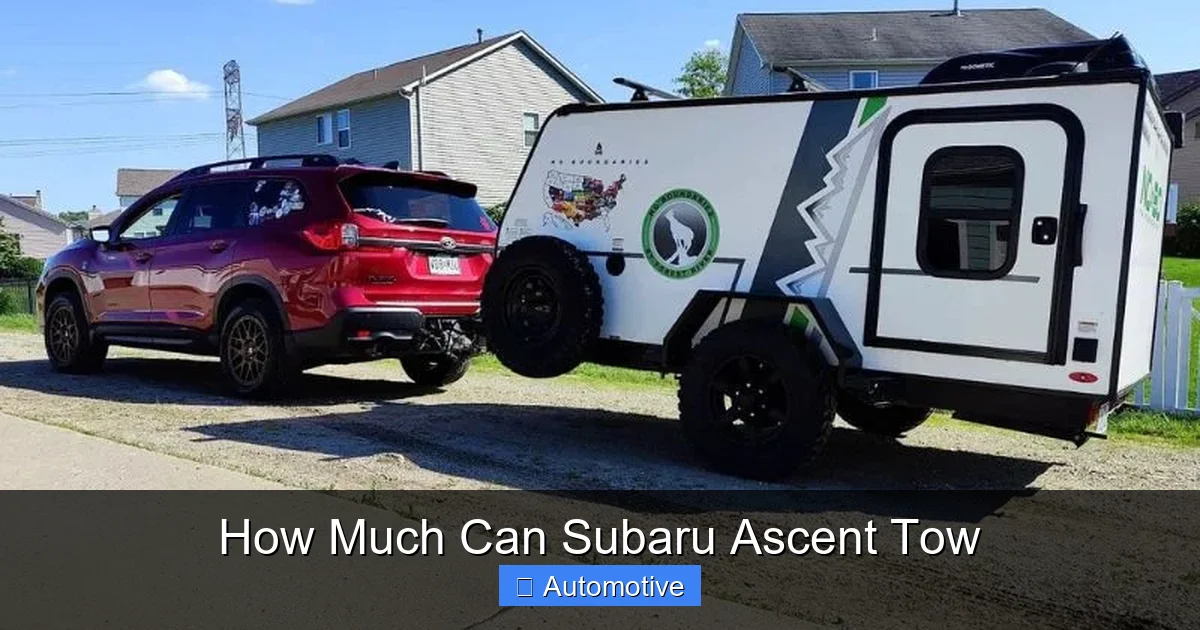
Visual guide about How Much Can Subaru Ascent Tow
Image source: rvingknowhow.com
Symmetrical All-Wheel Drive: Standard and Essential
One of Subaru’s hallmarks is Symmetrical All-Wheel Drive (AWD), and it comes standard on every Ascent. This isn’t just a marketing buzzword—it’s a real advantage when towing. The system sends power to all four wheels automatically, improving traction on wet, snowy, or uneven roads. Whether you’re pulling a boat out of a muddy ramp or navigating a gravel driveway with a camper, AWD helps keep you stable and in control.
Transmission and Cooling Systems
The Ascent uses a continuously variable transmission (CVT) with manual shift mode. While CVTs have a reputation for being less durable under heavy loads, Subaru has engineered this one with towing in mind. The transmission cooler included in the towing package helps regulate temperature, reducing the risk of overheating during long hauls. Additionally, the upgraded radiator improves overall engine cooling, which is vital when the engine is working hard to pull a heavy trailer.
Real-World Towing Performance
Owners and reviewers consistently praise the Ascent’s towing performance. It accelerates confidently with a loaded trailer, and the AWD system provides excellent stability. However, it’s not a pickup truck—don’t expect lightning-fast acceleration or the same level of control as a heavy-duty truck. But for a family SUV, the Ascent strikes a great balance between power, comfort, and capability. Many owners report successfully towing travel trailers, small fishing boats, and even lightweight pop-up campers with ease.
Safety Features That Make Towing Safer
Towing adds complexity to driving, so having the right safety features can make a big difference. The Subaru Ascent comes equipped with a suite of advanced driver-assist technologies that help keep you and your trailer safe on the road.
Trailer Stability Assist
One of the most valuable features for towing is Trailer Stability Assist (TSA). This system monitors the vehicle and trailer for swaying or fishtailing. If it detects instability, TSA automatically applies the brakes to individual wheels and reduces engine power to help bring the rig back under control. It’s not a substitute for proper loading and driving techniques, but it’s a helpful backup in emergency situations.
EyeSight Driver Assist Technology
Standard on all Ascent models, EyeSight includes adaptive cruise control, lane departure warning, pre-collision braking, and lane keep assist. When towing, adaptive cruise control can help maintain a safe following distance, while lane keep assist helps prevent unintentional drifting—especially useful on long highway drives. These features reduce driver fatigue and improve overall safety.
Blind Spot Detection and Rear Cross-Traffic Alert
These features are especially useful when towing, as a trailer can block your view of adjacent lanes. Blind spot detection alerts you when a vehicle is in your blind spot, while rear cross-traffic alert warns of approaching vehicles when you’re backing up—critical when hitching a trailer or maneuvering in tight spaces.
Rearview Camera and 360-Degree Camera (Optional)
The standard rearview camera makes hitching and reversing easier, but if you opt for the 360-degree camera system (available on higher trims), you get a bird’s-eye view of your surroundings. This is incredibly helpful when aligning your hitch with a trailer or navigating crowded campgrounds.
Practical Tips for Towing with Your Subaru Ascent
Knowing how much your Ascent can tow is just the first step. To tow safely and efficiently, you need to follow best practices for loading, hitching, and driving.
Proper Weight Distribution
One of the most common towing mistakes is improper weight distribution. For safe towing, about 60% of the trailer’s weight should be on the front half, with the tongue weight (the downward force on the hitch) ideally between 10% and 15% of the total trailer weight. Too much tongue weight can cause the rear of the Ascent to sag, affecting steering and braking. Too little can lead to trailer sway. Use a tongue weight scale or bathroom scale to check this before hitting the road.
Use a Weight-Distribution Hitch
For trailers over 3,500 pounds, Subaru recommends using a weight-distribution hitch. This device spreads the trailer’s weight more evenly across all axles, improving stability and ride quality. It also helps prevent the Ascent’s rear end from sagging, which can affect headlight alignment and suspension performance.
Check Your Tires and Air Pressure
Towing puts extra stress on tires, so make sure both your Ascent and trailer tires are in good condition and properly inflated. Underinflated tires can overheat and fail, especially when carrying heavy loads. Check the tire pressure monitoring system (TPMS) and adjust as needed before each trip.
Mind the Gross Combined Weight Rating (GCWR)
The GCWR is the maximum allowable weight of the fully loaded vehicle and trailer combined. For the Ascent, this is typically around 10,000 to 11,000 pounds, depending on the model. Never exceed this number, even if the trailer itself is under 5,000 pounds. Remember to include the weight of passengers, cargo, fuel, and accessories in your calculations.
Brake Controller (For Heavier Loads)
If you’re towing a trailer with electric brakes (common on campers and larger boats), you’ll need a brake controller. The Ascent doesn’t come with one standard, but you can install an aftermarket unit. This allows you to manually adjust brake force and synchronize the trailer brakes with the vehicle’s brakes, improving stopping power and control.
Practice Before You Go
If you’re new to towing, practice in an empty parking lot before taking your rig on the highway. Practice backing up, turning, and braking with the trailer attached. It takes time to get used to the extra length and weight, so don’t rush it.
What Can You Actually Tow with a Subaru Ascent?
With a 5,000-pound capacity, the Ascent can handle a wide range of recreational and utility trailers. Here are some real-world examples:
Travel Trailers and Campers
Many lightweight travel trailers and pop-up campers fall well within the Ascent’s towing range. For example, the popular Airstream Basecamp (2,500–3,500 lbs) and Jayco Jay Flight SLX (3,000–4,500 lbs) are great matches. Just be sure to check the fully loaded weight, including water, gear, and propane.
Boats and Watercraft
The Ascent can tow small to mid-sized boats, including fishing boats, pontoon boats, and jet skis. A typical 16–18 foot fishing boat with trailer weighs around 3,000–4,000 pounds, leaving plenty of margin. Even some larger pontoon boats (up to 20 feet) can be towed if they’re under 5,000 pounds.
Utility and Cargo Trailers
For home projects, the Ascent can haul utility trailers loaded with landscaping materials, furniture, or construction supplies. A standard 5×8 utility trailer weighs about 1,000 pounds empty, so you can load up to 4,000 pounds of cargo and still stay within limits.
ATVs and Small Vehicles
You can tow multiple ATVs, a small motorcycle trailer, or even a lightweight car dolly. Just remember that the combined weight of the trailer and cargo must not exceed 5,000 pounds.
What You Can’t Tow
The Ascent isn’t designed for heavy-duty towing. Avoid large fifth-wheel trailers, large travel trailers over 5,000 pounds, or heavy equipment like tractors. If you regularly need to tow heavier loads, consider a pickup truck or a larger SUV like the Ford Expedition or Chevrolet Tahoe.
Fuel Economy and Maintenance When Towing
Towing takes a toll on your vehicle—and your wallet. Expect a noticeable drop in fuel economy when pulling a heavy load.
Fuel Efficiency Impact
In normal driving, the Ascent gets around 21–27 mpg (city/highway). But when towing near its 5,000-pound limit, fuel economy can drop to 15–18 mpg, depending on terrain and driving style. Uphill driving, strong winds, and stop-and-go traffic will reduce efficiency even further. Plan your fuel stops accordingly, especially on long trips.
Maintenance Considerations
Towing increases wear and tear on your engine, transmission, brakes, and suspension. After heavy towing, check the following:
- Transmission fluid level and condition
- Engine coolant level
- Brake pad and rotor wear
- Tire tread and pressure
- Suspension components for signs of stress
Subaru recommends changing the transmission fluid every 30,000 miles if you frequently tow. Regular maintenance helps prevent costly repairs and keeps your Ascent running smoothly.
Driving Tips for Better Efficiency
To maximize fuel economy while towing, maintain a steady speed, avoid rapid acceleration, and use cruise control on flat highways. Reduce speed when going uphill—don’t “floor it” to maintain speed, as this burns more fuel. Also, remove the trailer when not in use to improve aerodynamics and save gas.
Conclusion: Is the Subaru Ascent Right for Your Towing Needs?
The Subaru Ascent is an excellent choice for families who need a capable, comfortable, and safe SUV that can also handle serious towing duties. With a maximum towing capacity of 5,000 pounds, it outperforms many competitors and can handle everything from campers and boats to utility trailers and ATVs. Its standard all-wheel drive, robust engine, and advanced safety features make it a reliable partner for weekend adventures and long road trips.
However, it’s important to tow responsibly. Always use the proper equipment, distribute weight correctly, and never exceed the vehicle’s limits. With the right setup and a little practice, the Ascent can be a versatile and dependable towing machine. Whether you’re exploring national parks, heading to the lake, or tackling a home improvement project, the Subaru Ascent has the power and confidence to get you—and your gear—there safely.
Frequently Asked Questions
What is the maximum towing capacity of the Subaru Ascent?
The Subaru Ascent can tow up to 5,000 pounds when equipped with the factory-installed towing package. Without the package, the maximum capacity drops to 2,000 pounds.
Do all Subaru Ascent models come with the towing package?
No, the towing package is optional and not included on the base model. It’s available on most trims, including Premium, Limited, and Touring, but must be added at the time of purchase or installed afterward.
Can the Subaru Ascent tow a travel trailer?
Yes, the Ascent can tow many lightweight to mid-sized travel trailers, as long as the fully loaded weight is under 5,000 pounds. Popular models like the Airstream Basecamp and Jayco Jay Flight are good matches.
Does towing affect the Subaru Ascent’s fuel economy?
Yes, towing significantly reduces fuel economy. Expect 15–18 mpg when towing near max capacity, compared to 21–27 mpg in normal driving conditions.
Do I need a brake controller to tow with the Subaru Ascent?
If your trailer has electric brakes, yes—you’ll need an aftermarket brake controller. The Ascent doesn’t come with one standard, but it’s essential for safe stopping with heavier loads.
Can I tow in any weather with the Subaru Ascent?
Thanks to standard all-wheel drive, the Ascent handles well in rain, snow, and light off-road conditions. However, avoid towing in extreme weather like heavy snowstorms or icy roads, and always drive cautiously when conditions are poor.
