
How Much Can a Gmc Yukon Tow

The GMC Yukon is a powerful full-size SUV built for heavy-duty towing. Depending on the model year, trim, and configuration, it can tow between 7,700 and 8,400 pounds—making it ideal for boats, trailers, and campers. With the right setup and features, the Yukon delivers reliable performance for both daily driving and weekend adventures.
[FEATURED_IMAGE_PLACEOLDER]
If you’re in the market for a full-size SUV that can handle more than just school drop-offs and grocery runs, the GMC Yukon deserves a serious look. Known for its bold styling, spacious interior, and rugged capability, the Yukon isn’t just a family hauler—it’s a workhorse. Whether you’re towing a camper across state lines, pulling a boat to the lake, or hauling a utility trailer for a home project, the Yukon is built to get the job done.
But just how much can a GMC Yukon tow? That’s the million-dollar question—and the answer isn’t one-size-fits-all. Towing capacity depends on several factors: the engine under the hood, whether you’re driving rear-wheel or four-wheel drive, the trim level, and whether you’ve equipped your Yukon with the right towing package. Over the past few years, GMC has refined the Yukon’s powertrain and chassis to deliver impressive towing numbers, making it one of the strongest SUVs in its class.
In this guide, we’ll break down everything you need to know about the GMC Yukon’s towing capabilities. We’ll explore the different engine options, explain how drivetrain and packages affect towing, and share practical tips to help you tow safely and confidently. Whether you’re a first-time tower or a seasoned pro, this article will give you the knowledge to make the most of your Yukon’s strength.
Key Takeaways
- Towing capacity ranges from 7,700 to 8,400 pounds depending on engine, drivetrain, and towing package.
- The 5.3L V8 engine is standard on most trims and provides solid towing power for everyday needs.
- The available 6.2L V8 engine boosts performance, offering the highest towing capacity in the lineup.
- Four-wheel drive (4WD) can reduce towing capacity slightly compared to rear-wheel drive (RWD) due to added weight.
- The Max Trailering Package is essential for maximizing towing capability and includes cooling systems, hitch, and sway control.
- Proper weight distribution and trailer brakes are critical for safe towing, especially near the upper limit.
- Always consult your owner’s manual to confirm your specific Yukon’s towing rating and requirements.
📑 Table of Contents
Understanding Towing Capacity Basics
Before we dive into the specifics of the GMC Yukon, it’s important to understand what “towing capacity” actually means. In simple terms, towing capacity is the maximum weight your vehicle can safely pull behind it. This number is determined by the manufacturer and takes into account the strength of the engine, transmission, frame, suspension, and braking system.
It’s not just about raw power—it’s about balance. A vehicle with a high towing capacity must also be able to stop, steer, and control the trailer under various conditions. That’s why GMC engineers rigorously test each Yukon configuration to ensure it meets safety and performance standards.
One key thing to remember: towing capacity isn’t the same as payload capacity. Payload refers to the total weight your vehicle can carry inside—passengers, cargo, and fuel. Towing capacity is strictly about what you can pull. Overloading either can lead to dangerous driving conditions, reduced fuel efficiency, and potential damage to your vehicle.
Another term you’ll hear is “Gross Combined Weight Rating” (GCWR). This is the maximum allowable weight of your fully loaded vehicle plus the fully loaded trailer. Exceeding this number can strain your engine and transmission, even if you’re under the towing capacity. Always check your Yukon’s door jamb sticker or owner’s manual for the exact GCWR.
GMC Yukon Towing Capacity by Model Year and Trim
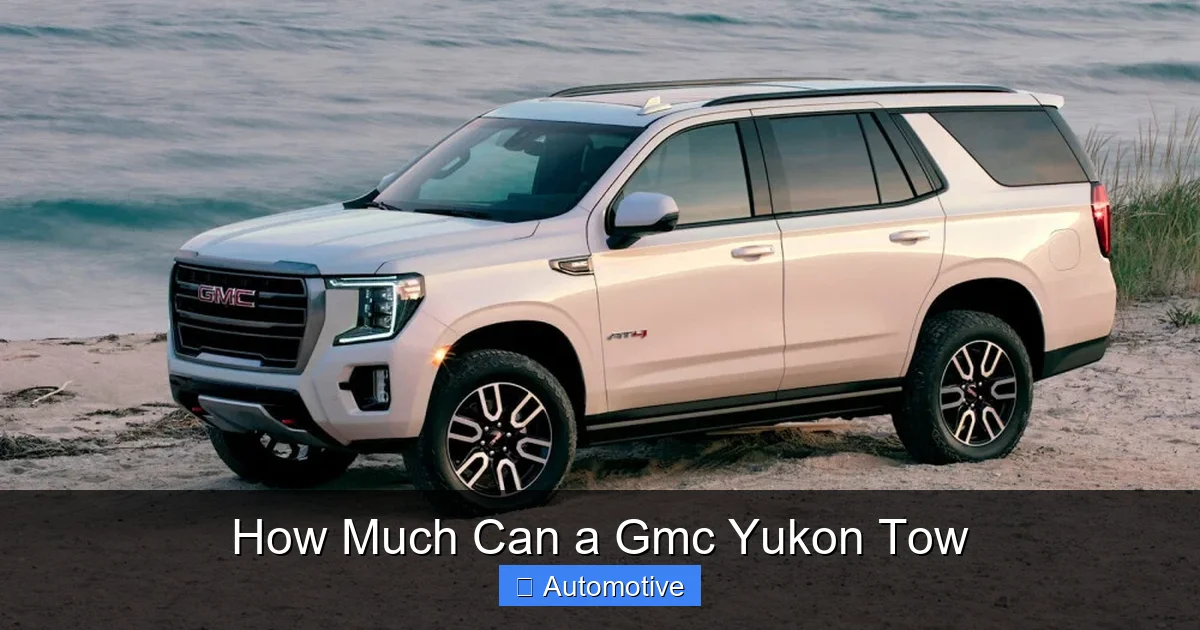
Visual guide about How Much Can a Gmc Yukon Tow
Image source: dealerinspire-image-library-prod.s3.us-east-1.amazonaws.com
The GMC Yukon has seen several updates in recent years, especially with the introduction of the fifth-generation model in 2021. This new platform brought improved aerodynamics, a stronger frame, and more powerful engine options—all of which contribute to better towing performance.
Let’s break down the towing capacities by model year and trim to give you a clear picture.
2021–2024 GMC Yukon (Fifth Generation)
The current-generation Yukon offers some of the best towing numbers in its history. Depending on the configuration, it can tow up to 8,400 pounds. Here’s how it breaks down:
– Standard 5.3L V8 Engine (RWD): Up to 8,400 lbs towing capacity
– Standard 5.3L V8 Engine (4WD): Up to 8,200 lbs
– Available 6.2L V8 Engine (RWD): Up to 8,400 lbs
– Available 6.2L V8 Engine (4WD): Up to 8,200 lbs
The 6.2L V8, available on the SLT, AT4, and Denali trims, delivers 420 horsepower and 460 lb-ft of torque. That extra muscle makes a noticeable difference when accelerating with a heavy load or climbing steep grades.
It’s worth noting that the AT4 trim, designed for off-road capability, still maintains strong towing numbers thanks to its reinforced suspension and available towing package. The Denali, GMC’s luxury flagship, doesn’t sacrifice performance for comfort—it’s equally capable of towing a large travel trailer or fifth-wheel.
2015–2020 GMC Yukon (Fourth Generation)
The previous-generation Yukon also offered impressive towing, though slightly less than the current model. With the 5.3L V8, it could tow up to 8,100 pounds with RWD and 7,900 pounds with 4WD. The 6.2L V8, introduced in later years, bumped that up to 8,500 pounds in RWD—though real-world numbers often landed closer to 8,100 due to equipment differences.
One thing to keep in mind with older models: towing capacity can vary based on wheelbase. The standard Yukon (120-inch wheelbase) and the extended Yukon XL (134-inch wheelbase) have slightly different ratings. The XL’s longer frame can provide better stability when towing, but it may also reduce maneuverability in tight spaces.
2007–2014 GMC Yukon (Third Generation)
Older Yukons are still capable machines, but their towing numbers are more modest. With the 5.3L V8, these models typically tow between 7,700 and 8,100 pounds, depending on drivetrain and equipment. The 6.0L V8, available on Denali trims, could push that closer to 8,200 pounds.
While these older Yukons can still handle light to moderate towing, they lack some of the advanced safety and towing aids found in newer models—like trailer sway control and integrated brake controllers.
Engine Options and Their Impact on Towing
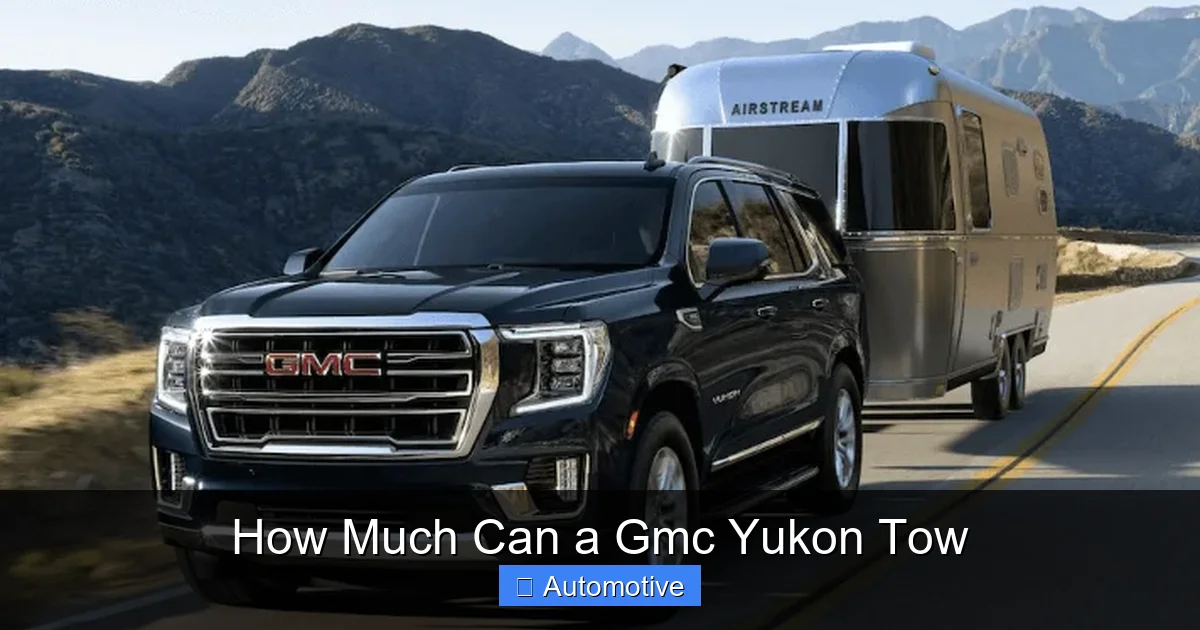
Visual guide about How Much Can a Gmc Yukon Tow
Image source: automotivetowingguide.com
The engine is the heart of any towing vehicle, and the GMC Yukon offers two strong V8 options that deliver excellent performance. Let’s take a closer look at how each engine affects towing capability.
5.3L EcoTec3 V8 Engine
The 5.3L V8 is the standard engine on most Yukon trims, including the SLE and SLT. It produces 355 horsepower and 383 lb-ft of torque. While it’s not the most powerful engine in the lineup, it’s more than capable of handling everyday towing tasks.
This engine uses GMC’s EcoTec3 technology, which includes direct fuel injection, variable valve timing, and cylinder deactivation. That means it can shut down four cylinders when you’re cruising to save fuel, then kick back into full power when you need it—like when you’re towing up a hill.
With the 5.3L V8 and the right towing package, the Yukon can tow up to 8,400 pounds in RWD configuration. That’s enough to handle a 25-foot travel trailer, a mid-sized boat, or a dual-axle utility trailer loaded with equipment.
6.2L EcoTec3 V8 Engine
For those who want maximum power, the 6.2L V8 is the way to go. Available on the SLT, AT4, and Denali trims, this engine delivers 420 horsepower and 460 lb-ft of torque—making it one of the most powerful naturally aspirated V8s in a full-size SUV.
The extra torque is especially helpful when starting from a stop with a heavy load or maintaining speed on inclines. Whether you’re towing a 30-foot fifth-wheel or a large pontoon boat, the 6.2L V8 gives you the confidence to do it smoothly and safely.
Interestingly, the towing capacity between the 5.3L and 6.2L engines is often the same—around 8,400 pounds in RWD. That’s because towing capacity is limited by other factors like frame strength and cooling, not just engine power. However, the 6.2L engine provides better performance under load, which can make towing feel easier and more controlled.
Diesel Option: 3.0L Duramax Turbo-Diesel
Starting in 2021, GMC introduced a 3.0L Duramax turbo-diesel engine as an option on the Yukon. This engine produces 277 horsepower and a stout 460 lb-ft of torque—the same as the 6.2L V8, but at lower RPMs.
Diesel engines are known for their torque and fuel efficiency, especially when towing. The 3.0L Duramax can tow up to 8,200 pounds in RWD and 8,000 pounds in 4WD. While it doesn’t match the peak towing of the V8s, it offers better fuel economy on long trips and excels in low-end pulling power.
This engine is a great choice if you plan to tow frequently over long distances or in mountainous terrain. The diesel’s efficiency can save you money at the pump, and its durability is well-suited for heavy-duty use.
Drivetrain and Towing Package Considerations
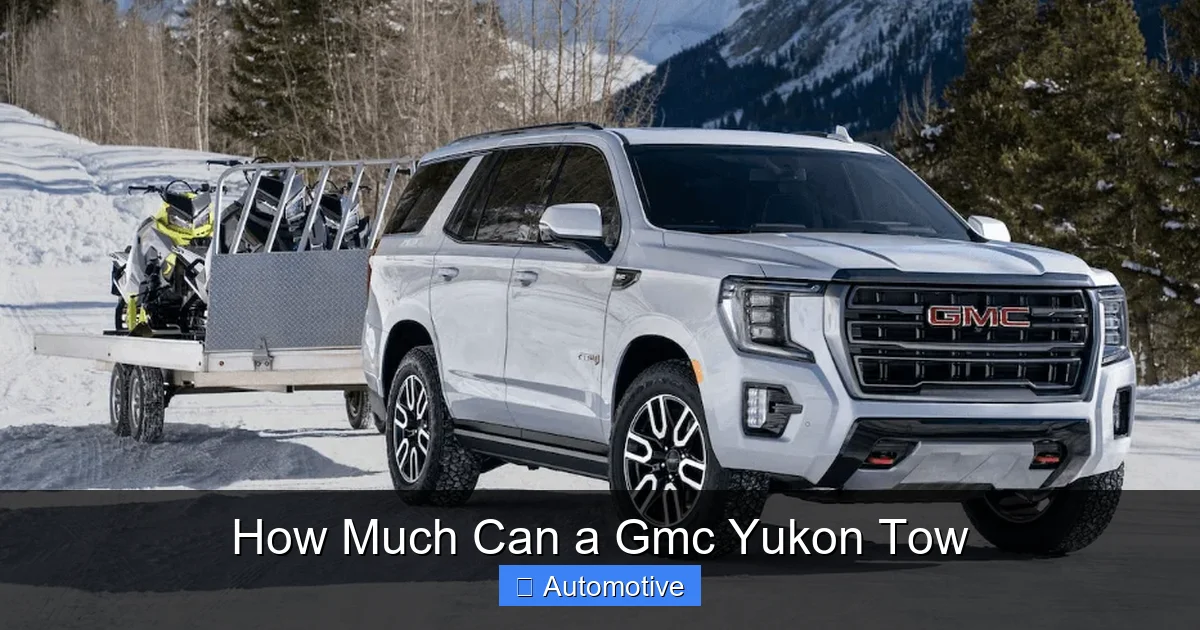
Visual guide about How Much Can a Gmc Yukon Tow
Image source: automotivetowingguide.com
Your Yukon’s drivetrain and equipment packages play a big role in determining its towing capacity. Let’s explore how these factors come into play.
Rear-Wheel Drive (RWD) vs. Four-Wheel Drive (4WD)
In most cases, a rear-wheel drive Yukon will have a higher towing capacity than a four-wheel drive model. Why? Because 4WD adds weight and complexity to the drivetrain, which can reduce the overall towing rating.
For example, a 2023 Yukon with the 5.3L V8 and RWD can tow 8,400 pounds. The same model with 4WD drops to 8,200 pounds. That’s a difference of 200 pounds—not huge, but enough to matter if you’re near the limit.
That said, 4WD offers better traction in slippery or off-road conditions. If you plan to tow in snow, mud, or on uneven terrain, the added grip of 4WD may be worth the slight reduction in towing capacity.
The Max Trailering Package
To get the most out of your Yukon’s towing ability, you’ll want the Max Trailering Package. This optional package is available on most trims and includes several key components:
– Enhanced cooling system for the engine and transmission
– Integrated trailer brake controller
– Heavy-duty rear axle
– Trailer sway control
– Upgraded suspension
– 2-inch receiver hitch with wiring harness
The Max Trailering Package is essential if you plan to tow near the vehicle’s maximum capacity. It ensures your Yukon can handle the heat and stress of heavy towing without overheating or losing control.
Without this package, your Yukon’s towing capacity may be reduced—sometimes by as much as 1,000 pounds. Always check your window sticker or owner’s manual to confirm whether your vehicle includes this package.
Wheelbase and Yukon XL
The standard GMC Yukon has a 120-inch wheelbase, while the Yukon XL stretches to 134 inches. The longer wheelbase of the XL provides better stability when towing, especially with large trailers or fifth-wheels.
Because of this, the Yukon XL often has a slightly higher towing capacity than the standard Yukon—sometimes by a few hundred pounds. It also offers more cargo space behind the third row, which can be helpful if you’re traveling with gear.
However, the XL is longer and less maneuverable, so consider your parking and driving needs before choosing between the two.
Practical Towing Tips for GMC Yukon Owners
Knowing your Yukon’s towing capacity is one thing—using it safely is another. Here are some practical tips to help you tow with confidence.
Know Your Trailer’s Weight
Before you hook up, make sure you know the actual weight of your trailer—including cargo, fluids, and accessories. Trailers often weigh more than advertised. Use a public scale or portable trailer scale to get an accurate reading.
Remember: towing capacity includes the trailer’s weight plus any tongue weight (the downward force on the hitch). Tongue weight should be 10–15% of the total trailer weight. Too little, and the trailer may sway; too much, and it can overload the rear axle.
Use the Right Hitch and Wiring
A 2-inch Class IV or Class V hitch is recommended for towing near the Yukon’s maximum capacity. Make sure it’s properly rated and installed.
Also, use a wiring harness to connect your trailer’s lights and brakes. The Yukon’s integrated trailer brake controller allows you to adjust brake force from inside the cab—essential for safe stopping with a heavy load.
Distribute Weight Properly
Load your trailer so that weight is balanced. Heavier items should be placed over the axles, not at the front or back. This helps prevent sway and improves handling.
Avoid overloading the trailer or packing too much in the Yukon itself. Remember, payload and towing capacity are separate limits.
Practice Safe Driving Habits
Towing changes how your vehicle handles. Allow extra time for braking, accelerating, and turning. Increase following distance and avoid sudden maneuvers.
Use your mirrors and consider adding extended towing mirrors for better visibility. If your trailer is especially long, practice backing up in an empty parking lot before hitting the road.
Check Tire Pressure and Brakes
Underinflated tires can overheat and fail when towing. Check tire pressure on both your Yukon and trailer before every trip.
Also, inspect trailer brakes and ensure they’re working properly. Electric brakes should be tested and adjusted regularly.
Real-World Towing Examples
To put the Yukon’s towing capacity into perspective, here are some common items it can handle:
– Travel Trailer: A 25–30 foot trailer weighing 6,000–8,000 pounds is well within the Yukon’s range.
– Boat and Trailer: A 22-foot pontoon boat with trailer typically weighs 5,000–7,000 pounds.
– Fifth-Wheel Camper: Smaller fifth-wheels (under 8,000 lbs) can be towed, especially with the 6.2L V8 and Max Trailering Package.
– Utility Trailer: A dual-axle trailer loaded with ATVs, furniture, or construction materials (up to 8,000 lbs) is no problem.
– Horse Trailer: A two-h bumper-pull trailer with horses usually weighs 5,000–7,500 pounds.
Always double-check the specific weight of your load and ensure your Yukon is properly equipped.
Conclusion
The GMC Yukon is a true towing champion in the full-size SUV segment. With towing capacities ranging from 7,700 to 8,400 pounds, it can handle everything from weekend camping trips to serious hauling jobs. Whether you choose the standard 5.3L V8, the powerful 6.2L V8, or the efficient 3.0L Duramax diesel, the Yukon delivers the strength and reliability you need.
But remember: towing safely is just as important as towing strongly. Equip your Yukon with the Max Trailering Package, know your trailer’s weight, and practice good driving habits. With the right setup, your Yukon will be ready for any adventure.
So, how much can a GMC Yukon tow? The answer is clear: plenty. And with the right preparation, you can tow it all with confidence.
Frequently Asked Questions
What is the maximum towing capacity of a GMC Yukon?
The maximum towing capacity of a GMC Yukon is 8,400 pounds when equipped with the 5.3L or 6.2L V8 engine, rear-wheel drive, and the Max Trailering Package. This applies to the 2021–2024 models.
Can a GMC Yukon tow a travel trailer?
Yes, the GMC Yukon can easily tow a travel trailer. Most 25–30 foot trailers weighing up to 8,000 pounds are within its towing range, especially with the right engine and towing package.
Does four-wheel drive reduce towing capacity?
Yes, four-wheel drive typically reduces towing capacity by 200–400 pounds compared to rear-wheel drive due to added weight and drivetrain complexity.
Is the Max Trailering Package necessary?
The Max Trailering Package is highly recommended if you plan to tow near the vehicle’s maximum capacity. It includes critical components like enhanced cooling, trailer brakes, and sway control.
Can the GMC Yukon tow a fifth-wheel camper?
The standard Yukon is not designed for fifth-wheel towing due to its bumper-pull hitch. However, the Yukon XL can be modified with a fifth-wheel hitch in the bed, though this requires professional installation and may affect payload.
What engine is best for towing in the GMC Yukon?
The 6.2L V8 engine offers the best performance for heavy towing, with 420 horsepower and 460 lb-ft of torque. The 3.0L Duramax diesel is also excellent for long-distance towing due to its fuel efficiency and low-end torque.