
How Much Can a Gmc Sierra 2500 Tow

The GMC Sierra 2500 is a powerhouse designed for serious towing, with a maximum capacity of up to 18,700 pounds when properly equipped. Whether you’re hauling a boat, camper, or construction equipment, this heavy-duty pickup delivers impressive strength, advanced towing tech, and rugged reliability.
Key Takeaways
- Maximum Towing Capacity: The GMC Sierra 2500 can tow up to 18,700 pounds when equipped with the available Duramax 6.6L Turbo-Diesel V8 engine and gooseneck/fifth-wheel setup.
- Gas vs. Diesel Performance: The gas-powered 6.6L V8 offers strong towing at 14,500 pounds, while the diesel engine adds extra torque and efficiency for heavier loads.
- Gooseneck vs. Conventional Towing: Gooseneck and fifth-wheel configurations provide better weight distribution and higher towing limits than standard bumper-pull hitches.
- Towing Technology: Features like the ProGrade Trailering System, HD Rear Vision Camera, and Trailer Side Blind Zone Alert make towing safer and easier.
- Payload and GVWR Matter: Always check your truck’s Gross Vehicle Weight Rating (GVWR) and payload capacity to avoid overloading.
- Proper Equipment is Key: Using the right hitch, brake controller, and trailer setup ensures safe and legal towing.
- Real-World Towing Tips: Maintain proper tire pressure, distribute weight evenly, and use engine braking on downhill grades.
📑 Table of Contents
- How Much Can a GMC Sierra 2500 Tow? A Complete Guide
- Understanding Towing Capacity: What It Really Means
- Gas vs. Diesel: Which Engine Delivers More Towing Power?
- Gooseneck vs. Fifth-Wheel vs. Conventional Towing
- Advanced Towing Technology in the GMC Sierra 2500
- Real-World Towing Tips for GMC Sierra 2500 Owners
- Conclusion: Is the GMC Sierra 2500 Right for Your Towing Needs?
How Much Can a GMC Sierra 2500 Tow? A Complete Guide
If you’re in the market for a truck that can handle serious towing duties, the GMC Sierra 2500 deserves a top spot on your list. Whether you’re pulling a massive fifth-wheel RV across the country, hauling a heavy equipment trailer to a job site, or towing a large boat to the lake, this heavy-duty pickup is built to deliver. But just how much can a GMC Sierra 2500 tow? The answer isn’t one-size-fits-all—it depends on the engine, drivetrain, cab configuration, bed length, and towing setup.
In this detailed guide, we’ll break down the towing capabilities of the GMC Sierra 2500, compare gas and diesel engine options, explain the difference between conventional and gooseneck towing, and share practical tips to help you tow safely and efficiently. By the end, you’ll know exactly what this truck can do—and how to get the most out of it.
Understanding Towing Capacity: What It Really Means
Visual guide about How Much Can a Gmc Sierra 2500 Tow
Image source: m.media-amazon.com
Before diving into numbers, it’s important to understand what “towing capacity” actually means. Towing capacity refers to the maximum weight a vehicle can safely pull behind it, including the trailer, cargo, passengers, and fuel. This number isn’t arbitrary—it’s determined by the manufacturer based on the truck’s frame strength, engine power, transmission, suspension, brakes, and cooling systems.
The GMC Sierra 2500 is classified as a heavy-duty pickup, which means it’s built with a reinforced frame, larger axles, and heavy-duty components designed to handle loads far beyond what a standard half-ton truck can manage. That said, not all Sierra 2500s are created equal. Towing capacity varies significantly depending on how the truck is configured.
For example, a Sierra 2500 with the standard gas engine and rear-wheel drive will have a lower towing capacity than one equipped with the optional diesel engine, four-wheel drive, and a gooseneck hitch. That’s why it’s crucial to look at the specific build of your truck—or the one you’re considering buying—when evaluating towing performance.
Factors That Affect Towing Capacity
Several key factors influence how much a GMC Sierra 2500 can tow:
- Engine Type: The engine is the heart of towing power. The Sierra 2500 offers two main engine options—a 6.6L gasoline V8 and a 6.6L Duramax Turbo-Diesel V8. The diesel engine produces significantly more torque, which is essential for moving heavy loads from a stop and maintaining speed on hills.
- Drivetrain: Rear-wheel drive (RWD) typically allows for higher towing capacity than four-wheel drive (4WD) because 4WD adds weight and complexity. However, 4WD provides better traction in off-road or slippery conditions, which can be important depending on your towing environment.
- Cab and Bed Configuration: Extended cab and crew cab models with longer beds (like the 8-foot box) generally offer better towing performance due to improved weight distribution and stability.
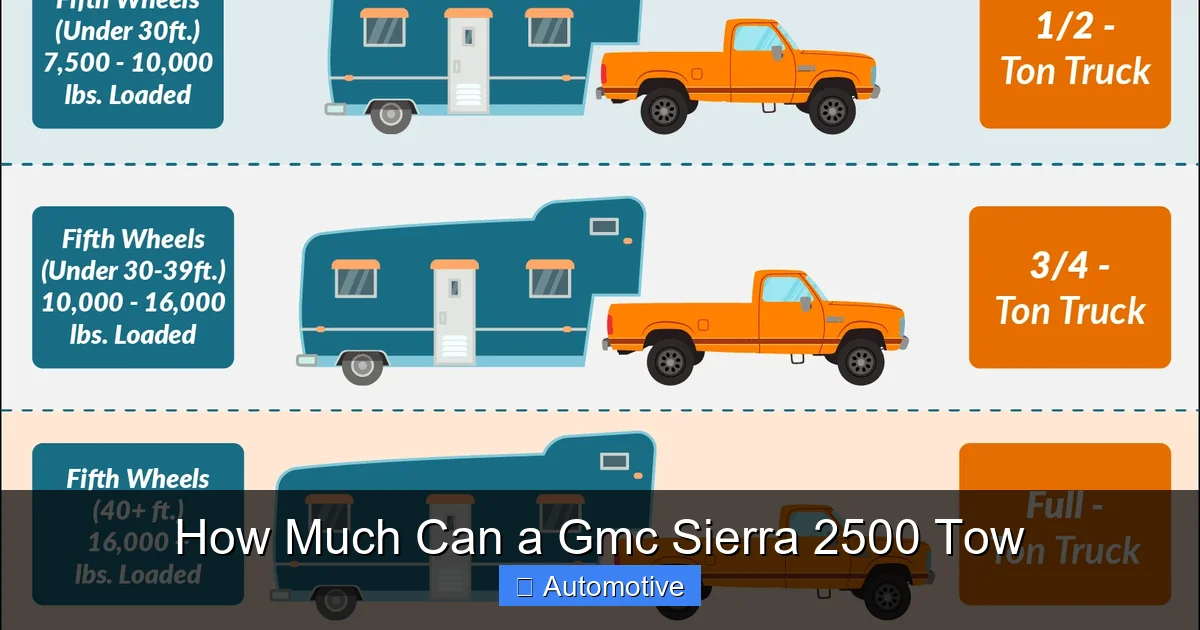
- Hitch Type: The type of hitch you use—conventional bumper-pull, gooseneck, or fifth-wheel—plays a major role. Gooseneck and fifth-wheel setups connect the trailer to the truck’s bed, placing the weight directly over the rear axle and allowing for much higher towing limits.
- Payload Capacity: Your truck’s payload (the total weight it can carry, including passengers, cargo, and hitch weight) must also be considered. If your payload is maxed out, you may not be able to tow at full capacity, even if the engine can handle it.
Gas vs. Diesel: Which Engine Delivers More Towing Power?
Visual guide about How Much Can a Gmc Sierra 2500 Tow
Image source: rvexpertise.com
One of the biggest decisions when buying a GMC Sierra 2500 is choosing between the gas and diesel engine. Both are powerful, but they serve different needs and come with different trade-offs.
The 6.6L Gasoline V8 Engine
The standard engine in the Sierra 2500 is a 6.6L gasoline V8 that produces 401 horsepower and 464 lb-ft of torque. It’s paired with a 6-speed automatic transmission and is available across most trim levels.
This engine is more than capable of handling everyday towing tasks. With the right setup, it can tow up to 14,500 pounds—enough for most travel trailers, large boats, and equipment trailers. It’s also more affordable upfront and uses regular gasoline, which is cheaper and more widely available than diesel fuel.
However, the gas engine has limitations when it comes to heavy-duty towing. It lacks the low-end torque of a diesel, which means it may struggle more on steep inclines or when starting with a very heavy load. Additionally, gas engines typically have lower fuel economy when towing, which can add up on long trips.
The 6.6L Duramax Turbo-Diesel V8 Engine
For maximum towing power, the Duramax 6.6L Turbo-Diesel V8 is the clear winner. This engine cranks out 445 horsepower and a massive 910 lb-ft of torque—nearly double the torque of the gas engine. It’s paired with a 10-speed automatic transmission that’s optimized for smooth shifting under load.
With the Duramax diesel, the GMC Sierra 2500 can tow up to 18,700 pounds when properly equipped with a gooseneck or fifth-wheel hitch. That’s a 4,200-pound advantage over the gas engine, making it ideal for hauling large RVs, horse trailers, or construction equipment.
The diesel engine also offers better fuel efficiency when towing, especially on long highway drives. While diesel fuel is more expensive per gallon, the improved mileage often offsets the cost. Plus, diesel engines are known for their longevity and durability under heavy use.
Which One Should You Choose?
If you plan to tow occasionally or under 10,000 pounds, the gas engine is a solid, cost-effective choice. But if you’re regularly towing heavy loads—especially over long distances or in hilly terrain—the diesel engine is worth the investment. The extra torque, efficiency, and towing capacity make it the best option for serious haulers.
Gooseneck vs. Fifth-Wheel vs. Conventional Towing
Not all towing setups are created equal. The type of hitch you use can dramatically affect how much your GMC Sierra 2500 can tow—and how safely it handles the load.
Conventional Bumper-Pull Towing
This is the most common towing method, where a trailer is hitched to a receiver mounted under the rear bumper. It’s simple, versatile, and works with a wide range of trailers, from small utility trailers to large travel trailers.
However, conventional towing has limitations. The weight of the trailer presses down on the hitch, which can affect the truck’s handling and reduce rear suspension travel. Most GMC Sierra 2500s with conventional hitches are rated to tow between 12,000 and 14,500 pounds, depending on the engine and configuration.
Gooseneck Towing
A gooseneck hitch connects the trailer to a ball mounted in the truck’s bed, just behind the rear axle. This setup places the trailer’s weight directly over the rear wheels, improving stability and allowing for higher towing capacity.
Gooseneck hitches are commonly used for livestock trailers, flatbeds, and large equipment haulers. With a gooseneck setup, the Sierra 2500 can reach its maximum towing capacity of 18,700 pounds—especially when paired with the diesel engine.
One advantage of gooseneck towing is that it allows for tighter turning radiuses and better maneuverability, especially in tight spaces like farms or job sites.
Fifth-Wheel Towing
Fifth-wheel hitches are similar to gooseneck hitches but use a kingpin connection instead of a ball. They’re most commonly used for large RVs and luxury campers. The hitch is mounted in the truck bed and connects to a kingpin on the front of the trailer.
Like gooseneck hitches, fifth-wheel setups provide excellent weight distribution and stability. They also allow for a more comfortable ride, as the connection point is higher and absorbs more of the trailer’s movement.
The GMC Sierra 2500 is designed with fifth-wheel prep packages available, making it easy to install a compatible hitch. With this setup, the truck can also achieve the full 18,700-pound towing capacity.
Which Hitch is Right for You?
If you’re towing a travel trailer or RV, a fifth-wheel hitch is often the best choice for comfort and stability. For heavy equipment or livestock, a gooseneck hitch offers superior strength and maneuverability. Conventional towing is fine for lighter loads and occasional use, but it won’t unlock the Sierra 2500’s full potential.
Advanced Towing Technology in the GMC Sierra 2500
Towing a heavy load isn’t just about power—it’s also about control, visibility, and safety. That’s why GMC equips the Sierra 2500 with a suite of advanced towing technologies designed to make hauling easier and safer.
ProGrade Trailering System
The ProGrade Trailering System is a comprehensive suite of tools that helps you manage every aspect of towing. It includes:
- Trailer Light Check: Confirms that your trailer’s brake lights, turn signals, and running lights are working properly before you hit the road.
- Trailer Theft Alarm: Alerts you if someone tries to disconnect your trailer while the truck is off.
- Brake Gain Setting: Allows you to adjust the sensitivity of the integrated trailer brake controller to match your trailer’s weight and braking needs.
- Trailer Tire Pressure Monitoring: Monitors the air pressure in your trailer’s tires and alerts you if any are underinflated.
These features are accessible through the truck’s infotainment screen and can save you time and stress when preparing to tow.
HD Rear Vision Camera and Surround Vision
Backing up with a trailer can be tricky, especially with a long or wide load. The Sierra 2500’s HD Rear Vision Camera provides a clear, high-definition view behind the truck, while the available Surround Vision system uses multiple cameras to give you a 360-degree view around the vehicle.
This is especially helpful when hitching up a trailer or navigating tight spaces. You can see curbs, obstacles, and even the hitch ball itself, making alignment much easier.
Trailer Side Blind Zone Alert
When towing a long trailer, your blind spots increase significantly. The Trailer Side Blind Zone Alert system extends the truck’s blind spot monitoring to cover the length of the trailer, alerting you if a vehicle is in your blind spot—even when it’s hidden behind the trailer.
This feature is a game-changer for highway driving and lane changes, reducing the risk of accidents.
Integrated Trailer Brake Controller
The Sierra 2500 comes with a factory-installed trailer brake controller that allows you to adjust and activate your trailer’s brakes directly from the dashboard. This ensures smooth, synchronized braking between the truck and trailer, improving safety and reducing wear on your brakes.
Real-World Towing Tips for GMC Sierra 2500 Owners
Even with all the power and technology, towing safely requires preparation and good habits. Here are some practical tips to help you get the most out of your GMC Sierra 2500:
Check Your GVWR and Payload
Before you tow, always check your truck’s Gross Vehicle Weight Rating (GVWR)—the maximum total weight the vehicle can safely carry, including passengers, cargo, fuel, and hitch weight. You can find this on the driver’s side door jamb sticker.
Also, calculate your payload. Add up the weight of all passengers, gear, and the tongue weight of the trailer (typically 10–15% of the trailer’s total weight). If your payload exceeds the truck’s capacity, you risk damaging the suspension or losing control.
Distribute Weight Evenly
Proper weight distribution is critical for stability. Load heavy items low and centered over the trailer’s axles. Avoid placing too much weight at the front or back, as this can cause swaying or fishtailing.
For fifth-wheel and gooseneck trailers, aim to have 15–20% of the trailer’s weight on the hitch. This ensures the truck’s rear axle carries enough load for traction and control.
Maintain Proper Tire Pressure
Underinflated tires can overheat and fail, especially when towing. Check both your truck’s and trailer’s tire pressure before every trip, and adjust according to the manufacturer’s recommendations—often higher when towing.
Use Engine Braking on Downhills
When descending steep grades, use lower gears to let the engine slow the vehicle instead of relying solely on the brakes. This reduces brake fade and improves control. The Sierra 2500’s diesel engine is especially good at engine braking due to its high compression and torque.
Practice Before You Go
If you’re new to towing, practice backing up, turning, and parking in an empty lot before hitting the road. It takes time to get used to the extra length and weight.
Inspect Your Hitch and Connections
Before every trip, check that your hitch is secure, the safety chains are crossed and attached, and the electrical connections are working. A loose or damaged hitch can lead to disaster.
Conclusion: Is the GMC Sierra 2500 Right for Your Towing Needs?
So, how much can a GMC Sierra 2500 tow? The answer is clear: up to 18,700 pounds when properly equipped with the Duramax diesel engine and a gooseneck or fifth-wheel hitch. That’s enough to handle almost any towing challenge, from weekend adventures to professional hauling.
Whether you choose the gas or diesel engine, the Sierra 2500 delivers impressive power, advanced technology, and rugged reliability. With the right setup and a few smart practices, you can tow safely and confidently—no matter where the road takes you.
If you’re serious about towing, the GMC Sierra 2500 is one of the best heavy-duty trucks on the market. It’s not just about how much it can pull—it’s about how well it does it.
Frequently Asked Questions
What is the maximum towing capacity of a GMC Sierra 2500?
The GMC Sierra 2500 can tow up to 18,700 pounds when equipped with the 6.6L Duramax Turbo-Diesel V8 engine and a gooseneck or fifth-wheel hitch. This is the highest towing capacity available for this model.
Can a GMC Sierra 2500 tow a fifth-wheel RV?
Yes, the GMC Sierra 2500 is an excellent choice for towing fifth-wheel RVs. With the proper fifth-wheel hitch and diesel engine, it can easily handle large, heavy campers up to its maximum capacity.
What’s the difference between gooseneck and fifth-wheel towing?
Gooseneck hitches use a ball in the truck bed and are common for equipment and livestock trailers. Fifth-wheel hitches use a kingpin connection and are typically used for RVs. Both offer higher towing capacity and better stability than conventional towing.
Does the gas engine tow as well as the diesel?
The gas engine is capable, with a max towing capacity of 14,500 pounds, but the diesel engine’s higher torque and efficiency make it better for heavy, frequent towing.
Do I need a special license to tow with a GMC Sierra 2500?
In most states, a standard driver’s license is sufficient for towing with a Sierra 2500, even at maximum capacity. However, some states require a special endorsement for very heavy loads—check your local regulations.
How do I know if my truck is properly equipped for towing?
Check your vehicle’s build sheet or door jamb sticker for towing specs. Ensure you have the correct hitch, brake controller, and engine option. When in doubt, consult your dealer or GMC’s towing guide.
