
How Much Can a 2015 Gmc 5.3l Tow

The 2015 GMC Sierra 1500 with a 5.3L V8 engine can tow up to 11,500 pounds when properly equipped. This impressive capability makes it a strong choice for hauling trailers, boats, campers, and work equipment—but real-world towing depends on configuration, payload, and setup.
[FEATURED_IMAGE_PLACEHolder]
Key Takeaways
- Maximum Towing Capacity: Up to 11,500 lbs when equipped with the Max Trailering Package and proper gear ratio.
- Standard Towing Range: Most 2015 GMC 5.3L models tow between 7,500 and 9,000 lbs without special packages.
- Engine and Transmission: The 5.3L EcoTec3 V8 delivers 355 hp and 383 lb-ft of torque, paired with a 6-speed automatic for smooth towing.
- Critical Towing Factors: Axle ratio, cab size, bed length, drivetrain (2WD vs 4WD), and trailer type all impact real-world towing ability.
- Safety and Stability: Use weight distribution hitches, trailer brakes, and proper tire pressure to maintain control under load.
- Payload Matters: Don’t overlook payload capacity—passengers, gear, and hitch weight reduce available towing margin.
- Maintenance is Key: Regular oil changes, brake checks, and cooling system maintenance ensure reliable towing performance.
📑 Table of Contents
- How Much Can a 2015 GMC 5.3L Tow?
- Understanding Towing Capacity Basics
- 2015 GMC 5.3L Towing Specifications
- Max Trailering Package: What It Includes
- Towing Safely: Tips and Best Practices
- Payload vs. Towing Capacity: Why Both Matter
- Common Mistakes to Avoid
- Conclusion: Is the 2015 GMC 5.3L Right for You?
How Much Can a 2015 GMC 5.3L Tow?
If you’re considering a 2015 GMC Sierra 1500 with the 5.3L V8 engine for towing, you’re likely wondering: *How much can it really pull?* The short answer is impressive—up to 11,500 pounds when properly equipped. But the full story is more nuanced. Towing capacity isn’t a one-size-fits-all number. It depends on how your truck is configured, what you’re towing, and how you set it up.
Let’s break it down so you can confidently hitch up and hit the road. Whether you’re hauling a travel trailer to the mountains, a boat to the lake, or a utility trailer full of gear, understanding your truck’s limits is essential for safety and performance. The 2015 GMC 5.3L is a capable workhorse, but like any vehicle, it has strengths and limits. This guide will walk you through everything you need to know—from engine specs to real-world tips—so you can tow with confidence.
Understanding Towing Capacity Basics
Visual guide about How Much Can a 2015 Gmc 5.3l Tow
Image source: i.ytimg.com
Before diving into numbers, it helps to understand what “towing capacity” actually means. It’s the maximum weight your truck can safely pull behind it, including the trailer, cargo, fluids, and passengers. This number is set by the manufacturer based on engineering tests and safety standards. But it’s not just about the engine—it’s a combination of the frame, suspension, brakes, transmission, cooling system, and more.
The 2015 GMC Sierra 1500 with the 5.3L V8 is built on a robust platform designed for light-duty towing and hauling. However, not all 5.3L models are created equal. A base model with rear-wheel drive (2WD) and a standard axle ratio won’t tow as much as a crew cab with four-wheel drive (4WD), a heavy-duty cooling package, and a 3.73:1 rear axle. That’s why configuration matters so much.
Another key concept is “properly equipped.” This phrase appears in every towing guide and owner’s manual for a reason. It means your truck must have the right options—like a trailer hitch, wiring harness, transmission cooler, and upgraded suspension—to reach its maximum towing potential. Without these, you’re limited to a lower, safer rating.
What Affects Towing Capacity?
Several factors influence how much your 2015 GMC 5.3L can tow:
- Axle Ratio: A higher numerical ratio (like 3.73:1) provides more torque to the wheels, improving towing power. Trucks with 3.08:1 or 3.42:1 ratios are better for fuel economy but less ideal for heavy loads.
- Cab and Bed Configuration: Extended cab and crew cab models have different weight distributions and payload capacities. Longer beds can help with stability but may reduce payload.
- Drivetrain: 2WD trucks often have higher towing ratings than 4WD models because they’re lighter. However, 4WD offers better traction in off-road or slippery conditions.
- Trailer Type: Travel trailers, fifth wheels, and gooseneck trailers affect towing differently. Gooseneck and fifth-wheel setups place weight directly over the rear axle, increasing capacity.
- Payload Capacity: This is the total weight your truck can carry, including passengers, cargo, and the tongue weight of the trailer. Exceeding payload can overload the suspension and brakes.
Understanding these variables helps you make informed decisions when buying or preparing your truck for towing.
2015 GMC 5.3L Towing Specifications
Visual guide about How Much Can a 2015 Gmc 5.3l Tow
Image source: i.ytimg.com
Now, let’s get to the numbers. The 2015 GMC Sierra 1500 with the 5.3L EcoTec3 V8 engine has a towing capacity that ranges from about 7,500 pounds to 11,500 pounds—depending on how it’s equipped.
The maximum of 11,500 pounds is only achievable with the **Max Trailering Package**, which includes:
– 3.73:1 rear axle ratio
– Heavy-duty cooling system
– Enhanced transmission cooler
– Trailer brake controller
– Integrated trailer brake controller
– Upgraded suspension
– 20-inch wheels (on some models)
Without this package, most 5.3L models fall into the 7,500 to 9,000-pound range. For example:
– A 2WD extended cab with 3.08:1 axle ratio: ~7,500 lbs
– A 2WD crew cab with 3.42:1 axle ratio: ~8,500 lbs
– A 4WD crew cab with 3.73:1 axle ratio and Max Tow Package: up to 11,500 lbs
It’s also important to note that these numbers assume you’re towing a conventional trailer (bumper-pull). If you’re using a fifth-wheel or gooseneck trailer, the capacity may be higher because the weight is distributed more evenly over the truck bed.
Engine and Drivetrain Details
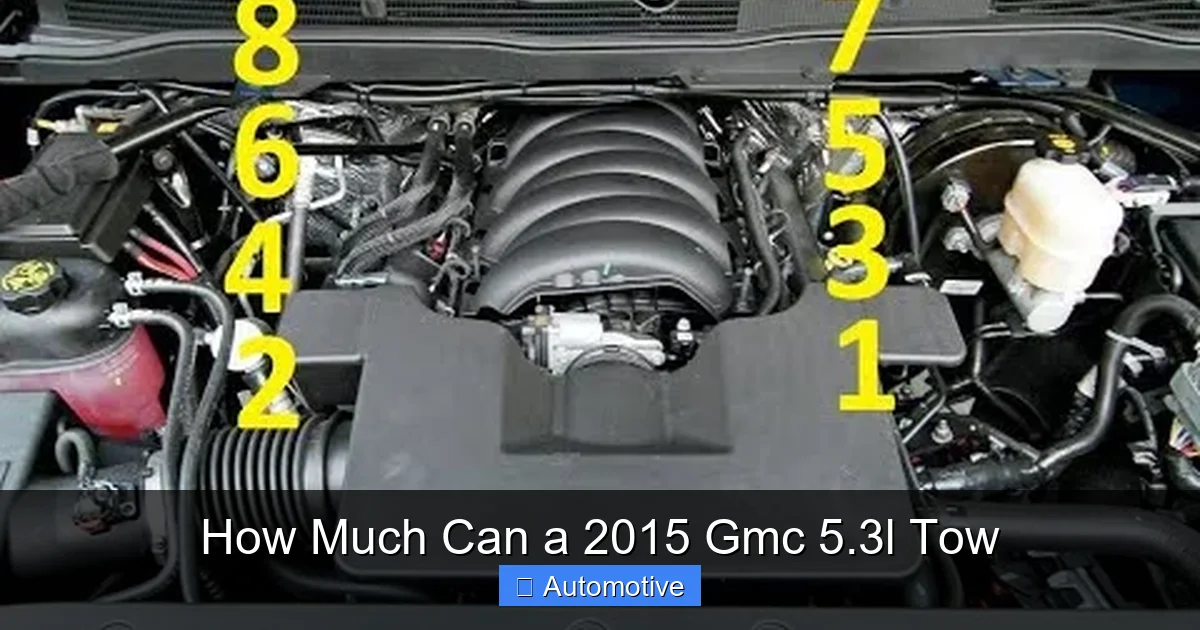
The heart of the 2015 GMC 5.3L is the EcoTec3 5.3L V8 engine. It produces 355 horsepower and 383 lb-ft of torque—plenty of grunt for towing. This engine features direct fuel injection, variable valve timing, and cylinder deactivation (which shuts down four cylinders under light load to save fuel).
Paired with a 6-speed automatic transmission, the powertrain is smooth and responsive. The transmission includes a tow/haul mode that adjusts shift points to reduce gear hunting and improve engine braking on downhill grades. This is especially helpful when towing heavy loads through mountains or hilly terrain.
The 5.3L also comes with a standard trailer sway control system and, on equipped models, an integrated trailer brake controller. These features help keep your trailer stable and allow you to apply the trailer’s brakes directly from the cab—critical for safety when stopping a heavy load.
Real-World Towing Examples
Let’s put these numbers into context with real-world examples:
- Travel Trailer: A typical 25-foot travel trailer weighs between 5,000 and 7,000 pounds. Most 2015 GMC 5.3L models can handle this with ease, especially if it’s under 8,000 lbs.
- Boat Trailer: A mid-sized fishing boat with trailer might weigh 6,000 to 8,000 pounds. Again, well within the range of most 5.3L trucks.
- Utility Trailer: A 6×12 enclosed cargo trailer loaded with tools or furniture could weigh 5,000 to 7,000 pounds—still manageable.
- Fifth-Wheel RV: These can weigh 10,000 to 15,000 pounds, so only the Max Tow Package models should attempt this. Even then, check the specific weight and hitch requirements.
- Gooseneck Livestock Trailer: A 2-horse gooseneck trailer might weigh 8,000 to 10,000 pounds. With proper setup, a Max Tow truck can handle it.
Always weigh your fully loaded trailer at a certified scale before hitting the road. Don’t rely on manufacturer estimates—actual weights can vary significantly.
Max Trailering Package: What It Includes
Visual guide about How Much Can a 2015 Gmc 5.3l Tow
Image source: i.ytimg.com
If you’re serious about towing, the Max Trailering Package is worth considering. This factory-installed option transforms your 2015 GMC 5.3L into a towing powerhouse. Here’s what it adds:
- 3.73:1 Rear Axle Ratio: Provides maximum torque for pulling heavy loads from a stop and up hills.
- Heavy-Duty Cooling: Upgraded radiator and engine oil cooler prevent overheating during long tows.
- Enhanced Transmission Cooler: Keeps transmission fluid cool under heavy load, extending transmission life.
- Trailer Brake Controller: Integrated into the dash, allowing precise control of trailer brakes.
- Trailer Sway Control: Uses the truck’s stability system to detect and correct sway.
- Upgraded Suspension: Stiffer rear springs and shocks improve load handling and ride quality.
- 20-Inch Wheels (on some trims): Provide better stability and load ratings.
This package is ideal for anyone planning to tow frequently or pull heavy loads like large RVs, horse trailers, or equipment haulers. While it may reduce fuel economy slightly, the peace of mind and performance gains are worth it.
Is the Max Tow Package Worth It?
If you plan to tow more than 8,000 pounds regularly, the answer is yes. The Max Tow Package not only increases your towing capacity but also improves safety, reliability, and resale value. It’s a smart investment for anyone using their truck as a work vehicle or for serious recreational towing.
Even if you don’t need 11,500 pounds today, having the capability gives you flexibility for future needs. Plus, many used 2015 GMC 5.3L trucks with this package are still in excellent condition and hold their value well.
Towing Safely: Tips and Best Practices
Knowing your truck’s towing capacity is only half the battle. Safe towing requires preparation, proper setup, and ongoing maintenance. Here are essential tips to keep you and others safe on the road.
Proper Hitch and Setup
Using the right hitch is critical. For conventional trailers, a weight-distributing hitch is recommended for loads over 5,000 pounds. This type of hitch uses spring bars to redistribute weight across all axles, improving steering and braking.
Make sure your hitch class matches your trailer weight:
– Class III: Up to 6,000 lbs
– Class IV: Up to 10,000 lbs
– Class V: Up to 12,000+ lbs
Always check that your hitch is rated for the weight you’re towing. A mismatched hitch can fail under load, leading to dangerous situations.
Weight Distribution and Tongue Weight
Tongue weight—the downward force the trailer exerts on the hitch—should be 10% to 15% of the total trailer weight. For an 8,000-pound trailer, that’s 800 to 1,200 pounds.
Too little tongue weight causes sway; too much overloads the rear suspension and reduces front-wheel traction. Use a tongue weight scale or bathroom scale with a block to measure it accurately.
Distribute cargo in the trailer so heavier items are centered over the axles. Avoid loading too much in the front or back.
Braking and Stability
Always use trailer brakes if your trailer weighs more than 1,500 pounds. Electric brakes are common and effective, but they require a brake controller in the truck.
Practice braking in a safe area before hitting the highway. Remember, it takes longer to stop a loaded truck. Leave extra following distance and avoid sudden maneuvers.
If your trailer starts to sway, don’t slam on the brakes. Instead, gently ease off the accelerator and let the truck’s stability system or trailer sway control do its job. Steer straight and avoid overcorrecting.
Tire Pressure and Load Ratings
Check tire pressure before every tow. Underinflated tires overheat and can fail. Overinflated tires reduce traction and wear unevenly.
Use tires with a load rating appropriate for your truck and trailer. LT (Light Truck) tires are better for towing than P-metric passenger tires because they’re built to handle heavier loads.
Regular Maintenance
Towing puts extra stress on your truck. Keep up with:
– Oil changes (every 3,000–5,000 miles when towing)
– Transmission fluid checks and changes
– Brake inspections
– Coolant system flushes
– Suspension and steering component checks
A well-maintained truck is a safe truck—especially when towing.
Payload vs. Towing Capacity: Why Both Matter
Many people focus only on towing capacity and forget about payload. But payload is just as important. It’s the total weight your truck can carry, including:
– Passengers
– Cargo in the cab and bed
– Hitch weight (tongue weight for conventional trailers)
– Aftermarket accessories (toolboxes, racks, etc.)
For example, a 2015 GMC 5.3L crew cab might have a payload capacity of 1,800 pounds. If you have four passengers (600 lbs), gear in the bed (300 lbs), and a trailer with 1,000 pounds of tongue weight, you’ve used 1,900 pounds—exceeding your payload limit.
Exceeding payload can cause:
– Suspension failure
– Brake overheating
– Poor handling
– Tire blowouts
Always calculate your total payload before towing. If you’re close to the limit, consider reducing cargo or upgrading to a heavier-duty truck.
How to Calculate Your Safe Towing Limit
To find your actual towing capacity, follow these steps:
1. Find your truck’s Gross Combined Weight Rating (GCWR) from the door jamb sticker or owner’s manual.
2. Subtract the curb weight of your truck (from the manual).
3. Subtract the weight of passengers, cargo, and hitch.
4. The result is your available towing capacity.
For example:
– GCWR: 18,000 lbs
– Truck curb weight: 5,500 lbs
– Passengers and cargo: 800 lbs
– Available towing capacity: 18,000 – 5,500 – 800 = 11,700 lbs
But remember, this is a theoretical max. Always stay within the manufacturer’s stated towing capacity for your specific configuration.
Common Mistakes to Avoid
Even experienced drivers make towing mistakes. Here are some to watch out for:
- Overloading the Trailer: Just because your truck can tow 10,000 lbs doesn’t mean your trailer is rated for it. Check the trailer’s GVWR.
- Ignoring Wind and Weather: High winds can destabilize tall trailers. Avoid towing in strong crosswinds or storms.
- Skipping Pre-Trip Checks: Always inspect tires, lights, brakes, and hitch before driving.
- Driving Too Fast: Reduce speed when towing. Most experts recommend 55–65 mph on highways.
- Not Using Mirrors: Wide-angle towing mirrors are essential for seeing around large trailers.
- Forgetting Trailer Lights: Ensure all lights (brake, turn, tail) are working. A broken light can lead to tickets or accidents.
Avoiding these mistakes keeps you safe and helps preserve your truck’s longevity.
Conclusion: Is the 2015 GMC 5.3L Right for You?
The 2015 GMC Sierra 1500 with the 5.3L V8 is a versatile and capable truck for towing. With the right setup, it can handle everything from weekend campers to heavy work trailers. Its combination of power, technology, and comfort makes it a popular choice among truck owners.
However, towing capacity isn’t just about the engine—it’s about the whole package. Configuration, payload, and preparation all play a role. If you’re planning to tow frequently or pull heavy loads, investing in the Max Trailering Package is a smart move.
Always prioritize safety. Weigh your trailer, check your setup, and maintain your truck. With the right approach, your 2015 GMC 5.3L can be a reliable towing partner for years to come.
Whether you’re hauling a boat to the lake or a trailer across the country, knowing your limits and preparing properly will ensure every trip is smooth, safe, and successful.
Frequently Asked Questions
What is the maximum towing capacity of a 2015 GMC 5.3L?
The maximum towing capacity is 11,500 pounds, but only when equipped with the Max Trailering Package, 3.73:1 axle ratio, and proper configuration. Most models without this package tow between 7,500 and 9,000 pounds.
Can a 2015 GMC 5.3L tow a travel trailer?
Yes, most 2015 GMC 5.3L trucks can safely tow a travel trailer up to 8,000 pounds. Larger trailers may require the Max Tow Package and careful attention to tongue weight and payload.
Does the 5.3L engine have enough power for towing?
Absolutely. The 5.3L V8 produces 355 hp and 383 lb-ft of torque, making it well-suited for towing. The EcoTec3 technology also improves efficiency and durability under load.
Do I need a special hitch to tow with a 2015 GMC 5.3L?
For trailers over 5,000 pounds, a weight-distributing hitch is recommended. For fifth-wheel or gooseneck trailers, a specialized bed-mounted hitch is required.
Can I tow in 4WD with a 2015 GMC 5.3L?
Yes, but 4WD reduces towing capacity slightly due to added weight. Use 2WD for maximum towing efficiency, and switch to 4WD only when needed for traction.
How often should I service my truck when towing?
When towing regularly, change the oil every 3,000–5,000 miles, check transmission fluid frequently, and inspect brakes and tires before each trip. Regular maintenance prevents breakdowns and ensures safety.
