
How Much Are Stock Jeep Rims Worth?

Stock Jeep rims can range from $50 to over $800 each, depending on the Jeep model, year, size, and condition. Factors like originality, finish, and market demand heavily influence their value, especially for collectors and off-road enthusiasts.
If you’ve ever owned a Jeep, you know that the wheels are more than just functional—they’re part of the vehicle’s identity. Whether you’re driving a rugged Wrangler, a classic CJ, or a newer Gladiator, the stock rims say a lot about your Jeep’s heritage and style. But what happens when you upgrade to bigger, flashier wheels? What do you do with those original factory rims? And more importantly—how much are they actually worth?
The truth is, stock Jeep rims can hold surprising value, especially if they’re in good condition and from a desirable model. Unlike generic car wheels, Jeep rims often have a loyal following among off-roaders, restorers, and collectors. Some people seek out original wheels for authenticity, while others want them for spare parts or to resell. Whether you’re looking to sell, trade, or just understand your Jeep’s worth, knowing how much your stock rims are valued can save you money and help you make smarter decisions.
In this guide, we’ll break down everything you need to know about the value of stock Jeep rims. From the factors that influence pricing to real-world examples and selling tips, we’ll help you get the most out of your original wheels—no matter what model you drive.
Key Takeaways
- Value varies widely: Stock Jeep rims can be worth anywhere from $50 to $800+ per wheel, depending on the model and condition.
- Model and year matter: Older or discontinued models like the Jeep CJ or early Wranglers often have higher collector value.
- Condition is key: Rims free of cracks, bends, or heavy corrosion retain significantly more value.
- Originality boosts price: Unmodified, factory-original rims with matching part numbers are more desirable.
- Market demand fluctuates: Off-road communities and restoration projects drive up demand for certain stock rims.
- Selling platform affects profit: Private sales on forums or marketplaces often yield higher returns than trade-ins or junkyards.
- Upgrades reduce value: Custom paint, powder coating, or aftermarket modifications typically lower the worth of stock rims.
📑 Table of Contents
- What Determines the Value of Stock Jeep Rims?
- Average Price Ranges for Popular Jeep Models
- Where to Sell Stock Jeep Rims and How to Get Top Dollar
- When Stock Rims Lose Value (And How to Avoid It)
- Collectibility and Nostalgia: The Emotional Value of Stock Rims
- Final Thoughts: Are Your Stock Jeep Rims Worth Selling?
What Determines the Value of Stock Jeep Rims?
When it comes to pricing stock Jeep rims, there’s no one-size-fits-all answer. The value depends on a mix of factors, including the Jeep model, manufacturing year, wheel size, material, finish, and overall condition. Let’s dive into the key elements that determine how much your stock rims are worth.
Jeep Model and Generation
Not all Jeeps are created equal—and neither are their rims. The model and generation of your Jeep play a huge role in determining rim value. For example, stock rims from a 1970s Jeep CJ-5 or CJ-7 are often highly sought after by restorers and collectors. These older models used simple, durable steel wheels that are now considered classic.
On the other hand, newer models like the Jeep Wrangler JL (2018–present) or Gladiator JT come with more modern alloy wheels. While these may look sleek, their value depends heavily on whether they’re original equipment manufacturer (OEM) parts and how popular the design is. Limited-edition trims like the Rubicon or Sahara often have unique wheels that can fetch a premium.
Even within the same model, different years can affect value. For instance, early Wrangler TJ models (1997–2006) with the iconic “spider” five-spoke alloy wheels are more desirable than later versions with similar designs but different finishes.
Wheel Size and Bolt Pattern
The size of your stock rims also impacts their worth. Most Jeeps use a 5×4.5-inch (5×114.3mm) bolt pattern, which is common among many trucks and SUVs. This compatibility makes stock Jeep rims more versatile and increases their resale potential.
Common stock rim sizes include 15-inch, 16-inch, and 17-inch diameters. Smaller 15-inch steel wheels from older Jeeps are often valued for off-road durability and simplicity. Larger 17-inch alloy wheels from newer models may appeal to buyers looking for a factory-style upgrade without the cost of aftermarket parts.
However, extremely large or uncommon sizes (like 18-inch or 20-inch rims on a Wrangler) may have limited demand, especially if they’re not original to the vehicle. Buyers looking for authentic restorations usually prefer stock sizes that match the factory specs.
Material and Finish
Stock Jeep rims come in two main materials: steel and aluminum alloy. Steel wheels are typically found on base models and older Jeeps. They’re heavier but more durable, making them ideal for off-roading. Because they’re often painted black or silver, their finish can wear over time, which affects value.
Aluminum alloy wheels are lighter and more stylish, commonly used on mid- to high-trim models. They come in various finishes—polished, painted, machined, or with a clear coat. The condition of the finish is crucial. A set of alloy rims with minor scuffs might still sell well, but deep scratches, peeling paint, or corrosion can drastically reduce their worth.
Original factory finishes (like the gloss black on a Rubicon or the satin silver on a Sahara) are more valuable than aftermarket paint jobs. In fact, custom powder coating or plasti-dipping often lowers the value because it deviates from the original look.
Condition and Wear
This one’s a no-brainer: the better the condition, the higher the value. Rims with no cracks, bends, or structural damage are always more desirable. Even minor issues like curb rash or pitting can affect pricing, especially for alloy wheels.
Steel wheels are more forgiving—small dents or surface rust can often be repaired. But if the rim is bent or has a broken weld, it’s likely only good for scrap metal.
For alloy wheels, check for:
– Cracks around the bolt holes or spokes
– Corrosion or oxidation (common in humid or salty climates)
– Peeling or bubbling paint
– Missing center caps or valve stems
A full set of four matching rims in excellent condition will always sell for more than a partial set or mismatched wheels.
Originality and Matching Sets
Original equipment manufacturer (OEM) rims with matching part numbers are worth more than aftermarket or mixed sets. Collectors and restorers want authenticity, so having all four wheels from the same production run adds value.
Look for the stamped part number on the back of each rim. If they match, you’ve got a complete OEM set. Even if one wheel is slightly different, it can reduce the overall value—especially for rare models.
Additionally, rims that come with original center caps, valve stems, and TPMS sensors (if applicable) are more complete and appealing to buyers.
Average Price Ranges for Popular Jeep Models
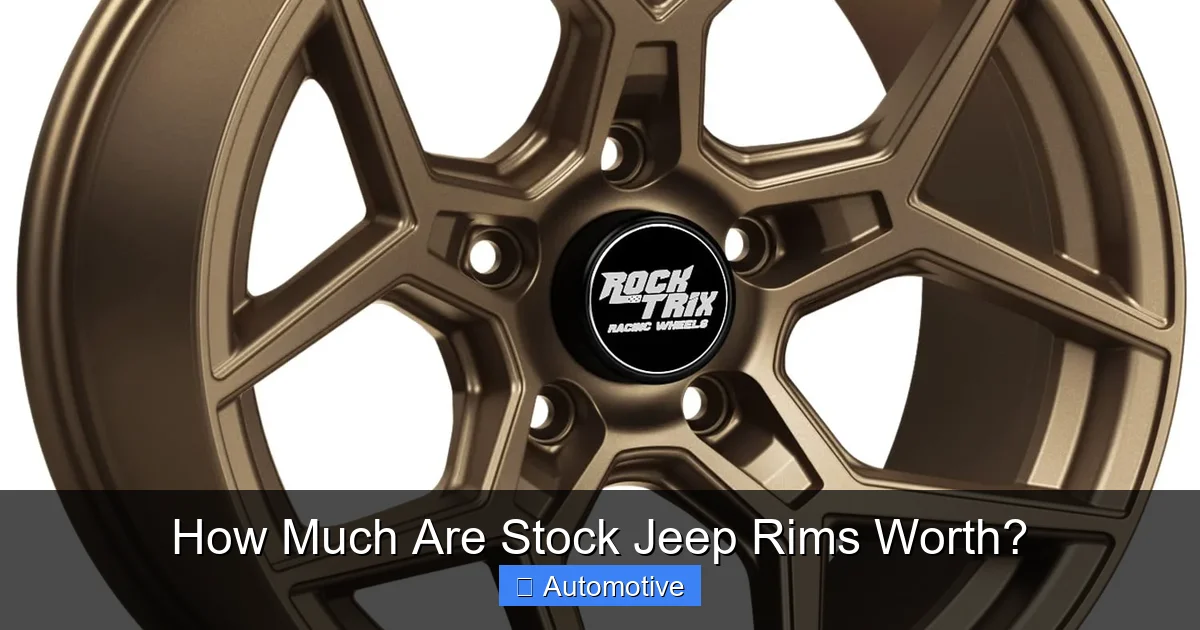
Visual guide about How Much Are Stock Jeep Rims Worth?
Image source: m.media-amazon.com
Now that we’ve covered the factors that influence value, let’s look at real-world price ranges for stock rims from popular Jeep models. Keep in mind that these are estimates based on current market trends (as of 2024) and can vary by region, condition, and demand.
Jeep Wrangler (TJ, JK, JL)
The Wrangler is the most popular Jeep model, and its stock rims reflect that demand.
– **TJ (1997–2006):** Stock 15-inch steel wheels typically sell for $50–$100 each in good condition. The five-spoke alloy wheels (often called “spider” wheels) can go for $150–$250 per rim if they’re clean and undamaged.
– **JK (2007–2018):** Base model steel wheels are worth $60–$120 each. Mid-trim alloy wheels (like those on the Sahara) range from $120–$200. Rubicon-specific wheels with the unique 17-inch design can fetch $200–$350 each, especially if they include the original center caps.
– **JL (2018–present):** Newer JL rims are in high demand due to the model’s popularity. Stock 17-inch alloy wheels from the Sport or Sahara trims sell for $150–$250 each. Rubicon wheels with the aggressive 17-inch design and gloss black finish can reach $300–$400 per rim in excellent condition.
Jeep CJ Series (CJ-5, CJ-7)
These classic models are favorites among restorers and off-road purists.
– **CJ-5 and CJ-7 (1970s–1980s):** Original 15-inch steel wheels are highly collectible. A single rim in good condition can sell for $100–$200, and a full set often goes for $600–$1,000 or more. The iconic “slotted” steel wheels are especially valuable.
– **Alloy wheels (if factory-installed):** Rare factory alloy wheels from later CJ models can exceed $300 each due to their scarcity.
Jeep Cherokee (XJ)
The compact XJ Cherokee (1984–2001) has a strong following, and its stock rims are in demand for resto-mod projects.
– **15-inch steel wheels:** $50–$90 each.
– **15-inch alloy wheels (common on Laredo or Limited trims):** $100–$180 each, depending on finish and condition.
Jeep Grand Cherokee (ZJ, WJ, WK)
These SUVs have more varied wheel designs, but stock rims still hold value.
– **ZJ (1993–1998):** 15-inch steel wheels: $40–$80. Alloy wheels: $80–$150.
– **WJ (1999–2004):** 16-inch and 17-inch alloy wheels: $100–$200 each.
– **WK (2005–2010):** 17-inch and 18-inch alloys: $120–$250, especially for Limited or Overland trims.
Jeep Gladiator (JT)
As the newest pickup from Jeep, the Gladiator’s stock rims are still relatively new but gaining value.
– **Sport trim (17-inch steel):** $100–$150 each.
– **Sahara (18-inch alloy):** $200–$300.
– **Rubicon (17-inch alloy with aggressive design):** $300–$450 per rim.
Where to Sell Stock Jeep Rims and How to Get Top Dollar
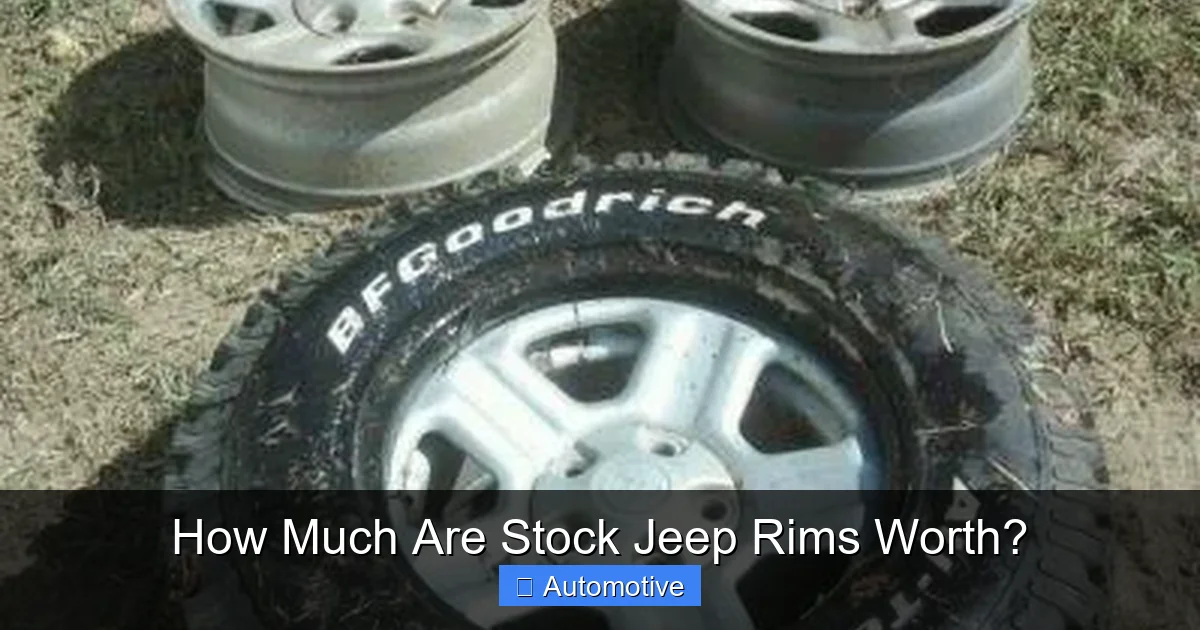
Visual guide about How Much Are Stock Jeep Rims Worth?
Image source: 2040-parts.com
Knowing the value of your stock rims is one thing—getting the best price is another. The platform you choose and how you present your wheels can make a big difference in your final sale price.
Best Platforms to Sell
– **eBay Motors:** Great for reaching a national audience. You can list individual rims or full sets. Be sure to include detailed photos, part numbers, and condition notes. Auctions can drive up prices for rare wheels.
– **Facebook Marketplace:** Ideal for local sales. You avoid shipping costs and can inspect the wheels in person. Popular in Jeep-heavy areas like Colorado, Texas, and California.
– **Jeep-Specific Forums:** Sites like JeepForum.com, WranglerForum.com, and CJ7.com have dedicated classified sections. Buyers here are often enthusiasts who appreciate original parts and are willing to pay a premium.
– **Craigslist:** Simple and free, but limited reach. Best for quick local sales.
– **Local Junkyards or Used Parts Stores:** Convenient, but you’ll get far less money—often 20–30% of market value. Only consider this if you need quick cash or are cleaning out a garage.
Tips to Maximize Your Sale Price
– **Clean the rims thoroughly:** Use a wheel cleaner and brush to remove brake dust, dirt, and grime. A clean set looks well-maintained and increases perceived value.
– **Take high-quality photos:** Shoot in natural light from multiple angles. Show the front, back, and any damage. Include close-ups of part numbers and center caps.
– **Highlight originality:** Mention if the rims are OEM, include original center caps, or have matching part numbers. Use terms like “factory original” or “unmodified” in your listing.
– **Sell as a set:** Buyers prefer complete sets. You’ll usually get more selling four wheels together than individually.
– **Be honest about condition:** Disclose any damage upfront. Buyers appreciate transparency and are more likely to trust your listing.
– **Price competitively:** Check recent sold listings (not just active ones) to see what similar rims have gone for. Price slightly below market if you want a quick sale.
Avoid Common Selling Mistakes
– **Overpricing:** Don’t assume your rims are worth more just because they’re from a Rubicon. Check actual sale prices.
– **Ignoring shipping costs:** If selling online, factor in shipping. Rims are heavy and expensive to ship—often $50–$100 per wheel. Offer local pickup when possible.
– **Not including part numbers:** This is a red flag for serious buyers. Always include the stamped part number from the back of the rim.
– **Selling damaged rims as “good condition”:** This leads to returns, negative feedback, and wasted time.
When Stock Rims Lose Value (And How to Avoid It)
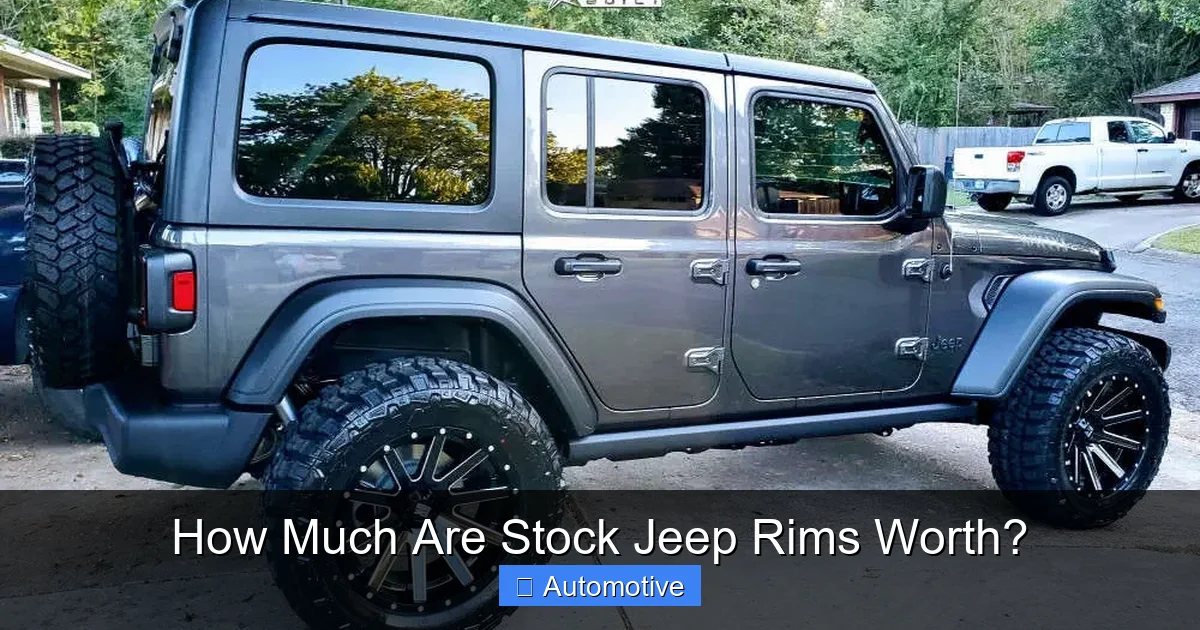
Visual guide about How Much Are Stock Jeep Rims Worth?
Image source: images.trailbuiltoffroad.com
Not all stock rims are created equal—and some choices can unintentionally reduce their worth. Here’s what to avoid if you want to keep your rims valuable.
Aftermarket Modifications
Painting, powder coating, or plasti-dipping your stock rims might look cool, but it often lowers their value. Restorers and collectors want original finishes. Even a professional paint job can’t replicate the factory look.
If you’ve already modified your rims, be upfront about it in your listing. Some buyers may still want them for parts or custom builds, but don’t expect top dollar.
Mixing and Matching
Swapping one stock rim for an aftermarket wheel or a different OEM style creates a mismatched set. This reduces value significantly, especially for collectors. Always try to keep all four wheels identical.
Neglecting Maintenance
Letting your rims sit outside, exposed to rain, snow, and road salt, leads to corrosion and pitting. Store them indoors if possible, and clean them regularly. A little care goes a long way in preserving value.
Upgrading Too Early
If you’re planning to sell your Jeep, consider keeping the stock rims until the sale. Many buyers prefer original wheels, and including them can increase the overall vehicle value. Selling the rims separately might seem profitable, but you could lose more on the Jeep’s resale price.
Collectibility and Nostalgia: The Emotional Value of Stock Rims
Beyond dollars and cents, stock Jeep rims carry emotional weight. For many owners, they represent a connection to Jeep’s rugged heritage. A set of original CJ wheels isn’t just metal—it’s a piece of automotive history.
This nostalgia drives demand in the collector market. Restorers seek out factory-correct parts to bring old Jeeps back to life. Off-roaders appreciate the simplicity and strength of steel wheels. Even younger buyers are drawn to the classic look of vintage rims.
Because of this, some stock rims appreciate in value over time—especially if the model becomes rare or discontinued. For example, early Wrangler YJ rims with the square headlights are now harder to find and command higher prices.
If you’ve got a set of old stock rims sitting in the garage, don’t dismiss them as junk. They might be worth more than you think—especially if they’re from a beloved Jeep generation.
Final Thoughts: Are Your Stock Jeep Rims Worth Selling?
So, how much are stock Jeep rims worth? The answer depends on your specific wheels, but there’s a good chance they’re worth more than you realize. From $50 steel wheels on a base model to $400+ alloy rims on a Rubicon, the market for original Jeep wheels is active and growing.
The key to getting top dollar is understanding what makes your rims valuable: model, condition, originality, and demand. Clean them up, take great photos, and sell them on the right platform. Whether you’re funding an upgrade or just decluttering, your stock rims could be a hidden goldmine.
And if you’re not ready to sell? That’s okay too. Holding onto original wheels can add value to your Jeep down the road—or give you peace of mind knowing you’ve preserved a piece of Jeep history.
Either way, your stock rims are more than just wheels. They’re part of the story.
Frequently Asked Questions
How much are stock Jeep Wrangler rims worth?
Stock Jeep Wrangler rims typically range from $50 to $400 each, depending on the model, year, and condition. Rubicon-specific alloy wheels often fetch the highest prices, especially if they’re in excellent condition and include original center caps.
Are old Jeep CJ rims valuable?
Yes, original steel wheels from Jeep CJ models (especially CJ-5 and CJ-7) are highly collectible. A single rim can sell for $100–$200, and a full set often goes for $600–$1,000 or more due to demand from restorers.
Do aftermarket modifications reduce rim value?
Yes, painting, powder coating, or plasti-dipping stock rims usually lowers their value. Collectors and restorers prefer original factory finishes, so modifications can make your rims less desirable.
Where is the best place to sell stock Jeep rims?
The best platforms include eBay Motors, Jeep-specific forums, and Facebook Marketplace. These reach enthusiasts who appreciate original parts and are willing to pay a premium for quality rims.
Can I sell just one stock Jeep rim?
Yes, but you’ll likely get less per wheel than selling a full set. Buyers prefer complete, matching sets, so individual rims may take longer to sell and attract lower offers.
Do stock rims increase my Jeep’s resale value?
Yes, keeping original stock rims can boost your Jeep’s resale value, especially for collectors. Many buyers prefer factory-correct wheels, so including them may help you sell faster and for more money.